Afp Business Asia

Hong Kong’s Cathay Pacific unveils deal to buy 14 Boeing jets

Hong Kong carrier Cathay Pacific said on Wednesday it would place a US$8.1 billion order for 14 Boeing jets, its first with the US aircraft maker for more than a decade.The airline said in a filing to the city’s stock exchange it would “purchase 14 Boeing 777-9 aircraft” and had “secured the right to acquire up to seven additional Boeing 777-9 aircraft”.The new order expects the aircraft to be delivered by 2034, according to a separate filing.Cathay was one of the first buyers to commit to Boeing’s 777X programme when it unveiled the purchase of 21 aircraft in 2013.Boeing said in a statement the new deal brought the order book of 777-9 aircraft — “the world’s largest twin-engine airplane” — to 35.The jets, designed to reduce fuel use and emissions, would meet Cathay’s growing global travel demand, it said.”Boeing certainly had a troubled period in the recent past, but we are very encouraged by the renewed focus that Boeing leadership has on engineering and production quality,” Cathay’s operations and service delivery officer Alex McGowan told a news conference.Cathay already has a fleet of more than 230 mostly passenger aircraft, consisting of Boeing and Airbus jets.It has agreed to buy more than 100 new aircraft, it said on Wednesday, adding that the new order has brought Cathay’s total investment to $12.7 billion (HK$100 billion).- Stock price slips -Hong Kong’s aviation sector was hit hard by Covid-era policies, which imposed strict rules on travellers that kept it internationally isolated before they were lifted in late 2022.Cathay’s attributable profit in 2024 rose slightly to $1.27 billion and it announced this year that its flights were finally back to pre-pandemic levels.The firm reported on Wednesday that its attributable profit in the first six months of 2025 rose slightly to $465 million (HK$3.65 billion) in the first six months of 2025, benefiting from a pick-up in travel demand in Asia.Total revenue in that period increased 9.5 percent to $6.92 billion.The company also declared an interim dividend of 20 Hong Kong cents per share.Chairman Patrick Healy welcomed a “solid financial performance” in the filing.”Our first-half result was driven by higher passenger volumes albeit with lower yields, a consistent cargo performance, and lower fuel price compared with the same period in 2024,” Healy said.The company’s passenger airlines, including Cathay Pacific and Hong Kong Express, have launched or announced 19 new destinations in 2025, with “more to come”, he said, adding that they now fly to more than 100 passenger destinations.The airline said this month it had resumed direct flights to Brussels after a long break caused by the Covid-19 pandemic.Cathay carried a total of 13.6 million passengers in the first half of this year — an average of 75,300 per day, and up 28 percent from the same period last year.But the firm also saw a drop of 0.6 percent in profit margin for the first half of the year.Cathay’s passenger yields — a measure of value generated by passengers — fell by 12.3 percent, with its low-cost airline HK Express recording a 21.6 percent drop.Wednesday’s results were also dragged down by rising costs, while Healy warned in the filing that HK Express was facing short-term challenges as a pick-up in bookings was “yet to return to normal levels”.He said the firm was “not immune to the various challenges” in the industry.Cathay’s shares in Hong Kong closed down more than 9.6 percent to HK$10.85 on Wednesday.

Stocks tick up with eyes on earnings, US tariff deadline

Stock markets edged higher Wednesday as traders assessed the latest corporate earnings and awaited President Donald Trump’s next wave of tariffs.Trump’s claim that Washington was “very close to a deal” to extend a China tariffs truce provided some optimism.Dozens of economies around the world including the European Union and India are set to face higher US tariffs on Thursday, as Trump’s long-threatened “reciprocal” duties over trade practices he deems unfair take effect.Separate 50 percent US tariffs on Brazilian imports came into place Wednesday, with significant exemptions, after Trump targeted Latin America’s biggest economy over its prosecution of former president Jair Bolsonaro.Oil prices rallied thanks to Trump’s threat to impose higher tariffs on India over its purchase of Russian crude.Kathleen Brooks, research director at trading group XTB, said “decent” corporate results in the United States and Europe were overshadowing concerns about a US economic slowdown and the impact of “Trump’s continuing obsession with tariffs”.Wall Street’s main indices edged higher at the start of trading.Paris rose in early afternoon deals, while Frankfurt was flat after data showed German industrial orders unexpectedly fell in June. London advanced ahead of the Bank of England’s expected decision to cut its key interest rate Thursday. Markets kept an eye on US tariff developments, with several countries still racing to strike deals before Thursday’s levies kick in.European investors are “in a relatively confident mood following a US-EU trade deal that eases concerns around tomorrow’s tariff headline”, said Joshua Mahony, chief market analyst at Rostro trading group.He added that markets are “heavily focused on the likes of India and Switzerland”, which have yet to reach a final agreement with Washington.In a Tuesday interview with CNBC, Trump said he was looking at hitting pharmaceuticals with tolls that eventually reach 250 percent, while semiconductors were also in the firing line. However, he signalled a more positive tone on talks with China, which analysts said helped boost Asian stocks.In company news, shares in Danish drug giant Novo Nordisk fell 3.5 percent.The group reported a sharp rise in second-quarter net profit but rising competition is hitting sales of its diabetes and obesity treatments Ozempic and Wegovy in the United States.In London, shares in Swiss mining and commodity giant Glencore shed 3.7 percent after it posted widening first-half losses on falling coal prices, US tariffs and Middle East tensions. In the United States, Disney lifted its full-year earnings forecast after reporting higher quarterly profits as it added 1.8 million subscribers to its streaming platform.However, investors appeared to focus on a drop in revenue from its linear TV business, with its shares falling four percent as trading got underway in New York.Shares in McDonald’s climbed 1.5 percent after the fast-food chain posted a rebound in sales.- Key figures at around 1330 GMT -New York – Dow: UP 0.2 percent at 44,190.66 pointsNew York – S&P 500: UP 0.2 percent at 6,308.57New York – Nasdaq Composite: UP 0.2 percent at 20,955.22London – FTSE 100: UP 0.3 percent at 9,167.02 Paris – CAC 40: UP 0.2 percent at 7,633.53 Frankfurt – DAX: FLAT at 23,854.85Tokyo – Nikkei 225: UP 0.6 percent at 40,794.86 (close)Hong Kong – Hang Seng Index: FLAT at 24,910.63 (close)Shanghai – Composite: UP 0.5 percent at 3,633.99 (close)Euro/dollar: UP at $1.1625 from $1.1582 on TuesdayPound/dollar: UP at $1.3317 from $1.3294Dollar/yen: DOWN at 147.39 yen from 147.55 yenEuro/pound: UP at 87.30 pence from 87.01 penceBrent North Sea Crude: UP 1.7 percent at $68.78 per barrelWest Texas Intermediate: UP 1.8 percent at $66.78 per barrelburs-rl/lth

Natural disasters caused $135 bn in economic losses in first half of 2025: Swiss Re

Natural disasters caused $135 billion in economic losses globally in the first half of 2025, fuelled by the Los Angeles wildfires, reinsurer Swiss Re said Wednesday.Swiss Re, which serves as an insurer of insurance companies, said first half losses were up from the $123 billion in the first half of 2024.The Zurich-based reinsurance giant estimated that of this year’s first half losses, $80 billion had been insured — almost double the 10-year average, in 2025 prices.The Los Angeles blazes in January constitute the largest-ever insured wildfire loss event by far, reaching an estimated $40 billion, said Swiss Re.It said the “exceptional loss severity” of the fires was down to prolonged winds, a lack of rainfall and “some of the densest concentration of high-value single-family residential property in the US”.Swiss Re said losses from wildfires had risen sharply over the past decade due to rising temperatures, more frequent droughts and changing rainfall patterns — plus greater suburban sprawl and high-value asset concentration.”Most fire losses originate in the US and particularly in California, where expansion in hazardous regions has been high,” it said.Before 2015, wildfire-related insured losses made up around one percent of all natural catastrophe claims, but now account for seven percent.- Hurricane season approaching -Insured losses from severe thunderstorms amounted to $31 billion in the first half of 2025.The second half of the year is usually more costly for insurers due to damage during the North Atlantic hurricane season. If current loss trends continue, global insured losses from natural catastrophes in 2025 could exceed the Swiss Re Institute’s projections of $150 billion. “The strongest lever to increase the resilience and safety of communities is to double down on mitigation and adaptation. It’s here that everyone can help reduce losses before they occur,” said Swiss Re’s group chief economist Jerome Haegeli.”While mitigation and adaptation measures come at a price, our research shows that, for example, flood protection measures such as dykes, dams and flood gates are up to 10 times more cost-effective than rebuilding.”The March earthquake in Myanmar figured among the major natural disasters in the first six months of the year, with the tremors felt in neighbouring Thailand, India, and China.In Thailand alone, insured losses reached $1.5 billion.Overall, while natural disasters caused $135 billion in economic losses in the first half of 2025, man-made disasters — which include industrial accidents — caused another $8 billion in losses, of which $7 billion were insured losses.

Markets tick up but traders wary as Trump tariffs temper rate hopes

Asian equities edged higher Wednesday as traders weighed Donald Trump’s trade war and fresh data that indicated further weakness in the US economy but added to interest rate cut speculation.The US president’s claim that Washington was “very close to a deal” to extend a China truce provided some optimism, though that was tempered by his warning of fresh levies on pharmaceuticals and chips.After a strong start to the week sparked by hopes that painful jobs data will force the US Federal Reserve to lower rates next month, another batch of figures added fuel to the fire.A closely watched index of services activity showed it had barely grown in July as companies contended with weaker hiring conditions and rising prices.The news came after Friday’s jobs data revealed far fewer US jobs were created than expected in May, June and July.”Market pricing has moved aggressively in favour of a September rate cut by the Federal Reserve, after a weak July jobs report and ugly revisions to May and June signalled the US labour market may finally be cracking under the pressure of tariffs,” said Neil Wilson at Saxo Markets. “The data pushed the US closer to stagflationary territory,” he said.”So far, the market has held up and looked beyond the tariff risks, but we may at last be seeing the hard data finally catch up with the soft survey data.”But while bets on a rate cut in September have soared, he said such a move was not a certainty.Stocks fluctuated through the morning but went into the afternoon on a more positive note.Tokyo,Shanghai, Singapore, Sydney, Seoul, Wellington, Manila, Bangkok and Jakarta rose, while Hong Kong was marginally higher. Taipei and Mumbai were in the red.London, Paris and Frankfurt enjoyed healthy buying in the morning, while Wall Street futures also advanced.Confidence remains thin as Trump’s tariff threats linger, with several countries — including India and Switzerland — still to hammer out deals before his delayed deadline Thursday, and agreed levies with others to kick in.In his latest salvo, Trump told CNBC he was looking at hitting pharmaceuticals with tolls that eventually reach 250 percent, while semiconductors were also in the firing line. He has said he will also hammer India over its purchases of Russian oil.Still, Trump did strike a positive note on China, which is in talks with US officials to continue a truce agreed in May that saw the world’s two largest economies pare down their eye-watering triple-digit tariffs.Regarding Chinese President Xi Jinping, Trump told CNBC’s “Squawk Box” that “I’ll end up having a meeting before the end of the year, most likely, if we make a deal.”If we don’t make a deal, I’m not going to have a meeting. I mean, you know, what’s the purpose of meeting if we’re not going to make a deal?”But we’re getting very close to a deal.”He added that his relationship with Xi was “very good” and that “I think we’ll make a good deal. It’s not imperative, but I think we’re going to make a good deal”. In company news, shares in Hong Kong carrier Cathay Pacific plunged more than nine percent in the city after it said passenger yield tumbled in the first half of the year. However, it also said it had placed an order with Boeing for 14 jets worth more than US$8 billion. The deal marks its first order with the US giant in 12 years.- Key figures at around 0810 GMT -Tokyo – Nikkei 225: UP 0.6 percent at 40,794.86 (close)Hong Kong – Hang Seng Index: FLAT at 24,910.63 (close)Shanghai – Composite: UP 0.5 percent at 3,633.99 (close)London – FTSE 100: UP 0.2 percent at 9,159.71 Euro/dollar: DOWN at $1.1581 from $1.1582 on TuesdayPound/dollar: UP at $1.3301 from $1.3294Dollar/yen: DOWN at 147.53 yen from 147.55 yenEuro/pound: UP at 87.07 pence from 87.01 penceWest Texas Intermediate: UP 0.8 percent at $65.69 per barrelBrent North Sea Crude: UP 0.8 percent at $68.20 per barrelNew York – Dow: DOWN 0.1 percent at 44,111.74 (close)

Taiwan’s orchid growers dig in as US tariffs shoot up

Since the start of US President Donald Trump’s global trade war, Taiwanese orchid grower Lee Tsang-yu has watched tariffs on his seedlings shoot from nothing to 20 percent.But, after weathering many economic crises, the 61-year-old seasoned farmer is digging in.Lee is cultivating new markets in Thailand and expanding in Vietnam, Indonesia and Brazil, while cutting back shipments to the United States.”The US is such a huge market, we can’t pull out, and we won’t,” said Lee, whose company, Charming Agriculture, operates four rugby field-sized greenhouses in Houbi, a district of the southern city of Tainan.Taiwan’s more than 300 orchid growers rank among the world’s biggest producers of the thick-leaved plants, with Phalaenopsis orchids, also known as moth orchids, dominating exports.The island’s orchid shipments reached NT$6.1 billion (US$204 million) in 2024, with about NT$2 billion worth of plants sent to the United States, its biggest market, official data shows.Until now, most growers have been absorbing the cost of the 10 percent tariff that Trump slapped on nearly every trading partner in April, said Ahby Tseng, 53, secretary-general of the Taiwan Orchid Growers Association.But “no one can bear” all of Trump’s temporary 20 percent levy on Taiwan announced last week, he said.Tseng said Taiwan’s main rival in the United States was The Netherlands, which has been hit with a relatively lighter 15 percent tariff.The five percentage point difference is significant, he said.”It is actually very difficult to immediately pass the cost on to consumers because consumers can choose not to buy, or they can choose to buy other types of flowers,” Tseng said.And stockpiling orchids in a warehouse wasn’t an option given that the plants “keep growing”.While the higher tariff would erode his bottom line, Lee said he was more concerned about the general state of the US economy since Trump took office.”Everything has become more expensive in the US, and consumer spending is shrinking — that’s what worries me,” he said.”Since late May, we’ve already cut shipments by 15 percent. Before that, the US accounted for 45 percent of our exports.”Lee said he was optimistic his efforts to expand into other markets, though slow and not always as lucrative, would “gradually offset this impact”.Taiwan’s orchids also had a competitive edge, he said — their flowers could last longer than Dutch plants.And, he reasons, “Trump won’t be president forever.” 

India’s central bank holds rates amid US tariff battle

India’s central bank maintained its key interest rate at 5.50 percent on Wednesday, as US President Donald Trump ramped up threats to raise tariffs on New Delhi because of Russian oil purchases.The Reserve Bank of India (RBI) kept steady the repurchase rate, the level at which it lends to commercial banks, after a unanimous vote by a six-member panel.A majority of analysts had forecast a pause following a surprise 50-basis-point reduction in June.Bank governor Sanjay Malhotra said global trade challenges remained but that the “Indian economy holds bright prospects in the changing world order”.”We have taken decisive and forward looking measures to support growth,” he said in a statement.The RBI cut rates for the first time in nearly five years in February and followed up with two other reductions in April and June.The Indian government has forecast above-average monsoon rains, which observers say should help growth, as higher agricultural output will aid the rural economy and keep vegetable prices stable.But Trump’s announcement Tuesday to “substantially” hike tariffs on Indian imports because of New Delhi’s purchases of Russian oil has added pressure on India.Before that threat was made, the existing 10 percent US tariff on Indian products was already due to rise to 25 percent on Thursday.Malhotra acknowledged that “the uncertainties of tariffs are still evolving” even though “growth is robust”. Trump’s pressure on India comes after he signalled fresh sanctions on Russia if it did not make progress by Friday towards a peace deal with Ukraine.India, the world’s most populous country, is not an export powerhouse, but the United States is its largest trading partner.

Investors walk fine line as Trump tariffs temper rate hopes

Asian investors trod warily Wednesday amid lingering uncertainty over Donald Trump’s trade war, while another round of data indicated further weakness in the US economy but added interest rate cut speculation.The US president’s claim that Washington was “very close to a deal” to extend a China truce provided some optimism, though that was tempered by his warning of fresh levies on pharmaceuticals and chips.After a strong start to the week sparked by hopes that painful jobs data will force the US Federal Reserve to lower rates next month, another batch of figures added fuel to the fire.A closely watched index of services activity showed it had barely grown in July as companies contend with weaker hiring conditions and rising prices.The news came after Friday’s jobs data revealed far fewer US jobs were created than expected in May, June and July.”Market pricing has moved aggressively in favour of a September rate cut by the Federal Reserve, after a weak July jobs report and ugly revisions to May and June signalled the US labour market may finally be cracking under the pressure of tariffs,” said Neil Wilson at Saxo Markets. “The data pushed the US closer to stagflationary territory,” he said.”So far, the market has held up and looked beyond the tariff risks, but we may at last be seeing the hard data finally catch up with the soft survey data.”But while bets on a rate cut in September have soared, he remained unsure that such a move was a certainty.Stocks fluctuated through the morning.Tokyo, Shanghai, Sydney, Wellington, Manila and Jakarta rose but Hong Kong, Singapore, Seoul and Taipei were in the red.Confidence remains thin as Trump’s tariff threats linger, with several countries — including India and Switzerland — still to hammer out deals before his delayed deadline Thursday, and agreed levies with others begin to kick in.In his latest salvo, Trump told CNBC he was looking at hitting pharmaceuticals with tolls that eventually reach 250 percent, while semiconductors were also in the firing line. He has said he will also hammer India over its purchases of Russian oil.Still, Trump did strike a positive note on China, which is in talks with US officials to continue a truce agreed in May that saw the world’s two largest economies pare down their eye-watering triple-digit tariffs.Regarding Chinese President Xi Jinping, Trump told CNBC’s “Squawk Box” that “I’ll end up having a meeting before the end of the year, most likely, if we make a deal.”If we don’t make a deal, I’m not going to have a meeting. I mean, you know, what’s the purpose of meeting if we’re not going to make a deal?”But we’re getting very close to a deal.”He added that his relationship with Xi was “very good” and that “I think we’ll make a good deal. It’s not imperative, but I think we’re going to make a good deal”. – Key figures at around 0230 GMT -Tokyo – Nikkei 225: UP 0.6 percent at 40,802.73 (break)Hong Kong – Hang Seng Index: DOWN 0.2 percent at 24,844.94Shanghai – Composite: UP 0.1 percent at 3,619.78Euro/dollar: DOWN at $1.1570 from $1.1582 on TuesdayPound/dollar: UP at $1.3303 from $1.3294Dollar/yen: UP at 147.61 yen from 147.55 yenEuro/pound: DOWN at 86.97 pence from 87.01 penceWest Texas Intermediate: UP 0.5 percent at $65.46 per barrelBrent North Sea Crude: UP 0.5 percent at $67.96 per barrelNew York – Dow: DOWN 0.1 percent at 44,111.74 (close)London – FTSE 100: UP 0.2 percent at 9,142.73 (close)

Trump targets tariff evasion, with eye on China

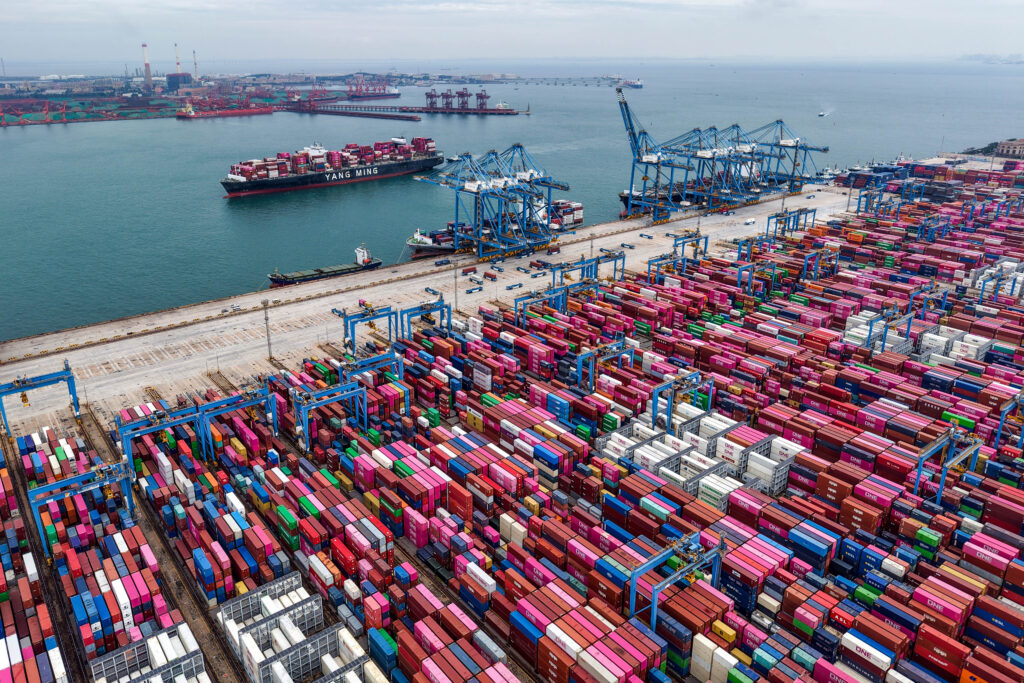
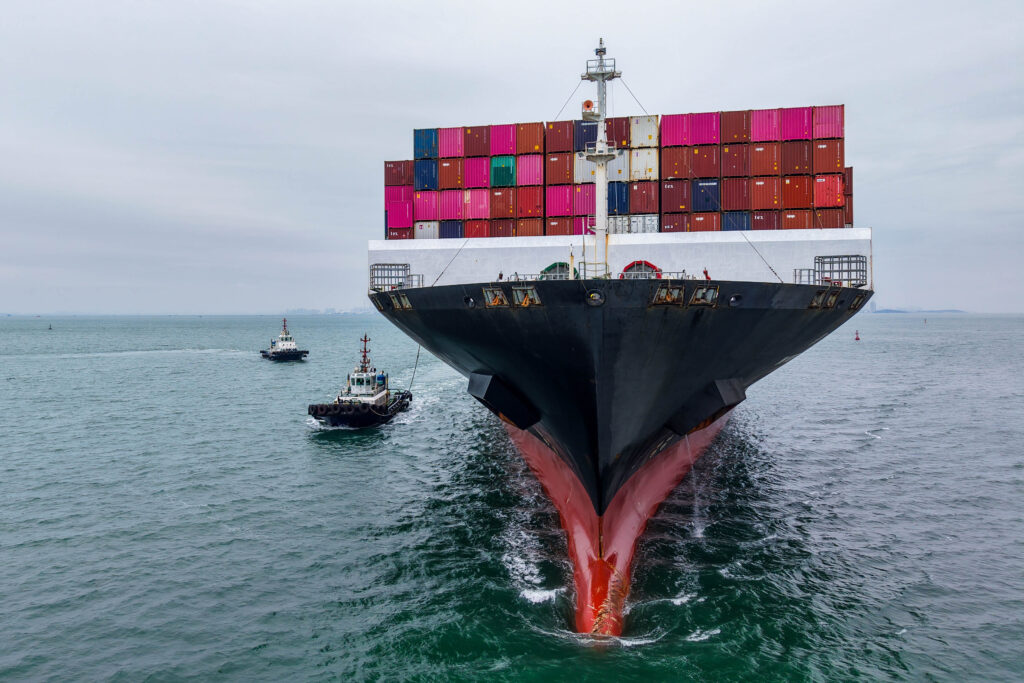
As the United States ramps up tariffs on major trading partners globally, President Donald Trump is also disrupting strategies that could be used — by Chinese companies or others — to circumvent them.Goods deemed to be “transshipped,” or sent through a third country with lower export levies, will face an additional 40-percent duty under an incoming wave of Trump tariffs Thursday.The latest tranche of “reciprocal” tariff hikes, taking aim at what Washington deems unfair trade practices, impacts dozens of economies from Taiwan to India.The transshipment rule does not name countries, but is expected to impact China significantly given its position as a manufacturing powerhouse.Washington likely wants to develop supply chains that are less reliant on China, analysts say, as tensions simmer between the world’s two biggest economies and the US sounds the alarm on Beijing’s excess industrial capacity.But “it’s a little more about the short-term effect of strengthening the tariff regime than it is about a decoupling strategy,” said Josh Lipsky, chair of international economics at the Atlantic Council.”The point is to make countries worried about it and then have them err on the side of not doing it, because they know that Trump could then jack up the tariff rates higher again,” he added, referring to tariff evasion.The possibility of a sharply higher duty is a “perpetual stick in the negotiations” with countries, said Richard Stern, a tax and budget expert at the conservative Heritage Foundation.He told AFP that expanding penalties across the globe takes the focus away from Beijing alone.- Alternative supplies -Experts have noted that Vietnam was the biggest winner from supply chain diversions from China since the first Trump tariffs around 2018, when Washington and Beijing engaged in a trade war.And Brookings Institution senior fellow Robin Brooks pointed to signs this year of significant transshipments of Chinese goods.He noted in a June report that Chinese exports to certain Southeast Asian countries started surging “anomalously” in early 2025 as Trump threatened widespread levies.While it is unclear if all these products end up in the United States, Brooks cast doubt on the likelihood that domestic demand in countries like Thailand and Vietnam rocketed right when Trump imposed duties.”One purpose of the transshipment provisions is to force the development of supply chains that exclude Chinese inputs,” said William Reinsch, senior adviser at the Center for Strategic and International Studies.”The other purpose is to push back on Chinese overcapacity and force them to eat their own surpluses,” he added.But Washington’s success in the latter goal depends on its ability to get other countries on board.”The transshipment penalties are designed to encourage that,” Reinsch said.Lipsky added: “The strategy that worked in the first Trump term, to try to offshore some Chinese manufacturing to other countries like Vietnam and Mexico, is going to be a much more difficult strategy to execute now.”- China response? -Lipsky noted that Beijing could see the transshipment clause as one targeting China on trade, “because it is.””The question is, how China takes that in the broader context of what had been a thawing relationship between the US and China over the past two months,” he added.While both countries temporarily lowered triple-digit tariffs on each other’s exports, that truce expires August 12.The countries are in talks to potentially extend the de-escalation, although the final decision lies with Trump.It will be tough to draw a line defining product origins, analysts say.Customs fraud has been illegal for some time, but it remains unclear how Washington will view materials from China or elsewhere that have been significantly transformed.The burden lies with customs authorities to identify transshipment and assess the increased duties.”That will be difficult, particularly in countries that have close relations with China and no particular incentive to help US Customs and Border Protection,” Reinsch added.

Wall Street stocks end lower as rally peters out

Wall Street stocks fell Tuesday as a rally ran out of steam following lackluster economic data, while investors monitor ongoing trade talks ahead of new tariff hikes set to take effect later this week.US President Donald Trump told CNBC he plans fresh tariffs on imported pharmaceuticals and semiconductors. Trump also said he expects to raise the US tariff on Indian imports due to the country’s purchases of Russian oil.The statements come before a separate set of tariff hikes goes into force on dozens of economies later this week. Swiss officials traveled to Washington Tuesday to try to strike a last-minute deal.Investors also digested an index of US services activity that came in at 50.1 percent, just barely in growth mode as companies contend with weaker hiring conditions and increased pricing pressure.The report comes on the heels of jobs data last Friday that pointed to slowing in the labor market. On the positive side, “a weaker economy could mean more rate cuts from the Fed,” said Adam Sarhan of 50 Park Investments.After opening higher, US indices fell into negative territory, with the S&P 500 ending down 0.5 percent.European markets ended mixed, with Paris dipping into the red, while oil prices retreated further on worries about the demand outlook.Swiss leaders flew to Washington on Tuesday in a last-ditch effort to avoid a hefty 39-percent tariff.Meanwhile, the European Union on Tuesday announced the suspension of its retaliatory tariffs on US goods worth 93 billion euros ($107 billion) after Brussels struck a deal with Washington last month.Among individual companies, Palantir Technologies jumped 7.9 percent after reporting its first quarter with more than $1 billion in revenues. The data analysis and artificial intelligence company also raised its full-year revenues forecast.Pfizer was another big winner after earnings as the drugmaker reported a big increase in profits to $2.9 billion behind higher sales of Covid-19 products and lower expenses. Shares jumped 5.2 percent.Diageo, the maker of Guinness stout and Smirnoff Vodka, rose 4.9 percent after raising its cost-savings targets following a sharp drop profits to the hit from US tariffs.- Key figures at around 2100 GMT -New York – Dow: DOWN 0.1 percent at 44,111.74 (close)New York – S&P 500: DOWN 0.5 percent at 6,299.19 (close)New York – Nasdaq Composite: DOWN 0.7 percent at 20,916.55 (close)London – FTSE 100: UP 0.2 percent at 9,142.73 (close)Paris – CAC 40: DOWN 0.1 percent at 7,621.04 (close)Frankfurt – DAX: UP 0.4 percent at 23,846.07 (close)Tokyo – Nikkei 225: UP 0.6 percent at 40,549.54 (close)Hong Kong – Hang Seng Index: UP 0.7 percent at 24,902.53 (close)Shanghai – Composite: UP 1.0 percent at 3,617.60 (close)Euro/dollar: UP at $1.1582 from $1.1571 on MondayPound/dollar: UP at $1.3294 from $1.3285Dollar/yen: UP at 147.55 yen from 147.09 yenEuro/pound: DOWN at 87.01 pence from 87.10 penceWest Texas Intermediate: DOWN 1.7 percent at $65.16 per barrelBrent North Sea Crude: DOWN 1.7 percent at $67.64 per barrelburs-jmb/st

US trade gap shrinks on imports retreat as tariffs fuel worries

The US trade gap narrowed in June, government data showed Tuesday, as imports pulled back more than exports while businesses grappled with President Donald Trump’s tariffs on allies and competitors alike.The overall trade deficit in the world’s biggest economy narrowed by 16 percent to $60.2 billion, down from a revised $71.7 billion figure in May, the Department of Commerce said.The narrowing was more than analysts expected but largely reflected a drop in goods imports — including consumer goods as Trump’s wide-ranging tariffs added to businesses’ costs of bringing in foreign products.In April, Trump imposed a 10-percent duty on most US trading partners and he has also slapped much steeper tariffs on steel, aluminum and autos.This baseline tariff is set to rise to varying levels for dozens of economies including Japan and the European Union come Thursday.Given that plans have been set out for higher rates to take effect, policy uncertainty has eased somewhat, said Nationwide financial markets economist Oren Klachkin.”But businesses hoping tariffs were just threats must now adjust to the reality they are here to stay,” he added in a note.”We think the negative impact of high tariff rates will outweigh any positives from lower policy uncertainty,” Klachkin said.The June deficit narrowed on the back of a fall in imports, by 3.7 percent to $337.5 billion, while exports also dropped by 0.5 percent to $277.3 billion.The drop in imports came as those of consumer goods decreased $8.4 billion, while those of industrial supplies and materials fell by $2.7 billion. Imports of autos and parts also dropped by $1.3 billion.The retreat in exports, meanwhile, came as goods exports declined by $1.3 billion, with decreases seen in industrial supplies as well.The goods deficit with China dropped by $4.6 billion, to $9.4 billion in June.Washington and Beijing slapped escalating tariffs on each other’s products in April, reaching prohibitive triple-digit levels and snarling supply lines between the world’s two biggest economies.But in May, the countries reached a temporary agreement to bring these duties to a lower level until August 12.