Afp Business Asia

Global stocks mixed as market awaits ECB decision

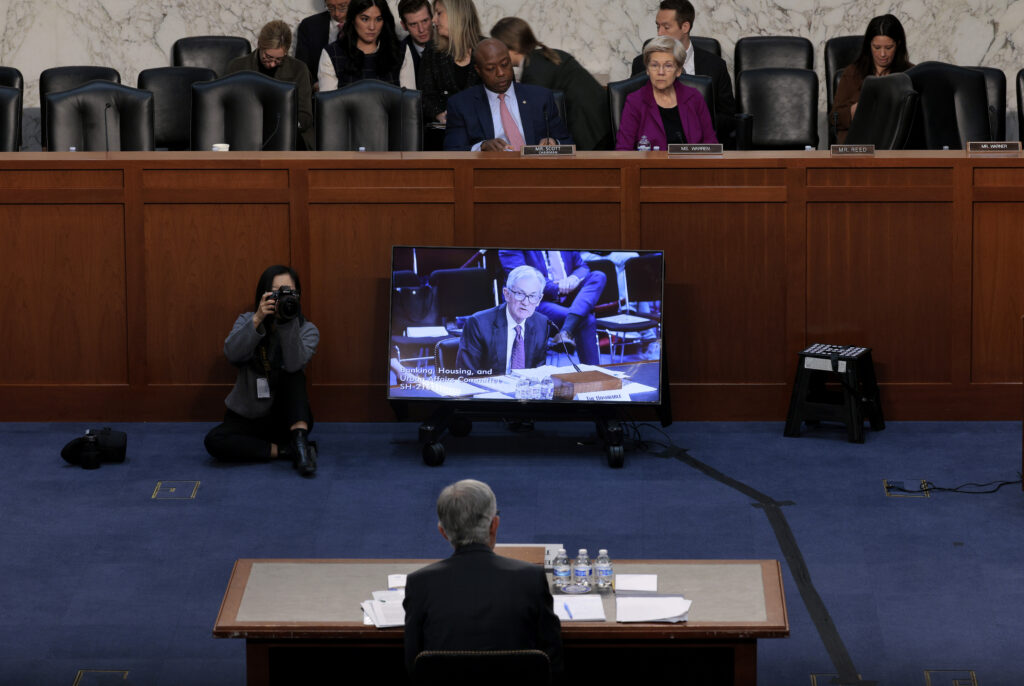
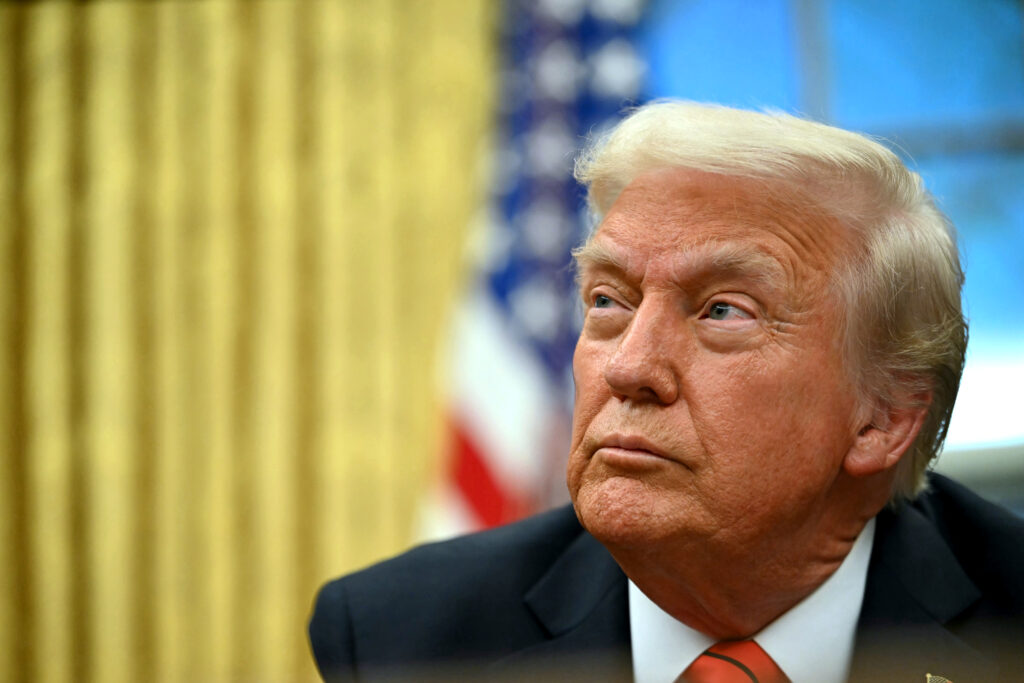
Equity markets were mixed Wednesday as attention turned away from tech stocks to the outlook for monetary policy, with the Federal Reserve holding steady on interest rates ahead of an ECB decision.Major US indices spent most of the session in the red before closing moderately lower. The S&P 500 shed 0.5 percent.In Europe, London and continental bourses mostly rose, with the notable exception of Paris, which was dragged down by poor results from luxury group LVMH, Europe’s largest company by market value.The Fed, as expected, left its key lending rate unchanged, resisting pressure from President Donald Trump to continue with cuts in the first rate decision since his return to office.Stocks did not move significantly after the decision or during a news conference with Fed Chair Jerome Powell.”We’re looking at a major plethora of earnings data,” Adam Sarhan of 50 Park Investments said Wednesday afternoon after the Fed decision but before earnings releases from several tech giants.US stocks took a hammering Monday, with chip giant and market darling Nvidia collapsing almost 17 percent, after China’s DeepSeek unveiled a chatbot that apparently matched the capacity of US artificial intelligence pacesetters for a fraction of the investments made by American companies.Tuesday saw a tech rebound, with Nvidia surging 8.8 percent, as some analysts voiced doubts over whether DeepSeek’s AI was developed as cheaply as it claims, and with others saying that more cost-effective AI applications are good for everyone.On Wednesday, Nvidia dropped 4.1 percent.In Paris, LVMH shares were down more than five percent after it reported late Tuesday that net profit shrank 17 percent last year, leading its chief executive Bernard Arnault to complain about the high level of taxes in France. Shares in Dutch tech giant ASML, which sells cutting-edge machines to make semiconductors, closed more than 6 percent higher on Wednesday after it reported solid orders in the fourth quarter.European stock markets have been supported by expectations that the European Central Bank will cut rates 25 basis points Thursday to revive stagnant European economies. “The ECB’s dovish stance has provided a tailwind for European equities,” said Daniela Sabin Hathorn, senior market analyst at Capital.com. “As momentum shifts from US to European markets, further upside in European stocks remains a strong possibility.”Earlier in the day, Tokyo’s stock market rebounded after having taken a heavy hit over the previous two days as its chip companies tanked. There were gains also in Sydney, Wellington and Mumbai, though Bangkok dipped. Chinese indices were closed for the holidays.But oil prices fell on reports of growing US crude reserves and on expectations that Trump’s tariff policy could reduce demand.- Key figures around 2200 GMT -New York – Dow: DOWN 0.3 percent at 44,713.52 (close)New York – S&P 500: DOWN 0.5 percent at 6,039.31 (close)New York – Nasdaq Composite: DOWN 0.5 percent at 19,963.32 (close)London – FTSE 100: UP 0.3 percent at 8,557.81 (close)Paris – CAC 40: DOWN 0.3 percent at 7,872.48 (close)Frankfurt – DAX: UP 1.0 percent at 21,637.53 (close)Tokyo – Nikkei 225: UP 1.0 percent at 39,414.78 (close)Hong Kong – Hang Seng Index: Closed for a holidayShanghai – Composite: Closed for a holidayEuro/dollar: DOWN at $1.0425 from $1.0430 on TuesdayPound/dollar: UP at $1.2444 from $1.2443Dollar/yen: DOWN at 155.15 yen from 155.54 yen Euro/pound: DOWN at 83.68 pence from 83.82 pence West Texas Intermediate: DOWN 1.6 percent at $72.62 per barrelBrent North Sea Crude: DOWN 1.2 percent at $76.58 per barrel

Stocks diverge, dollar steady before Fed rate decision

Equity markets diverged Wednesday as attention turned away from recent turbulence in tech stocks to the outlook for interest rates, with the Fed and the ECB both holding their first major meetings of the year.The Dow was little changed in late morning trading in New York, while the wider S&P and the tech-heavy Nasdaq were lower.In Europe, London and continental bourses mostly rose, with the notable exception of Paris, which was dragged down by poor results from luxury group LVMH, Europe’s largest company by market value.While the Federal Reserve is expected to keep interest rates unchanged at its Wednesday meeting, investors were awaiting Fed Chairman Jerome Powell’s post-meeting comments, given President Donald Trump’s pressure to lower rates.”The real wait-and-see item is the press conference,” said Patrick J. O’Hare, an analyst at Briefing.com. “The intrigue revolves around the press conference and how Fed Chair Powell will describe the Fed’s deliberations over the inflation data and what Powell thinks about President Trump’s view that he knows more about interest rates than the Fed Chair does.” US stocks took a hammering Monday, with chip giant and market darling Nvidia collapsing almost 17 percent, after China’s DeepSeek unveiled a chatbot that apparently matched the capacity of US artificial intelligence pace-setters for a fraction of the investments made by American companies.Tuesday saw a tech rebound, with Nvidia surging 8.8 percent, as some analysts voiced doubts over whether DeepSeek’s AI was developed as cheaply as it claims, and with others saying that more cost-effective AI applications are good for everyone.Besides the Fed, US investors are also awaiting earnings from Meta, Microsoft and Tesla after the market shuts, which should give further direction to tech sector stocks. In Paris, LVMH shares were down more than five percent after it reported late Tuesday that net profit shrank 17 percent last year, leading its chief executive Bernard Arnault to complain about the high level of taxes in France. Shares in Dutch tech giant ASML, which sells cutting-edge machines to make semiconductors, closed more than 6 percent higher on Wednesday after it reported solid orders in the fourth quarter.European stock markets have been supported by expectations that the European Central Bank will cut rates 25 basis points Thursday to revive stagnant European economies. “The ECB’s dovish stance has provided a tailwind for European equities,” said Daniela Sabin Hathorn, senior market analyst at Capital.com. “As momentum shifts from US to European markets, further upside in European stocks remains a strong possibility.”The dollar was holding on to its recent gains, driven by expectations of steady interest rates in the US and sliding rates in Europe.Trump’s plans to slash taxes, restrict immigration and impose tariffs, all of which could reignite inflation and therefore keep borrowing costs higher for longer — even if the president has told the independent Fed that he wants lower rates.Earlier in the day, Tokyo’s stock market rebounded after having taken a heavy hit over the previous two days as its chip companies tanked. There were gains also in Sydney, Wellington and Mumbai, though Bangkok dipped. Chinese indices were closed for the holidays.Oil prices fell on reports of growing US crude reserves and on expectations that Trump’s tariff policy could reduce demand.- Key figures around 1640 GMT -New York – Dow: UP LESS THAN 0.1 percent at 44,870.43 points New York – S&P 500: DOWN 0.4 percent at 6,045.31 New York – Nasdaq Composite: DOWN 0.7 percent at 19,589.65 London – FTSE 100: UP 0.3 percent at 8,557.81 (close)Paris – CAC 40: DOWN 0.3 percent at 7,872.48 (close)Frankfurt – DAX: UP 1.0 percent at 21,637.53 (close)Tokyo – Nikkei 225: UP 1.0 percent at 39,414.78 (close)Hong Kong – Hang Seng Index: Closed for a holidayShanghai – Composite: Closed for a holidayEuro/dollar: DOWN at $1.0419 from $1.0433 on TuesdayPound/dollar: DOWN at $1.2432 from $1.2440Dollar/yen: DOWN at 155.04 yen from 155.53 yen Euro/pound: DOWN at 83.79 pence from 83.84 pence West Texas Intermediate: DOWN 0.6 percent at $73.33 per barrelBrent North Sea Crude: DOWN 0.4 percent at $77.21 per barrel

Stocks diverge, dollar firmer before Fed rate decision

Stock markets diverged Wednesday as attention turned away from recent turbulence in tech markets to the outlook for interest rates, with the Fed and the ECB both holding their first major meetings of the year.The Dow was up slightly in early New York trading, while the wider S&P and the tech-heavy Nasdaq were lower.In Europe, London and continental bourses all rose, except Paris which was dragged down by poor results from luxury group LVMH, Europe’s largest company by market value.While the Federal Reserve is expected to keep interest rates unchanged at its Wednesday meeting, investors were awaiting comments from Fed Chairman Jerome Powell, given the pressure he has been under by President Donald Trump to lower rates.”The real wait-and-see item is the press conference,” said Patrick J. O’Hare, an analyst at Briefing.com. “The intrigue revolves around the press conference and how Fed Chair Powell will describe the Fed’s deliberations over the inflation data and what Powell thinks about President Trump’s view that he knows more about interest rates than the Fed Chair does.” US stocks took a hammering Monday, with chip giant and market darling Nvidia collapsing almost 17 percent, after China’s DeepSeek unveiled a chatbot that apparently matched the capacity of US artificial intelligence pace-setters for a fraction of the investments made by American companies.Tuesday saw a tech rebound, with Nvidia surging 8.8 percent, as some analysts voiced doubts over whether DeepSeek’s AI was developed as cheaply as it claims, and with others saying that more cost-effective AI applications are good for everyone.Besides the Fed, US investors are also awaiting earnings from Meta, Microsoft and Tesla after the market shuts.In Paris, LVMH shares were down more than five percent after it reported late Tuesday that net profit shrank 17 percent last year, leading its chief executive Bernard Arnault to complain about the high level of taxes in France. Shares in Dutch tech giant ASML, which sells cutting-edge machines to make semiconductors, soared more than 11 percent on Wednesday after it reported solid orders in the fourth quarter.European stock markets have been supported by expectations that the European Central Bank will cut rates 25 basis points Thursday to revive stagnant European economies. “The ECB’s dovish stance has provided a tailwind for European equities,” said Daniela Sabin Hathorn, senior market analyst at Capital.com. “As momentum shifts from U.S. to European markets, further upside in European stocks remains a strong possibility.”The dollar was firmer, driven by expectations of steady interest rates in the US and sliding rates in Europe.Trump’s plans to slash taxes, restrict immigration and impose tariffs, all of which could reignite inflation and therefore keep borrowing costs higher for longer — even if the president has told the independent Fed that he wants lower rates.Earlier in the day, Tokyo’s stock market rebounded after having taken a heavy hit over the previous two days as its chip companies tanked. There were gains also in Sydney, Wellington and Mumbai, though Bangkok dipped. Chinese indices were closed for the holidays.Oil prices fell on reports of growing US crude reserves and on expectations that Trump’s tariff policy could reduce demand.- Key figures around 1440 GMT -New York – Dow: UP 0.1 percent at 44,889.15 points New York – S&P 500: DOWN 0.3 percent at 6,052.57 New York – Nasdaq Composite: DOWN 0.5 percent at 19,640.56 London – FTSE 100: UP 0.3 percent at 8,561.00 Paris – CAC 40: DOWN 0.4 percent at 7,865.92Frankfurt – DAX: UP 0.9 percent at 21,631.19Tokyo – Nikkei 225: UP 1.0 percent at 39,414.78 (close)Hong Kong – Hang Seng Index: Closed for a holidayShanghai – Composite: Closed for a holidayEuro/dollar: DOWN at $1.0400 from $1.0433 on TuesdayPound/dollar: DOWN at $1.2411 from $1.2440Dollar/yen: DOWN at 155.38 yen from 155.53 yen Euro/pound: DOWN at 83.79 pence from 83.84 pence West Texas Intermediate: DOWN 0.8 percent at $73.22 per barrelBrent North Sea Crude: DOWN 0.7 percent at $76.93 per barrel

Upstart DeepSeek faces heightened scrutiny as AI wows

With around six million dollars and a stockpile of chips acquired before Washington banned their export to China, startup DeepSeek has produced what Chinese tech titans couldn’t — a world-class AI chatbot.The success will come with heightened scrutiny, both from Western governments with long-held suspicions about Chinese technology but also from Beijing, whose stern regulatory crackdown on the sector, though eased in 2022, still has a chilling effect.After surging ahead in the global artificial intelligence race this week, DeepSeek faces an uncertain future in its home country. In 2020, Beijing unleashed a severe regulatory campaign against China’s sprawling tech sector, which officials feared was growing beyond its control.The crackdown saw authorities intensify local compliance efforts and slap eye-watering fines on domestic champions including Alibaba and Tencent for alleged monopolistic behaviour.Beijing finally relented after a dire sell-off of Chinese tech stocks in March 2022.But the sector has yet to find its way back to the flourishing growth of its boom years.And China’s leaders have since stressed their desire for the country to become a world AI leader, pumping huge sums into a fund set up last year to help firms develop advanced computer chips in response to US shipment curbs.Meanwhile, tech giants — including TikTok parent company ByteDance and internet search and cloud computing giant Baidu — have raced to develop an AI chatbot on par with ChatGPT, released by US-based OpenAI in 2022.- No subsidies -But in the end, it was the low-key hedge fund project DeepSeek that accomplished the feat, outstripping domestic juggernauts and triggering a Wall Street rout that wiped over half a trillion dollars off of US chip titan Nvidia’s market capitalisation.”It is interesting that this breakthrough was achieved not by government-backed research institutes and large (state-owned enterprises), but by a hedge fund with no government subsidies,” noted Zhiwei Zhang, president and chief economist at Pinpoint Asset Management.Beijing is unlikely to be discouraged, however, with Zhang adding that DeepSeek’s success “will likely motivate the government to further promote technological innovation by the private sector”.The road ahead for DeepSeek will also feature major challenges overseas, with calls mounting for US authorities to act more urgently to prevent the flow of advanced chips to Chinese firms.And with President Donald Trump vowing to impose blanket tariffs on China in coming weeks for its alleged role in the US fentanyl crisis as well as “unfair” trade practices, a relaxation of curbs on advanced chip exports appears unlikely.Beijing’s policy is also increasingly driven by national security concerns — with President Xi Jinping remarking in a speech this week that the country had faced “complex and severe situations” throughout the past year.Despite growing fears of an intensified trade war, DeepSeek surged to the top of Apple’s App Store download charts this week as curious consumers flocked to test it.- TikTok fate? -The firm’s growing user base overseas may lead to fresh challenges stemming from Western governments’ long-standing concerns about the Chinese government’s potential espionage via locally developed apps, as well as heavy state censorship of content deemed by Beijing to be undesirable.Authorities in the country have in recent years rolled out new regulations for the burgeoning field of generative AI, ensuring that content it produces aligns with Beijing’s official narrative on sensitive issues such as the status of Taiwan or alleged human rights abuses.In addition to screening out obscenity and encouragement of violence, Chinese chatbots are required to adhere to the government’s “core socialist values” — a decree regulators say is to promote “social stability”.Another potential pitfall in DeepSeek’s quest to become the global go-to chatbot is how it handles the personal information of its users.The potential ban of TikTok in the United States is fuelled in large part by concerns that user data stored on servers owned by a China-based company poses a major national security risk.”DeepSeek’s cost efficiency is praiseworthy, but the privacy implications of its data collection would raise significant concerns,” said Saeed Rehman, senior lecturer in cybersecurity and networking at Flinders University.”This situation may evoke similar concerns to those raised for TikTok, where data privacy and security have been hotly debated,” he said.DeepSeek — whose founder Liang Wenfeng once said he became convinced as a student that AI would “change the world” — arrived on the world stage this week with a clamour.How long it stays on top will depend on how it manages the litany of potential perils that lie in its path.

Stocks firm after tech rout; dollar steady before Fed rate call

Stock markets mostly rose Wednesday, tracking a rally on Wall Street, where tech titans led by Nvidia recovered some of their hefty losses thanks to easing worries over Chinese artificial intelligence startup DeepSeek.Investors were awaiting the conclusion of the Federal Reserve’s interest-rate policy meeting later in the day as well as major earnings, including from Meta, Microsoft and Tesla.”Calm has descended on financial markets after the AI upheaval, which triggered a wave of selling (this week), with investors seeing sharp falls as a buying opportunity,” noted Susannah Streeter, head of money and markets at Hargreaves Lansdown.DeepSeek’s unveiling of its R1 chatbot has apparently shown the ability to match the capacity of US AI pace-setters for a fraction of the investments made by American companies.The news hammered tech firms Monday, with US chip giant and market darling Nvidia collapsing almost 17 percent and wiping almost $600 billion from its market capitalisation — a record single-day loss for a publicly traded company.Tuesday saw a tech rebound, with Nvidia surging 8.8 percent, as some analysts voiced doubts over whether DeepSeek’s AI was developed as cheaply as it claims.Shares in Dutch tech giant ASML, which sells cutting-edge machines to make semiconductors, soared more than 11 percent on Wednesday after it reported solid orders in the fourth quarter.DeepSeek’s arrival raised questions about whether the vast sums of cash invested in AI in the past few years may have been overdone, but observers said the industry could benefit in the long term from competition pushing down costs.All three main Wall Street indices rose Tuesday, with the Nasdaq putting on two percent and the S&P 500 almost one percent — both clawing back most of Monday’s losses.Tokyo followed suit Wednesday, having taken a heavy hit over the previous two days as its chip companies tanked. There were gains also in Sydney, Wellington and Mumbai, though Bangkok dipped. Chinese indices were closed for holidays.European stock markets mostly rose in morning deals, though Paris was dragged lower by heavy falls to shares of luxury companies.It comes one day after LVMH, Europe’s largest company by market value, said its net profit slid 17 percent last year to 12.6 billion euros ($13 billion) on falling sales.- Fed decision -The Fed is set to stand pat on interest rates Wednesday despite calls by President Donald Trump for the central bank to lower them.Its post-meeting statement, and comments by boss Jerome Powell, will be pored over for clues over the outlook.There are worries Trump’s plans to slash taxes, regulations and immigration — as well as impose tariffs on imports — will reignite inflation and therefore keep borrowing costs higher for longer.The prospect of rates staying elevated boosted the dollar, which is being lifted also by Trump wanting universal tariffs “much bigger” than the 2.5 percent suggested by Treasury Secretary Scott Bessent.Elsewhere, the European Central Bank is expected to cut eurozone interest rates on Thursday.On the eve of the decision, eurozone member Spain said its economy expanded 3.2 percent last year on buoyant exports and consumption that have made it one of the fastest-growing developed countries.- Key figures around 0915 GMT -London – FTSE 100: UP 0.1 percent at 8,541.10 pointsParis – CAC 40: DOWN 0.3 percent at 7,875.79Frankfurt – DAX: UP 0.4 percent at 21,509.19Tokyo – Nikkei 225: UP 1.0 percent at 39,414.78 (close)Hong Kong – Hang Seng Index: Closed for a holidayShanghai – Composite: Closed for a holidayNew York – Dow: UP 0.3 percent at 44,850.35 (close)Euro/dollar: DOWN at $1.0414 from $1.0433 on TuesdayPound/dollar: DOWN at $1.2434 from $1.2440Dollar/yen: DOWN at 155.24 yen from 155.53 yen Euro/pound: DOWN at 83.77 pence from 83.84 pence West Texas Intermediate: DOWN 0.6 percent at $73.33 per barrelBrent North Sea Crude: DOWN 0.6 percent at $76.02 per barrel

Fears of scam centre kidnaps keep Chinese tourists on edge in Thailand

Chinese tourists visiting Thailand for Lunar New Year are worried about being kidnapped by gangsters to work in hellish scam centres, despite efforts to reassure them.Chinese nationals topped the list of visitors to Thailand last year, with nearly seven million making the trip to Thailand in 2024. But high-profile kidnappings on the Thai-Myanmar border have sent a chill through the market at a peak period, with a reported 10,000 trips cancelled during the Lunar New Year holidays. Thai aviation chiefs say they expect arrivals from China over the January 24 to February 2 period to be down on 2024, despite higher traveller numbers overall. Even those who have brave the trip are uneasy.”I didn’t dare to tell my family, so I came here secretly,” Gao, a 29-year-old tourist from Hainan province who gave only one name, told AFP at Wat Pho, the Thai capital’s Temple of the Reclining Buddha.Fears were heightened after Chinese actor Wang Xing was rescued from a cyber fraud centre in Myanmar earlier this month. Wang said he was lured to Thailand on the promise of an audition, only to be whisked off and smuggled across the border.The fact that kidnappings appear to be carried out by Chinese speakers is making tourists wary.”When we are here, we try not to talk too much to people who speak Chinese,” Hu Yangfan, a 25-year-old tourist from Zhejiang in eastern China told AFP near the Grand Palace, one of Bangkok’s most famous landmarks. – Chinese cancellations – China is a hugely important market for Thailand as it seeks to rebuild its crucial tourism sector after the devastating impact of travel shutdowns during the Covid-19 pandemic.Tourism generated more than $50 billion in 2024, according to the Tourism Authority of Thailand, equivalent to around 10 percent of GDP. Of that, travel over the Lunar New Year period accounted for more than $1 billion as Chinese visitors sought shopping bargains and cultural experiences.However, following kidnapping reports, public broadcaster ThaiPBS said around 10,000 Chinese tourists had cancelled flights, citing Airports of Thailand (AOT), which runs the kingdom’s main international terminals.Kasikorn Bank said in a research note Friday that Chinese visitor numbers could be down by as much as 17.5 percent during this year’s holiday period compared with 2024.The government is deeply concerned and took the highly unusual step last week of publishing an AI-generated video of Prime Minister Paetongtarn Shinawatra insisting — in Mandarin, a language she does not speak — that the kingdom was safe for Chinese tourists.”The bad situation isn’t caused by Thai people, but sparked concerns among Chinese tourists visiting the country,” she said on social media platform X. A junior Chinese security minister visited Thailand to press the government to do more to crack down on the gangs running scam compounds.And Paetongtarn said she would use talks with Beijing next week to try to allay fears.- Tour guide fears – Those on the front line of the Thai tourism industry are feeling the effects.Back at the Grand Palace, tour guide Buri Chin eyed the thinning crowd of Chinese tourists with unease. Fluent in Mandarin, Buri has spent decades guiding Chinese visitors around Bangkok’s historic sights but said the mood had changed lately. “When I ask if they need a Chinese-speaking guide, many seem scared. They don’t even want to talk to strangers,” he told AFP.He said he was bracing for a tough season. “The number of Chinese tourists will definitely be lower this year,” Buri said. “Many Chinese-speaking guides I know are heading back to their hometowns instead of working during the holidays,” he added.Not all visitors are worried. A 65-year-old man from Shanghai who gave his name only as Li dismissed safety concerns.”Tourism is their lifeline. If Thailand was truly dangerous, its reputation would collapse,” Li told AFP.”We walk around in the evening and it’s very safe.”

DeepSeek’s ‘Sputnik moment’ exposes holes in US chip curbs

US export controls on high-tech chips may have inadvertently fuelled the success of start-up DeepSeek’s AI chatbot, sparking fears in Washington there could be little it can do to stop China in the push for global dominance in AI.The firm, based in the eastern Chinese city of Hangzhou, has stunned investors and industry insiders with its R1 programme, which can match its American competitors seemingly at a fraction of the cost.That’s despite a strict US regime prohibiting Chinese firms from accessing the kinds of advanced chips needed to power the massive learning models used to develop AI.DeepSeek founder Liang Wenfeng has admitted the “embargo on high-end chips” has proved a major hurdle in its work. But while the curbs have long aimed to ensure US tech dominance, analysts suggest they may have spurred the firm to develop clever ways to overcome them.The company has said it used the less-advanced H800 chips — permitted for export to China until late 2023 — to power its large learning model.”The constraints on China’s access to chips forced the DeepSeek team to train more efficient models that could still be competitive without huge compute training costs,” George Washington University’s Jeffrey Ding told AFP.The success of DeepSeek, he said, showed “US export controls are ineffective at preventing other countries from developing frontier models”.”History tells us it is impossible to bottle up a general-purpose technology like artificial intelligence.”DeepSeek is far from the first Chinese firm forced to innovate in this way: tech giant Huawei has roared back into profit in recent years after reorienting its business to address US sanctions.But it is the first to spark such panic in Silicon Valley and Washington.Venture capitalist Marc Andreessen described it as a “Sputnik moment” — a reference to the Soviet satellite launch that exposed the yawning technology gap between the United States and its primary geopolitical adversary.- Fraction of the cost -For years many had assumed US supremacy in AI was a given, with the field dominated by big Silicon Valley names like OpenAI and Facebook-parent Meta.While China has invested millions and vowed to be the world leader in AI technology by 2030, its offerings were hardly enough to raise hackles across the Pacific.Tech giant Baidu’s attempt at matching ChatGPT, Ernie Bot, failed to impress on release — seemingly confirming views among many that Beijing’s stifling regulatory environment for big tech would prevent any real innovation.That was combined with a tough regime, spearheaded by the administration of Joe Biden, aimed at limiting Chinese purchases of the high-tech chips needed to power AI large language models.But DeepSeek has blown many of those ideas out of the water.”It’s overturned the long-held assumptions that many had about the computation power, the data processing that’s required to innovate,” Samm Sacks, a Research Scholar in Law and Senior Fellow at Yale Law School’s Paul Tsai China Center, told AFP.”And so the question is can we get cutting-edge AI at a fraction of the cost and a fraction of the computation?”While DeepSeek’s model emphasised cost-cutting and efficiency, American policy towards AI has long been based on assumptions about scale.”Throw more and more computing power and performance at the problem to achieve better and better performance,” according to George Washington University’s Ding.That’s the central idea behind President Donald Trump’s Stargate venture, a $500 billion initiative to build infrastructure for artificial intelligence led by Japanese giant SoftBank and ChatGPT-maker OpenAI.But the success of DeepSeek’s R1 chatbot — which its developers claim was built for just $5.6 million — suggest innovation can come much cheaper.Some urge caution, stressing the firm’s cost-saving measures might not be quite so innovative.”DeepSeek V3’s training costs, while competitive, fall within historical efficiency trends,” Lennart Heim, an associate information scientist at the RAND Corporation, told AFP, referring to R1’s previous iteration.”AI models have consistently become cheaper to train over time — this isn’t new,” he explained.”We also don’t see the full cost picture of infrastructure, research, and development.”- ‘Wake-up call’ -Nevertheless, Trump has described DeepSeek as a “wake-up call” for Silicon Valley that they needed to be “laser-focused on competing to win”.Former US Representative Mark Kennedy told AFP that DeepSeek’s success “does not undermine the effectiveness of export controls moving forward”.Washington could choose to fire the next salvo by “expanding restrictions on AI chips” and increased oversight of precisely what technology Chinese firms can access, he added.But it could also look to bolster its own industry, said Kennedy, who is now Director of the Wilson Center’s Wahba Institute for Strategic Competition.”Given the limitations of purely defensive measures, it may also ramp up domestic AI investment, strengthen alliances, and refine policies to ensure it maintains leadership without unintentionally driving more nations toward China’s AI ecosystem,” he said.Rebecca Arcesati, an analyst at Mercator Institute for China Studies (MERICS), told AFP “the very real fear of falling behind China could now catalyse that push”.

Taiwan could help industry after Trump warns of chip tariffs

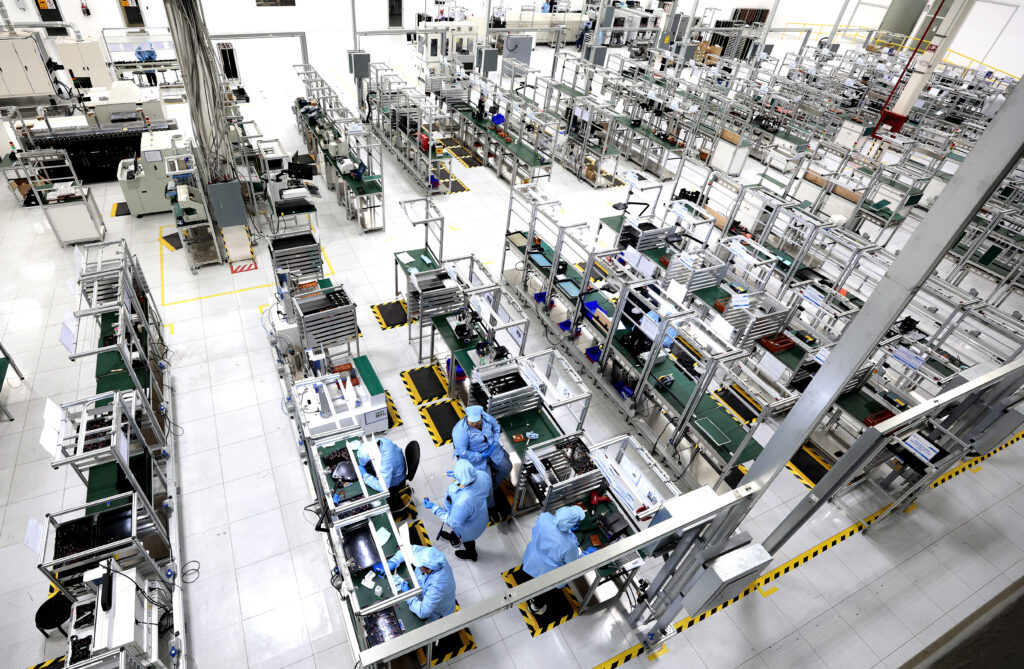
Taiwan will consider supporting its domestic industrythe government said Wednesday, after US President Donald Trump warned he will soon place tariffs on overseas-made semiconductor chips.The self-ruled island is a global power in the manufacturing of chips, which are used in products from Apple’s iPhones to Nvidia’s artificial intelligence hardware and are a key driver of its economy.”In the next day or two, we will urgently assess whether additional collaboration plans or support measures for the industry are needed,” Premier Cho Jung-tai told reporters.”Taiwan’s position in the global supply chain cannot be ignored, and we will continue to maintain this advantage.”Trump, who previously accused Taiwan of stealing the US chip industry, has threatened several key trade partners with tariffs in an attempt to drive companies to shift manufacturing to the United States.Speaking at a Republican congressional retreat in Miami on Monday, Trump warned the United States will soon place tariffs on foreign-made semiconductor chips, pharmaceuticals and metals such as steel.The levies could be implemented in the “very near future” so as to “return production of these essential goods to the United States of America”, he said.”They left us and they went to Taiwan… which is about 98 percent of the chip business… and we want them to come back,” he added.”The incentive is going to be they’re not going to want to pay a 25, 50 or even 100 percent tax.”Trump has previously criticised the CHIPS Act, a major law passed during former president Joe Biden’s tenure aimed at strengthening the US semiconductor industry and reducing the country’s reliance on Asian suppliers, including Taiwan.The United States finalised a deal to award Taiwanese chipmaking giant TSMC up to $6.6 billion in direct funding to help build “state-of-the-art facilities in Arizona”, officials said in November.Similar deals were struck with US chipmakers GlobalFoundries, Intel and South Korea’s SK Hynix before Trump took office, ensuring the funds can start flowing as companies reach milestones.TSMC, which is the world’s largest chipmaker, has long been under pressure to move more of its production away from Taiwan, where the bulk of its fabrication plants are located.While Taiwan is a self-ruled island, China claims it as part of its territory and has threatened to use force to bring it under its control.TSMC’s new factories overseas include three planned in the United States and one that opened in Japan last year.

Asian markets track Wall St bounce as Fed decision looms

Asian markets rose in holiday-thinned trade Wednesday, tracking a rally on Wall Street, where tech titans led by Nvidia recovered some of their hefty losses a day earlier as worries over Chinese AI startup DeepSeek subsided.Investors were also awaiting the conclusion of the Federal Reserve’s policy meeting later in the day as well as earnings from the likes of Microsoft and Tesla over the coming days.A sense of calm returned to trading floors after Monday’s rout, which was sparked by DeepSeek’s unveiling of its R1 chatbot that has apparently shown the ability to match the capacity of US AI pace-setters for a fraction of the investments made by American companies.The news hammered tech firms Monday, with US chip giant and market darling Nvidia collapsing almost 17 percent and wiping almost $600 billion from its market capitalisation — a record single-day loss for a publicly traded company.The firm has been at the forefront of a rush by investors into all things linked to AI, pushing it up around 1,900 percent in the past five years. However, Tuesday saw a tech sector rebound, with Nvidia climbing 8.8 percent as analysts said the selling may have been a little overdone and suggested a pullback in a recent rally may have been needed.Others said there were also doubts over whether DeepSeek’s AI was developed as cheaply as it claims.DeepSeek’s arrival raised questions about whether the vast sums of cash invested in AI in the past few years may have been overdone, but observers said the industry could benefit in the long term.Billionaire investment giant and founder of Point72 Asset Management Steve Cohen said the emergence of the startup could boost AI development.And Malik Ahmed Khan at Morningstar said he expected US companies to over time “replicate some of the AI techniques that DeepSeek leveraged to drive the cost of R1 down, as a means of reducing their own model training and inference costs, potentially lowering medium- to long-term capital expenditures”.All three main indexes rose Tuesday, with the Nasdaq putting on two percent and the S&P 500 almost one percent — both clawing back most of their losses.Tokyo followed suit, having taken a heavy hit over the previous two days as its chip companies tanked. There were also gains in Sydney, Wellington and Mumbai, though Bangkok dipped.Asia’s other markets were closed for holidays.The Fed’s policy meeting is expected to see it stand pat on interest rates but its post-meeting statement, and comments by boss Jerome Powell, will be pored over for an idea about the future as Donald Trump kicks off his second term.The US president has called on the bank to lower rates, but there are worries his plans to slash taxes, regulations and immigration — as well as impose tariffs on imports — will reignite inflation.The prospect of borrowing costs staying elevated boosted the dollar, which was given an extra lift Monday when Trump said he wanted universal tariffs “much bigger” than the 2.5 percent suggested by Treasury Secretary Scott Bessent.Traders are also awaiting the European Central Bank’s latest policy meeting, with some analysts expecting a small rate cut. – Key figures around 0630 GMT -Tokyo – Nikkei 225: UP 1.0 percent at 39,414.78 (close)Hong Kong – Hang Seng Index: Closed for a holidayShanghai – Composite: Closed for a holidayEuro/dollar: UP at $1.0438 from $1.0433 on TuesdayPound/dollar: UP at $1.2451 from $1.2440Dollar/yen: DOWN at 155.10 yen from 155.53 yen Euro/pound: DOWN at 83.83 pence from 83.84 pence West Texas Intermediate: DOWN 0.2 percent at $73.61 per barrelBrent North Sea Crude: DOWN 0.2 percent at $77.31 per barrelNew York – Dow: UP 0.3 percent at 44,850.35 (close)London – FTSE 100: UP 0.4 percent at 8,533.87 (close)

Sony names new CEO in management reshuffle

Japanese electronics and entertainment giant Sony Group said Wednesday that it has promoted Hiroki Totoki to chief executive officer as part of a wider management reorganisation.Totoki, 60, joined in 1987 and is currently Sony’s chief operating officer, finance chief and president. From April 1, he will succeed Kenichiro Yoshida, who will remain chairman, Sony said in a statement.It also announced “changes to its management structure to clarify management roles according to their responsibilities for the management of the entire Group or of each business”.This includes the appointment of Hideaki Nishino as president and CEO of the video games division and the designation of the heads of each division as a “Chief Officer”, it said.Yoshida and Totoki have overseen a greater focus on content — PlayStation games, anime, music and movies — which has helped Sony boost revenues and profits, Bloomberg News reported.”At our Corporate Strategy Meeting in May of last year, we newly announced our ‘Creative Entertainment Vision,’ which outlines where we want Sony to be in 10 years,” Totoki said in the statement.”Together with our employees, creators, partners, and our new leadership team, I will work to create a bright future filled with a boundless sense of Kando,” he said, referring to a Japanese concept of deriving enjoyment from creativity.