Afp Business Asia

China rebuffs Trump offer of tariff concessions if Beijing agrees TikTok deal

China rebuffed on Thursday a suggestion from US President Donald Trump that he might offer to reduce tariffs on the country to get Beijing’s approval for the sale of popular social media platform TikTok.Trump said this month the United States was in talks with four groups interested in acquiring TikTok, with the app facing an uncertain future in the country.A US law has ordered TikTok to divest from its Chinese owner ByteDance or be banned in the United States, enacted over concerns that Beijing could exploit the video-sharing platform to spy on Americans or covertly influence US public opinion.The law took effect on January 19, a day before Trump’s inauguration, but he quickly announced a delay that has allowed it to continue to operate.That delay is set to expire on April 5.Trump told reporters at the White House on Wednesday that he could give China “a little reduction in tariffs or something to get it done”.”We’re going to have a form of a deal,” Trump said, adding that if it wasn’t done in time, he would extend the deadline.”China is going to have to play a role in that, possibly in the form of an approval and I think they’ll do that.”Beijing swiftly rebuffed Trump’s suggestion, with its foreign ministry saying that it has “repeatedly stated our position” on TikTok.”The Chinese side’s stance against imposing additional tariffs is also consistent and clear,” foreign ministry spokesman Guo Jiakun said.- ‘People’s Bid for TikTok’ -Trump similarly attempted to ban TikTok in the United States on national security concerns during his first stint in the White House.TikTok temporarily shut down in the United States in January and disappeared from app stores as the deadline for the law approached, to the dismay of millions of users.Trump suspended its implementation for two-and-a-half months after beginning his second term on January 20, seeking a solution with Beijing.TikTok subsequently restored service in the United States and returned to the Apple and Google app stores in February.Artificial intelligence (AI) startup Perplexity recently expressed its interest in buying TikTok.Perplexity laid out in a blog post a vision for integrating its AI-powered internet search capabilities with the popular video-snippet sharing app.”Combining Perplexity’s answer engine with TikTok’s extensive video library would allow us to build the best search experience in the world,” the San Francisco-based firm said.Although TikTok does not appear overly motivated regarding the sale of the app, potential buyers include an initiative called “The People’s Bid for TikTok”, launched by real estate and sports tycoon Frank McCourt’s Project Liberty initiative.Others in the running are Microsoft, Oracle and a group that includes Internet personality MrBeast, whose real name is Jimmy Donaldson.”Any acquisition by a consortium of investors could in effect keep ByteDance in control of the algorithm, while any acquisition by a competitor would likely create a monopoly in the short form video and information space,” Perplexity said in its post.”All of society benefits when content feeds are liberated from the manipulations of foreign governments and globalist monopolists.”

Japan warns of ‘significant impact’ from US tariffs

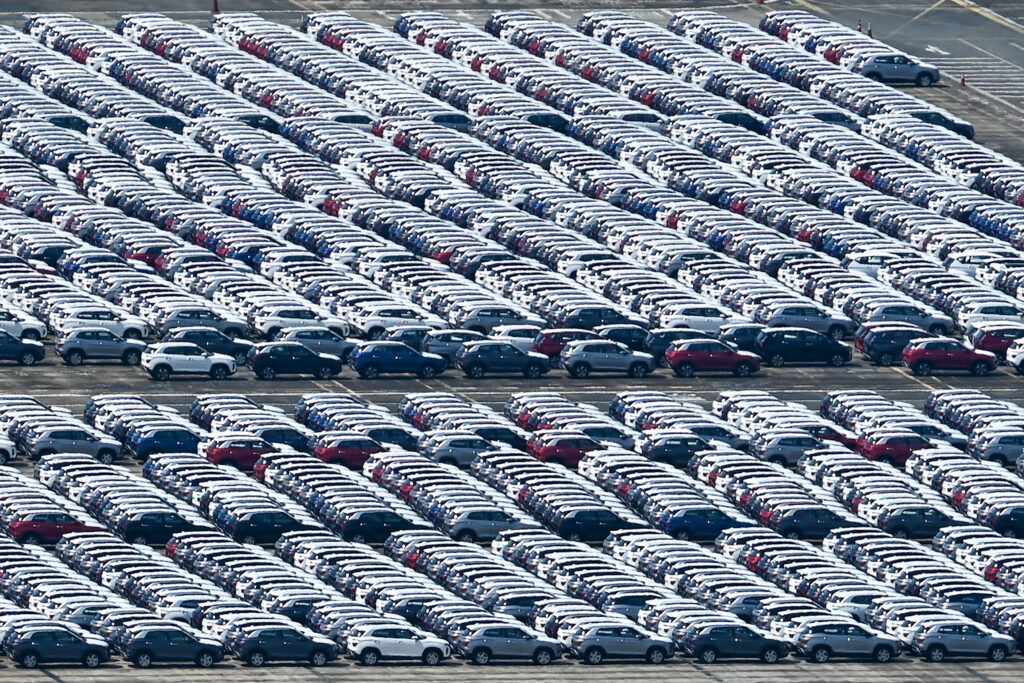
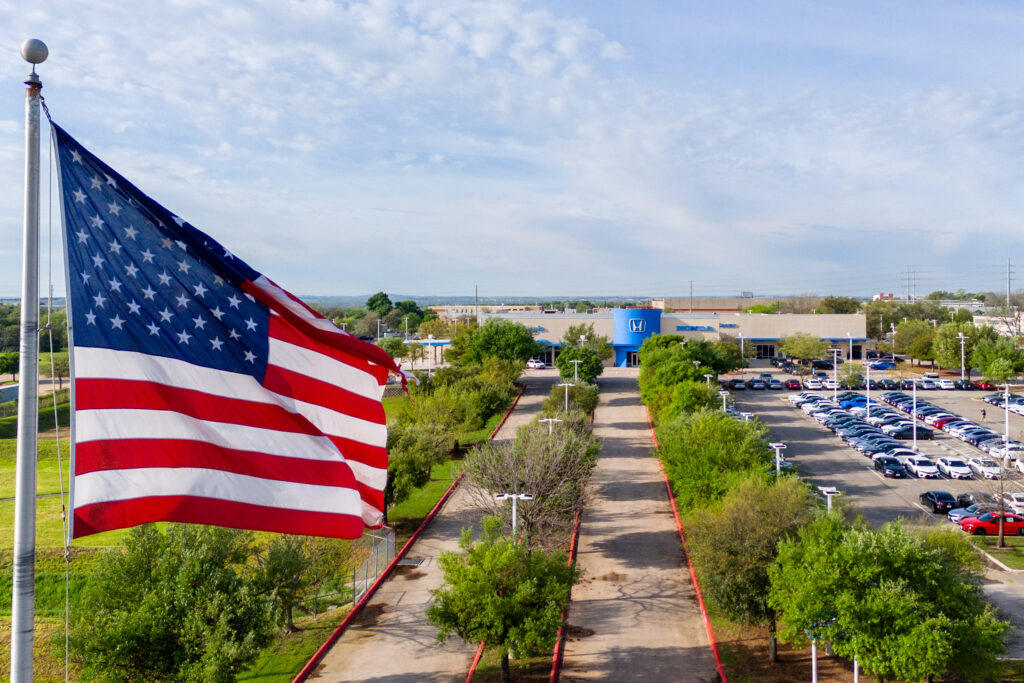
Japan’s government warned Thursday of a “significant impact” on its economic ties with the United States and on global trade, after President Donald Trump announced import tariffs on cars.Tokyo is one of Washington’s closest economic and strategic allies, with its firms the biggest investors in the United States and one in 10 Japanese jobs tied to the auto sector.Trump announced on Wednesday 25 percent tariffs “on all cars that are not made in the United States” effective 12:01 am (0401 GMT) eastern time on April 3.Prime Minister Shigeru Ishiba, who last month held friendly talks with Trump at the White House, said Japan was reviewing an “appropriate” response.”Japan has made significant investments and significant job creation, which doesn’t apply to all countries… We are the number one (country) in investment in the United States,” Ishiba added.”We believe that the current measures and other broad-based trade restrictions by the US government could have a significant impact on the economic relationship between Japan and the US, as well as on the global economy and the multilateral trading system,” government spokesman Yoshimasa Hayashi said.”In response to this announcement, we have again told the US government that this measure was extremely regrettable and we strongly urged the US government to exclude Japan from the scope of this measure,” Hayashi said.South Korea’s trade and industry minister Ahn Duk-geun held an emergency meeting with major automakers and others after Trump’s announcement, the government said.”The government will work closely with the industry to devise countermeasures and, in coordination with other ministries, announce a comprehensive emergency response plan for the auto sector in April,” Ahn said.- Shares down -Trump’s announcement hammered carmakers in Asia, although they later recovered some ground.The world’s top-selling automaker Toyota closed down 2.0 percent, while Nissan shed 1.7 percent and Honda was off 2.5 percent.In South Korea, Hyundai shares dipped 4.0 percent.Contacted by AFP, Toyota was not immediately available for comment on Thursday. Honda said it would “study the impact of the tariffs on our businesses, then we will take measures to minimise the impact”.- US-Japan ties -Vehicles accounted for around 28 percent of Japan’s 21.3 trillion yen ($142 billion) of US-bound exports in 2024.Japanese ministers have been lobbying their US counterparts to secure tariff exemptions for goods like steel and vehicles, but these requests have been denied.The Trump administration says levies will raise government revenue, revitalise American industry and press countries on US priorities.Critics say they will increase prices for US consumers.About 50 percent of cars sold in the United States are manufactured domestically. Japanese automakers account for around 16 percent of car imports into the United States, and South Koreans 15 percent.Takahide Kiuchi, an economist at Nomura, said that the 25-percent tariff will shrink Japan’s economy by around 0.2 percent. “It would encourage a contraction of domestic production and employment and encourage a hollowing out of the economy,” Kiuchi said.Seiji Sugiura, senior analyst at Tokai Tokyo Intelligence Laboratory, estimated that the tariffs could collectively mean an additional cost of $11.4 billion for Japan’s top six automakers.”This is very high-impact,” Sugiura told AFP. “Against that, the automakers have not issued anything about how they plan to deal with it.””I have some clients in the auto industry. I think there will be a big impact. I will see some impact on myself, even though it will probably be indirect, because 25 percent is pretty big,” said Hiroki Ito, an IT company employee.”Of course we have different opinions, but I hope (Japan and the US) can find some common grounds to compromise so that we could solve issues in a calm manner,” Ito told AFP.burs-stu/tc

Trump announces 25% tariffs on foreign-built vehicles

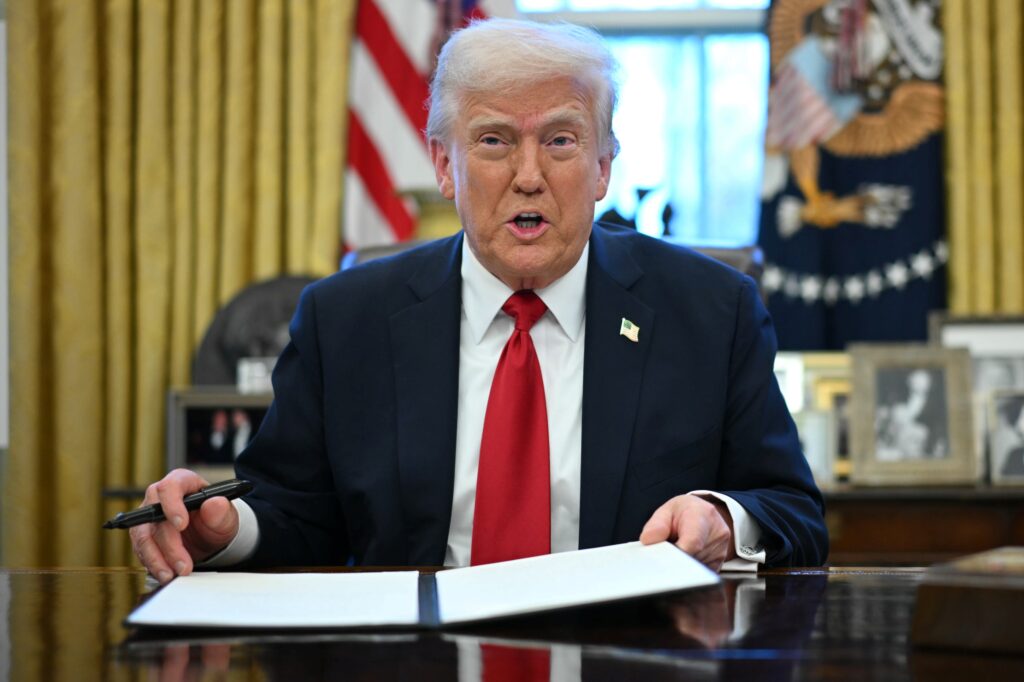
US President Donald Trump has announced steep tariffs on auto imports and parts, provoking threats of retaliation from trading partners ahead of further promised trade levies next week.Wall Street slumped ahead of Trump’s Wednesday afternoon announcement, while the world’s top-selling automaker Toyota plunged more than three percent.Japan’s Prime Minister Shigeru Ishiba said Tokyo was “considering all kinds of countermeasures”, while Canada’s Mark Carney branded Trump’s tariffs a “direct attack” on his country’s workers.Brazil’s President Luiz Inacio Lula da Silva also said his country “cannot stand still” in response to the levies.”What we’re going to be doing is a 25 percent tariff on all cars that are not made in the United States,” Trump said, as he signed the order in the Oval Office.The duties take effect at 12:01 am (0401 GMT) on April 3 and impact foreign-made cars and light trucks. Key automobile parts will also be hit within the month.Trump responded by threatening Canada and the European Union with “large scale tariffs, far larger than currently planned” if they work together to cause “economic harm” to the United States.Peter Navarro, Trump’s senior counselor for trade and manufacturing, in a briefing after Trump’s announcement blasted “foreign trade cheaters” who he said turned America’s manufacturing sector into a “lower wage assembly operation for foreign parts.”He took aim at Germany and Japan for reserving the construction of higher-value parts to their countries.But Washington’s levies appeared to raise eyebrows close to home, including from Trump ally and Tesla boss Elon Musk, who said the cost impact on his firm’s cars was “not trivial”.”To be clear, this will affect the price of parts in Tesla cars that come from other countries. The cost impact is not trivial,” he posted on X.The association of American Automakers said in a statement on Wednesday that Trump’s tariffs must be implemented in a way that “avoids raising prices for consumers” and preserves the industry’s competitiveness. Since beginning his second term in January, Trump has imposed fresh tariffs on imports from major US trading partners Canada, Mexico and China — alongside a 25 percent duty on steel and aluminum.The latest levies will be in addition to those already in place for products.But the White House added that vehicles entering under the US-Mexico-Canada Agreement (USMCA) can qualify for a lower rate depending on their American content.Similarly, USMCA-compliant auto parts will remain tariff-free as officials establish a process to target their non-US content.- ‘Devastating impact’ -Uncertainty over Trump’s trade plans and worries they could trigger a downturn have roiled financial markets, with consumer confidence also falling in recent months.Shares in General Motors and Stellantis were each down more than three percent ahead of Trump’s announcement.In Japan, carmakers Nissan lost 2.5 percent, Honda shed 3.1 percent and Mitsubishi Motors gave up 4.5 percent, while Mazda and Subaru both gave up around six percent.South Korea’s Hyundai retreated 2.7 percent in Seoul.Trump has defended the levies as a way to raise government revenue and revitalize American industry.But targeting imported cars could strain ties with close partners such as Japan, South Korea, Canada, Mexico and Germany.”Imposing 25 percent tariffs on imported cars will have a devastating impact on many of our close trading partners,” said Wendy Cutler, vice president at the Asia Society Policy Institute and a former US trade negotiator.She added that Washington has free-trade agreements with some affected parties, “calling into question the value of US commitments” under a trade deal.About 50 percent of cars sold in the United States are manufactured within the country. Among imports, about half come from Mexico and Canada, with Japan, South Korea and Germany also being major suppliers.And of the US-made cars, more than half were assembled from foreign parts, said a White House official.The American Automotive Policy Council representing Detroit’s “Big Three” automakers — Ford, General Motors and Stellantis — issued a carefully worded statement on the tariffs, saying it hoped the policy would boost US auto production.But it stressed: “It is critical that tariffs are implemented in a way that avoids raising prices for consumers.”The Center for Automotive Research has previously estimated that US tariffs –- including those on metals and imported autos –- could increase the price of a car by thousands of dollars and weigh on the jobs market.- ‘Liberation Day’ -Besides the automobile industry, Trump is also eyeing sector-specific tariffs, such as on pharmaceuticals, semiconductors and lumber.Wednesday’s announcement comes ahead of Trump’s so-called “Liberation Day” for the world’s biggest economy on April 2.He has promised reciprocal levies, tailored to different trading partners to remedy practices Washington deemed unfair. On Wednesday he said these duties will impact all countries.While Trump has invoked emergency economic powers for some recent tariffs, his auto levies build on a government investigation completed in 2019.The probe found that excessive imports were weakening the internal economy and might impair national security.

Autos lead Asian market losses after Trump’s latest tariffs salvo

A plunge in automakers hit Asia equities Thursday after Donald Trump announced painful tariffs on all imported vehicles and parts as he presses hardball trade policies many fear will spark a recession.Indications that levies lined up for the president’s “Liberation Day” on April 2 would be less severe than feared had given investors a little hope, and helped markets chalk up much-needed gains.However, the White House’s habit of alternating between tough talk and leniency has fanned uncertainty, and the latest announcement did little to soothe nerves.”What we’re going to be doing is a 25 percent tariff on all cars that are not made in the United States,” he said as he signed an order in the Oval Office.The move takes effect at 12:01 am eastern time (0400 GMT) on April 3 and impacts foreign-made cars and light trucks. Key automobile parts will also be hit within the month.About half of the cars sold in the United States are made within the country. Of the imported motors, about half come from Mexico and Canada, with Japan, South Korea and Germany also major suppliers.Japan’s government called the tariffs “extremely regrettable” while Canadian Prime Minister Mark Carney called it a “direct attack” on his country’s workers.There was little comfort in Trump’s comments that reciprocal measures lined up for next week could be “very lenient”.The auto news hammered carmakers in Asia.In Tokyo, Toyota and Honda shed more than three percent while Nissan was off 2.5 percent. Seoul-listed Hyundai gave up more than four percent.US-listed car giants also tumbled with General Motors, Ford and Stellantis all deep in the red in after-hours trade.”It’s a stark reminder: Trump’s not bluffing — or at least he’s doing a damn good job pretending he’s not,” said SPI Asset Management’s Stephen Innes. “And if he goes full throttle with this round of tariffs — especially the reciprocal measures slated for April 2 — markets are staring down the barrel of the worst-case macro cocktail: faster inflation, slower growth and a fresh wave of volatility.The retreat in the auto sector hit broader markets, which were already shaky owing to worries over Trump’s trade agenda.Tokyo and Seoul almost one percent, with Sydney, Wellington, Taipei and Manila also down.However, Hong Kong and Shanghai eked out gains with SingaporeThere was a little cheer after Trump told reporters at the White House that he might offer to reduce tariffs on China to get Beijing’s approval for the sale of popular social media platform TikTok.Earlier this month, Trump said Washington was in talks with four groups interested in buying TikTok, which has been in limbo after a US law ordered it to divest from its Chinese owner ByteDance or be banned in the country owing to national security concerns.The broadly negative day followed losses on all three of Wall Street’s main indexes ahead of the president’s announcement, with the CBOE Volatility Index — or “fear gauge” — jumping almost seven percent.Market jitters were compounded by data Tuesday showing consumer sentiment had fallen to its lowest level since 2021 as concerns about higher prices increase.- Key figures around 0230 GMT -Tokyo – Nikkei 225: UP 0.9 percent at 37,674.03 (break)Hong Kong – Hang Seng Index: UP 0.6 percent at 23,624.74Shanghai – Composite: UP 0.2 percent at 3,374.63Euro/dollar: UP at $1.0766 from $1.0757 on WednesdayPound/dollar: UP at $1.2900 from $1.2891Dollar/yen: DOWN at 150.11 yen from 150.54 yenEuro/pound: UP at 83.46 pence from 83.41 penceWest Texas Intermediate: UP 0.1 percent at $69.72 per barrelBrent North Sea Crude: UP 0.1 percent at $73.85 per barrelNew York – Dow: DOWN 0.3 percent at 42,454.79 (close)London – FTSE 100: UP 0.3 percent at 8,689.59 (close) 

Global stocks drop ahead of Trump auto tariff announcement

Global stock markets mostly slipped Wednesday as investors readied for an announcement on auto tariffs from US President Donald Trump. In New York, all three major indices closed lower, while the CBOE Volatility Index — Wall Street’s so-called “fear gauge” — jumped seven percent, reflecting market jitters.”It’s the continuation of worries regarding the tariffs and the impact on the economy,” Peter Cardillo from Spartan Capital Securities told AFP.In Europe, Paris and Frankfurt closed down while London edged up as data showed an unexpected slowdown to UK annual inflation.- Incoming auto tariffs -With the White House’s so-called “Liberation Day” on April 2 fast approaching, investors are bracing for a wave of sweeping levies on imports amid warnings of crippled global trade, a fresh spike in inflation, and even a possible recession. Trump has alternated between tough talk about imposing tariffs across the board to suggesting he may allow some carve-outs to spare US consumers the full brunt of their impact on prices.The result has been a drop in economic sentiment as consumers expect higher prices. “All the tariff talk uncertainty has led to a sharp drop in confidence,” said Trade Nation analyst David Morrison.On Wednesday, White House Press Secretary Karoline Leavitt said that Trump would unveil new tariffs on the auto industry at 4:00 pm local time in Washington (2000 GMT), setting off a sell-off in the stocks of several firms, including General Motors and Tesla.Trump’s tariff plans have hit consumer sentiment hard, with the Conference Board reporting Tuesday that its closely-watched gauge of consumer confidence dived to its lowest level since 2021 as concerns grow about higher prices.”Recent survey data has painted a gloomy outlook for the US economy,” Morrison said. “But this pessimism has yet to show up in hard data, such as unemployment, while corporate earnings continue to beat expectations.”- Defense stocks rise -While most European markets fell, defense stocks bucked the trend, as one country after another has pledged to boost military spending, with Spain and Sweden being the latest to do so Wednesday.France’s Thales, Germany’s Rheinmetall and Italy’s Leonardo all rose. London’s stock market closed up on the news that Britain’s annual consumer inflation slowed to 2.8 percent in February from 3.0 percent a month earlier.The market held onto its gains even after the British government’s financial watchdog halved the country’s growth forecast for 2025, while raising it for the next three years.Trump’s talk of tariff exemptions had earlier helped some Asian markets edge higher after recent slumps. Copper futures traded on New York’s Comex exchange touched a record high after Trump said he could impose duties on imports of the commodity within weeks, leading some investors to shift supply to the United States to avoid any eventual levies.- Key figures around 2020 GMT -New York – Dow: DOWN 0.3 percent at 42,454.79 points (close)New York – S&P 500: DOWN 1.1 percent at 5,712.20 (close)New York – Nasdaq Composite: DOWN 2.0 percent at 17,899.02 (close)London – FTSE 100: UP 0.3 percent at 8,689.59 (close) Paris – CAC 40: DOWN 1.0 percent at 8,030.68 (close)Frankfurt – DAX: DOWN 1.2 percent at 22,839.03 (close) Tokyo – Nikkei 225: UP 0.7 percent at 38,027.29 (close)Hong Kong – Hang Seng Index: UP 0.6 percent at 23,483.32 (close)Shanghai – Composite: DOWN less than 0.1 percent at 3,368.70 (close)Euro/dollar: DOWN at 1.0757 from $1.0790 on TuesdayPound/dollar: DOWN at $1.2891 from $1.2943Dollar/yen: UP at 150.54 yen from 149.90 yenEuro/pound: UP at 83.41 pence from 83.37 penceBrent North Sea Crude: UP 1.1 percent at $73.79 per barrelWest Texas Intermediate: UP 0.9 percent at $69.65 per barreldan-ajb-ni-da/jgc

Tesla troubles: Speed bump or early signs of impending crash?

Tesla, the Elon Musk-run auto company, has had a turbulent time recently, fueled by its chief executive’s close ties to Donald Trump and increased electric vehicle competition.The mounting issues have sent the company’s share price tumbling in recent weeks. Here are some of the biggest challenges it faces: – Pole position under threat -Gone are the days when Tesla was far and away the world leader in electric vehicle sales.China’s BYD is now snapping at Tesla’s heels, selling 1.76 million vehicles in 2024 — up 12 percent year-on-year — to Tesla’s 1.79 million, a one percent decline.Including hybrid vehicles, BYD’s revenues actually exceeded the US auto maker’s last year, $107.2 billion to $97.7 billion.To make matters worse, Musk’s leading role in the Trump administration — and vocal support for far-right politics in Europe — appears to be hampering Tesla’s bottom line.The company’s registrations fell 49 percent year-on-year in January and February in the European Union.Tesla has “moderated” its initial forecast of a 20-to-30 percent sales increase in 2025, according to CFRA Research analyst Garrett Nelson. “We’re looking at a 5 percent decline but it could be much more than that,” he told AFP.- Potholes -In the United States, France, and Germany, Tesla stores, charging stations and vehicles have been vandalized in recent weeks.Protests have also been called in which participants have criticized the world’s richest person for his heavy hand in US and international politics. In New York, one recent sign asserted that “Tesla finances fascism” and called for a boycott of its cars.And in Germany, where an arson attack in March 2024 halted production at Tesla’s plant in Germany, Musk has come under heavy criticism for his support of the far-right Alternative for Germany (AfD) party in the parliamentary elections.”The biggest concern now is regarding the brand value,” said Nelson from CFRA. “Picking a side, Republican or Democrat, can really do a lot of damage,” he added, pointing to the way Tesla’s stock had fallen “dramatically,” losing around a third of its value since the start of the year.Tesla is also suffering because the range of vehicles it has for sale has remained largely unchanged since the Model Y was released in 2020.”Lack of innovation, lack of new models,” Nelson said, adding this was a “big reason why Tesla has lost market share in China to BYD.”The Cybertruck was the only new model to be released recently, but its sales had been “very disappointing,” he said. The pickup truck, which was plagued by delays, was finally released at the end of 2023, but has since suffered a series of recalls. The latest, on March 20, concerned all 46,096 Cybertrucks currently in circulation, whose body panels were in danger of coming unstuck.Tesla’s long-promised low-cost model still seems to be a long way off. – Escape routes -The brand’s salvation could come from its full self-driving (FSD) feature, where it has a “major advantage” that represents a “huge market opportunity,” with a global market estimated at $5 trillion, Nelson said.He thinks Tesla is in a stronger position than Google’s Waymo, whose robotaxis have operated in several US cities since 2010.However, the company’s much-trailed Cybercab competitor is still several months away from starting road trials in Austin, Texas.The Trump administration is preparing a “new” federal regulatory framework for fully autonomous driving, Nelson said, adding it has also begun to reduce support for the energy transition, which should benefit Tesla given its comparative advantage in the United States.In his view, Tesla and Musk both enjoy the unwavering loyalty of shareholders, but to reassure them, some sort of senior executive should be appointed to take care of the day-to-day running of the company from Musk.”He is spending most of his time in Washington, D.C., right now,” Nelson said.”He is less focused on the day to day of what’s happening operationally at such a critical time in Tesla’s history.”

Global stocks drop as US tariff uncertainty lingers

Global stock markets mostly slipped Wednesday as investors digested conflicting signals from President Donald Trump about his coming wave of tariffs.In New York, the Dow was little changed but the wider S&P 500 and the tech-heavy Nasdaq were lower in midday deals. In Europe, Paris and Frankfurt closed down while London edged up as data showed an unexpected slowdown to UK annual inflation.With the White House’s so-called “Liberation Day” on April 2 fast approaching, investors are bracing for a wave of sweeping levies on imports amid warnings of crippled global trade, recession and a fresh spike in inflation.But Trump has alternated between tough talk about imposing tariffs across the board to suggesting he may allow some carve-outs to spare US consumers the full brunt of their impact on prices.The result has been a drop in economic sentiment as consumers expect higher prices. “All the tariff talk uncertainty has led to a sharp drop in confidence,” said David Morrison, analyst at Trade Nation. The president told Newsmax on Tuesday that he did not “want to have too many exceptions” but added: “I’ll probably be more lenient than reciprocal, because if I was reciprocal, that would be very tough for people.”The Conference Board reported Tuesday that its closely watched gauge of consumer confidence dived to its lowest level since 2021 — during the Covid pandemic — as concerns grow over higher prices.”Recent survey data has painted a gloomy outlook for the US economy. But this pessimism has yet to show up in hard data, such as unemployment, while corporate earnings continue to beat expectations,” Morrison said.The figures come as the Federal Reserve re-evaluates its monetary policy in light of Trump’s tariffs agenda, with some analysts warning it might have to hold off any interest rate cuts this year.The next major clue on its outlook comes Friday with the release of a key inflation indicator.While almost all European markets fell, defence stocks bucked the trend as one country after another pledges to boost military spending, with Spain and Sweden being the latest to do so Wednesday.France’s Thales, Germany’s Rheinmetall and Italy’s Leonardo were all sharply higher.London’s stock market rose after news that the country’s annual consumer inflation slowed to 2.8 percent in February from 3.0 percent in January.The market held onto its gains even after finance minister Rachel Reeves cut the country’s growth forecast in half to one percent as she announced spending cuts, as she raised the outlook for the subsequent three years.”She appears to have done the trick of not unnerving investors further,” said Susannah Streeter, head of money and markets at Hargreaves Lansdown.  Trump’s talk of tariff exemptions had earlier helped some Asian markets edge higher after recent slumps. Copper futures traded on New York’s Comex exchange touched a record high after Trump said he could impose duties on imports of the commodity within weeks, leading some investors to shift supply to the United States to avoid any eventual levies.- Key figures around 1700 GMT -New York – Dow: DOWN 0.1 percent at 42,543.75 points New York – S&P 500: DOWN 0.9 percent at 5,726.12 New York – Nasdaq Composite: DOWN 1.7 percent at 17,964 London – FTSE 100: UP 0.3 percent at 8,689.59 (close) Paris – CAC 40: DOWN 1.0 percent at 8,030.68 (close)Frankfurt – DAX: DOWN 1.2 percent at 22,839.03 (close) Tokyo – Nikkei 225: UP 0.7 percent at 38,027.29 (close)Hong Kong – Hang Seng Index: UP 0.6 percent at 23,483.32 (close)Shanghai – Composite: FLAT at 3,368.70 (close)Euro/dollar: UNCHANGED from Tuesday at $1.0790 Pound/dollar: DOWN at $1.2897 from $1.2943Dollar/yen: UP at 150.54 yen from 149.90 yenEuro/pound: UP at 83.67 pence from 83.37 penceBrent North Sea Crude: UP 1.2 percent at $73.88 per barrelWest Texas Intermediate: UP 1.3 percent at $69.87 per barrel

Apple says Indonesia iPhone sales ban ends in April

Teach giant Apple announced on Wednesday the iPhone 16 will be available in Indonesia from next month, indicating the sales ban in Southeast Asia’s biggest economy had been lifted.The government in October prohibited the marketing and sale of the model over the US tech titan’s failure to meet regulation requiring 40 percent of phones be made from local parts. However, Apple struck a deal with the Indonesian government last month to invest in the country of 280 million after months of deadlock. “Today, Apple announces that all iPhone 16 series… will be available starting from Friday, April 11,” the company said in a statement.The industry ministry did not respond to AFP’s request for comment.The ministry said this month it had approved local certificates for more than a dozen Apple products. Last week, The Ministry of Communication and Digital Affairs said Apple has also obtained a certificate needed for all telecommunication devices with transmission. Jakarta rejected a $100 million investment proposal from Apple in November, saying it lacked the “fairness” required by the government. Apple later agreed to invest $150 million in building two facilities — one in Bandung in West Java province to produce accessories, and another in Batam for AirTags. Industry Minister Agus Gumiwang Kartasasmita said last month that Apple had also committed to building a semiconductor research and development centre in Indonesia, calling it a “first of its kind in Asia”. Despite the ban on iPhone sales in Indonesia, the government had allowed the devices to be brought in if they were not being traded commercially. Indonesia has also banned the sale of Google Pixel phones for failing to meet the 40 percent local parts requirement.

Global stocks mixed as US tariff uncertainty lingers

Global stock markets diverged Wednesday as investors remained cautious following conflicting signals from President Donald Trump about his coming wave of tariffs.New York’s main indexes opened mixed while shares in Paris and Frankfurt dropped.London edged up as data showed an unexpected slowdown to UK annual inflation.With the White House’s “Liberation Day” on April 2 fast approaching, investors are bracing for a wave of sweeping levies on imports amid warnings of crippled global trade, recession and a fresh spike in inflation.But Trump has alternated between tough talk about imposing tariffs across the board to suggesting he may allow some carve-outs to spare US consumers the full brunt of their impact on prices.”All the tariff talk uncertainty has led to a sharp drop in confidence,” said David Morrison, analyst at Trade Nation. “Recent survey data has painted a gloomy outlook for the US economy. But this pessimism has yet to show up in hard data, such as unemployment, while corporate earnings continue to beat expectations,” Morrison added.The president told Newsmax on Tuesday that he did not “want to have too many exceptions” but added: “I’ll probably be more lenient than reciprocal, because if I was reciprocal, that would be very tough for people.”The Conference Board reported Tuesday that its closely watched gauge of consumer confidence dived to its lowest level since 2021 — during the Covid pandemic — as concerns grow over higher prices.The figures come as the Federal Reserve re-evaluates its monetary policy in light of Trump’s tariffs agenda, with some analysts warning it might have to hold off any interest rate cuts this year.Wall Street’s Dow index was up in morning trading, the wider S&P 500 was unchanged, and the tech-heavy Nasdaq was down slightly.While almost all European markets were lower in mid-afternoon trading on the tariff uncertainty, defence stocks bucked the trend as one country after another pledges to boost military spending, with Spain and Sweden being the latest to do so Wednesday.France’s Dassault Aviation and Thales, Germany’s Rheinmetall, and Italy’s Leonardo were all sharply higher.London’s stock market rose after news that the country’s annual consumer inflation slowed to 2.8 percent in February from 3.0 percent in January.While that was a boost to finance minister Rachel Reeves, prices later gave up some of their gains after the country’s growth forecast was cut in half to one percent as she announced spending cuts. Trump’s talk of tariff exemptions had earlier helped some Asian markets edge higher after recent slumps. Copper futures traded on New York’s Comex exchange touched a record high after Trump said he could impose duties on imports of the commodity within weeks, leading some investors to shift supply to the US to avoid any eventual levies.- Key figures around 1340 GMT -New York – Dow: UP 0.4 percent at 42,753.15 points New York – S&P 500: FLAT at 5,778.45 New York – Nasdaq Composite: DOWN 0.2 percent at 18,230.40 London – FTSE 100: UP 0.2 percent at 8,683.18 Paris – CAC 40: DOWN 0.8 percent at 8,046.20Frankfurt – DAX: DOWN 0.7 percent at 22,939.11 Tokyo – Nikkei 225: UP 0.7 percent at 38,027.29 (close)Hong Kong – Hang Seng Index: UP 0.6 percent at 23,483.32 (close)Shanghai – Composite: FLAT at 3,368.70 (close)Euro/dollar: DOWN at $1.0772 from $1.0791 on TuesdayPound/dollar: DOWN at $1.2875 from $1.2943Dollar/yen: UP at 150.45 yen from 149.90 yenEuro/pound: UP at 83.65 pence from 83.37 penceBrent North Sea Crude: UP 1.0 percent at $73.77 per barrelWest Texas Intermediate: UP 1.0 percent at $69.72 per barrel

China drinks chain Mixue profits spike 40% in 2024

Chinese drinks company Mixue Group, which has surpassed McDonald’s and Starbucks in store count to become the world’s largest food and beverage chain, reported a spike in profits on Wednesday as it laid out further expansion plans.The results came after Mixue raised $444 million in a bumper Hong Kong listing, with the stock jumping more than 40 percent on its March 3 debut and trading at around double its offer price this week.The firm — known for beverages usually priced around $1 — had 41,584 stores in China and another 4,895 spread across 11 countries as of the end of last year, Mixue said in an exchange filing on Wednesday.Revenue increased 22 percent to $3.4 billion in 2024, which the company attributed mostly to “increased revenue generated from sales of goods and equipment, and to a lesser extent, from franchise and related services”.Profit for the year jumped 40 percent to $613 million.Mixue, whose name translates to “honey snow ice city”, was founded by two brothers in the Chinese hinterland province of Henan in 1997 as a shaved ice shop.The Zhengzhou-headquartered firm quickly expanded across China and became a hit with frugal young consumers, disrupting a sector once dominated by premium brands.Mixue stores — recognisable by their bright red signs and smiling snowman mascot — became ubiquitous in lower-income Chinese cities, offering freshly made fruit drinks, tea drinks, ice cream and coffee.Nearly 60 percent of Mixue stores in China are in cities categorised by the company as “third-tier or below”.Mixue says it relies on a franchise model to grow its brick-and-mortar network, but “franchise and related service fees are not our primary sources of revenue”.Instead, it makes most of its money from supplying food materials, equipment and packaging needed to run its stores.The company said Wednesday that it will “continue to elevate the breadth and depth of our supply chain” in China, while remaining “focused on cultivating the Southeast Asia market”.