Afp Business Asia

Trump tariffs spark fears for Asian jobs, exporting sectors

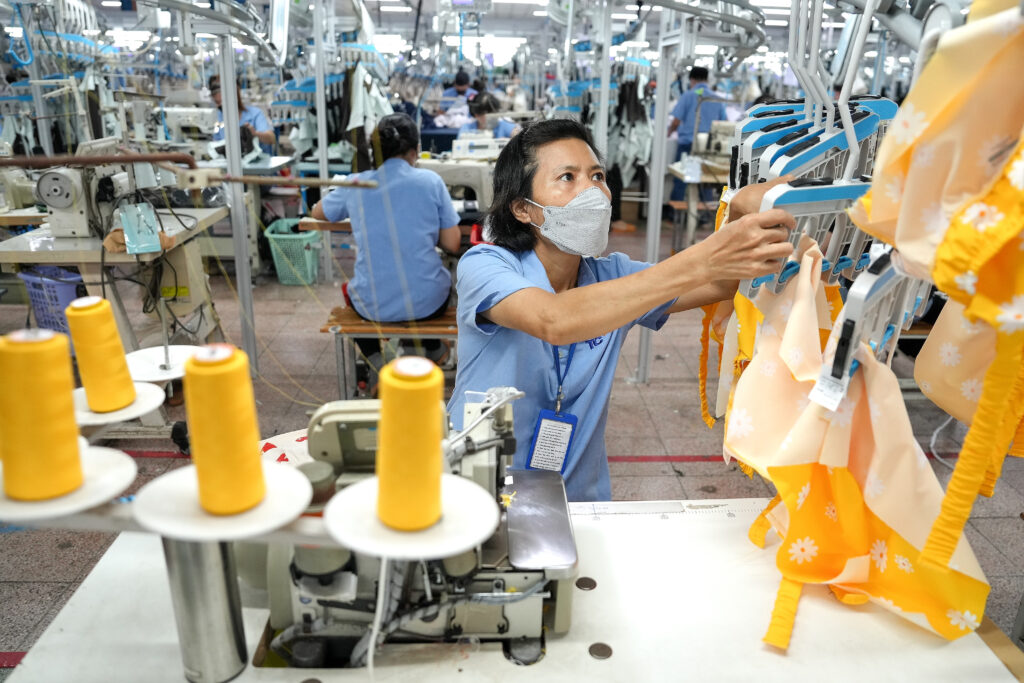
Across Asia, factory workers, directors, trade associations and analysts voiced concern Thursday that US President Donald Trump’s stinging tariffs could put jobs at risk and hammer key sectors of industry.Trump ramped up a global trade war as he imposed sweeping levies on imports into the United States on Wednesday, sparking worries about what the implications might mean for workers and businesses.”I can’t eat or sleep well because I keep worrying about losing my job,” said Cao Thi Dieu, who helps make shoes for Western brands such as Nike and Adidas at a factory in Ho Chi Minh City.Vietnam was hammered with huge tariffs of 46 percent as part of Trump’s global trade blitz, which sent shares tumbling more than seven percent in Hanoi on Thursday.Dieu, 38, feared the tariffs would impact the job she has been doing for two decades.”How will I manage if I lose my job? How will I continue earning money each month to take care of my two children’s education?” she said.”I only want to stay in the shoe manufacturing job because I don’t know how to do other work.”Erik Hon, 45, a director at a financial technology firm in Singapore, thought the tariffs would drive up global inflation.”It is dangerous for everyone to have the most powerful country in the world going back to isolationism and trying to tame (a) China that is inevitably going to take over its world leadership position,” he added.Alicia Garcia-Herrero, chief economist for Asia Pacific at investment managers Natixis in Hong Kong, warned the tariffs could backfire.”The largest loser is the US, because everybody’s being taxed so there’s no escape for higher inflation,” she said.- ‘Worst-case scenario’ -Chrissy Chan, 48, a business owner in Malaysia, told AFP she was worried it would cost her more to travel to the United States to visit her family.But she said the tariff rates “do not make sense to me… I won’t be surprised if the Trump admin does another backpedal”.Chin Chee Seong, president of the SME (small and medium enterprises) Association of Malaysia said the higher tariffs on other countries might give Malaysian firms a competitive advantage.However, “we import a lot of IT products from the US”, he told AFP.”If we impose a reciprocal tariff, the end user here will pay more. We will suffer. It works both ways.”Taiwan had sought to avoid Trump’s levies by pledging increased investment in the United States, more purchases of US energy, and greater defence spending.But Trump unleashed a hefty 32 percent levy on Taiwanese imports, and while the island’s all-important semiconductor shipments were excluded, Taipei described the move as “unfair”.”The 32 percent really came as a surprise and I think our government was caught off guard,” said Jason Hsu, senior fellow at the Hudson Institute think-tank and a former legislator in Taiwan for the opposition Kuomintang party.”The implications are actually pretty big. I think the government has to think deeply about how to deal with Trump in the next four years with a completely new mindset.”Andrew Kam Jia Yi, an associate professor at the National University of Malaysia, expected Taiwan to lobby for more exemptions.Trump “gives you the worst-case scenario then batters you down to a deal that you might not want but seems more reasonable than the original threat”, he said.burs-rjm/dan
Stocks and dollar sink, havens rally as Trump tariffs fan trade war

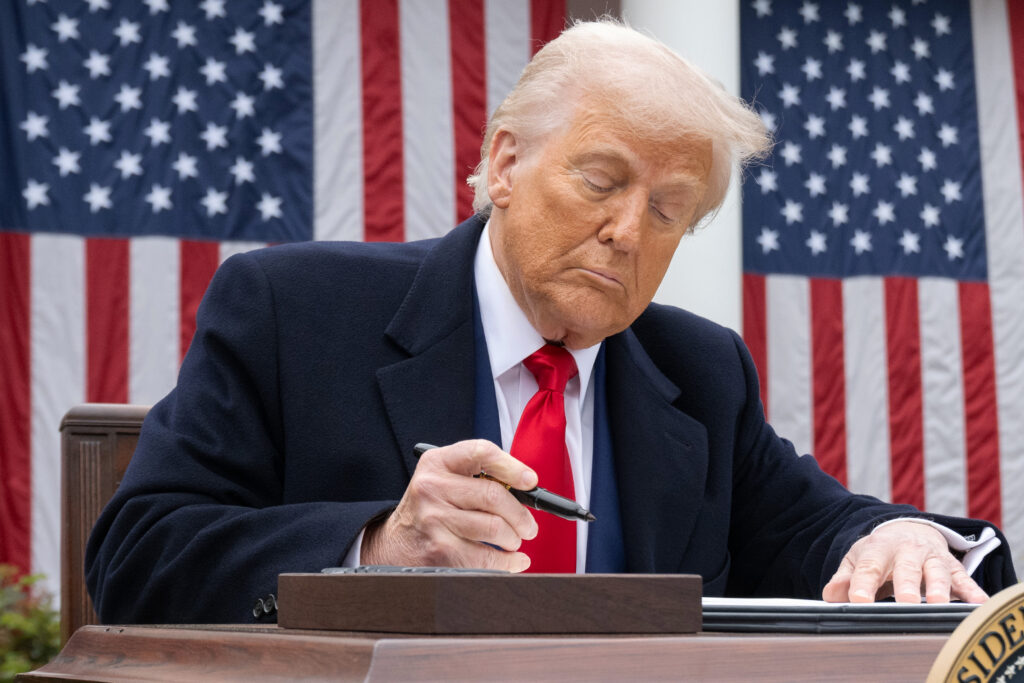
Equity markets tumbled Thursday after Donald Trump delivered a “haymaker” blow with sweeping tariffs against US partners and rivals, fanning a global trade war that many fear will spark recessions and ramp up inflation.Tokyo’s Nikkei briefly collapsed more than four percent, while US futures plunged with oil prices, safe haven gold hit a record high and the dollar retreated amid worries retaliatory measures will batter economies. The panic came after the US president unveiled a blitz of harsher-than-expected levies aimed at countries he said had been “ripping off” the United States for years.Against a backdrop of US flags, Trump said that “for decades, our country has been looted, pillaged, raped and plundered by nations near and far, both friend and foe alike”.The measures included a 34 percent tariff on rival China, 20 percent on key ally the European Union and 24 percent on Japan.A number of others will face specifically tailored tariff levels, and for the rest, Trump said he would impose a “baseline” tariff of 10 percent. Auto tariffs of 25 percent meanwhile kicked in Thursday.Investors are bracing for retaliatory measures, with governments making their anger clear.China vowed “countermeasures” and urged Washington to cancel the tariffs, while calling for dialogue. Japan said the move was “extremely regrettable” and could contravene World Trade Organization rules, while Taiwan described the levies as “highly unreasonable”. European Union chief Ursula von der Leyen called Trump’s announcement a “major blow to the world economy” but vowed the bloc was “prepared to respond”. And France said Brussels was “ready for a trade war” and plans to target online services in response.Thailand said it had a “strong plan” to handle the new US measures and hopes to negotiate a reduction, while Canadian Prime Minister Mark Carney warned “we are going to fight these tariffs with counter measures”.”We are going to protect our workers,” Carney said. – ‘Shock and awe’ -Stephen Innes of SPI Asset Management said: “President Trump walked into the Rose Garden and detonated the most aggressive trade shock the market’s seen in decades. This isn’t a jab — it’s a full-on haymaker.”Wall Street “had talked itself into a softer, more symbolic move. Instead, Trump carpet-bombed the global supply chain”.”This was a ‘shock and awe’ tariffs campaign, dressed up in ‘reciprocity’ language but designed to throttle the trade deficit through brute force.”He said the measures meant inflation risks had surged and economic growth expectations would be cut, with the Federal Reserve “pinned between a hawkish rock and a deflationary hard place”.Tokyo pared its hefty drop but still ended down 2.8 percent, while Hong Kong, Sydney, Seoul, Manila, Mumbai, Shanghai and Singapore also fell. However, Wellington managed to eke out a small gain as New Zealand faced smaller tariffs.London, Paris and Frankfurt all tumbled more than one percent, while Vietnam’s stock exchange dived 7.8 percent after the country was hit with levies of almost 50 percent.Wall Street futures were also battered, with the Dow dropping two percent, the Nasdaq plunging more than three percent and the S&P 500 off 2.8 percent off.Safe havens rallied as traders sought to dump risk assets.Gold hit a new peak of $3,167.84 and the Japanese yen strengthened to 147.04 per dollar from 150.50 the day before.Among other currencies, the euro and pound both jumped more than one percent against the dollar on fears about the US economy and bets that the Fed will have to cut interest rates to deal with the impact on growth.US Treasury yields hit five-month lows — yields and prices go in opposite directions.Oil also suffered big losses, with both main contracts down at least three percent on fears that the shock to economies would hit demand.Among the big corporate losers, Japanese tech giant Sony shed 4.8 percent, while its South Korean rival Samsung was down 2 percent.Car titan Toyota was off more than five percent, Nissan lost 3.7 percent and Honda was down 2.3 percent. Tokyo-listed tech investment firm SoftBank was off close to four percent.Hong Kong-listed e-commerce giants fell after the removal of a duty-free exemption for small parcels from China. Alibaba and JD.com shed 5.0 and 5.2 percent respectively.Tai Hui of JP Morgan Asset Management said the scale of the measures raised concerns about growth.”US consumers may cut back on spending due to pricier imports, and businesses might delay capital expenditures amid uncertainty about the tariffs’ full impact and potential retaliation from trade partners,” he wrote in a note.- Key figures around 0810 GMT -Tokyo – Nikkei 225: DOWN 2.8 percent at 34,735.93 (close)Hong Kong – Hang Seng Index: DOWN 1.5 percent at 22,849.81 (close)Shanghai – Composite: DOWN 0.2 percent at 3,342.01 (close)London – FTSE 100: DOWN 1.2 percent at 8,502.37 Dollar/yen: DOWN at 147.14 yen from 149.39 yenEuro/dollar: UP at $1.0970 from $1.0814 on WednesdayPound/dollar: UP at $1.3137 from $1.2985Euro/pound: UP at 83.51 pence from 83.33 penceWest Texas Intermediate: DOWN 3.2 percent at $69.44 per barrelBrent North Sea Crude: DOWN 3.0 percent at $72.72 per barrelNew York – Dow: UP 0.6 percent at 42,225.32 (close)

Nintendo Switch 2 sparks excitement despite high price

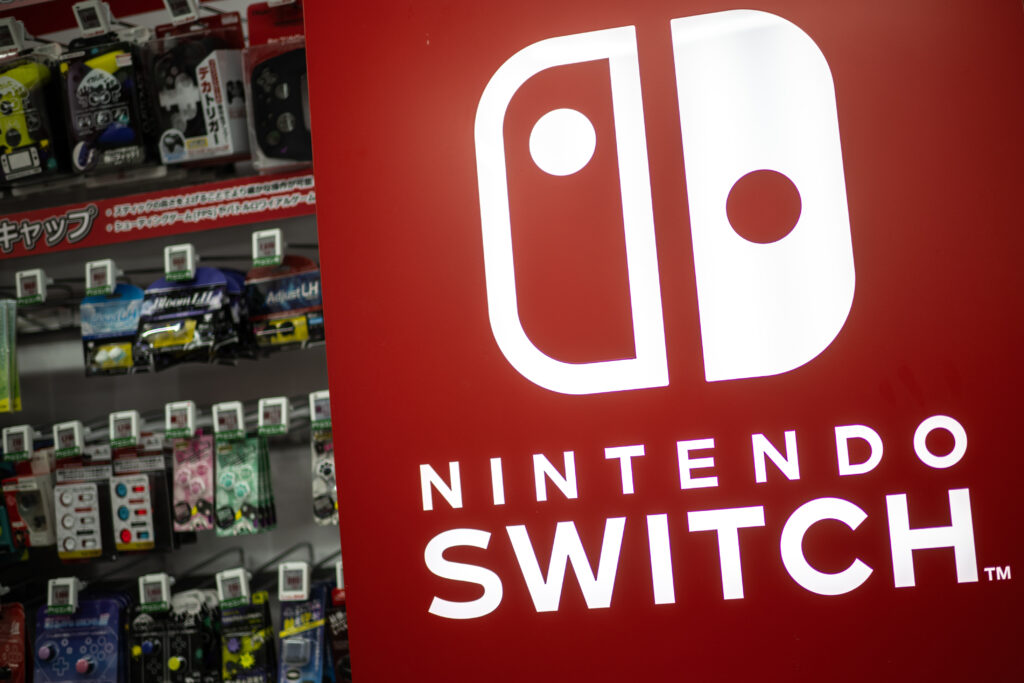
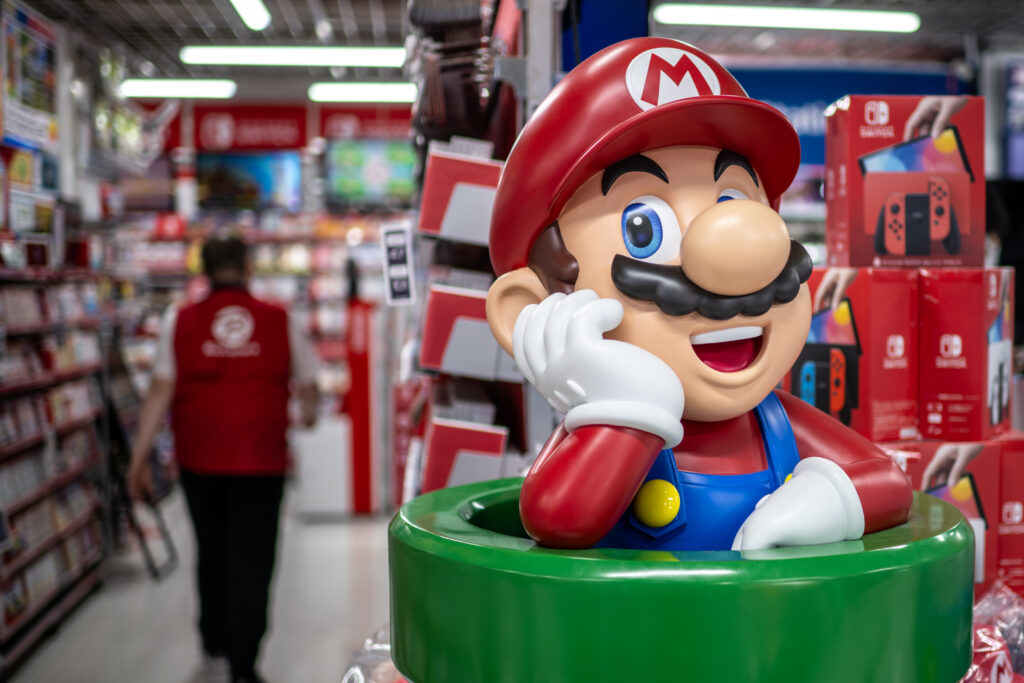
Nintendo fans excited over the upcoming Switch console said Thursday they were disappointed by the high price tag, as US tariffs bite.The Japanese video game giant revealed details about the Switch 2 on Wednesday, announcing an update to the hugely successful 2017 original that has sold over 150 million units.But shares in the Kyoto-based company tanked nearly six percent following the announcement, partly because the recommended retail price — $449.99 in the United States, 395.99 pounds in Britain and 469.99 euros in France — is at least a third more than its predecessor.Shares closed down 3.3 percent in the wake of US President Donald Trump’s sweeping levies.These include 46 percent on Vietnam and 49 percent on Cambodia — countries where Nintendo has reportedly shifted an increasing share of its production in recent years.The Switch 2 games, including “Donkey Kong Bonanza”, “Kirby Air Riders” and “Mario Kart World”, will cost 80-90 euros ($86-$97).”I will buy it, but maybe not when it’s released,” Felix Sorge, a 33-year-old data analyst told AFP in Tokyo. “It’s quite expensive in comparison to the old one.”Industry research firm Niko Partners poured cold water on the idea of waiting for a discount, however.”We do not expect a price drop for the Switch 2 within its first five years given continued uncertainty around reciprocal tariffs, global trade and higher component costs,” it said.The original Switch was an all-ages hit thanks to its hybrid concept, which allows players to use it on the go and connect to a TV. The new version retains many of its features, including detachable “Joy-Con” controllers.What’s new is a “C” button that activates “GameChat” — allowing users to speak with one another while playing.”Even when you’re apart, you can play games and hang out as if you were together in the same room,” Nintendo said.- ‘GameShare’ -The Switch 2, which will be released on June 5, will have eight times the memory of the first Switch at 256 GB, and a 7.9-inch (20-centimetre) screen up from 6.2 inches for the original.Its controllers, which attach with magnets, can also be used like a desktop computer mouse, a new functionality the company clearly hopes game developers will use.A “GameShare” function will also enable users to share games with friends and temporarily play together.Rio Narita, a 21-year-old Japanese university student, called the wider range of gameplay possibilities “a big deal” and said Sony’s PlayStation 5 console was also expensive.”Given all these functions and the larger screen, it’s sort of unavoidable,” he said.But student Sayaka Motoya, 18, said the price was “tough for younger people or those who don’t have much money”.Nintendo offered a glimpse of the hotly anticipated new console in mid-January, ahead of the live presentation Wednesday.”The Switch 2 is more of an iteration than a reinvention of the wheel,” Niko Partners said.Despite recent diversification efforts into movies and theme parks, Nintendo’s core business still relies on video games.The company could sell around 19 million units in 2025 and 21 million the following year, Toyo Securities estimated.Some media reported that export data shows Nintendo has been amassing an inventory of the new Switch in the United States to get ahead of the tariffs.According to Niko Partners, the higher cost of the console in the United States compared to Japan is likely intended “to avoid potential impacts from US tariffs”.The video game industry has been struggling with a global slowdown, with sales down by 35 percent in 2024 year-on-year in the United States, according to US market researchers Circana.burs-cg-kaf/lb

China vows ‘countermeasures’ to sweeping new US tariffs

China on Thursday said it “firmly opposes” sweeping new US tariffs on its exports, vowing “countermeasures” to protect its rights and interests.US President Donald Trump has ignited a potentially ruinous global trade war after imposing 10 percent levies on imports from around the world and harsh extra duties on key trading partners.Trump unveiled particularly stinging tariffs of 34 percent on China, one of its largest trading partners.The commerce ministry in Beijing said in a statement that those tariffs “do not comply with international trade rules and seriously harm the legitimate rights and interests of the relevant parties”.It urged Washington to “immediately cancel” them, warning they “endanger global economic development”, hurting US interests and international supply chains.It also accused the United States of a “typical unilateral bullying practice”.The tariffs come on top of a 20 percent rate imposed last month.At a weekly briefing Thursday, the commerce ministry slammed Washington’s “protectionism and bullying”. But it also said that the two sides were “maintaining communication” over sources of contention in trade and economic issues.Beijing’s foreign ministry also warned the United States that protectionism has no “exit ramp” and noted the broad international opposition to the measures.China previously responded to US tariffs with levies of up to 15 percent on a range of US agricultural goods including soybeans, pork and chicken.Chen Wenling, chief economist at the China Center for International Economic Exchanges in Beijing, told AFP that Beijing could potentially impose export controls of critical and rare minerals to the United States in response.”The United States has become a high-tariff nation, and its status as the flagbearer of free trade has diminished,” Chen said.US duties have threatened to harm China’s fragile economic recovery as it struggles with a long-running debt crisis in the property sector and persistently low consumption.- ‘No winner in a trade war’ -An intensified trade war will likely mean China cannot peg its hopes for strong economic growth this year on its exports, which reached record highs in 2024.Trump labelled Wednesday’s measures “reciprocal” but many experts say his administration’s estimates for levies placed on US imports by other countries are wildly exaggerated.”The US claims to have suffered losses in international trade, using so-called ‘reciprocity’ as an excuse to raise tariffs on all trade partners,” Beijing said.”This approach disregards the balance of interests achieved through years of multilateral trade negotiations and ignores the fact that the US has long profited significantly from international trade,” it added.It instead called for “dialogue” to resolve the dispute.”There is no winner in a trade war, and there is no way out for protectionism,” it said, adding that “history has proven that raising tariffs does not solve the US’s own problems”.The US has also imposed tariffs of 25 percent on steel and aluminium imports.China is the world’s leading steel manufacturer, though not a major exporter of the product to the United States.

Trump escalates trade war with sweeping global tariffs

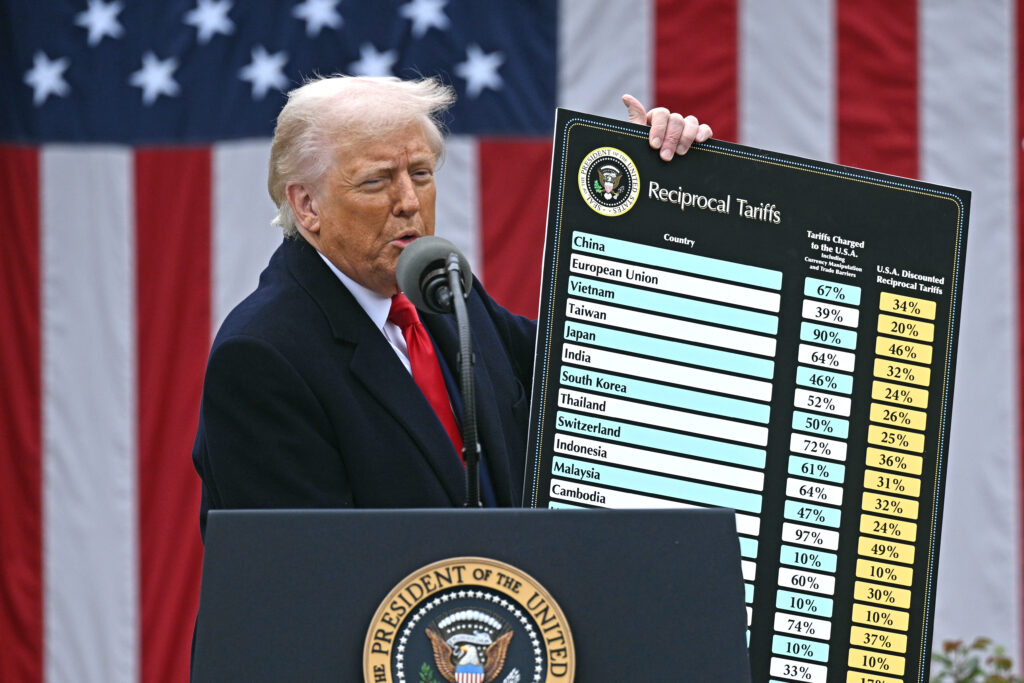
US President Donald Trump intensified a global trade war Wednesday as he slapped sweeping tariffs on imports from allies and foes alike, sending markets into a tailspin and upending decades-long free trade norms.The EU and China vowed retaliation against the levies, with Australia’s leader saying the new tariffs were “not the act of a friend” and would hurt the close allies’ relationship.Shortly after Trump’s proclamation, separate tariffs of 25 percent on all foreign-made cars and light trucks went into effect, with auto parts also due to be hit by May 3.Holding up a chart of the sweeping measures in the White House Rose Garden, Trump unveiled particularly stinging tariffs on major trade partners China and the European Union on what he called “Liberation Day.””This is one of the most important days, in my opinion, in American history,” said Trump. “It’s our declaration of economic independence.”The tariffs announcement triggered immediate anger around the world, with rival China warning they could “endanger” global economic development.Stock markets looked set for major volatility Thursday, with Tokyo’s Nikkei leading an Asian selloff, collapsing more than four percent, and Hanoi shares tanked more than five percent after Vietnam was targeted with tariffs of 46 percent.US futures plummeted and safe haven gold hit a new record as investors took fright.Trump reserved some of the heaviest blows for what he called “nations that treat us badly.” That included an additional 34 percent on goods from China — bringing the new added tariff rate there to 54 percent. Beijing swiftly vowed countermeasures and called for dialogue, warning the levies would “seriously harm” those involved. The figure for the European Union was 20 percent, and 24 percent on Japan, whose trade minister called the tariffs “extremely regrettable.”For the rest, Trump said he would impose a “baseline” tariff of 10 percent, including another key ally, Britain.The 78-year-old Republican brushed off fears of turmoil, insisting that the tariffs would restore the US economy to a lost “Golden Age.””For decades, our country has been looted, pillaged, raped and plundered by nations near and far, both friend and foe alike,” Trump said.- ‘Make America wealthy again’ -A hand-picked audience of cabinet members, as well as workers in hard hats from industries including steel, oil and gas, whooped and cheered as Trump promised tariffs would “make America wealthy again.”Trump labeled Wednesday’s tariffs “reciprocal” but many experts say his administration’s estimates for levies placed on US imports by other countries are wildly exaggerated.The US president had telegraphed the move for weeks, sparking fears of a recession at home as costs are passed on to US consumers, and a damaging trade war abroad.US Treasury Secretary Scott Bessent warned against countermeasures, saying on Fox News: “If you retaliate, there will be escalation.”Some of the worst-hit trading partners were in Asia, including 49 percent for Cambodia, 46 percent for Vietnam and 44 percent for military-ruled Myanmar, recently hit by a devastating earthquake.Russia was not affected because it is already facing sanctions over the Ukraine war “which preclude any meaningful trade,” a White House official said.Certain goods like copper, pharmaceuticals, semiconductors, lumber and gold will not be subject to the tariffs, according to the White House.- ‘Fight’ -EU chief Ursula von der Leyen vowed Europe was “prepared to respond” to the tariffs, calling them a “major blow to the world economy.”Italian Prime Minister Giorgia Meloni, a close Trump ally, said the levies on the EU were “wrong” but pledged to seek a deal.Britain escaped relatively lightly after a diplomatic offensive, but said it still wanted to “mitigate” the tariffs.Canada and Mexico are not affected by the new levies as Trump has already punished them for what he says is their failure to stymie drug trafficking and illegal immigration.Canadian Prime Minister Mark Carney vowed to “fight” the existing levies.Trump’s announcement is the culmination of a long love affair with tariffs, which he has seen for decades as a cure-all for America’s trade imbalances and economic ills.The 10 percent “baseline tariff” kicks in on Saturday, while the elevated rates for those the White House deemed “the worst offenders” will take effect on April 9.

Japan says US tariffs ‘extremely regrettable’, may break WTO rules

Japan slammed Thursday as “extremely regrettable” US President Donald Trump’s sweeping new tariffs, saying they may break WTO rules and the two countries’ trade agreement.Japanese firms are the biggest investors into the United States but Tokyo has failed to secure an exemption, with Trump announcing a hefty 24-percent levy on Japanese imports.”I have conveyed that the unilateral tariff measures taken by the United States are extremely regrettable, and I have again strongly urged (Washington) not to apply them to Japan,” Yoji Muto, trade and industry minister, told reporters.He said he spoke to US Commerce Secretary Howard Lutnick before Trump’s announcement of a new 10-percent baseline tariff and extra levies on selected countries — including close strategic ally Japan.”Japan (are) very very tough. Great people…. They would charge us 46 percent, and much higher for certain items,” Trump said. “We are charging them 24 percent.”Muto said he had explained to Lutnick “how the US tariffs would adversely affect the US economy by undermining the capacity of Japanese companies to invest”.”We had a frank discussion on how to pursue cooperation in the interest of both Japan and the United States that does not rely on tariffs,” Muto said.Government spokesman Yoshimasa Hayashi also said that the US measures may contravene World Trade Organization (WTO) rules and the two countries’ trade treaty.”We have serious concerns as to consistency with the WTO agreement and Japan-US trade agreement,” he told reporters.Asked if Japan will impose retaliatory tariffs or is considering filing a suit to the WTO, Hayashi said: “We decline to disclose details of our considerations.”- Abe exception -In Trump’s first term, then prime minister Shinzo Abe, who had warm relations with Trump, managed to secure an exemption from tariffs.In February, Trump hosted Prime Minister Shigeru Ishiba for apparently friendly and fruitful talks, hailing a “new golden age for US-Japan relations”.Ishiba promised a trillion dollars in investments and to import what Trump called “record” imports of US natural gas.Japan, together with South Korea, would also partner on a “gigantic natural gas pipeline in Alaska”, Trump said.Japan has also failed to win exclusion from 25-percent tariffs on imports into the United States by its massive auto sector that came into force on Thursday.Last year, vehicles accounted for around 28 percent of Japan’s 21.3 trillion yen ($142 billion) of US-bound exports, and roughly eight percent of all Japanese jobs are tied to the sector.Japanese carmakers ship about 1.45 million cars to the United States from Canada and Mexico, where they operate factories, Bloomberg News reported.By comparison Japan exports 1.49 million cars directly to the United States, while Japanese automakers make 3.3 million cars in America.

China says opposes new US tariffs, vows ‘countermeasures’

China on Thursday said it “firmly opposes” sweeping new US tariffs on its exports and vowed “countermeasures to safeguard its own rights and interests”.US President Donald Trump has ignited a potentially ruinous global trade war after imposing 10 percent levies on imports from around the world and harsh extra duties on key trading partners.The Commerce Ministry in Beijing said in a statement that those tariffs “do not comply with international trade rules and seriously harm the legitimate rights and interests of the relevant parties”.It urged Washington to “immediately cancel” them, warning they “endanger global economic development”, hurting US interests and international supply chains.It also accused the United States of a “typical unilateral bullying practice”.Trump unveiled particularly stinging tariffs of 34 percent on China, one of its largest trading partners, while a 10 percent base tariff on all countries will also apply to China.That comes on top of a 20 percent rate imposed last month.Beijing responded to those tariffs with levies of up to 15 percent on a range of US agricultural goods including soybeans, pork and chicken.US duties have threatened to harm China’s fragile economic recovery as it struggles with a long-running debt crisis in the property sector and persistently low consumption.An intensified trade war will likely mean China cannot peg its hopes for strong economic growth this year on its exports, which reached record highs in 2024.Trump labelled Wednesday’s measures “reciprocal” but many experts say his administration’s estimates for levies placed on US imports by other countries are wildly exaggerated.”The US claims to have suffered losses in international trade, using so-called ‘reciprocity’ as an excuse to raise tariffs on all trade partners,” Beijing said.”This approach disregards the balance of interests achieved through years of multilateral trade negotiations and ignores the fact that the US has long profited significantly from international trade,” it added.It instead called for “dialogue” to resolve the dispute.”There is no winner in a trade war, and there is no way out for protectionism,” it said, adding that “history has proven that raising tariffs does not solve the US’s own problems.”The US has also imposed tariffs of 25 percent on steel and aluminium imports.China is the world’s leading steel manufacturer, though not a major exporter of the product to the United States.

Trump sparks trade war with sweeping global tariffs

US President Donald Trump ignited a potentially ruinous global trade war Wednesday as he slapped 10 percent tariffs on imports from around the world and harsh extra levies on key trading partners.Holding up a chart of the sweeping measures in the White House Rose Garden, Trump unveiled particularly stinging tariffs on major trade partners China and the European Union on what he called “Liberation Day.””This is one of the most important days, in my opinion, in American history,” said Trump. “It’s our declaration of economic independence.”The announcement triggered immediate anger, with China warning the tariffs could “endanger” global economic development, US ally Australia blasting them as “not the act of a friend,” and threats of retaliation from around the world.Stock markets looked set for major volatility Thursday, with Tokyo’s Nikkei leading an Asian selloff, collapsing more than four percent. US futures plummeted and safe haven gold hit a new record as investors took fright.Trump reserved some of the heaviest blows for what he called “nations that treat us badly.” That included an additional 34 percent on goods from superpower rival China — bringing the new added tariff rate there to 54 percent. Beijing swiftly vowed countermeasures and called for dialogue, warning the levies would “seriously harm” those involved. “There is no winner in a trade war, and there is no way out for protectionism,” its commerce ministry said.The figure for the European Union was 20 percent, and 24 percent on Japan, whose trade minister called the tariffs “extremely regrettable.”For the rest, Trump said he would impose a “baseline” tariff of 10 percent, including another key ally, Britain.The 78-year-old Republican brushed off fears of turmoil, insisting that the tariffs would restore the US economy to a lost “Golden Age.””For decades, our country has been looted, pillaged, raped and plundered by nations near and far, both friend and foe alike,” Trump said.- ‘Make America wealthy again’ -A hand-picked audience of cabinet members, as well as workers in hard hats from industries including steel, oil and gas, whooped and cheered as Trump promised tariffs would “make America wealthy again.”Sweeping auto tariffs of 25 percent that Trump announced last week were due to take effect at 12:01 am (0401 GMT) Thursday.Trump labelled Wednesday’s tariffs “reciprocal” but many experts say his administration’s estimates for levies placed on US imports by other countries are wildly exaggerated.The US president had telegraphed the move for weeks, sparking fears of a recession at home as costs are passed on to US consumers, and a damaging trade war abroad.US Treasury Secretary Scott Bessent warned against countermeasures, saying on Fox News: “If you retaliate, there will be escalation.”Some of the worst hit trading partners were in Asia, including 49 percent for Cambodia, 46 percent for Vietnam and 44 percent for military-ruled Myanmar, recently hit by a devastating earthquake.Russia was not affected because it is already facing sanctions over the Ukraine war “which preclude any meaningful trade,” a White House official said.Certain goods like copper, pharmaceuticals, semiconductors, lumber and gold will not be subject to the tariffs, according to the White House.They will also reinforce fears that Trump is backing further away from US allies towards a new order based on his vision of American supremacy.- ‘Fight’ -Australian Prime Minister Anthony Albanese on Thursday said the tariffs were “totally unwarranted.”Italian Prime Minister Giorgia Meloni, a close Trump ally, said the levies on the EU were “wrong” but pledged to seek a deal.Britain escaped relatively lightly after a diplomatic offensive, but said it still wanted to “mitigate” the tariffs.Canada and Mexico are not affected by the new levies as Trump has already punished them for what he says is their failure to stymie drug trafficking and illegal immigration.Canadian Prime Minister Mark Carney vowed to “fight” the existing levies.Trump’s announcement is the culmination of a long love affair with tariffs, which he has seen for decades as a cure-all for America’s trade imbalances and economic ills.

Key details on Trump’s market-shaking tariffs

After weeks of anticipation, US President Donald Trump unveiled sweeping new tariffs on trading partners Wednesday, calling it a “declaration of economic independence.”A fresh “baseline tariff” of 10 percent will apply to economies around the world, with steeper rates tailored to those that Washington deemed as bad actors. But there are some exemptions.What are the details of Trump’s latest announcement?- New tariffs -A 10 percent “baseline tariff” kicks in at 12:01 am (0401 GMT) on April 5, while elevated rates for those the White House deemed “the worst offenders” take effect at 12:01 am (0401 GMT) on April 9.The steeper additional tariffs impact major US trading partners, with the European Union facing a 20 percent rate and China a 34 percent figure.For China, the number stacks on an added 20 percent levy Trump imposed earlier this year over its alleged role in the illicit fentanyl supply chain, taking the new additional figure to 54 percent.Other key partners include India with a 26 percent added rate, South Korea at 25 percent and Japan at 24 percent.Trump said: “For nations that treat us badly, we will calculate the combined rate of all their tariffs, non-monetary barriers and other forms of cheating.”The numbers, he said, are “approximately half of what they are and have been charging us.”- Exclusions -Some goods like copper, pharmaceuticals, semiconductors, lumber, gold, energy and “certain minerals” will not be subject to reciprocal tariffs unveiled Wednesday, according to a White House fact sheet.Major US partners Canada and Mexico are not hit by the new tariffs either, US officials added.Trump earlier imposed 25 percent tariffs on imports from both countries, with a lower rate on Canadian energy, and they will continue to face these duties.Goods entering the world’s biggest economy under the US-Mexico-Canada Agreement will still be exempted.Should Canada and Mexico reach deals on the levies, however, they will come up against a new regime.The White House also said that the latest country-based tariffs do not stack atop of sector-specific ones, like those already applied to imports of steel and aluminum.Cuba, Belarus, North Korea, and Russia are not subject to Trump’s new “reciprocal tariffs” as they are already facing sanctions which “preclude any meaningful trade,” the White House said.- Other tariffs -On Thursday, new 25 percent tariffs on imported autos will also kick in, bringing fresh challenges to the industry.Trump earlier imposed 25 percent charges on steel and aluminum imports too, which will be expanded to impact canned beer and empty aluminum cans from Friday.He has ordered probes into imports of copper and lumber as well, which could lead to further duties.White House officials said Wednesday that Trump is mulling similar moves on semiconductors, pharmaceuticals and possibly critical minerals in the future.Separately, a 25 percent levy on goods from countries importing Venezuelan oil can take place from April 2. Trump has threatened a similar “secondary tariff” on Russian oil.- Small parcels -On Wednesday, Trump separately ordered an end to a duty-free exemption for small parcels from China, a move likely to severely disrupt the import of popular low-cost products.The rule has faced heavy scrutiny as US officials pointed to the growth of Chinese-founded online retailers Shein and Temu as a factor behind a surge of shipments using the exemption.Products imported under the “loophole” from China would be subject to a duty rate of either 30 percent of their value or $25 per item, increasing to $50 per item after June 1. The policy shift kicks in May 2, according to Trump’s executive order.

Nintendo to launch Switch 2 console on June 5

Nintendo’s new Switch console will be launched on June 5, the Japanese video game giant said Wednesday, starting the countdown for one of the most hotly awaited gaming launches in years.Millions of fans tuned in on YouTube for an hour-long presentation about the Switch 2 — an update to the 2017 original model that has sold around 150 million units.But shares in the Kyoto-based company tanked nearly six percent in early Japanese trade on Thursday, partly on profit-taking but also as investors apparently baulked at the gadget’s high price.The shares’ fall also followed US President Donald Trump’s announcement of sweeping global tariffs, including 46 percent on Vietnam and 49 percent on Cambodia, where Nintendo has reportedly shifted an increasing amount of production in recent years.The Switch 2 retains many of its predecessor’s features, including its detachable “Joy-Con” controllers.But it comes with a larger, higher resolution screen and quicker processing speeds.After giving a glimpse of the new console in mid-January, Nintendo provided further details about some of the changes including a “C” button that activates “GameChat”, allowing players to speak with one another while playing.”Even when you’re apart, you can play games and hang out as if you were together in the same room,” the firm said.Nintendo also announced a new version of its best-selling Mario Kart game, “Mario Kart World”, which allows players to go exploring off-grid.- High price -Other notable new games, intended to drive uptake of the more expensive hardware, include “Donkey Kong Bonanza” and “Kirby Air Riders”.They will be priced around 30 percent higher than existing Switch games at 80-90 euros ($86-$97), while the console will also be at least a third more than its predecessor.The recommended retail price is listed as $449.99 in the United States, £395.99 in Britain and 469.99 euros in France — which quickly became a sore point among commentators on game sites and forums.”These price tags have created such negativity around its release that I’m actually flabbergasted,” streamer Sendo DX wrote on social media platform X.The Switch 2 will have eight times the memory of the first Switch at 256 GB, and a screen that measures 7.9 inches (20 centimetres) versus 6.2 inches for the original.Its controllers, which attach with magnets rather than sliding on, can also be used like a desktop computer mouse, a new functionality the company clearly hopes game developers will make use of.A new “GameShare” function will also enable users to share games with friends to allow them to temporarily play together.- ‘Higher performance’ -Analysts had predicted that the company would opt to bring out an improved iteration of a winning formula, rather than announce revolutionary changes — and that appeared to be the case overall. Gamers “mention performance and game software, but in reality, they seem to want the same experience as the original Switch”, Hideki Yasuda, an analyst at Japanese brokerage Toyo Securities, had said beforehand.”I think what they truly want is simply higher performance.”The Switch won favour with all ages thanks to its hybrid concept, which allows players to use it on the go and connect to a TV.Despite recent diversification efforts into movies and theme parks, Nintendo’s core business still relies heavily on video games.The company cut profit forecasts in February due to slowing sales of the original Switch, but its shares have risen this year overall on expectations of strong demand for the Switch 2.Nintendo could sell around 19 million units in 2025 and 21 million the following year, Toyo Securities estimated.The video game industry has been struggling with a global slowdown, with sales down by 35 percent in 2024 year-on-year in the United States, according to US market research firm Circana.