Afp Business Asia

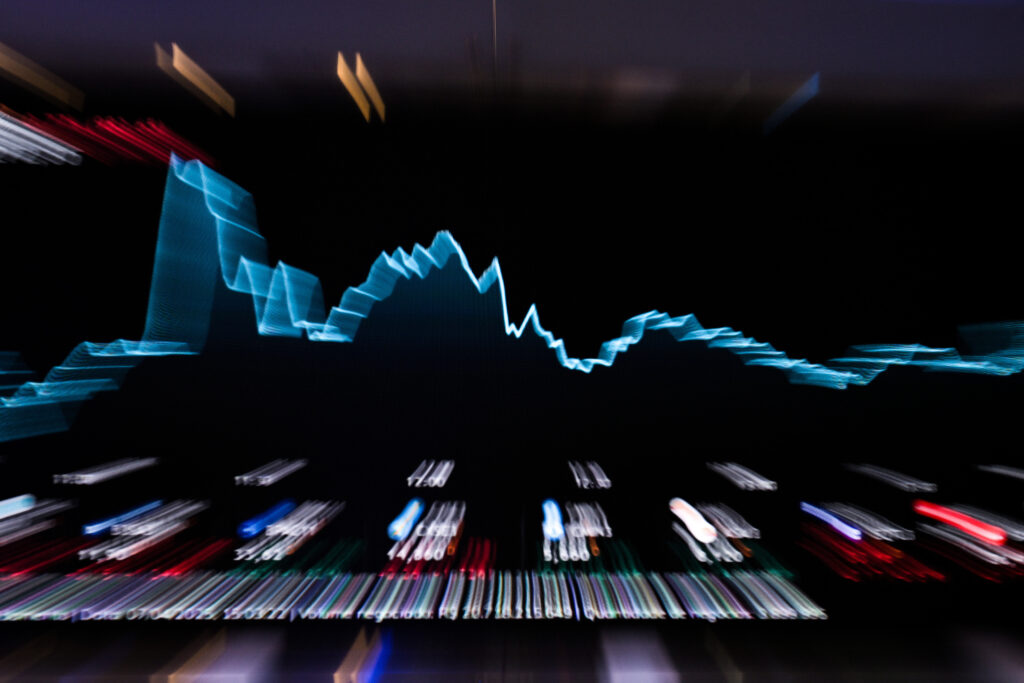
Stocks, oil recover slightly awaiting Trump’s next tariffs moves

Stock markets and oil prices recovered slightly Tuesday after a huge sell-off, but analysts warned of more turmoil as US President Donald Trump charges ahead in his escalating trade war.After trillions of dollars were wiped from the combined value of global equity markets since last week, share prices across Asia and Europe battled back awaiting Wall Street’s reopening.Investors clawed back some ground as they assess the possibility of Washington tempering some of levies.The dollar dipped against main rivals.”After multiple punishing sessions, stock markets appear to have started their road to recovery,” noted Russ Mould, investment director at AJ Bell trading group.He warned, however, that “it’s dangerous to think a massive rally will definitely happen, given how Trump is unpredictable”.Europe’s main indices were up by an average of about 1.5 percent approaching the half-way stage.European Union chief Ursula von der Leyen warned against escalating a trade conflict during a phone call with Chinese Premier Li Qiang on Tuesday.The EU plans tariffs of up to 25 percent on US goods in retaliation for levies on metals, but will spare bourbon to shield European wine and spirits from reprisals, according to a document seen by AFP.- Asia bounce -Tokyo’s stock market closed up more than six percent — recovering much of Monday’s drop — after Japanese Prime Minister Shigeru Ishiba held talks with Trump.The share price of Nippon Steel rallied by around the same amount after Trump launched a review of its proposed takeover of US Steel that was blocked by his predecessor Joe Biden.However, the US leader’s threat to hit China with an extra 50 percent tariffs — in response to its 34 percent retaliation in kind — ramped up the chances of a catastrophic stand-off between the two economic superpowers.Trump said he would impose the additional levies if Beijing did not heed his warning not to push back against his barrage of tariffs. China fired back that it would “never accept” such a move and called the potential escalation “a mistake on top of a mistake”.Hong Kong’s stock market closed up by more than one percent, having plunged over 13 percent Monday, its biggest one-day retreat since 1997.Trading in Jakarta was briefly suspended after it plunged more than nine percent in exaggerated moves following a long holiday weekend in Indonesia.The advances followed less pain Monday on Wall Street, with the Nasdaq edging up.The trade war has put the Federal Reserve in the spotlight as economists said escalation could send prices surging. US central bank officials are now having to decide whether to cut interest rates to support the economy, or keep them elevated to keep a lid on inflation.”Because the tariffs announced thus far are higher than previously expected, we think the risk is now skewed toward more rate cuts by year-end,” said Nuveen chief investment officer Saira Malik. – Key figures around 1030 GMT -London – FTSE 100: UP 1.6 percent at 7,827.99 points Paris – CAC 40: UP 1.0 percent at 6,998.74Frankfurt – DAX: UP 1.2 percent at 20,021.15 Tokyo – Nikkei 225: UP 6.0 percent at 33,012.58 (close)Hong Kong – Hang Seng Index: UP 1.5 percent at 20,127.68 (close)Shanghai – Composite: UP 1.6 percent at 3,145.55 (close)New York – Dow: DOWN 0.9 percent at 37,965.60 (close)Euro/dollar: UP at $1.0934 from $1.0904 on MondayPound/dollar: UP at $1.2752 from $1.2723Dollar/yen: DOWN at 146.89 yen from 147.83 yen Euro/pound: UP at 85.73 pence from 85.68 penceWest Texas Intermediate: UP 0.4 percent at $60.95 per barrelBrent North Sea Crude: UP 0.3 percent at $64.39 per barrelburs-bcp/ajb/lth
China ready to ‘fight’ US trade war, EU seeks to cool tensions

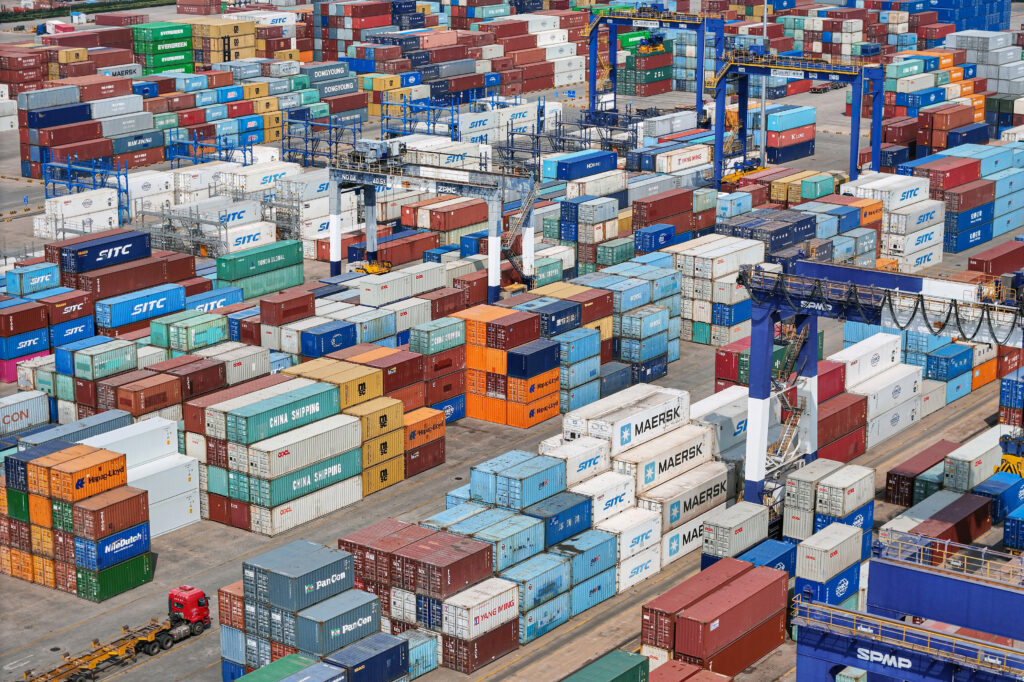
China vowed Tuesday to “fight to the end” after US President Donald Trump threatened to further ramp up tariffs but the EU warned against escalating a trade war that has rocked global markets.Trump has upended the world economy with sweeping tariffs that have raised the spectre of an international recession, but has ruled out any pause in his aggressive trade policy despite a dramatic market sell-off.Beijing — Washington’s major economic rival but also a key trading partner — responded by announcing its own 34 percent duties on US goods to come into effect on Thursday, deepening a showdown between the world’s two largest economies. The swift retaliation from China sparked a fresh warning from Trump that he would impose additional levies of 50 percent if Beijing refused to stop pushing back against his barrage of tariffs — a move that would drive the overall levies on Chinese goods to 104 percent.”I have great respect for China but they can not do this,” Trump said at the White House.”We are going to have one shot at this… I’ll tell you what, it is an honour to do it.”China swiftly hit back, blasting what it called “blackmailing” by the United States and vowing “countermeasures” if Washington imposes tariffs on top of the 34 percent extra that were due to come in force on Wednesday.”If the US insists on going its own way, China will fight it to the end,” a spokesperson for Beijing’s commerce ministry said on Tuesday.- ‘Ignorant, impolite’ -In a mounting war of words between Beijing and Washington, China’s foreign ministry also condemned “ignorant and impolite” remarks by US Vice President JD Vance in which he complained the US had for too long borrowed money from “Chinese peasants”.The ministry said that “pressure, threats and blackmail are not the right way to deal with China”.Beijing urged Washington to instead “adopt an attitude of equality, respect and mutual benefit” if it wanted to engage in talks.The European Union sought to cool tensions, with the bloc’s chief Ursula von der Leyen warning against worsening the trade conflict in a call with Chinese Premier Li Qiang.She stressed the “vital importance of stability” for the world’s economy, urged a “negotiated solution” and emphasised “the need to avoid further escalation,” according to a readout of the call from EU officials.The EU is weighing its own response to the 20-percent tariffs it is facing, with its biggest economies Germany and France advocating a tax targeting US tech giants.But Brussels has also proposed an exemption from tariffs on industrial products, including cars, which Trump said Monday was not enough to account for the US trade deficit with the EU.”The European Union has been very, very bad to us,” Trump said.A 10 percent “baseline” tariff on US imports from around the world took effect Saturday, and a slew of countries will be hit by higher duties from Wednesday, including China and the EU.Trump’s tariffs have roiled global markets in the last days, with trillions of dollars wiped off combined stock market valuations in recent sessions.Stock markets staged a mild rebound on Tuesday, with Hong Kong’s Hang Seng index rising 1.5 percent after crashing 13.2 percent the previous day in its worst performance since 1997.Shares in Tokyo leapt after Treasury Secretary Scott Bessent suggested in a Fox News interview that Japan would get “priority” in negotiations over the US tariffs “just because they came forward very quickly”.Scores of countries have sought talks, Bessent said, adding “through good negotiations, all we will do is see levels come down”.European markets also clawed back some ground, with London, Paris and Frankfurt all up more than one percent in morning trade.Trump believes the tariffs will revive America’s lost manufacturing base by forcing foreign companies to relocate to the United States, rather than making goods abroad.But most economists question that and say his tariffs are arbitrary.Despite the turmoil, Trump said Monday he was “not looking” at any pause in tariff implementation.He also scrapped any meetings with China over tariffs, but said Washington was ready for talks with any country willing to negotiate.While meeting Israel’s Prime Minister Benjamin Netanyahu, the first leader to lobby Trump in person over the levies, Trump said: “There can be permanent tariffs, and there can also be negotiations, because there are things that we need beyond tariffs.”burs-sr/lth

Indonesia stocks plunge on Trump tariffs after weeklong break

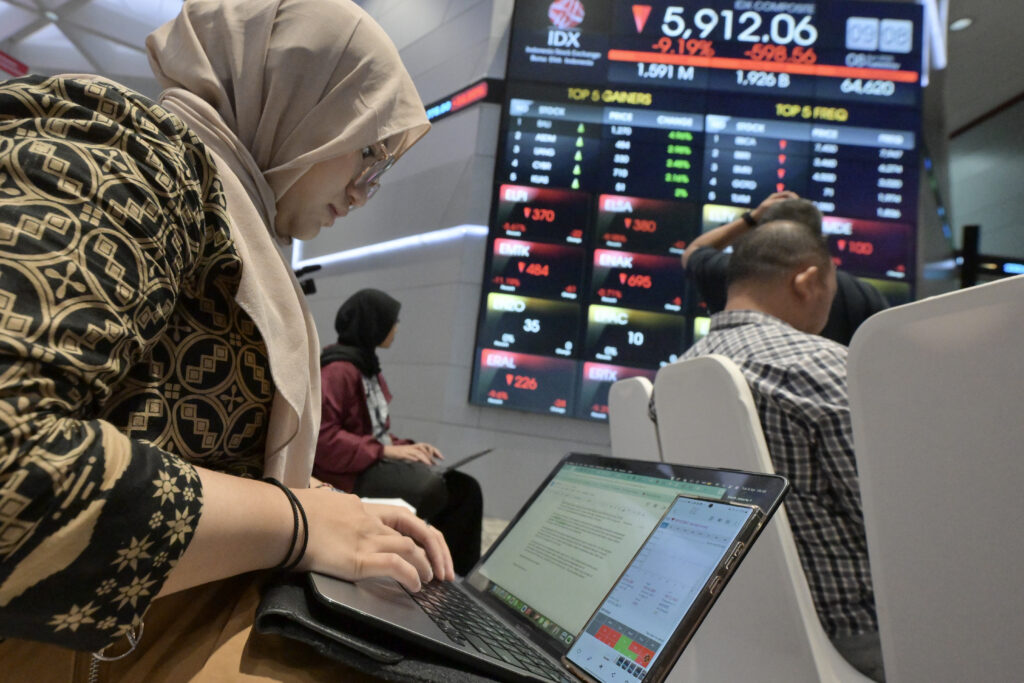
Indonesian stocks closed down nearly eight percent on Tuesday after a weeklong public holiday break, its biggest fall in more than a decade as uncertainty over US President Donald Trump’s global tariffs roil markets.Trump upended the world economy last week with sweeping tariffs that have raised fears of an international recession and triggered criticism even from within his own Republican Party.The benchmark Jakarta Composite Index closed down 7.9 percent at 5,996.14, its lowest level since June 2021 as markets reopened following a closure since March 28 because of public holidays. The fall was its biggest since 2011, Bloomberg reported.In the opening session, stocks sharply fell more than nine percent, sparking a brief trade suspension, but it would recoup some of those losses.Ahead of the opening, Indonesia’s stock exchange said trading would be further suspended if the market fell 15 percent, and trading would be halted for the day if the market dropped 20 percent “to ensure orderly, fair and efficient securities trading”.The stock exchange also said if an individual share fell by 15 percent, any sell orders below that price would be turned down.Analysts said the sell-off reflected investor fears of a wider global trade war.”The trading halt… was a strong signal of the market’s deep concerns about the escalation of global risks,” Permata Bank chief economist Josua Pardede told AFP.- ‘Escalation of global risks’ -The Indonesian central bank said Monday it would “intervene aggressively” to support the suffering rupiah.The currency was down more than one percent on Tuesday against the dollar, according to spot markets.The central bank said it had already intervened in the offshore rupiah market ahead of the reopening.The rupiah was already punished last month as confidence waned in President Prabowo Subianto’s handling of the economy and fears over the country’s growth prospects.Trump set an additional rate of 32 percent on goods from Indonesia, higher than the baseline 10 percent for all countries hit with levies.Prabowo has said Jakarta will pursue diplomacy by sending a high-level delegation to the United States, instead of retaliating to the tariffs.Indonesia’s chief economic minister Airlangga Hartarto said Tuesday that Jakarta would buy more products from the United States to narrow its trade surplus with Washington, including wheat, liquefied natural gas and liquefied petroleum gas.Jakarta enjoyed a $16.8 billion trade surplus with Washington last year, according to Indonesian government data.

Vietnam says to buy more US goods as it seeks tariff delay

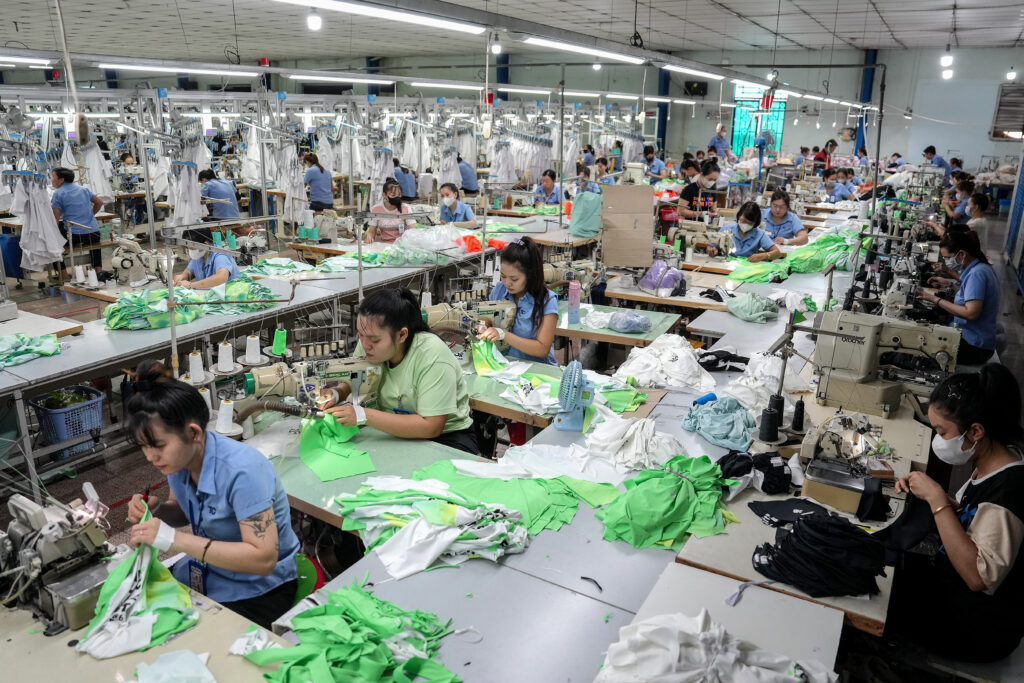
Vietnam will buy more US goods including security and defence products, the government said, as it seeks a last-minute delay to enormous tariffs imposed by Washington.The Southeast Asian manufacturing powerhouse counted the United States as its biggest export market in the first three months of the year, but its key customer has now hit it with colossal 46 percent duties.Hanoi has asked US President Donald Trump to delay their implementation by at least 45 days to give time for talks.Prime Minister Pham Minh Chinh said Vietnam would “approach and negotiate with the US side to reach a bilateral agreement, moving towards a sustainable trade balance”, according to a statement published on the government’s news portal late Monday.It would also “continue to buy more US products that are strong and Vietnam has demand for, including products related to security and defence; promote early delivery of aircraft trade contracts”, the statement added.The tariffs are part of a global trade blitz announced last week by Trump that has sent markets around the world into a tailspin.Regarding Vietnam, it appears that his administration was particularly angered by what it sees as the country’s role in attempts to get around tariffs imposed on China.According to a separate statement on the news portal Tuesday, Deputy Prime Minister Bui Thanh Son has requested the ministry of industry and trade “to review and strictly control the origin of goods, to prevent unfortunate incidents from happening”.- ‘Significantly damage’ growth -Top leader To Lam has sent a letter to Trump asking for a delay to the tariff.According to a copy seen by AFP, Lam said he had appointed Ho Duc Phoc, another deputy prime minister, to serve as the primary contact with the US side on the issue, “with the aim of reaching an agreement as soon as possible”.He also said he hoped to meet Trump in Washington at the end of May to finalise the matter.Trump said on Friday he had had “a very productive” call with Lam, who he said wanted to make a deal on tariffs.The measures threaten to “significantly damage” Vietnam’s current growth model, which relies heavily on exports to the United States, according to Sayaka Shiba, senior country risk analyst at research firm BMI.She said in the worst-case scenario Vietnam could suffer a three percent hit to gross domestic product this year.Vietnam’s main stock exchange, which avoided the freefall that hit global markets on Monday because of a holiday, fell nearly six percent on Tuesday.

Markets stage mild rebound but Trump tariff uncertainty reigns

Asian and European markets battled Tuesday to recover from the previous day’s tariff-fuelled collapse, though Donald Trump’s warning of more measures against China and Beijing’s vow to “fight to the end” raised concerns of a spiralling trade war.Equities across the world have been hammered since the US president unveiled sweeping levies against friend and foe, upending trading norms, sparking talk of a global recession and wiping trillions of company valuations.Investors fought to claw back some of those losses as they try to assess the possibility that Washington could temper some of the tariffs. Tokyo traded up more than six percent — recovering much of Monday’s drop — after Japanese Prime Minister Shigeru Ishiba held talks with Trump.However, the US leader’s threat to hit China with an extra 50 percent tariffs — in response to its 34 percent retaliation in kind — ramped up the chances of a catastrophic stand-off between the two economic superpowers.Trump said he would impose the additional levies if Beijing did not heed his warning not to push back against his barrage of tariffs. China fired back that it would “never accept” such a move and called the potential escalation “a mistake on top of a mistake”.If Washington “insists on a tariff war and a trade war, China will definitely fight to the end”, China’s foreign ministry spokesman Lin Jian said Tuesday.”Pressure, threats and blackmail are not the right way to deal with China,” he said.In light of the turmoil gripping markets, Trump told Americans to “be strong, courageous, and patient”.While uncertainty rules, investors in most markets took the opportunity to pick up some beaten-down stocks.Tokyo jumped six percent, with Nippon Steel rallying just as much after Trump launched a review of its proposed takeover of US Steel that was blocked by his predecessor Joe Biden.Hong Kong gained more than one percent but was well short of recouping Monday’s loss of more than 13 percent that was the biggest one-day retreat since 1997.  Shanghai advanced 1.6 percent after China’s central bank promised to back major state-backed fund Central Huijin Investment in a bid to maintain “the smooth operation of the capital market”. Sydney and Mumbai added more than two percent, while Manila gained three percent. Seoul and Wellington also edged up.London, Paris and Frankfurt rose more than one percent, having dropped more than four percent Monday.- Worse to come? -The advances followed a less painful day on Wall Street, where the S&P and Dow fell but pared earlier losses, while the Nasdaq edged up.Others however were not as fortunate. Taipei shed four percent to extend the previous day’s record loss of 9.7 percent, while Singapore was off more than one percent.Trading in Jakarta was briefly suspended soon after the open as it plunged more than nine percent as investors returned from an extended holiday, while the bourse in Vietnam — which has been hit with 46 percent tariffs — shed more than six percent.Bangkok sank five percent as it also reopened after a holiday, with losses tempered by the Stock Exchange of Thailand’s decision to ban short-selling on most stocks.Analysts warned that things could get worse. “If none of the announced tariffs are reversed by deal-making in the next four weeks or so, the global economy risks entering an ‘oil price shock’ type crisis by mid-year,” said Vincenzo Vedda, global chief investment officer at DWS.Pepperstone’s Chris Weston said it was unlikely that China will scrap its countermeasure, “so we assume a high risk that Trump will follow through with an additional 50 percent tariff rate”.And JPMorgan Chase CEO Jamie Dimon told shareholders: “Whether or not the menu of tariffs causes a recession remains in question, but it will slow down growth” and likely increase inflation.The trade war has also put the Federal Reserve in the spotlight as economists say it could send prices surging. Bank officials are now having to decide whether to cut interest rates to support the economy, or keep them elevated to keep a lid on inflation.”Because the tariffs announced thus far are higher than previously expected, we think the risk is now skewed toward more rate cuts by year-end,” said Nuveen chief investment officer Saira Malik. “Our probability-weighted guidance has increased from a total of four Fed cuts through 2025 and 2026 to 6.6 cuts.”- Key figures around 0810 GMT -Tokyo – Nikkei 225: UP 6.0 percent at 33,012.58 (close)Hong Kong – Hang Seng Index: UP 1.5 percent at 20,127.68 (close)Shanghai – Composite: UP 1.6 percent at 3,145.55 (close)London – FTSE 100: UP 1.5 percent at 7,815.00Euro/dollar: UP at $1.0944 from $1.0904 on MondayPound/dollar: UP at $1.2766 from $1.2723Dollar/yen: DOWN at 147.16 yen from 147.83 yen Euro/pound: UP at 85.74 pence from 85.68 penceWest Texas Intermediate: DOWN 0.2 percent at $60.60 per barrelBrent North Sea Crude: DOWN 0.2 percent at $64.11 per barrelNew York – Dow: DOWN 0.9 percent at 37,965.60 (close)

China vows ‘fight to the end’ as Trump warns 50% more tariffs

China vowed on Tuesday to “fight to the end” against fresh tariffs of 50 percent threatened by US President Donald Trump, further aggravating a trade war that has already wiped trillions off global markets.Trump has upended the world economy with sweeping tariffs that have raised the spectre of an international recession, but has ruled out any pause in his aggressive trade policy despite a dramatic market sell-off.Beijing — Washington’s major economic rival but also a key trading partner — responded by announcing its own 34 percent duties on US goods to come into effect on Thursday, deepening a showdown between the world’s two largest economies. The swift retaliation from China sparked a fresh warning from Trump that he would impose additional levies if Beijing refused to stop pushing back against his barrage of tariffs — a move that would drive the overall levies on Chinese goods to 104 percent.”I have great respect for China but they can not do this,” Trump said in the White House.”We are going to have one shot at this… I’ll tell you what, it is an honour to do it.”China swiftly hit back, blasting what it called “blackmailing” by the US and vowing “countermeasures” if Washington imposes tariffs on top of the 34 percent extra that were due to come in force on Wednesday.”If the US insists on going its own way, China will fight it to the end,” a spokesperson for Beijing’s commerce ministry said on Tuesday.In a mounting war of words between Beijing and Washington, China’s foreign ministry also Tuesday condemned “ignorant and impolite” remarks by US Vice President JD Vance in which he complained the US had for too long borrowed money from “Chinese peasants”.The ministry said that “pressure, threats and blackmail are not the right way to deal with China”.Beijing urged Washington to instead “adopt an attitude of equality, respect and mutual benefit” if it wanted to engage in talks.- Market turmoil -A 10 percent “baseline” tariff on US imports from around the world took effect Saturday, and a slew of countries will be hit by higher duties from Wednesday, including the levy of 34 percent for Chinese goods as well as 20 percent for EU products.Trump’s tariffs have roiled global markets in the last days, with trillions of dollars wiped off combined stock market valuations in recent sessions. Hong Kong’s Hang Seng collapsed by 13.2 percent on Monday — its worst day since the Asian financial crisis — before paring back some of those losses on Tuesday.But stocks in Thailand, Indonesia and Vietnam — a key export hub — sank on Tuesday, as they resumed trading after bank holidays.In financial powerhouse Singapore, Prime Minister Lawrence Wong told parliament his government was “very disappointed by the US move”.”These are not actions one does to a friend.”Trump doubled down Monday, saying he was “not looking” at any pause in tariff implementation.He also scrapped any meetings with China over tariffs, but said the United States was ready for talks with any country willing to negotiate.After equities took a hammering in Shanghai, China’s central bank issued a statement before trading resumed Tuesday to underline it was standing behind a sovereign fund as it buys up exchange traded funds to stabilise the market. With investors seeking any relief from the ruinous trade war, stocks in Tokyo leapt Tuesday after Treasury Secretary Scott Bessent suggested in an interview with Fox News that Japan would get “priority” in negotiations over the US tariffs “just because they came forward very quickly”.Scores of countries have sought talks, Bessent said, adding “through good negotiations, all we will do is see levels come down”.- ‘Don’t be Weak!’ -While meeting Israel’s Prime Minister Benjamin Netanyahu, the first leader to lobby Trump in person over the levies, Trump said: “There can be permanent tariffs, and there can also be negotiations, because there are things that we need beyond tariffs.”EU trade ministers were in Luxembourg on Monday to discuss the bloc’s response, with Germany and France having advocated a tax targeting US tech giants.”We must not exclude any option on goods, on services,” said French Trade Minister Laurent Saint-Martin.The 27-nation bloc should “open the European toolbox, which is very comprehensive and can also be extremely aggressive”, he said.While markets continued its wild ride, Trump told Americans: “Don’t be Weak! Don’t be Stupid!”.The 78-year-old Republican believes the tariffs will revive America’s lost manufacturing base by forcing foreign companies to relocate to the United States, rather than making goods abroad.But most economists question that and say his tariffs are arbitrary.JPMorgan Chase CEO Jamie Dimon warned of coming inflation, adding “whether or not the menu of tariffs causes a recession remains in question, but it will slow down growth”.burs-oho/hmn

Hong Kong firm did not uphold Panama Canal ports contract: Panama audit

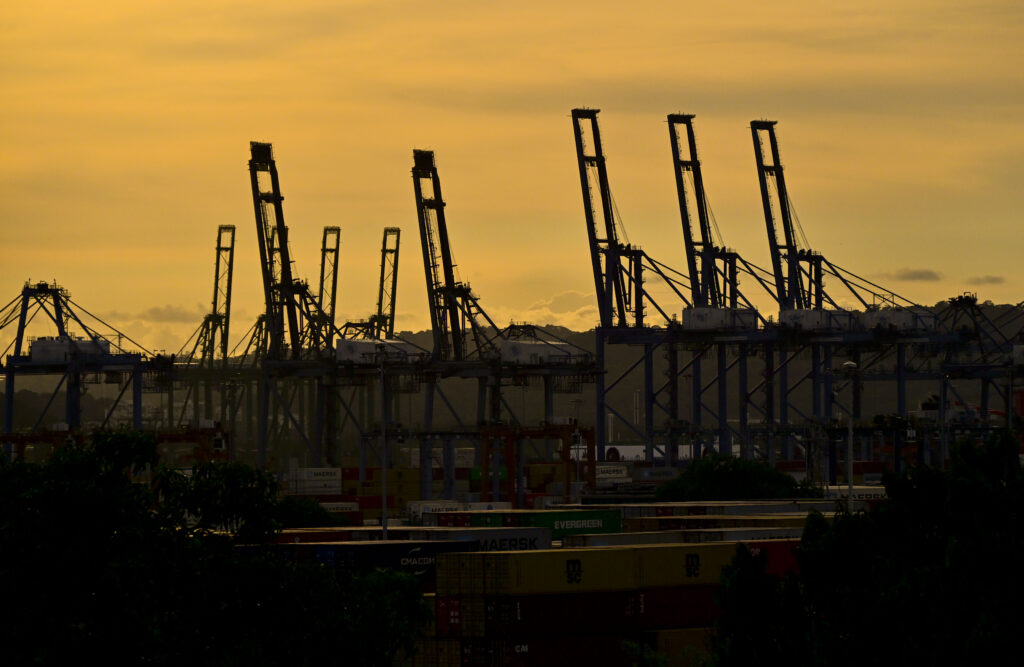
The Hong Kong firm in charge of two key Panama Canal ports has flouted the terms of its contract, according to a Panamanian audit released Monday, as US and Chinese firms fight for business on the waterway after President Donald Trump threatened to seize it.The audit found “many breaches” of the concession awarded to a subsidiary of logistics giant CK Hutchison to operate the two ports, and concluded that Panama did not receive $1.2 billion it was owed under the contract.The subsidiary, called Panama Ports, benefited from many tax exemptions and also had irregularities in a previous audit that was used to justify an extension of the concession first awarded in 1997, said state comptroller Anel Flores.”This is a very delicate issue,” Flores told journalists, adding that he would file a complaint with prosecutors in the coming days over the unpaid concession fees.The release of the audit results came hours before US Defense Secretary Pete Hegseth arrived in Panama, which has come under strong pressure from Trump to reduce Chinese influence on the US-built canal.The United States has said it is a threat to its national security — and the region as a whole — for a Hong Kong company to operate ports at either end of the canal connecting the Atlantic and Pacific, through which five percent of all global shipping passes.Hegseth will meet Panamanian President Jose Raul Mulino on Tuesday and visit the canal, which opened in 1914.He will also participate in a security conference with Central American officials.Although the waterway has been under Panamanian control since 1999 under international treaties, Trump has threatened to take it back, by force if necessary, arguing that it is effectively controlled by Beijing.- Trump threats -Flores on Monday denied that the announcement of Panama Ports failing to honor the concession contract had anything to do with the Hegseth visit.”This is an autonomous act by Panama,” Flores said.However, some analysts had predicted that this audit would in fact purport to show irregularities, so that Panama could strip the Chinese company of the contract and thus appease the Trump administration.”It comes as a surprise to no one that the audit turns up alleged irregularities, since the idea was to have some kind of legal justification strong enough to cancel the concession,” Euclides Tapia, a professor of international relations, told AFP.The state comptroller’s office is an autonomous body that examines how government money is spent.It began the audit of Panama Ports in late January to determine if it was honoring the concession contract, after Trump threatened to take over the canal.Faced with the US president’s repeated threats, the Central American country in turn has put pressure on CK Hutchison to relinquish its control of the ports.In March, the firm announced an agreement to sell 43 ports in 23 countries — including its two on the interoceanic Panama Canal — to a group led by US giant asset manager BlackRock for $19 billion in cash.A furious Beijing has since announced an antitrust review of the deal, which likely prevented the parties from signing an agreement on April 2 as had been planned.The Panama Ports concession to operate Balboa port on the Pacific side of the canal and Cristobal port on the Atlantic side was renewed for another 25 years in 2021.

Samsung forecast beats market expectations for first quarter

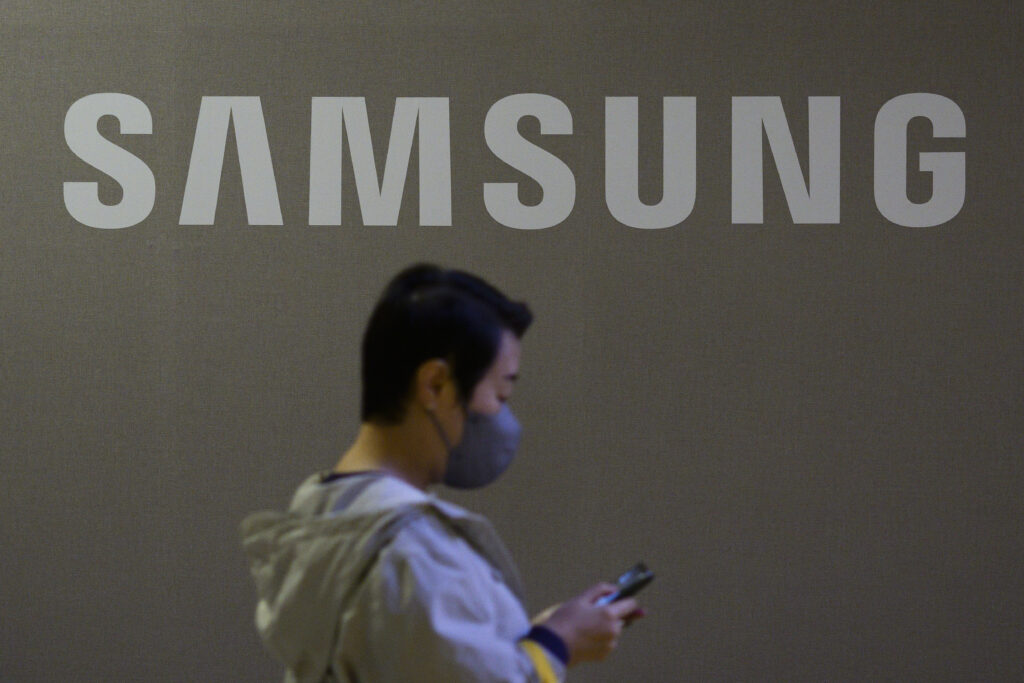
Samsung Electronics on Tuesday posted highest ever figures for its first quarter sales forecast and said it predicted a better-than-expected performance for profits, beating market expectations.The firm is the flagship subsidiary of South Korean giant Samsung Group, by far the largest of the family-controlled conglomerates that dominate business in Asia’s fourth-largest economy.The tech giant said in a regulatory filing that its January-March operating profits were expected to rise to 6.6 trillion won ($4.5 billion), down 0.15 percent from a year earlier but up nearly two percent on the previous quarter.This was almost 34 percent higher than the average estimate, according to South Korea’s Yonhap news agency, which cited its own financial data firm.Sales were also seen increasing to 79 trillion won, a near 10 percent jump from a year earlier, marking the highest first-quarter figure on record and the second-highest quarterly revenue ever. The company did not disclose its net income or the detailed earnings of its business divisions. Analysts credit the high figures to record sales of the new Galaxy S25 series phone, which was released in February.The gadget became the fastest ever Galaxy device to reach one million units sold in the shortest time — within 21 days.Shares in Samsung rose more than two percent in Seoul on Tuesday.The revenue and sales growth was due to strong demand for server DRAM — mostly used in data centres — which offset slowing prices for more conventional high-end chips, TrendForce analyst Tom Hsu told AFP.There was “strong purchase momentum” from some US and Chinese cloud service providers, who were investing in their data centres, he said. But “with the US government imposing substantial tariffs, leading to a potential for economic uncertainties”, demand is likely to fall, which could hit future prices, he added.The announcement comes a day after the stock market collapsed on a black Monday in Asia and Europe after China retaliated against steep US tariffs.Experts warn the move could also impact Samsung, as more than half of its smartphones are made in Vietnam, which now faces a 46 percent US duty.”Samsung’s consensus-beating first-quarter operating profit implies its popular product offerings, such as Galaxy smartphones, could weather a tough business environment, when combined with strong cost control capabilities,” Bloomberg Intelligence analysts said.”Yet the pace of profit growth might slow in the second quarter given most of its smartphones are made in Vietnam, which subjects them to US import tariffs. A recovery in memory chip prices is a bright spot.”Samsung said it had no comment when contacted by AFP.

Asian markets stage mild rebound but Trump tariff uncertainty reigns

Asian markets battled Tuesday to recover from the previous day’s tariff-fuelled collapse, though Donald Trump’s warning of more measures against China and Beijing’s vow to fight “to the end” raised concerns the trade war could worsen.Equities across the world have been hammered since the US president unveiled sweeping levies against friend and foe, upending trading norms, sparking talk of a global recession and wiping trillions of company valuations.Investors fought to claw back some of those losses as they try to assess the possibility that Washington could temper some of the tariffs. Tokyo traded up more than six percent — recovering much of Monday’s drop — after Japanese Prime Minister Shigeru Ishiba held talks with Trump.However, the US leader’s threat to hit China with an extra 50 percent tariffs — in response to its 34 percent retaliation in kind — ramped up the chances of a catastrophic stand-off between the two economic superpowers.Trump said he would impose the additional levies if Beijing did not heed his warning not to push back against his barrage of tariffs. China fired back that it would “never accept” such a move and called the potential escalation “a mistake on top of a mistake”.”If the US insists on going its own way, China will fight it to the end,” a spokesperson for Beijing’s commerce ministry said on Tuesday.In light of the turmoil gripping markets, Trump told Americans to “be strong, courageous, and patient”.While uncertainty rules, investors in most markets took the opportunity to pick up some beaten-down stocks.In Tokyo, Nippon Steel piled on around 11 percent after Trump launched a review of its proposed takeover of US Steel that was blocked by his predecessor Joe Biden.Hong Kong gained more than two percent but was well off recouping Monday’s loss of more than 13 percent that was the biggest one-day retreat since 1997.  Sydney, Seoul, Wellington and Manila also rose.Shanghai was also up Tuesday after China’s central bank promised to back major state-backed fund Central Huijin Investment in a bid to maintain “the smooth operation of the capital market”. The advance followed a less painful day on Wall Street, where the S&P and Dow fell but pared earlier losses, while the Nasdaq edged up.Oil prices also enjoyed some respite, gaining more than one percent.Others however were not as fortunate. Taipei shed more than four percent to extend the previous day’s record loss of 9.7 percent, while Singapore also suffered further selling.Trading in Jakarta was suspended soon after the open as it plunged more than nine percent as investors returned from an extended holiday, while the bourse in Vietnam — which has been hit with 46 percent tariffs — shed five percent.Analysts warned that things could get worse. “If none of the announced tariffs are reversed by deal-making in the next four weeks or so, the global economy risks entering an ‘oil price shock’ type crisis by mid-year,” said Vincenzo Vedda, global chief investment officer at DWS.Pepperstone’s Chris Weston added: “Most see a low probability that China will fold on its 34 percent tariff countermeasure, so we assume a high risk that Trump will follow through with an additional 50 percent tariff rate.”And JPMorgan Chase CEO Jamie Dimon told shareholders: “Whether or not the menu of tariffs causes a recession remains in question, but it will slow down growth.”He added that “the recent tariffs will likely increase inflation”.The trade war has also put the Federal Reserve in the spotlight as economists say it could send prices surging. Bank officials are now having to decide whether to cut interest rates to support the economy, or keep them elevated to keep a lid on inflation.”Because the tariffs announced thus far are higher than previously expected, we think the risk is now skewed toward more rate cuts by year-end,” said Nuveen chief investment officer Saira Malik. “The debate around further cuts, however, has shifted from inflation to decelerating growth. Notably, our probability-weighted guidance has increased from a total of four Fed cuts through 2025 and 2026 to 6.6 cuts.”- Key figures around 0240 GMT -Tokyo – Nikkei 225: UP 6.1 percent at 33,030.66 (break)Hong Kong – Hang Seng Index: UP 2.2 percent at 20,245.43Shanghai – Composite: UP 0.4 percent at 3,107.75Euro/dollar: UP at $1.0967 from $1.0904 on MondayPound/dollar: UP at $1.2785 from $1.2723Dollar/yen: DOWN at 147.36 yen from 147.83 yen Euro/pound: UP at 85.79 pence from 85.68 penceWest Texas Intermediate: UP 1.4 percent at $61.54 per barrelBrent North Sea Crude: UP 1.1 percent at $64.92 per barrelNew York – Dow: DOWN 0.9 percent at 37,965.60 (close)London – FTSE 100: DOWN 4.4 percent at 7,702.08 (close)

Spain PM heads to China, Vietnam as US tariff blitz bites

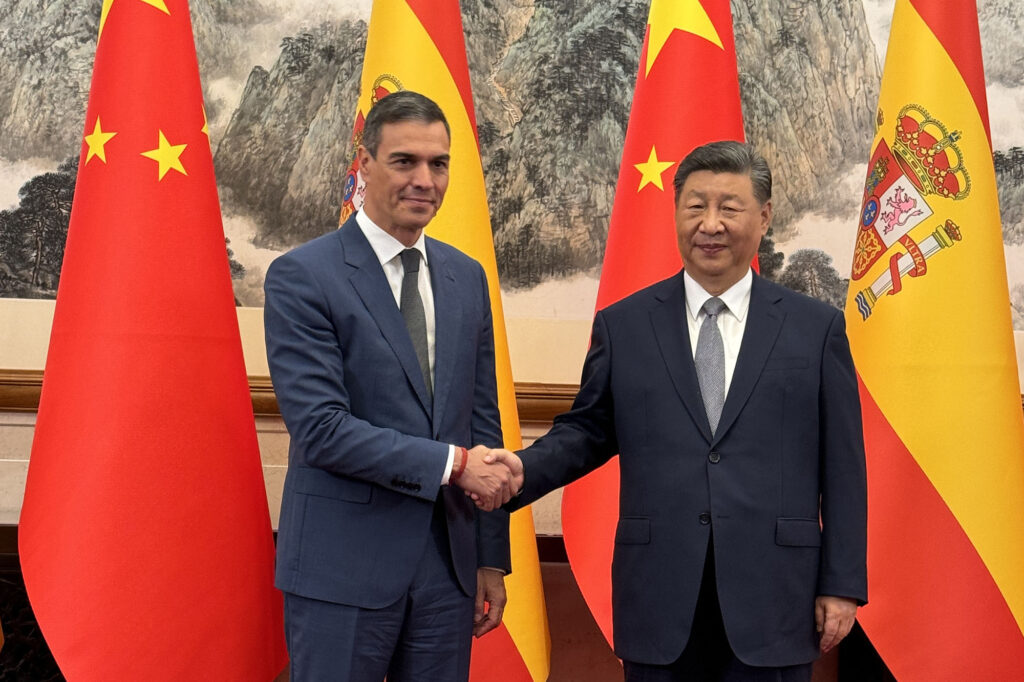
Spanish Prime Minister Pedro Sanchez aims to open new market opportunities during a visit to China and Vietnam this week on the heels of US President Donald Trump’s sweeping tariffs.The trip comes as the European Union rethinks its global trading relationships amid turmoil caused by the US import duties announced last week that have sent world markets into a tailspin.Sanchez is to arrive in Hanoi on Wednesday for talks with Vietnam’s top leader, To Lam, on the same day Trump’s 20 percent tariffs on EU products come into force.On Thursday, he will travel to Ho Chi Minh City, the Asian manufacturing powerhouse’s commercial capital, to meet with business leaders.The Socialist prime minister then heads to China for his third visit in just over two years, where he is scheduled to meet President Xi Jinping and Chinese investors on Friday.China and Vietnam currently sell much more to Spain than they buy.Trump last week announced he would hit China with an additional 34 percent tariff on top of a 20 percent levy imposed this year. On Monday, he threatened additional tariffs of 50 percent from Wednesday if China did not withdraw its retaliatory measures.Vietnam, where Sanchez will make the first official visit by a Spanish prime minister, is to be hit with a thumping 46 percent tariff.- ‘A mistake’ -Sanchez broke with the rest of the EU on his last trip to China in September 2024, urging the bloc to reconsider plans to impose high tariffs on Chinese electric cars and calling for a “fair trade order”.The EU argued that the tariffs were necessary to protect European producers from unfair competition from state-backed Chinese firms.China reacted by launching a probe into imports of EU pork products. Spain is the bloc’s biggest exporter of pork products to China.Sanchez “has tried to present himself as a bridge between Brussels and China and to be one of the voices calling for pragmatism” that puts the economy first, said Ines Arco, an Asia specialist at the Barcelona Centre for International Affairs, a think tank.Spain’s conservative opposition and media have however accused Sanchez of acting on his own and without coordination with Brussels.”It’s a mistake to want to switch from the United States to China overnight,” said Alberto Nunez Feijoo, leader of Spain’s main opposition conservative Popular Party.- ‘Level playing field’ -Brussels, however, has recently signalled that it wants smoother ties with Beijing.After Trump’s return to the White House in January, EU chief Ursula von der Leyen called for “constructive engagement with China”. And the bloc’s trade commissioner, Maros Sefcovic, recently visited China to “promote a more balanced and cooperative trade relationship”.The “clear objective” of Sanchez’s trip is to increase Spain’s exports to China, given the huge trade imbalance that exists, said Miguel Otero, a senior analyst at the Elcano Royal Institute think tank in Madrid.Spain buys some 45 billion euros ($49.1 billion) of goods from China per year, its fourth-largest trading partner, but sells it just some 7.4 billion euros.Sanchez will also seek to attract more green tech investment after Chinese carmaker Chery announced last year it would open its first European electric car factory in Barcelona.Another major Chinese carmaker, BYD, is mulling a new investment in Europe after opening an electric vehicle plant in Hungary, and Spain could be a candidate, said Arco.Spanish Economy Minister Carlos Cuerpo said Monday that Madrid wants to reach “negotiated agreements” with China “to open up our markets, but always with a degree of protection… our companies, our industries should play on a level playing field”.