Afp Business Asia

Hopes rise on second day of US-China trade talks

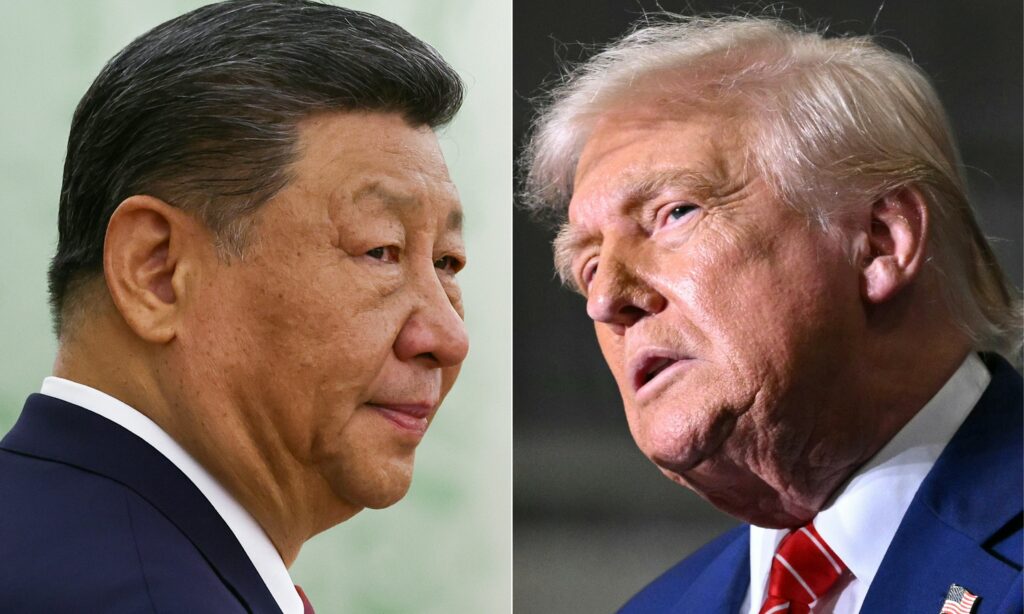
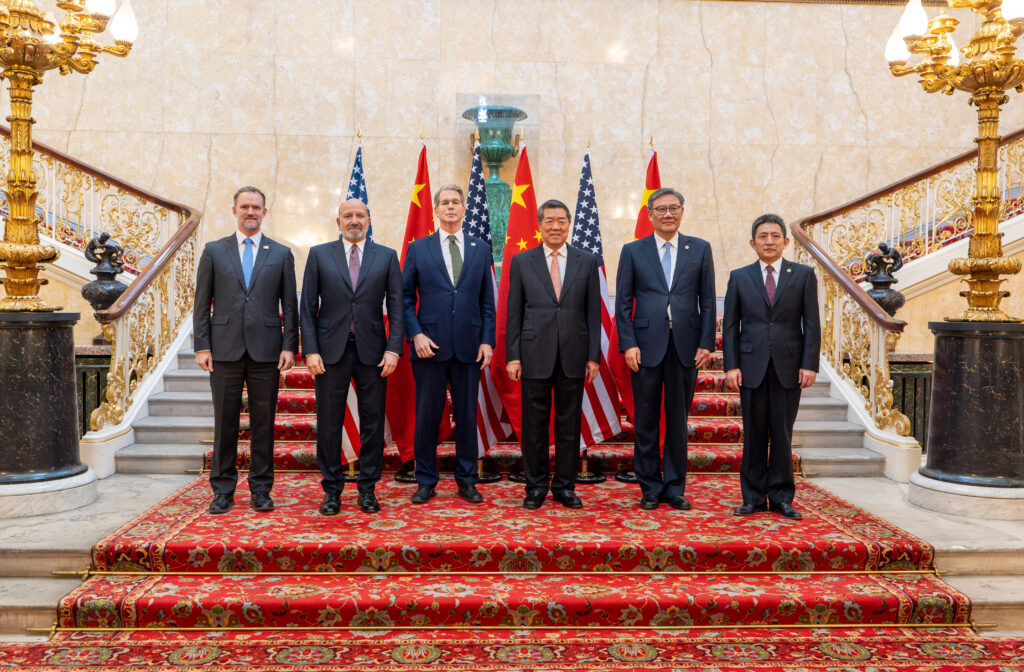
The United States and China huddled for a second day of talks in London on Tuesday, with Washington sending positive signals that the two superpowers might resolve a bitter trade war dragging on the global economy.The talks were “going well,” US Commerce Secretary Howard Lutnick told Bloomberg Television, adding he expected Tuesday’s discussions to last “all day”.Global stock markets were muted on Tuesday as investors awaited the outcome of the talks aimed at cementing a fragile truce in the trade war.With talks dragging on, “the lack of positive headlines weighed on stocks and the dollar,” said Kathleen Brooks, research director at XTB trading platform.But one of US President Donald Trump’s top advisers had said Monday he expected “a big, strong handshake” after the talks in the UK’s historic Lancaster House.Trump told reporters at the White House on Monday: “We are doing well with China. China’s not easy.”He added: “I’m only getting good reports.”The gathering of key officials from the world’s two biggest economies began Monday in London, after an earlier round of talks in Geneva last month.China’s exports of rare earth minerals used in a wide range of things including smartphones, electric vehicle batteries and green technology are expected to dominate the agenda. “In Geneva, we had agreed to lower tariffs on them, and they had agreed to release the magnets and rare earths that we need throughout the economy,” Trump’s top economic adviser, Kevin Hassett, told CNBC on Monday.But even though Beijing was releasing some supplies, “it was going a lot slower than some companies believed was optimal”, he added.Still, he said he expected “a big, strong handshake” at the end of the talks.”Our expectation is that after the handshake, any export controls from the US will be eased, and the rare earths will be released in volume,” Hassett added.He also said the Trump administration might be willing to ease some recent curbs on tech exports.- Concessions? -Tensions between Washington and Beijing have heightened since Trump took office in January, with both countries engaging in a tariffs war hiking duties on each other’s exports.The Geneva pact to cool tensions temporarily brought new US tariffs on Chinese goods down from a staggering 145 percent to 30 percent, and Chinese countermeasures from 125 percent to 10 percent.But Trump recently said China had “totally violated” the deal.And analysts remained cautious.”We doubt that the US will back off completely. That’s likely to restrain any relief rally,” said Thomas Mathews, head analyst of Asia Pacific markets for Capital Economics.Ipek Ozkardeskaya, senior analyst at the Swissquote Bank, said although there had been “no breakthrough” it seemed “the first day of the second round of negotiations reportedly went relatively well”.”Rumours are circulating that the US may be willing to make concessions on tech exports in exchange for China easing restrictions on rare earth metal exports,” she said.On what he dubbed “Liberation Day” in April, Trump slapped sweeping levies of 10 percent on friend and foe alike, and threatened steeper rates on dozens of economies.The tariffs have already dented trade, with official figures from Beijing showing Chinese exports to the United States in May plunged by 12.7 percent.China is also in talks with other trading partners — including Japan and South Korea — to try to build a united front to counter Trump’s tariffs.Chinese leader Xi Jinping on Tuesday urged South Korea’s new President Lee Jae-myung to work with Beijing to uphold free trade and ensure “the stability and smooth functioning of global and regional industrial and supply chains,” the Xinhua news agency said.Chinese Vice Premier He Lifeng is heading the team in London, which included Commerce Minister Wang Wentao and China International Trade Representative Li Chenggang.US Treasury Secretary Scott Bessent, Lutnick and Trade Representative Jamieson Greer are leading the US delegation.
Stocks mixed as investors track US-China trade talks

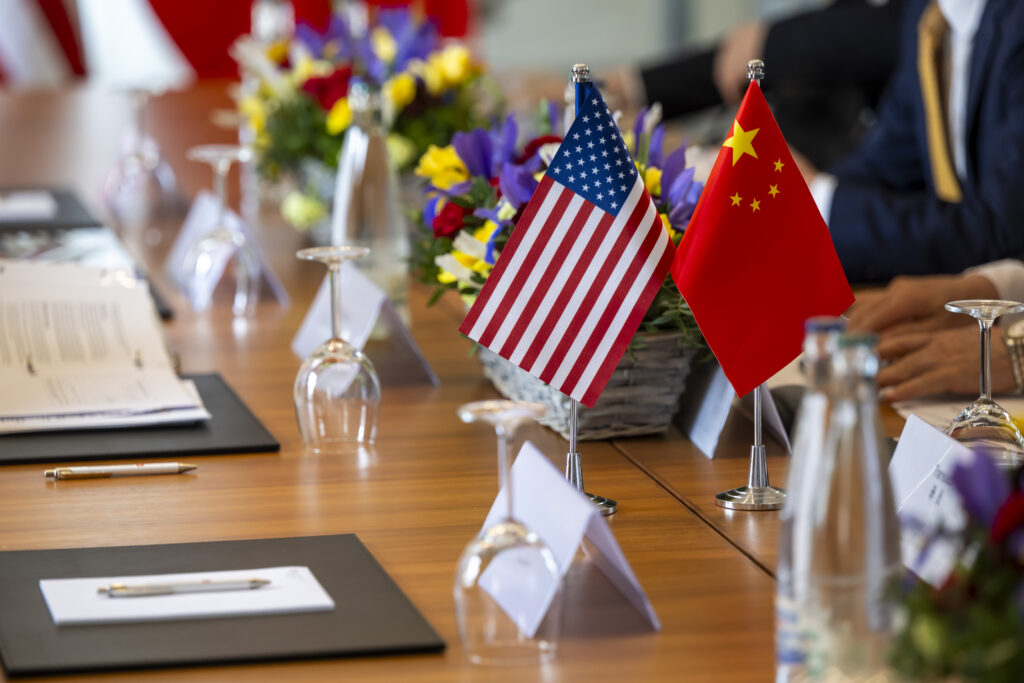
Global stock markets diverged on Tuesday as investors waited for the outcome of US-China talks aimed at cementing a fragile trade war truce between the world’s two biggest economies.US and European indices were mixed, and Asia mostly closed down, with analysts saying much was riding on the talks in London, which were in their second day.US Commerce Secretary Howard Lutnick told Bloomberg Television that the talks were “going well” and that he expected Tuesday’s discussions to last “all day”.With talks dragging on, “the lack of positive headlines weighed on stocks and the dollar,” said Kathleen Brooks, research director at XTB trading platform.Analysts said that any positive sign of agreement would fuel a rise in equities — but that could be restrained.”We wouldn’t bank on a big turnaround thanks to any potential trade breakthroughs,” said Thomas Mathews, head analyst of Asia Pacific markets for Capital Economics.”We doubt that the US will back off completely. That’s likely to restrain any relief rally,” he said.The talks were expected to be dominated by Chinese exports of rare earth minerals used in a wide range of things including smartphones, electric vehicle batteries and green technology.In New York, the broad S&P 500 index and the tech-heavy Nasdaq were both trading higher, but the blue-chip Dow was struggling.In Europe, Paris’s CAC 40 was barely higher, and Frankfurt’s Dax slipped.European shares could be weakened by the conspicuous lack of any deal between Washington and Brussels before a July 9 deadline for 50-percent US tariffs to take effect.Brooks said the upside for the dollar — which was weaker on Tuesday — was limited, depending on the scope of any US-China agreement.”For the dollar to meaningfully retrace some recent losses, we do not think that positive headlines will be enough,” she said.”A trade agreement with an actionable plan to get trade between the US and China flowing freely for the long term is the only way to stop the slide in the buck, in our view.”While other markets sputtered, London’s FTSE 100 index was on course to close at a record high after weak UK unemployment data raised the chances of the Bank of England cutting interest rates into next year, which often propels stock prices.Investors are also awaiting key US inflation data this week, which could impact the Federal Reserve’s monetary policy.Analysts warn Trump’s tariffs will refuel inflation, strengthening the argument to keep interest rates on hold instead of lowering them when the Fed meets next week.The Fed faces pressure from the president to cut rates.Oil prices ticked up, partly from continued uncertainty about the direction of US-Iran talks on Tehran’s nuclear programme. Iran said a new round of talks was planned for Sunday, in the Omani capital Muscat — but Trump had earlier said the meeting was expected on Thursday. Each side has drawn up proposals for the other to consider.- Key figures at around 1335 GMT -New York – Dow: FLAT at 42,752.41 pointsNew York – S&P 500: UP 0.1 percent at 6,012.73New York – Nasdaq Composite: UP 0.1 percent at 19,608.41London – FTSE 100: UP 0.5 percent at 8,873.85Paris – CAC 40: FLAT at 7,793.72Frankfurt – DAX: DOWN 0.4 percent at 24,076.70Tokyo – Nikkei 225: UP 0.3 percent at 38,211.51 (close)Hong Kong – Hang Seng Index: DOWN 0.1 percent at 24,162.87 (close)Shanghai – Composite: DOWN 0.4 percent at 3,384.82 (close)Euro/dollar: UP at $1.1445 from $1.1420 on MondayPound/dollar: DOWN at $1.3531 from $1.3552Dollar/yen: DOWN at 144.49 yen 144.60 yenEuro/pound: UP 84.58 pence from 84.27 penceBrent North Sea Crude: UP 0.4 percent at $67.33 per barrelWest Texas Intermediate: UP 0.4 percent at $65.53 per barrel

Stocks mostly fall as China-US resume trade talks

Major stocks markets mostly dropped in Asia and Europe on Tuesday as investors waited for the outcome of US-China talks aimed at cementing a fragile trade war truce between the world’s two biggest economies.London’s benchmark FTSE 100 index bucked the trend as it was on course to close at a record high after weak UK unemployment data raised chances the Bank of England will cut interest rates into next year.”US-China trade talks are the main focus for investors,” noted Neil Wilson, UK investor strategist at Saxo Markets.”A good outcome could send Wall Street to a fresh record high” when trading resumes Tuesday, he added.The world’s two biggest economies are holding a second day of trade talks in London, seeking to shore up a shaky tariff truce in a bitter row deepened by export curbs.One of US President Donald Trump’s top advisers said he expected “a big, strong handshake” at the end of the discussions.Trump told reporters at the White House: “We are doing well with China. China’s not easy.”I’m only getting good reports.”The agenda is expected to be dominated by exports of rare earth minerals used in a wide range of things including smartphones, electric vehicle batteries and green technology.”Investors remain on tenterhooks as talks between the US and China spill over to today, with a nuanced situation yet to be resolved,” said Richard Hunter, head of markets at Interactive Investor.”For the time being, the pause in tariff hostilities is a positive starting point as the US seeks the restoration of rare earth mineral exports from China which would inevitably result in a mutual relaxation.”Investors are awaiting also key US inflation data this week, which could impact the Federal Reserve’s monetary policy.Analysts warn Trump’s tariffs will refuel inflation, strengthening the argument to keep interest rates on hold instead of lowering them.The Fed faces pressure from the president to cut rates, with bank officials due to make a decision at their policy meeting next week.While the Bank of England is expected to pause on rates at its next meeting this month, analysts now see it cutting on at least two occasions this year and again in early 2026 after Tuesday’s jobs data, which also showed slowing wages growth.News of dampened inflationary pressure weighed heavily on the pound, boosting the London stock market, which has benefitted this year from the UK government striking post-Brexit trade agreements with the US and India.Prime Minister Keir Starmer’s Labour administration has managed also to shield Britain against Trump’s most severe tariff rates.- Key figures at around 1100 GMT -London – FTSE 100: UP 0.4 percent at 8,869.51 pointsParis – CAC 40: DOWN 0.1 percent at 7,782.46 Frankfurt – DAX: DOWN 0.5 percent at 24,060.83Tokyo – Nikkei 225: UP 0.3 percent at 38,211.51 (close)Hong Kong – Hang Seng Index: DOWN 0.1 percent at 24,162.87 (close)Shanghai – Composite: DOWN 0.4 percent at 3,384.82 (close)New York – Dow: FLAT at 42,761.76 (close)Euro/dollar: UP at $1.1424 from $1.1420 on MondayPound/dollar: DOWN at $1.3498 from $1.3552Dollar/yen: UP at 144.63 yen 144.60 yenEuro/pound: UP 84.62 pence from 84.27 penceBrent North Sea Crude: UP 0.5 percent at $67.37 per barrelWest Texas Intermediate: UP 0.5 percent at $65.62 per barrelburs-bcp/ajb/lth

Hopes rise as US and China hold second day of trade talks

The United States and China began a second day of trade talks on Tuesday, seeking to shore up a shaky tariff truce in a bitter row deepened by export curbs.The gathering of key officials from the world’s two biggest economies began Monday in London, after an earlier round of talks in Geneva last month.Stock markets wavered as investors hoped the talks will bring some much-needed calm on trading floors and ease tensions between the economic superpowers.A US Treasury spokesman told AFP on Tuesday the “talks resumed earlier this” morning.One of US President Donald Trump’s top advisers said he expected “a big, strong handshake” at the end of the talks in the historic Lancaster House, operated by the UK foreign ministry.Trump told reporters at the White House on Monday: “We are doing well with China. China’s not easy.”I’m only getting good reports.”The agenda is expected to be dominated by exports of rare earth minerals used in a wide range of things including smartphones, electric vehicle batteries and green technology.”In Geneva, we had agreed to lower tariffs on them, and they had agreed to release the magnets and rare earths that we need throughout the economy,” Trump’s top economic adviser, Kevin Hassett, told CNBC on Monday.But even though Beijing was releasing some supplies, “it was going a lot slower than some companies believed was optimal”, he added.Still, he said he expected “a big, strong handshake” at the end of the talks.”Our expectation is that after the handshake, any export controls from the US will be eased, and the rare earths will be released in volume,” Hassett added.He also said the Trump administration might be willing to ease some recent curbs on tech exports.- Concessions? -Tensions between Washington and Beijing have heightened since Trump took office in January, with both countries engaging in a tariffs war hiking duties on each other’s exports to three figures — an effective trade embargo.The Geneva pact to cool tensions temporarily brought new US tariffs on Chinese goods down from 145 percent to 30 percent, and Chinese countermeasures from 125 percent to 10 percent.But Trump recently said China had “totally violated” the deal.”Investors are willing to grab on to any positive trade headline right now, as this is keeping hopes of a rally alive,” said Kathleen Brooks, research director at trading group XTB.Ipek Ozkardeskaya, senior analyst at the Swissquote Bank, said that although there had been “no breakthrough” it seemed “the first day of the second round of negotiations reportedly went relatively well”.”Rumours are circulating that the US may be willing to make concessions on tech exports in exchange for China easing restrictions on rare earth metal exports,” she said.Rare earth shipments from China to the US have slowed since the tariff war was triggered by Trump’s so-called “Liberation Day” announcements, according to Brooks.The US leader slapped sweeping levies of 10 percent on friend and foe alike, and threatened steeper rates on dozens of economies.The tariffs have already had a sharp effect, with official figures from Beijing showing Chinese exports to the United States in May plunged by 12.7 percent.China is also in talks with other trading partners — including Japan and South Korea — to try to build a united front to counter Trump’s tariffs.Chinese leader Xi Jinping on Tuesday urged South Korea’s new President Lee Jae-myung to work with Beijing to uphold free trade to ensure “the stability and smooth functioning of global and regional industrial and supply chains.””A healthy, stable, and continuously deepening China–South Korea relationship aligns with the trend of the times,” Xi said in a phone call, according to the Xinhua news agency.Chinese Vice Premier He Lifeng is heading the team in London, which included Commerce Minister Wang Wentao and China International Trade Representative Li Chenggang.US Treasury Secretary Scott Bessent, Commerce Secretary Howard Lutnick and Trade Representative Jamieson Greer are leading the US delegation.
Most markets extend gains as China-US talks head into second day

Stocks mostly rose Tuesday as the latest round of China-US trade talks moved into a second day, with one of Donald Trump’s top advisers saying he expected “a big, strong handshake”.There is optimism the negotiations — which come after the US president spoke to Chinese counterpart Xi Jinping last week — will bring some much-needed calm to markets and ease tensions between the economic superpowers.This week’s meeting in London will look to smooth relations after Trump accused Beijing of violating an agreement made at a meeting of top officials last month in Geneva that ended with the two sides slashing tit-for-tat tariffs.The key issues on the agenda at the talks are expected to be exports of rare earth minerals used in a wide range of things including smartphones and electric vehicle batteries.”In Geneva, we had agreed to lower tariffs on them, and they had agreed to release the magnets and rare earths that we need throughout the economy,” Trump’s top economic adviser, Kevin Hassett, told CNBC on Monday.But even though Beijing was releasing some supplies, “it was going a lot slower than some companies believed was optimal”, he added.Still, he said he expected “a big, strong handshake” at the end of the talks.”Our expectation is that after the handshake, any export controls from the US will be eased, and the rare earths will be released in volume,” Hassett added.He also said the Trump administration might be willing to ease some recent curbs on tech exports.The president told reporters at the White House: “We are doing well with China. China’s not easy.”I’m only getting good reports.”After a strong start, Asian markets stuttered in the afternoon, though it was not immediately clear what had prompted the step back.Tokyo, Sydney, Seoul, Wellington, Taipei, Mumbai, Bangkok and Jakarta rose but Hong Kong and Shanghai reversed their initial rallies as investors grew nervous ahead of the resumption of the talks.Singapore and Manila also slipped.London and Paris rose but Frankfurt was slightly lower.”The bulls will layer into risk on any rhetoric that publicly keeps the two sides at the table,” said Pepperstone’s Chris Weston.”And with the meeting spilling over to a second day, the idea of some sort of loose agreement is enough to underpin the grind higher in US equity and risk exposures more broadly.”Investors are also awaiting key US inflation data this week, which could impact the Federal Reserve’s monetary policy amid warnings Trump’s tariffs will refuel inflation strengthening the argument to keep interest rates on hold.However, it also faces pressure from the president to cut rates, with bank officials due to make a decision at their meeting next week.While recent jobs data has eased concerns about the US economy, analysts remain cautious.”Tariffs are likely to remain a feature of US trade policy under President Trump,” said Matthias Scheiber and John Hockers at Allspring Global Investments.”A strong US consumer base was helping buoy the global economy and avoid a global recession.”However, they also warned: “The current global trade war coupled with big spending cuts by the US government and possibly higher US inflation could derail US consumer spending to the point that the global economy contracts for multiple quarters.”- Key figures at around 0810 GMT -Tokyo – Nikkei 225: UP 0.3 percent at 38,211.51 (close)Hong Kong – Hang Seng Index: DOWN 0.1 percent at 24,162.87 (close)Shanghai – Composite: DOWN 0.4 percent at 3,384.82 (close)London – FTSE 100: UP 0.4 percent at 8,862.93Euro/dollar: DOWN at $1.1392 from $1.1420 on MondayPound/dollar: DOWN at $1.3470 from $1.3552Dollar/yen: UP at 144.73 yen 144.60 yenEuro/pound: UP 84.56 from 84.27 penceWest Texas Intermediate: DOWN 0.2 percent at $65.18 per barrelBrent North Sea Crude: DOWN 0.1 percent at $66.97 per barrelNew York – Dow: FLAT at 42,761.76 (close)

Huawei founder says chips still lag ‘one generation’ behind US

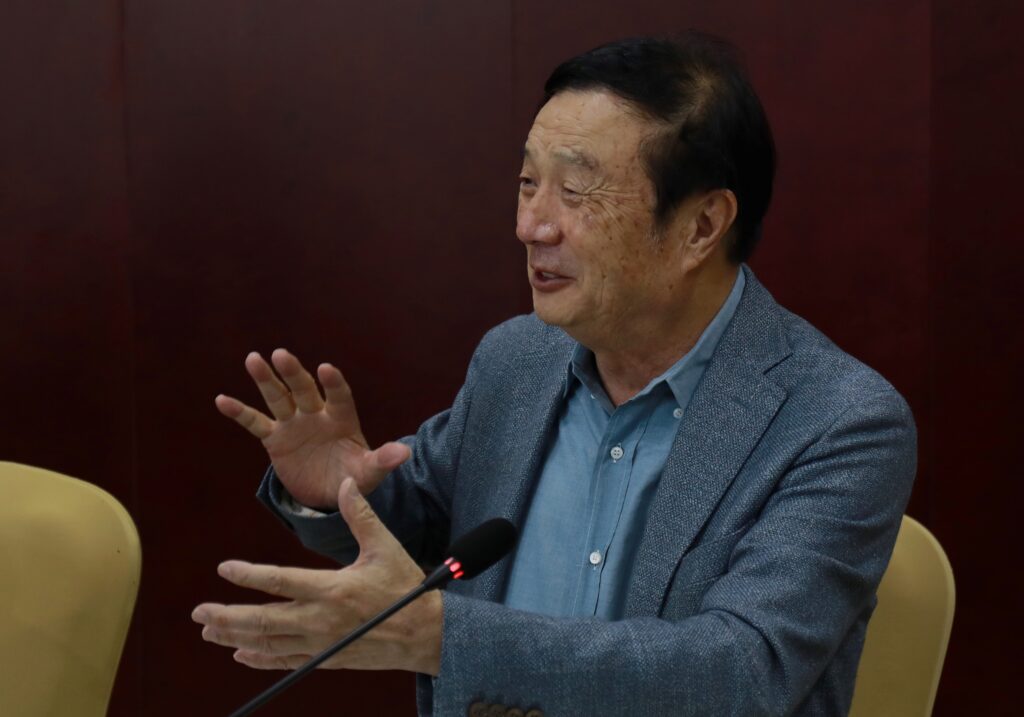
Chinese tech giant Huawei’s chips still “lag behind the United States by one generation”, state media quoted its founder and CEO Ren Zhengfei as saying in a rare interview on Tuesday.Washington last month unveiled fresh guidelines warning firms that using Chinese-made high-tech AI semiconductors, specifically Huawei’s Ascend chips, would put them at risk of violating US export controls.The Shenzhen-based company has been at the centre of an intense standoff between the economic supergiants after Washington warned its equipment could be used for espionage byBeijing, an allegation Huawei denies.Speaking to the People’s Daily, the official newspaper of the ruling Communist Party, 80-year-old Ren insisted the United States had “exaggerated” Huawei’s achievements.Tougher controls in recent years have prevented US chip giant Nvidia, one of Huawei’s rivals, from selling certain AI semiconductors — widely regarded as the most advanced in the world — to Chinese firms.As a result, it is now facing tougher competition from local players in the crucial market, including Huawei.Nvidia’s chief executive Jensen Huang told reporters last month that Chinese companies “are very, very talented and very determined, and the export control gave them the spirit, the energy and the government support to accelerate their development”.But Ren said Huawei was “not that great yet”, according to the article published on the newspaper’s front page Tuesday.”Many companies in China are making chips, and quite a few are doing well — Huawei is just one of them,” he added.When asked about “external blockades and suppression” — a veiled reference to US export restrictions on Beijing — Ren said he had “never thought about it”.”Don’t dwell on the difficulties, just get the job done and move forward step by step,” he added. Sanctions since 2019 have curtailed the firm’s access to US-made components and technologies, forcing it to diversify its growth strategy.China has accused the United States of “bullying” and “abusing export controls to suppress and contain” the country’s firms.

Indonesia revokes most mining permits in dive hotspot after outcry

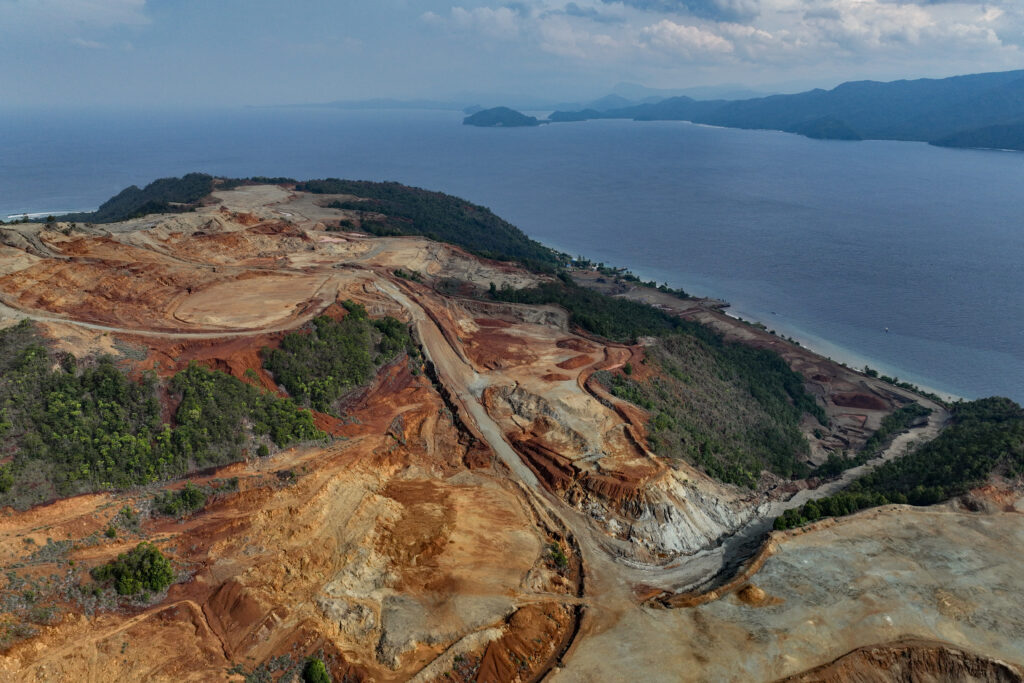
Indonesia revoked permits on Tuesday for four of the five mining companies operating in the eastern archipelago of Raja Ampat after activists shared videos of islands damaged by nickel extraction.The cluster of islands and shoals in Southwest Papua Province sits in the Coral Triangle and is thought to be one of the world’s most pristine reefs, with its clear blue waters making it a popular diving spot.Indonesia has the world’s largest nickel reserves and is the biggest producer of the metal, which is used in electric vehicle batteries and stainless steel, and a 2020 export ban has spurred a domestic industrial boom.Last week, Greenpeace Indonesia published videos showing environmental damage to three islands because of nickel mining projects, including one clip which racked up more than 15 million Instagram views.President Prabowo Subianto “decided that the government will revoke the mining business licence of four companies in Raja Ampat”, state secretariat minister Prasetyo Hadi told reporters.Energy and mineral resources minister Bahlil Lahadalia said “they have violated” regulations.”We believe this region must be protected,” he said.Greenpeace said nickel exploitation on the islands of Gag, Kawe and Manuran had led to the destruction of more than 500 hectares (1,200 acres) of forest and vegetation.Environmentalists say coral reefs and marine life are threatened by the operations, but Bahlil denied the surrounding environment had been harmed.”If people say the coral reefs and the ocean have been damaged, you can see for yourself. Please be careful to differentiate which one is real and which one is not,” he said.- ‘Make sure they stop’ -The NGO’s campaign led to growing calls by politicians and celebrities for the licences to be withdrawn.The four companies impacted by the immediate ban are PT Anugerah Surya Pratama, PT Nurham, PT Kawei Sejahtera Mining and PT Mulia Raymond Perkasa. PT Nurham received its mining permits this year and has not started production but the other three have had them since 2013, according to the energy ministry.One more company — PT Gag Nikel — will continue to operate on Raja Ampat’s Gag island but be closely monitored, said Bahlil. It received its operational permit in 2017.The three affected islands are categorised as small islands that under Indonesian law should be off-limits to mining, Greenpeace said.Greenpeace Indonesia said the decision was a good start but the government needed to take further action.”We appreciate this decision but we need to make sure the decision will be implemented. We need to make sure they stop,” forest campaign team leader Arie Rompas said.He warned the government could reissue the permits later or the companies could appeal the decision in court.The activist said the government should also revoke the operating permit for the fifth company.A report last week by Climate Rights International alleged the Indonesian government was allowing environmental damage and violations against Indigenous people to go unchecked by nickel mining firms in the eastern Maluku islands.Processing and mining operations have grown there around Weda Bay, the world’s largest nickel mine by production, but have led to locals reporting a spike in air pollution from smelters and rivers polluted by nickel tailings in soil carried by rain.An AFP report last month detailed how the home of the nomadic Hongana Manyawa tribe was being eaten away by that mine, with members issuing a call for nickel companies to leave their tribal lands alone.

Asian markets extend gains as China-US talks head into second day

Asian stocks squeezed out more gains Tuesday as the latest round of China-US trade talks moved into a second day, with one of Donald Trump’s top advisers saying he expected “a big, strong handshake”.There is optimism the negotiations — which come after the US president spoke to Chinese counterpart Xi Jinping last week — will bring some much-needed calm to markets and ease tensions between the economic superpowers.The advances in Asian equities built on Monday’s rally and followed a broadly positive day on Wall Street, where the S&P 500 edged closer to the record high touched earlier in the year.This week’s meeting in London will look to smooth relations after Trump accused Beijing of violating an agreement made at a meeting of top officials last month in Geneva that ended with the two sides slashing tit-for-tat tariffs.The key issues on the agenda at the talks are expected to be exports of rare earth minerals used in a wide range of things including smartphones and electric vehicle batteries.”In Geneva, we had agreed to lower tariffs on them, and they had agreed to release the magnets and rare earths that we need throughout the economy,” Trump’s top economic adviser, Kevin Hassett, told CNBC on Monday.But even though Beijing was releasing some supplies, “it was going a lot slower than some companies believed was optimal”, he added.Still, he said he expected “a big, strong handshake” at the end of the talks.”Our expectation is that after the handshake, any export controls from the US will be eased, and the rare earths will be released in volume,” Hassett added.He also said the Trump administration might be willing to ease some recent curbs on tech exports.The president told reporters at the White House: “We are doing well with China. China’s not easy.”I’m only getting good reports.”Tokyo led gains in Asian markets, with Hong Kong, Shanghai, Sydney, Seoul, Singapore, Taipei, Wellington and Jakarta also well up.”The bulls will layer into risk on any rhetoric that publicly keeps the two sides at the table,” said Pepperstone’s Chris Weston.”And with the meeting spilling over to a second day, the idea of some sort of loose agreement is enough to underpin the grind higher in US equity and risk exposures more broadly.”Investors are also awaiting key US inflation data this week, which could impact the Federal Reserve’s monetary policy amid warnings Trump’s tariffs will refuel inflation strengthening the argument to keep interest rates on hold.However, it also faces pressure from the president to cut rates, with bank officials due to make a decision at their meeting next week.While recent jobs data has eased concerns about the US economy, analysts remain cautious.”Tariffs are likely to remain a feature of US trade policy under President Trump,” said Matthias Scheiber and John Hockers at Allspring Global Investments.”A strong US consumer base was helping buoy the global economy and avoid a global recession.”However, they also warned: “The current global trade war coupled with big spending cuts by the US government and possibly higher US inflation could derail US consumer spending to the point that the global economy contracts for multiple quarters.”- Key figures at around 0230 GMT -Tokyo – Nikkei 225: UP 1.0 percent at 38,473.97 (break)Hong Kong – Hang Seng Index: UP 0.4 percent at 24,275.16Shanghai – Composite: UP 0.2 percent at 3,405.64Euro/dollar: DOWN $1.1394 from $1.1420 on MondayPound/dollar: DOWN at $1.3530 from $1.3552Dollar/yen: UP at 145.14 yen 144.60 yenEuro/pound: DOWN 84.21 from 84.27 penceWest Texas Intermediate: UP 0.5 percent at $65.61 per barrelBrent North Sea Crude: UP 0.5 percent at $67.37 per barrelNew York – Dow: FLAT at 42,761.76 (close)London – FTSE 100: DOWN 0.1 percent at 8,832.28 (close)

China carefully assembling a deep-sea mining strategy

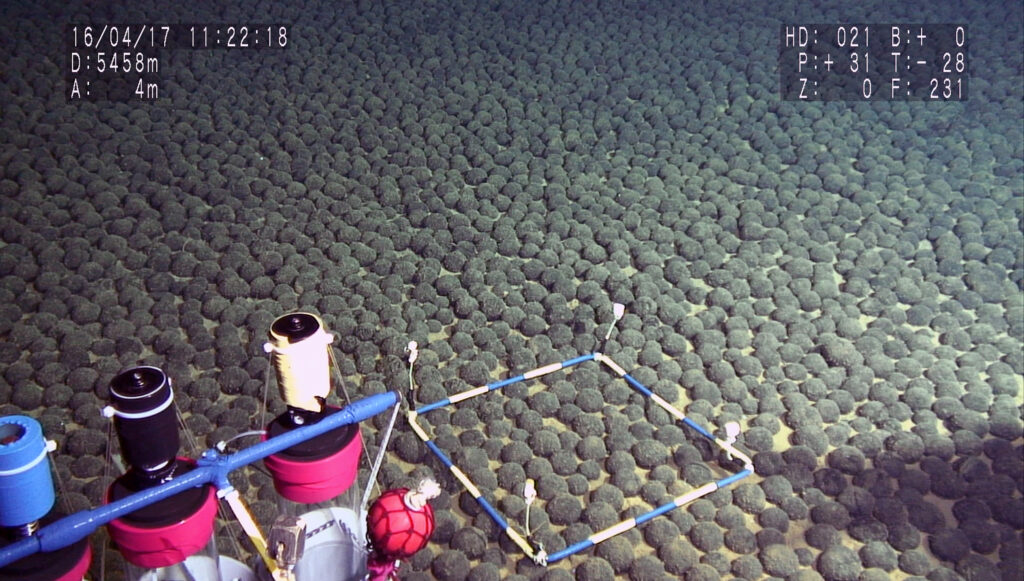
In a world hungry for crucial resources, China may not be poised to start deep-sea mining but it is planting seeds for such operations in a meticulously planned economic and geopolitical strategy.The world’s oceans, both international waters and those under national jurisdiction, are rich in minerals and metals, like cobalt, nickel and copper.These are important for building electric car batteries, for instance, and other technologies as countries try to transition away from fossil fuels.China “is an energy-thirsty country. It will look for resources everywhere,” including the deep sea, said Julia Xue of Shanghai Jiao Tong University.But she said China is not particularly anxious over the issue, although recent developments — one company is itching to be the first to start mining the sea bed — may put more pressure on Beijing.A Canadian firm, The Metals Company, has filed an application with the United States to begin undersea mining in international waters.Using its American subsidiary, it acted after President Donald Trump, bypassing international negotiations, signed an executive order in April to speed up the permit-issuing process for such mining in US and international waters.Trump cited an obscure 1980 US law that says American citizens can explore for and recover deep sea minerals in areas beyond the country’s jurisdiction.Environmental groups are outraged by Trump’s order, arguing that a wild hunt for the potato-sized, metal-containing nodules could harm fragile undersea ecosystems.The Canadian company initially said it would submit its request to the International Seabed Authority (ISA), a body which has jurisdiction over the ocean floor in international waters.The Metals Company says it ignored this authority because of its slow pace in talks on adopting a mining code that establishes rules for exploiting seabed resources. The United States is not an ISA member.A long-time observer of those talks who spoke on condition of anonymity said China is not particularly worried about who starts mining first.”For them it’s more about dominance, staying competitive in the game, and giving the impression that you can’t mess with us,” the observer said.With that goal in mind “they’re definitely developing the technology and putting the strategic agreements in place,” Alex Gilbert, a researcher at the Payne Institute for Public Policy at Colorado School of Mines, told AFP.For instance, China has reached an agreement with the Cook Islands to explore for minerals in that Pacific country’s waters.Another tiny Pacific nation, Kiribati, also says it is exploring a deep-sea mining partnership with China.This approach is “more geopolitical than economic,” said Emmanuel Hache of the French Institute for International and Strategic Affairs, noting Beijing is using undersea mining as a lure to cement greater diplomatic support as it exerts power.China holds five contracts handed out by the ISA to look for resources in the Pacific and Indian Ocean sea beds and these contracts cover all types of undersea mineral resources. China’s is the largest number of the 22 contracts the organization has granted.- Years behind -“From a research perspective, we have been continuously getting closer. And from a technical perspective, we have been continuously improving,” said Chen Xuguang, a researcher at Ocean University of China.In 2024 a Chinese prototype deep-sea mining vehicle called Pioneer II, developed by Shanghai Jiao Tong University, set a national record by operating at a depth of more than 4,000 meters (13,100 feet).State-owned Beijing Pioneer Hi-Tech Development Corporation told AFP that later this year it plans a seabed nodule collection test.    Still, China is not as advanced technologically as The Metals Company, experts say.”I would characterize China as being two to four years behind them in terms of their technology,” said Gilbert in Colorado.Hache, the French expert, put the gap at five years.But China has an advantage over firms like the Canadian one in recovering and processing nodules: its companies are supported by the state and China has infrastructure for processing metals.The observer of the international seabed talks said China does not need seabed mining for metal supply, “but maybe geopolitically, in the context of maintaining their control over the commodities market.”China wants to keep its options open, this person said.And while it supports an international mining code, China does not need one now and “they’re not going to put pressure until they’ve decided strategically that they’re ready,” said Gilbert.

US, China trade talks to stretch into second day

United States and Chinese officials are set to meet Tuesday for a second day of trade talks in London, seeking to shore up a shaky tariff truce in a spat further strained by export curbs.The gathering of key officials from the world’s two biggest economies began Monday in the historic Lancaster House, run by the UK Foreign Office, following an earlier round of talks in Geneva last month.Chinese Vice Premier He Lifeng was again heading the team in London, which included Commerce Minister Wang Wentao and China International Trade Representative Li Chenggang.Treasury Secretary Scott Bessent, Commerce Secretary Howard Lutnick and Trade Representative Jamieson Greer are leading the US delegation.A source familiar with negotiations told AFP that talks wrapped up Monday evening and are expected to restart Tuesday at 10:00 am local time (0900 GMT).The London meeting came after Washington accused Beijing of violating their Geneva deal to de-escalate staggeringly high tariffs.A key sticking point was the export of rare earths from China.”In Geneva, we had agreed to lower tariffs on them, and they had agreed to release the magnets and rare earths that we need throughout the economy,” Kevin Hassett, director of the White House’s National Economic Council, told CNBC on Monday.But even though Beijing was releasing some supplies, “it was going a lot slower than some companies believed was optimal,” Hassett added.This issue was raised last week in US President Donald Trump’s first publicly announced telephone talks with Chinese President Xi Jinping since the Republican’s return to the White House.Trump said on his Truth Social platform that Thursday’s long-awaited call reached a “very positive conclusion”.On Monday, the US leader told reporters that he was “only getting good reports” on the trade talks, adding: “We are doing well with China. China is not easy.”- US easing curbs? -US official Hassett said he expected “a big, strong handshake” at the trade negotiations.”Our expectation is that after the handshake,” Hassett added, “any export controls from the US will be eased, and the rare earths will be released in volume.”Both sides can then “go back to negotiating smaller matters,” he said.Tensions between Washington and Beijing have soared since Trump took office, with both countries engaging in a tariffs war that took duties on each other’s exports to three figures — an effective trade embargo.The Geneva pact to cool tensions temporarily brought new US tariffs on Chinese goods from 145 percent to 30 percent, and Chinese countermeasures from 125 percent to 10 percent.But Trump recently said China “totally violated” the deal. A key issue was Beijing’s shipments of rare earths, crucial to goods including electric vehicle batteries.”Rare earth shipments from China to the US have slowed since President Trump’s ‘Liberation Day’ tariffs in April,” said Kathleen Brooks, research director at trading group XTB.Brooks was referring to when Trump slapped sweeping levies of 10 percent on friend and foe alike, and threatened steeper rates on dozens of economies.”The US wants these shipments to be reinstated, while China wants the US to rethink immigration curbs on students, restrictions on access to advanced technology including microchips, and to make it easier for Chinese tech providers to access US consumers,” Brooks added.Hassett’s statement signaled the Trump administration might be willing to ease some recent curbs on tech exports.- ‘Green channel’ -Throughout its talks with Washington, China has also launched discussions with other trading partners — including Japan and South Korea — to try to build a united front to counter Trump’s tariffs.On Thursday, Beijing and Canada agreed to regularise their channels of communication after strained ties.Beijing has also proposed establishing a “green channel” to ease exports of rare earths to the European Union, and fast-tracking approval of some export licenses.China is expected to host a summit with the EU in July, marking 50 years since Beijing and Brussels established diplomatic ties.According to a UK government spokesperson, Finance Minister Rachel Reeves took advantage of the London talks to meet with her US counterpart Bessent and Chinese Vice Premier He on Sunday.