Afp Business Asia

Asian markets swing as China-US trade euphoria fades

Asian stocks fluctuated Wednesday, with investors struggling to track a strong day on Wall Street as euphoria over the China-US trade detente petered out.But while the days of breathtaking volatility seen through April appear to be over for now, analysts warned that more work was needed for Washington to reach tariff deals with countries and instill a sense of stability.Data showing US inflation unexpectedly slowed last month provided some cheer, though observers pointed out that the real impact of Donald Trump’s “Liberation Day” tolls will not likely be felt until May’s readings.The US president on Tuesday played up a deal with Beijing.”We have the confines of a very, very strong deal with China. But the most exciting part of the deal… that’s the opening up of China to US business,” he told Fox News.His remarks were made aboard Air Force One as he headed off on his Gulf tour, with Saudi Arabia on Tuesday pledging $600 billion worth of US investments in a range of sectors from defence to artificial intelligence.The agreements — including a huge chip deal for Nvidia and Advanced Micro Devices — would boost US jobs, and the stock market is “gonna go a lot higher”, Trump said, citing an “explosion of investment and jobs”.The tech-rich Nasdaq rallied with the S&P 500, which broke back into positive territory for the year, helped slightly by the inflation data.But Asia struggled to extend the rally.Hong Kong, Seoul, Jakarta and Taipei rose more than one percent but Wellington and Manila were flat, while Tokyo, Shanghai, Sydney and Singapore fell.Oil, which had enjoyed a four-day rally on demand optimism and Trump’s warnings to Iran over a nuclear deal, also edged down.Analysts said that while the China deal was welcome, investors were now bracing for the next developments in the US president’s trade standoff with the world as countries look to strike deals with the White House to avert stiff tariffs.”Remember it’s an armistice not a peace treaty — and the tariffs are still at these levels worse than we had before,” Neil Wilson at Saxo Markets said.”Let’s be honest, the market knows this script by heart: Trump escalates. Markets tumble. Back-channels open. China blinks. A deal gets made. Risk rallies,” added Stephen Innes at SPI Asset Management.”The fog has lifted — for now. Whether this cycle brings more sustainable upside or just sets up the next tantrum remains to be seen,” he said.Still, the dialling down of tensions with China saw JPMorgan Chase predict the US economy would grow this year, reversing its earlier forecast for a contraction caused by the tariffs.Investors are also awaiting the release of earnings from Chinese tech titans Alibaba and Tencent, which could provide an idea about how the market heavyweights are coping with the trade upheaval and uncertainty in the world’s number two economy.- Key figures at around 0230 GMT -Tokyo – Nikkei 225: DOWN 0.8 percent at 37,874.59 (break)Hong Kong – Hang Seng Index: UP 1.2 percent at 23,390.30Shanghai – Composite: DOWN 0.1 percent at 3,372.40Euro/dollar: DOWN at $1.1186 from $1.1189 on TuesdayPound/dollar: UP at $1.3308 from $1.3304Dollar/yen: DOWN at 147.21 yen from 147.47 yenEuro/pound: UP at 84.08 pence from 84.07 penceWest Texas Intermediate: DOWN 0.4 percent at $63.44 per barrelBrent North Sea Crude: DOWN 0.4 percent at $66.39 per barrelNew York – Dow: DOWN 0.6 percent at 42,140.43 (close)London – FTSE 100: FLAT at 8,602.92 (close)

US stocks mostly rise on better inflation data while dollar retreats

Wall Street stocks mostly rose Tuesday while oil prices advanced, extending a rally as the improved state of US-China trade boosts the economic outlook. Both the S&P 500 and Nasdaq finished solidly higher following benign US inflation data while the Dow retreated after weakness in UnitedHealth Group shares.Markets continued to cheer the US-China announcement Monday of a de-escalation of trade tensions. The two countries agreed to significantly lower levies for 90 days while they work to hash out an agreement.The tech-rich Nasdaq led major US indices, winning 1.6 percent.Oil prices also climbed more than two percent as traders pencil in more oil demand.”It seems as if the euphoria that was ignited yesterday or over the weekend has continued into today at least for the S&P 500 and the Nasdaq,” said Sam Stovall of CFRA Research.The consumer price index eased to 2.3 percent in April from a year ago, a tick below the 2.4 percent figure recorded in March.Some analysts cautioned that it was still too early to see the implications of US President Donald Trump’s tariff policies, some of which have been rolled back or suspended.But the weaker inflation data put pressure on the dollar, with more traders betting the Federal Reserve will soon cut interest rates.In Europe, London closed barely changed, while Paris and Frankfurt both ticked up 0.3 percent.Asian equities had finished with strong gains, in their catch-up session digesting Wall Street’s jump on Monday, although Hong Kong dropped nearly two percent on profit-taking.On the corporate front, the big focus was on the auto sector after major news out of Japan.Nissan posted an annual net loss of $4.5 billion, confirmed plans to slash 15 percent of its global workforce and warned about the possible impact of US tariffs.The carmaker, whose mooted merger with Honda collapsed this year, is heavily indebted and engaged in an expensive business restructuring plan.For its part, Honda on Tuesday forecast a 70-percent drop in net profit for the 2025-26 financial year.”The impact of tariff policies in various countries on our business has been very significant, and frequent revisions are being made, making it difficult to formulate an outlook,” said Honda chief executive Toshihiro Mibe.- Key figures at around 2050 GMT -New York – Dow: DOWN 0.6 percent at 42,140.43 (close)New York – S&P 500: UP 0.7 percent at 5,886.55 (close)New York – Nasdaq Composite: UP 1.6 percent at 19,010.08 (close)London – FTSE 100: FLAT at 8,602.92 (close)Paris – CAC 40: UP 0.3 percent at 7,873.83 (close)Frankfurt – DAX: UP 0.3 percent at 23,638.56 (close)Tokyo – Nikkei 225: UP 1.4 percent at 38,183.26 (close)Hong Kong – Hang Seng Index: DOWN 1.9 percent at 23,108.27 (close)Shanghai – Composite: UP 0.2 percent at 3,374.87 (close)Euro/dollar: UP at $1.1189 from $1.1087 on MondayPound/dollar: UP at $1.3304 from $1.3176Dollar/yen: DOWN at 147.47 yen from 148.46 yenEuro/pound: DOWN at 84.07 pence from 84.14 penceBrent North Sea Crude: UP 2.6 percent at $66.63 per barrelWest Texas Intermediate: UP 2.8 percent at $63.67 per barrelburs-jmb/jgc

Stocks mixed after cool US inflation and as rally tapers

Stocks traded mixed and the dollar dipped on Tuesday as the rally from the previous day faded despite cool US inflation data easing concerns about the economy.Temporary US-China tariff reductions announced on Monday still firmed up oil prices, however. They extended gains as investors’ fears of blocked trade between the world’s two largest economies were quelled.But “the US dollar rally seems to be momentarily running out of steam,” said Axel Rudolph, senior technical analyst for trading platform IG.In midday New York trading, the S&P 500 and Nasdaq were trading in positive territory, while the Dow was showing small losses.In Europe, London closed barely changed, while Paris and Frankfurt both ticked up 0.3 percent.Asian equities had finished with strong gains, in their catch-up session digesting Wall Street’s jump on Monday, although Hong Kong dropped nearly two percent on profit-taking.”Both the Nasdaq 100 and the S&P 500 are trading back in positive territory for the year as US inflation unexpectedly slows and China lowers tariffs on US goods,” said Rudolph.Data released on Tuesday showed US consumer inflation cooled slightly in April, despite financial markets that month being spooked by President Donald Trump’s sweeping tariffs.The US consumer price index eased to 2.3 percent in April from a year ago, a shade below the 2.4 percent figure recorded in March, the Labor Department said in a statement. “This data suggests that the US economy was in good shape in April, that tariffs are not showing up in the inflation data yet, and that demand for services remains strong,” said Kathleen Brooks, research director at XTB.Briefing.com analyst Patrick O’Hare said investor sentiment has also been comforted by progress made by US lawmakers on their budget plans, which include tax cuts.”The stock market finds itself in a hopeful state that is allowing for a better-than-feared economic and earnings outlook,” he said.But eToro market analyst Lale Akoner said stubbornly high housing and other sticky core elements in US inflation shored up a wait-and-see stance by the US Federal Reserve while it weighs a possible rate cut.”For now, this mixed bag validates the Fed’s cautious stance,” she said. “There’s no urgency to cut, but no clear case for tightening either.”Investors are now pricing in a first-quarter percentage point rate cut in September. On the corporate front, focus was on the auto sector after major news out of Japan.Nissan posted a annual net loss of $4.5 billion, confirmed plans to slash 15 percent of its global workforce and warned about the possible impact of US tariffs.The carmaker, whose mooted merger with Honda collapsed this year, is heavily indebted and engaged in an expensive business restructuring plan.For its part, Honda on Tuesday forecast a 70-percent drop in net profit for the 2025-26 financial year.”The impact of tariff policies in various countries on our business has been very significant, and frequent revisions are being made, making it difficult to formulate an outlook,” said Honda chief executive Toshihiro Mibe.- Key figures at around 1530 GMT -New York – Dow: DOWN 0.3 percent at 42,277.05 pointsNew York – S&P 500: UP 0.9 percent at 5,896.01New York – Nasdaq Composite: UP 1.6 percent at 19,007.40London – FTSE 100: FLAT at 8,602.92 (close)Paris – CAC 40: UP 0.3 percent at 7,873.83 (close)Frankfurt – DAX: UP 0.3 percent at 23,638.56 (close)Tokyo – Nikkei 225: UP 1.4 percent at 38,183.26 (close)Hong Kong – Hang Seng Index: DOWN 1.9 percent at 23,108.27 (close)Shanghai – Composite: UP 0.2 percent at 3,374.87 (close)Euro/dollar: UP at $1.1177 from $1.1089 on MondayPound/dollar: UP at $1.3279 from $1.3173Dollar/yen: DOWN at 147.83 yen from 148.38 yenEuro/pound: DOWN at 84.15 pence from 84.18 penceBrent North Sea Crude: UP 1.9 percent at $66.17 per barrelWest Texas Intermediate: UP 2.2 percent at $63.28 per barrelburs-rmb/rl

European stocks, dollar steady after China-US truce rally

European stock markets and the dollar steadied Tuesday after kicking off the week with strong gains as investors basked in the glow of the China-US tariff suspension.Asian equities, catching up with big advances Monday on Wall Street, saw further rallies Tuesday, although Hong Kong dropped nearly two percent on profit-taking.Oil prices firmed further on hopes that the global economy would avoid a tariffs-fuelled recession.”European markets are making moderate gains… as stocks take a breather after yesterday’s widespread exuberance,” noted Joshua Mahony, analyst at Scope Markets.”The tariff breakthrough seen over the weekend managed to outperform even the most optimistic.”The United States agreed to temporarily reduce its 145-percent duties on China to 30 percent, while Beijing cut its retaliatory measures to 10 percent from 125 percent.Wall Street’s main indices surged by an average of around 3.5 percent Monday, while a gauge of US-listed Chinese stocks surged more than five percent.”Clearly, US-China trade talks have yielded much faster success than many had expected,” HSBC strategists concluded in a note to clients.They cautioned that “things could easily turn out a bit bumpier in future trade negotiations”.- Auto sector -On the corporate front, focus was on the auto sector after major news out of Japan.Nissan posted a annual net loss of $4.5 billion, confirmed plans to slash 15 percent of its global workforce and warned about the possible impact of US tariffs.The carmaker, whose mooted merger with Honda collapsed this year, is heavily indebted and engaged in an expensive business restructuring plan.For its part, Honda on Tuesday forecast a 70 percent drop in net profit for the 2025-26 financial year.”The impact of tariff policies in various countries on our business has been very significant, and frequent revisions are being made, making it difficult to formulate an outlook,” said Honda chief executive Toshihiro Mibe.French automaker Renault said it expects to book a 2.2-billion-euro ($2.4-billion) hit in the first quarter owing to partner Nissan’s turnaround plan, which sees 20,000 jobs axed.- Key figures at around 1035 GMT -London – FTSE 100: UP 0.1 percent at 8,616.31 pointsParis – CAC 40: UP 0.1 percent at 7,854.70Frankfurt – DAX: UP 0.2 percent at 23,601.09 Tokyo – Nikkei 225: UP 1.4 percent at 38,183.26 (close)Hong Kong – Hang Seng Index: DOWN 1.9 percent at 23,108.27 (close)Shanghai – Composite: UP 0.2 percent at 3,374.87 (close)New York – Dow: UP 2.8 percent at 42,410.10 (close)Euro/dollar: UP at $1.1106 from $1.1089 on MondayPound/dollar: UP at $1.3214 from $1.3173Dollar/yen: DOWN at 148.02 yen from 148.38 yenEuro/pound: DOWN at 84.05 pence from 84.18 penceBrent North Sea Crude: UP 0.7 percent at $65.42 per barrelWest Texas Intermediate: UP 0.8 percent at $62.45 per barrelburs-bcp/ajb/lth

Nissan posts $4.5 bn annual net loss, to cut 20,000 jobs

Japan’s Nissan posted an annual net loss of $4.5 billion on Tuesday while saying it plans to cut 15 percent of its global workforce and warning about the possible impact of US tariffs.The heavily indebted carmaker, whose mooted merger with Honda collapsed this year, is slashing production as part of its expensive business turnaround plan.”Nissan must prioritise self-improvement with greater urgency and speed,” CEO Ivan Espinosa told reporters.”The reality is clear. We have a very high cost structure. To complicate matters further, the global market environment is volatile and unpredictable, making planning and investment increasingly challenging.”Nissan reported a net loss of 671 billion yen ($4.5 billion) for the financial year to March 2025.Its worst ever full-year net loss was 684 billion yen in 1999-2000, during a crisis that birthed its rocky partnership with French automaker Renault.Renault, which has nearly a 36 percent stake in Nissan, said Tuesday it expects to take a 2.2-billion-euro ($2.4-billion) hit in the first quarter due to Nissan’s turnaround plan.Nissan did not issue a net profit forecast for 2025-2026, only saying that it expects to see sales of 12.5 trillion yen.”The uncertain nature of US tariff measures makes it difficult for us to rationally estimate our full-year forecast for operating profit and net profit, and therefore we have left those figures unspecified,” Espinosa said.Nissan’s shares closed three percent higher Tuesday after reports, later confirmed by the company, that it planned to slash a total of 20,000 jobs worldwide.”We wouldn’t be doing this if it was not necessary to survive,” Espinosa said of the cuts.- Junk ratings -Nissan, as part of recovery efforts, also said it would “consolidate its vehicle production plants from 17 to 10 by fiscal year 2027″.”In China, we will strengthen our market performance by unleashing multiple new-energy vehicles,” it added.Like many peers, Nissan is finding it difficult to compete against Chinese electric vehicle brands.A merger with Japanese rival Honda had been seen as a potential lifeline but talks collapsed in February when the latter proposed making Nissan a subsidiary.Espinosa said Tuesday that Nissan remained “open to collaborating with multiple partners”, including Honda.Nissan has faced numerous speed bumps in recent years — including the 2018 arrest of former boss Carlos Ghosn, who later fled Japan concealed in an audio equipment box.The automaker, whose shares have tanked nearly 40 percent over the past year, appointed Espinosa CEO in March.Ratings agencies have downgraded the firm to junk, with Moody’s citing its “weak profitability” and “ageing model portfolio”.And this month Nissan shelved plans, only recently agreed, to build a $1 billion battery plant in southern Japan owing to the tough “business environment”.Of Japan’s major automakers, Nissan is likely to be the most severely impacted by US President Donald Trump’s 25 percent tariff on imported vehicles, Bloomberg Intelligence analyst Tatsuo Yoshida told AFP ahead of Tuesday’s earnings report.Its clientele has historically been more price-sensitive than that of its rivals, he said.So the company “can’t pass the costs on to consumers to the same extent as Toyota or Honda without suffering a significant loss in sales units”, he added.

Japan’s SoftBank posts $7.8 bn annual net profit

Japanese tech investor SoftBank Group, a major player in the US Stargate artificial intelligence drive, on Tuesday posted a $7.8 billion annual net profit, its first in the black for four years.Global market rallies were a boon to SoftBank, which reaped gains from its investments in the likes of Chinese e-commerce giant Alibaba and US telecom firm T-Mobile.Its 1.15 trillion yen ($7.8 billion) net profit for the 12 months to March 2025 was up from a net loss of 227 billion yen in the previous financial year.The company’s earnings often swing dramatically because it invests heavily in tech start-ups and semiconductor firms, whose share prices are volatile.Tuesday’s result marked its first full-year net profit since the 2020-21 financial year.The group’s Vision Fund investment vehicle also saw the values of its stakes in Tiktok operator ByteDance and South Korean e-commerce service Coupang jump.SoftBank has been betting big on AI under its flamboyant founder and CEO Masayoshi Son, who has repeatedly said “artificial superintelligence” will arrive in a decade — bringing new inventions, medicine and ways to invest.The company is leading the $500 billion Stargate project to build AI infrastructure in the United States along with cloud giant Oracle and ChatGPT-maker OpenAI.But Bloomberg News reported this week that uncertainty fuelled by US trade tariffs has delayed financing talks for the project, citing people familiar with the matter.- AI push -SoftBank and OpenAI also announced in February that the Japanese giant would spend $3 billion annually to deploy OpenAI’s technologies across its group companies.SoftBank’s Chief Financial Officer Yoshimitsu Goto told reporters that it enjoys strong ties with OpenAI and said trade tariffs should not hinder the group’s operations.In March, SoftBank said it had reached a deal to buy US semiconductor firm Ampere for $6.5 billion, reinforcing its aggressive push into AI. The purchase is expected to close in the second half of the year.The Japanese company is a majority shareholder in Arm Holdings, whose technology is used in 99 percent of smartphones.Hideki Yasuda, an analyst at brokerage Toyo Securities, told AFP ahead of Tuesday’s announcement that he expected the firm to reveal strong figures.”The market was not bad from January to March, so I think (the results) will land relatively well,” he said.”The market environment only worsened from the end of March to the beginning of April when the tariffs were announced,” he said, referring to US President Donald Trump’s multi-pronged free trade war.Son, 67, made his name with successful early investments in Chinese ecommerce titan Alibaba and internet pioneer Yahoo.But he has also bet on catastrophic failures such as office-sharing firm WeWork.”For the last 20 years, the US market has been outstanding, so I don’t think there was an option to not invest in the United States” for SoftBank, Yasuda said.During that time the Chinese market was also growing, “so they invested in China — but China has tightened up a lot of controls, so not much has been invested in China since then”, he added.

Most markets extend rally in glow of China-US truce

Most stocks extended gains Tuesday as investors basked in the glow of the China-US tariff suspension that has fuelled hopes the world’s two economic superpowers will step back from a punishing trade war.Equity markets across the world rallied with oil and the dollar Monday after the two sides said they would slash most of their eye-watering tit-for-tat levies and hold talks to end a standoff that has stoked recession fears.The news raised hopes that deals can be done with Washington to cut or even remove some of the tolls unveiled by Donald Trump on his “Liberation Day” on April 2 that sent shivers through trading floors and raised concerns about the global trading system.Top-level negotiators said after two days of talks in Geneva at the weekend that the United States would reduce its 145 percent duties on China to 30 percent for 90 days, while Beijing would cut its retaliatory measures to 10 percent from 125 percent.The US president described the move as a “total reset” and said talks with counterpart Xi Jinping could soon follow, while US Treasury Secretary Scott Bessent told CNBC he expected officials would meet again in the coming weeks to reach “a more fulsome agreement”.After piling higher on the news Monday, most of Asia’s markets started Tuesday on the front foot. Tokyo was up more than one percent, while Shanghai, Sydney, Taipei, Singapore, Seoul, Wellington, Bangkok and Manila were also well up.London, Paris and Frankfurt edged up in early trade.However, Hong Kong dropped nearly two percent, having surged three percent the day before. Mumbai also slipped.The dollar also pulled back from the previous day’s rally, though oil reversed early losses to extend Monday’s advance.The broad gains in Asia came after Wall Street greeted the announcement with open arms.The tech-heavy Nasdaq rocketed more than four percent, the S&P 500 jumped 3.3 percent and the Dow 2.8 percent, while a gauge of US-listed Chinese stocks surged more than five percent.”Clearly, US-China trade talks have yielded much faster success than many had expected,” strategists at HSBC wrote in a note.”There’s very clearly upside risk for the broader risk asset spectrum now as markets will likely extrapolate a higher likelihood of further deals in the coming weeks.”However, nervousness remains.The HSBC strategists added: “These may not move in a straight line. Things could easily turn out a bit bumpier in future trade negotiations.”IG chief market analyst Chris Beauchamp said the talks show “both sides are aware of the need to repair their relationship, and avoid further damage from the imposition of such huge tariffs”. “But even at the pause levels of 10 percent and 30 percent, these tariffs are still much higher than anything imagined by investors just a few months ago. “It is not quite six weeks since these tariffs were introduced — the impact has yet to really appear in both economic data and company earnings. The full impact will only become clear with time.”Federal Reserve governor Adriana Kugler warned that even with the reduction in tariffs, Trump’s trade policies will likely push inflation higher and weigh on economic growth.- Key figures at around 0810 GMT -Tokyo – Nikkei 225: UP 1.4 percent at 38,183.26 (close)Hong Kong – Hang Seng Index: DOWN 1.9 percent at 23,108.27 (close)Shanghai – Composite: UP 0.2 percent at 3,374.87 (close)London – FTSE 100: UP 0.1 percent at 8,608.90 Dollar/yen: DOWN at 147.91 yen from 148.38 yen on MondayEuro/dollar: UP at $1.1114 from $1.1089Pound/dollar: UP at $1.3210 from $1.3173Euro/pound: DOWN at 84.14 pence from 84.18 penceWest Texas Intermediate: UP 0.2 percent at $62.06 per barrelBrent North Sea Crude: UP 0.1 percent at $65.04 per barrelNew York – Dow: UP 2.8 percent at 42,410.10 (close)

Honda forecasts 70% net profit drop citing ‘tariff impact’

Japan’s Honda Motor on Tuesday forecast a 70 percent drop in net profit for the 2025-26 financial year as US trade tariffs weigh on the global auto industry.The announcement comes after rival Toyota, the world’s top-selling carmaker, predicted a 35 percent year-on-year drop in annual net profit because of the levies and other factors.Honda said it expected net profit of 250 billion yen ($1.7 billion) in the 12 months to March 2026.”Tariff impact and recovery efforts” will have a negative effect on operating profit, it warned, estimating they will cost the company around 450 billion yen over the year.In an attempt to rev up the US auto industry, President Donald Trump last month imposed a 25 percent toll on imported vehicles, dealing a major blow to Japanese carmakers.”The impact of tariff policies in various countries on our business has been very significant, and frequent revisions are being made, making it difficult to formulate an outlook,” CEO Toshihiro Mibe told reporters Tuesday.Mibe said Honda would examine the impact of US tariffs on supply chains and “carefully” make any decisions on pricing changes.Honda, Japan’s second-biggest automaker after Toyota, logged net profit of 835 billion yen in the past financial year, a drop of almost 25 percent on-year and well short of its February forecast of 950 billion yen. “Our automobile business experienced a decline in sales volume mainly in China and the ASEAN region” in Southeast Asia, Mibe said. It was also “impacted by increased incentives for EV sales in North America”, although “hybrid vehicle sales expanded”.But Honda may still have a better chance of weathering Trump’s tariff onslaught than its competitors in Japan, analysts said.Late last month Trump softened the auto tariffs by signing an executive order to limit the impact of overlapping levies on carmakers.He also said he would give the industry a two-year grace period to move supply chains back to the United States.This is good news for Honda, which builds more than 60 percent of the vehicles it sells in the United States in the country.That is “the highest percentage” of all major Japanese automakers, Bloomberg Intelligence auto analyst Tatsuo Yoshida told AFP ahead of the results. That means the impact from tariffs will be “comparatively smaller for Honda”, he added.Also on Tuesday, Honda said it would postpone by two years a project announced last month to establish an electric vehicle supply chain in Canada.The postponement was due to “flagging EV demand”, with the resumption of the project possible depending on how market trends develop, the company said.

Most Asian markets extend rally in glow of China-US truce

Most Asian stocks extended gains Tuesday as investors continued to bask in the glow of the China-US tariff suspension that has fuelled hopes the world’s two economic superpowers will step back from a punishing trade war.Equity markets across the world rallied with oil and the dollar Monday after the two sides said they would slash most of their eye-watering tit-for-tat levies and hold talks to end a standoff that has stoked recession fears.The news raised hopes that deals can be done with Washington to cut or even remove some of the tolls unveiled by Donald Trump on his “Liberation Day” on April 2 that sent shivers through trading floors and raised concerns about the global trading system.Top-level negotiators said after two days of talks in Geneva at the weekend that the United States would reduce its 145 percent duties on China to 30 percent for 90 days, while Beijing would cut its retaliatory measures to 10 percent from 125 percent.The US president described the move as a “total reset” and said talks with counterpart Xi Jinping could soon follow, while US Treasury Secretary Scott Bessent told CNBC he expected officials would meet again in the coming weeks to reach “a more fulsome agreement”.After piling higher on the news Monday, most of Asia’s markets started Tuesday on the front foot. Tokyo was up more than one percent with Taipei, while Shanghai, Sydney, Singapore, Seoul, Wellington and Manila were also well up.However, Hong Kong dropped more than one percent, having surged three percent the day before.Oil prices and the dollar also pulled back from the previous day’s rally.The broad gains in Asia came after Wall Street greeted the announcement with open arms.The tech-heavy Nasdaq rocketed more than four percent, the S&P 500 jumped 3.3 percent and the Dow 2.8 percent, while a gauge of US-listed Chinese stocks surged more than five percent.”Clearly, US-China trade talks have yielded much faster success than many had expected,” strategists at HSBC wrote in a note.”There’s very clearly upside risk for the broader risk asset spectrum now as markets will likely extrapolate a higher likelihood of further deals in the coming weeks.”However, nervousness remains.The HSBC strategists added: “These may not move in a straight line. Things could easily turn out a bit bumpier in future trade negotiations.”And IG chief market analyst said the talks show “both sides are aware of the need to repair their relationship, and avoid further damage from the imposition of such huge tariffs”. “But even at the pause levels of 10 percent and 30 percent, these tariffs are still much higher than anything imagined by investors just a few months ago. “It is not quite six weeks since these tariffs were introduced — the impact has yet to really appear in both economic data and company earnings. The full impact will only become clear with time.”Meanwhile, Federal Reserve governor Adriana Kugler warned that even with the reduction in tariffs, Trump’s trade policies will likely push inflation higher and weigh on economic growth.- Key figures at around 0230 GMT -Tokyo – Nikkei 225: UP 1.7 percent at 38,296.86 (break)Hong Kong – Hang Seng Index: DOWN 1.2 percent at 23,273.82Shanghai – Composite: UP 0.2 percent at 3,375.51Dollar/yen: DOWN at 148.01 yen from 148.38 yen on MondayEuro/dollar: UP at $1.1103 from $1.1089Pound/dollar: UP at $1.3177 from $1.3173Euro/pound: UP at 84.25 pence from 84.18 penceWest Texas Intermediate: DOWN 0.2 percent at $61.81 per barrelBrent North Sea Crude: DOWN 0.3 percent at $64.80 per barrelNew York – Dow: UP 2.8 percent at 42,410.10 (close)London – FTSE 100: UP 0.6 percent at 8,604.98 (close)

US, China agree to slash tariffs as Trump says will speak to Xi

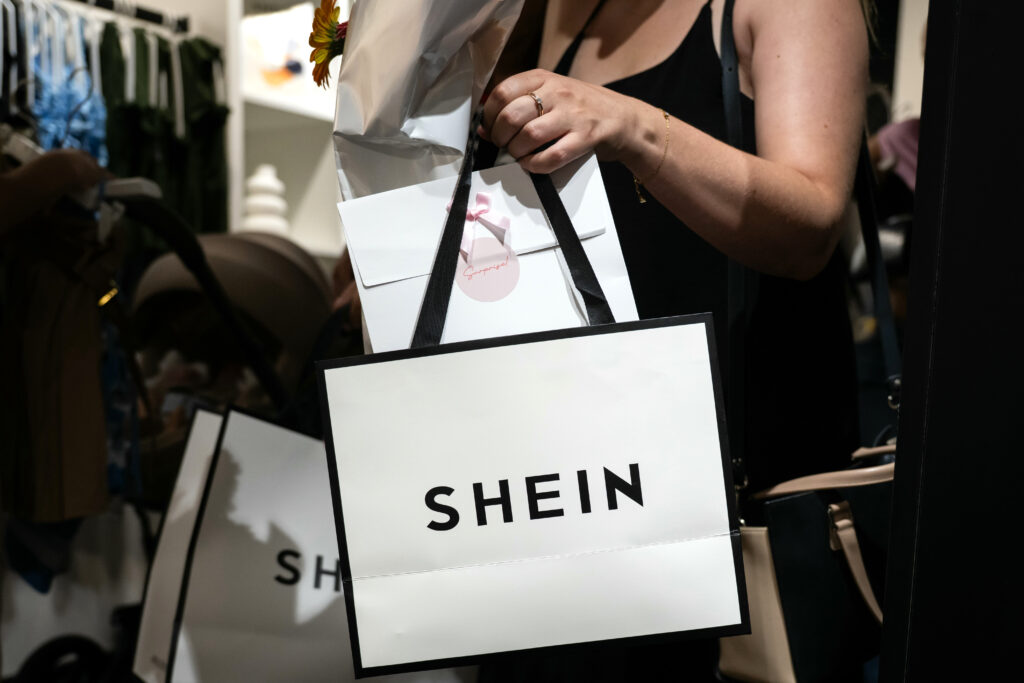
The United States and China announced Monday an agreement to drastically reduce tit-for-tat tariffs for 90 days, an outcome President Donald Trump dubbed a “total reset” as he said talks with counterpart Xi Jinping could soon follow.After the first meetings between Washington and Beijing since Trump ratcheted up his trade war, the world’s two biggest economies agreed in a joint statement to bring their triple-digit tariffs down to two figures and continue negotiations.The announcement sent financial markets soaring after weeks of turmoil over tariff fears. Major Wall Street indexes surged, with the broad-based S&P 500 closing 3.3 percent higher.”Yesterday we achieved a total reset with China after productive talks in Geneva,” Trump said. “I’ll speak to President Xi, maybe at the end of the week.”US Treasury Secretary Scott Bessent described weekend discussions with Chinese Vice Premier He Lifeng and international trade representative Li Chenggang as “productive” and “robust” with both sides anticipated to meet again soon.Trump’s fresh duties on many imports from China came up to 145 percent this year, compared to 10 percent for other countries in a global tariff blitz launched last month.Beijing hit back with duties of 125 percent on US goods.The United States agreed to lower its tariffs on Chinese goods to 30 percent while China will reduce its own to 10 percent.These actions take effect at 12:01 am on Wednesday, according to an executive order released by the White House.The United States also lowered a levy on low-value imports from China that had hit e-commerce sites such as Shein and Temu. Under Trump’s executive order, “de minimis” items sent through the US Postal Service will be hit with duties of 54 percent of their value, or a $100 payment. The prior tariff had been set at 120 percent.Bessent told CNBC Monday that he expects United States and Chinese representatives to meet again in the coming weeks to work out “a more fulsome agreement.”While Washington does not want broad decoupling from China, it seeks “decoupling for strategic necessities,” Bessent said.He added to CNBC that the 90-day pause was also done to see what the United States could do about non-tariff barriers weighing on US firms. China hailed the “substantial progress” made at the talks, held at the discreet villa residence of Switzerland’s ambassador to the United Nations in Geneva.This move “is in the interest of the two countries and the common interest of the world,” the Chinese commerce ministry said, adding that it hoped Washington would keep working with Beijing “to correct the wrong practice of unilateral tariff rises.”With the agreement, China also committed to suspending or removing non-tariff countermeasures.- Fentanyl ‘cooperation’ -The US additional tariff rate remains higher than China’s because it includes a 20 percent levy over Trump’s complaints about Chinese exports of chemicals used to make fentanyl, US Trade Representative Jamieson Greer told reporters.”Those remain unchanged for now,” he said. But “both the Chinese and United States agreed to work constructively together on fentanyl and there is a positive path forward there as well.”In a joint statement, the two sides agreed to “establish a mechanism to continue discussions about economic and trade relations.””I think we leave with a very good mechanism to avoid the unfortunate escalations,” Bessent said, noting that the tariffs had essentially created a trade “embargo” between the two superpowers.China’s commerce ministry said both parties “will conduct rolling consultations on a regular or ad hoc basis in China, the US or agreed third countries.”- ‘No guarantee’ -A suspension of higher tariffs marks “substantial de-escalation,” said Capital Economics chief Asia economist Mark Williams in a note.But “there is no guarantee that the 90-day truce will give way to a lasting ceasefire,” he warned. Washington appears to be seeking to rally others towards introducing restrictions on trade with China, he said.Nonetheless, the latest development signals negotiations are moving to a more conciliatory phase, according to a Deutsche Bank Research note.Zhiwei Zhang, president and chief economist at Pinpoint Asset Management, believes the outcome of the weekend meeting was a “success” for Beijing.”China took a tough stance on the US threat of high tariffs and eventually managed to get the tariffs down significantly without making concessions,” he said.Trump’s tariffs and high rates targeting China have rocked financial markets, raising fears the levies would rekindle inflation and cause a global economic downturn.The Geneva meeting came days after Trump unveiled a trade agreement with Britain, the first with any country since his new duties on both friend and foe.burs-nl-bys-jmb/dw