Afp Business Asia

Stocks mostly rise on trade deal optimism

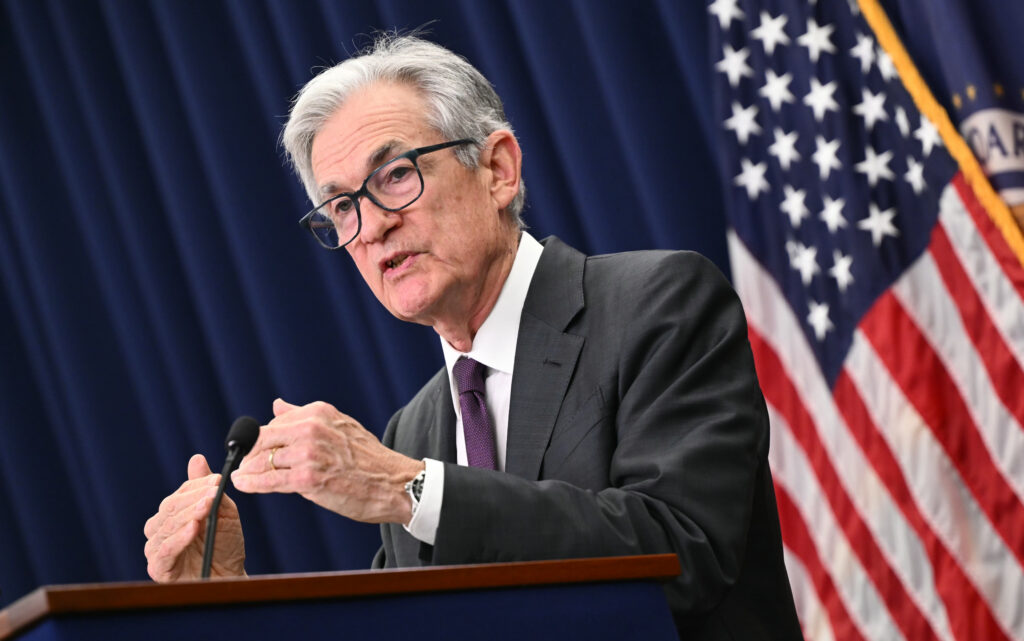
Asian markets mostly rose Thursday on optimism that governments will hammer out deals to avoid the worst of US President Donald Trump’s tariffs even after he broadened his range of measures.Negotiators from around the world have tried to reach agreements with Washington since Trump in April unveiled his “Liberation Day” tariff bombshell, with a July 9 deadline recently pushed back to August 1.Letters have been sent in recent days to more than 20 trading partners — including Japan and South Korea — setting out new tolls, with some higher and some lower than the initial levels.The US president also said this week he would put a 50 percent tariff on copper imports, while considering a 200 percent charge for pharmaceuticals.However, analysts said the threats are largely being seen as negotiating tools, and investors have increasingly taken them in their stride, with the S&P 500 and Nasdaq hitting all-time highs in New York.And David Chao, global market strategist for Asia Pacific at Invesco, painted a positive picture even in light of the threatened levies.”Should the US ultimately impose higher tariffs on Asian countries, the region appears better positioned to withstand the resulting headwinds,” he wrote.”A softer dollar should give Asian central banks greater flexibility to ease policy to support their domestic economies without heightened concerns over currency depreciation.”Asian stocks mostly advanced after a healthy lead from Wall Street, where the Nasdaq hit another peak thanks to a surge in Nvidia that pushed the firm to a $4 trillion valuation at one point.Hong Kong, Shanghai, Sydney, Singapore, Seoul, Taipei, Manila and Jakarta all rose, though Tokyo edged down with Wellington.The broadly upbeat mood helped push bitcoin above $112,000 for the first time.There was also little reaction to news that Trump had hit Brazil with a 50 percent tariff as he blasted the trial of the country’s ex-president Jair Bolsonaro.In a letter addressed to Brazilian President Luiz Inacio Lula da Silva, he called the treatment of his right-wing ally an “international disgrace”. Bolsonaro is on trial over accusations he plotted a coup after his 2022 election loss to Lula.Lula said he will impose reciprocal levies on the United States.Brazil had not been among those threatened with these higher duties previously, with the United States running a goods trade surplus instead with the South American giant.Traders were given few guides on the Federal Reserve’s interest rate plans after minutes from its June policy meeting showed officials divided on the best way forward.Boss Jerome Powell’s patient approach to lowering borrowing costs has drawn the ire of Trump, who on Wednesday said they were “at least” three points too high.While the board sees the president’s tariffs as inflationary, the minutes said there remained “considerable uncertainty” on the timing, size and duration of the effects.Companies might choose not to raise consumer prices until they depleted their product stockpiles, for example, but supply chain disruptions caused by the levies could trigger larger price hikes.”While a few participants noted that tariffs would lead to a one-time increase in prices and would not affect longer-term inflation expectations, most participants noted the risk that tariffs could have more persistent effects on inflation,” the report said.- Key figures at around 0230 GMT -Tokyo – Nikkei 225: DOWN 0.5 percent at 39,610.61 (break)Hong Kong – Hang Seng Index: UP 0.2 percent at 23,938.07Shanghai – Composite: UP 0.3 percent at 3,503.13Euro/dollar: UP at $1.1741 from $1.1719 on WednesdayPound/dollar: UP at $1.3608 from $1.3590Dollar/yen: DOWN at 145.95 yen from 146.30 yenEuro/pound: UP at 86.28 pence from 86.21 penceWest Texas Intermediate: DOWN 0.2 percent at $68.28 per barrelBrent North Sea Crude: DOWN 0.1 percent at $70.15 per barrelNew York – Dow: UP 0.5 percent at 44,458.30 (close)London – FTSE 100: UP 0.2 percent at 8,867.02 (close)

Trump broadens push for tariff deals, unveils 50% Brazil levy

US President Donald Trump announced a 50 percent tariff Wednesday targeting Brazil as he blasted the trial of the country’s ex-leader, while widening a push to secure more bilateral trade deals with other partners.In a letter addressed to President Luiz Inacio Lula da Silva, Trump criticized the treatment of Jair Bolsonaro as an “international disgrace,” adding that the trial “should not be taking place.”In response, Brazil threatened Wednesday to reciprocate, with Lula writing on X “any unilateral tariff increases will be addressed in light of the Brazilian Law of Economic Reciprocity.”Trump also said Washington would launch an investigation into Brazil’s trade practices.The latest tariff threat came after Brazil said it had summoned the US charge d’affaires in a diplomatic row over Trump’s earlier criticism of the coup trial of Bolsonaro.Bolsonaro denies he was involved in an attempt to wrest power back from Lula, with prosecutors saying the alleged coup plot failed only for a lack of military backing.The 50 percent US tariff on Brazilian goods will take effect August 1, Trump said in his letter, mirroring a deadline that dozens of other economies face.While Trump has started to issue letters to trading partners this week as he ramps up pressure towards more deals, he has focused on partners with which his country runs significant deficits.Brazil had not been among those threatened with these higher duties previously. The United States runs a goods trade surplus instead with Brazil.- Escalation threats -Trump’s message to Lula was the latest in more than 20 such letters the US president has released since Monday, setting out tariff rates as Washington tries to bring about more trade pacts.On Wednesday, Trump had addressed letters to leaders of the Philippines, Sri Lanka, Brunei, Algeria, Libya, Iraq and Moldova, spelling out duties ranging from 20 percent to 30 percent that would also take effect on August 1.Similar to a first batch of documents published Monday, the levels were not too far from those originally threatened in April, although some partners received notably lower rates this time.While Trump in April imposed a 10 percent levy on almost all trading partners, he unveiled — and then withheld — higher rates for dozens of economies.The deadline for those steeper levels to take effect was meant to be Wednesday, before Trump postponed it further to August 1.Countries that faced the threats of elevated duties began receiving letters spelling out US tariff rates on their products.In the messages, Trump justified his tariffs as a response to trade ties that he says are “far from Reciprocal.”The letters urged countries to manufacture products in the United States to avoid duties, while threatening further escalation if leaders retaliated.Other countries that have received Trump’s letters include key US allies Japan and South Korea, as well as Indonesia, Bangladesh and Thailand.- EU deal in ‘coming days’? -Analysts have noted that Asian countries have been a key target so far.But all eyes are on the state of negotiations with major partners who have yet to receive such letters, including the European Union.The Trump administration is under pressure to unveil more trade pacts. So far, Washington has only reached agreements with Britain and Vietnam, alongside a deal to temporarily lower tit-for-tat levies with China.Trump on Tuesday said his government was “probably two days off” from sending the EU a letter with an updated tariff rate.An EU spokesman said Wednesday the bloc wants to strike a deal with the United States “in the coming days,” and has shown readiness to reach an agreement in principle.Apart from tariffs targeting goods from different countries, Trump has rolled out sector-specific duties on steel, aluminum and autos since returning to the White House in January.On Tuesday, Trump said levies were incoming on copper and pharmaceuticals. The planned rate for copper is 50 percent, he added, while pharmaceutical products face a levy as high as 200 percent — but manufacturers would be given time to relocate operations to the United States.

Global stocks mostly up despite new Trump tariffs, Nasdaq at record

The Nasdaq powered to a fresh record and major European markets closed in the green Wednesday, brushing off US President Donald Trump’s growing array of tariff targets.After releasing tariff warning letters to seven additional countries early Wednesday afternoon, Trump followed up late in the afternoon with a threatened 50 percent levy on Brazil.Trump tied the levy — which is more severe than those facing dozens of other countries — to Brazil’s prosecution of former president Jair Bolsonaro over an alleged attempted coup following the 2022 election, when Bolsonaro was defeated by President Luiz Inacio Lula da Silva.Trump, who spent last week successfully lobbying Congress for his sweeping fiscal legislation, has returned to tariffs with a vengeance this week. On Monday, Trump sent letters to Japan and South Korea, among other countries. On Tuesday, the US president announced a potential 50 percent toll on copper imports, and said he was looking at 200 percent tariffs on pharmaceuticals.The news sent the price of copper — with a wide range of uses including in cars, construction and telecoms — to a record high Tuesday.But Kathleen Brooks, research director at XTB, said Wednesday “the market is not taking Trump at his word when it comes to tariffs, and the market impact has been limited so far.”The tech-rich Nasdaq Composite Index vaulted nearly one percent higher to a fresh all-time high, while artificial intelligence giant Nvidia touched $4 trillion in market value before falling back slightly.”The market is certainly not acting as if it’s fearing the tariffs,” said Briefing.com analyst Patrick O’Hare. “Obviously, there’s been a lot of attention on the tariff letters that have gone out this week, but the market is operating on the assumption that they are just negotiating tools and that, ultimately, better terms will be reached.”European markets were also shrugging off risks of a trade war. Germany’s Dax hit a new high as it posted a 1.4 percent gain, matched by the CAC 40 in Paris. London could only manage a gain of just under 0.2 percent. But Chris Beauchamp, chief market analyst at online trading platform IG, urged caution as “reports suggesting that Trump relishes the actual dealmaking process more than an actual resolution seem to suggest that a further delay to tariffs will be forthcoming, although this is an approach fraught with risk.”Earlier in Asia, Tokyo gains were tempered by losses in Hong Kong and Shanghai.- Key figures at around 2130 GMT -New York – Dow: UP 0.5 percent at 44,458.30 (close)New York – S&P 500: UP 0.6 percent at 6,263.26 (close)New York – Nasdaq Composite: UP 0.9 percent at 20,611.34 (close)London – FTSE 100: UP 0.2 percent at 8,867.02 points (close)Paris – CAC 40: UP 1.4 percent at 7,878.46 (close)Frankfurt – DAX: UP 1.4 percent at 24,549.56 (close)Tokyo – Nikkei 225: UP 0.3 percent at 39,821.28 (close)Hong Kong – Hang Seng Index: DOWN 1.1 percent at 23,892.32 (close)Shanghai – Composite: DOWN 0.1 percent at 3,493.05 (close)Euro/dollar: DOWN at $1.1719 from $1.1725 on TuesdayPound/dollar: DOWN at $1.3590 from $1.3659Dollar/yen: DOWN at 146.30 yen from 146.58 yenEuro/pound: DOWN at 86.21 pence from 86.26 penceBrent North Sea Crude: UP 0.1 percent at $70.41 per barrelWest Texas Intermediate: UP 0.1 percent at $68.38 per barrel

Starbucks receives bids for stake in China business: US media

Starbucks has received around 30 offers from investment firms seeking a stake in the company’s China business, US media reported Wednesday.The coffee chain’s China business, its second biggest after its US operation, drew non-binding offers from a mix of Chinese and foreign private equity firms valuing the enterprise at between $5 and $10 billion, CNBC reported, citing three people familiar with the matter.Under one possible outcome, Starbucks could retain a 30 percent stake with a group of buyers each holding less than this share, CNBC said. A note from TD Cowen said a valuation of between $2.6 billion and $4.7 billion is “more realistic” than one as potentially as high as $10 billion.Starbucks declined to comment directly on any offers received but said it would not exit China.”We are looking for a strategic partner with like-minded values, who shares our vision to provide a premium coffeehouse experience,” a Starbucks spokesperson said.”We remain committed to China and want to retain a meaningful stake in the business. Any deal must make sense for Starbucks business and partners.”The bidders include Centurium Capital, Hillhouse Capital and US private equity firms Carlyle Group and KKR, CNBC reported.As of the end of March, Starbucks had around 7,700 cafes in more than 250 cities in China, employing more than 60,000 people. Only the United Staets, with more than 17,000 cafes is bigger for the chain.Starbucks has been in turnaround mode, naming former Chipotle CEO Brian Niccol as CEO in August 2024 after the short tenure of Laxman Narasimhan failed to reignite growth.In its most recent quarter ending March 30, Starbucks had flat revenues in China compared with the year-ago period, with the number of transactions rising four percent but the average ticket falling four percent.In a conference call in late April, Niccol told analysts that Starbuck’s China sales had benefited during the period from adding new sugar-free beverages and introducing options at different price points.”We’ve got more work to do in the market, but our brand remains strong,” said Niccol.Shares of Starbucks fell 0.2 percent in afternoon trading.

Trump issues more letters to countries in push for tariff deals

US President Donald Trump released a fresh set of letters to trading partners Wednesday, setting out tariff rates for seven more countries as Washington pushes to bring about a flurry of trade deals.The letters, addressed to leaders of the Philippines, Sri Lanka, Brunei, Algeria, Libya, Iraq and Moldova, spelled out duties ranging from 20 percent to 30 percent that would take effect on August 1.Similar to Trump’s first batch of documents published Monday, the levels were not too far from those originally threatened in April, although some partners received notably lower rates this time.Sri Lanka’s updated tariff was 30 percent, down from 44 percent announced in April, while the figure for Iraq was 30 percent, down from 39 percent.The Philippines, however, saw a 20 percent levy, up from 17 percent announced previously.While the president in April imposed a 10 percent levy on almost all trading partners, he unveiled — and then withheld — higher rates for dozens of economies.The deadline for those steeper levels to take effect was meant to be Wednesday, before Trump postponed it further to August 1.Instead, countries who face the threats of elevated duties began receiving letters spelling out US tariff rates on their products.Trump said Wednesday that he decided on the levies based on “common sense” and trade deficits.He added at an event that he would release more letters later in the day — including for Brazil, which does not currently face a tariff hike come August.Trump’s latest messages were near-identical to those published earlier in the week, and justified his tariffs as a response to trade ties that he says are “far from Reciprocal.”They urged countries to manufacture products in the United States to avoid duties, while threatening further escalation if leaders retaliated.For now, over 20 countries have received Trump’s letters including key US allies Japan and South Korea, as well as Indonesia, Bangladesh and Thailand.- EU deal in ‘coming days’? -Analysts have noted that Asian countries have been a key target so far.But all eyes are on the state of negotiations with major partners who have yet to receive such letters, including the European Union.For now, the Trump administration is under pressure to unveil more trade pacts. So far, Washington has only reached agreements with Britain and Vietnam, alongside a deal to temporarily lower tit-for-tat levies with China.Trump on Tuesday said that his government was “probably two days off” from sending the EU a letter with an updated tariff rate for the bloc.”They’re very tough, but now they’re being very nice to us,” he added at a cabinet meeting.An EU spokesman said Wednesday that the bloc wants to strike a deal with the United States “in the coming days,” and has shown readiness to reach an agreement in principle.EU diplomats say the European Commission, in charge of trade policy for the 27-country bloc, could continue talks until August 1.The EU expects Trump to keep a 10 percent baseline tariff on its goods, with exemptions for critical sectors such as airplanes, spirits and cosmetics, diplomats told AFP this week.Legal challenges to Trump’s sweeping tariffs are continuing to work their way through the US court system.Apart from tariffs targeting goods from different countries, Trump has also rolled out sector-specific duties on steel, aluminum and autos since returning to the White House in January.On Tuesday, Trump said levies were incoming on copper and pharmaceuticals. The planned rate for copper is 50 percent, he added, while pharmaceutical products face a levy as high as 200 percent — but manufacturers would be given time to relocate operations.

European stocks brush off Trump’s copper, pharma tariff threats

Wall Street rose and major European markets closed in the green Wednesday, brushing off US President Donald Trump’s tariff threats on copper and pharmaceuticals. Investors kept an eye on countries seeking to hammer out tariff agreements before Trump’s new cut-off date of August 1.The US president had reignited trade jitters Tuesday by announcing a 50 percent toll on copper imports and saying he was looking at 200 percent tariffs on pharmaceuticals.The news sent the price of copper — with a wide range of uses including in cars, construction and telecoms — to a record high Tuesday.But Kathleen Brooks, research director at XTB, found Wednesday “the market is not taking Trump at his word when it comes to tariffs, and the market impact has been limited so far.”The tech-heavy Nasdaq had added almost 1 percent two hours into the session with chipmaker Nvidia barrelling ahead just over 2 percent as AI growth saw it top $4 trillion in market value, the first company to hit the mark as it extended its globe-leading market capitalisation.Noting tech had endured some lean months going back to the third quarter of last year, eToro’s US investment analyst Bret Kenwell said “we’re seeing growth stocks come to life on the back of AI initiatives, while cybersecurity firms are rallying higher. Mega-cap tech continues to spend fortunes building out the necessary AI infrastructure for the future.”After Trump said he would allow pharmaceutical manufacturers time to relocate operations to the United States before rolling out fresh duties, equity markets largely took the news in their stride as “details of when, how and who remain thin on the ground”, said Derren Nathan, head of equity research at Hargreaves Lansdown.European markets were shrugging off risks of a trade war. Germany’s Dax hit a new high as it posted a 1.4 percent gain, matched by the CAC 40 in Paris. London could only manage a gain of just under 0.2 percent. But Chris Beauchamp, chief market analyst at online trading platform IG, urged caution as “reports suggesting that Trump relishes the actual dealmaking process more than an actual resolution seem to suggest that a further delay to tariffs will be forthcoming, although this is an approach fraught with risk.”Trump warned he would not again extend his August 1 deadline to reach deals, after he pushed back his July 9 cut-off.Earlier in Asia, Tokyo gains were tempered by losses in Hong Kong and Shanghai.- Key figures at around 1545 GMT -New York – Dow: UP 0.2 percent at 44,306.77 pointsNew York – S&P 500: UP 0.3 percent at 6,242.61New York – Nasdaq Composite: UP 0.8 percent at 20,5301.22London – FTSE 100: UP 0.2 percent at 8,867.02 points (close)Paris – CAC 40: UP 1.4 percent at 7,878.46 (close)Frankfurt – DAX: UP 1.4 percent at 24,549.56 (close)Tokyo – Nikkei 225: UP 0.3 percent at 39,821.28 (close)Hong Kong – Hang Seng Index: DOWN 1.1 percent at 23,892.32 (close)Shanghai – Composite: DOWN 0.1 percent at 3,493.05 (close)Euro/dollar: DOWN at $1.1714 from $1.1730 on TuesdayPound/dollar: DOWN at $1.3606 from $1.3592Dollar/yen: DOWN at 146.44 yen from 146.53 yenEuro/pound: DOWN at 86.11 pence from 86.27 penceBrent North Sea Crude: UP 0.2 percent at $70.29 per barrelWest Texas Intermediate: UP 0.2 percent at $68.52 per barrel

Markets mixed as Trump flags fresh tariffs, eyes on trade talks

Stocks were mixed Wednesday as investors assessed Donald Trump’s latest tariff threats, while keeping an eye on trade talks after the US president warned he would not again extend a deadline to reach deals.Investors took in their stride news that Trump had sent letters to 14 countries outlining his new levies on expectations that most will hammer out an agreement before his new cut-off date of August 1.But he caused rumbles on trading floors again Tuesday by announcing a 50 percent toll on copper imports and saying he was looking at 200 percent tariffs on pharmaceuticals.The news sent the price of copper — used in a wide range of things including cars, construction and telecoms — to a record high Tuesday, though it edged down in Asian business.The measures would broaden a slate of sector-specific actions Trump has imposed since returning to the White House, with autos and steel hit with taxes.The president has ordered probes into imports of copper, pharmaceuticals, lumber, semiconductors and critical minerals that could lead to further levies.”Today we’re doing copper,” he told a cabinet meeting Tuesday. “I believe the tariff on copper, we’re going to make it 50 percent.”Commerce Secretary Howard Lutnick later told CNBC the rate will likely come into effect at the end of July or on August 1.Regarding pharmaceuticals, Trump said: “We’re going to give people about a year, a year and a half to come in, and after that, they’re going to be tariffed.”They’re going to be tariffed at a very, very high rate, like 200 percent.”He also warned “no extensions will be granted” to his August 1 deadline for tariff deals, after he pushed back his previous cut-off of July 9 to allow more time for talks.Despite the prospect of more tariffs, equity traders largely took the latest announcement in stride, with Wall Street ending on a mixed note. Asia saw similar moves, with gains in Tokyo, Singapore, Seoul, Taipei, Manila, Mumbai and Jakarta tempered by losses in Hong Kong, Shanghai, Sydney, Wellington and Bangkok.London, Frankfurt and Paris rose in the morning.”This is the market equivalent of driving with one foot on the gas and one on the brake — negative headline risk can impact sentiment one minute, while hopes of negotiation breakthroughs ease it the next,” said SPI Asset Management’s Stephen Innes. “The president’s Truth Social posts are now a de facto ‘risk on-risk off’ barometer for global markets, each one examined like scripture, influencing metals, bond yields, and risk premiums in their wake.”However, Fabien Yip, a market analyst at IG, said: “When combined with country-specific tariffs, the impact on prices of goods and services can be far more severe than current levels suggest.”There was little major reaction to data showing Chinese consumer prices rose in June for the first time since January, providing a much-needed bright spot for the world’s number two economy.Still, that was tempered by a sharper-than-expected fall in factory gate prices that suggested there were further deflationary pressures.- Key figures at around 0810 GMT -Tokyo – Nikkei 225: UP 0.3 percent at 39,821.28 (close)Hong Kong – Hang Seng Index: DOWN 1.1 percent at 23,892.32 (close)Shanghai – Composite: DOWN 0.1 percent at 3,493.05 (close)London – FTSE 100: UP 0.2 percent at 8,867.21 Euro/dollar: DOWN at $1.1708 from $1.1730 on TuesdayPound/dollar: DOWN at $1.3585 from $1.3592Dollar/yen: UP at 146.85 yen from 146.53 yenEuro/pound: DOWN at 86.18 pence from 86.27 penceWest Texas Intermediate: UP 0.5 percent at $68.65 per barrelBrent North Sea Crude: UP 0.5 percent at $70.48 per barrelNew York – Dow: DOWN 0.4 percent at 44,240.76 (close)

China’s snaps 4-month consumer decline but factory price deflation deepens

Consumer prices in China rose slightly in June, official data showed on Wednesday, snapping a four-month decline even as factory gate prices were bruised by a fierce trade war with Washington.Chinese officials have been trying to revive sluggish domestic spending since the end of the Covid-19 pandemic, with the government’s official growth target at risk.That comes just as leaders face heightened turmoil sparked by US President Donald Trump’s trade war.The consumer price index — a key measure of inflation — edged up 0.1 percent on-year last month, according to data published by China’s National Bureau of Statistics (NBS).The reading beat the 0.1 percent drop forecast in a Bloomberg survey of economists and was an improvement on the 0.1 percent fall seen in May.The flip into positive territory was “mainly due to the rebound in prices of industrial consumer goods”, NBS statistician Dong Lijuan said in a statement.Dong noted that “policies of expanding domestic demand and promoting consumption continued to be effective”.Beijing has set its official growth target this year at around five percent, although many economists consider that goal to be ambitious because domestic spending remains sluggish.The government has introduced a series of aggressive moves since last year in an attempt to get people spending, including key rate cuts, abolishing some restrictions on homebuying and a consumer goods trade-in scheme.In a signal of further deflationary pressure, Chinese factory gate prices fell in June at the fastest rate in nearly two years, the NBS also said on Wednesday.The producer price index declined 3.6 percent year-on-year, accelerating from a 3.3 percent drop in May, and faster than the 3.2 percent decline estimated in the Bloomberg survey.”I think it is too early to call the end of deflation at this stage,” Zhiwei Zhang, president and chief economist at Pinpoint Asset Management, wrote in a note.China’s once-booming real estate market has been mired in a crisis for years, stalling many large construction projects and spooking would-be homebuyers.”The momentum in the property sector is still weakening,” Zhang said.The slump in the property market — long a key driver of growth — gives China’s exports a more prominent role in boosting economic activity.However, the outlook for Chinese exports has also darkened with fierce headwinds on trade this year.Trump revealed new tariff rates for many countries this week, with many at levels similar to those announced — and later paused — in April.Zhang said “the market is too complacent about the damage of such high tariffs on both the US and the global economy”.

China’s ‘new farmers’ learn to livestream in rural revitalisation

Gao Chaorong knows what it takes to turn out good crops of sweet potatoes, peanuts and wheat, but tasty produce is no longer enough to draw China’s app savvy crowd.To prevent her crops from rotting unsold in the fields, the 56-year-old is now back in school, attending a “hands-on livestreaming bootcamp” to learn to take her vegetables straight to consumers via their mobile phones.Gao and her classmates are gunning for online popularity as China’s “new farmers” — people who use the latest technology in agricultural production or services.The number of new rural creators has soared 52 percent on China’s TikTok sister app Douyin over the past year as they hope to capitalise on the country’s one billion internet users, the world’s most.On the Instagram-like Chinese app Xiaohongshu, the hashtag “new farmers” has been viewed more than 227 million times.Local authorities are even sending some officials to learn livestreaming and help farmers get online.”It’s been harder for farmers to sell their produce, especially offline,” said Chen Xichuan, a Communist Party cadre in the small Shandong city of Pingdu who was among those asked to set an example and help growers take their trade online.Live in action outdoors, Chen squeezed a ripe green pear he held up to a phone secured on a tripod.”Just look at the juice,” Chen, wearing a straw hat to shield himself from the blazing sun, told his viewers.”Take it home, taste it, and make fresh pear juice for your children,” said Chen.- ‘Full marks’ -With Chinese consumers buying anything from clothes to makeup to garlic online, livestreaming has become an essential marketing platform for farmers to entice and engage customers directly.Users can make purchases at the click of a button, as well as comment during live broadcasts or ask sellers about their products.The Tian sisters, livestreamers and e-commerce experts born to farmers, organise the training camp monthly, charging around 5,000 yuan ($698) for four days of intensive lessons and “lifelong” follow-ups.Students learn how to hook audiences using compelling scripts, props and visually appealing backgrounds.In the classroom, a dozen students watched as Gao held up a sliced eggplant and gushed, with barely a pause or a stutter, about the best way to cook the vegetable.”Remember, when you’re selling products, it’s not just about memorising your sales script,” teacher Tian Dongying said, scribbling on a whiteboard as she reviewed Gao’s mock livestreaming session. “You need to understand who you’re talking to,” she said.Tian, who founded the livestreaming school with two sisters and a cousin, said all her students deserved “full marks”.”They’ve never done this kind of thing before and just being able to stand up and speak is already a challenge,” she told AFP.”Because they want to earn this money, they have to push past their own limits.”Gao told AFP she attended the bootcamp because farmers like her face fierce competition and “can’t stick to the old-fashioned way of farming anymore”.She grows her crops at the foot of Shandong’s Maling Mountain and has started to post videos on Douyin, gaining more than 7,000 followers.- Refunds guaranteed -China’s agricultural sector is becoming more important because industries like real estate are “no longer as prosperous” and unemployment is rising, said livestreaming school principal Tian Chunying, Dongying’s eldest sister.”Agriculture is becoming the cornerstone of China’s ability to support its population,” she said.President Xi Jinping has identified rural revitalisation as a key priority for China’s development since taking office in 2012.He has also emphasised the vital role that agriculture plays in China, the world’s top producer of commodities including rice and wheat.”A country must first strengthen agriculture to make itself strong,” Xi said in 2022.Digital tools such as livestreaming have transformed public perceptions of rural life in China, said Pan Wang, an associate professor at Australia’s University of New South Wales.”Traditionally, Chinese farmers have been depicted as working from sunrise to sunset — poor, old-fashioned, disconnected from technology,” Wang told AFP.However, hurdles remain for farmers as they try to become more tech-savvy.”Livestreaming and making videos are all new,” farmer Gao said.”For young people, clicking around on a computer…feels effortless, but we have to put in twice the effort to learn these things.”

Asian markets mixed as Trump flags fresh tariffs, eyes on trade talks

Stocks were mixed Wednesday as investors assessed Donald Trump’s latest tariff threats, while keeping an eye on trade talks after the US president warned he would not again extend a deadline to reach deals.Investors took in their stride news that Trump had sent letters to 14 countries outlining his new levies on expectations that most will hammer out an agreement before his new cut-off date of August 1.But he caused rumbles on trading floors again Tuesday by announcing a 50 percent toll on copper imports and saying he was looking at 200 percent tariffs on pharmaceuticals.The news sent the price of copper — used in a wide range of things including cars, construction and telecoms — to a record high Tuesday, though it edged down in Asian business.The measures would broaden a slate of sector-specific actions Trump has imposed since returning to the White House, with autos and steel hit with 25 percent taxes.The president has ordered probes into imports of copper, pharmaceuticals, lumber, semiconductors and critical minerals that could lead to further levies.”Today we’re doing copper,” he told a cabinet meeting Tuesday. “I believe the tariff on copper, we’re going to make it 50 percent.”Commerce Secretary Howard Lutnick later told CNBC the rate will likely come into effect at the end of July or on August 1.Regarding pharmaceuticals, Trump said: “We’re going to give people about a year, a year and a half to come in, and after that, they’re going to be tariffed.”They’re going to be tariffed at a very, very high rate, like 200 percent.”He also warned “no extensions will be granted” to his August 1 deadline for tariff deals, after he pushed back his previous cut-off of July 9 to allow more time for talks.Despite the prospect of more tariffs, equity traders largely took the latest announcement in stride, with Wall Street ending on a mixed note. And Asia saw similar moves, with losses in Hong Kong, Sydney and Wellington offset by gains in Shanghai, Singapore, Seoul, Taipei, Manila and Jakarta. Tokyo was flat.”This is the market equivalent of driving with one foot on the gas and one on the brake — negative headline risk can impact sentiment one minute, while hopes of negotiation breakthroughs ease it the next,” said SPI Asset Management’s Stephen Innes. “The president’s Truth Social posts are now a de facto ‘risk on-risk off’ barometer for global markets, each one examined like scripture, influencing metals, bond yields, and risk premiums in their wake.”However, Fabien Yip, a market analyst at IG, said: “When combined with country-specific tariffs, the impact on prices of goods and services can be far more severe than current levels suggest.”There was little major reaction to data showing Chinese consumer prices rose in June for the first time since January, providing a much-needed bright spot for the world’s number two economy.Still, that was tempered by a sharper-than-expected fall in factory gate prices that suggested there were further deflationary pressures.- Key figures at around 0230 GMT -Tokyo – Nikkei 225: FLAT at 39,677.42 (break)Hong Kong – Hang Seng Index: DOWN 0.7 percent at 23,987.70Shanghai – Composite: UP 0.3 percent at 3,509.35Euro/dollar: DOWN at $1.1724 from $1.1730 on TuesdayPound/dollar: DOWN at $1.3590 from $1.3592Dollar/yen: UP at 146.79 yen from 146.53 yenEuro/pound: UP at 86.28 pence from 86.27 penceWest Texas Intermediate: DOWN 0.4 percent at $68.09 per barrelBrent North Sea Crude: DOWN 0.3 percent at $69.93 per barrelNew York – Dow: DOWN 0.4 percent at 44,240.76 (close)London – FTSE 100: UP 0.5 percent at 8,854.18 (close)