AFP Asia

Modi and new Canadian PM hope to work together after spat

Indian Prime Minister Narendra Modi voiced hope Tuesday for improved cooperation with Canada as he met his new counterpart Mark Carney, following a bitter spat over New Delhi’s alleged involvement in an assassination. Carney, who took office in March, invited Modi to the Canadian Rockies as a guest of the Group of Seven major economies.Carney’s predecessor Justin Trudeau last year publicly accused India of involvement in the assassination of a Sikh separatist on Canadian soil and expelled the Indian ambassador, triggering a furious reciprocal response from India.Modi took a conciliatory tone as he met Carney at a remote mountain lodge, saying: “The relationship between India and Canada is very important in many ways.””Dedicated to democratic values, Canada and India will strengthen democracy together, and strengthen humanity,” he said.He congratulated Carney on guiding his Liberal Party to an election victory and said: “I am confident that together with him India and Canada will work together to make progress in many areas.”Carney said it was a “great honor” to welcome Modi to the G7 summit but made a passing allusion to the domestically sensitive row with a reference to “transnational repression.”Carney said he hoped to work with India on “the issues that we look to tackle together, from energy security… the future of artificial intelligence, to the fight that we have against transnational repression and against terrorism.”Canada is home to the largest Sikh population outside India and the community has exerted growing political influence.Hardeep Singh Nijjar, a naturalized Canadian citizen who advocated for an independent Sikh state called Khalistan, was shot dead in the parking lot of a Sikh temple in British Columbia in 2023.Trudeau accused India of direct involvement. Canada has accused India of directing a broad campaign targeting Sikh activists on Canadian soil, which Ottawa says has included intimidation, threats and violence. India denied involvement in the killing and said that Canada should take more action against violent advocates for Khalistan, which has been reduced to a fringe movement inside India.

G7 rallies behind Ukraine after abrupt Trump exit

Group of Seven leaders, holding talks Tuesday at a summit in Canada, promised Ukrainian President Volodymyr Zelensky fresh support as Russia stepped up attacks on its neighbor.US President Donald Trump, who has had a volatile relationship with Zelensky, had been due to meet him but left the summit early to return to Washington over the Israel-Iran conflict. Zelensky arrived at the remote resort venue in the Canadian Rockies after Russia hit Kyiv with one of the worst bombardments since it invaded in February 2022, killing at least 10 people in the capital.Prime Minister Mark Carney welcomed Zelensky and announced Can$2 billion ($1.47bn) of military support, including drones and helicopters, for Ukraine.”This underscores the importance of standing in total solidarity with Ukraine,” Carney told him, calling for “maximum pressure against Russia.”Carney also joined Britain in tightening sanctions on Russia’s so-called shadow fleet of ships used to circumvent international sanctions on its oil sales.Britain said it wanted to ramp up economic pressure to show Russian President Vladimir Putin it was in his interest to end the war.”These sanctions strike right at the heart of Putin’s war machine, choking off his ability to continue his barbaric war in Ukraine,” Prime Minister Keir Starmer said in a statement.- US holding out -US lawmakers have also drafted a package of new sanctions on Russia but Trump has been hesitant to give his support, saying he wants to preserve relations with Putin, whom he spoke to by telephone on the eve of the G7 summit.Trump infamously berated Zelensky in the Oval Office on February 28, saying he was ungrateful for US aid, but has since voiced disappointment that Putin has rebuffed a US proposal for at least a temporary ceasefire.Zelensky, his voice choked with emotion, told Carney that the latest Russian attack was a “big tragedy” for Ukrainian families and it showed the need for allies’ support — and made clear that he still backed Trump-led calls for negotiations.”It’s important for our soldiers to be strong in the battlefield, to stay strong until Russia will be ready for the peace negotiations,” Zelensky said.”We are ready for the peace negotiation — unconditional ceasefire. For this we need pressure.”French President Emmanuel Macron accused his Russian counterpart of exploiting global focus on the Middle East to carry out the deadly attack on Kyiv.”It shows the complete cynicism of President Putin,” Macron told reporters at the summit.- Tough trade talks -The G7 — Britain, Canada, France, Germany, Italy, Japan and the United States — was holding its first summit since the return to power of Trump, who openly questions longstanding US alliances.Trump appeared in relatively good spirits before pulling out early.”Obviously with Trump gone the discussions might be a bit smoother, but they also have less impact with the most powerful nation not there,” a diplomat from a G7 nation said on condition of anonymity.Treasury Secretary Scott Bessent remained to represent the United States at the summit, where discussions have also concentrated on Trump’s attempts to radically overhaul the world’s trading system.Trump has vowed to slap sweeping tariffs on friends and foes alike on July 9, although he has postponed once.The US president, speaking to reporters on his way back from the summit, complained that the European Union was not yet offering a “fair deal” on trade.”We’re either going to make a good deal or they’ll just pay whatever we say they will pay,” he said.European Commission president Ursula von der Leyen said she still hoped for a negotiated solution and that talks were “intense and demanding.”Trump’s negotiators have already sealed a deal with Britain and, outside of the G7, reached an agreement to lower tariffs with rival China.Japanese Prime Minister Shigeru Ishiba said he had “frank” discussions with Trump on Monday but made clear the importance of automobile exports to the world’s second-largest developed economy.”We have not reached an agreement on the package as a whole,” Ishiba told reporters.

Relatives wait for remains after Air India crash

Indian health officials have begun handing relatives the bodies of their loved ones after one of the world’s worst plane crashes in decades, but most families were still waiting on Monday for the results of DNA testing.Mourners have held funerals for some of the 279 people killed when the Air India jet crashed in the western city of Ahmedabad on Thursday, but others are facing an anguished wait.”They said it would take 48 hours. But it’s been four days and we haven’t received any response,” said Rinal Christian, 23, whose elder brother was a passenger on the jetliner. There was one survivor out of 242 passengers and crew on board the London-bound plane when it slammed into a residential area of Ahmedabad, killing at least 38 people on the ground as well.”My brother was the sole breadwinner of the family,” Christian said on Sunday. “So what happens next?”Among the latest victims identified was Vijay Rupani, a senior member of India’s ruling party and former chief minister of Gujarat state.His flag-draped coffin was carried in Ahmedabad by soldiers, along with a portrait of the politician draped in a garland of flowers.Crowds gathered in a funeral procession for passenger Kinal Mistry in Anand district, a two-hour journey from Ahmedabad.The 24-year-old had postponed her flight, leaving her father Suresh Mistry agonising that “she would have been alive” if she had stuck to her original plan.Air India said there were 169 Indian passengers, 53 British, seven Portuguese and a Canadian on board the flight, as well as 12 crew members.As of Monday afternoon, 114 crash victims have been identified, Gujarat’s Home Minister Harsh Sanghavi wrote on social media platform X.Rajnish Patel, a doctor at Ahmedabad’s civil hospital, said: “This is a meticulous and slow process, so it has to be done meticulously only.”One victim’s relative who did not want to be identified told AFP they had been instructed not to open the coffin when they receive it.Witnesses reported seeing badly burnt bodies and scattered remains.- ‘We need to know’ -Nilesh Vaghela, a casket maker, was asleep when the crash happened in the early afternoon.”Then around 5:00 pm, I got a call from Air India saying they need coffins,” he told AFP after delivering dozens of caskets.”My work is very sad. All these innocent people died, small children,” he said. “Someone has to do it.”The Boeing 787-8 Dreamliner erupted into a fireball when it went down moments after takeoff, smashing into buildings used by medical staff.The task of clearing debris from the scorched crash site went on in Ahmedabad, where an AFP photographer saw dozens of workers in yellow hard hats.Indian authorities have yet to identify the cause of the disaster and have ordered inspections of Air India’s Dreamliners.The airline said one of its Dreamliners returned to Hong Kong airport on Monday “shortly after take off due to a technical issue” and was undergoing checks.Indian authorities announced on Sunday that the second black box of the Ahmedabad plane, the cockpit voice recorder, had been recovered. This could offer investigators more clues about what went wrong.Aviation Minister Ram Mohan Naidu Kinjarapu said on Saturday he hoped decoding the first black box, the flight data recorder, would “give an in-depth insight” into the circumstances of the crash.Imtiyaz Ali, who was still waiting for a DNA match to find his brother, is also seeking answers.”Next step is to find out the reason for this accident. We need to know,” he told AFP.

Sri Lanka’s Mathews hails ‘dream run’ in final Test against Bangladesh

Sri Lanka are set to begin a two-Test series against Bangladesh in Galle on Tuesday that will mark the end of Angelo Mathews’s “dream run” in the game’s longest format, as the cricket season resumed following South Africa’s World Test Championship triumph at Lord’s.The red-ball matches between Sri Lanka and Bangladesh will be followed by a white-ball series of three one-day internationals and three T20s.Hosts Sri Lanka begin the contest as firm favourites, eager to turn a fresh page after a stuttering end to the previous WTC cycle.Sri Lanka were firmly in the mix for a place in the WTC final until December before the wheels came off spectacularly.Two defeats in South Africa followed by a twin collapse at Galle against Australia saw them tumble down the rankings.”We had one hand on a spot in the final but a few brain fades at crunch moments cost us dearly,” Sri Lankan captain Dhananjaya de Silva told reporters on Monday.”We’ve learnt our lessons. A strong home start lays the foundation for success on the road.”- ‘Dream run’ -Sri Lanka’s squad includes six uncapped players, with at least one debut cap set to be handed out.Spin remains Sri Lanka’s strength, with Prabath Jayasuriya the key and selectors also calling up off-spinner Akila Dananjaya.Bangladesh enter the series without stalwarts Tamim Iqbal and Shakib Al Hasan, and captain Najmul Hossain Shanto is realistic about the challenge.”Tamim and Shakib -– those are massive boots to fill,” he said. “But this is a chance for the young guys to put their hands up.”Shanto, who is playing in Galle for the first time, said the team have “prepped well and we’re ready for the challenge”.The Test will also be the swansong of Sri Lanka’s veteran Angelo Mathews, who is retiring after 118 Tests.The former skipper also played his first Test on the famous pitch perched beneath the fortress in Galle in 2009.”It’s been a dream run,” said 38-year-old Mathews.”The wins in England in 2014 and whitewashing the Aussies in 2016 stand out. I’ve seen so many youngsters come through the ranks,” he said.”I truly believe Sri Lanka’s future is in good hands.”Sri Lanka have won 20 of the 26 Tests they have played against Bangladesh, who have only managed a solitary win along with five draws.The second Test will begin in Colombo on June 25.

Nepal begins commercial power export to Bangladesh

Nepal said Monday it has begun regular commercial electricity exports to Bangladesh, marking its entry into the international power market beyond neighbouring India.The landlocked Himalayan nation started transmitting 40 megawatts (MW) of electricity to Bangladesh via India on Sunday under a five-year agreement.”Nepal will continue supplying electricity to Bangladesh during the monsoon season from mid-June to mid-November,” Rajan Dhakal, spokesperson at Nepal Electricity Authority, told AFP.In October, the country signed a tripartite power export deal with the Bangladesh Power Development Board and India’s NTPC Vidyut Vyapar Nigam, which is facilitating access to the transmission line. The following month, the line was opened for only one day.”This is just the beginning of Nepal’s journey as an energy exporter,” Nepal’s energy minister Dipak Khadka said.”This highlights our energy surplus and commitment to regional energy security,” he posted on X Sunday.Four in five Nepalis did not have access to electricity at the turn of the century, according to the International Energy Agency, but a dam-building spree has since helped connect nearly all its 30 million people to the grid.The country now boasts an installed electricity capacity of more than 3,500 MW, with more power than it can currently consume during the rainy season.Nepal first began exporting electricity to India on a smaller scale in late 2021.Exporting power to Bangladesh comes as the country struggles with energy insecurity. With an electricity grid heavily reliant on fossil fuels, it has faced severe power outages over the past year.Some studies estimate that water-rich Nepal could have a total potential capacity of 72,000 MW, which is about 20 times the size of the current installed capacity.However, conservationists have criticised Nepal’s rush to develop its hydro potential, saying that environmental compliance safeguards are sometimes ignored.

G7 protests hit Calgary with leaders far away

Hundreds of protesters supporting various causes assembled peacefully in downtown Calgary on Sunday as the Group of Seven summit began a long drive away in the mountain resort of Kananaskis.In recent years, G7 protests have become tightly controlled affairs. Demonstrators are confined to designated spaces, often more than 100 kilometers (62 miles) from where world leaders meet.The 2025 edition is no different, with protesters voicing their anger in Alberta’s largest city. Canadian officials promised a livestream of their messages to the isolated mountain town of Kananaskis where leaders of the seven industrialized nations are meeting.The crisis in Gaza was a dominant theme for the crowd of about 500 gathered in front of Calgary’s main municipal building — one of several areas in the city designated as protest zones.Police said no protesters were present at the other two local demonstration zones, including one near the Calgary airport where the leaders began arriving.”I’m here because I’m an Indigenous person,” said Emrys Peacock, who came by bus from British Columbia’s Okanagan region.”As an Indigenous person, I can’t ignore a fellow Indigenous nation being bombed, murdered and starved at the hands of an occupation, (something) my people have been through since colonization,” she added.Dozens of other protesters also railed against Israel’s war campaign in Gaza, which was triggered by the October 7, 2023 attack on Israel by Hamas.Calgary student Terrence, who declined to give his last name, seemed surprised by the calm atmosphere. “I’m a little underwhelmed. I thought there would be a lot more confrontation because last year’s Gaza protest was quite tense,” he said.- Not a ’51st state’ -Unsurprisingly, hostility toward US President Donald Trump emerged as another major theme, particularly regarding his suggestions that Canada should become America’s 51st state.Calgary native Diane Houston carried a sign calling the US leader an “abomination” and a “sociopath.” She said she wanted “to make sure he’s under no illusion that Canadians want to be a 51st state.”Tracy Osterland from nearby Canmore echoed this sentiment: “Trump is a wannabe dictator, and he definitely needs to be stopped. Enough of the 51st state stuff already. We’re not at all interested.”Capturing the potpourri of themes at the protest, her double-sided poster had biting criticism of Trump on one side and a colorful welcome sign for Ukrainian President Volodymyr Zelensky on the other.”I’m really hoping that they can do something for him,” she said of the Ukrainian leader, who will be attending the G7 summit along with other invitees.Another attendee beyond the seven leaders of the industrialized countries is Indian Prime Minister Narendra Modi, who launched strikes on Pakistan last month after an attack on civilians in divided Kashmir.The G7 leaders “are the world’s peacekeepers,” said Asif Nazir of the Jammu Kashmir National Awami Party.”We give our message to Modi and all the G7 summit participants to come forward and solve this issue, as per the Kashmiris’ wishes,” he said.Environmental concerns also featured prominently, with activists highlighting Canada’s vast freshwater resources.Ila Dame from the group Protect Alberta’s Rockies and Headwaters suggested Trump’s interest in Canadian annexation stems from coveting resources.”We have 20 percent of the world’s fresh water. Trump wants our water and our resources. It has nothing to do with wanting our people,” she said.Despite being relegated far from the actual summit, most protesters took the strict rules surrounding the G7 in stride.”I do think it would be more effective if we were closer, if we could actually get the attention of the people who attend the G7,” Peacock said.”However, we will have an effect anywhere,” she added, not regretting her long ride to Calgary.

‘Hidden treasure’: Rare Gandhi portrait up for UK sale

A rare oil painting of Indian independence leader Mahatma Gandhi, which is believed to have been damaged by a Hindu nationalist activist, is to be auctioned in London in July.Gandhi, one of the most influential figures in India’s history, led a non-violent movement against British rule and inspired similar resistance campaigns across the world.He is the subject of tens of thousands of artworks, books and films.But a 1931 painting by British-American artist Clare Leighton is believed to be the only oil portrait he sat for, according to the painter’s family and Bonhams, where it will be auctioned online from July 7 to 15.”Not only is this a rare work by Clare Leighton, who is mainly known for her wood engravings, it is also thought to be the only oil painting of Mahatma Gandhi which he sat for,” said Rhyanon Demery, Bonhams Head of Sale for Travel and Exploration.The painting is a “likely hidden treasure”, Caspar Leighton, the artist’s great-nephew, told AFP.Going under the hammer for the first time next month, the painting is estimated to sell for between £50,000 and £70,000 ($68,000 and $95,000).Clare Leighton met Gandhi in 1931, when he was in London for talks with the British government on India’s political future.She was part of London’s left-wing artistic circles and was introduced to Gandhi by her partner, journalist Henry Noel Brailsford.”I think there was clearly a bit of artistic intellectual courtship that went on,” said Caspar, pointing out that his great-aunt and Gandhi shared a “sense of social justice”.- Painting attacked -The portrait, painted at a crucial time for India’s independence struggle, “shows Gandhi at the height of his power”, added Caspar.It was exhibited in London in November 1931, following which Gandhi’s personal secretary, Mahadev Desai, wrote to Clare: “It was such a pleasure to have had you here for many mornings doing Mr Gandhi’s portrait.””Many of my friends who saw it in the Albany Gallery said to me that it was a good likeness,” reads a copy of the letter attached to the painting’s backing board.The painting intimately captures Gandhi’s likeness but it also bears reminders of his violent death.Gandhi was shot at point-blank range in 1948 by disgruntled Hindu nationalist activist Nathuram Godse, once closely associated with the right-wing paramilitary organisation RSS.Godse and some other Hindu nationalist figures accused Gandhi of betraying Hindus by agreeing to the partition of India and the creation of Muslim-majority Pakistan.According to Leighton’s family, the painting was attacked with a knife by a “Hindu extremist” believed to be an RSS activist, in the early 1970s.Although there is no documentation of the attack, a label on the back of the painting confirms that it was restored in the United States in 1974.Under UV light, Demery pointed out the shadow of a deep gash running across Gandhi’s face where the now-restored painting was damaged. “It feels very deliberate,” she said.- ‘Real home’ -The repairs “add to the value of the picture in a sense… to its place in history, that Gandhi was again attacked figuratively many decades after his death”, said Caspar.The only other recorded public display of the painting was in 1978 at a Boston Public Library exhibition of Clare Leighton’s work.After Clare’s death, the artwork passed down to Caspar’s father and then to him.”There’s my family’s story but the story in this portrait is so much greater,” he said. “It’s a story for millions of people across the world,” he added.”I think it’d be great if it got seen by more people. Maybe it should go back to India — maybe that’s its real home.”Unlike countless depictions of the man known in India as the “father of the nation” — in stamps, busts, paraphernalia and recreated artwork — “this is actually from the time”, said Caspar. “This might be really the last truly significant picture of Gandhi to emerge from that time.”

Guest list for G7 summit tells of global challenges

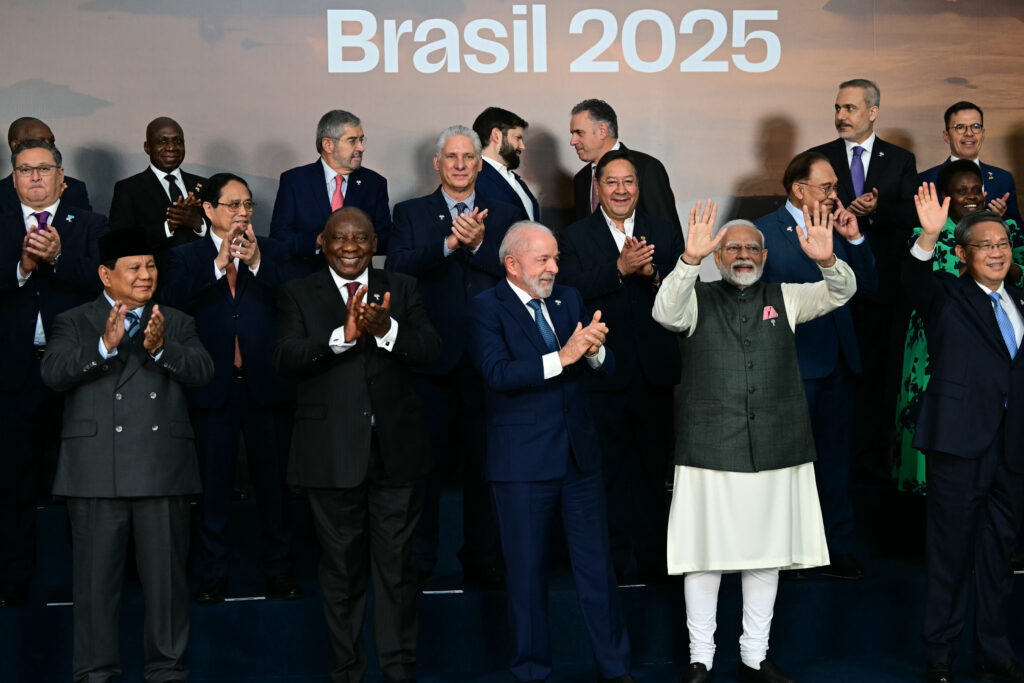
The G7 may be a small, elite club, but when its leaders gather in Canada, several other national heads will attend as guests — highlighting the group’s efforts to adapt to a fast-changing world.The leaders of India, Ukraine, Mexico, South Africa and South Korea are among a carefully selected guest list drawn up at a time of global turmoil and a radical new US approach to world affairs.Summit invitations have become part of the G7 routine, and the host nation often likes to make a “welcome-to-this-exclusive-club” gesture, Ananya Kumar, of the Atlantic Council’s GeoEconomics Center, told AFP.”The leaders want to meet each other, and you’ll see the guests being a part of most of the work that happens.”Some hosts “really want certain guests there to show their significance in the global economy,” she added.This year’s summit in the Canadian Rockies comes as the G7’s share of world GDP has fallen from 63 percent in 1992 to 44 percent today, and as member nations deliberate on troubled relations with China and Russia.”It’s important to think of who will be there in the room as they’re making these decisions,” Kumar said ahead of the three-day event that mixes leadership meetings with “the nitty-gritty ministerial work.”Fifty years ago, Britain, France, Germany, Italy, Japan and the United States formed the G6, first meeting at a French chateau, before Canada joined the following year.Russia itself was a guest in the early 1990s, becoming a full member of the G8 in 1998 before being expelled in 2014.Notable guests for the summit that starts Sunday include:- Ukraine -President Volodymyr Zelensky’s presence in Canada is a sign of continuing broad G7 support for Ukraine in its fight against Russia’s invasion — despite Donald Trump’s skepticism.The US president regularly criticizes Zelensky and has upended the West’s supply of vital military, financial and intelligence assistance to Ukraine.Zelensky aims to use the summit to press for more US sanctions on Moscow, saying last week “I count on having a conversation” with Trump, who wants a quick peace deal.- India -Prime Minister Narendra Modi attended the last G7 summit as India — the most populous nation in the world — takes an evermore important role in geopolitics. But his invitation this year was far from certain.Relations between India and Canada have turned sour over accusations of New Delhi’s involvement in the assassination of a Sikh activist in Canada. Modi and new Canadian Prime Minister Mark Carney will have a chance to reset ties.India is also a leading member of BRICS — a more fractured bloc that includes Russia and China, but which has growing economic clout and is increasingly seen as a G7 rival.- Mexico -President Claudia Sheinbaum’s invitation means Canada has ensured that all three members of the USMCA free trade agreement will be present.Trump is seeking to transform the deal when it is up for review next year, as he pursues his global tariff war aimed at shifting manufacturing back to the United States.Enrique Millan-Mejia, of the Atlantic Council’s Adrienne Arsht Latin America Center, said he expected Mexico to use the summit to touch base with United States on tariffs and the USMCA, but he forecast no major breakthroughs.- South Africa -President Cyril Ramaphosa can expect a friendlier welcome than he got from Trump last month, when their Oval Office meeting included a surprise video alleging the South African government was overseeing the genocide of white farmers.Ramaphosa may hope he can make progress repairing badly strained ties via a quiet word with Trump away from the cameras.The former anti-apartheid activist is attending the summit as South Africa holds the current presidency of the wider G20 group, and he said he plans to push its agenda in Canada.- South Korea -Carney appears keen to expand the event to bring in other partners that hold views generally aligned with core members.South Korea fits the bill and has emerged since the Ukraine war as a major defense exporter to Europe, although it has stopped short of directly sending arms to Kyiv.Newly elected President Lee Jae-myung, who comes from the left, will attend after winning a snap election triggered by his predecessor’s disastrous martial law declaration.

India a voice for Global South at G7, says foreign minister

India, whose leader has been invited to the G7 starting on Sunday, is eager to represent the Global South on the world stage, acting as a “bridge” between different countries, Foreign Minister Subrahmanyam Jaishankar said.India is not a member of the G7 — which comprises Britain, Canada, France, Germany, Italy, Japan and the United States — but the world’s most populous nation and one of its biggest economies has been invited to summits since 2019.”We have been an outreach country in the G7 for many years, and I think it brings benefits to the G7,” he told AFP in Paris.”There are very strong feelings in the Global South about the inequities of the international order, the desire to change it, and we are very much part of that,” he added.”It is important for us to organise ourselves and make our presence felt.”The leaders of the G7 kick off a yearly summit in the Canadian Rockies on Sunday.They have invited Indian Prime Minister Narendra Modi, along with the leaders of Ukraine, Mexico, South Africa and South Korea, to attend at a time of global turmoil and a radical new US approach to world affairs.The member nations are also expected to deliberate on troubled relations with China and Russia.India is a leading member of BRICS — a bloc of leading emerging economies that includes Russia and China, whose leaders are set to meet in early July.BRICS has growing economic clout and is increasingly seen as a G7 rival.Jaishankar said India had “the ability to work with different countries in a way without making any relationship exclusive”.”To the extent that that serves as a bridge, it’s frankly a help that we do to international diplomacy at a time when, mostly what you see are difficult relationships and excessive tensions,” he added.- No need for ‘more tension’ -The foreign minister said his country had been in favour of direct talks between Russia and Ukraine to end the conflict since 2022.But Jaishankar — whose nation is a political ally of Russia and trades with Moscow — said sanctions such as those against President Vladimir Putin’s government did not work.”Where sanctions are concerned, you could argue that it has not actually had much impact on policy behaviour,” he said.Europeans are in favour of a plan for a “secondary” sanctions plan, including a 500-percent tariff on countries that buy Russian oil, gas and raw materials.”The world does not need more tension, more conflict, more hostility, more stresses,” the former Indian ambassador in Washington said.US President Donald Trump is expected at the G7 summit in Kananaskis, Alberta.Modi is expected to meet him to push a trade deal with the United States — India’s largest trading partner — before the July 9 deadline when Washington’s punishing 26 percent tariffs are set to resume.Jaishankar said Trump “clearly, in many ways, represents a discontinuity”.”He is definitely a very nationalistic person who puts his country’s interests very strongly ahead,” he added.- ‘Stable relationship’ with China -As for China, it was a balancing act, said the minister.India and China, the world’s two most populous nations, are intense rivals competing for strategic influence across South Asia, and their 3,500-kilometre (2,200-mile) shared frontier has been a perennial source of tension.Their troops clashed in 2020, killing at least 20 Indian and four Chinese soldiers, and forces from both sides today face off across contested high-altitude borderlands.Despite both country’s differences, “we are also today the major rising powers in the world”, Jaishankar said.”Where we (India) have to be strong and firm, we will be strong and firm. Where we have to forge a stable relationship, we are prepared to do that,” he added.China has also been a staunch partner of India’s arch-enemy Pakistan.Pakistan used Chinese jets against India when the nuclear-armed foes fought an intense four-day conflict last month in which 70 people were killed, their worst standoff since 1999.The fighting was triggered by an April 22 attack on civilians in Indian-administered Kashmir that New Delhi accused Pakistan of backing — a charge Islamabad denies.The territory is claimed in full by both India and Pakistan, which have fought several wars over Kashmir since their 1947 independence from British rule.But Jaishankar dismissed fears at the time of a nuclear escalation.These were “only the concerns of people who were completely uninformed,” he said.

Families hold funerals for Air India crash victims

Mourners covered white coffins with flowers in India on Sunday as funerals were held for some of the at least 279 people killed in one of the world’s worst plane crashes in decades.Health officials have begun handing over the first passenger bodies identified through DNA testing, delivering them to grieving relatives in the western city of Ahmedabad, but the wait went on for most families.”They said it would take 48 hours. But it’s been four days and we haven’t received any response,” said Rinal Christian, 23, whose elder brother was a passenger on the jetliner. There was one survivor out of 242 passengers and crew on board the London-bound Air India jet when it crashed Thursday into a residential area of Ahmedabad, killing at least 38 people on the ground as well.”My brother was the sole breadwinner of the family,” Christian told AFP. “So what happens next?” At a crematorium in the city, around 20 to 30 mourners chanted prayers in a funeral ceremony for Megha Mehta, a passenger who had been working in London. As of Sunday evening, 47 crash victims have been identified, according to Rajnish Patel, a doctor at Ahmedabad’s civil hospital. “This is a meticulous and slow process, so it has to be done meticulously only,” Patel said.One victim’s relative who did not want to be named told AFP they had been instructed not to open the coffin when they receive it.Witnesses reported seeing badly burnt bodies and scattered remains.Workers went on clearing debris from the site on Sunday, while police inspected the area.The Boeing 787-8 Dreamliner erupted into a fireball when it went down moments after takeoff, smashing into buildings used by medical staff.The majority of those injured on the ground have been discharged, Patel said, with one or two remaining in critical care.- ‘We need to know’ -Indian authorities have yet to identify the cause of the disaster and have ordered inspections of Air India’s Dreamliners.Authorities announced Sunday that the second black box, the cockpit voice recorder, had been recovered. This may offer investigators more clues about what went wrong.Aviation Minister Ram Mohan Naidu Kinjarapu said Saturday he hoped decoding the first black box, the flight data recorder, would “give an in-depth insight” into the circumstances of the crash.Imtiyaz Ali, who was still waiting for a DNA match to find his brother, said the airline should have supported families faster.”I’m disappointed in them. It is their duty,” said Ali, who was contacted by the airline on Saturday. “Next step is to find out the reason for this accident. We need to know,” he told AFP.One person escaped alive from the wreckage, British citizen Vishwash Kumar Ramesh, whose brother was also on the flight.Air India said there were 169 Indian passengers, 53 British, seven Portuguese and a Canadian on board the flight, as well as 12 crew members.Among the passengers was a father of two young girls, Arjun Patoliya, who had travelled to India to scatter his wife’s ashes following her death weeks earlier.”I really hope that those girls will be looked after by all of us,” said Anjana Patel, the mayor of London’s Harrow borough where some of the victims lived.”We don’t have any words to describe how the families and friends must be feeling,” she added.While communities were in mourning, one woman recounted how she survived by arriving late at the airport.”The airline staff had already closed the check-in,” said 28-year-old Bhoomi Chauhan.”At that moment, I kept thinking that if only we had left a little earlier, we wouldn’t have missed our flight,” she told the Press Trust of India news agency.