AFP Asia

Ton-up Jaiswal makes England toil in first Test as India take control

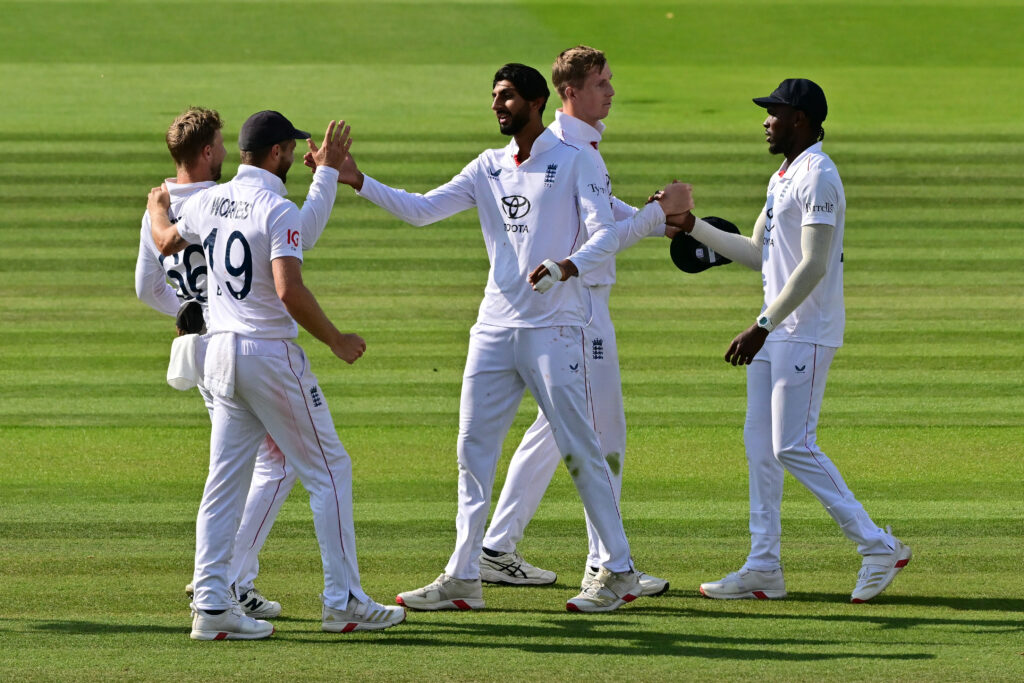
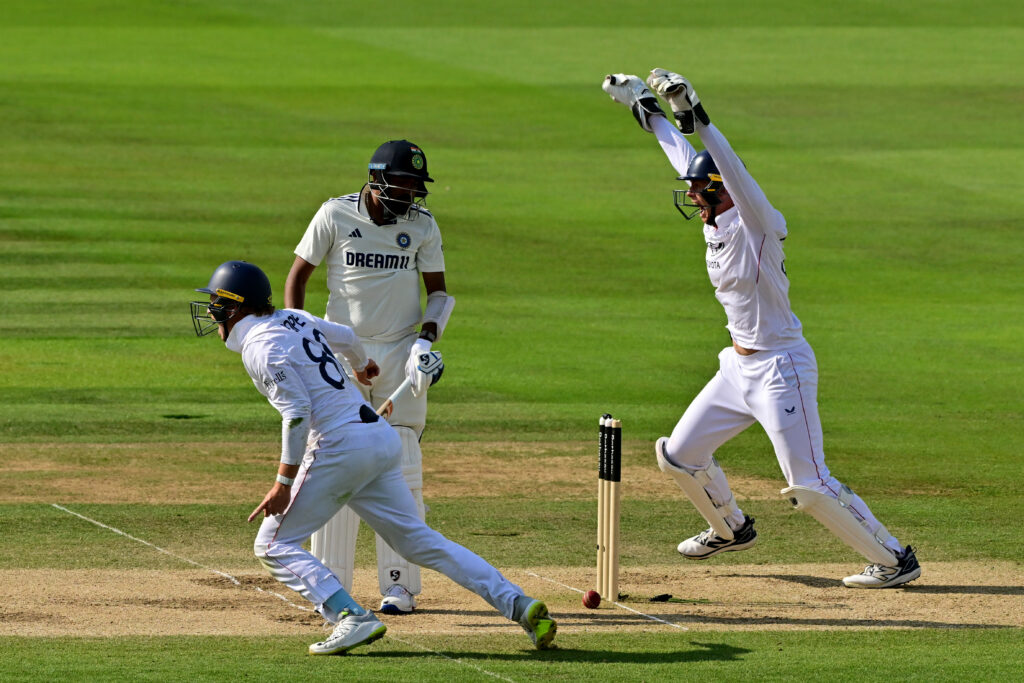
India’s Yashasvi Jaiswal marked his first Test innings in England with a superb century and captain Shubman Gill hit an unbeaten fifty as the tourists took control of the series opener at Headingley on Friday.India dominated the bulk of the morning’s play after being sent into bat, only to lose two wickets in quick succession as they ended the session on 92-2.By tea on the first day of the opening Test in a five-match series, India were firmly back in control on 215-2, with 23-year-old opener Jaiswal 100 not out.Gill, in his first innings as skipper since succeeding the retired Rohit Sharma, was also in fine form on 58 not out.The pair had so far shared an unbroken partnership of 123 in 25.2 overs, with India going through the second session without losing a wicket.England captain Ben Stokes’ decision to bowl, which may have been influenced by the fact the last six Tests at Headingley have all been won by the team batting second, meant England did not have to face India’s star paceman Jasprit Bumrah at the start of the match.It also gave England a chance to strike an early blow against an India top order without experienced batsmen Rohit and Virat Kohli after the pair retired from Test cricket within days of each other last month.But an England attack without retired greats James Anderson and Stuart Broad and missing injured express quicks Jofra Archer and Mark Wood, rarely threatened on a good pitch. Chris Woakes, sidelined by an ankle problem earlier in the season, returned to take the new ball in place of the injured Gus Atkinson, with Brydon Carse given a home debut in the other change to the England side that beat Zimbabwe recently.- Sublime stroke-play -Jaiswal and Rahul seized on anything loose as India made a stylish start to their quest for just a fourth Test series win in England after their triumphs in 1971, 1986 and 2007.With India’s openers approaching a century partnership, England made a double strike.Rahul, on 42, drove loosely at a wide ball from Carse and edged to Joe Root at first slipMoments later, number three Sai Sudharsan joined the long list of batsmen who have made a duck on Test debut when a glance off Stokes was well caught by diving wicketkeeper Jamie Smith.But India’s third-wicket duo seized back the momentum with a century stand full of sublime stroke-play.Gill was especially severe on Woakes as he on-drove and cut the all-rounder for commanding boundaries before completing a 56-ball fifty — his quickest in Tests — with a pulled four off Josh Tongue.Stokes brought on Shoaib Bashir to add variety to his attack but the off-spinner’s first ball was cuffed through the covers for four by Jaiswal.Jaiswal appeared to suffer several bouts of cramp before he went to 99 with two superb boundaries off Carse.A quick single took an elated Jaiswal to a 144-ball hundred, including 16 fours, as he completed his fifth century in 20 Tests and third against England. Before play both teams and the match officials observed a minute’s silence in memory of the victims of an Air India plane crash in Ahmedabad that killed all but one of 242 people on board, with players also wearing black armbands as a mark of respect.

Bangladesh’s lead over Sri Lanka nears 200 in first Test

Bangladesh edged ahead of Sri Lanka on day four of the first Test in Galle on Friday, extending their lead to 187 runs with seven wickets in hand.  The visitors finished at 177-3 after a strong partnership of 68 between opener Shadman Islam and skipper Najmul Hossain Shanto. All-rounder Milan Rathnayake dismissed Shadman for 76 but veteran campaigner Mushfiqur Rahim, fresh off a first-innings century, joined his captain to steady the innings.The duo built an unbroken 49-run partnership for the fourth wicket to put their side in the driver’s seat heading into the final day. Bangladesh off-spinner Nayeem Hasan earlier took five wickets to halt Sri Lanka’s first-innings charge, with the visitors dismissed for 485 after lunch to trail by 10 runs.Nayeem was well supported by Hasan Mahmud, who finished with 3-74.Sri Lanka looked set for a useful lead after the first session, reaching 465-6 with Kamindu Mendis and Rathnayake stitching together a gritty 84-run stand for the seventh wicket.However, Sri Lanka then surrendered the momentum with a lower-order collapse, losing their last four wickets for 15 runs. Rathnayake had shown commendable defiance for his 39 but was undone by an inside edge onto the stumps off Mahmud.Kamindu followed in the next over with Sri Lanka’s score unchanged, falling to Nayeem’s off-spin as the ball kicked off the surface and caught the left-hander by surprise.His composed 87 included eight fours and a six but he fell with a third hundred against Bangladesh within sight.Nayeem said he “really enjoyed” Kamindu’s wicket.”Very happy with that ball that got him,” he said. Nayeem also removed debutant Tharindu Rathnayake for a duck with another sharp off-break that went through the gate as Sri Lanka lost three wickets for just one run in 10 deliveries.He then bowled Asitha Fernando (4) to close out Sri Lanka’s innings.The last Test draw at the Galle cricket ground was between the same two sides in 2013.”I think the game is open for both sides,” Kamindu said.”If we are able to get three wickets early, then we are up for a challenge.” Brief scores:Bangladesh 1st innings: 495 all out (Mushfiqur Rahim 163, Najmul Hossain Shanto 148; Asitha Fernando 4-86)Sri Lanka 1st innings: 485 all out (Pathum Nissanka 187, Kamindu Mendis 87, Dinesh Chandimal 54; Nayeem Hasan 5-121, Hasan Mahmud 3-74)Bangladesh 2nd innings: 177-3 (Shadman Islam 76, Najmul Hossain Shanto 56)Toss: Bangladesh

Thailand credits prey releases for ‘extraordinary’ tiger recovery

In the thick, steamy forests of western Thailand, 20 skittish sambar deer dart from an enclosure into the undergrowth — unaware they may find themselves in the jaws of one of the habitat’s 200 or so endangered tigers.The release is part of a project run by the government and conservation group WWF to provide tigers with prey to hunt and eat, which has helped the big cat make a remarkable recovery in Thailand.The wild tiger population in Thailand’s Western Forest Complex, near the border with Myanmar, has increased almost fivefold in the last 15 years from about 40 in 2007 to between 179 and 223 last year, according to the kingdom’s Department of National Parks (DNP).It is an uptick that WWF’s Tigers Alive initiative leader Stuart Chapman calls “extraordinary”, especially as no other country in Southeast Asia has seen tiger numbers pick up at all.The DNP and the WWF have been breeding sambar, which are native to Thailand but classed as vulnerable, and releasing them as prey.Now in its fifth year, the prey release is a “very good activity,” says the DNP’s Chaiya Danpho, as it addresses the ecosystem’s lack of large ungulates for tigers to eat.Worrapan Phumanee, a research manager for WWF Thailand, says that deer were previously scarce in the area, impacting the tiger population.But “since starting the project, we’ve seen tigers become regular residents here and successfully breed,” he says.Cambodia, Laos and Vietnam have all lost their native populations of Indochinese tigers, while Myanmar is thought to have just 23 left in the wild, in large part due to poaching and wildlife trafficking.Over the past century numbers worldwide have fallen from about 100,000 individuals to an estimated 5,500, according to the IUCN, which classifies tigers as endangered due to habitat loss and overhunting of the species and their natural prey.But major tiger recoveries have been recorded in India and Nepal, where in recent years numbers of Bengal tigers have grown to 3,600 and 355 respectively thanks to conservation measures.- ‘Incredibly successful’ -In a forest clearing in Khlong Lan National Park, DNP staff open the gate of the sambar deer enclosure where 10 males and 10 females have been grazing.The deer watch cautiously as one brave individual darts out, before the rest follow at speed and disappear into the trees.Worrapan says prey release programmes — now also happening in Cambodia and Malaysia — are part of wider restoration efforts to “rebuild ecosystems” in Southeast Asia, where they have been adapted for local purposes from similar initiatives that have existed for years in Africa.The breeding and releases also aim to solve the problem of the sambar deer’s own population decline due to hunting, says Worrapan.”The purpose of releasing deer is not solely to serve as tiger prey but also to restore the deer population,” he says, adding that GPS collar-monitoring has allowed researchers to track their lives after release.He says despite having only known captivity, the deer show a strong ability to adapt to outside threats.”(They) don’t simply wait passively. They try to evade predators and choose safe areas to thrive.”Chaiya says only a small number of the released deer end up as predator dinner, with most going on to reproduce.The sambar deer and their offspring “play a role in the food chain within the ecosystem, serving as prey for predators,” he says.

Cheap alms bowls imports hit Sri Lanka makers, monks

The alms bowl is a symbol of monks, yet in Sri Lanka artisans are struggling as cheap substitutes flood the market, igniting a debate over Buddhist tradition and quality.The village of Panvila has long been associated with craftsmen who produce the humble “paathra”, the special bowl that forms part of the eight essentials donated to monks and which is used to ask for food.Thenuwara Badalge Sarath, 65, says he is the only blacksmith left in a village that once supplied much of the country.”When I learnt the craft from my father, there were more than 10 families in the neighbourhood who made these bowls,” Sarath told AFP, while hammering a piece of scrap metal into a holy utensil.”Today, I am the only one keeping up the tradition. My son died recently in a road accident, and there is no one to carry on this line of work after I am gone,” said the fourth-generation craftsman.He spends about a week producing a batch of five to six bowls from discarded steel barrels. He sells each for 600 rupees ($2), but competition from cheap imports is tough.”There are aluminium bowls that come from abroad. They are cheaper and lighter — we can’t compete,” Sarath said at his village smithy, near the southern tourist resort of Hikkaduwa.- Karma drives demand -The Buddhist-majority nation of some 22 million people has just over 42,000 monks, but the demand for bowls is disproportionately high because of the positive karma attached to offering them to temples.Kirinde Assagi, a leading Buddhist monk, said the alms bowl forms part of the eight items for a monk to lead an ascetic life and spread the teachings of Buddha, along with two robes, a razor, a straining cloth, a needle and thread, and a belt.”The bowl is his livelihood. When a monk goes out begging with his bowl, he gets sustenance”, Assagi said.”Because gifting ‘ata pirikara’ to monks brings enormous good karma, devotees clamour to donate this,” said the monk, in reference to the eight-item package.At his Gangaramaya temple in the capital Colombo there were nine such packages donated within an hour one weekend.- ‘Mountain’ of discarded pots -Assagi says most of the bowls however are of poor quality, made out of aluminium and unfit to serve food in.In a storeroom at the back of his temple, there is a huge pile of bowls that monks say are not suitable even for offering food to household pets.”I will show you a mountain of begging bowls that we have discarded. We make holes at the bottom and repurpose them for potted plants.”Monks in Thailand, Myanmar, and Laos traditionally seek alms every morning, underscoring their simple life and demonstrating that their livelihood depends on others.But the influx of cheap bowls is impacting the dawn ritual.”We see the practice of monks begging slowly dying off as the quality of the bowls goes down,” he said.The Gangaramaya temple in Colombo has campaigned to improve the quality of utensils offered to monks and revive the ritual of seeking alms.Assagi said the Thai royal family has in recent years gifted more than 27,000 high qualitiy stainless steel bowls to Sri Lankan monks, most of whom are followers of the Siam sect of Buddhism practised in that nation.Unlike the financially well-off Gangaramaya, smaller temples are known to sell their excess bowls back to the market in a move that undermines traditional craftsmen such as Sarath.”When the bowls go back to the shop from a temple, we find it difficult to sell our produce,” Sarath said. He is trying to convince devotees that there is less merit in offering bowls that are being regifted.

Govts scramble to evacuate citizens from Israel and Iran

Governments around the world are evacuating thousands of their nationals caught up in the rapidly spiralling Israel-Iran conflict, organising buses and planes and in some cases assisting people crossing borders on foot.Foreigners have rushed to leave both countries after Israel launched an unprecedented bombing campaign on Friday targeting Iran’s nuclear and military facilities, sparking retaliation from Tehran.With Israel’s air space closed and the two countries exchanging heavy missile fire, many people are being evacuated via neighbouring countries.- Europe -European countries have already repatriated hundreds of their citizens from Israel.The Czech Republic and Slovakia repatriated 181 people, who were bussed to a neighbouring country and crossed the border on foot, the Czech defence ministry said.Germany scheduled flights for Wednesday and Thursday via Jordan, while Poland said the first of its citizens would also arrive back on Wednesday.Italian nationals were being offered a charter flight on Sunday from Israel to Egypt and then Italy, with non-refundable reservations set at 500 euros ($575) per adult.Greece said it had repatriated 105 citizens plus a number of foreign nationals via Egypt, while a private plane with 148 people landed in the Bulgarian capital Sofia on Tuesday.Hungary evacuated 21 citizens from Iran via Azerbaijan, mainly diplomats and their families, officials said.Bulgaria repatriated 17, and Slovenia two diplomats and their families.- United States -The US ambassador to Israel announced plans on Wednesday for evacuating Americans by air and sea.The embassy was working on evacuation flights and cruise ship departures for “American citizens wanting to leave Israel,” Ambassador Mike Huckabee posted on social media.- China -China has evacuated more than 1,600 citizens from Iran and several hundred more from Israel. Its foreign ministry said on Thursday those efforts would continue.- Australia -Australia has started evacuating around 1,500 citizens from Iran and more than 1,200 from Israel, although missile barrages have made it too risky for civilian aircraft, its foreign minister said.”We have taken the opportunity to get a small group of Australians out of Israel through a land border crossing,” said Foreign Minister Penny Wong.- Mexico -Mexico said it had evacuated 18 people from Iran to Azerbaijan, both Mexican nationals and family members.- Pakistan -Pakistan has shut its border crossings with neighbouring Iran, except to Pakistanis wanting to return home.Around 3,000 Pakistanis have crossed the border from Iran since the conflict started, foreign ministry spokesman Shafqat Ali Khan said on Thursday.The families of diplomats and some non-essential staff from Iran have also been evacuated.- India -Around 110 students who fled Iran over the land border with Armenia have landed in New Delhi, an Indian foreign ministry spokesperson said Thursday. There are around 10,000 Indian citizens in Iran.New Delhi also said it planned to evacuate all Indian nationals in Israel who wish to leave. There are around 30,000.- Japan -Japan has ordered military planes to be on standby for around 1,000 Japanese nationals believed to live in Israel, and around 280 in Iran, according to government ministers.- Indonesia -Indonesia is preparing to evacuate around 380 of its citizens currently in Iran by land, Jakarta’s foreign minister said Thursday.At least 11 Indonesians in Israel have also asked to leave.- Vietnam -Vietnam, which has more than 700 citizens in Israel and dozens in Iran, said it was working to ensure their safety.The foreign ministry said on Thursday that 18 Vietnamese from Iran were evacuated, 16 of whom returned to Vietnam. It did not provide further information on evacuations from Israel.- Philippines -The Philippines is preparing to repatriate 28 Israel-based Filipino workers out of 178 who asked for help, the Department of Migrant Workers said on Thursday.At least 21 Philippine government officials have also crossed into Jordan by land from Israel, the foreign ministry said.

Air India says plane ‘well-maintained’ before crash

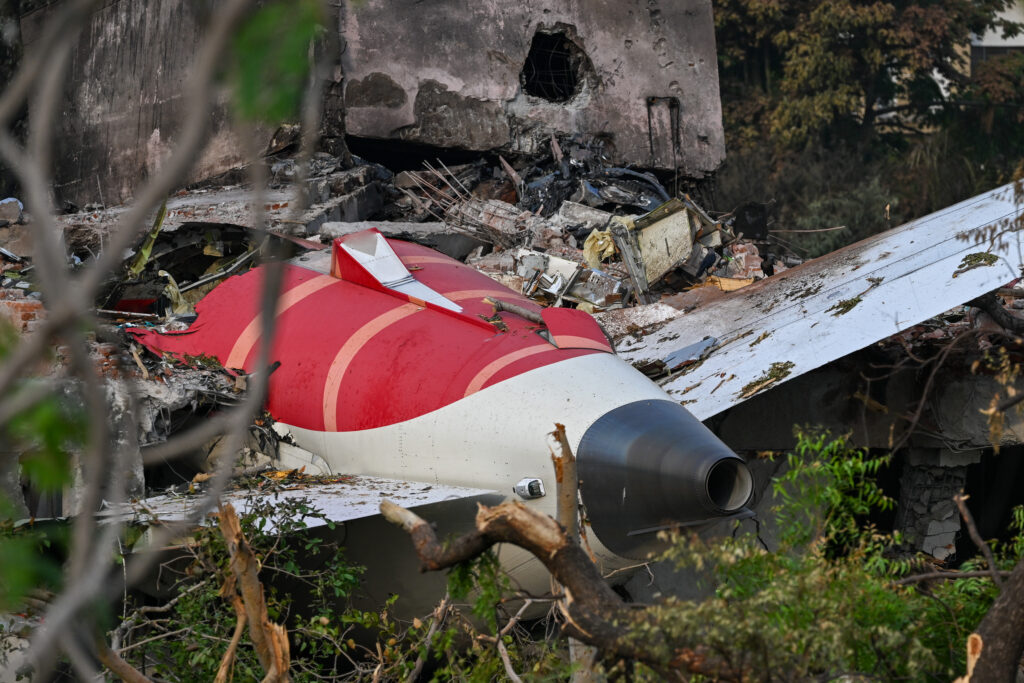
Air India’s Boeing plane was “well-maintained” before it crashed a week ago, killing all but one of 242 people on board, the airline said on Thursday.Indian authorities are yet to detail what caused the Boeing 787-8 Dreamliner to hurtle to the ground in the western city of Ahmedabad a week ago.At least 38 people were killed in the residential neighbourhood that the plane hit, causing such devastation that DNA analysts are still trying to identify dozens of the dead.As investigators attempt to retrieve data from the plane’s black boxes — the cockpit voice recorder and the flight data recorder — the airline said no problems were detected with the jet before the disaster.”The plane was well-maintained, with its last major check in June 2023,” Air India said in a statement.”Its right engine was overhauled in March 2025, and the left engine was inspected in April 2025. Both the aircraft and engines were regularly monitored, showing no issues before the flight,” it said.The London-bound jet burst into a fireball when it smashed down in Ahmedabad moments after takeoff.Initial checks on Air India’s Dreamliners since the crash “did not reveal any major safety concerns”, the country’s civil aviation regulator said on Tuesday.India’s aviation investigative unit said on Thursday the probe was “progressing steadily”.”Key recovery work, including site documentation and evidence collection, has been completed, and further analysis is now underway,” the Aircraft Accident Investigation Bureau said in a statement.- ‘Highly experienced pilot’ -Air India said there were 169 Indian passengers, 53 British, seven Portuguese and a Canadian on board the flight, as well as 12 crew members.The pilots were accomplished flyers, according to the airline.”The flight was led by Captain Sumeet Sabharwal, a highly experienced pilot and trainer with over 10,000 hours flying widebody aircraft,” it said.”First Officer Clive Kunder had over 3,400 hours of flying experience.”While investigators try to piece together what went wrong, many families of victims are still waiting for their loved ones to be identified.As of Thursday evening, 215 victims have been matched through DNA testing, all but nine of them passengers, according to the civil hospital’s medical superintendent Rakesh Joshi.The remains of around 15 of them have been transported by air, Joshi told journalists. Six people injured in the disaster remain in hospital, with one due to be discharged shortly while the others are in a stable condition.

Nissanka’s 187 leads Sri Lanka fightback in first Bangladesh Test

Pathum Nissanka’s career-best 187 helped Sri Lanka finish the third day of the first Test against Bangladesh in a strong position Thursday, only 127 runs off the Tigers’ first innings score.The 27-year-old opener anchored the Sri Lanka innings before they finished on 368-4 at the close of play, behind Bangladesh’s 495.He struck several key partnerships before he was bowled by Hasan Mahmud towards the end of the day’s play.Nissanka, who had been under pressure before the match with only one half-century in nine innings, hit 23 fours and a six in his marathon 256-ball innings.Nissanka looked set for his maiden double-ton when he was bowled by Mahmud, who was bowling with the second new ball.”This is my first Test hundred at home so I was very happy to get there,” Nissanka said after the day’s play.”It is important that we get a decent lead and put them under pressure.”But Sri Lanka’s top-scorer said he was “disappointed” with the way he got out. He acknowledged he had failed to score big since his century in England last year and said that he was “trying to make the most of today”.Kamindu Mendis (37) and skipper Dhananjaya de Silva (17) will take charge of Sri Lanka’s first innings on the fourth day, with the Galle wicket still playing well for the batters. Besides Mahmud, Taijul Islam, Nayeem Hasan and Mominul Haque finished the third day with one wicket each in a largely uneventful session for Bangladesh’s bowlers.  Nissanka lost his opening partner Lahiru Udara (29) early in the day to the slow left-arm orthodox bowling of Islam. Dinesh Chandimal came in and took a solid 54 runs before he was removed by Hasan after an important 157-run partnership with Nissanka. Veteran Angelo Matthews, walking out to bat in his farewell Test with a guard of honour from the opposition, hit 39 runs in a key cameo that took the hosts to 293 before he fell to Haque.- ‘Toiled hard’ -Earlier, the third day started with Sri Lanka wrapping up Bangladesh’s innings in just three overs after their overnight score of 484-9.Bangladesh’s last man Nahid Rana feathered a short ball to wicketkeeper Kusal Mendis as fast bowler Asitha Fernando completed a return of 4-86 from his 29.4 overs.The visitors had been cruising at 458-4 on Wednesday before losing five wickets for 26 runs in the final hour of the rain-hit second day.Bangladesh’s bowling coach Shaun Tait said it was “a good batting wicket” in Galle.”It was difficult conditions for the fast bowlers today, they toiled hard,” he said after play Thursday. He acknowledged the Bangladesh “lower order didn’t contribute much”, but said they would have taken the score before the game.”I am not going to be critical of our batters,” he said.Brief scores:Bangladesh: 495 all out (Najmul Hossain Shanto 148, Mushfiqur Rahim 163)Sri Lanka: 368-4 (Pathum Nissanka 187, Dinesh Chandimal 54)Toss: Bangladesh

Air India says plane ‘well-maintained’ before crash

Air India’s Boeing plane was “well-maintained” before it crashed a week ago, killing all but one of 242 people on board, the airline said Thursday.Indian authorities are yet to detail what caused the Boeing 787-8 Dreamliner to hurtle to the ground in the western city of Ahmedabad, where at least 38 people were also left dead.As investigators attempt to retrieve data from the plane’s black boxes — the cockpit voice recorder and the flight data recorder — the airline said that no problems were detected with the jet before the disaster.”The plane was well-maintained, with its last major check in June 2023,” Air India said in a statement.”Its right engine was overhauled in March 2025, and the left engine was inspected in April 2025. Both the aircraft and engines were regularly monitored, showing no issues before the flight,” the airline said.The London-bound jet burst into a fireball when it smashed into a residential area of Ahmedabad moments after takeoff.Initial checks since the crash on Air India’s Dreamliners “did not reveal any major safety concerns”, the country’s civil aviation regulator said Tuesday.India’s aviation investigative unit said Thursday the probe was “progressing steadily”.”Key recovery work, including site documentation and evidence collection, has been completed, and further analysis is now underway,” the Aircraft Accident Investigation Bureau said in a statement.Air India said there were 169 Indian passengers, 53 British, seven Portuguese and a Canadian on board the flight, as well as 12 crew members.The airline said Thursday the pilots were accomplished flyers. “The flight was led by Captain Sumeet Sabharwal, a highly experienced pilot and trainer with over 10,000 hours flying widebody aircraft,” it said.”First Officer Clive Kunder, had over 3,400 hours of flying experience.”While investigators try to piece together what went wrong, families of dozens of victims are still waiting for their loved ones to be identified.As of Thursday, 210 victims have been identified through DNA testing, state health minister Rushikesh Patel said.

A close-up of a stack of newspapers resting on a desk, symbolizing information and media.

Relieved Pakistanis recall ‘horrifying nights’ as Israel, Iran trade strikes

Mohammad Hassan anxiously returned to Pakistan from neighbouring Iran this week after witnessing drones, missiles, and explosions tear through Tehran’s sky during what he called long, “horrifying nights”. The 35-year-old  University of Tehran student is one of about 3,000 Pakistanis who, according to the Ministry of Foreign Affairs, have returned home since Israel launched its aerial war against its long-time enemy last week.Governments around the world are scrambling to evacuate their nationals caught up in the rapidly spiralling conflict as Israel and Iran trade missile and drone strikes. “I was in the city centre where most of the strikes took place and even one of the student dormitories was attacked and luckily no one was dead, but students were injured,” Hassan said.There are more than 500 Pakistani students at his university alone, he said, all of them on their way “back home”.”Those days and nights were very horrifying… hearing sirens, the wailing, the danger of being hit by missiles. As one peeped out the window in the night, you could see drones, missiles with fire tails,” he told AFP.- Ghost town -Pakistan and Iran have a shaky diplomatic relationship. They bombed each other’s territory little more than a year ago, both claiming to target rebels using their neighbour’s land to launch attacks.Yet they have never suspended trade, tourism and academic ties.Iranian consulates across Pakistan have stepped up efforts to promote their universities.Between 25 million and 35 million Pakistani Shiite Muslims also hope to make at least one pilgrimage in their lifetime to holy sites in Iran, foremost among them the sacred city of Qom.Mohammad Khalil, a 41-year-old petroleum engineer, left Tehran three days ago, the capital of the Islamic Republic looking like a ghost town as residents sheltered indoors and families fled.”In the last two days, I saw people moving out of the city in different vehicles with necessary commodities,” Khalil said.Abdul Ghani Khan sells medical equipment in his hometown of Peshawar in northwest Pakistan and travels to Iran regularly for supplies.He had been in Tehran for a week when the first Israeli missiles fell on Friday. Iran and Israel have traded heavy missile fire in the days since, raising fears of a wider regional conflict.Pakistan is in a difficult position as the only Muslim-majority country with nuclear weapons. It, like Iran, does not recognise Israel but is also a major ally of the United States.Khan had to make the journey home by road because the airspace is now closed. Pakistan has also shut its border crossings with Iran to all except Pakistanis wanting to return home.”We saw drones, red lights of anti-aircraft guns and I spotted one building catch fire,” Khan said.- ‘Offering prayer’ -Mohammad Asif, a lawyer from Lahore in Pakistan’s east, heard about the air strikes while on a pilgrimage in Qom.He wasn’t initially afraid and continued his pilgrimage to Mashhad in Iran’s northeast, home to the golden-domed Imam Reza shrine.That was until Israeli strikes hit the airport in Mashhad, nearly 1,000 kilometres (620 miles) from the Pakistani border.Samreen Ali was also in Mashhad but, like Asif, cut her trip short and returned with her husband and 15-year-old son.She was praying in a mosque in Mashhad when Israel struck the city.Ali said she had visited Iran nine times before on pilgrimages and never imagined witnessing war there.”I was offering prayer when I heard two explosions,” she told AFP.She then noticed she wasn’t receiving messages on her phone and assumed that “communication was being restricted… because of the war”.Syed Saqib, 46, was in Qom and had to travel 500 kilometres (310 miles) by bus southeast to Yazd. “We had to take alternative routes, spend an entire night waiting at a bus terminal,” Saqib said.They then boarded buses to Zahedan, a city near the border with Pakistan’s Balochistan province. A relieved Saqib recalled making the border crossing at Taftan, surrounded by families carrying heavy luggage.

England v India: Three key battles

Ben Stokes’ England take on an India team under new captain Shubman Gill at Headingley on Friday in the first Test of a five-match series.The visitors are embarking on a new era without heavyweights Virat Kohli and Rohit Sharma as they seek to end their 18-year wait for a Test series win in England.AFP Sport looks at three key battles that could define the series, which comes at the start of a new cycle in the World Test Championship.Bumrah v England’s top orderJasprit Bumrah can lay claim to being the best all-format bowler in world cricket today, with his Test figures of 205 wickets at under 20 apiece putting the paceman alongside the greats of the game.But with five gruelling matches to come in less than seven weeks, Bumrah, who suffered a back injury in Australia in January, is unlikely to feature in every game.Blessed with a unique action and an ability to generate sharp pace off a short run, the 31-year-old is one of the most difficult bowlers for batsmen to face. He was crowned ICC men’s cricketer of the year for 2024 after taking 71 Test wickets at a remarkable average of just 14.92.Wisden editor Lawrence Booth described Bumrah as “uniquely challenging” as he was named the leading men’s cricketer in the world in the 2025 edition.England’s hope is that they can blunt Bumrah, forcing him to bowl more overs than he would like. If they achieve that it might be half the battle won.Skippers: Stokes v GillShubman Gill would love nothing more than to lead from the front in his first series as India captain.The 25-year-old, however, has a modest Test batting average of 35 in 32 matches and a paltry average of under 15 in three matches in England.Gill has a tough task in shaping a new-look side without retired star batsman Kohli and former skipper Rohit as he targets India’s fourth series win in England following triumphs in 1971, 1986 and 2007.He will be pitting his wits against Stokes, who has repeatedly demonstrated a priceless ability to inspire those around him since succeeding Joe Root as England captain in 2022.But are his superhuman all-round powers waning?It is now two years since Stokes made the last of his 13 Test hundreds, a remarkable 155 against Australia at Lord’s, and he has been dogged by injuries.However, the 34-year-old remains a threat with his lively medium pace, showing again in last month’s Test win against Zimbabwe his enduring ability to take wickets at key times.Keepers: Smith v PantIt is increasingly rare for a Test wicketkeeper to be selected purely on the quality of their work behind the stumps, with runs now a major factor.Nobody better exemplifies this trend than India’s Rishabh Pant, who averages just over 42 in 43 matches, with six hundreds, and has the ability to dismantle attacks.At his sharpest, Pant is capable of spectacular dismissals in the field, although there are occasions when he can appear to lose concentration. His presence on the field is something of a minor miracle given he was out of the game for 15 months after being seriously injured in a car crash in December 2022.England ‘keeper Jamie Smith, 24, is just 10 Tests into a highly promising international career, averaging a shade under 43 after displacing Surrey teammate Ben Foakes, widely regarded as the superior gloveman.With England deploying an inexperienced bowling attack, it will be even more important than usual for Smith to take every chance that comes his way.