AFP Asia

Sri Lanka raises electricity price in line with IMF bailout

Cash-strapped Sri Lanka on Wednesday announced a 15 percent increase in the electricity price to shore up revenues for the state-run utility, in line with conditions imposed by an IMF bailout.The Public Utilities Commission said it allowed the Ceylon Electricity Board (CEB) to charge the higher rates from Thursday, six months after a controversial reduction that pushed the utility into the red.The government had forced a 20 percent price cut on the CEB in January, despite fears that it would cause the government-owned company to lose money and undermine the national budget.Ensuring cost-recovery and doing away with subsidies is in line with the conditions set by the International Monetary Fund, which granted a four-year, $2.9 billion loan to help salvage Sri Lanka’s economy.The country had declared bankruptcy after defaulting on its $46 billion foreign debt in April 2022, having run out of foreign exchange to finance even the most essential imports, such as food, fuel and medicines.Months of protests over shortages led to the toppling of then-president Gotabaya Rajapaksa in July 2022.His successor, Ranil Wickremesinghe, secured the IMF bailout and proceeded to cut subsidies and raise taxes.Wickremesinghe lost the September election, but his successor, Anura Kumara Dissanayake, is pushing ahead with the IMF-backed reforms.Inflation, which peaked at nearly 70 percent in September 2022, has dropped sharply, and the country has been experiencing deflation since September.The IMF says Sri Lanka is slowly emerging from its worst meltdown and that the economy has turned around, although risks remain.

Pakistani man who allegedly plotted US attack extradited from Canada

A Pakistani man was extradited from Canada to the United States on Tuesday to face charges of plotting to carry out an attack on Jews in New York City, the Justice Department said.Muhammad Shahzeb Khan, 20, also known as Shahzeb Jadoon, was arrested in Canada in September.According to a criminal complaint, Khan planned to travel to New York and carry out a mass shooting in support of the Islamic State (IS) at a Jewish center in Brooklyn on the October 7 anniversary of the deadly 2023 Hamas attack on Israel.”He planned to use automatic weapons to kill as many members of our Jewish community as possible, all in support of IS,” US Attorney Jay Clayton said in a statement.Khan allegedly revealed his plans in conversations with conspirators who were actually undercover law enforcement officers, the Justice Department said.He was taken into custody by Canadian authorities in the municipality of Ormstown some 12 miles (19 kilometers) from the US-Canada border.Khan is charged with attempting to provide material support and resources to a designated foreign terrorist organization and attempting to commit acts of terrorism. He could face a maximum of life in prison if convicted.

Indian coastguard battles blaze on container ship

India’s coastguard said Tuesday it was battling to stop a fierce blaze that has engulfed a Singapore-flagged container ship listing off the country’s southern coast.The 268-metre (879-foot) container vessel MV Wan Hai 503 carrying 22 crew members caught fire some 78 nautical miles off India’s Beypore port on Monday. Eighteen crew members were rescued by the Indian coastguard and navy, with four still missing, according to Singapore’s Maritime and Port Authority.China’s Xinhua state news agency reported, citing its embassy in India, that two of the missing people were from Taiwan.Indian Coast Guard said Tuesday that “fires and explosions persist” on the vessel, which was tilting at around “10–15 degrees”.They issued photographs that showed flames leaping from the stacked containers, with the ship surrounded by thick plumes of billowing black smoke.Initial images on Monday showed heavy containers that had seemingly been hurled up by a powerful explosion on board, with the coastguard saying that some were in the water.Singapore’s Maritime and Port Authority had said there were “some injuries” among the crew.Coastguard vessels alongside the blackened and burning ship poured jets of water onto the flames, video footage showed. The MV Wan Hai 503 container ship is the second to run into trouble off India’s southern coast within weeks.A Liberian-flagged container ship with hazardous cargo sank off the coast of Kerala on May 24. The Indian navy rescued all 24 crew members.

Pakistan increases defence budget by 20 percent

Pakistan announced on Tuesday a 20 percent hike in defence spending in this year’s federal budget, a month after a conflict with India that saw the worst violence in decades.More than 70 people were killed in the four-day conflict between the nuclear-armed neighbours in May before a ceasefire was announced.  Finance minister Muhammad Aurangzeb presented a $62 billion budget to parliament on Tuesday evening, allocating 14 percent to the military — rising from 2.12 trillion Pakistani rupees ($7.5 billion) to 2.55 trillion this coming fiscal year. It comes after Pakistan’s government announced Friday on social media that it was in discussions to acquire 40 new Chinese fighter jets and new air defence systems. Pakistan came to the brink of default in 2023, as a political crisis compounded an economic downturn and drove the nation’s debt burden to terminal levels, before it was saved by a $7 billion bailout from the International Monetary Fund. It has since then enjoyed a degree of recovery, with inflation easing and foreign exchange reserves increasing.”We have moved in the right direction,” Aurangzeb said at a briefing ahead of the budget announcement in parliament. “Any transformation takes two to three years and we have done a good job in terms of where we wanted to take things.”The budget will be voted on by parliament later this month, but the government’s safe majority means only minor changes are expected.An economic survey released on Monday for the outgoing fiscal year which ends on June 30, showed that the country missed almost all the targets set at the beginning of the year, with GDP expected to grow by 2.7 percent – falling short of the initial 3.6 percent target set in the last budget.The government has set an ambitious target of 4.2 percent GDP growth for the next fiscal year.The budget set aside 8 trillion rupees ($28.4 billion) to service its huge amount of debt.A World Bank report said last week that nearly 45 percent of Pakistan’s 240 million population is living below the poverty line, while the country’s literacy rate stands at 61 percent.It is the government’s second budget since coming to power last year, in an election which saw the wildly popular leader Imran Khan jailed for charges he says were politically motivated. 

‘Flawed’ Test Championship reveals world cricket’s underlying problems

Reigning champions Australia face South Africa in the World Test Championship final at Lord’s from Wednesday amid a chorus of criticism over the competition’s format.Wisden, cricket’s ‘bible’, was scathing in its assessment, with editor Lawrence Booth writing in this year’s edition that the WTC is a “shambles masquerading as a showpiece”.Former England captain Michael Atherton said “everyone knows the WTC in its present guise is flawed”.One fundamental problem is that political tensions mean India and Pakistan, two of cricket’s leading nations, have not played a Test against each other since 2007.The nine-nation WTC is further skewed because the teams are not all required to face each other or to play the same number of matches.  Countries are free to decide how many Tests they want to play in the two-year qualifying cycle and positions are calculated based on the percentage of available points won by teams.South Africa have played just 12 Tests in the current cycle — all of them two-match series — compared to England’s 22 — and have not played either England or Australia.South Africa also sent a weakened side to New Zealand in early 2024, and lost, with the best players staying at home to appear in the domestic T20 competition — a sign of the times in modern cricket.Booth wants the cycle doubled to four years, with teams playing each other home and away over series that last at least three Tests.- ‘Nobodies’ -South Africa reeled off six straight wins to book their place in this year’s final, only for former England captain Michael Vaughan to say they had got there “on the back of beating pretty much nobody”.But Proteas coach Shukri Conrad objected that South Africa had beaten teams who had beaten the ‘Big Three’ of India, Australia and England.”One of the nobodies we beat won a Test match in Australia — West Indies beat Australia in a Test match. They are not nobody,” insisted Conrad. “New Zealand beat India, three-zip in India. New Zealand is not a nobody. “Sri Lanka won Test matches (against England and New Zealand). I don’t buy this thing about us beating nobody.”Victory in the final in London would be a huge boost to South Africa following years of near-misses in ICC white-ball tournaments.”It’s the biggest thing for South African cricket at the moment,” said Conrad. One of those involved in devising the points system, speaking on condition of anonymity, told AFP it was tricky to come up with a workable format.”It’s difficult to come up with a solution where everyone is happy given the barriers to an orthodox table that exist, such as the India-Pakistan situation,” he said.”Commercial considerations will also mean the ‘Big Three’ will want to play each other in five-Test series.”But the WTC, set up to boost Test cricket’s profile in an era of many competing formats, matters to players and fans.New Zealand’s win in the inaugural 2021 World Test Championship final was welcomed as a long-overdue global triumph for a popular side. Australia’s failure to qualify for that match was labelled a “big missed opportunity” by skipper Pat Cummins, who made amends with victory in an Oval final two years ago.That India were beaten finalists in both 2021 and 2023 indicated there is still a place for the five-day game in world cricket’s economic powerhouse, where Twenty20 cricket holds sway.Former India captain Virat Kohli, speaking after securing his long-awaited first Indian Premier League title last week with Royal Challengers Bengaluru, left no room for doubt about his views on where Test cricket sits in the hierarchy.”If you want to earn respect in world cricket all over, take up Test cricket and give your heart and soul to it,” he said.But the awkward question for the sport’s chiefs is whether the WTC is helping or hindering that aim. 

Indian navy deploys after crew injured on burning container ship

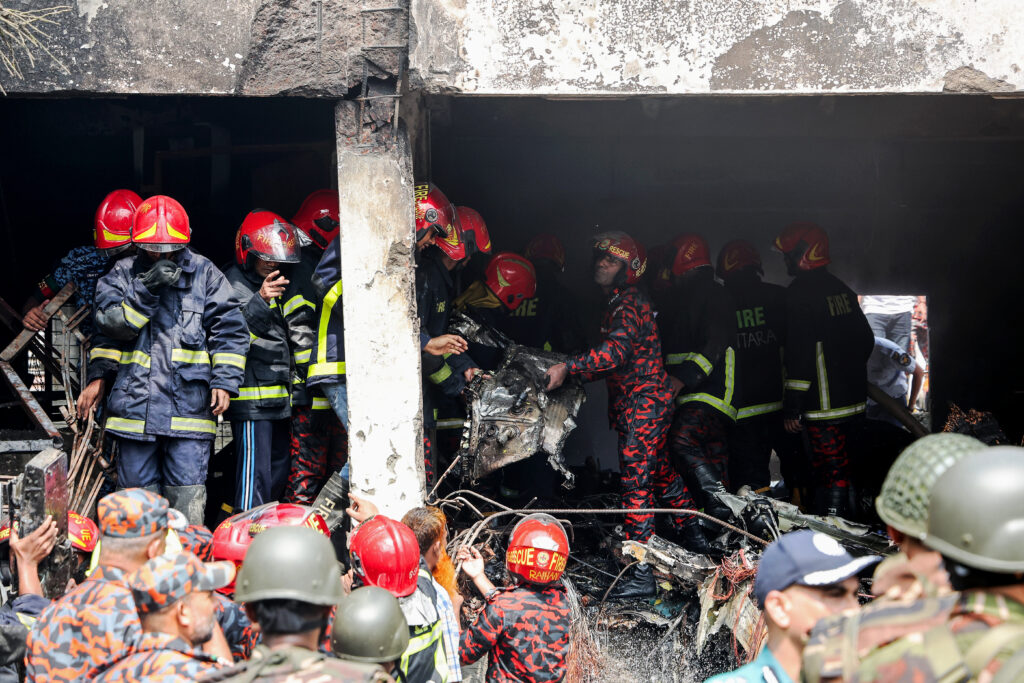
India deployed coast guard aircraft and a warship on Monday after a Singapore-flagged container ship caught fire off the southern coast, the defence ministry said, with four crew members missing.Singapore’s Maritime and Port Authority (MPA) said in a statement that there were “some injuries” among the crew, with four members unaccounted for.Photographs taken by a coast guard plane showed a thick plume of billowing black smoke and containers that had seemingly been hurled up by a powerful explosion on board.”Fire incident reported onboard Singapore-flagged container vessel MV Wan Hai 503,” India’s defence ministry said in a statement, adding that it had diverted a destroyer to aid the stricken ship.It said the 268-metre (879-foot) vessel caught fire some 78 nautical miles off Beypore port.Singapore’s MPA said that, of the total crew of 22, 18 had been “accounted for and are in the process of being transferred from lifeboats to a passing vessel”, adding that “some injuries have been reported among them”.It said four crew members remain unaccounted for.”The Indian Coast Guard and Indian Navy are rendering assistance to the crew and conducting search and rescue operations for the missing crew,” the MPA said.A Liberian-flagged container ship with hazardous cargo sank off the coast of Kerala in southern India last month. The Indian navy rescued all 24 crew members.

Monkey business delays Sri Lanka’s wildlife survey

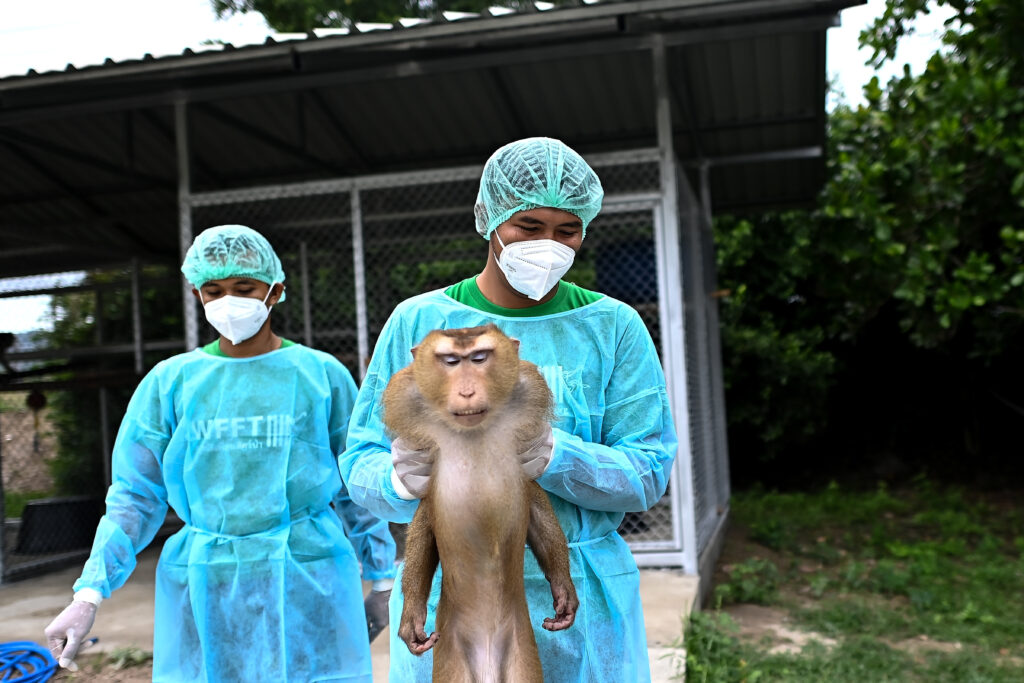
Sri Lanka is withholding the results of a survey of crop-destroying wildlife, including monkeys and peacocks, because data collected from some farmers appeared unrealistic, a minister said on Monday.Deputy Environment Minister Anton Jayakodi said authorities had begun a review of the nationwide survey conducted on March 15, the first of its kind, because “some of the data was unbelievable”.Authorities suggested some enraged farmers might have exaggerated the numbers to suggest that the problem was even bigger.Data in some places appeared “unusually high”, officials said.Residents across the island country were asked to count wild boar, peacocks, monkeys and lorises — a small, largely nocturnal primate — spotted near farms and homes during a five-minute period.”We started the survey to understand the size of the problem,” Jayakodi told reporters in Colombo. “But we now have to review the results… there have been issues with some unusual data.”Jayakodi said officials would return to assess data before releasing the final results of the survey, which was aimed at drawing up a national plan to deal with nuisance wildlife.Opposition legislator Nalin Bandara said the survey was “a complete failure, a waste of money”.Officials say more than a third of crops are destroyed by wild animals, including elephants that are protected by law because they are considered sacred.While elephants are major raiders of rice farms and fruit plantations, they were not included in the March count.The then agricultural minister proposed in 2023 exporting some 100,000 toque macaques to Chinese zoos but the monkey business was abandoned following protests from environmentalists.Sri Lanka removed several species from its protected list in 2023, including all three of its monkey species as well as peacocks and wild boars, allowing farmers to kill them.

Climate change heightens risk of Indian farmer suicides

On a small farm in India’s Maharashtra state, Mirabai Khindkar said the only thing her land grew was debt, after crops failed in drought and her husband killed himself.Farmer suicides have a long history in India, where many are one crop failure away from disaster, but extreme weather caused by climate change is adding fresh pressure.Dwindling yields due to water shortages, floods, rising temperatures and erratic rainfall, coupled with crippling debt, have taken a heavy toll on a sector that employs 45 percent of India’s 1.4 billion people.Mirabhai’s husband Amol was left with debts to loan sharks worth hundreds of times their farm’s annual income, after the three-acre (one-hectare) soybean, millet and cotton plot withered in scorching heat.He swallowed poison last year.”When he was in the hospital, I prayed to all the gods to save him,” said 30-year-old Mirabai, her voice breaking.Amol died a week later, leaving behind Mirabai and three children. Her last conversation with him was about debt.Their personal tragedy is replicated daily across Marathwada, a region in Maharashtra of 18 million, once known for fertile farmland.Last year, extreme weather events across India affected 3.2 million hectares (7.9 million acres) of cropland — an area bigger than Belgium — according to the New Delhi-based Centre for Science and Environment research group.Over 60 percent of that was in Maharashtra. “Summers are extreme, and even if we do what is necessary, the yield is not enough,” said Amol’s brother and fellow farmer Balaji Khindkar.”There is not enough water to irrigate the fields. It doesn’t rain properly.”- ‘Increase the risks’ -Between 2022 and 2024, 3,090 farmers took their own lives in Marathwada, an average of nearly three a day, according to India’s Minister of Agriculture Shivraj Singh Chouhan.Government statistics do not specify what drove the farmers to kill themselves, but analysts point to several likely factors.”Farmer suicides in India are a consequence of the crisis of incomes, investment and productivity that you have in agriculture,” said R. Ramakumar, professor of development studies at the Tata Institute of Social Sciences.Farming across many Indian smallholdings is done largely as it has been for centuries, and is highly dependent on the right weather at the correct time.”What climate change and its vulnerabilities and variabilities have done is to increase the risks in farming,” Ramakumar said.This “is leading to crop failures, uncertainties… which is further weakening the economics of cultivation for small and marginal farmers.”The government could support farmers with better insurance schemes to cope with extreme weather events, as well as investments in agricultural research, Ramakumar said.”Agriculture should not be a gamble with the monsoon.”- ‘Make ends meet’ -Faced with uncertain weather, farmers often look to stem falling yields by investing in fertilisers or irrigation systems.But banks can be reluctant to offer credit to such uncertain borrowers.Some turn to loan sharks offering quick cash at exorbitant interest rates, and risking catastrophe if crops fail.”It is difficult to make ends meet with just farming,” Mirabai said, standing outside her home, a tin-roofed hut with patch-cloth walls.Her husband’s loans soared to over $8,000, a huge sum in India, where the average monthly income of a farming household is around $120.Mirabai works on other farms as a labourer but could not pay back the debt.”The loan instalments piled up,” she said, adding that she wants her children to find jobs outside of farming when they grow up.”Nothing comes out of the farm.”The agricultural industry has been in a persistent crisis for decades.And while Maharashtra has some of the highest suicide rates, the problem is nationwide.Thirty people in the farming sector killed themselves every day in 2022, according to national crime records bureau statistics.At another farm in Marathwada, 32-year-old farmer Shaikh Imran took over the running of the family smallholding last year after his brother took his own life.He is already more than $1,100 in debt after borrowing to plant soybean.The crop failed.Meanwhile, the pop of explosives echoes around as farmers blast wells, hoping to hit water.”There’s no water to drink,” said family matriarch Khatijabi. “Where shall we get water to irrigate the farm?”

Restive Indian state orders curfew after fresh violence

An Indian state riven by ethnic tensions imposed an internet shutdown and curfew after protesters clashed with security forces over the arrest of some members of a radical group, police said Sunday.Manipur in India’s northeast has been rocked by periodic clashes for more than two years between the predominantly Hindu Meitei majority and the mainly Christian Kuki community that have killed more than 250 people.The latest violence was triggered Saturday after reports of the arrest of five members, including a commander, of Arambai Tenggol, a radical Meitei group.Incensed mobs demanding their release stormed a police post, set fire to a bus and blocked roads in parts of the state capital Imphal.Manipur police announced a curfew in five districts, including Imphal West and Bishnupur, due to the “developing law and order situation”.”Prohibitory orders have been issued by District Magistrates. Citizens are requested to cooperate with the orders,” the police said in a statement.Arambai Tenggol, which is alleged to have orchestrated the violence against the Kuki community, has also announced a 10-day shutdown in the valley districts.The state’s home ministry has ordered all internet and mobile data services in volatile districts to be shut off for five days in order to bring the latest unrest under control.Internet services were shut down for months in Manipur during the initial outbreak of violence in 2023, which displaced around 60,000 people from their homes according to government figures.Thousands of the state’s residents are still unable to return home owing to ongoing tensions.Long-standing tensions between the Meitei and Kuki communities revolve around competition for land and public jobs. Rights activists have accused local leaders of exacerbating ethnic divisions for political gain.

Petals and thorns: India’s Booker prize author Banu Mushtaq

All writers draw on their experience, whether consciously or not, says Indian author Banu Mushtaq — including the titular tale of attempted self-immolation in her International Booker Prize-winning short story collection.Mushtaq, who won the coveted literature prize as the first author writing in Kannada — an Indian regional language — said the author’s responsibility is to reflect the truth.”You cannot simply write describing a rose,” said the 77-year-old, who is also a lawyer and activist.”You cannot say it has got such a fragrance, such petals, such colour. You have to write about the thorns also. It is your responsibility, and you have to do it.”Her book “Heart Lamp”, a collection of 12 powerful short stories, is also her first book translated into English, with the prize shared with her translator Deepa Bhasthi.Critics praised the collection for its dry and gentle humour, and its searing commentary on the patriarchy, caste and religion.Mushtaq has carved an alternative path in life, challenging societal restrictions and perceptions.As a young girl worried about her future, she said she started writing to improve her “chances of marriage”.Born into a Muslim family in 1948, she studied in Kannada, which is spoken mostly in India’s southern Karnataka state by around 43 million people, rather than Urdu, the language of Islamic texts in India and which most Muslim girls learnt.She attended college, and worked as a journalist and also as a high school teacher. – ‘Confused’ -But after marrying for love, Mushtaq found her life constricted. “I was not allowed to have any intellectual activities. I was not allowed to write,” she said. “I was in that vacuum. That harmed me.”She recounted how as a young mother aged around 27 with possible postpartum depression, and ground down by domestic life, had doused petrol on herself and on the “spur of a moment” readied to set herself on fire.Her husband rushed to her with their three-month-old daughter.”He took the baby and put her on my feet, and he drew my attention to her and he hugged me, and he stopped me,” Mushtaq told AFP.The experience is nearly mirrored in her book — in its case, the protagonist is stopped by her daughter. “People get confused that it might be my life,” the writer said.Explaining that while not her exact story, “consciously or subconsciously, something of the author, it reflects in her or his writing”.Books line the walls in Mushtaq’s home, in the small southern Indian town of Hassan.Her many awards and certificates — including a replica of the Booker prize she won in London in May — are also on display.She joked that she was born to write — at least that is what a Hindu astrological birth chart said about her future.”I don’t know how it was there, but I have seen the birth chart,” Mushtaq said with a laugh, speaking in English.The award has changed her life “in a positive way”, she added, while noting the fame has been a little overwhelming.”I am not against the people, I love people,” she said referring to the stream of visitors she gets to her home.”But with this, a lot of prominence is given to me, and I don’t have any time for writing. I feel something odd… Writing gives me a lot of pleasure, a lot of relief.”- ‘Patriarchy everywhere’ -Mushtaq’s body of work spans six short story collections, an essay collection and poetry. The stories in “Heart Lamp” were chosen from the six short story collections, dating back to 1990.The Booker jury hailed her characters -– from spirited grandmothers to bumbling religious clerics –- as “astonishing portraits of survival and resilience”.The stories portray Muslim women going through terrible experiences, including domestic violence, the death of children and extramarital affairs. Mushtaq said that while the main characters in her books are all Muslim women, the issues are universal.”They (women) suffer this type of suppression and this type of exploitation, this type of patriarchy everywhere,” she said. “A woman is a woman, all over the world.”While accepting that even the people for whom she writes may not like her work, Mushtaq said she remained dedicated to providing wider truths.”I have to say what is necessary for the society,” she said.”The writer is always pro-people… With the people, and for the people.”