AFP Asia

Landslide-prone Nepal tests AI-powered warning system

Every morning, Nepali primary school teacher Bina Tamang steps outside her home and checks the rain gauge, part of an early warning system in one of the world’s most landslide-prone regions.Tamang contributes to an AI-powered early warning system that uses rainfall and ground movement data, local observations and satellite imagery to predict landslides up to weeks in advance, according to its developers at the University of Melbourne.From her home in Kimtang village in the hills of northwest Nepal, 29-year-old Tamang sends photos of the water level to experts in the capital Kathmandu, a five-hour drive to the south.”Our village is located in difficult terrain, and landslides are frequent here, like many villages in Nepal,” Tamang told AFP.Every year during the monsoon season, floods and landslides wreak havoc across South Asia, killing hundreds of people.Nepal is especially vulnerable due to unstable geology, shifting rainfall patterns and poorly planned development.As a mountainous country, it is already “highly prone” to landslides, said Rajendra Sharma, an early warning expert at the National Disaster Risk Reduction and Management Authority.”And climate change is fuelling them further. Shifting rainfall patterns, rain instead of snowfall in high altitudes and even increase in wildfires are triggering soil erosion,” Sharma told AFP.- Saving lives -Landslides killed more than 300 people last year and were responsible for 70 percent of monsoon-linked deaths, government data shows.Tamang knows the risks first hand.When she was just five years old, her family and dozens of others relocated after soil erosion threatened their village homes.They moved about a kilometre (0.6 miles) uphill, but a strong 2015 earthquake left the area even more unstable, prompting many families to flee again.”The villagers here have lived in fear,” Tamang said.”But I am hopeful that this new early warning system will help save lives.”The landslide forecasting platform was developed by Australian professor Antoinette Tordesillas with partners in Nepal, Britain and Italy.Its name, SAFE-RISCCS, is an acronym of a complex title — Spatiotemporal Analytics, Forecasting and Estimation of Risks from Climate Change Systems. “This is a low-cost but high-impact solution, one that’s both scientifically informed and locally owned,” Tordesillas told AFP.Professor Basanta Adhikari from Nepal’s Tribhuvan University, who is involved in the project, said that similar systems were already in use in several other countries, including the United States and China.”We are monitoring landslide-prone areas using the same principles that have been applied abroad, adapted to Nepal’s terrain,” he told AFP. “If the system performs well during this monsoon season, we can be confident that it will work in Nepal as well, despite the country’s complex Himalayan terrain.”In Nepal, it is being piloted in two high-risk areas: Kimtang in Nuwakot district and Jyotinagar in Dhading district.- Early warnings -Tamang’s data is handled by technical advisers like Sanjaya Devkota, who compares it against a threshold that might indicate a landslide. “We are still in a preliminary stage, but once we have a long dataset, the AI component will automatically generate a graphical view and alert us based on the rainfall forecast,” Devkota said. “Then we report to the community, that’s our plan.”  The experts have been collecting data for two months, but will need a data set spanning a year or two for proper forecasting, he added.Eventually, the system will deliver a continuously updated landslide risk map, helping decision makers and residents take preventive actions and make evacuation plans.The system “need not be difficult or resource-intensive, especially when it builds on the community’s deep local knowledge and active involvement”, Tordesillas said.Asia suffered more climate and weather-related hazards than any other region in 2023, according to UN data, with floods and storms the most deadly and costly.And while two-thirds of the region have early warning systems for disasters in place, many other vulnerable countries have little coverage.In the last decade, Nepal has made progress on flood preparedness, installing 200 sirens along major rivers and actively involving communities in warning efforts.  The system has helped reduce flooding deaths, said Binod Parajuli, a flood expert with the government’s hydrology department.”However, we have not been able to do the same for landslides because predicting them is much more complicated,” he said.”Such technologies are absolutely necessary if Nepal wants to reduce its monsoon toll.”

Rights groups urge Nepal to reverse Telegram ban

Rights groups on Thursday urged Nepal to reverse a ban on the Telegram messaging app, calling the move a serious threat to freedom of expression and digital privacy.The Himalayan nation blocked access to the app on July 18, citing a rise in online fraud and money laundering.”The government’s ban is a serious human rights violation and a discriminatory decision,” said Taranath Dahal of Freedom Forum, a media freedom watchdog. “This shows the government can ban any platform without transparency, which is extremely concerning.”Freedom Forum was among more than two dozen organisations to release a statement demanding an “immediate” reversal of the ban.”The sudden, unlawful disruption has severely impacted journalists, human rights defenders, students, small businesses, and others who depend on the platform for essential day-to-day communication,” said a statement released by #KeepItOn, an international coalition of civil society organisations. Min Prasad Aryal, spokesperson for the Nepal Telecommunication Authority, confirmed the government’s directive.”We asked all internet service providers to block the app after receiving an order from the Prime Minister’s Office,” Aryal told AFP. In a statement sent to AFP, Telegram said it had “always responded to Nepal’s legal requests” and that it “actively moderates harmful content on its platform and removes cases of fraud and money laundering as soon as they are discovered, although we have not received any reports of this from Nepalese authorities”.Nepal has restricted access to popular online platforms in the past. In August last year, the government lifted a nine-month ban on TikTok after the platform’s South Asia division agreed to comply with Nepali regulations.Telegram, launched in 2013, is a cloud-based messaging app known for its privacy features and support for large group chats and broadcast channels. The app has an estimated billion users worldwide, but faces restrictions in some countries. Telegram’s Russian-born founder and chief executive Pavel Durov was briefly detained in France last year and questioned again this week about the platform’s alleged complicity in criminal activity.

India captain Gill run out in sight of Gavaskar record

India captain Shubman Gill ran himself out on Thursday’s opening day of the fifth and deciding Test against England as he closed in on Sunil Gavaskar’s national record for runs in a series.The tourists were 85-3 when rain stopped play for a second time at the Oval after being sent in to bat in a match India must win to square the series at 2-2.Gill, who has already scored four hundreds in a prolific debut campaign as captain, came in with India struggling on 38-2.At that stage, he needed just 53 more runs to overhaul Gavaskar’s mark for the most runs scored by an India batsman in a Test series of 774 — set by the “Little Master” against the West Indies in 1971.The 25-year-old Gill struck several elegant trademark drives and rarely looked in trouble, despite the overcast, bowler-friendly conditions that favoured England’s quicks.But on 21 he pushed the ball into the offside and set off for a single that was never on, with fast bowler Gus Atkinson, following through, throwing down the stumps at the striker’s end.Gill, halfway down the pitch, slipped as he tried to turn back to safety.The skipper could yet break Gavaskar’s record should India have a second innings. Sai Sudharsan was 28 not out when the rain came again, with Josh Tongue and Jamie Overton — two of England’s three recalled quicks along with Atkinson — too often wayward.Earlier, England took two wickets after Ollie Pope, leading the hosts in place of injured captain Ben Stokes, won the toss on his Surrey home ground.It was not long before Atkinson, a Surrey team-mate of Pope and one of four changes to the England team following last week’s drawn third Test at Old Trafford, had opener Yashasvi Jaiswal lbw for two on review.Veteran seamer Chris Woakes then had opener KL Rahul, who has scored more than 500 runs the series, playing on for 14 trying to cut a ball that was too close to him.A schedule of five Tests in less than seven weeks has taken its toll, with both England and India making four changes to their teams at the Oval.India left out paceman Jasprit Bumrah, who hurt his back earlier this year.Team bosses had previously announced the world’s top-ranked Test bowler would only feature in three games during the current series — a figure he reached in Manchester.

Thousands of Afghans scramble for chance to work in Qatar

When Mohammad Hanif heard Qatar was opening jobs to Afghans, he joined thousands of others to put his name down for a shot to make a living in the gas-rich emirate, his own country wracked by unemployment.The Taliban authorities announced a deal with Gulf state this month to recruit 3,100 workers from Afghanistan, who started applying on Tuesday at centres across the country.By Wednesday, more than 8,500 people had put their names down from the capital Kabul and surrounding provinces, labour ministry spokesman Samiullah Ibrahimi told AFP, and more than 15,500 people are expected to register nationwide.The Taliban government says the jobs will help fight steep unemployment and poverty in the country of around 48 million people, facing what the United Nations says is one of the world’s worst humanitarian crises. “Our country has many problems, most people are poor and work odd jobs,” said Hanif, who travelled to western Herat from neighbouring Badghis to register. “I have skills in car mechanics and cooking, and I have certificates to prove it,” said the 35-year-old, adding he was grateful to Qatar for employing Afghans.  Competition is steep, however, with centres swarmed by hopeful applicants ready to present the required passports, identification cards and professional certificates to nab roles ranging from bus driver to cleaner, cook, mechanic and electrician. More than 1,000 people have applied in southern Kandahar for around 375 positions allocated to the region, and in Herat, around 2,000 people lined up on Wednesday to try for one of a few hundred jobs, AFP journalists said. – Doha instead of Tehran -Qatar, where the Taliban opened an office during the two-decade war with US-led forces, is one of the handful of countries to have strong diplomatic ties with Afghanistan’s rulers after they swept to power in 2021. Only Russia has so far officially recognised the Taliban government.Discussions are also underway with Saudi Arabia, the United Arab Emirates, Oman, Turkey and Russia to set up similar deals, labour minister Abdul Manan Omari said in a statement on Tuesday. The process “will undoubtedly have a positive impact on the country’s economic situation and reduce unemployment”, said Abdul Ghani Baradar, the deputy prime minister for economic affairs.Nearly half of Afghanistan’s population lives in poverty, and the unemployment rate (over 13 percent) affects nearly a quarter of young people aged 15 to 29, according to the World Bank. Those who do have work often support large, extended families on stretched salaries.High unemployment has been driven by infrastructure hamstrung by 40 years of conflict, drought impacting the crucial agriculture sector and the recent mass removals of Afghans from neighbouring countries, said Noorullah Fadwi, head of an association of job search companies.  This year, nearly two million Afghans have returned to their country after being driven out or deported from Iran and Pakistan, where many had lived for decades. “We are grateful to Qatar and ask other (Arab) countries to hire Afghan workers too, because the situation in Iran and Pakistan is very bad,” said 39-year-old Noor Mohammad, who registered in Herat, hoping for a hotel job.- ‘There is nothing’ -The Taliban authorities have not yet detailed how the Afghan recruits will be housed or their potential working conditions, while pledging to safeguard their rights.Qatar, where foreigners make up nearly 90 percent of the three million-strong population, has faced heavy criticism over the treatment of migrant labourers, particularly during construction leading up to hosting the 2022 FIFA World Cup. Qatar has since introduced major reforms to improve workers’ safety and punish employers who violate the rules.It has dismantled its “kafala” labour system, which gave employers powerful rights over whether workers could leave their jobs or even the country.Mohammad Qasim, 37, said he would not go to Qatar if he could find a job in Afghanistan, but he earned a university degree in education four years ago and has been unemployed ever since.”I tried very hard to find work but there is nothing,” he told AFP, saying he applied to be a cleaner at a centre in Kandahar.At least in Qatar, he said, “I will earn something.”

Pakistan opposition leader given 10 years for Imran Khan protests

The opposition leader in Pakistan’s parliament was among more than 100 people convicted Thursday over nationwide protests in support of Imran Khan in 2023, his party said. A statement from Khan’s Pakistan Tehreek-e-Insaf party (PTI) said six members of parliament, a senator, and a provincial MP, were given 10-year sentences, a week after several others were also convicted. Among them was Omar Ayub Khan, the opposition leader in the National Assembly, who did not attend the protests.He was convicted at an anti-terrorism court in the eastern city of Faisalabad of abetting violence and conspiring to incite riots and arson.”We are going to challenge this in the upper court,” PTI chairman Gohar Ali Khan told reporters. “Such verdicts are bad for democracy and the country altogether.”The party officials have been on bail during the trial and have not yet been taken to jail.Nationwide protests that targeted sensitive military installations erupted on May 9 when Khan was briefly arrested in the capital, Islamabad.Khan, who was prime minister between 2018 and 2022, has been in jail for nearly two years on charges he says are politically motivated. His supporters and senior party leaders have also faced a severe crackdown, with thousands rounded up and Khan’s name censored from television.Sayed Zulfikar Bukhari, the London-based spokesman for PTI said the latest sentences were “a black day for demoracy”.”Convicting opposition leaders one after another is not a good omen for any democratic system, and it will seriously damage our already fragile democracy,” he said.

Indian court acquits ex-MP, six others accused of deadly bombing

An Indian court on Thursday acquitted a firebrand Hindu nationalist nun and former lawmaker, and six others accused of participating in a deadly bombing near a mosque in 2008.The attack killed six people and wounded more than 100 others when a bomb strapped to a motorcycle exploded close to the mosque in Malegaon in the western state of Maharashtra.Seven people were tried on terrorism and criminal conspiracy charges, including former MP from the ruling Bharatiya Janata Party (BJP) Sadhvi Pragya Thakur, in a case that dragged on for years.The prosecution claimed Thakur’s motorbike was used to carry the explosives used in the attack, and that she took part in a key planning meeting before it was staged.However, Judge AK Lahoti ruled Thursday that the prosecution failed to provide sufficient evidence against Thakur and the six others.”Judgements cannot be based on morals and public perception,” Lahoti said, according to Indian legal website Live Law.Defence lawyer Ranjit Nair said the judge noted that the prosecution could not “present any proof against the accused”.Indian parliamentarian Asaduddin Owaisi called the verdict “disappointing”, saying those killed were “targeted for their religion”.”A deliberately shoddy investigation/prosecution is responsible for the acquittal,” he said in a post on X. Islam is a minority religion in Hindu-majority India, the world’s most populous country.During the trial, India’s counter-terrorism unit said the 2008 bombing was orchestrated to incite communal tensions, local media reported. Thakur, 55, spent nine years in jail before she was given bail in 2017.She later won an election after being fielded by the BJP to run for a seat in the central city of Bhopal.Indian election rules allow anyone to stand for office as long as they have not been convicted of a crime.Thakur courted controversy when she called the radical Hindu assassin of Indian independence hero Mahatma Gandhi a “patriot” — earning her a rebuke from Prime Minister Narendra Modi.She also raised eyebrows for claiming that drinking cow urine had helped cure her cancer and extolling the benefits of drinking a concoction of milk, butter and cow dung.

England and India set for final push in gripping Test series

Both England and India are set to field new-look teams when the decisive fifth and final Test of an enthralling, gruelling, and often spiky series gets underway at the Oval on Thursday.England confirmed Wednesday they will be without captain Ben Stokes after the inspirational all-rounder was ruled out with a shoulder injury — a huge blow to the hosts.In last week’s drawn fourth match at Old Trafford, which preserved his side’s 2-1 series lead, Stokes became just the fourth England cricketer to score a century and take five wickets in the same Test. The 34-year-old is also the leading wicket-taker on either side, with 17 wickets at 25.23, while sending down 140 overs — the most the lively seamer has delivered in any series.”I am obviously disappointed to not be able to finish the series,” an emotional Stokes told reporters on Wednesday, adding: “Bowling was ruled out as soon as we got the scan results.”England, in an exhausting schedule of five Test in under seven weeks, have made four changes to their side at the Oval. Spin-bowling all-rounder Jacob Bethell makes his first Test appearance of 2025, effectively as a replacement for Stokes.Pacemen Josh Tongue, Gus Atkinson and Jamie Overton all come into the team, with Jofra Archer and Brydon Carse rested. Liam Dawson has been dropped, with England opting against deploying a specialist spinner.- Bumrah dilemma -India, meanwhile, have still to confirm if Jasprit Bumrah will play at the Oval.Bumrah’s back injury earlier this year prompted India to announce the fast bowler would only feature in three games during the current series.The world’s top-ranked Test bowler made his third appearance at Old Trafford and has little time to recover after bowling a draining 33 overs, during which he took two wickets and conceded 100 runs for the first time in a Test innings.”We are going to take a decision tomorrow (Thursday),” India captain Shubman Gill said Wednesday. “The wicket looks pretty green. So, we will see how it turns out.”India are set to recall Akash Deep, who took 10 wickets in Bumrah’s absence during India’s 336-run win in the second Test at Edgbaston before suffering a groin injury in the next match at Lord’s.The tourists will have to make at least one change, as prolific run-scorer Rishabh Pant has been ruled out after fracturing his foot in Manchester, with Dhruv Jurel taking over as wicketkeeper.India were in dire straits at 0-2 in their second innings at Old Trafford. But Gill, in on a hat-trick, made his fourth century of a remarkable debut campaign as India skipper before further hundreds from Ravindra Jadeja and Washington Sundar kept the series alive.The 25-year-old Gill has now set a new record for the most runs scored by an India batsman in a series against England of 722.And he could eclipse Sunil Gavaskar’s all-time India series record of 774 runs, set against the West Indies in 1971, at the Oval.”One day before the last Test match, I am here and I am very excited,” said Gill, thrust into the captaincy following Rohit Sharma’s shock retirement. The series has become increasingly heated, with India refusing to shake hands on a draw early in the fourth Test in Manchester after Gill accused England of ignoring the “spirit of cricket” with time-wasting tactics in the third Test at Lord’s.And on Tuesday there was even an extraordinary row between India coach Gautam Gambhir and Oval groundsman Lee Fortis.Gill, while acknowledging emotions had occasionally boiled over, said: “I think once the match is over, there is mutual respect between both the teams.”Despite India’s superb rearguard action to earn a draw at Old Trafford, former India batsman Gambhir remains under pressure.  Since he took over as head coach, India have won just two and lost eight out of 12 Tests. 

Trump’s new tariff to impact Indian economy, could reshape bilateral ties

US President Donald Trump’s decision to slap harsh tariffs on Indian exports and a “penalty” on purchases of Russian weapons and energy will cost thousands of jobs and could fundamentally change the nature of bilateral ties, experts said Wednesday.Months of negotiations between the two countries over an interim trade deal had stalled in recent weeks over Trump’s sweeping demands and New Delhi’s reluctance to fully open its agricultural and dairy sectors to US imports.On Wednesday, two days before the deadline for the reintroduction of Trump’s so-called “reciprocal tariffs”, the US president announced that Indian shipments to the United States would be hit with a 25 percent tariff.He added that an unspecified “penalty” for acquiring military equipment and oil from Russia would also kick in from August 1.Kirit Bhansali, Chairman of India’s Gem and Jewellery Export Promotion Council, said the move was a “deeply concerning development” that would have “far-reaching repercussions across India’s economy” and threaten “thousands of livelihoods”.For his sector alone, the United States is India’s “single largest market, accounting for over $10 billion in exports — nearly 30 percent of our industry’s total global trade,” he said.”A blanket tariff of this magnitude will inflate costs, delay shipments, distort pricing, and place immense pressure on every part of the value chain — from small karigars (artisans) to large manufacturers,” he added. “We recognise the need to address trade imbalances, but such extreme measures undermine decades of economic cooperation.”Indian goods exports to the United States amounted to $87.4 billion in 2024, according to US data, with top sectors including pharmaceuticals, gems, textiles and smartphones.- ‘Completely unacceptable’ -Trump’s targeting of India with such a high rate of levies would complicate ongoing negotiations for a more comprehensive trade agreement, said Biswajit Dhar, of the Council for Social Development think tank. “It was already a difficult set of negotiations, but both sides said we were making progress. And there was no hard and fast deadline,” he said, referring to previous dates for the imposition of his tariffs that Trump had extended unilaterally.Dhar added that Trump’s threatened “penalty” for India’s ties with Russia was “completely unacceptable for a sovereign state”.”A sovereign state can’t be told who to maintain relations with. Whether it’s Russia or China or whoever. You can’t browbeat a country into accepting your conditions,” he said.Analysts warned that US-India relations may be entering new territory, after years of warming as Washington has cultivated New Delhi as a counterweight to rising Chinese power.”President Trump’s messaging has damaged many years of careful, bipartisan nurturing of the US-India partnership in both capitals,” said Ashok Malik, of business consultancy The Asia Group, in a social media post.”Politically the relationship is in its toughest spot since the mid-1990s.”Praveen Donthi of the International Crisis Group said the announcement underscored the fact that Trump did not “differentiate between friends and foes when it comes to tariffs”.”In the past when India purchased S400 missile system from Russia, there were no sanctions because of the bipartisan consensus that existed in the US about India because of its value as a democratic counterweight to China. “But now that’s gone.” The move could have far-reaching consequences, including seeing New Delhi attempt “to mend its relations with Beijing,” he said.

India secures return of ancient Buddhist gems

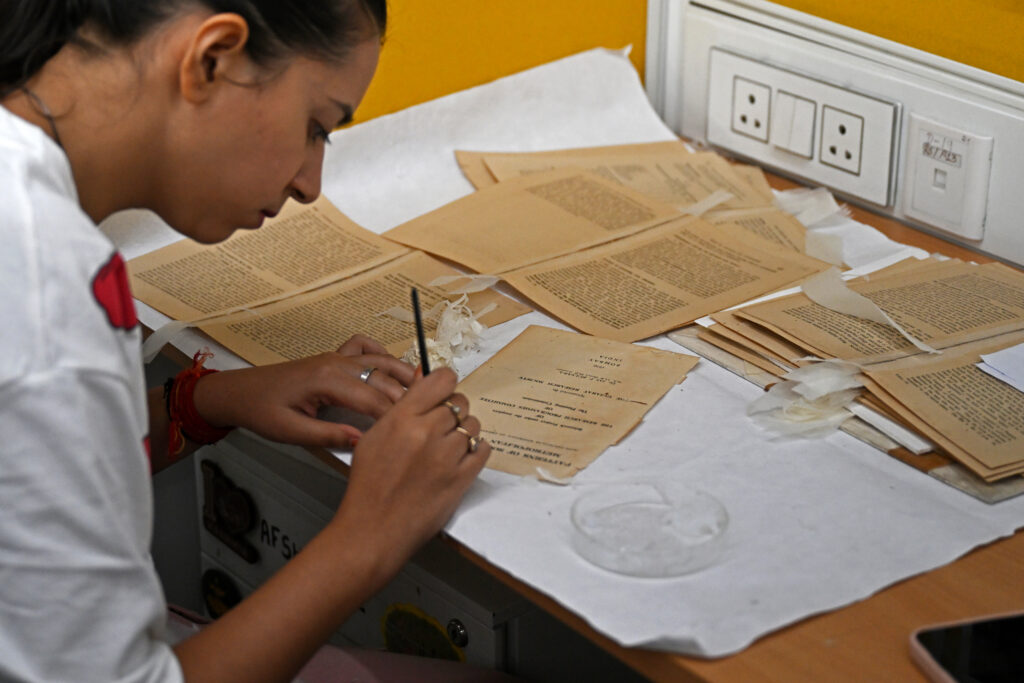
India has recovered a set of relics linked to early Buddhism more than a century after they were removed from the country during the British colonial period, officials said Wednesday.The Piprahwa gems date back to around the third century BC and were unearthed in 1898 by Englishman William Claxton Peppe in northern India.India’s culture ministry said it secured the return of the gems, which had been slated for auction in Hong Kong in May, in partnership with Mumbai-based conglomerate Godrej Industries Group.”These relics have long held immense spiritual value for the global Buddhist community and represent one of the most important archaeological discoveries in India’s history,” the ministry said in a statement.The gems will be put on public display soon, it added, without giving further details. Prime Minister Narendra Modi hailed the recovery as a “joyous” occasion for India’s cultural heritage. “It may be recalled that the Piprahwa relics were discovered in 1898 but were taken away from India during the colonial period,” he said in a post on social media. “When they appeared in an international auction earlier this year, we worked to ensure they returned home,” he added.”I appreciate all those who have been involved in this effort.”In May, the culture ministry issued a legal notice to Sotheby’s, the auction house that had organised the sale of the gems, demanding it be cancelled and the relics returned to India.The ministry also called for an apology and full disclosure of provenance documents. Sotheby’s postponed the auction in response. The auction house said in a statement Wednesday that it was “delighted to have facilitated the return of the Piprahwa Gems to India”. “Sotheby’s is thrilled to have played such a central role in securing this historic outcome,” it added.The gems were excavated at the Piprahwa village near the Buddha’s birthplace and have been attributed to a clan linked to the religious figure.”This is one of the most significant instances of repatriation of our lost heritage,” culture minister Gajendra Singh Shekhawat said.

US, India launch powerful Earth-monitoring satellite

A formidable new radar satellite jointly developed by the United States and India launched Wednesday, designed to track subtle changes in Earth’s land and ice surfaces and help predict both natural and human-caused hazards.Dubbed NISAR (NASA-ISRO Synthetic Aperture Radar), the pickup truck-sized spacecraft blasted off around 5:40 pm (1210 GMT) from the Satish Dhawan Space Centre on India’s southeastern coast, riding an ISRO Geosynchronous Satellite Launch Vehicle rocket.Livestream of the event showed excited schoolchildren brought to watch the launch and mission teams erupting in cheers and hugging.Highly anticipated by scientists, the mission has also been hailed by US President Donald Trump and Indian Prime Minister Narendra Modi as a milestone in growing cooperation between the two countries.”Congratulations India!” Dr Jitendra Singh, India’s science and technology minister wrote on X, calling the mission a “game changer.””Our planet surface undergoes constant and meaningful change,” Karen St Germain, director of NASA’s Earth Science division, told reporters ahead of launch.”Some change happens slowly. Some happens abruptly. Some changes are large, while some are subtle.”By picking up on tiny shifts in the vertical movement of the Earth’s surface — as little as one centimeter (0.4 inches) — scientists will be able to detect the precursors for natural and human-caused disasters, from earthquakes, landsides and volcanoes to aging infrastructure like dams and bridges.”We’ll see land substance and swelling, movement, deformation and melting of mountain glaciers and ice sheets covering both Greenland and Antarctica, and of course, we’ll see wildfires,” added St Germain, calling NISAR “the most sophisticated radar we’ve ever built.”India in particular is interested in studying its coastal and nearby ocean areas by tracking yearly changes in the shape of the sea floor near river deltas and how shorelines are growing or shrinking.Data will also be used to help guide agricultural policy by mapping crop growth, tracking plant health, and monitoring soil moisture. In the coming weeks, the spacecraft will begin an approximately 90-day commissioning phase during which it will unfurl its 39-foot (12-meter) radar antenna reflector.Once operational, NISAR will record nearly all of Earth’s land and ice twice every 12 days from an altitude of 464 miles (747 kilometers), circling the planet near the poles rather than around the equator.- Microwave frequencies -As it orbits, the satellite will continuously transmit microwaves and receive echoes from the surface. Because the spacecraft is moving, the returning signals are distorted, but computer processing will reassemble them to produce detailed, high-resolution images. Achieving similar results with traditional radar would require an impractically large 12-mile-wide dish.NISAR will operate on two radar frequencies: L-band and S-band. The L-band is ideal for sensing taller vegetation like trees, while the S-band enables more accurate readings of shorter plants such as bushes and shrubs.NASA’s Jet Propulsion Laboratory and India’s ISRO shared the workload, each building components on opposite sides of the planet before integrating and testing the spacecraft at ISRO’s Satellite Integration & Testing Establishment in the southern Indian city of Bengaluru.NASA’s contribution came to just under $1.2 billion, while ISRO’s costs were around $90 million.India’s space program has made major strides in recent years, including placing a probe in Mars orbit in 2014 and landing a robot and rover on the Moon in 2023.Shubhanshu Shukla, a test pilot with the Indian Air Force, recently became the second Indian to travel to space and the first to reach the International Space Station — a key step toward India’s own indigenous crewed mission planned for 2027 under the Gaganyaan (“sky craft”) program.