AFP Asia

Rain halts rescue operation after Pakistan floods kill hundreds

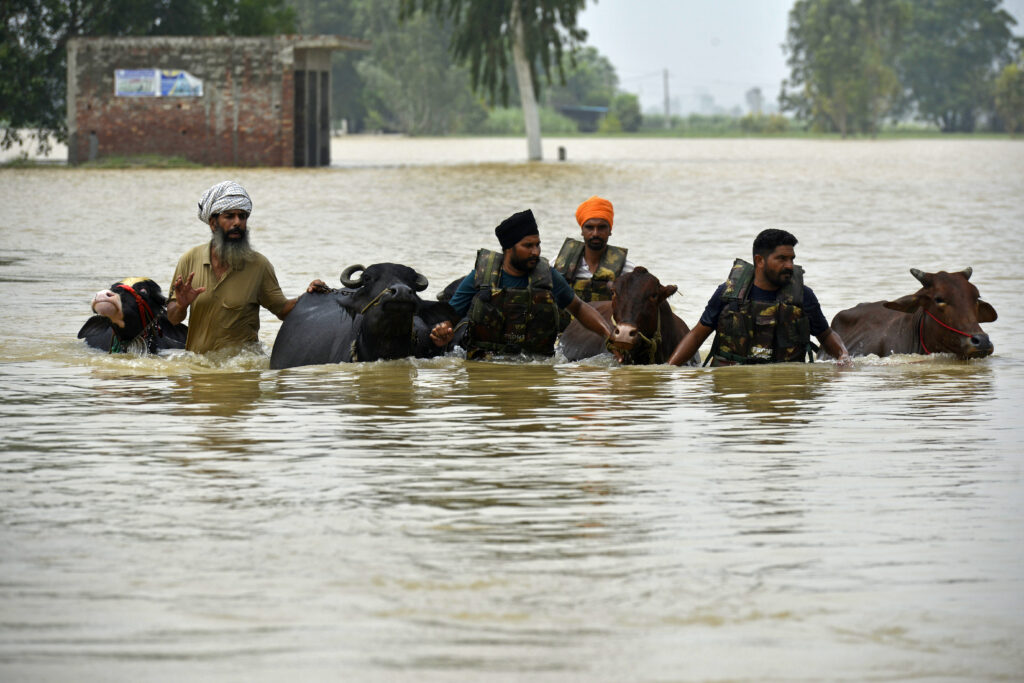
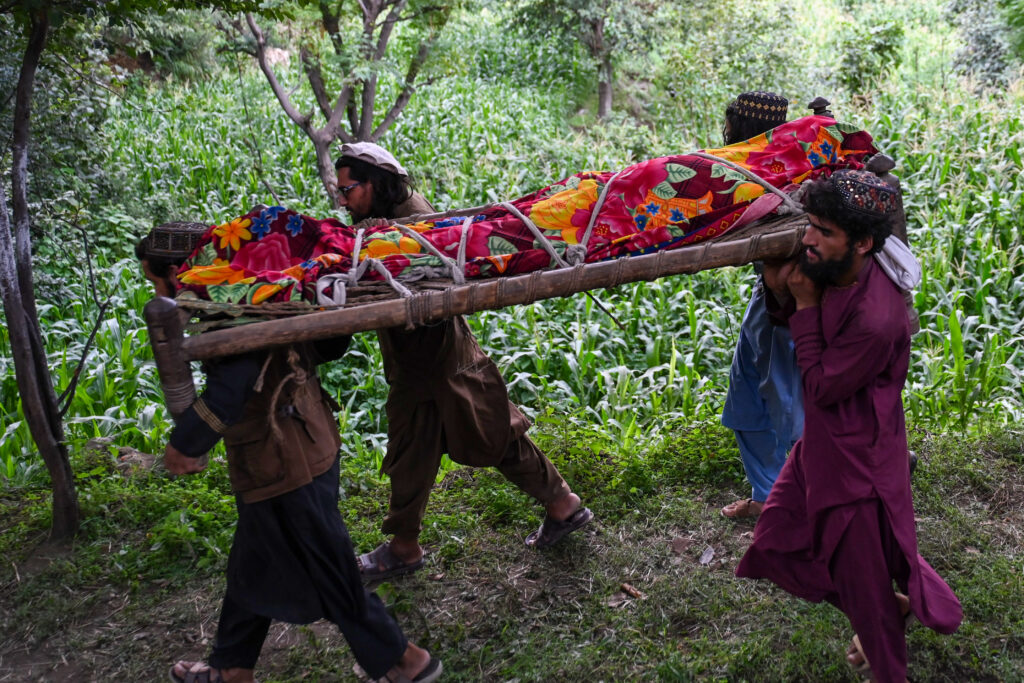
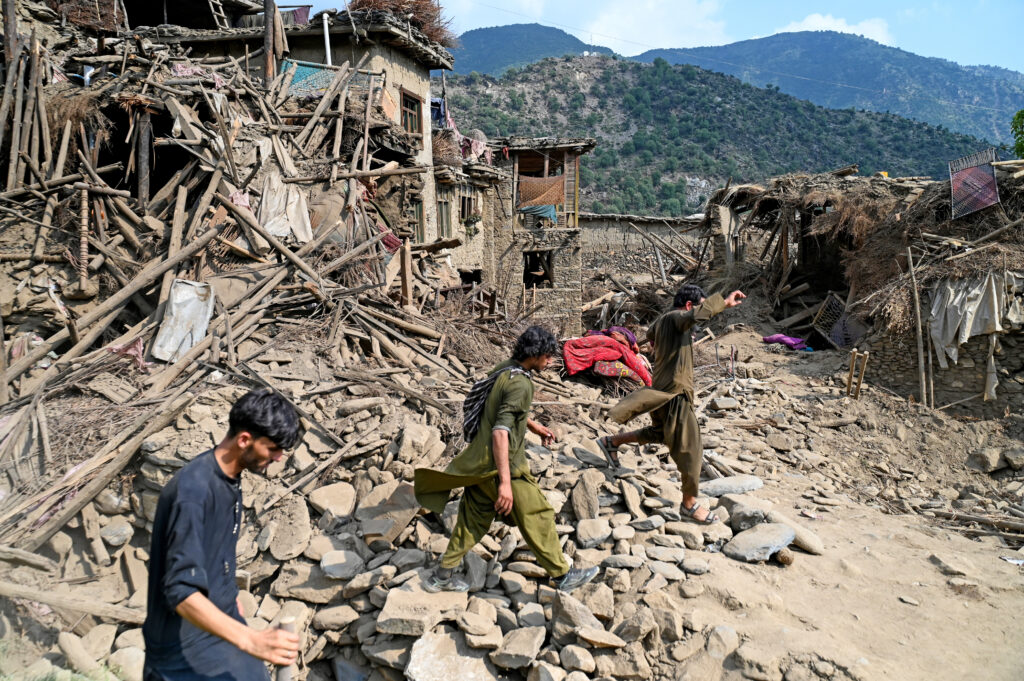
Rain on Monday halted search and rescue operations in northern Pakistan after flash floods that have killed nearly 350 people with around 200 still missing, officials said.Torrential rains across the country since Thursday have caused flooding, rising waters and landslides that have swept away entire villages and left many residents trapped in the rubble.Most of the deaths — more than 320 — were reported in northwestern Khyber Pakhtunkhwa province, according to the provincial disaster agency, which warned of new flash floods “till Thursday”.Volunteers had been assisting hundreds of rescue workers in their race against time to find possible survivors and retrieve bodies as fresh rains started lashing the province.”This morning fresh rains forced a halt to relief operations,” said Nisar Ahmad, 31, a volunteer in worst-hit Buner district, where “12 villages have been completely wiped out and 219 bodies have been recovered”.”Dozens of bodies are still buried under the mud and rocks, which can only be recovered with heavy machinery. However, the makeshift tracks built to access the area have once again been destroyed by the new rains,” he added.Around 200 people are still missing in Khyber Pakhtunkhwa province, according to local authorities.- ‘We feel scared’ -Many people fled to seek shelter under damaged infrastructure and in the mountains in Buner, an area with difficult terrain.”Even if it rains a little now, we feel scared because there was light rain that day. And then the unsuspecting people were swept away by the storm,” said Buner resident Ghulam Hussain, 35.”Children and women are running and screaming up the mountains to escape,” Hazrat Ullah, 18, told AFP.Volunteer Ahmad said there were also fears for the future due to a lack of food supplies and clean water.”Many livestock have also perished in the cloudburst, and their decomposing bodies are spreading a foul odour in several places. Right now, our most urgent need is clean drinking water, and I appeal to the government to provide it,” he said.The monsoon season brings about three-quarters of South Asia’s annual rainfall, which is vital for agriculture and food security but also causes widespread destruction.According to the National Disaster Agency, the intensity of this year’s monsoon is about 50 to 60 percent higher than last year.Landslides and flash floods are common during the monsoon season, which typically begins in June and lasts until the end of September.The heavy rains that have battered Pakistan since the start of the summer monsoon have claimed the lives of more than 650 people, with over 920 injured.Pakistan is among the world’s most vulnerable countries to the effects of climate change and is increasingly facing extreme weather events.In 2022, monsoon floods submerged one-third of the country and resulted in approximately 1,700 deaths.

Drought, dams and diplomacy: Afghanistan’s water crisis goes regional

Over four decades of war, Afghanistan wielded limited control over five major river basins that flow across its borders into downstream neighbouring nations. But as Taliban authorities swept to power and tightened their grip on the country, they have pushed for Afghanistan’s water sovereignty, launching infrastructure projects to harness precious resources in the arid territory.  Dams and canals have sparked tensions with neighbouring states, testing the Taliban authorities’ efforts to build strong regional ties, as they remain largely isolated on the global stage since their 2021 takeover. At the same time, the region is facing the shared impacts of climate change intensifying water scarcity, as temperatures rise and precipitation patterns shift, threatening glaciers and snowpack that feed the country’s rivers. Here are key points about Afghanistan’s transboundary water challenges:- Central Asian states to the north – Afghanistan is emerging as a new player in often fraught negotiations on the use of the Amu Darya, one of two key rivers crucial for crops in water-stressed Central Asia, where water sharing relies on fragile accords since Soviet times.Central Asian states have expressed concern over the Qosh Tepa mega canal project that could divert up to 21 percent of the Amu Darya’s total flow to irrigate 560,000 hectares of land across Afghanistan’s arid north, and further deplete the Aral Sea. Uzbekistan and Turkmenistan are likely to face the biggest impact, both joined by Kazakhstan in voicing alarm, even as they deepen diplomatic ties with the Taliban authorities — officially recognised so far by only Russia.”No matter how friendly the tone is now,” water governance expert Mohd Faizee warned, “at some point there will be consequences for Uzbekistan and Turkmenistan when the canal starts operating”. Taliban officials have denied that the project will have a major impact on the Amu Darya’s water levels and pledged it will improve food security in a country heavily dependent on climate-vulnerable agriculture and facing one of the world’s worst humanitarian crises. “There is an abundance of water, especially when the Amu Darya floods and glacial meltwater flows into it” in the warmer months, said project manager Sayed Zabihullah Miri, during a visit to the canal works in Faryab province, where diggers carved into a drought-ridden plain dotted with camels and locusts.- Iran to the west – Iran is the only country with which Afghanistan has a formal water sharing treaty, agreed in 1973 over the Helmand river, which traverses Taliban heartland territory, but the accord was never fully implemented.Longstanding tensions over the river’s resources have spiked over dams in southern Afghanistan, particularly in periods of drought, which are likely to increase as climate shocks hit the region’s water cycle. Iran, facing pressure in its parched southeastern region, has repeatedly demanded that Afghanistan respect its rights, charging that upstream dams restrict the Helmand’s flow into a border lake. The Taliban authorities insist there is not enough water to release more to Iran, blaming the impact of climate pressures on the whole region.They also argue long-term poor water management has meant Afghanistan has not gotten its full share, according to an Afghanistan Analysts Network report by water resources management expert Assem Mayar.Iran and Afghanistan have no formal agreement over their other shared river basin, the Harirud, which also flows into Turkmenistan and is often combined into a single basin with the Morghab river.  While infrastructure exists on the Afghan portions of the basin, some has not been fully utilised, Faizee said. But that could change, he added, as the end of conflict in Afghanistan means infrastructure works don’t incur vast security costs on top of construction budgets, lifting a barrier to development of projects such as the Pashdan dam inaugurated in August on the Harirud.- Pakistan to the east – Water resources have not topped the agenda in consistently fraught relations between Afghanistan and Pakistan. Afghanistan’s Kabul river basin, which encompasses tributaries to the greater Indus basin and feeds the capital and largest city, is shared with Pakistan.The countries, however, have no formal cooperation mechanism. With the Afghan capital wracked by a severe water crisis, the Taliban authorities have sought to revitalise old projects and start new ones to tackle the problem, risking fresh tensions with Pakistan. But the lack of funds and technical capacity means the Taliban authorities’ large water infrastructure projects across the country could take many years to come to fruition — time that could be good for diplomacy, but bad for ordinary Afghans. 

Women bear brunt of Afghanistan’s water scarcity

In a remote Afghan village, women strap yellow plastic jerry cans to donkeys and travel every day down a dusty canyon to collect as much water as they can. The containers hold barely enough for drinking, let alone for the hygiene needs of the roughly 30 people living in Qavriyak, central Bamiyan province.”There is not enough water to clean or take a shower daily and we don’t have hygienic toilets,” said 26-year-old Masooma Darweshi.It’s a struggle faced by parched settlements across much of the country.Afghans are experiencing the climate crisis through water, international organisations warn, emphasising that women are particularly at risk.Women and girls traditionally make the increasingly long trips to collect water, made more difficult since the Taliban government came to power and imposed restrictions on women’s movement, education and work.Women are the primary caregivers in Afghan households, tending to children, the sick and elderly as well as domestic chores. “Water is women’s business,” Shukria Attaye, a school teacher in a village above Darweshi’s, told AFP.”Cooking, cleaning dishes, fetching water, washing clothes, taking care of the kids, bathing them — it’s all on women.” – ‘Unaware of proper hygiene’ -At the top of the canyon with sides stained by a now-dry stream, Attaye’s village’s fortunes changed when non-governmental organisation Solidarites International provided toilets and a clean water source. “Women used to carry big gallons on their backs, causing back problems” as they hiked thirty minutes each way to collect water or take dishes and clothes for washing, said Attaye.The children used to get sick often from water contaminated by human and animal waste, contributing to one of the highest rates of malnutrition in the world, particularly among children and mothers. The UN children’s agency UNICEF said in May approximately 31 percent of Afghans do not have access to basic drinking water and 42 percent do not have access to basic hygiene services, with the burden weighing “most heavily on girls and women”. The Taliban authorities dispute the UN figures but have implemented their own projects on water management and hygiene, water ministry spokesman Motiullah Abid told AFP. Improving hygiene awareness and disease rates “won’t be solved in just five or six months, addressing them requires sustained effort”, said Aziza Shuja, who has worked on women’s health issues across her native Bamiyan for years, carrying out hundreds of hygiene training sessions with Solidarites International. “Many women said they had previously been unaware of proper hygiene,” with diarrhoea and skin conditions rife, said Shuja, who trained in gynaecology.But a cultural reluctance to publicly address women’s health and a ban on girls’ education beyond primary school have contributed to a lack of knowledge and poor access to women healthcare providers. – ‘More problems than men’ -Darweshi said the women in her village get ill often, but it is a long and bumpy ride to the nearest clinic — a journey often taken by donkey or motorcycle. “Sometimes, when women get their periods, they complain of pain in their kidneys or abdomen,” Darweshi said, blaming infections from lack of water for hygiene.  Disposable pads are out of reach for the poor family, which did not have enough water this year to grow crops. The fine line many families walk between getting by and desperation in a country facing one of the world’s worst humanitarian crises after decades of war, is stark in the face of increasing climate risks, like droughts and floods. In neighbouring Maidan Wardak province, Gol Babo and her daughter said they would have to cut dirty clothes into strips to use when they menstruated after a flash flood clogged the Chinzai village’s already limited water source. “Women have more problems than men, of course,” she told AFP. “There is only enough water for drinking… Everything is laying outside dirty, there is no water to clean anything.”

Hopes for survivors wane after Pakistan flooding kills hundreds

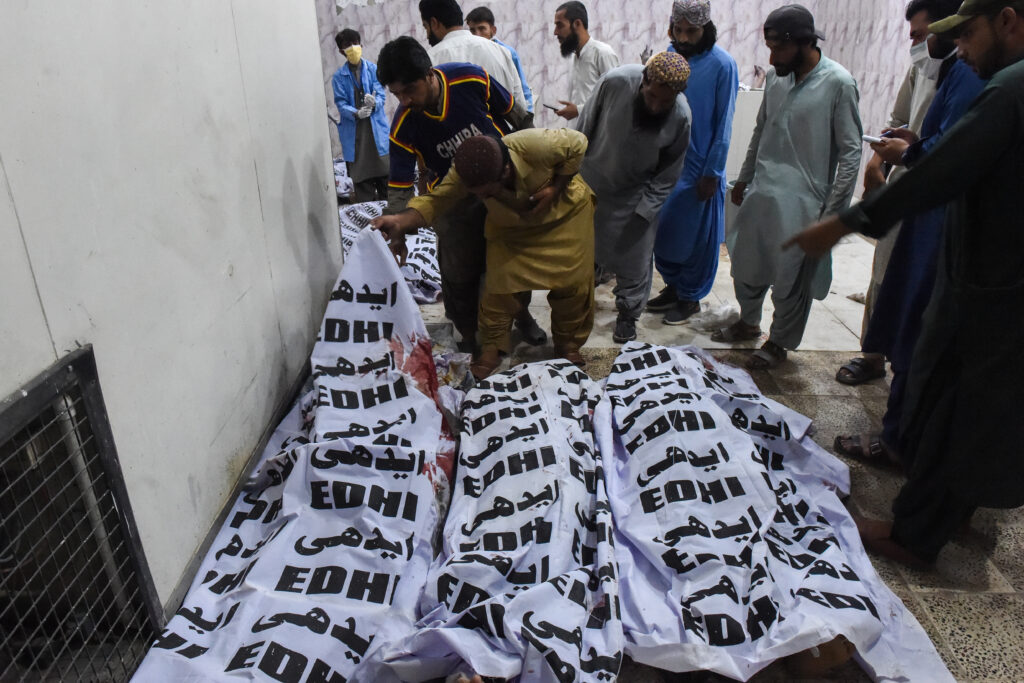
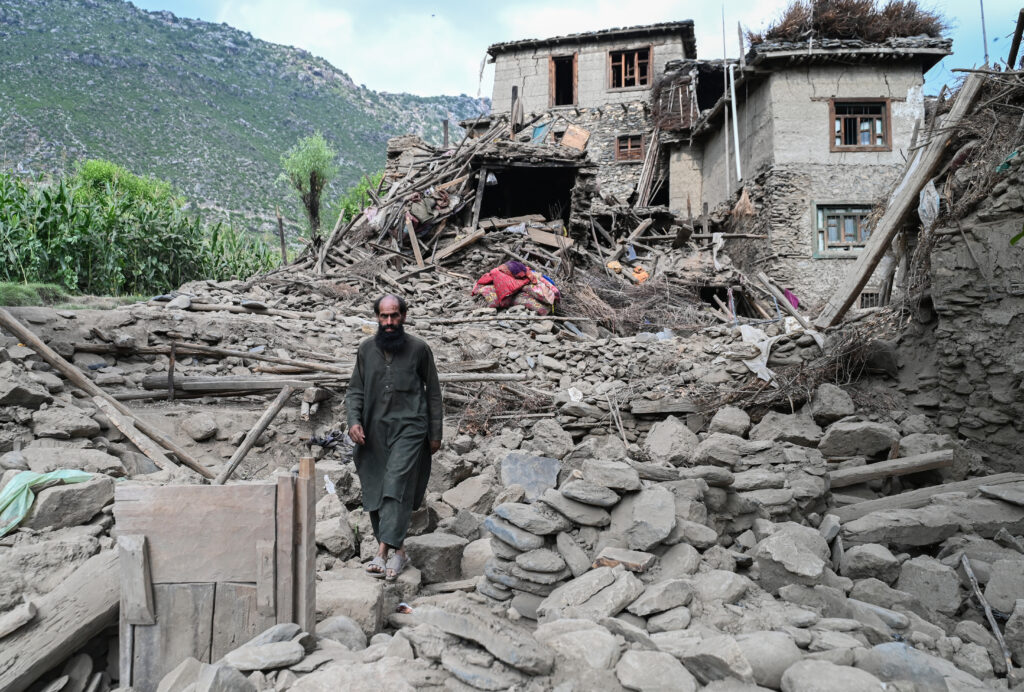
Pakistani rescuers dug homes out from under massive boulders on Sunday as they searched for survivors of flash floods that killed at least 344 people, with more than 150 still missing.Torrential rains across the country since Thursday have caused flooding, rising waters and landslides that have swept away entire villages and left many residents trapped in the rubble.Most of the deaths, 317, were reported in Khyber Pakhtunkhwa province, where monsoon rains that are only expected to intensify in the days ahead drove flooding and landslides that collapsed houses.”We saw all the houses, buildings, and vehicles being swept away like pieces of wood. We managed to climb up the mountain, and when we looked down, our home was gone,” said Suleman Khan, a schoolteacher in Buner district who lost 25 relatives.More than 150 people are missing in Buner, where at least 208 people were killed and “10 to 12 entire villages” were partially buried, officials told AFP.”They could be trapped under the rubble of their homes or swept away by floodwaters,” said Asfandyar Khattak, head of Khyber Pakhtunkhwa’s Provincial Disaster Management Authority. “Separately, in Shangla district, dozens of people are also reported missing,” Khattak added.The spokesman for the province’s rescue agency told AFP that around 2,000 rescue workers were involved across nine districts, where rain was still hampering efforts.”The operation to rescue people trapped under debris is ongoing,” said Bilal Ahmad Faizi.”The chances of those buried under the debris surviving are very slim,” he added.AFP journalists in Buner saw half-buried vehicles and belongings lying strewn in the sludge, with mud covering houses and shops.After days without power, the electricity supply was restored on Sunday afternoon.A grave digger, Qaiser Ali Shah, told AFP he dug 29 burial places in the last two days.”I have also dug six graves for children. With each grave, it felt as though I was digging it for my own child,” he said.”For the first time, my body simply refused to carry me through. That’s why today I apologised and said I cannot do this work anymore.”Flooded roads hampered the movement of rescue vehicles, as a few villagers worked to cut fallen trees to clear the way after the water receded.”Our belongings are scattered, ruined and are in bad shape,” shopkeeper Noor Muhammad told AFP as he used a shovel to remove mud.”The shops have been destroyed along with everything else. Even the little money people had has been washed away,” he added.The provincial government has declared the severely affected mountainous districts of Buner, Bajaur, Swat, Shangla, Mansehra and Battagram as disaster-hit areas.”Every house in our area has been destroyed,” said Buner resident Bakht Rawan.”Our loved ones are still buried under the mud, stones, and collapsed houses,” he told AFP.”We appeal to the government to please send machinery to us.”- Mass funerals -On Saturday, hundreds gathered for mass funerals, where bodies wrapped in blood-stained white shawls were laid out on the village ground.Fallen trees and straw debris were scattered across nearby fields, while residents shovelled mud out of their homes.Pakistan’s meteorological department has forecast “torrential rains” with monsoon activity “likely to intensify” from Sunday onwards.Iran said it stood ready to provide “any cooperation and assistance aimed at alleviating the suffering” in neighbouring Pakistan, while Pope Leo XIV addressed the flooding with prayers “for all those who suffer because of this calamity”.The monsoon season brings South Asia about three-quarters of its annual rainfall, vital for agriculture and food security, but also brings destruction.”The intensity of this year’s monsoon is around 50 to 60 percent more than last year,” said Lieutenant General Inam Haider, chairman of the national disaster agency.”Two to three more monsoon spells are expected until the first weeks of September,” he told journalists in Islamabad.Landslides and flash floods are common during the season, which usually begins in June and eases by the end of September.The torrential rains that have pounded Pakistan since the start of the summer monsoon have killed more than 650 people, with more than 920 injured.Pakistan is one of the world’s most vulnerable countries to the effects of climate change and is contending with extreme weather events with increasing frequency.Monsoon floods in 2022 submerged a third of the country and killed around 1,700 people.

Hopes for survivors wane as landslides, flooding bury Pakistan villages

Pakistani rescuers dug homes out from under massive boulders on Sunday as they searched for survivors of flash floods that killed at least 344 people, with more than 150 still missing.Since Thursday, torrential rains across the country have caused flooding, rising waters and landslides that have swept away entire villages and left many residents trapped in the rubble.Most of the deaths, 317, were reported in Khyber Pakhtunkhwa province, where monsoon rains that are only expected to intensify in the days ahead drove flooding and landslides that collapsed houses.More than 150 people are missing in hardest-hit Buner district, where at least 208 people were killed and “10 to 12 entire villages” were partially buried, officials told AFP.”They could be trapped under the rubble of their homes or swept away by floodwaters,” said Asfandyar Khattak, head of Khyber Pakhtunkhwa’s Provincial Disaster Management Authority. “Separately, in Shangla district, dozens of people are also reported missing,” Khattak added.”There is no electricity or mobile signal in Buner, as power lines and mobile towers were damaged,” he added.The spokesman for the province’s rescue agency told AFP that around 2,000 rescue workers were involved across nine districts, where rain was still hampering efforts.”The operation to rescue people trapped under debris is ongoing,” said Bilal Ahmad Faizi.”The chances of those buried under the debris surviving are very slim,” he added.AFP journalists in Buner saw half-buried vehicles and belongings lying strewn in the sludge, with mud covering houses and shops.A grave digger, Qaiser Ali Shah, told AFP he dug 29 burial places in the last two days.”I have also dug six graves for children. With each grave, it felt as though I was digging it for my own child,” he told AFP.”For the first time, my body simply refused to carry me through. That’s why today I apologised and said I cannot do this work anymore.”Flooded roads hampered the movement of rescue vehicles, as a few villagers worked to cut fallen trees to clear the way after the water receded.”Our belongings are scattered, ruined and are in bad shape,” shopkeeper Noor Muhammad told AFP as he used a shovel to remove mud.”The shops have been destroyed along with everything else. Even the little money people had has been washed away,” he added.The provincial government has declared the severely affected mountainous districts of Buner, Bajaur, Swat, Shangla, Mansehra and Battagram as disaster-hit areas.”We were trapped in our homes and could not get out,” another Buner resident, Syed Wahab Bacha, told AFP.”Our entire poor community has been affected… This road was our only path, and it too has been washed away,” he added.- Mass funerals -On Saturday, hundreds gathered for mass funerals, where bodies wrapped in blood-stained white shawls were laid out on the village ground.Fallen trees and straw debris were scattered across nearby fields, while residents shovelled mud out of their homes.Pakistan’s meteorological department has forecast “torrential rains” with monsoon activity “likely to intensify” from Sunday onwards.The monsoon season brings South Asia about three-quarters of its annual rainfall, vital for agriculture and food security, but also brings destruction.”The intensity of this year’s monsoon is around 50 to 60 percent more than last year,” said Lieutenant General Inam Haider, chairman of the national disaster agency.”Two to three more monsoon spells are expected until the first weeks of September,” he told journalists in Islamabad.Landslides and flash floods are common during the season, which usually begins in June and eases by the end of September.The torrential rains that have pounded Pakistan since the start of the summer monsoon have killed more than 650 people, with more than 920 injured.Pakistan is one of the world’s most vulnerable countries to the effects of climate change and is contending with extreme weather events with increasing frequency.Monsoon floods in 2022 submerged a third of the country and killed around 1,700 people.Another villager in Buner told AFP on Saturday that residents had spent the night searching through the rubble of their former homes.”The entire area is reeling from profound trauma,” said 32-year-old schoolteacher Saifullah Khan.”I helped retrieve the bodies of the children I taught. I keep wondering what kind of trial nature has imposed on these kids,” he said.

From drought to floods, water extremes drive displacement in Afghanistan

Next to small bundles of belongings, Maruf waited for a car to take him and his family away from their village in northern Afghanistan, where drought-ridden land had yielded nothing for years.”When you have children and are responsible for their needs, then tell me, what are you still doing in this ruin?” said the 50-year-old.Many of the mud homes around him are already empty, he said, his neighbours having abandoned the village, fleeing “thirst, hunger and a life with no future”.Successive wars displaced Afghans over 40 years, but peace has not brought total reprieve, as climate change-fuelled shocks drive people from their homes and strain livelihoods.Since the war ended between the now-ruling Taliban and US-led forces in 2021, floods, droughts and other climate change-driven environmental hazards have become the main cause of displacement in the country, according to the UN’s International Organization for Migration (IOM).In early 2025, nearly five million people across the country were impacted and nearly 400,000 people were displaced, the IOM said in July, citing its Climate Vulnerability Assessment.The majority of Afghans live in mud homes and depend heavily on agriculture and livestock, making them particularly exposed to environmental changes.The water cycle has been sharply impacted, with Afghanistan again in the grip of drought for the fourth time in five years and flash floods devastating land, homes and livelihoods.”Crop failure, dry pastures and vanishing water sources are pushing rural communities to the edge,” the UN Food and Agriculture Organization said in July.”It’s getting harder for families to grow food, earn income or stay where they are.”Experts and Taliban officials have repeatedly warned of escalating climate risks as temperatures rise, extreme weather events intensify and precipitation patterns shift.The country’s limited infrastructure, endemic poverty and international isolation leave Afghans with few resources to adapt and recover — while already facing one of the world’s worst humanitarian crises worsened by severe aid cuts.- Too little -Abdul Jalil Rasooli’s village in the drought-hit north has watched their way of life wither with their crops.Drought already drove many from his village to Pakistan and Iran a decade ago.Now they’ve returned, forced back over the border along with more than four million others from the two neighbouring countries since late 2023 — but to work odd jobs, not the land.”Everything comes down to water,” said the 64-year-old, retreating from the day’s heat in the only home in the village still shaded by leafy trees.”Water scarcity ruins everything, it destroys farming, the trees are drying up, and there’s no planting anymore,” he told AFP.Rasooli holds out hope that the nearby Qosh Tepa canal will bring irrigation from the Amu Darya river. Diggers are carving out the last section of the waterway, but its completion is more than a year away, officials told AFP.It’s one of the water infrastructure projects the Taliban authorities have undertaken since ousting the foreign-backed government four years ago.But the theocratic government, largely isolated on the global stage over its restrictions on women, has limited resources to address a crisis long exacerbated by poor environmental, infrastructure and resource management during 40 years of conflict. “The measures we have taken so far are not enough,” Energy and Water Minister Abdul Latif Mansoor told journalists in July, rattling off a list of dam and canal projects in the pipeline.”There are a lot of droughts… this is Allah’s will, first we must turn to Allah.”Hamayoun Amiri left for Iran when he was a young man and drought struck his father’s small plot of land in western Herat province.Forced to return in a June deportation campaign, he found himself back where he started 14 years ago — with nothing to farm and his father’s well water “getting lower and lower every day”.The Harirud river was a dry bed in July as it neared the border with downstream Iran, following a road lined with empty mud buildings pummelled back to dust by the province’s summer gales. – Too much -Taliban authorities often hold prayers for rain, but while the lack of water has parched the land in some parts of the country, changes in precipitation patterns mean rains can be more of a threat than a blessing.This year, rains have come earlier and heavier amid above-average temperatures, increasing flood risks, the UN said.A warmer atmosphere holds more water, so rain often comes in massive, destructive quantities.”The weather has changed,” said Mohammad Qasim, a community leader of several villages in central Maidan Wardak battered by flash floods in June.”I’m around 54 years old, and we have never experienced problems like this before,” he told AFP in the riverbed full of boulders and cracked mud. Eighteen-year-old Wahidullah’s family was displaced after their home was damaged beyond repair and all their livestock were drowned. The family of 11 slept in or near a rudimentary tent on high ground, with no plans or means to rebuild.”We’re worried that if another flood comes, then there will be nothing left and nowhere to go.”

Pakistan rescuers recover bodies after monsoon rains kill over 340

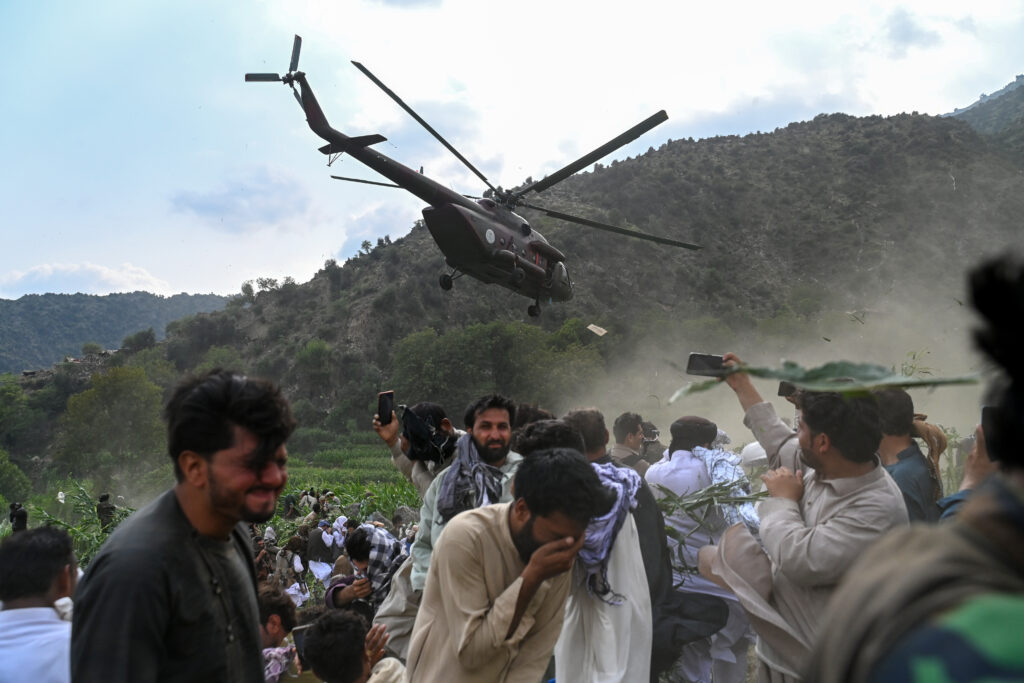
Rescuers struggled to retrieve bodies from muddy debris on Saturday after flash floods triggered by heavy monsoon rains across northern Pakistan killed at least 344 people in the past 48 hours, authorities said.The majority of deaths, 324, were reported in mountainous Khyber Pakhtunkhwa province, the National Disaster Management Authority said.Most were killed in flash floods and collapsing houses, while at least 137 others were injured.One resident told AFP it felt like “the end of the world” as the ground shook with the force of the water. The provincial rescue agency told AFP that around 2,000 rescue workers were engaged in recovering bodies from the debris and carrying out relief operations in nine districts, where rain was still hampering efforts.”Heavy rainfall, landslides in several areas, and washed-out roads are causing significant challenges in delivering aid, particularly in transporting heavy machinery and ambulances,” Bilal Ahmed Faizi, spokesman for Khyber Pakhtunkhwa’s rescue agency, told AFP.He said road closures meant rescue workers had to walk to some of the disaster sites in remote regions.”They are trying to evacuate survivors, but very few people are relocating due to the deaths of their relatives or loved ones being trapped in the debris,” Faizi said.Buner district deputy commissioner Kashif Qayum Khan also said rescuers were forced to find new ways to reach remote areas.”Many more people may still be trapped under the debris, which local residents cannot clear manually,” Khan told AFP. The provincial government has declared the severely affected mountainous districts of Buner, Bajaur, Swat, Shangla, Mansehra and Battagram as disaster-hit areas.The meteorological department has also issued a heavy rain alert for Pakistan’s northwest, urging people to take “precautionary measures”.Eleven more people were killed in Pakistan-administered Kashmir, and another nine in the northern Gilgit-Baltistan region, national officials said.Five more were killed when a local government helicopter crashed due to bad weather during a relief mission on Friday.- ‘Profound trauma’ -The monsoon season brings South Asia about three-quarters of its annual rainfall, vital for agriculture and food security, but it also brings destruction.Landslides and flash floods are common during the season, which usually begins in June and eases by the end of September.The national disaster agency’s Syed Muhammad Tayyab Shah told AFP that this year’s monsoon season began earlier than usual and was expected to end later.It would also increase in intensity over the next fortnight, he said.In Buner district, where there have been dozens of deaths and injuries, resident Azizullah said he “thought it was doomsday”.”I heard a loud noise as if the mountain was sliding,” he told AFP. “The ground was trembling due to the force of the water, and it felt like death was staring me in the face.”An AFP journalist saw three excavators clearing mud and wood from the completely flattened site, while dozens of rescuers and residents also dug through the debris.”My daughter’s dowry worth around five hundred thousand rupees ($1,760) was washed away in the flood,” resident Abdul Hayat told AFP.”We don’t even have clothes to wear, the food was also swept away,” he said.Others cleared heavy rocks with their hands and with shovels.”People are still lying under the debris… Those who were swept away are being searched for downstream,” said resident Abdul Khan.In picturesque Swat district, an AFP photographer saw roads submerged in muddy water, downed electricity poles and vehicles half-buried in mud.The torrential rains that have pounded Pakistan since the start of the summer monsoon, described as “unusual” by authorities, have killed more than 650 people, with more than 905 injured.In July, Punjab, home to nearly half of Pakistan’s 255 million people, recorded 73 percent more rainfall than the previous year and more deaths than in the entire previous monsoon.Pakistan is one of the world’s most vulnerable countries to the effects of climate change and is contending with extreme weather events with increasing frequency.Monsoon floods in 2022 submerged a third of the country and killed around 1,700 people.Another villager in Buner told AFP residents kept on searching through the rubble overnight.”The entire area is reeling from profound trauma,” said 32-year-old schoolteacher Saifullah Khan.”I help retrieve the bodies of the children I taught, I keep wondering what kind of trial nature has imposed on these kids,” he said.

Pakistan rescuers recover bodies after monsoon rains kill 340

Rescuers were struggling to retrieve bodies from debris after flash floods triggered by heavy monsoon rains across northern Pakistan killed at least 344 people in the past 48 hours, authorities said on Saturday. The majority of deaths, 328, were reported in mountainous Khyber Pakhtunkhwa province, the Provincial Disaster Management Authority said.Most were killed in flash floods and collapsing houses, while at least 120 others were injured.One resident told AFP it felt like “the end of the world” was coming, as the ground shook with the force of the water. The provincial rescue agency told AFP that around 2,000 rescue workers were engaged in recovering bodies from the debris and carrying out relief operations in nine affected districts where rain was still hampering efforts.”Heavy rainfall, landslides in several areas, and washed-out roads are causing significant challenges in delivering aid, particularly in transporting heavy machinery and ambulances,” said Bilal Ahmed Faizi, spokesman for Khyber Pakhtunkhwa’s rescue agency.”Due to road closures in most areas, rescue workers are travelling on foot to conduct operations in remote regions,” he told AFP.”They are trying to evacuate survivors, but very few people are relocating due to the deaths of their relatives or loved ones being trapped in the debris.”The provincial government has declared the severely affected mountainous districts of Buner, Bajaur, Swat, Shangla, Mansehra and Battagram as disaster-hit areas.The meteorological department has issued a heavy rain alert for Pakistan’s northwest, urging people to take “precautionary measures”.Eleven more people were killed in Pakistan-administered Kashmir, while five died in the northern Gilgit-Baltistan region, the national disaster authority said.Another five people, including two pilots, were killed when a local government helicopter crashed due to bad weather during a relief mission on Friday.- ‘Reeling from profound trauma’ -The monsoon season brings South Asia about three-quarters of its annual rainfall, vital for agriculture and food security, but it also brings destruction.Landslides and flash floods are common during the season, which usually begins in June and eases by the end of September.Syed Muhammad Tayyab Shah, a representative of the national disaster agency, told AFP that this year’s monsoon season began earlier than usual and was expected to end later.”The next 15 days… the intensity of the monsoon will further exacerbate,” he said.In Buner district, where there have been dozens of deaths and injuries, resident Azizullah said he “thought it was doomsday”.”I heard a loud noise as if the mountain was sliding. I rushed outside and saw the entire area shaking, like it was the end of the world,” he told AFP. “The ground was trembling due to the force of the water, and it felt like death was staring me in the face.”In Bajaur, a tribal district abutting Afghanistan, a crowd gathered around an excavator digging through a mud-soaked hill.On Friday, funeral prayers began in a paddock nearby, with people grieving in front of several bodies covered by blankets.In the picturesque district of Swat, an AFP photographer saw roads submerged in muddy water, electricity poles grounded, and vehicles half-buried in mud.The torrential rains that have pounded Pakistan since the start of the summer monsoon, described as “unusual” by authorities, have killed more than 650 people, with more than 880 injured.In July, Punjab, home to nearly half of Pakistan’s 255 million people, recorded 73 percent more rainfall than the previous year and more deaths than in the entire previous monsoon.Pakistan is one of the world’s most vulnerable countries to the effects of climate change, and its population is contending with extreme weather events with increasing frequency.Monsoon floods in 2022 submerged a third of the country and killed around 1,700 people.Another villager in Buner told AFP residents kept on searching through the rubble overnight.”The entire area is reeling from profound trauma,” said 32-year-old schoolteacher Saifullah Khan.”We still have no clear idea who in this small village is alive and who is dead,” he added.”I help retrieve the bodies of the children I taught, I keep wondering what kind of trial nature has imposed on these kids.”

Pakistan rescuers recover bodies after monsoon rains kill 320

Rescuers were struggling to retrieve bodies from debris after flash floods triggered by heavy monsoon rains across northern Pakistan killed at least 321 people in the past 48 hours, authorities said on Saturday.The majority of deaths, 307, were reported in mountainous Khyber Pakhtunkhwa province, the Provincial Disaster Management Authority said.Most were killed in flash floods and collapsing houses, with the dead including 15 women and 13 children. At least 23 others were injured.The provincial rescue agency told AFP that around 2,000 rescue workers were engaged in recovering bodies from the debris and carrying out relief operations in nine affected districts where rain was still hampering efforts.”Heavy rainfall, landslides in several areas, and washed-out roads are causing significant challenges in delivering aid, particularly in transporting heavy machinery and ambulances,” Bilal Ahmed Faizi, spokesman for Khyber Pakhtunkhwa’s rescue agency, told AFP.”Due to road closures in most areas, rescue workers are travelling on foot to conduct operations in remote regions,” he added.”They are trying to evacuate survivors, but very few people are relocating due to the deaths of their relatives or loved ones being trapped in the debris.”The provincial government has declared the severely affected mountainous districts of Buner, Bajaur, Swat, Shangla, Mansehra and Battagram as disaster-hit areas.The meteorological department has issued a heavy rain alert for Pakistan’s northwest for the next few hours, urging people to take “precautionary measures”.Nine more people were killed in Pakistan-administered Kashmir, while five died in the northern Gilgit-Baltistan region, the national disaster authority said.Another five people, including two pilots, were killed when a local government helicopter crashed due to bad weather during a relief mission on Friday.- ‘Doomsday’ monsoon -The monsoon season brings South Asia about three-quarters of its annual rainfall, vital for agriculture and food security, but it also brings destruction.Landslides and flash floods are common during the season, which usually begins in June and eases by the end of September.Syed Muhammad Tayyab Shah, a representative of the national disaster agency, told AFP that this year’s monsoon season began earlier than usual and was expected to end later.”The next 15 days… the intensity of the monsoon will further exacerbate,” he said.One resident likened the disaster to “doomsday”.”I heard a loud noise as if the mountain was sliding. I rushed outside and saw the entire area shaking, like it was the end of the world,” Azizullah, a resident of Buner district, where there have been dozens of deaths and injuries, told AFP.”I thought it was doomsday,” he said. “The ground was trembling due to the force of the water, and it felt like death was staring me in the face.”In Bajaur, a tribal district abutting Afghanistan, a crowd gathered around an excavator digging through a mud-soaked hill.On Friday, funeral prayers began in a paddock nearby, with people grieving in front of several bodies covered by blankets.The torrential rains that have pounded Pakistan since the start of the summer monsoon, described as “unusual” by authorities, have killed more than 600 people.In July, Punjab, home to nearly half of Pakistan’s 255 million people, recorded 73 percent more rainfall than the previous year and more deaths than in the entire previous monsoon.Pakistan is one of the world’s most vulnerable countries to the effects of climate change, and its population is contending with extreme weather events with increasing frequency.Monsoon floods in 2022 submerged a third of the country and killed around 1,700 people.Another villager in Buner told AFP locals kept on searching through the rubble throughout the night.”The entire area is reeling from profound trauma,” 32-year-old local schoolteacher Saifullah Khan told AFP.”We still have no clear idea who in this small village is alive and who is dead,” he added.”I help retrieve the bodies of the children I taught, I keep wondering what kind of trial nature has imposed on these kids.”

Taliban mark fourth year in power in Afghanistan

Afghanistan’s Taliban authorities marked the fourth anniversary of their takeover on Friday buoyed by Russia’s first official recognition of their government, a step they hope other countries will follow.Helicopters circled above Kabul, dropping flower petals over the city to mark the Taliban seizure of the capital on August 15, 2021.Taliban members and supporters leaned out of trucks and rickshaws on the streets below waving the black-and-white “Islamic Emirate of Afghanistan” flags.They also carried yellow jerry cans — a common receptacle for homemade bombs during the 20-year war against US-led forces. Celebrations were organised across the country, although a military parade like the one held with much fanfare last year at the Bagram airbase, once the linchpin for US-led operations, was cancelled without public explanation. A gathering was held instead at the enormous Loya Jirga Hall in Kabul, where hundreds of men listened to ministers praise the government’s achievements.Supreme Leader Hibatullah Akhundzada, who remains largely secluded in the southern Taliban heartland of Kandahar, did not attend but, in a statement read by a spokesman, hailed the return of security to Afghanistan.”Our people were saved from corruption, oppression, usurpation, narcotics, theft, plunder and looting in the light of Islamic laws,” the statement said.”A positive environment was created for the rebuilding and reconstruction of Afghanistan.” The speeches did not mention the steep challenges facing a country gripped by one of the world’s worst humanitarian crises, according to the United Nations. In Jalalabad in the east, farmer Zabihullah — who like many Afghans only uses one name — celebrated the Taliban takeover but also hoped authorities would address poverty and unemployment.”They should address the bad situation in the country, because of unemployment poor Afghans are going from one country to another, some die, some are detained, it is a chaotic situation,” the 45-year-old told AFP.The Taliban government remains largely isolated on the global stage over restrictions imposed under their severe interpretation of Islamic law, with women facing restrictions the UN has deemed “gender apartheid”.The International Criminal Court issued arrest warrants in July for two senior Taliban leaders, accusing them of crimes against humanity over the persecution of women and girls who are banned from most education and work.Women and girls are also barred from parks and gyms, and from travelling without a male guardian.- International engagement -The Taliban authorities scored a victory in July when Russia became the first country to officially recognise their administration.Kabul also enjoys close ties with China, Qatar and several Central Asian states.The Taliban government has reported talks in Kabul with officials from Western states, including Norway, Britain and the United States. International Crisis Group analyst Ibraheem Bahiss said women’s rights are still important to the international community but other issues, particularly security, take precedence.”Even Europe — because it has a core interest with migration — has continued to pursue engagement,” he told AFP, although discussions with Taliban authorities on women’s rights were “a complete non-starter”. The Taliban authorities have almost no internal opposition but struggle with economic fragility, international aid cuts and the influx of four million Afghans expelled from neighbouring countries.The Revolutionary Association of the Women of Afghanistan (RAWA) condemned any engagement with the Taliban authorities in a statement. Contrary to its claims, RAWA said, the Taliban government “is not dedicated to ensuring peace and human dignity but is bent on destroying the last vestiges of our people’s most basic rights”. Independent experts appointed by the UN Human Rights Council called on the international community on Thursday not to normalise relations with the Taliban authorities and to reject their “violent and authoritarian rule”. “Operating without legitimacy, the Taliban enforces an institutionalised system of gender oppression, crushes dissent, exacts reprisals, and muzzles independent media,” they said in a statement.