AFP Asia

A close-up of a stack of newspapers resting on a desk, symbolizing information and media.

Nepal’s ‘courageous’ new PM known for integrity

Nepal’s first woman Supreme Court chief justice Sushila Karki — now the country’s new prime minister — is known for her insistence on integrity and the need for an independent judiciary.Karki, who took the oath of office late Friday from President Ram Chandra Paudel, will lead the political transition in the Himalayan nation after deadly anti-corruption protests.The 73-year-old emerged as the leading candidate of many representatives of “Gen Z” — the loose umbrella title of the protest movement — who selected her via online platform Discord.She told Nepali media that the Gen Z protesters had told her that “they believe in me” to lead for “a short time for the purpose of doing elections”.”She is a credible choice to lead the interim government,” Anil Kumar Sinha, a former justice of the Supreme Court who worked with Karki, told AFP.”Her integrity has never been in doubt, and she is not someone who can be intimidated or easily influenced. She is courageous and not swayed by pressure.”- ‘In favour of youth’ -In a speech broadcast on Nepali media earlier this year, Karki spoke of ingrained corruption.”We see it everywhere but we don’t speak — now we need the youth to speak up, take the lead and stand in elections”, she said.”What I have seen in the last 35 years does not work. I am 100 percent in favour of youth coming forward.”Her tenure as chief justice, from 2016 to 2017, was brief but significant — challenging gender stereotypes and facing down politicians over corruption.Karki came of age in a society where women rarely entered the legal profession.Born in 1952 in Biratnagar, an industrial town in eastern Nepal, she earned degrees in political science in India and in law in Kathmandu.She began her career as a lawyer in 1979, and quickly gained a reputation as a fearless advocate, often taking up cases others avoided. – Defiant -In 2012, Karki was one of two presiding Supreme Court judges who jailed a serving government minister for corruption — a first at the time for Nepal in its battle against a culture of graft.In 2017, the government tried to impeach her as chief justice after she overturned its choice for chief of police.The United Nations called the impeachment “politically motivated” and the move was blocked. She stepped down from the post at her retirement.Nepal emerged from a brutal decade-long Maoist insurgency in 2006 and, in 2008, the end of the country’s 240-year-old Hindu monarchy.The transformation to a federal state was marred by political infighting, and successive governments have dragged their feet on bringing perpetrators of abuses committed during the civil war to justice.But it was under Karki’s watch as chief justice that a court in 2017 sentenced three soldiers to 20 years in jail for the murder of a teenage girl, at the time only the second conviction for crimes committed during the war.She is Nepal’s first woman prime minister, but not its first woman leader — Bidya Devi Bhandari held the largely ceremonial role of president for two terms from 2015 to 2023.

Nepal ex-chief justice Karki becomes next PM after protests

Nepal’s former chief justice Sushila Karki was sworn in Friday to lead the transition as the country’s next prime minister after deadly anti-corruption protests ousted the government.The 73-year-old Karki, Nepal’s first woman chief justice, was sworn into office by President Ram Chandra Paudel, after the previous prime minister quit Tuesday as parliament was set ablaze.”Congratulations! We wish you success, wish the country success,” Paudel said to Karki after the small ceremony in the presidential palace, attended by diplomats and some former leaders.The Himalayan nation of 30 million people was plunged into chaos this week after security forces tried to crush rallies by young anti-corruption protesters.At least 51 people were killed in the worst violence since the end of a civil war and the abolition of the monarchy in 2008.The military took back control of the streets on Wednesday, enforcing a curfew.The appointment of the judge, known for her independence, comes after two days of intense negotiations by army chief General Ashok Raj Sigdel and Paudel, including with representatives from “Gen Z”, the loose umbrella title of the youth protest movement.Thousands of young activists had used the online app Discord to debate the next steps — and name Karki as their choice of next leader.Karki, dressed in a red sari dress, took the oath but did not make a further speech. She smiled and bowed with her hands pressed together repeatedly in traditional greetings.”It is a moment of victory… finally the power vacuum has ended,” said Amrita Ban, a Gen Z protester.”We did it”, key youth protest group Hami Nepal posted on Instagram, calling for unity.”Honour the lives of those who sacrificed themselves for this moment”.Presidential press advisor Kiran Pokharel told AFP that “a council of ministers will be formed after, and other processes will be taken from there”.- ‘Make a better Nepal’ -Protests fed into longstanding economic woes in Nepal, where a fifth of people aged 15-24 are unemployed, according to the World Bank, with GDP per capita standing at just $1,447. At least 21 protesters were among those killed, mainly on Monday during the police crackdown on demonstrations against corruption and poor governance that was sparked by a ban on social media.Parliament, major government buildings and a Hilton Hotel were among the sites set ablaze by protesters on Tuesday.KP Sharma Oli, the 73-year-old leader of the Communist Party, then quit as prime minister. His whereabouts are not known.More than 12,500 prisoners who escaped from jails across the country during the chaos “are still at large”, police spokesman Binod Ghimire told AFP.Nepal’s army said it had recovered more than 100 guns looted in the uprising, during which protesters were seen brandishing automatic rifles.Soldiers patrolled the largely quiet streets of the capital Kathmandu for a third day on Friday.”I was very afraid, and stayed locked inside my home with family and didn’t leave,” said Naveen Kumar Das, a painter-decorator in his mid-40s.He was among many ordinary residents of Kathmandu who took advantage of a brief lifting of the curfew to stock up on supplies.James Karki, 24, who was among the protesters, said he was hopeful for change ahead. “We started this movement so we could make a better Nepal,” he said. 

Afghan deputy PM visits earthquake hit area

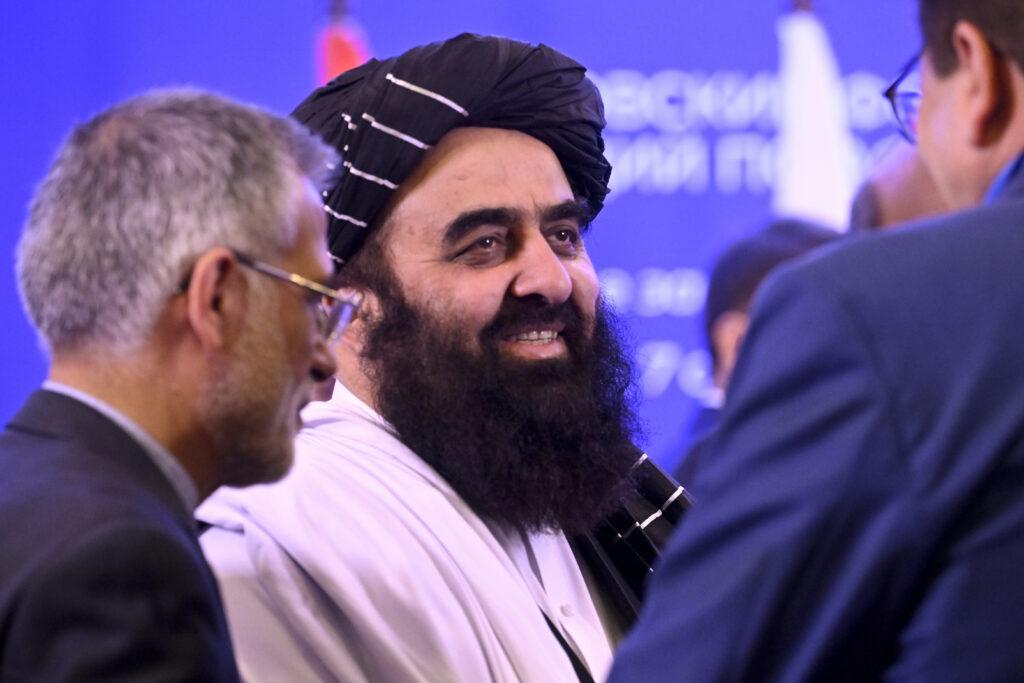
Afghanistan’s deputy prime minister visited the country’s east on Friday, becoming the first member of the Taliban government to do so nearly two weeks after a powerful earthquake killed more than 2,200 people.Abdul Ghani Baradar, co-founder of the Taliban with Mullah Omar, visited the eastern province of Kunar where the worst damage was seen from the magnitude 6 earthquake on August 31, according to his office.In the Friday sermon that followed the disaster, the government’s religious authorities claimed the earthquake and its aftershocks were “divine punishment”, calling on Afghans to repent. Afghanistan, one of the poorest countries in the world, is wracked by a humanitarian crisis after decades of war. On Friday, Baradar called on “all officials to collect aid and distribute it transparently”.”Efforts are being made to rebuild destroyed homes and provide the necessary infrastructure to reduce damage from future natural disasters,” he said, according to his office. Thousands of families are now surviving in open fields or tents in mountainous rural areas. The United Nations said half of those who died were children.On Thursday evening, Foreign Minister Amir Khan Muttaqi assured diplomats that “441 flights” had delivered aid to villages cut off by landslides and rockfalls, and that the injured had been evacuated by helicopter. The UN is concerned about the risk of disease spreading among the victims but, like other international NGOs, it has been forced to reduce its assistance to Afghans due to cuts in aid spending.The UN is also battling segregation rules imposed by Taliban authorities on its staff, which led to the organisation suspending its assistance to the millions of Afghans expelled from neighbouring countries.

India hardliners give Nepal protests baseless religious twist

Protesters in Nepal ousted the prime minister and set parliament ablaze over the government’s ban on social media and corruption allegations — but in neighbouring India, the violence is being misrepresented online as something else entirely: a religious uprising. While some claim that the demonstrations are a demand for a “Hindu state”, others say the opposite — that they are an attack on the faith. Fuelling the narrative are allegations from Indian broadcasters and politicians that rioters vandalised Nepal’s Pashupatinath temple, a revered Hindu site in the Himalayan nation. “Some rioters, hiding within the crowd of protesters, attempted to vandalise the temple, and it was only after this incident that the army was deployed,” an anchor for the right-wing Zee News television channel said in a report featuring a clip of people climbing onto the temple’s gate and violently shaking it. Jivesh Mishra, a member of India’s ruling Bharatiya Janata Party (BJP) in eastern Bihar state, which shares a border with Nepal, told reporters on Wednesday: “An attack on a temple is an attack on (the) Hindu faith.”Right-wing influencers also amplified the claim to their thousands of followers.But AFP fact-checkers traced the footage to a religious ritual called Naxal Bhagwati Jatra, filmed weeks before the violence. KN Swami, a renowned monk in the temple, also posted clips on social media to refute claims it had been attacked. “I am currently inside the temple, and everything is peaceful here,” he confirmed to AFP on Wednesday.Nepal’s demonstrations began Monday in the capital Kathmandu, driven by angry young protesters who dubbed themselves the “Gen Z” movement. The protests escalated into an outpouring of rage nationwide, with government buildings set ablaze after a deadly crackdown. KP Sharma Oli quit as prime minister shortly after demonstrators set fire to his house.- ‘Instigated and funded’ -Hundreds of social media posts have claimed without evidence that the protests were “instigated and funded” by “anti-Hindu forces and Islamists” to attack religious sites. Nepal, a secular republic since 2008, has witnessed frequent demonstrations by groups demanding a return to Hindu statehood. Old visuals of the rallies resurfaced online this week, misleadingly presented as the current protests.Footage of protesters calling for a Hindu monarchy in the past was falsely shared as evidence that Nepal’s “Gen Z” movement is more about religion than corruption. Another image circulated with a claim that demonstrators wanted India’s firebrand Hindu monk Yogi Adityanath as Nepal’s new prime minister. Other posts viewed thousands of times on X, Instagram, Threads and Facebook have compared the unrest in Nepal with protests in Bangladesh, a Muslim-majority country where a student-led revolt ousted long-time leader Sheikh Hasina last year.Meanwhile, hashtags in favour of a “Hindu Nation” — a popular catchphrase of the BJP — have trended across social media platforms in India. The posts warn the country to “prepare for similar youth uprisings”.”The urge to break news fast in India is higher, and that led to misinformation from their side,” said Prashant Das, a senior research fellow at South Asian University.”What is rife now are speculations and rumours, which are natural responses of people in such situations.”

A close-up of a stack of newspapers resting on a desk, symbolizing information and media.

Nepalis assess damage after terror of deadly protests

Retired Nepali civil servant Dhruba Shrestha has lived through decades of turmoil, from civil war to political upheaval, but the 76-year-old says nothing compared to the violence that engulfed the Himalayan nation this week.”I’ve seen violence since my student days, but never such a riot,” Shrestha told AFP Friday, as the army briefly lifted a curfew in Kathmandu.Nepal was plunged into chaos after police fired on young anti-corruption protesters, triggering nationwide unrest on Tuesday.Demonstrators torched parliament, government and presidential offices, and a newly-opened Hilton Hotel, before soldiers retook control of the streets the following day. “Anyone would be afraid in such a situation,” Shrestha said. “No one could have imagined this.” The capital’s streets were eerily quiet on Friday, littered with charred vehicles, as soldiers manned checkpoints around scorched government buildings.At least 51 people were killed across the country of 30 million, the worst violence since the end of a civil war and the abolition of the monarchy in 2008.Security forces are also scrambling to recapture some 12,500 inmates who escaped in mass jailbreaks.Nepal’s president and army chief are seeking a consensus interim leader to fill a political vacuum.Disagreements between rival factions remain, although Sushila Karki, 73, Nepal’s first woman chief justice, is a leading candidate.- ‘Scary and troubling’ -For ordinary citizens, daily survival is the focus.Hundreds of residents emerged from hiding at home to buy food, bracing for potentially more days indoors.”The situation is obviously scary and troubling,” Shrestha said while stocking up at a market.Economic hardship added fuel to the protests, alongside demands for political change. The World Bank says a “staggering” 82 percent of Nepal’s workforce is in informal employment — among the highest rates in the world. “It’s difficult for people like us, who have to earn and spend every day,” said construction worker Anup Thapa, sipping tea at a street stall. “I don’t have savings. It’s tough to survive without work.” Others came out to witness the destruction, including 73-year-old Achyut Thapaliya, who wept after visiting the fire-ravaged Singha Durbar government complex and the parliament. “I returned with tears in my eyes. It was our pride,” he said. Thapaliya backs the protesters’ demand to end corruption, but recoiled at the violence. “This is the land of the Buddha,” he said. “We are a peace-loving people, and it should stay like that.”

Nepal seeks new leader as army reclaims streets after protest violence

Nepal’s president and army sought on Friday to find a consensus interim leader to fill a political vacuum after deadly anti-corruption protests toppled the government and left parliament in flames.The Himalayan nation of 30 million people was plunged into chaos this week after security forces tried to crush rallies by young anti-corruption protesters, culminating in widespread violence on Tuesday.At least 51 people were killed in the worst violence since the end of a Maoist civil war and abolition of the monarchy in 2008.The military took back control of the streets on Wednesday, enforcing a curfew, as army chief General Ashok Raj Sigdel and President Ramchandra Paudel held talks with key figures and representatives from “Gen Z”, the loose umbrella title of the youth protest movement.- ‘Solution being sought’ -Disagreements between rival factions remain, although Sushila Karki, 73, Nepal’s first woman chief justice, is a leading candidate.”A meeting has been scheduled for this afternoon with the president, the army chief, former chief justice Sushila Karki, our representative Sudan Gurung and one legal expert,” Nimesh Shrestha, who was part of the Gen Z protest, told AFP.Karki has told AFP that “experts need to come together to figure out the way forward”, and that “the parliament still stands”. Gurung, the youth activist, told reporters on Thursday that their “first demand is the dissolution of parliament”.Paudel issued a statement to the nation on Thursday saying that “a solution to the problem is being sought, as soon as possible”.The army patrolled the largely quiet streets of the capital Kathmandu for a third day on Friday, after the protests and nationwide chaos that included a mass breakout of prisoners.”I was very afraid and stayed locked inside my home with family and didn’t leave,” said Naveen Kumar Das, a painter-decorator in his mid-40s.He was among many ordinary residents of Kathmandu who took advantage of a brief lifting of the curfew in the morning to stock up on supplies.Food stores, tea stalls and pharmacies bustled with customers after people spent days inside.”It was a really tense time and we just stayed indoors,” said Laxmi Thapa, 32, on a motorbike as her husband filled its fuel tank.”We came out as things have improved.”- ‘Make a better Nepal’ -At least 21 protesters were among those killed, mainly on Monday during a police crackdown on demonstrations against corruption and poor governance that was sparked by a ban on social media.Protesters set parliament, major government buildings and a Hilton Hotel on fire on Tuesday, 73-year-old KP Sharma Oli resigned as prime minister, and the army then took charge of the streets.Nepal’s army said on Friday that it had recovered more than 100 guns looted in the uprising, during which protesters were seen brandishing automatic rifles.More than 12,500 prisoners who escaped from jails across the country during the chaos “are still at large”, police spokesman Binod Ghimire told AFP.Protests fed into longstanding economic woes in Nepal, where more than two-fifths of people are aged between 16 and 40.A fifth of people aged 15-24 are unemployed, according to the World Bank, with GDP per capita just $1,447.Discussions are still heated among Gen Z ranks as they seek a radical political transition.James Karki, 24, who was among the protesters, said he was hopeful for change. “We started this movement so we could make a better Nepal,” he said. “And I am positive that the army will listen.”

A close-up of a stack of newspapers resting on a desk, symbolizing information and media.

Trump envoy hopes to resolve India tariff row within weeks

The United States expects to resolve a bitter tariff row with India within weeks, an envoy of President Donald Trump said Thursday, as he voiced hope for keeping New Delhi in US good graces.India has seen outrage and a spike in anti-US sentiment after Trump imposed tariffs of up to 50 percent on some of its exports over purchases of oil from Russia, under Western sanctions for its invasion of Ukraine.Sergio Gor, nominated by Trump to be ambassador to India, said he expected progress when India’s trade minister visits Washington next week.”I do think it will get resolved over the next few weeks,” Gor told the Senate Foreign Relations Committee in his confirmation hearing.Gor has risen quickly in the Trump White House after spearheading the quick vetting for loyalty of 4,000 appointees to run the US government.Despite his lack of formal foreign policy experience, Gor, a 38-year-old former fund-raiser for Trump, appeared prepared for his questions, deftly not replying to a senator’s question on India’s volatile relationship with Pakistan.Describing the tariffs as a “little hiccup,” Gor — also named to a broad position of Trump’s special envoy for South Asia — said of concern over India’s Russia ties, “We hold our friends to different standards.””I will make it a top priority to ensure that they’re pulled in our direction, not away from us,” Gor said of India.Gor noted that Trump, not shy about airing grievances with other leaders, has not personally attacked Indian Prime Minister Narendra Modi, a fellow right-wing populist.”When the president has been critical of India, he has gone out of his way to compliment Prime Minister Modi,” Gor said.Trump has accused New Delhi of fueling Moscow’s invasion of Ukraine by buying oil from Russia, its Cold War ally. Trump trade advisor Peter Navarro has even called it “Modi’s war.”Trump has not taken similar action against Russia itself and appeared peeved that Modi did not personally credit him for a ceasefire between India and Pakistan following their conflict in May.India — maintaining a decades-old red line against outside intervention over divided Kashmir — has also rebuffed Trump’s overtures to mediate between the two nuclear-armed nations.- ‘Wrong direction’ -Politicians from across the US political spectrum have nearly unanimously supported warm ties with India, making Trump’s tariffs a greater jolt.US policymakers have eyed democratic India as a balance to the world’s other billion-plus nation, China, seen as the top long-term adversary to the United States. Modi recently paid a friendly visit to China, despite the two powers’ long animosity.Democratic Senator Tim Kaine told Gor that the United States should be “tough when we need to be, but balance that with a real understanding that we want to be close to India and we don’t want to push them in the wrong direction.”Since returning to the presidency in January, Trump has used tariffs as a wide-ranging tool to address what Washington deems unfair trade practices as well as assorted other priorities.Commerce Secretary Howard Lutnick told CNBC on Thursday that “India basically has to open their market, has to stop buying Russian oil,” when asked about trade talks.He added that “we’ve got a big deal coming with Taiwan, we’ll probably get a deal done with Switzerland.” Steeper tariffs took effect on both economies in early August.

Pakistan must ‘focus on job’ in highly charged India clash: coach

Coach Mike Hesson has told his Pakistan team to “focus on the job” in Sunday’s highly charged Asia Cup clash with arch-rivals India.The match in Dubai is the first time that the neighbours will have met in cricket since a brief but deadly border conflict in May and emotions will be running high.The New Zealander Hesson said Thursday: “I guess, from my perspective, just like any time you enter a match, whether it be a final of a world event or whatever, it’s about keeping everybody focused on the job at hand and that’ll be no different on the weekend.”The eight-nation Twenty20 tournament began on Tuesday with Afghanistan beating Hong Kong by 94 runs. India crushed hosts the United Arab Emirates by nine wickets on Wednesday.Pakistan begin their campaign against Oman on Friday, but all the talk is already of world champions India two days later.”We know that India are obviously hugely confident and rightfully so in terms of how well they’ve played,” Hesson said of the Asia Cup holders, who skittled UAE for just 57 in 13.1 overs. India cruised to victory in just 4.3 overs. Since winning the World Cup last year they have won 18 of their 21 T20Is.Hesson is excited to be part of a blockbuster, which will be watched by a packed stadium in Dubai and hundreds of millions of television viewers. “Look, I’ve certainly watched many games from afar, so certainly being on the other side of the fence, I guess, being right and amongst such a highly charged event is going to be exciting,” he added.Pakistan enter the Asia Cup with a tri-series win in the UAE also involving Afghanistan and UAE, and confidence is growing.”We’re very much focused on improving as a team, sort of day by day, and not getting too far ahead of ourselves,” said Hesson.India, Pakistan, Oman and UAE are in Group A while Sri Lanka, Afghanistan, Hong Kong and Bangladesh form Group B.The top two teams from each Group will qualify for the Super Four stage. The top two teams will then play the September 28 final in Dubai.

President seeks end to crisis engulfing Nepal

Nepal’s president said Thursday he was seeking an end to the crisis that has engulfed the Himalayan nation since deadly protests this week ousted the prime minister and left parliament in flames.The army has imposed a curfew in the Himalayan nation of 30 million people, with soldiers patrolling the largely quiet streets for a second day after the worst violence in two decades.President Ramchandra Paudel appealed to “all parties to be confident that a solution to the problem is being sought, as soon as possible”.Army chief General Ashok Raj Sigdel has launched talks with key figures and “representatives of Gen Z”, a military spokesperson said, referring to the loose umbrella title of the youth protest movement.Demonstrations began on Monday in Kathmandu against the government’s short-lived ban on social media and over corruption, with at least 19 people killed in the crackdown.A day later, protests escalated into an outpouring of rage nationwide, with government offices, a Hilton Hotel and other buildings set on fire.In the chaos, more than 13,500 prisoners broke out of jails countrywide, leaving security forces scrambling to regain control. Only around 250 have been recaptured, according to Nepal’s security forces and an Indian border official.”Our first demand is the dissolution of parliament,” Sudan Gurung, a key figure among the Gen Z protesters, told reporters on Thursday.”My humble request to everyone, including political parties: please don’t send the same old leaders,” he said, saying the protesters were not seeking power themselves. “We don’t need positions in government,” he said. “We need real reform.”Protests fed into longstanding economic woes in Nepal, where more than a fifth of people aged 15-24 are unemployed, according to the World Bank, with GDP per capita just $1,447.- ‘Every effort’ -KP Sharma Oli, 73, a four-time prime minister, resigned Tuesday. His home was set ablaze the same day and his whereabouts are unknown.Constitutionally, 80-year-old Paudel should invite the leader of the largest parliamentary party to form a government.But much of the political old guard has vanished from view. “I am consulting and making every effort to find a way out of the current difficult situation in the country, within the constitutional framework,” said Paudel, whose presidential offices were also set on fire.Former chief justice Sushila Karki is the leading choice for interim leader, a Gen Z protester representative said Thursday, although their backing is not unanimous.”Right now, Sushila Karki’s name is coming up to lead the interim government — we are now waiting for the president to make a move,” said Rakshya Bam, an activist who was among those at the army meeting on Wednesday.Journalist Pranaya Rana said there were “divisions”, but it was “natural in a decentralised movement like this that there are going to be competing interests”.Karki, 73, Nepal’s first woman chief justice, has told AFP that “experts need to come together to figure out the way forward”, and that “the parliament still stands”. Kathmandu Mayor Balendra Shah, a 35-year-old former engineer and rapper, was also among the names suggested as a potential interim leader.But Shah said in a post on Facebook that he “fully supports the proposal” of Karki.”The job of this interim government is to hold elections, to give a new mandate to the country,” he said.

Nepal ex-chief justice tipped to lead political transition

Nepal’s former chief justice Sushila Karki is the leading choice for interim leader, a representative of the “Gen Z” protesters said Thursday, after deadly demonstrations toppled the prime minister.The army has imposed a curfew to restore order in the Himalayan nation of 30 million people, after the worst violence in two decades ousted the government and left parliament ablaze on Tuesday.Army chief General Ashok Raj Sigdel held talks with key figures and “representatives of Gen Z” on Wednesday, a military spokesperson said, referring to the loose umbrella title of the protest movement.”Right now, Sushila Karki’s name is coming up to lead the interim government — we are now waiting for the president to make a move,” said Rakshya Bam, an activist who was among those at the meeting.- ‘Competing interests’ -Demonstrations began on Monday in Kathmandu against the government’s short-lived ban on social media and over corruption, with at least 19 people killed in the crackdown.A day later, protests escalated into an outpouring of rage nationwide, with government offices, a major hotel and other buildings set on fire. In the chaos, more than 13,500 prisoners broke out of jail.”We discussed with the army chief about the future,” Bam told AFP.”The conversation was about how we can move forward, keeping the peace and security of the country.”Karki, 73, an academic and Nepal’s first woman Supreme Court chief justice, has told AFP that “experts need to come together to figure out the way forward”, and that “the parliament still stands”.Constitutionally, 80-year-old President Ramchandra Paudel should invite the leader of the largest parliamentary party to form a government.But much of the political old guard has vanished from view.The protesters’ backing of Karki is not unanimous.In a virtual meeting on platform Discord that was attended by thousands on Wednesday, activists debated who should represent them, with several names floated.There were conflicting arguments and several names proposed.”There are divisions,” journalist Pranaya Rana said.”It is natural in a decentralised movement like this that there are going to be competing interests and competing voices.”- ‘New mandate’ -Kathmandu Mayor Balendra Shah, a 35-year-old former engineer and rapper, was also among the names suggested as potential interim leader.But Shah said in a post on Facebook that he “fully supports the proposal” to push Karki as the candidate.”The job of this interim government is to hold elections, to give a new mandate to the country,” he added.Soldiers patrolled the streets of the capital for a second day on Thursday, which appeared to be quiet, with multiple army checkpoints set up along the streets.Restrictions on movement were briefly lifted on Thursday morning to allow people to collect food and for essential workers.Communist party veteran KP Sharma Oli, 73, a four-time prime minister, resigned Tuesday in the face of protests. His whereabouts are unknown.His former coalition ally, 79-year-old Sher Bahadur Deuba of the Nepali Congress –- a five-time prime minister — has not been seen since unrest erupted.