AFP Asia

North Korea’s Kim in China ahead of massive military parade

North Korean leader Kim Jong Un was on his way to Beijing on Tuesday morning, having crossed the border into China aboard an armoured train ahead of a massive military parade on Wednesday.Kim will join Chinese President Xi Jinping and other world leaders including Russia’s Vladimir Putin for a huge spectacle in which China will showcase its military prowess, with troops marching in formation, flypasts and other high-tech fighting gear.More than 25 leaders will also attend Wednesday’s parade centred on Beijing’s Tiananmen Square to mark 80 years since the end of World War II.Millions of Chinese people were killed during a prolonged war with imperial Japan in the 1930s and 40s, which became part of a global conflict following Tokyo’s attack on Pearl Harbor in 1941.China has touted the parade as a show of unity with other countries, and Kim’s attendance will be the first time he has been seen with Xi and Putin at the same event.The North Korean leader’s special train passed into China early Tuesday, South Korea’s Yonhap news agency reported, citing the North’s state-run radio service, KCBC.His appearance in China “formalises the China-Russia-North Korea trilateral (relationship) to the public”, Soo Kim, a geopolitical risk consultant and former CIA analyst, told AFP.Kim enjoyed a brief bout of high-profile international diplomacy from around 2018, meeting US President Donald Trump and then South Korean president Moon Jae-in multiple times.But he withdrew from the global scene after the collapse of a summit with Trump in Hanoi, Vietnam, in 2019.Kim stayed in North Korea throughout the Covid-19 pandemic, but met Putin in Russia’s far east in 2023.- Flags, flowers and fanfare -Security around Beijing has tightened in recent days and weeks, with road closures, military personnel stationed on bridges and street corners, and miles upon miles of white barriers lining the capital’s wide boulevards. Art installations with flowers, doves and an emblem showing the Great Wall of China with “1945-2025” have cropped up around the city, and on Tuesday morning Chinese flags flew in residential neighbourhoods.Officials have been tight-lipped over the list of hardware to be displayed at the parade, but military enthusiasts have already spotted significant new systems, including what is rumoured to be a gigantic laser weapon.Wednesday’s event caps a bumper week of diplomacy for President Xi, who on Sunday and Monday hosted a slew of Eurasian leaders for a summit in the northern port city of Tianjin aimed at putting China front and centre of regional relations.The club of 10 countries — named the Shanghai Cooperation Organisation (SCO) — touts itself as a non-Western style of collaboration in the region and seeks to be an alternative to traditional alliances.During the summit, Xi slammed “bullying behaviour” from certain countries — a veiled reference to the United States — while Putin defended Russia’s Ukraine offensive, blaming the West for triggering the conflict.Many of the guests from the Tianjin gathering, including Putin, Belarusian President Alexander Lukashenko and several other leaders will join Xi and Kim for the parade in Beijing.

Xi and Putin round on West at regional summit in China

Presidents Xi Jinping and Vladimir Putin took turns Monday to swipe at the West during a gathering of Eurasian leaders aimed at putting Beijing front and centre of regional relations.The Shanghai Cooperation Organisation (SCO)touts itself as a non-Western style of collaboration between 10 countries in the region and seeks to be an alternative to traditional alliances.Xi told leaders including Belarusian President Alexander Lukashenko and India’s Prime Minister Narendra Modi that the global situation was becoming more “chaotic and intertwined”.The Chinese leader also slammed “bullying behaviour” from certain countries — a veiled reference to the United States.”The security and development tasks facing member states have become even more challenging,” he said in his address in the northern port city of Tianjin.”With the world undergoing turbulence and transformation, we must continue to follow the Shanghai spirit…and better perform the functions of the organisation.”Putin used his speech to defend Russia’s Ukraine offensive, blaming the West for triggering the three-and-a-half year conflict that has killed tens of thousands and devastated much of eastern Ukraine.”This crisis wasn’t triggered by Russia’s attack on Ukraine, but was a result of a coup in Ukraine, which was supported and provoked by the West,” Putin said.Ukraine’s foreign ministry urged China to work towards peace during Putin’s visit, saying in a statement from Kyiv they “would welcome a more active role” for Beijing to help find peace “based on respect for the UN Charter”.Putin meanwhile praised Turkey’s mediation efforts in the conflict as he met Turkish counterpart Recep Tayyip Erdogan.And Putin later met his Iranian counterpart Masoud Pezeshkian, the Kremlin said, with the pair expected to discuss Iran’s nuclear programme.- ‘Always insightful’ -Earlier, leaders from the 10 countries — China, India, Russia, Pakistan, Iran, Kazakhstan, Kyrgyzstan, Tajikistan, Uzbekistan and Belarus — posed for a group photo on a red carpet.Xi, Putin and Modi were seen chatting, flanked by their translators. Modi and Putin were photographed holding hands and held talks in the afternoon.Russian state media reported the pair spent nearly an hour talking “face-to-face” in Putin’s armoured presidential car before an official meeting.”Conversations with him are always insightful,” Modi posted on X alongside a photograph of them travelling in the car.Before their meeting, Modi praised the “special and privileged strategic partnership” with Moscow and added that India wanted both sides in the Ukraine conflict to “find stable peace”.- ‘Mutual trust’ -The SCO summit kicked off on Sunday, days before a massive military parade in Beijing to mark 80 years since the end of World War II.The member states signed a declaration Monday agreeing to strengthen cooperation in sectors such as security and economy, China’s Xinhua news agency said. Xinhua added that the leaders also admitted Laos as an observer country, or “dialogue partner” — the summit already has 16 observers.Xi held a flurry of back-to-back meetings with leaders including Lukashenko — one of Putin’s staunch allies — and Modi, who is on his first visit to China since 2018.Modi told Xi that India was committed to taking “forward our ties on the basis of mutual trust, dignity and sensitivity”. The world’s two most populous nations are intense rivals, competing for influence across South Asia, and fought a deadly border clash in 2020. A thaw began last October, when Modi met Xi for the first time in five years at a summit in Russia.Their rapprochement deepened as US President Donald Trump pressured both Asian economic giants with trade tariffs.More than 20 leaders are attending the bloc’s largest meeting since it was founded in 2001.Many of the assembled dignitaries will be in Beijing on Wednesday to watch the military parade, which will also be attended by North Korean leader Kim Jong Un.A train carrying Kim passed into China early Tuesday, South Korea’s Yonhap news agency reported, citing the North’s state-run radio service.burs-jxb/ksb/tc/tym

Afghanistan earthquake kills more than 800, flattens villages

Survivors of an earthquake that flattened villages in eastern Afghanistan, killing more than 800 people, spent the night in the open as rescuers worked Tuesday to pull victims from the rubble. The 6.0-magnitude earthquake struck just before midnight Sunday, with the worst of the destruction in Kunar province, which borders Pakistan.Rescuers searched into the night to pull to safety those trapped under the debris of simple mud and stone homes built into steep valleys. The dead, some of them children, were wrapped in white shrouds by villagers who prayed over their bodies before burying them, while helicopters ferried the wounded to hospitals.”The rooms and walls collapsed… killing some children and injuring others,” said 22-year-old Zafar Khan Gojar, who was evacuated from Nurgal to Jalalabad along with his brother, whose leg was broken.Afghanistan is one of the poorest countries in the world, facing a protracted humanitarian crisis and the influx of millions of Afghans forced back to the country by neighbours Pakistan and Iran in recent years.  The earthquake epicentre was about 27 kilometres (17 miles) from Jalalabad, according to the USGS, which said it struck a shallow eight kilometres below the Earth’s surface.Around 800 people were killed and 2,500 injured in Kunar alone, near the epicentre, Taliban government spokesman Zabihullah Mujahid said. “Many people are stuck under the rubble of their roofs,” the disaster management head in eastern Kunar province, Ehsanullah Ehsan, told AFP on Monday afternoon, warning the death toll could rise.Another 12 people were killed and 255 injured in neighbouring Nangarhar province, while 58 people were injured in Laghman province.Some of the most severely impacted villages in Kunar remain inaccessible due to road blockages, the UN migration agency told AFP.  The United Nations was working with authorities to “swiftly assess needs, provide emergency assistance and stand ready to mobilise additional support,” UN Secretary-General Antonio Guterres said in a statement Monday. An initial $5 million had been released from the UN’s global emergency response fund, he said.The disaster is unfolding against a grim funding outlook for humanitarian assistance. The United States was the largest aid donor to Afghanistan until early 2025, when all but a sliver of funds were cancelled after President Donald Trump took office. In June, the United Nations said it was drastically scaling back its global humanitarian aid plans due to the “deepest funding cuts ever”. – ‘Fear and tension’ -Relatively shallow quakes can cause more damage, especially since the majority of Afghans live in low-rise, mud-brick homes vulnerable to collapse. “There is a lot of fear and tension… Children and women were screaming. We had never experienced anything like this in our lives,” Ijaz Ulhaq Yaad, a member of the agricultural department in Nurgal told AFP.In a post shared by the Vatican, Pope Leo XIV said he was “deeply saddened by the significant loss of life” caused by the quake.Many living in quake-hit villages were among the more than four million Afghans who have returned to the country from Iran and Pakistan in recent years.Afghanistan is frequently hit by earthquakes, especially in the Hindu Kush mountain range, near the junction of the Eurasia and India tectonic plates. In October 2023, western Herat province was devastated by a 6.3-magnitude earthquake, which killed more than 1,500 people and damaged or destroyed more than 63,000 homes.A 5.9-magnitude quake struck the eastern province of Paktika in June 2022, killing more than 1,000 people and leaving tens of thousands homeless.Ravaged by four decades of war, Afghanistan is already contending with a series of humanitarian crises.Since the return of the Taliban in 2021, foreign aid to Afghanistan has been slashed, undermining the impoverished nation’s already hamstrung ability to respond to disasters.Around 85 percent of the Afghan population lives on less than one dollar a day, according to the UN Development Programme.

Earthquake in Afghan village leaves no family untouched

No household was spared death or injury in the village of Wadir when a powerful earthquake shook eastern Afghanistan, reducing homes to piles of rubble.Aftershocks from the 6.0-magnitude earthquake continued to rumble across the scenes of destruction, where remains of dead livestock jutted out from a tangle of broken beams and muddy, flattened homes.”In every home at least one person was killed or injured,” 55-year-old resident Gul Mohammad Rasooli told AFP, himself injured.The smell of death mingled with the sound of wailing women and scraping shovels as rescuers and residents desperately tried to find anyone still alive.In front of what was a single-storey mud-brick home, rescuers were undeterred by a string of aftershocks that sent a din echoing between the mountains as they tried to find two children.Their mother had been injured, a rescue worker told AFP, “and when we pulled her out she was calling out for her children”, who were still inside.Many families were asleep when the quake struck in the dead of the night. Every 15 minutes, the roar of a helicopter filled the air, with Taliban security personnel spilling out to unload bread and water and then refilling the aircraft with stretchers bearing those hurt worst.Men, women and children were ferried to hospitals in the nearest city Jalalabad, capital of Nangarhar province, around 40 kilometres (25 miles) away. Many roads through the mountainous areas that were already difficult to navigate were rendered impassable by landslides.- ‘May not survive’ -The grim toll of the earthquake started to become clear from the first hours after the earthquake early on Monday.The country — one of the poorest in the world and regularly hit by natural disasters that are expected to multiply under the effects of climate change — has already counted more than 800 dead.Thousands of injured are already crammed into hospitals, where doctors and nurses work frantically amid the constant flow of stretchers.In Wadir, where around a 1,000 homes are tucked in the mountains of Kunar province — half of them belong to Afghans recently expelled from neighbouring Pakistan and trying to rebuild their lives — no one yet dares to give a final death toll. “It won’t be wrong to tell you that nine out of 10 people are either dead or hurt,” said 38-year-old doctor Fazel Rabih, who was delivering first aid.Eastern Afghanistan is no stranger to powerful earthquakes, having seen 12 with a magnitude higher than seven since 1900.But 20-year-old Wadir resident Mohammad Jawad said he had never felt one so strong. “When the earthquake happened it was so strong I ran out of the house and it immediately collapsed behind me,” he told AFP, saying among the 10 members of his family, one person had been killed and most of the others had been injured.Even as the earth continues to shake under their feet, the villagers fear the worst is not over, as dark rain clouds gathered in the mountains overhead. There is no shelter for those left behind in the scarred remnants of the village, said the village mullah Irfan Ulhaq.”If anyone is alive under the rubble, they may not survive.” 

Afghanistan earthquake kills more than 800

A massive rescue operation was underway in Afghanistan on Monday, after a strong earthquake and multiple aftershocks collapsed homes onto sleeping families in a remote, mountainous region, killing more than 800 people, according to the Taliban authorities. The 6.0-magnitude earthquake struck just before midnight, rattling buildings from Kabul to neighbouring Pakistan’s capital, Islamabad.  More than 1.2 million people likely felt strong or very strong shaking, according to the US Geological Survey (USGS), which recorded at least five aftershocks throughout the night.Casualties and destruction swept across at least five provinces.Near the epicentre in eastern Afghanistan, around 800 people were killed and 2,500 injured in remote Kunar province alone, chief Taliban government spokesman Zabihullah Mujahid said. Another 12 people were killed and 255 injured in neighbouring Nangarhar province, while 58 people were injured in Laghman province.In Wadir village in the hard-hit district of Nurgal, dozens of people joined the effort to pull people from the rubble of destroyed or severely damaged homes more than 12 hours after the initial earthquake, AFP journalists saw.The epicentre was about 27 kilometres (17 miles) from the city of Jalalabad in Nangarhar province, according to the USGS, which said it struck about eight kilometres below the Earth’s surface.Such relatively shallow quakes can cause more damage, especially since the majority of Afghans live in low-rise, mud-brick homes vulnerable to collapse.Some of the most severely impacted villages in remote Kunar provinces “remain inaccessible due to road blockages”, the UN migration agency warned in a statement to AFP.The Taliban authorities and the United Nations mobilised rescue efforts, with the defence ministry saying at least 40 flight sorties had so far been carried out.A member of the agricultural department in Nurgal said people had rushed to clear blocked roads in the hours after the earthquake, but that badly affected areas were remote and had limited telecoms networks. “There is a lot of fear and tension… Children and women were screaming. We had never experienced anything like this in our lives,” Ijaz Ulhaq Yaad told AFP. He said that many living in quake-hit villages were among the more than four million Afghans who have returned to the country from Iran and Pakistan in recent years. “They wanted to build their homes here.” Nangarhar and Kunar provinces border Pakistan, with the Torkham crossing the site of many waves of Afghan returnees deported or forced to leave, often with no work and nowhere to go. UN Secretary-General Antonio Guterres added his condolences to those shared by the Taliban government and several nations.”I stand in full solidarity with the people of Afghanistan after the devastating earthquake that hit the country earlier today,” he said.In a post shared by the Vatican, Pope Leo XIV said he was “deeply saddened by the significant loss of life caused by the earthquake in the area of eastern Afghanistan”.- Frequent quakes -Afghanistan is frequently hit by earthquakes, especially in the Hindu Kush mountain range, near the junction of the Eurasia and India tectonic plates. Since 1900, there have been 12 earthquakes with magnitudes greater than seven in northeast Afghanistan, according to Brian Baptie, a seismologist at the British Geological Survey.  “This scale of the seismic activity, the potential for multi-hazard events and the construction of structures in the region can combine to create significant loss of life in such events,” he said in a statement.Nangarhar province was also hit by flooding overnight Friday to Saturday, which killed five people and destroyed crops and property, provincial authorities said. In October 2023, western Herat province was devastated by a 6.3-magnitude earthquake, which killed more than 1,500 people and damaged or destroyed more than 63,000 homes.In June 2022, a 5.9-magnitude quake struck the impoverished eastern border province of Paktika, killing more than 1,000 people and leaving tens of thousands homeless.Ravaged by four decades of war, Afghanistan is already contending with a series of humanitarian crises.Since the return of the Taliban, foreign aid to Afghanistan has been slashed, undermining the impoverished nation’s ability to respond to disasters.Around 85 percent of the Afghan population lives on less than one dollar a day, according to the United Nations Development Programme.

Afghanistan earthquake kills more than 600

A massive rescue operation was underway in Afghanistan Monday after a strong earthquake and multiple aftershocks flattened homes in the impoverished nation, killing more than 600 people, the interior ministry said.The earthquake struck just before midnight, shaking buildings from Kabul to neighbouring Pakistan’s capital Islamabad. Near the epicentre in the east of the country, “610 people were killed and 1,300 were injured in Kunar province, with numerous houses destroyed”, spokesman Abdul Mateen Qani told AFP, adding that in neighbouring Nangarhar province 12 people were killed and another 255 injured.The Taliban authorities and the United Nations mobilised rescue efforts to hard-hit areas. “The UN in Afghanistan is deeply saddened by the devastating earthquake that struck the eastern region & claimed hundreds of lives,” the UN said on X, saying teams were on the ground “delivering emergency assistance & lifesaving support”.The epicentre of the quake, which struck at a relatively shallow depth of eight kilometres, was 27 kilometres from the city of Jalalabad in Nangarhar province, according to the US Geological Survey.Shallow quakes tend to cause more damage than deep tremors.- Frequent quakes -A series of aftershocks followed throughout the night, including a powerful and shallow 5.2-magnitude quake just after 4:00 am (2330 GMT Sunday).Afghanistan is frequently hit by earthquakes, especially in the Hindu Kush mountain range, near the junction of the Eurasian and Indian tectonic plates. Nangarhar province was also hit by flooding overnight Friday to Saturday, which killed five people and destroyed crops and property, provincial authorities said.In June 2022, a 5.9-magnitude quake struck the impoverished eastern border province of Paktika, killing more than 1,000 people and leaving tens of thousands homeless.Ravaged by four decades of war, Afghanistan is already contending with a humanitarian disaster.With the return of the Taliban, foreign aid to Afghanistan has shrunk dramatically, undermining the already impoverished nation’s ability to respond to disasters.In 2015, more than 380 people were killed in Pakistan and Afghanistan when a powerful 7.5-magnitude earthquake ripped across the two countries, with the bulk of the deaths in Pakistan. In that disaster, 12 young Afghan girls were crushed to death in a stampede as they tried to flee their shaking school building.burs/lb/mtp

Bollywood reels as AI reshapes Indian films

Bollywood, famed for its lavish song-and-dance numbers and vast production crews, now finds itself confronting a new kind of spectacle: artificial intelligence.From altering iconic endings to generating entire films, AI is shaking up India’s multibillion-dollar film industry, raising alarm for some, excitement for others.The debate first erupted when producers re-released the 2013 hit “Raanjhanaa” with an AI-modified finale, when the Hindi film was dubbed into India’s southern language of Tamil.The new ending changed the tragic death finale into a hopeful one — with the protagonist’s eyes seen to flicker open — triggering outrage from director Aanand L. Rai and star Dhanush.They decried the change as a violation of creative rights.”This alternate ending has stripped the film of its very soul,” Dhanush posted on social media, after the new version was released in August.”The concerned parties went ahead with it despite my clear objection,” Dhanush said, calling the use of AI to alter films “a deeply concerning precedent for both art and artists”.”It threatens the integrity of storytelling and the legacy of cinema”, he added.Director Rai said that while AI is “definitely the future… it is not there to change the past”.Then, days later, entertainment firm Collective Artists’ Network announced India’s first fully AI-generated feature film, “Chiranjeevi Hanuman -– The Eternal”.The mythological epic, set for a 2026 release, aims to merge ancient legend with cutting-edge technology for a global audience, telling the story of the Hindu monkey god Hanuman.Not all filmmakers were impressed.”And so, it begins,” wrote filmmaker Vikramaditya Motwane on social media. “Who needs writers and directors when it’s ‘Made in AI’?”- ‘Flesh and blood’ -The industry is bracing for a fight.On one side are those who see AI as a cost-saving disruptor capable of replacing armies of extras and technicians in Bollywood’s famously labour-intensive productions.On the other are defenders of artistry, unpredictability, and human expression.Some see opportunity in using AI to boost traditional films.”I don’t think AI means there can’t be flesh and blood,” said director Shakun Batra, who has created a five-part short film series using AI. “The best future would be when two skill sets merge.”But he insists that technology must complement, not override, human creativity.”I don’t encourage AI as a replacement to human endeavour of expression,” said Batra, known for emotional Bollywood dramas such as “Ek Main Aur Ekk Tu”, “Kapoor & Sons” and “Gehraiyaan”.Veteran filmmaker Shekhar Kapur, director of classics such as “Masoom”, “Mr. India”, and the 1998 movie “Elizabeth” that was nominated for seven Academy Awards, shrugged off the threat.He said AI could not replace good storytelling.”The best stories are unpredictable and AI cannot handle unpredictability,” he told AFP. “AI can’t, at this moment, create great performances on screen — because if you look at any big stars of this world, it is their eyes that act, not their face.”Kapur said AI would be destructive only for filmmakers who rely on formulaic tropes.”If your movies are predictable… then of course, AI will destroy you,” he added. “Perhaps some kid somewhere will be able to do what you are doing.”Instead, he said AI, at its best, would open the industry to new ideas.”AI is a hugely democratic technology because it gives opportunities to those who would never get it,” he said. “How many people in India can afford to go to film schools?”- ‘Level the playing field’ – The emergence of AI would initially hit high-budget films such as superhero movies where you are “relying on action”, Kapur said.Kapur is actively integrating AI into his own work, and even plans to establish an AI-focused film school in Mumbai’s Dharavi slum.”AI will empower creators, level the playing field for independent filmmakers, and even lead to the creation of entirely new, AI-generated movie stars and characters,” he said.But filmmakers also point out that the future of movies lies in the hands of the audience.”Raanjhanaa” director Rai says he was comforted by the support of his fans backing the unchanged version, even 12 years after its original release.”The way they reacted to AI is much bigger than the way I reacted,” he said. “It is more of their film than mine.”

‘Fueling sexism’: AI ‘bikini interview’ videos flood internet

The videos are strikingly lifelike, featuring bikini-clad women conducting street interviews and eliciting lewd comments — but they are entirely fake, generated by AI tools increasingly used to flood social media with sexist content.Such AI slop — mass-produced content created by cheap artificial intelligence tools that turn simple text prompts into hyper-realistic visuals — is frequently drowning out authentic posts and blurring the line between fiction and reality.The trend has spawned a cottage industry of AI influencers churning out large volumes of sexualized clips with minimal effort, often driven by platform incentive programs that financially reward viral content.Hordes of AI clips, laden with locker-room humor, purport to show scantily clad female interviewers on the streets of India or the United Kingdom — sparking concern about the harm such synthetic content may pose to women.AFP’s fact-checkers traced hundreds of such videos on Instagram, many in Hindi, that purportedly show male interviewees casually delivering misogynistic punchlines and sexualized remarks — sometimes even grabbing the women — while crowds of men gawk or laugh in the background.Many videos racked up tens of millions of views — and some further monetized that traction by promoting an adult chat app to “make new female friends.”The fabricated clips were so lifelike that some users in the comments questioned whether the featured women were real.A sample of these videos analyzed by the US cybersecurity firm GetReal Security showed they were created using Google’s Veo 3 AI generator, known for hyper-realistic visuals.- ‘Gendered harm’ -“Misogyny that usually stayed hidden in locker room chats and groups is now being dressed up as AI visuals,” Nirali Bhatia, an India-based cyber psychologist, told AFP.”This is part of AI-mediated gendered harm,” she said, adding that the trend was “fueling sexism.”The trend offers a window into an internet landscape now increasingly swamped with AI-generated memes, videos and images that are competing for attention with — and increasingly eclipsing — authentic content.”AI slop and any type of unlabeled AI-generated content slowly chips away at the little trust that remains in visual content,” GetReal Security’s Emmanuelle Saliba told AFP.The most viral misogynistic content often relies on shock value — including Instagram and TikTok clips that Wired magazine said were generated using Veo 3 and portray Black women as big-footed primates. Videos on one popular TikTok account mockingly list what so-called gold-digging “girls gone wild” would do for money.Women are also fodder for distressing AI-driven clickbait, with AFP’s fact-checkers tracking viral videos of a fake marine trainer named “Jessica Radcliffe” being fatally attacked by an orca during a live show at a water park.The fabricated footage rapidly spread across platforms including TikTok, Facebook and X, sparking global outrage from users who believed the woman was real.- ‘Unreal’ -Last year, Alexios Mantzarlis, director of the Security, Trust, and Safety Initiative at Cornell Tech, found 900 Instagram accounts of likely AI-generated “models” — predominantly female and typically scantily clothed.These thirst traps cumulatively amassed 13 million followers and posted more than 200,000 images, typically monetizing their reach by redirecting their audiences to commercial content-sharing platforms.With AI fakery proliferating online, “the numbers now are undoubtedly much larger,” Mantzarlis told AFP.”Expect more nonsense content leveraging body standards that are not just unrealistic but literally unreal,” he added.Financially incentivized slop is becoming increasingly challenging to police as content creators — including students and stay-at-home parents around the world — turn to AI video production as gig work.Many creators on YouTube and TikTok offer paid courses on how to monetize viral AI-generated material on platforms, many of which have reduced their reliance on human fact-checkers and scaled back content moderation.Some platforms have sought to crack down on accounts promoting slop, with YouTube recently saying that creators of “inauthentic” and “mass produced” content would be ineligible for monetization.”AI doesn’t invent misogyny — it just reflects and amplifies what’s already there,” AI consultant Divyendra Jadoun told AFP.”If audiences reward this kind of content with millions of likes, the algorithms and AI creators will keep producing it. The bigger fight isn’t just technological — it’s social and cultural.”burs-ac/st

Putin and Modi in China for summit hosted by Xi

President Xi Jinping gathered the leaders of Russia and India among dignitaries from around 20 Eurasian countries on Sunday to kick off a showpiece summit aimed at putting China front and centre of regional relations.The Shanghai Cooperation Organisation summit is being held in the northern port city of Tianjin until Monday, days before a massive military parade in the capital Beijing to mark 80 years since the end of World War II.The SCO comprises China, India, Russia, Pakistan, Iran, Kazakhstan, Kyrgyzstan, Tajikistan, Uzbekistan and Belarus — with 16 more countries affiliated as observers or “dialogue partners”.Russian President Vladimir Putin touched down in Tianjin on Sunday with an entourage of senior politicians and business representatives.Xi held a flurry of back-to-back bilateral meetings with leaders including Belarusian President Alexander Lukashenko — one of Putin’s staunch allies — and India’s Prime Minister Narendra Modi, on his first visit to China since 2018.Modi told Xi that India was committed to taking “forward our ties on the basis of mutual trust, dignity and sensitivity”.Xi, in turn, told Modi that he hoped the two countries would recognise that they are “partners rather than rivals”.If they see each other as “opportunities for development rather than threats”, China-India relations will grow steadily, Xi added, according to state broadcaster CCTV.The two most populous nations are intense rivals competing for influence across South Asia and fought a deadly border clash in 2020.A thaw began last October, when Modi met with Xi for the first time in five years at a summit in Russia.”The interests of 2.8 billion people of both countries are linked to our cooperation. This will also pave the way for the welfare of the entire humanity,” Modi told Xi.- ‘Project influence’ – The bilateral talks were held at the Tianjin Guest House, an intimate venue surrounded by lush greenery.Security guards positioned themselves around and inside the venue, their eyes scanning reporters and guests carefully, as Chinese diplomats hurried through the halls.Large sections of Tianjin were closed to traffic, with a significant police presence deployed around the city.Official posters promoting the SCO lined the streets, displaying words such as “mutual benefit” and “equality” written in Chinese and Russian.China and Russia have sometimes touted the SCO as an alternative to the NATO military alliance. This year’s summit is the first since US President Donald Trump returned to the White House.As China’s claim over Taiwan and Russia’s invasion of Ukraine have seen them clash with the United States and Europe, experts say that Beijing and Moscow are eager to use platforms such as the SCO to curry favour.”China has long sought to present the SCO as a non-Western-led power bloc that promotes a new type of international relations, which, it claims, is more democratic,” said Dylan Loh, an assistant professor at Singapore’s Nanyang Technological University.More than 20 leaders including Iranian President Masoud Pezeshkian and his Turkish counterpart Recep Tayyip Erdogan are attending the bloc’s largest meeting since its founding in 2001.- Talks on the sidelines -Putin is expected to hold talks on Monday with Erdogan and Pezeshkian about the Ukraine conflict and Tehran’s nuclear programme respectively.Xi met Erdogan on Sunday to discuss the situations in Gaza and Ukraine, a readout from Ankara said. Turkey has hosted three rounds of peace talks between Moscow and Kyiv this year that have failed to break the deadlock over how to end the conflict.The Russian president needs “all the benefits of SCO as a player on the world stage and also the support of the second largest economy in the world”, said Lim Tai Wei, a professor and East Asia expert at Japan’s Soka University.”Russia is also keen to win over India, and India’s trade frictions with the United States presents this opportunity,” Lim told AFP.The summit comes days after India was hit by a sharp bump up in US tariffs on its goods as punishment for New Delhi’s purchases of Russian oil.Many of the assembled dignitaries will be in Beijing on Wednesday to witness the military parade, which will also be attended by North Korean leader Kim Jong Un.

Floods leave women struggling in Pakistan’s relief camps

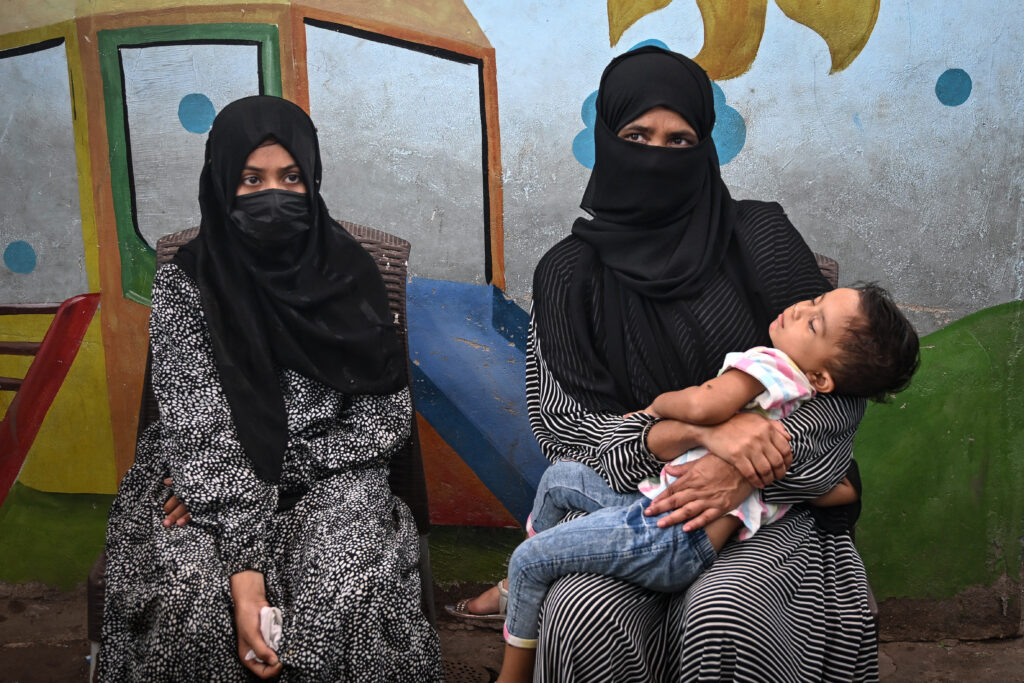
In a former classroom, now a makeshift relief camp, pregnant women take refuge from the floods that have ravaged eastern Pakistan, their bodies aching, eyes heavy with exhaustion and silent despair.Waiting for the water that swallowed their homes to recede, women in Chung, a settlement on Lahore’s outskirts, have limited access to sanitary pads and essential medicines, including pregnancy-related care.Shumaila Riaz, 19-years-old and seven months pregnant with her first child, spent the past four days in the relief camp, enduring pregnancy cramps.”I wanted to think about the child I am going to have, but now, I am not even certain about my own future,” she told AFP.Clad in dirty clothes they have worn for days and with unbrushed hair, women huddle in the overcrowded school hosting more than 2,000 people, surrounded by mud and stagnant rainwater.”My body aches a lot and I can’t get the medicines I want here,” said 19-year-old Fatima, mother to a one-year-old daughter and four months pregnant.”I used to eat as I please, sleep as I please, walk as I please — that is all gone now. I can’t do that here,” added Fatima, who asked AFP not to use her real name.Monsoon rains over the past week swelled three major rivers that cut through Punjab province, Pakistan’s agricultural heartland and home to nearly half of its 255 million people.The number of affected people rose on Sunday to more than two million, according to provincial senior minister Marriyum Aurangzeb.Around 750,000 people have been evacuated, of whom 115,000 were rescued by boat — making it the largest rescue operation in Punjab’s history, according to the provincial government.The flooded rivers have affected mostly rural areas near their banks but heavy rain also flooded urban areas, including several parts of Lahore — the country’s second-largest city.While South Asia’s seasonal monsoon brings rainfall that farmers depend on, climate change is making the phenomenon more erratic, and deadly, across the region.Landslides and floods triggered by heavier-than-usual monsoon rains have killed more than 850 people nationwide since June.The latest downpour has killed at least 32 people, the provincial minister said on Sunday.- Infections and trauma -Sleeping in tents held together with thin wooden sticks, women displaced by the floods struggle to get sanitary pads and clean clothes when theirs are stained by blood from their periods.Menstruation remains a taboo topic in Pakistan, with many women discouraged from speaking about it.”We are struggling to get pads for when we get our period. And even if we do, there are no proper bathrooms to use,” said Aleema Bibi, 35, as her baby slept on a sheet soiled with mud.”We go to the homes nearby to use the bathroom,” she added. Jameela, who uses only one name, said she seeks privacy in a makeshift bathroom next to a cowshed.”We wait for men in these homes to leave, so that we can go use the bathrooms and change our pads,” she said.Outside the medical truck beside the relief camp, a concerned woman asked where to take her eight-month-pregnant daughter-in-law who had gone into labour, AFP journalists saw.The pregnant women are also vulnerable to infectious diseases, according to doctors in the medical camp set up by a local NGO. “I receive around 200 to 300 patients every day with different infections and water-borne diseases,” said Fahad Abbas, 27, a doctor at the medical camp. “There are a lot of patients here who are going through psychological trauma, especially women and children, after losing their homes.”Even without the crisis of a flood, 675 babies under one month old die every day in Pakistan, along with 27 women in perinatal stages from preventable complications, according to the World Health Organization.Another woman, who wanted to stay anonymous, said the medicine she once used to manage her period cramps was now too difficult to buy.”We escaped death, but this misery is no less than death either,” Jameela said.