AFP Asia

Tri-series win confidence builder for Pakistan, says coach Hesson

Pakistan coach Mike Hesson believes his team’s victory in a tri-series tournament with Afghanistan and the United Arab Emirates will serve as a “confidence builder” for the Asia Cup starting in Abu Dhabi on Tuesday.Pakistan thumped Afghanistan by 75 runs on a tricky pitch in Sunday’s final in Sharjah, with Mohammad Nawaz claiming a hat-trick in a career-best five-wicket haul.”We have beaten Afghanistan in conditions that suited their spin attack, which was a real confidence builder,” said Hesson, who was only appointed white-ball coach in May, on Monday.”Heading into the Asia Cup this was also very important for us.”Since Hesson took over, Pakistan have white-washed Bangladesh 3-0 at home and then lost to the same opponents 2-1 in an away series.Pakistan also won 2-1 against the West Indies in Florida before losing just once, to the Afghans, in five tri-series matches.”An eight-team Asia Cup is great for Asian cricket and it’s a true test, it expands the game in the region, and it allows us to see players we don’t face often.”The 17th edition of the Asia Cup will kick off with a Group B match between Afghanistan and Hong Kong in Abu Dhabi on Tuesday.Six-time Asia Cup champions Sri Lanka and Bangladesh are the other teams in the group.Eight-time champions and title holders India, Pakistan, Oman and the UAE are in Group A.India open their campaign with a match against the UAE in Dubai on Wednesday before their high-profile clash with Pakistan at the same venue on Sunday.”Our pool is challenging with Oman, UAE and India, so we need to adapt quickly. The key is not to get distracted by external pressures,” said Hesson, who coached New Zealand to the ODI World Cup final in 2015.The top two teams from each group will qualify for the Super Four stage, with the final to be held on September 28 in Dubai.

At least 16 killed in Nepal protest over social media ban

At least 16 protesters were killed Monday when Nepal police dispersed young demonstrators in Kathmandu demanding the government lift its social media ban and tackle corruption.Several social media sites — including Facebook, YouTube and X — have been inaccessible in Nepal since Friday after the government blocked 26 unregistered platforms, leaving users angry and confused.Thousands took to the streets and were met with rubber bullets, tear gas, water cannon and baton-charges from police when the demonstrators pushed through barbed wire into a restricted area near parliament.”I have never seen such a disturbing situation at the hospital,” said Ranjana Nepal, information officer at the facility which received many of those wounded. “Tear gas entered the hospital area as well, making it difficult for doctors to work,” she told AFP from the Civil Hospital.Nepali media reported police used live fire against the protesters, a claim AFP could not immediately verify. “Sixteen people have sadly died,” Shekhar Khanal, spokesman for the Kathmandu valley police, told AFP. “About a hundred are under treatment, including police.”The district administration imposed a curfew in several key areas of the city, including the parliament, the president’s residence and Singha Durbar, which houses the prime minister’s office.Some of the demonstrators had climbed over the wall into the parliament premises and its gate was vandalised.Similar protests were organised in other districts across the country. Popular platforms such as Instagram have millions of users in Nepal who rely on them for entertainment, news and business.”We were triggered by the social media ban but that is not the only reason we are gathered here,” said student Yujan Rajbhandari, 24.”We are protesting against corruption that has been institutionalised in Nepal.”- ‘Want to see change’ -Another student, Ikshama Tumrok, 20, said she was protesting against the “authoritarian attitude” of the government.”We want to see change. Others have endured this, but it has to end with our generation,” she told AFP.Demonstrators had started their protest in Kathmandu with the national anthem and waving the country’s flag, before chanting against the social media stoppage and corruption.There have been several corruption cases reported in the last few years involving ministers, former ministers and high-profile officials. Since the ban, videos contrasting the struggles of ordinary Nepalis with the children of politicians flaunting luxury goods and expensive vacations have gone viral on TikTok, which is still operating.”There have been movements abroad against corruption and they (the government) are afraid that might happen here as well,” said protester Bhumika Bharati.The cabinet decided last month to give the affected social media firms seven days to register in Nepal, establish a point of contact and designate a resident grievance handling officer and compliance officer.The decision came after a Supreme Court order in September last year.In a statement on Sunday, the government said it respected freedom of thought and expression and was committed to “creating an environment for their protection and unfettered use”.Nepal has restricted access to popular online platforms in the past.The government blocked access to the Telegram messaging app in July, citing a rise in online fraud and money laundering.It lifted a nine-month ban on TikTok in August last year after the platform agreed to comply with Nepali regulations.

At least 10 killed in Nepal protest over social media ban

At least 10 protesters were killed Monday after Nepal police fired rubber bullets, tear gas and water cannon to disperse demonstrators in Kathmandu demanding the government lift its ban on social media and tackle corruption.Several social media sites — including Facebook, YouTube and X — have been inaccessible in Nepal since Friday after the government blocked 26 unregistered platforms, leaving users angry and confused.”Until now 10 protesters have died and 87 are injured,” Shekhar Khanal, spokesman for the Kathmandu valley police, told AFP.”The crowds are still in the streets”.Many of the injured were being treated at the nearby Civil Hospital, according to its information officer Ranjana Nepal.”I have never seen such a disturbing situation at the hospital,” she told AFP. “Tear gas entered the hospital area as well, making it difficult for doctors to work”. Waving national flags, young demonstrators in the capital Kathmandu started the protest with the national anthem before unleashing chants against the social media prohibitions and corruption.The crowd swelled as it crossed into a restricted area close to the parliament, and pushed through barbed wire.Violence erupted in the streets as police baton-charged protesters, some of whom climbed over the wall into the parliament premises.The district administration imposed a curfew in several key areas of the city, including the parliament, the president’s residence and Singha Durbar, which houses the prime minister’s office.Similar protests were organised in other districts across the country. Popular platforms such as Instagram have millions of users in Nepal who rely on them for entertainment, news and business.”We were triggered by the social media ban but that is not the only reason we are gathered here,” said student Yujan Rajbhandari, 24.- ‘We want to see change’ -“We are protesting against corruption that has been institutionalised in Nepal.”Another student, Ikshama Tumrok, 20, said she was protesting against the “authoritarian attitude” of the government.”We want to see change. Others have endured this, but it has to end with our generation,” she told AFP.Since the ban, videos contrasting the struggles of ordinary Nepalis with the children of politicians flaunting luxury goods and expensive vacations have gone viral on TikTok, which is still operating.”There have been movements abroad against corruption and they (the government) are afraid that might happen here as well,” said protester Bhumika Bharati.The cabinet decided last month to give the affected companies seven days to register in Nepal, establish a point of contact and designate a resident grievance handling officer and compliance officer.The decision came after a Supreme Court order in September last year.In a statement on Sunday, the government said it respected freedom of thought and expression and was committed to “creating an environment for their protection and unfettered use”.Nepal has restricted access to popular online platforms in the past.The government blocked access to the Telegram messaging app in July, citing a rise in online fraud and money laundering.It lifted a nine-month ban on TikTok in August last year after the platform agreed to comply with Nepali regulations.

India hopes ‘insights’ from Pakistan clash will help woo arms buyers

The skies lit up during the four-day clash between India and Pakistan in May as drones were blasted from the air by missiles that showcased what New Delhi believes is a “new vision” of warfare.India now hopes that the demonstration of its combat capabilities, which included a domestically developed “invisible shield” missile defence system, will fuel international demand.”The operation was a sign of the new art of warfare, a glimpse of a new vision, technological advancements and self-reliance,” Defence Minister Rajnath Singh said in August.Long one of the world’s top arms importers, India is now determined to recast itself as a major producer and exporter of weapons.Defence exports reached a record $2.8 billion in 2024-25, still small compared to established players, but up 12 percent from the year before and 34 times higher than a decade ago.Domestic defence production also surged to a record $18 billion, nearly doubling in five years.India now exports defence equipment to more than 100 countries, with the United States, France and Armenia among the top buyers, according to the defence ministry.Exports range from missiles, boats and artillery to radar systems, rocket launchers, software and electronic components.- ‘Golden insights’ -The May conflict was the worst between the nuclear-armed neighbours since 1999, with more than 70 people killed in missile, drone and artillery exchanges.Both sides claimed victory, each boasting of downing the other’s fighter jets.A senior Indian army officer said the clashes provided a “very good understanding” of how new weapons performed.”These were golden insights for us — and our rapidly expanding industry partners,” he told AFP.Among the weapons tested was Akashteer, or “Sky Arrow”, a vehicle-mounted air defence platform powered by artificial intelligence that intercepted volleys of missiles and armed drones.India also fired several long-range BrahMos cruise missiles at Pakistani airbases.Co-developed with Russia and already exported to the Philippines, the BrahMos drew fresh attention after the conflict.”Because of the stellar performance of these BrahMos missiles, 14 or 15 countries have reached out to supply these missiles,” Singh said at a military factory opening in July.Ashok Malik, of The Asia Group business consultancy, said the conflict acted “like a market demonstrator”.”It is one thing for me to buy something which you’ve made,” Malik said. “It is another to buy something which you’ve made and successfully used in the field.”- Air defence -India’s defence budget has more than doubled in the past decade, reaching $78 billion.At the same time, India has sought to ease its reliance on Russian hardware, signing import and production deals with the United States, France and Israel.The industry push comes as New Delhi balances relations with Washington and Moscow, while also countering China — Pakistan’s chief arms supplier.That tightrope act has grown harder since Washington imposed 50 percent tariffs on many Indian products to punish New Delhi for buying Russian oil.Hence the “Make in India” drive as the country seeks to develop fighter jet engines and pledges to build an Israeli-style Iron Dome system it calls “Sudarshan Chakra” — the spinning discus weapon of the Hindu god Vishnu.India has also highlighted its fast-growing drone sector, which it says could be worth $11 billion by 2030, including several models developed while working closely with Israeli firms.However, challenges remain.Murlidhar Mohol, junior minister for civil aviation, told parliament in April that 39 percent of critical smaller drone components had been “sourced from manufacturers based in China”.

Nawaz hat-trick helps Pakistan down Afghanistan in tri-series final

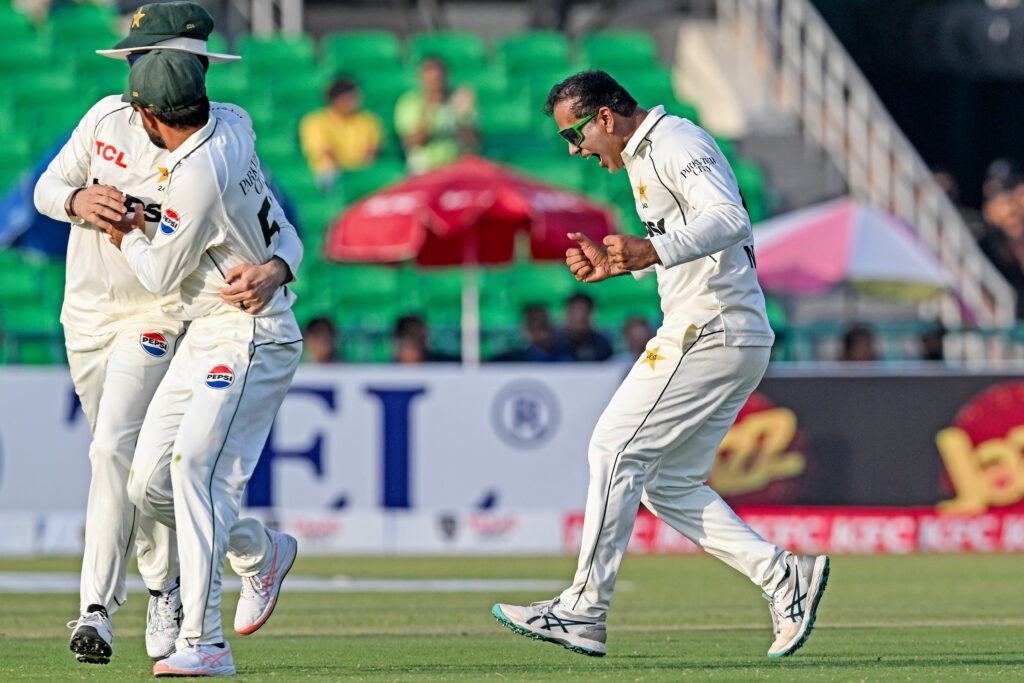
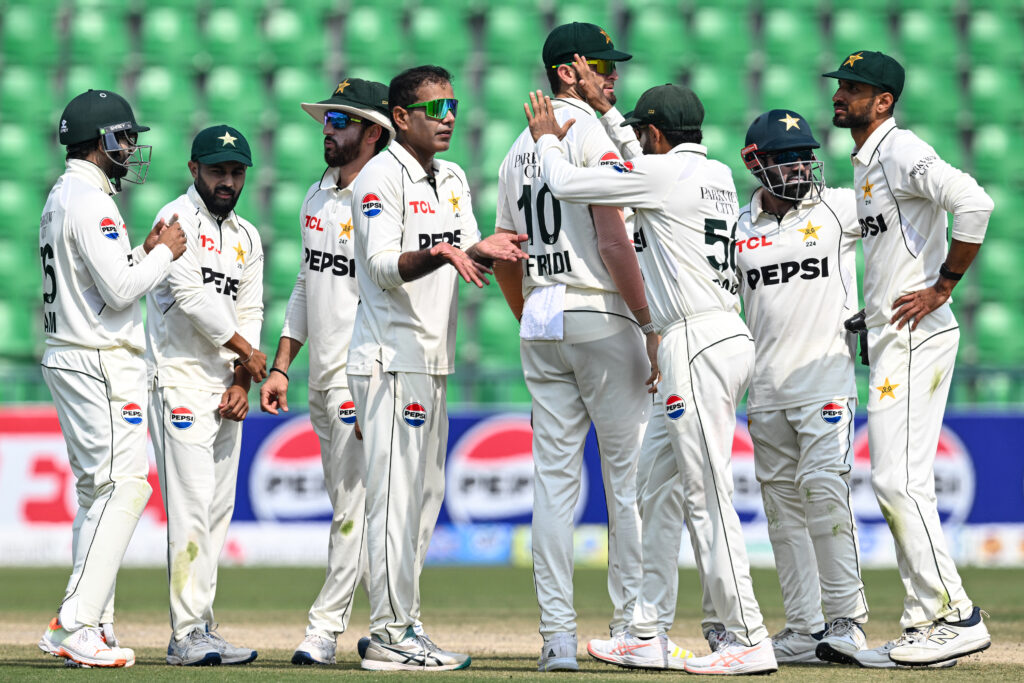
Pakistan laid down a marker ahead of the Asia Cup as Mohammad Nawaz took a hat-trick in a 75-run win over Afghanistan in their tri-series final in Sharjah on Sunday.Nawaz picked up 5-19 in total — his best figures in T20 internationals — as Pakistan skittled Afghanistan out for 66 in 15.5 overs while defending a modest 142-run target on a tricky pitch.Afghan captain Rashid Khan took three wickets to help restrict Pakistan to 141-8, with Fakhar Zaman top-scoring with 27.Nawaz dismissed Darwish Rasooli and Azmatullah Omarzai off successive deliveries for ducks and then removed Ibrahim Zadran for nine off the first ball of his next over to complete a hat-trick.Nawaz became the third Pakistani bowler after Faheem Ashraf and Mohammad Hasnain to achieve the feat in T20Is.Rashid (17) and Sediqullah Atal (13) were the only batters to reach double figures as Afghanistan recorded their second lowest total in T20Is, behind their 56 all out against South Africa in last year’s World Cup semi-finals.”We wanted to prepare in a way that helps us for the Asia Cup and we’ve done that,” said Pakistan skipper Salman Agha.”We’ve been doing really well since the Bangladesh home series. Finally, we’re in very good shape and fully prepared for the Asia Cup.”Earlier, Pakistan, who won the toss and batted, also struggled against spin. Nawaz made a 21-ball 25 with two sixes while Agha laboured to a 27-ball 24.Zaman added 49 for the second wicket with Saim Ayub (17) after opener Sahibzada Farhan fell off the third ball of the match for a duck.Rashid dismissed Zaman in his first over and then accounted for Hasan Nawaz (15) and Agha, but only after his opposite number struck him for two sixes.Afghanistan next open their Asia Cup campaign on Tuesday against Hong Kong in a Group B clash in Abu Dhabi. Sri Lanka and Bangladesh are the other two teams in their group.Pakistan will face arch-rivals India, Oman and the United Arab Emirates in Group A.

First India-Pakistan match since conflict fires up Asia Cup

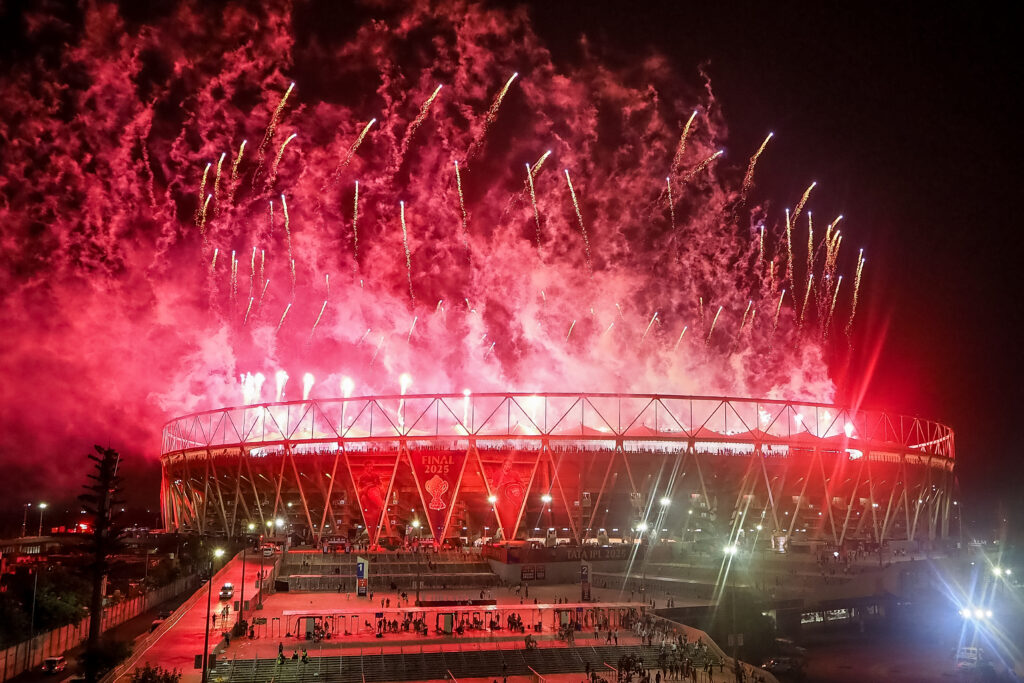
A blockbuster between India and Pakistan headlines the Asia Cup starting on Tuesday as they face off for the first time in cricket since the military conflict in May.Along with regional bragging rights, the Twenty20 competition will serve as a build-up towards the T20 World Cup in February-March in India and Sri Lanka.The eight-team event in the United Arab Emirates begins when Afghanistan play minnows Hong Kong in Abu Dhabi.Arch-rivals India and Pakistan clash in Dubai on September 14, with Pakistan bowling great Wasim Akram saying players and fans from both teams should “remain disciplined and not cross the line”.The neighbours have not met on either side’s soil in a bilateral series since 2012 and only play each other in international tournaments on neutral ground as part of a compromise deal.The two Asian cricketing giants have been clubbed together in the same group and could potentially meet three times in the tournament, which concludes on September 28.There have been tensions in the build-up after the two countries fought an intense four-day conflict, their worst since 1999.The hostilities in May left more than 70 people dead in missile, drone and artillery exchanges, before a ceasefire.Both sides claimed victory and in a sign of lingering bitterness, an India team of retired players withdrew from their semi-final with Pakistan in the World Championship of Legends in July-August in England.Led by former international Yuvraj Singh, the Indians also refused to play Pakistan in the group stage of the tournament, as clamour grew among fans to boycott the games.Former India spinner Harbhajan Singh was part of the veterans team and has strongly opposed the Asia Cup game.”Blood and sweat cannot co-exist,” Harbhajan told The Times of India.”It cannot be the case that there’s fighting on the border, tensions between the two nations, and we go to play cricket. “Until these big issues are resolved, cricket is a very small matter.”- India strong favourites -India and Pakistan last met in cricket, again in Dubai, in February in the 50-over Champions Trophy, with India winning by six wickets and going on to lift the title.They are also defending Asia Cup champions and led by Suryakumar Yadav are clear favourites against their old foes with a 10-3 win record against Pakistan in T20 internationals.Pakistan will be without star players Babar Azam and Mohammad Rizwan, both dropped from the shortest format because of poor form.India won the previous Asia Cup, which was played in a 50-over format in 2023, when they beat hosts Sri Lanka in the final in Colombo. India are strong favourites to retain their crown.The five full members of the Asian Cricket Council — Afghanistan, Pakistan, India, Bangladesh and Sri Lanka — earned automatic qualification to the tournament. They are joined by Hong Kong, Oman and the UAE, teams that secured their spots by finishing in the top three of the ACC men’s Premier Cup.Group A is made up of India, Pakistan, hosts UAE and Oman.Group B comprises Afghanistan, Bangladesh, Hong Kong and Sri Lanka.The group stage will be followed by a Super Four round, followed by the final in Dubai.

Powerful quake aftershocks cause more injuries in Afghanistan

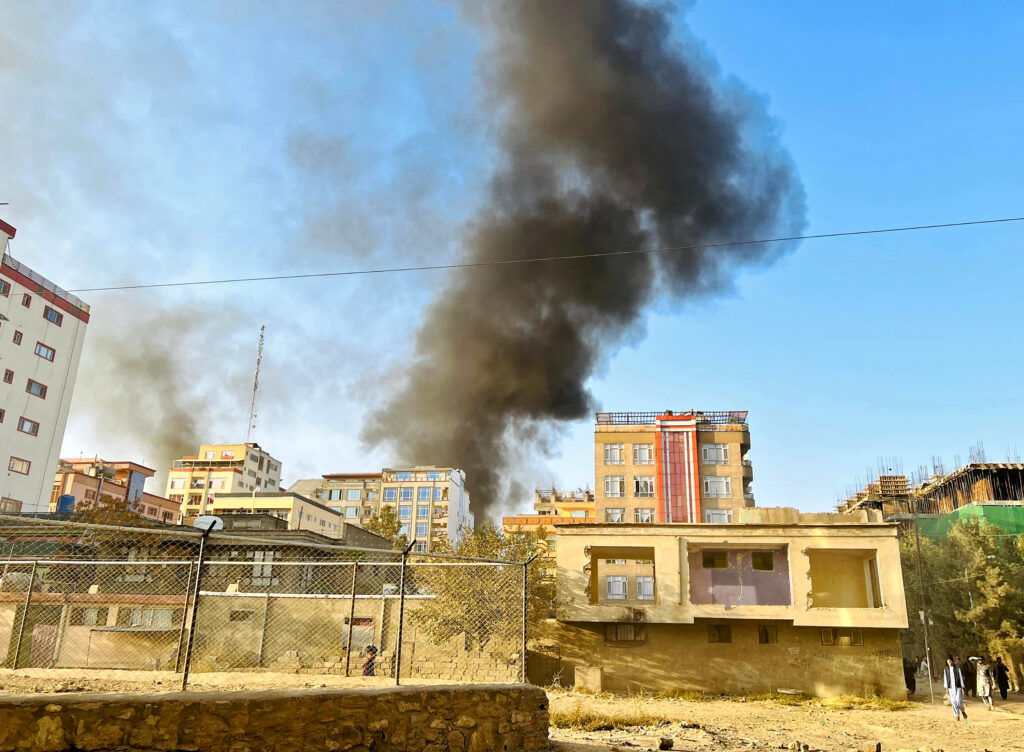
A series of strong aftershocks from a deadly earthquake that hit eastern Afghanistan at the weekend injured at least another 10 people and caused further damage, Taliban authorities said on Friday.Five shallow aftershocks, the strongest measuring at magnitude 5.6, were recorded by the US Geological Survey (USGS) on Thursday night and Friday morning, with some rattling Kabul and neighbouring Pakistan’s capital, Islamabad.National disaster authority spokesman Mohammad Hammad told AFP that 10 people were injured across eight provinces jolted by the aftershocks, including the hardest hit Kunar, Nangarhar and Laghman, adding to the more than 3,700 already injured in the initial quake.Another 5.2-magnitude quake struck in the same area on Friday evening, according to the USGS.More than 2,200 people were killed after the magnitude-6.0 earthquake hit eastern Afghanistan just before midnight on Sunday, making it the deadliest quake to hit the country in decades. In Nuristan province, north of Kunar, resident Enamullah Safi said he and others ran out of their homes when the aftershocks hit overnight. “Everyone was afraid. We are still afraid and have not returned to our homes,” the 25-year-old cook told AFP, saying he huddled under a blanket with several other people to keep warm in the cold, mountain night. Some houses were damaged or destroyed, he said, adding that they have received little assistance, as aid is concentrated in the worst-hit zones.Access has been stymied by already poor roads blocked by landslides and rockfall that continued as the area was convulsed by aftershocks. The disaster comes as Afghanistan is already facing multiple crises after decades of conflict, contending with endemic poverty, severe drought and the influx of millions of Afghans forced back to the country by neighbours Pakistan and Iran since the Taliban’s 2021 takeover. strs-sw/ecl/fox/des/st

New recipes help Pakistani mothers ward off malnutrition

Clutching their hungry babies, a group of mothers mix a semolina dish under the guidance of a teacher, an attempt to curb malnutrition which affects nearly one in two children in Pakistan’s south.Despite Sindh province being home to the mega port city of Karachi, the financial centre of the country that sprawls along the Arabian coastline, children in rural areas just a few hours away face stark levels of wasting and stunting. In the arid village of Sujawal, lethargic children with prominent bones wilt in the searing heat as social workers educate mothers on nutrient-rich ingredients and dispel myths around food. “Before, we only gave our children potatoes because they were always available at home,” said Shahnaz, 25, who has radically changed the diet of her six children, weak and frequently sick, after a year of classes.Now, convinced that children should eat a varied diet, she has introduced affordable ingredients such as lentils and semolina into her cooking, lifting her daughter out of malnutrition. In impoverished rural Sindh province, 48 percent of children under five suffer from malnutrition and 20 percent from its most severe form, wasting, according to the latest national survey on the issue conducted in 2018. In this class, Azma, a social worker, shows mothers how to cook with semolina — easily available in the market. “Semolina is cheap — for 50 rupees it can last a week if you’re feeding one to two spoonfuls daily to a six-month-old child,” she explained to AFP. In Sindh, a province of 55 million people where contraception remains taboo and large families are the norm, 3,500 mothers have benefited from cooking classes developed by UNICEF. Like many mothers in the area, Kulsoom, 23 and pregnant with her sixth child, all born prematurely and underweight, once only fed her children pieces of fried flatbread.”One of my children died, and my youngest is extremely weak, so I was advised to take these classes,” said Kulsoom, who goes by only one name, like most women in her district. – No spices -Parents are recommended to feed babies solid foods from about six months old, but in rural Sindh this often means adult leftovers, too spicy for young stomachs.”The main problem is the lack of dietary diversity,” says Mazhar Iqbal, a nutritionist for UNICEF.In Pakistan, 38 percent of children eat only two or fewer of the eight food categories recommended by UNICEF.Meat is saved for special occasions, yet inexpensive protein alternatives exist such as chicken offal, boiled bones, lentils and beans. As for fruit and vegetables, they are usually fried, losing their nutrients. Bakhtawar Kareem joined the programme after her child died of anaemia. “I have no money. Sometimes we eat, sometimes we don’t,” she lamented, scanning the swollen belly of her one-year-old daughter, who has only sparse clumps of hair. Like 72 percent of children in the village, her daughter has stunting, well above the average rate in Pakistan of 42 percent — one of the highest in the world. Stunting is most closely associated with brain development and physical growth, and can have long-term physical and mental impacts. Vulnerable to a lack of clean water and sanitation which contributes to malnutrition, children often also suffer from dengue fever or malaria, from vomiting, diarrhoea, or difficulty urinating, and have abnormally swollen bellies. – Women eat leftovers -But the vicious cycle of malnutrition begins with the mothers. “With early marriages and repeated pregnancies, more than 45 percent of women in Sindh are anaemic,” said the nutritionist. “This increases the risk of having low birth weight babies, who are more likely to suffer from malnutrition.” In Sujawal, where only a quarter of the population can read and write, myths about food also deprive women of vital nutrients. Farrah Naz, the head of the Global Alliance for Improved Nutrition in Pakistan, regularly has to repeat that eggs and dried fruits do not cause women to bleed more during their periods. Cultural norms around women serving meals to men first and eating the leftovers — despite the physical work they carry out in the fields — also contributes to poor health. “And when food runs out, it’s their rations that are cut first.” 

Bangladesh eyes end to treasure trove bank vault mystery

For more than a century, the fate of the dazzling Darya-e-Noor diamond has been sealed inside a bank vault — a mystery that haunts Khawaja Naim Murad, descendant of the former princes, or Nawabs, of Dhaka.Locked away in 1908, were the family’s heirlooms lost during the violence at the end of British rule in 1947?Did they survive Bangladesh’s war of independence in 1971 and the string of coups that followed, or are they still safe, dusty but untouched?Many suspect the jewels are long gone, and officials at the state-run bank hesitate to simply open the vault, fearing they’d carry the cost if it is empty.But the cash-strapped South Asian government have now ordered a committee unseal the vault — and Murad clings to hope.”This is not a fairytale,” said Murad, 55, recounting a story passed down from his father about the giant diamond dubbed the “River of Light”, the centrepiece rock of glittering armband.”The diamond was rectangular in shape and surrounded by more than half a dozen smaller diamonds,” Murad told AFP.It was part of a trove of 108 treasures. According to original court documents, they include a gold-and-silver sword encrusted with diamonds, a bejewelled fez with cascading pearls, and a fabulous star brooch once owned by a French empress.- History and myth -The nawab’s riverside pink palace of Ahsan Manzil is now a government museum.Murad, a former popular film star, lives in a sprawling villa in a wealthy Dhaka suburb.He flourished a sheaf of documents, including a family book with detailed paintings of the treasures.”It is one of the most famous diamonds in the world, and its history is closely associated with that of the Koh-i-Noor,” the book reports, referring to the shining centrepiece of Britain’s crown jewels — a gem also claimed by Afghanistan, India, Iran and Pakistan.”It is absolutely perfect in lustre.”Another diamond of the same name, the pink-hued Daria-i-Noor, is in Tehran as part of Iran’s former royal jewels.Murad maintains that the family’s diamond, too, was once owned by Persia’s shahs, then worn by Sikh warrior-leader Ranjit Singh in 19th-century Punjab. It was later seized by the British and eventually acquired by his ancestors.But fortunes shifted. In 1908, the then-nawab — Murad’s great-grandfather — faced financial trouble.Sir Salimullah Bahadur borrowed from British colonial powers — mortgaging his vast Dhaka estates and placing the treasures in a vault as collateral.That was their last confirmed sighting. Since then, myth and history merge.Murad believes his uncle saw the jewels in the bank in the 1980s, but bank officials say they do not know if the vault has ever been opened.Chairman of the Bangladesh’s Land Reforms Board, AJM Salahuddin Nagri, says the government body inherited custody of the trove, held in a state-owned bank.”But I haven’t seen any of the jewels yet,” he told AFP.- ‘Vault is sealed’ -The 1908 court papers did not specify the diamond’s carat weight but valued it at 500,000 rupees — part of a hoard worth 1.8 million rupees.By today’s conversion, that equals roughly $13 million, though experts say the market value of such rare and large jewels has since sometimes soared many times higher.Today’s guardian, Shawkat Ali Khan, managing director of Sonali Bank, said the safe remains shut.”The vault is sealed,” Khan said. “Many years back, an inspection team came to check on the jewels, but they never really opened it — they just opened the gate that held the vault.”He is keen for the vault to be opened at last, though no date yet has been given.”I am excited,” he said with a brief smile.The family hope to discover if any of the century-old debt remains, and whether they could reclaim the jewels.Murad dreams of diamonds, but says his real wish is to simply see the treasure for himself.”We believe that if anyone dies in debt, his soul never finds peace,” he said.

‘Pink and green’ protests call for a reset in Indonesia

“RESET SYSTEM” reads graffiti above an intersection in the Javanese city of Yogyakarta, painted hastily in vibrant green and pink after deadly protests swept Indonesia last week.Pink and green have quickly come to symbolise a solidarity movement after violent protests, sparked by discontent over economic inequality and lavish perks for lawmakers, rocked Southeast Asia’s biggest economy.In the capital Jakarta, office worker Dila paused at her desk to apply a bright green and pink filter to her Instagram and WhatsApp profile pictures.”What we need now is solidarity among each other… because there’s still a long way to go,” said 28-year-old Dila, who declined to give her full name.Pink represents the colour of the hijab worn by a woman who stood outside the House of Representatives to protest, waving the national flag in defiance of police guarding the building.Green has come to symbolise 21-year-old delivery driver Affan Kurniawan, who was run over by an armoured paramilitary police vehicle and whose death stoked anger among workers who face big pay deductions and longer working hours.Affan was on a food delivery order and was wearing a bright green jacket, common among ride-hailing drivers across Indonesia, when he was killed last Thursday.”There must be reform in our police force, impunity cannot be allowed to continue,” Dila said.”This  is not only about the current demonstration, but the accumulation of cases from the past.”The protests marked the worst unrest since President Prabowo Subianto, an ex-general and once a son-in-law of the military dictator Suharto, took power less than a year ago.- ‘Brave Pink, Hero Green’ -The “Brave Pink, Hero Green” movement that sprang from the protests has forced Prabowo and parliament to make U-turns on the perks that angered Indonesians across the sprawling archipelago.Those perks included overseas travel and housing allowances for MPs that were nearly 10 times the minimum wage in Jakarta.Indonesia recorded a surge in growth in the second quarter of the year on the back of manufacturing and export demand.Yet that is not being felt in the wallets of everyday Indonesians, who see a corrupt political class enriching itself while economic disparity widens.”It’s the whole corrupt system, there is too big a distance between people in the government, the parliament, and us as the people they have to serve,” office worker Dila told AFP.She, like many others, has adopted the “brave pink hero green movement” as a way to spread the word online among those who may not have been aware or who did not join the protests.Some design and draw their own images, while others have created a free website image generator so that people can modify their own pictures.”Perhaps this is one of the ways to remind people that this issue deserves our attention,” Dila said.- ‘We are not the problem’ -A state-affiliated rights group said on Wednesday that at least 10 people were killed and hundreds injured during the protests, while another NGO has said at least 20 people were missing.The protests have eased and Prabowo, who had called for calm, left late on Tuesday to attend a massive military parade in Beijing after earlier delaying the trip.Prabowo had stayed behind to deal with the demonstrations after saying that some of the protesters’ actions were “leaning towards treason and terrorism”.Mutiara Ika Pratiwi, from the women’s rights group Perempuan Mahardhika, said she was “devastated” that Prabowo had described the protests in such a way.”The people are not the problem. We have the right to protest because our voice has never been heard,” she told AFP.”This is beyond resentment, this is compassion that evolves and becomes the symbol of resistance,” Pratiwi said of the pink-and-green movement.- ‘Crucial pillar’ -Muhammad Dwiki Mahendra, 27, joined the movement from Germany, where he is undertaking a Master’s degree in peace and conflict studies.”I believe this is a crucial pillar in countering the narrative often used by the government, which views community movements as being manipulated by foreign forces,” he told AFP.He said the government’s public communications had been poor and had “not answered or addressed the existing issues at all”.Only then would change be possible, say adherents of the pink-and-green movement.”I can feel that we are not alone, when I see others use the same filter I feel joyful,” said Sphatika Winursita, a 25-year-old from Banten province west of Jakarta who changed her Instagram profile on Monday.”I’m proud that we have each other to fight for our dream.”