AFP Asia

India plans mega-dam to counter China water fears

On a football field ringed by misty mountains, the air rang with fiery speeches as tribesmen protested a planned mega-dam — India’s latest move in its contest with China over Himalayan water.India says the proposed new structure could counteract rival China’s building of a likely record-breaking dam upstream in Tibet by stockpiling water and guarding against releases of weaponised torrents.But for those at one of the possible sites for what would be India’s largest dam, the project feels like a death sentence. “We will fight till the end of time,” said Tapir Jamoh, a resident of the thatch-hut village of Riew, raising a bow loaded with a poison-tipped arrow in a gesture of defiance against authorities. “We will not let a dam be built.”Jamoh’s homelands of the Adi people are in the far-flung northeastern corner of India, divided from Tibet and Myanmar by soaring snowy peaks.Proposed blueprints show India considering the site in Arunachal Pradesh for a massive storage reservoir, equal to four million Olympic-size swimming pools, behind a 280-metre (918-foot) high dam.The project comes as China presses ahead with the $167 billion Yaxia project upstream of Riew on the river known in India as the Siang, and in Tibet as the Yarlung Tsangpo.China’s plan includes five hydropower stations, that could produce three times more electricity than its vast Three Gorges dam — the world’s largest power station — though other details remain scant.Beijing — which lays claim to Arunachal Pradesh, fiercely rejected by India — says it will have no “negative impact” downstream.”China has never had, and will never have, any intention to use cross-border hydropower projects on rivers to harm the interests of downstream countries or coerce them,” Beijing’s foreign ministry told AFP.Chinese media reports suggest the project may be more complex than a single giant dam, and could involve diverting water through tunnels.The area around the village of Riew is one of the shortlisted sites for India’s response mega-dam, a project that people like Jamoh feel is the more immediate threat to them.”If the river is dammed, we also cease to exist,” the 69-year-old told AFP, saying that the arrow’s tip was dipped in poisonous herbs foraged from the mountains.”Because it is from the Siang that we draw our identity and culture,” he added.-‘Water bomb’-Despite a thaw between New Delhi and Beijing, the two most populous nations have multiple areas of disputed border manned by tens of thousands of troops, and India has made no secret of its concerns.The river is a tributary of the mighty Brahmaputra, and Indian officials fear China could use its dam as a control tap — to create deadly droughts or release a “water bomb” downstream.China rejects that, saying that the “hype surrounding the Yaxia Hydropower Project as a ‘water bomb’ is groundless and malicious”.But Arunachal Pradesh state Chief Minister Pema Khandu said protective action against China’s dam is a “national security necessity”, and sees India’s dam as a safety valve to control the water.”China’s aggressive water resource development policy leaves little room for downstream riparian nations to ignore it,” said Maharaj K. Pandit, a Himalayan ecology specialist at the National University of Singapore.India’s dam could produce 11,200-11,600 megawatts of hydropower, making it the country’s most powerful by a huge margin, and helping scale back emissions from its coal-dependent electricity grid.But generating power is not the priority, acknowledged a senior engineer from National Hydropower Corporation (NHPC) — the federal agency contracted to develop the dam.”It is meant for water security and flood mitigation — if China seeks to weaponise their dam and use it like a water bomb,” the engineer said on condition of anonymity as he was not authorised to talk to reporters.”During the lean season, the reservoir will be filled to capacity, so that it can add in if water is diverted upstream,” the officer said. “That is the calculation.”In the rains, water will only reach up two-thirds of the dam wall — so there is capacity to absorb water if released suddenly by China.India’s former ambassador to Beijing, Ashok K. Kantha, called China’s dam project “reckless” and said that India’s dam, as well as generating power, would be a “defensive measure” against potential attempts “to regulate the flow of water”.- ‘Identity and culture’ -India’s dam would create a giant storage reservoir of 9.2 billion cubic metres, but the exact area flooded depends on the final location of the dam.The Adi people, like Jamoh, consider the river sacred and depend on its life-giving waters for their lush lands dotted with orange and jackfruit trees.They fear the dam will drown their world.”We are children of the Siang,” said Jamoh, who was the former headman of Riew — before being forced to quit by local government authorities for protesting against the dam.In May, furious Adi villagers blocked NHPC from surveying a proposed site. Today, government paramilitary forces watch over the charred remains of the drilling machines that protesters torched. But the protests have not stopped.When AFP visited, thousands gathered to hold a traditional court-style meeting of Adi clans to condemn the proposed dam. “We are asking for a project plan to have an idea of the magnitude of the dam,” said Bhanu Tatak of the Siang Indigenous Farmer’s Forum (SIFF), a local protest group.”Instead they have militarised us, treating us like extremists,” she said.The dam, the local residents are convinced, would drown dozens of villages.”If they build a huge dam, the Adi community will vanish from the map of the world,” said Likeng Libang, from Yingkiong, a town that even officials say is likely to be entirely underwater.”The Adi will be totally displaced,” he added. “We will be nowhere.”NHPC did not respond to AFP’s requests for comment. – ‘Dam-for-dam’-India’s “dam-for-dam” approach may be counterproductive, said Anamika Barua, a transborder water governance expert at the Indian Institute of Technology Guwahati.”Diplomatic engagement, transparent water-sharing agreements, and investment in cooperative river basin management would yield more durable and equitable outcomes than reactive infrastructure building,” she said.Building mega-dams in earthquake-prone Arunachal Pradesh is also risky, said Barua.But India’s construction drive of massive dams suggests it will not back down on this project. Two other major dams overcame local resistance.”If the dam must be built, I hope I die before that day comes,” said bow-and-arrow-wielding Jamoh.

US sanctions on key Indian project in Iran take effect

US sanctions went into effect Monday on a major Indian port project in Iran, as President Donald Trump again showed his willingness to punish longstanding partner New Delhi in aid of his wider regional goals — in this case to pressure Tehran.The sanctions on the Chabahar port come a day after wide UN sanctions also came back into force on Iran, as Trump, European allies and Israel have all targeted the country over its nuclear program.The first Trump administration issued a rare exemption in 2018 to allow Indian companies to keep developing Chabahar when the United States imposed sweeping unilateral sanctions on Iran, whose main port at Bandar Abbas is overcapacity.But much has changed since 2018. Kabul was then still controlled by a government backed by Washington, the European Union and India, who viewed Pakistan’s role in Afghanistan with suspicion, accusing it of having ties to the Taliban.Chabahar had been billed as an alternate gateway to Afghanistan, bypassing Pakistan, which has long controlled the lion’s share of transit trade into Afghanistan.The Taliban retook control of Afghanistan in 2021, as US forces withdrew under a peace deal signed by Trump.The US president has also broken with decades of US deference to India, in which his predecessors declined to press New Delhi on disagreements as they saw the rising power as a counterweight to China.Trump, who appeared peeved after Indian Prime Minister Narendra Modi declined to praise him over a ceasefire in a four-day conflict with Pakistan, has imposed major tariffs on India due to its purchases of oil from Russia. State Department spokesman Tommy Pigott announced the end of the sanctions exemption on Chabahar in an earlier statement that said it was effective September 29.The decision is “consistent with President Trump’s maximum pressure policy to isolate the Iranian regime” and the exemption had been made “for Afghanistan reconstruction assistance and economic development,” Pigott said.- India weighs next move -Under US law, companies including state-run India Ports Global Limited will have 45 days to exit Chabahar or risk having any US-based assets frozen and US transactions barred.Joshua Kretman, a counsel at law firm Dentons who formerly worked on sanctions at the State Department, said any inclusion of an Indian firm on the sanctioned list “has the potential to create a kind of cascading effect where banks and other companies may not transact with the designated business.””If that sanctioned entity operates globally, needs access to major banks or dollar clearing, there is legitimate reason for concern,” he said.Commenting on the decision, Indian foreign ministry spokesman Randhir Jaiswal said only: “We are presently examining the implications that this revocation has for India.”Despite the closing of Afghanistan, India last year signed a 10-year contract in which the state-run India Ports Global Limited (IPGL) promised $370 million of investment in Chabahar.The port remains strategic for India as it lies near the border with longtime adversary Pakistan, in the troubled Baluchistan region.Barely 200 kilometers (125 miles) away on the Pakistani side, China is building a major port in Gwadar, which will give Beijing major new access into the Arabian Sea and Indian Ocean.Chabahar “has strategic value for India: regional connectivity with Iran and Afghanistan and the Middle East without being held back” by “friction with Pakistan,” said Aparna Pande, a research fellow at the Hudson Institute.But India is always careful not to violate sanctions, she said.”At a time when there is an American administration which is imposing sanctions and tariffs as punitive action, India will likely adopt a wait-and-watch approach,” she said.India begrudgingly stopped buying Iranian oil after Trump imposed sanctions in his first term.Nonetheless Kadira Pethiyagoda, a geopolitical strategist who has written on Indian foreign policy, said that India could use Iran ties as “leverage in its dealings with the US, Gulf states and Israel.””India may choose to wear the sanctions as part of a broader effort amongst non-Western Great Powers, including China and Russia, to reduce reliance on the US economy and decouple from Western-controlled financial networks,” he said.

Taliban shut down communications across Afghanistan

Taliban authorities on Monday imposed a nationwide shutdown of communications, weeks after they began severing fibre optic connections to prevent “vice”.Connectivity was operating at less than one percent of its normal levels, according to internet watchdog Netblocks, who called it a “comprehensive, or total blackout”.In the minutes before it happened, a government official told AFP the shutdown would last “until further notice”.”It is going to be cut, it will happen gradually tonight, there are eight to nine thousand telecommunications pillars it will shut down,” he told AFP on condition of anonymity.”There isn’t any other way or system to communicate… the banking sector, customs, everything across the country will be affected.”AFP lost all contact with its bureau in the capital Kabul at around 5:45 pm (1315 GMT).Afghanistan’s Taliban authorities began the crackdown on access earlier this month, effectively shutting down high-speed internet in several regions.Telephone services are often routed over the internet, sharing the same fibre lines, especially in countries with limited telecoms infrastructure. “A nation-wide telecoms blackout is now in effect,” said Netblocks, a watchdog organisation that monitors cybersecurity and internet governance, adding it “appears consistent with the intentional disconnection of service”.”It may turn out that disconnecting internet access while keeping phone service available will take some trial and error.”Over the past weeks, internet connections have been extremely slow or intermittent.On September 16, Balkh provincial spokesman Attaullah Zaid said fibre optic internet was completely banned in northern province on the Taliban leader’s orders.”This measure was taken to prevent vice, and alternative options will be put in place across the country to meet connectivity needs,” he wrote on social media.At the time, AFP correspondents reported the same restrictions in the northern provinces of Badakhshan and Takhar, as well as in Kandahar, Helmand, Nangarhar and Uruzgan in the south.In 2024, Kabul had touted the 9,350-kilometre fibre optic network — largely built by former US-backed governments — as a “priority” to bring the country closer to the rest of the world and lift it out of poverty.Since regaining power, the Taliban have instituted numerous restrictions in accordance with their interpretation of Islamic law.It is the first time since the Taliban government won their insurgency in 2021 that communications have been shutdown in the country.

India, Pakistan trade barbs after Asia Cup trophy debacle

Pakistan captain Salman Agha said India had “disrespected cricket” while Indian counterpart Suryakumar Yadav complained his side were denied the trophy after winning a fraught Asia Cup overshadowed by ill feeling on both sides.The two teams did not shake hands for the third Asia Cup match running as India won a thrilling final by five wickets in Dubai on Sunday.Suryakumar’s men then refused to accept the trophy from Mohsin Naqvi, the president of the Asian Cricket Council (ACC), who is also chairman of the Pakistan Cricket Board and Pakistan interior minister.The Indian players instead celebrated retaining their regional crown by mimicking holding a trophy.Suryakumar told reporters: “I think this is one thing which I have never seen since I started playing cricket that the champion team is denied the trophy. “We took the call on the ground about not taking the trophy.”The Twenty20 tournament in the UAE was the first time the Asian cricket giants had met since a deadly military conflict between the nuclear-armed neighbours in May.Tensions had been running high after the two previous matches in the competition saw political posturing and a series of flashpoints between the two teams.”If you tell me about the trophies, my trophies are sitting in my dressing room — all the 14 players and support staff. They are the real trophies for me,” said Suryakumar.”It appeared on the big screen that India is Asia Cup 2025 champion. It was a great journey and moment for us as a team.” The presentation ceremony was delayed for an hour before announcer Simon Doull said: “I have been informed by the ACC that the Indian cricket team will not be collecting their awards tonight. So that does conclude the post-match presentation.”  Pakistan’s Agha said India’s actions during the tournament had been “bad for cricket”.”I think what has happened in this tournament is very disappointing,” Agha told reporters. “If they think they disrespected us by not shaking hands, then I say they disrespected cricket.”What they did today, a good team doesn’t do that. Good teams do what we have done. We waited for our medals and took them.”It’s been seen for the first time. I do not know where it will stop. What has happened in this tournament is bad for cricket.”In Sunday’s final, India’s third win over Pakistan in as many matches, India pace bowler Jasprit Bumrah bowled Haris Rauf for six and celebrated the dismissal with a crashing-plane gesture.Rauf had made a similar motion in the previous meeting between the two teams, appearing to mock India’s military action.Pakistan opener Sahibzada Farhan previously mimicked a gun celebration after hitting a half-century.- Tensions spill into cricket -India and Pakistan only meet in cricket on neutral territory in international tournaments because of long-simmering tensions between the arch-rivals.Both countries claimed victory in the four-day conflict in May that killed more than 70 people in missile, drone and military fire on each side.India tagged its military action against Pakistan “Operation Sindoor”, the Hindi word for vermilion, which married Hindu women wear on their foreheads.The name was seen as a symbol of Delhi’s determination to avenge those widowed in the April 22 attack in Kashmir’s Pahalgam, which sparked the hostilities.”#OperationSindoor on the games field,” Prime Minister Narendra Modi wrote on X after Sunday’s win. “Outcome is the same — India wins! Congrats to our cricketers.”Naqvi was quick to respond, saying: “If war was your measure of pride, history already records your humiliating defeats at Pakistan’s hands.”burs-pst/dh

India, Pakistan trade accusations after Asia Cup trophy debacle

Pakistan captain Salman Agha said India had “disrespected cricket” while Indian counterpart Suryakumar Yadav complained his side “were denied the trophy” after winning a fraught Asia Cup. The two teams did not shake hands for the third Asia Cup match running as India won the final by five wickets in Dubai on Sunday.Suryakumar’s side did not attend the victory ceremony after refusing to accept the trophy from Mohsin Naqvi, the president of the Asian Cricket Council (ACC), who is also chairman of the Pakistan Cricket Board and Pakistan interior minister.Suryakumar told reporters: “I think this is one thing which I have never seen since I started playing cricket that the champion team is denied the trophy. “We took the call on the ground about not taking the trophy.”The regional Twenty20 tournament was the first time the Asian cricket giants had met since deadly fighting between the nuclear-armed neighbours earlier this year.Tensions had been running high after the two previous matches in the competition saw political posturing and aggressive on-field behaviour.”If you tell me about the trophies, my trophies are sitting in my dressing room — all the 14 players and support staff. They are the real trophies for me,” said Suryakumar.”It appeared on the big screen that India is Asia Cup 2025 champion. It was a great journey and moment for us as a team.” The presentation ceremony was delayed for an hour before announcer Simon Doull said: “I have been informed by the ACC that the Indian cricket team will not be collecting their awards tonight. So that does conclude the post-match presentation.”  Pakistan’s Agha said India’s actions during the tournament had been “bad for cricket”.”I think what has happened in this tournament is very disappointing,” Agha told reporters. “If they think they disrespected us by not shaking hands, then I say they disrespected cricket.”What they did today, a good team doesn’t do that. Good teams do what we have done. We waited for our medals and took them.”It’s been seen for the first time. I do not know where it will stop. What has happened in this tournament is bad for cricket.”

India’s divine designs meld with AI at Durga Puja festival

Millions in India’s eastern city of Kolkata will draw on millennia-old traditions when they celebrate the Hindu festival of Durga Puja this week with street parties and worshipping idols in elaborate pavilions.The ancient and divine now increasingly interact with the digital and futuristic as wildly popular artificial intelligence apps help generate new design ideas.”Artisans are now using artificial intelligence to find new designs, helping them to stay updated,” potter Monti Paul said as he admired his statue of the goddess Durga.The statue, made of clay moulded onto a wire-and-straw frame and painted in neon pinks and blues, depicts the 10-armed, three-eyed goddess riding a lion while slaying a demon buffalo in a celebration of the triumph of good over evil.Paul, 70, learnt his craft from his father, like hundreds of other potters in the narrow alleys of Kumartuli, the city’s centuries-old idol-making hub.Kolkata is home to more than 15 million people and each year it erupts in a 10-day celebration of art, music, and devotion, an event UNESCO has recognised as part of humanity’s “intangible cultural heritage”.At its heart are the intricately crafted idols and the temporary temples, or “pandals”, commissioned by thousands of community clubs.Many reflect contemporary themes, from politics to pop culture.- ‘AI-driven images’ -Artisans race each year to create works more striking than before. For decades, designs were either drawn on paper or described verbally by the thousands of committees commissioning them, Paul explained.But the commissioning communities now also use AI apps, which generate fantastical pictures through text prompts, to translate ideas into images.”This year, many festival organisers are opting for AI-driven images — they give us pictures of idols from ChatGPT,” he said, noting that they draw on the “thousands of images of Durga idols from ancient times”.”We then try to create the designs of the idols as the organisers wish.”India, with 900 million internet users, according to the Internet and Mobile Association of India, has become one of the world’s largest markets for AI tools.It is the biggest user base for Google’s Nano Banana image-generation model and the second-largest for ChatGPT.China has more internet users, but India is open to US tech companies.- ‘Blessing or a curse’ -The fusion of AI with Durga Puja has itself become a theme for some.Subal Paul, secretary at a century-old community club in north Kolkata, said they chose artificial intelligence as their motif.”We took the help of ChatGPT and other AI tools to get the idea of the pandal and idol of the goddess Durga,” he said.”We took the help of chatbots… highlighting how artificial intelligence is shaping our life.”Their pavilion is decorated with giant computer keyboards and flashing lights, set against a backdrop resembling IT office towers.Two life-size robots guard the entrance, while another whirls atop the pandal roof before the idol.”The old order has changed, yielding place to a new one,” 45-year-old Subal Paul said. “We don’t know if it is a blessing or a curse.”For many, the technology only enhances a festival famed for transcending barriers of class, religion and community.”There is nothing as spectacular and soulful like this tradition,” said Ajoy Bhattacharya, 80, a scholar of Sanskrit scriptures.”It’s an amalgamation of tradition, culture and modernity.” 

India beat Pakistan for Asia Cup title but skip trophy presentation

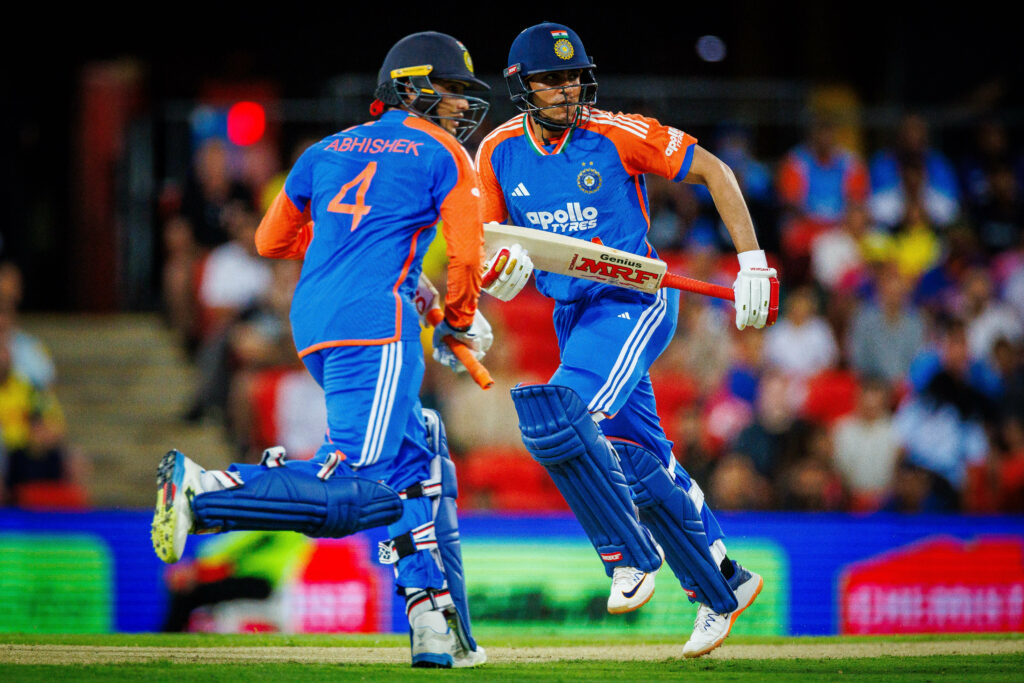
India defeated Pakistan by five wickets for a record-extending ninth Asia Cup title on Sunday but skipped the trophy presentation in a tournament without handshakes between the two rivals.India finished unbeaten to retain the Asia Cup title — they won the last edition in the 50-over format — but Suryakumar Yadav’s team did not collect the trophy in Dubai.The presentation ceremony took more than an hour to get going with media reports saying India did not want to get the trophy from Pakistan Cricket Board chief and head of Asian Cricket Council Mohsin Naqvi.”I have been informed by the ACC that the Indian cricket team will not be collecting their awards tonight,” presenter Simon Doull said. “So that does conclude the post-match presentation.”Chasing 147 for victory, India depended on Tilak Varma’s unbeaten 69 to reach their target with two balls to spare in a tense chase.Varma put on a key stand, including a 60-run fifth-wicket partnership with Shivam Dube, who got out for 33 at the end of the 19th over.Needing 10 off the last over, Varma struck a six and Rinku Singh hit the winning boundary as the pair ran off to celebrate with their team, leaving Pakistan to shake hands among themselves.Kuldeep Yadav set up India’s third victory over their rivals in the regional tournament played under the T20 format as his figures of 4-30 helped bowl out Pakistan for 146.Kuldeep ended the tournament as the leading bowler with 17 wickets. Indian opener Abhishek Sharma won the player of the tournament with 314 runs, including three fifties at a strike-rate of 200.India were in trouble at 3-20 and 4-77, but Varma kept calm to anchor the chase as he hit three fours and four sixes in his knock.”It was a bit of pressure, but I wanted to stay at the wicket and finish the game,” Varma said after being named player of the match. “I was prepared to bat anywhere and I was backing on my game.”Wicketkeeper-batsman Sanju Samson’s 24 and then a supporting knock by Dube took India home at a nearly packed stadium dominated by Indian fans.”It is a tough pill to swallow,” Pakistan skipper Salman Agha said. “We could not finish well in the batting. Bowling, we gave everything.”- Bumrah retaliates -The two neighbours came into the title clash with tensions high from their previous two clashes in the competition, which witnessed political posturing and aggressive on-field behaviour.India pace bowler Jasprit Bumrah raised the heat in the first innings on Sunday when he bowled Haris Rauf for six and made a gesture similar to the one the Pakistan bowler had done to the crowd in the previous meeting between the two teams.Put in to bat after no handshakes at the toss, Pakistan started strongly as openers Sahibzada Farhan, who made 57, and Fakhar Zaman, who made 46, put on 84 runs but the team slipped from 113-1 to be bowled out in 19.1 overs.After Farhan fell, Zaman took charge and along with Saim Ayub kept up the attack with regular boundaries until Kuldeep struck in the 13th over.Ayub fell to Kuldeep’s left-arm wrist spin as Pakistan lost six wickets for 21 runs.Zaman fell short of his fifty and Kuldeep struck with three wickets in the 17th over, including Agha for eight.India and Pakistan met earlier in the competition for the first time after deadly fighting between the nuclear-armed neighbours, who have not played a bilateral series in over a decade.The two only meet in multi-nation tournaments at neutral venues as part of a compromise deal.India comfortably won their earlier two matches, but in the Super Four clash Farhan mimicked a gun celebration after his half-century.Rauf made gestures appearing to mock India’s military action during the four-day border conflict in May that left more than 70 people dead.In the group match, India skipper Suryakumar had refused to shake hands with Pakistan counterpart Agha and the two teams kept up the stance for the rest of the tournament.

Varma guides India to Asia Cup final win over Pakistan

Tilak Varma hit an unbeaten 69 as India defeated Pakistan by five wickets for a record-extending ninth Asia Cup title with no handshakes between the sides again on Sunday.Chasing 147 for victory, India depended on Varma’s 53-ball knock and a key 60-run stand with fellow left-hander Shivam Dube to reach their target with two balls to spare in Dubai.Dube got out for 33 at the end of the 19th over and, with India needing 10 off the last six deliveries, Varma struck a six and Rinku Singh hit the winning boundary as the pair ran off to celebrate with their team, leaving Pakistan to shake hands among themselves.Kuldeep Yadav set up India’s third victory over their rivals in the regional tournament played under the T20 format as his figures of 4-30 helped bowl out Pakistan for 146.India were in trouble at 3-20 and 4-77, but Varma kept calm to anchor the chase as he hit three fours and four sixes in his knock.Wicketkeeper-batsman Sanju Samson’s 24 and then a supporting knock by Dube took India home at a nearly packed stadium dominated by Indian fans. – Bumrah retaliates -The two neighbours came into the title clash with tensions high from their previous two clashes in the competition, which witnessed political posturing and aggressive on-field behaviour.India pace bowler Jasprit Bumrah raised the heat in the first innings on Sunday when he bowled Haris Rauf for six and made a gesture similar to the one the Pakistan bowler had done to the crowd in the previous meeting between the two teams.Put in to bat after no handshakes at the toss, Pakistan started strongly as openers Sahibzada Farhan, who made 57, and Fakhar Zaman, who made 46, put on 84 runs but the team slipped from 113-1 to be bowled out in 19.1 overs.Farhan fell after his second fifty in this edition of the Asia Cup after the batter attempted a second successive six off spinner Varun Chakravarthy.Zaman took charge and along with Saim Ayub kept up the attack with regular boundaries until Kuldeep struck in the 13th over.Ayub fell to Kuldeep’s left-arm wrist spin as Pakistan lost six wickets for 21 runs.Zaman fell short of his fifty and Kuldeep struck with three wickets in the 17th over, including skipper Salman Agha for eight.India and Pakistan met earlier in the competition for the first time after deadly fighting between the nuclear-armed neighbours, who have not played a bilateral series in over a decade.The two only meet in multi-nation tournaments at neutral venues as part of a compromise deal.India comfortably won their earlier two matches, but in the Super Four clash Farhan mimicked a gun celebration after his half-century.Rauf made gestures appearing to mock India’s military action during the four-day border conflict in May that left more than 70 people dead.In the group match, India skipper Suryakumar Yadav had refused to shake hands with Pakistan counterpart Agha and the two teams kept up the stance for the rest of the tournament.The Asia Cup was widely seen as a dress rehearsal for the T20 World Cup to be co-hosted by India and Sri Lanka in February-March of next year.

No handshake again as India bowl against Pakistan in Asia Cup final

India skipper Suryakumar Yadav won the toss and elected to field first against Pakistan as the two teams stuck to no handshakes and cold vibes in the Asia Cup final on Sunday.The two neighbours come into the title clash with tensions high from their previous two clashes in the competition, which witnessed political posturing and aggressive on-field behaviour at the same venue in Dubai.Defending champions India and Pakistan are playing a final in the Asia Cup for the first time in the tournament’s 41-year-old history.India, who remain unbeaten in six matches of the Asia Cup, made three changes to the team from their previous win with all-rounder Hardik Pandya to sit out with injury.Jasprit Bumrah, Shivam Dube and Rinku Singh make the team in place of Pandya, Harshit Rana and Arshdeep Singh.Pakistan captain Salman Agha said he would have batted first anyway had he won the toss as his team come in unchanged from their previous win over Bangladesh.India and Pakistan met in the regional contest played under the T20 format after deadly fighting between the nuclear-armed neighbours, who have not played a bilateral series in over a decade.The two only meet in multi-nation tournaments at neutral venues as part of a compromise deal.India comfortably won both their games in the tournament, but in the Super Four clash Pakistan opener Sahibzada Farhan mimicked a gun celebration after his half-century.Pakistan pace bowler pacer Haris Rauf made gestures appearing to mock India’s military action during the four-day border conflict in May that left more than 70 people dead.In the group match, Suryakumar had refused to shake hands with Pakistan’s Agha and the two teams kept up the stance in the previous match.India won the previous edition played in the 50-over format.The Asia Cup is being widely seen as a dress rehearsal for the T20 World Cup to be co-hosted by India and Sri Lanka in February-March.TeamsIndia: Abhishek Sharma, Shubman Gill, Suryakumar Yadav (capt), Tilak Varma, Sanju Samson (wk), Shivam Dube, Rinku Singh, Axar Patel, Kuldeep Yadav, Jasprit Bumrah, Varun ChakaravarthyPakistan: Sahibzada Farhan, Fakhar Zaman, Saim Ayub, Salman Agha (capt), Hussain Talat, Mohammad Haris (wk), Mohammad Nawaz, Faheem Ashraf, Shaheen Afridi, Haris Rauf, Abrar AhmedUmpires: Ahmad Shah Pakteen (AFG), Masudur Rahman (BAN)TV Umpire: Raveendra Wimalasiri (SRI)Match Referee: Richie Richardson (WIS)

Indian actor-politician’s aides charged after rally stampede kills 40

Police charged three close aides of a popular actor and politician with culpable homicide and negligence on Sunday after a stampede at his rally in southern India killed at least 40 people, officials said.Some 27,000 people thronged a public road in Tamil Nadu state in the hope of seeing the politician, known by the single name of Vijay, on Saturday but panic broke out, triggering a deadly crush.Such crowd incidents happen frequently during mass gatherings in India and are often blamed on lax safety measures.Police filed a case against three senior members of Vijay’s party, whom they identified as Bussy Anand, G.R. Nirmal Kumar and V.P. Mathiyazhagan.”A case has been registered and the investigation will reveal all who are involved,” senior police officer S. Davidson Devasirvatham told reporters.All three have been charged with “culpable homicide not amounting to murder” and negligent conduct endangering human life.Witnesses cited hours of delays, insufficient police presence and people falling from a tree branch onto the audience as reasons contributing to the crush.Vijay was addressing the rally in Karur district when the crowd surged suddenly, forcing him to halt his speech.Videos on social media showed him tossing water bottles to supporters shortly before the panic broke out.”I am at a loss for words to express the pain my heart endures,” the 51-year-old star said in a statement on Sunday.”This is indeed an irreparable loss for us,” he said, adding that he would pay two million rupees ($22,000) to each of the victims’ families as compensation.Senior district official M. Thangavel said 40 people had been killed in the stampede, raising an earlier toll of 39.Nine children were among the dead.- Huge crowds -State police chief G. Venkataraman said crowds had been waiting for hours after the public was told that Vijay would arrive at the venue by noon.”The crowds started coming in from 11 am. He came at 7:40 pm,” Venkataraman told reporters. “The people lacked sufficient food and water under the hot sun.”He said 10,000 people were expected but about 27,000 had turned up.Vijay launched his party in 2024 and has drawn huge crowds at campaign events ahead of state elections due next year.Survivor B. Kanishka said he was “pushed down by the crowd all of a sudden”.”There was absolutely no space to move,” he told the Hindu newspaper. “I subsequently fainted.” Others said poor organisation and an hours-long wait left people restless before the gathering spiralled out of control.Another survivor, identified as Karthick, told the paper that the disaster could have been prevented “if people were not forced to wait for hours together”.”Poor planning and execution of the programme and lack of police personnel at the spot were also the reason,” he said.The Indian Express newspaper said panic spread after supporters who had climbed into a tree fell onto the crowd below.In January, 30 people were killed in a crush at a major religious fair in the northern state of Uttar Pradesh, and 121 were also killed during a Hindu prayer meeting in the same state last year.Eleven fans were crushed to death in the southern city of Bengaluru in June during celebrations for the local team’s first Indian Premier League cricket title.