AFP Asia

Top conservation group meets in UAE on growing threats to nature

The world’s top conservation body kicked off its world congress Thursday in the Emirati capital Abu Dhabi, where it will unveil its updated “red list” of threatened species a day later.Hundreds of participants were meeting at the venue where the International Union for Conservation of Nature (IUCN), whose decisions help set the global agenda on environmental protection, will on Friday publish its list ranking plant and animal species from “least concern” to “extinct”.The congress, held every four years, sheds light on the dire state of the world’s biodiversity. An increasing number of animals suffer from the destruction of their natural habitat, climate change, and water, air and soil pollution.According to the United Nations’s expert scientific panel on biodiversity (IPBES), biodiversity has declined every decade in the past 30 to 50 years.In an update to its “red list” last year, the IUCN said that out of the 169,420 species studied, a total of 47,187 were classified as threatened — more than a quarter.The most impacted species were corals and amphibians, with more than 40 percent of each group under threat.- UAE climate diplomacy -The United Arab Emirates, a major oil exporter that also hosted the UN’s annual climate talks in 2023 (known as COP28), is seeking a bigger role in setting the environmental agenda by hosting these events.”The UAE has become a global convening power to bring countries together, bring all stakeholders on discussions that are very vital for our environment,” UAE climate change and environment minister Amna bint Abdullah Al Dahak told AFP at the meeting.”This is a platform where conversations can converge,” Al Dahak said of the congress.She called for translating “those conversations into pledges, into actions and into implementation plans”, urging “more implementation plans and actions on the ground”.The IUCN congress last convened in the French city of Marseille in 2021.The meeting revolves around votes on adopting resolutions.Though not legally binding, the resolutions can “shape the international agenda” and “accelerate” work on treaties under discussion, an IUCN source told AFP, requesting anonymity to discuss the event freely.”The Congress programme reflects the urgency and ambition of our time,” said Shaikha Salem Al Dhaheri, Secretary General of the Environment Agency-Abu Dhabi and IUCN councillor from the West Asia region.IUCN Director General Grethel Aguilar of Costa Rica said the upcoming announcements “reflect the scale of ambition and the real possibility of delivering the solutions we need to build a planet where people and nature thrive together”.- Synthetic biology debate -The most closely watched vote revolves around two competing motions on synthetic biology — a controversial technique widely used in the pharmaceutical industry and agribusiness.It enables scientists to redesign organisms by engineering them to have new abilities.One motion calls for a moratorium on the technology because “genetic engineering of wild species in natural ecosystems, including in protected areas, is not compatible with the practices, values and principles of nature conservation”.A competing motion argues that synthetic biology could complement conservation efforts, and says IUCN policy “should not be interpreted as supporting or opposing synthetic biology, per se”.Organisers expect 10,000 delegates and 5,000 civil society attendees.The IUCN congress describes itself as the “world’s largest and most inclusive nature conservation forum”.Its voting members include government agencies, national and international NGOs, and Indigenous groups.

India’s Gill out to avoid ‘mental fatigue’ from constant cricket

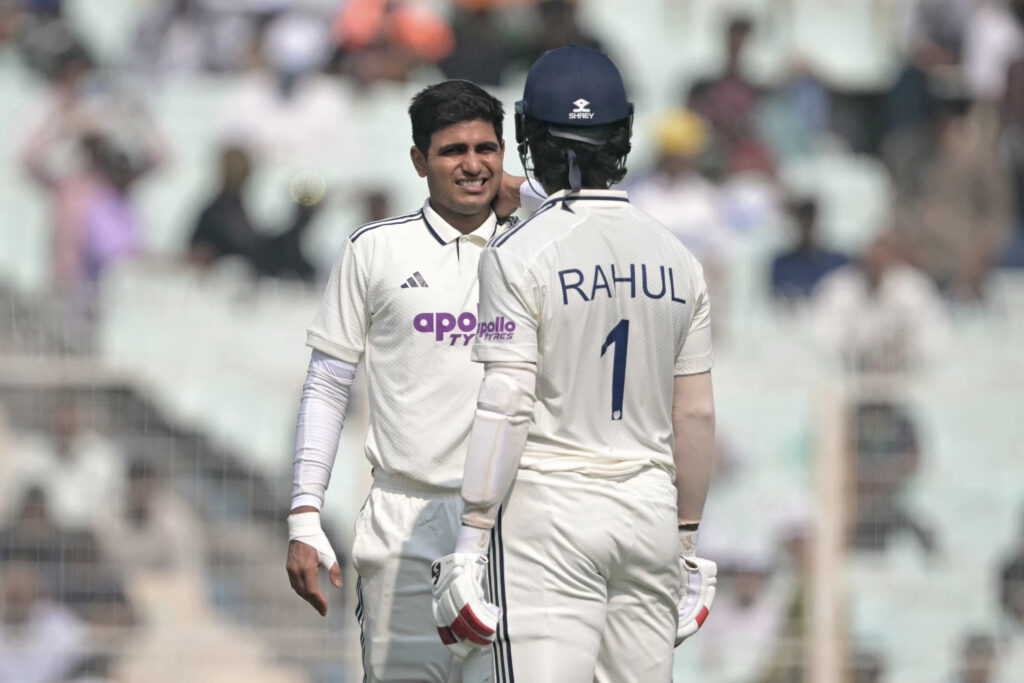
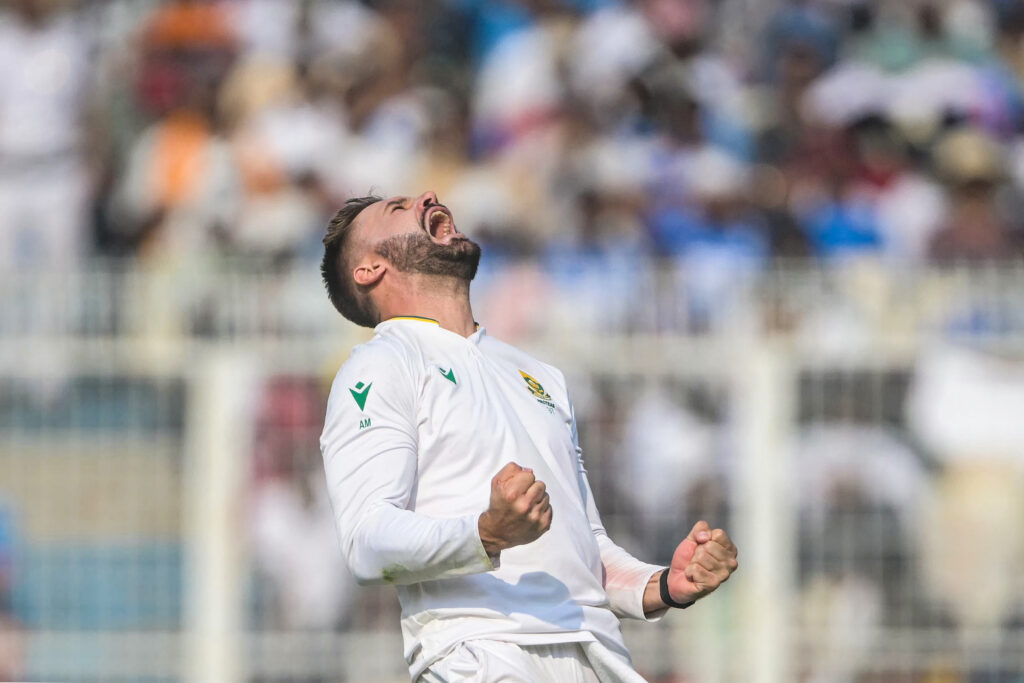
Shubman Gill said Thursday that his biggest opponent could be “mental fatigue” after the India Test captain recently took over charge of the 50-over side.Speaking ahead of Friday’s second Test against the West Indies in New Delhi, Gill conceded that it was a challenge to play all three international formats, but that was what drove him.”Physically most of the time I feel fine, but sometimes there is mental fatigue because when you are constantly playing,” Gill told reporters.”There is obviously a certain expectation that I have from myself.”India lead the two-match series 1-0 after they hammered the visitors by an innings and 140 runs inside three days in the first Test. Immediately after play ended on day three, Gill was named to succeed Rohit Sharma as ODI captain, adding to the 26-year-old’s workload.”I think that is the challenge about being able to play all the formats for India,” said Gill.”And I want to play and succeed in all the formats for the country, and win ICC titles.”Gill, who made his Test debut in December 2020, took over as Test skipper in May from Rohit.He was India’s leading scorer in the drawn five-Test series in England with 754 runs. He was also vice-captain of the Asia Cup-winning T20 team last month.Turning to the West Indies, Gill said there would be no complacency as India aim to wrap up the series against a team who are a pale shadow of the side that once ruled world cricket.”I don’t think your intensity drops down depending on the opposition,” Gill said.”It doesn’t matter who we are playing. We want to be able to play at our own intensity and we want to win.”West Indies were swept 3-0 at home by Australia in June and July. But embattled captain Roston Chase said he had been told to “keep believing” by West Indian greats, including Viv Richards, Brian Lara and Richie Richardson who were at an awards ceremony in New Delhi.”I had the privilege of meeting all three of them and they said the same thing, they told me ‘to keep believing’,” said Chase.”We are down right now but it has to change at some point. “It starts with belief and need to keep motivating the players to play positive cricket and change around our downfall.”

Afghan mobile access to Facebook, Instagram intentionally restricted: watchdog

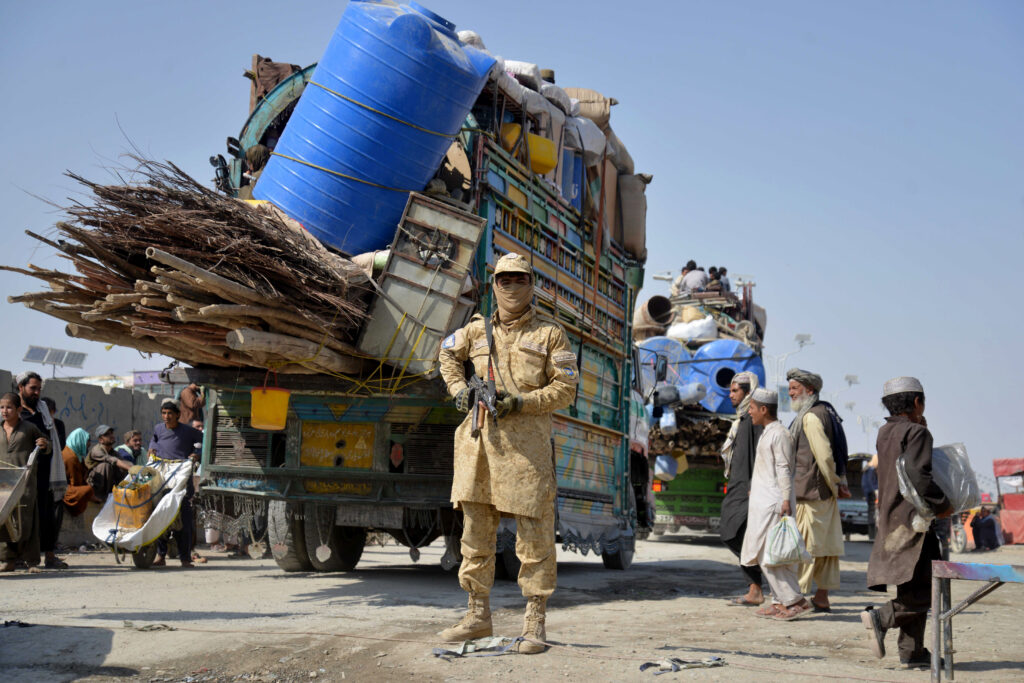
Access to several social media sites, including Facebook, Instagram and Snapchat, has been “intentionally restricted” in Afghanistan, an internet watchdog said Wednesday, a week after a 48-hour telecommunications blackout in the country.Social media sites have been intermittently accessible on smartphones in provinces across the country since Tuesday, AFP journalists reported, while internet speed is significantly slower than normal.  “The restrictions are now confirmed on multiple providers, the pattern shows an intentional restriction,” said NetBlocks, a watchdog organisation that monitors cybersecurity and internet governance.The disruption is “primarily impacting mobile with some fix-lines also affected”.The Taliban government has not responded to requests for comment from AFP. Confusion gripped Afghanistan last Monday when mobile phone service and the internet went down without warning, freezing businesses and cutting people off from the rest of the world.The massive blackout came weeks after the government began cutting high-speed internet connections to some provinces to prevent “immorality”, on the orders of shadowy supreme leader Hibatullah Akhundzada.At the time, Netblocks said the blackout “appears consistent with the intentional disconnection of service”, adding that connection slowed to around one percent of ordinary levels.It is the first time since the Taliban government won their insurgency in 2021 and imposed a strict version of Islamic law that communications have been cut in the country.The government has yet to comment on the blackout. For Afghan girls and women in particular, the internet is a lifeline in a country where they are banned from secondary schools, universities, gyms, parks and most work. “I would feel really sad if they banned Instagram or other social media because it’s the only way I can connect with the world,” said 24-year-old Ghezal, who asked for only her first name to be used.”These social media platforms are the main way I stay connected with my friends who live in other countries.”At the beginning of 2025, 13.2 million people had access to the internet in Afghanistan — around 30.5 percent of the population, according to the specialist website DataReportal.Around 4.05 million people were using social media.

British PM Starmer hails India opportunities after trade deal

British Prime Minister Keir Starmer touted “unparalleled” opportunities opening up in India as he made his inaugural visit to the country on Wednesday, seeking to promote a trade deal signed this summer.Indian Prime Minister Narendra Modi welcomed Starmer and what he called “the largest ever trade delegation from the UK”, saying in a statement that he hoped to bolster their “shared vision of a stronger, mutually prosperous future”.The two-day visit comes after the countries signed a major trade accord in London in July.”With India set to be the third-biggest economy in the world by 2028, and trade with them about to become quicker and cheaper, the opportunities waiting to be seized are unparalleled,” Starmer said.India and its former colonial ruler are the world’s fifth- and sixth-largest economies, with bilateral trade worth around $54.8 billion and investments supporting more than 600,000 jobs across both countries.Starmer, whose 125-member delegation includes business leaders like British Airways chief executive Sean Doyle, called the recent trade deal the “biggest” India had ever struck.”I’ve asked the team to implement it as quickly as humanly possible… but I think it’s already changing the mood music, frankly,” he told the delegation.”I think the opportunities are already opening up, the contact has already increased, trade with India went up hugely in the last 12 months, and climbing.”- Bollywood blockbusters -Under the new deal, India will slash tariffs on imports of British goods such as whisky, cosmetics and medical devices, while Britain will reduce duties on clothing, footwear and food products, including frozen prawns from India.Starmer also said three new Bollywood blockbusters will be made in the UK from next year as he wrapped up his visit to the famed Yash Raj Film studio.”Bollywood is back in Britain, and it’s bringing jobs, investment and opportunity, all while showcasing the UK as a world-class destination for global filmmaking,” he said.Starmer also visited a new Premier League community programme where he met aspiring young Indian footballers and coaches.The Premier League is one of the UK’s most successful cultural exports, and generates $13 billion of value to the economy, supporting over 100,000 jobs.More football fans in India now watch the Premier League (71 million) than the entire population of the UK.”I’m hugely proud of our national sport — it brings communities together and changes lives,” he said.However, Starmer ruled out expanding visa access for Indian professionals despite pressure.”That isn’t part of the plan,” he told reporters en route to Mumbai.”We’re here now to take advantage of the free trade agreement that we’ve already struck. We’ve got to implement it.”Rights groups have urged Starmer to raise the case of Scottish Sikh blogger Jagtar Singh Johal, detained in India since 2017 over an alleged plot to kill right-wing Hindu leaders.He has not been convicted, and one of the nine charges against him was dismissed in March.Starmer is due to meet Modi on Thursday, and to address a fintech conference in Mumbai alongside him.

Modi, Starmer hail ‘new energy’ in India-UK ties

Indian Prime Minister Narendra Modi told his British counterpart Keir Starmer on Thursday that relations had made “significant progress”, as they pledged to unlock “unparalleled” economic opportunities.Starmer is on his first visit to India as premier, accompanied by a 125-member delegation, after the two countries signed a trade deal in London in July.Under the accord, India will slash tariffs on imports of British goods such as whisky, cosmetics and medical devices, while Britain will reduce duties on clothing, footwear and food products, including frozen prawns from India.”This agreement will reduce import costs between our two countries, create new employment opportunities for youth, boost trade, and benefit both our industry and consumers,” Modi said.He told his “friend” Starmer that his visit “symbolises the new energy” in ties between the nations. “Together we will build a bright future for the people of both countries”, he told Starmer, speaking in Hindi.India and its former colonial ruler share bilateral trade worth around $54.8 billion and investments supporting more than 600,000 jobs across both countries.India’s became the world’s fifth-largest economy in 2022, when its GDP overtook Britain’s, according to IMF figures. It is tipped to overtake Japan as the fourth largest later this year.”India’s growth story is remarkable,” Starmer said, noting New Delhi’s ambition to become the world’s third largest economy by 2028.”Everything I’ve seen since I’ve been here is absolute proof to me that you’re on track to succeed in that,” Starmer said. “So, we want to be partners on that journey.”Starmer, who returns to London later on Thursday, said he expected by his departure to have “secured major new investments, creating thousands of high-skilled jobs” for both nations.”My visit this week is about doubling down on the potential of our trade deal for the benefit of all of us”, Starmer said.The leaders also announced a defence cooperation deal, as well pushing education ties, including support for the nine British universities opening campuses in India.

Afghan Taliban foreign minister begins first India visit

Afghanistan’s UN-sanctioned foreign minister arrived in India on Thursday, the first visit by a top Taliban leader since they returned to power in 2021 following the withdrawal of US-led forces.Amir Khan Muttaqi’s trip — made possible after the UN Security Council granted him a travel waiver — is expected to be closely watched by India’s arch-rival Pakistan, as New Delhi deepens its engagement with the Taliban government.”We look forward to engaging discussions with him on bilateral relations and regional issues,” Indian foreign ministry spokesman Randhir Jaiswal said in a statement, offering Muttaqi a “warm welcome”.Muttaqi, who met with India’s top career diplomat Vikram Misri in January in Dubai, is set to hold talks with Foreign Minister Subrahmanyam Jaishankar.Neither side has disclosed the agenda, but analysts say trade and security are likely to be at the forefront — though India is unlikely, for now, to extend formal recognition to the Taliban government.”New Delhi is eager to establish its influence in Kabul… and not be left behind by its arch-rivals, China and Pakistan,” International Crisis Group analyst Praveen Donthi told AFP.Muttaqi’s visit follows meetings in Russia — the only country so far to have officially recognised the Taliban administration.But while the Taliban are “seeking diplomatic recognition and legitimacy”, Donthi said, others noted that was some way off.”India is not in a hurry to provide diplomatic recognition to the Taliban,” Rakesh Sood, India’s former ambassador to Kabul, told AFP.India has long hosted tens of thousands of Afghans, many who fled the country after the Taliban returned to power.Afghanistan’s embassy in New Delhi shut in 2023, although consulates in Mumbai and Hyderabad still operate limited services.India says its mission in Kabul is limited to coordinating humanitarian aid.- ‘Drive a wedge’ -The Taliban’s strict interpretation of Islamic law may appear an unlikely match for Prime Minister Narendra Modi’s Hindu nationalist government, but India has sought to seize the opening.Diplomatic dynamics in South Asia are driven by long-running distrust between India and Pakistan, with New Delhi seeking to exploit divisions between Islamabad and Kabul.”Kabul will be walking the tightrope between Islamabad and New Delhi, with the latter trying to get the most from the engagement without offering formal recognition,” Donthi added.Pakistani analyst Wahed Faqiri called Muttaqi’s visit a “remarkable development”, coming as “tension between the Taliban and Pakistan is high”.Islamabad accuses neighbouring Afghanistan of failing to expel militants using Afghan territory to launch attacks on Pakistan, an accusation that authorities in Kabul deny.Nuclear-armed rivals India and Pakistan fought a brief but deadly clash in May, their worst confrontation in decades.”The visit would certainly make Pakistan angrier and more suspicious,” Faqiri said.”Moreover, it would strengthen India’s position in Afghanistan and India would try to drive a wedge between Taliban and Pakistan.”

Top nature group to unveil new ‘red list’ of threatened species

The world’s top conservation body is holding its world congress starting Thursday in the Emirati capital Abu Dhabi and will unveil its updated “red list” of threatened species.The International Union for Conservation of Nature (IUCN), whose decisions help set the global agenda on environmental protection, will on Friday publish its list ranking at-risk plant and animal species from “least concern” to “extinct”.The congress, held every four years, sheds light on the dire state of the world’s biodiversity. An increasing number of animals suffer from the destruction of their natural habitat, climate change, and water, air and soil pollution.According to the United Nations’s expert scientific panel on biodiversity (IPBES), biodiversity has declined every decade in the past 30 to 50 years.The IUCN congress last convened in the French city of Marseille in 2021.In an update to its “red list” last year, the IUCN said that out of the 169,420 species studied, a total of 47,187 were classified as threatened — more than a quarter.The most impacted species were corals and amphibians, with more than 40 percent of each group under threat.- ‘Urgency’ -“The Congress programme reflects the urgency and ambition of our time,” said Shaikha Salem Al Dhaheri, Secretary General of the Environment Agency-Abu Dhabi and IUCN councillor from the West Asia region.IUCN Director General Grethel Aguilar of Costa Rica said the upcoming announcements “reflect the scale of ambition and the real possibility of delivering the solutions we need to build a planet where people and nature thrive together”.The IUCN congress votes on adopting resolutions.Though not legally binding, they can “shape the international agenda” and “accelerate” work on treaties under discussion, an IUCN source told AFP, requesting anonymity to discuss the event freely.- Synthetic biology debate -The most closely watched vote revolves around two competing motions on synthetic biology — a controversial technique widely used in the pharmaceutical industry and agribusiness.It enables scientists to redesign organisms by engineering them to have new abilities.One motion calls for a moratorium on the technology because “genetic engineering of wild species in natural ecosystems, including in protected areas, is not compatible with the practices, values and principles of nature conservation”.A competing motion argues that synthetic biology could complement conservation efforts, and says IUCN policy “should not be interpreted as supporting or opposing synthetic biology, per se”.Organisers expect 10,000 delegates and 5,000 civil society attendees.The IUCN congress describes itself as “world’s largest and most inclusive nature conservation forum”.Its voting members include government agencies, national and international NGOs, and Indigenous groups.

Mooney ton rescues Australia in stunning World Cup win over Pakistan

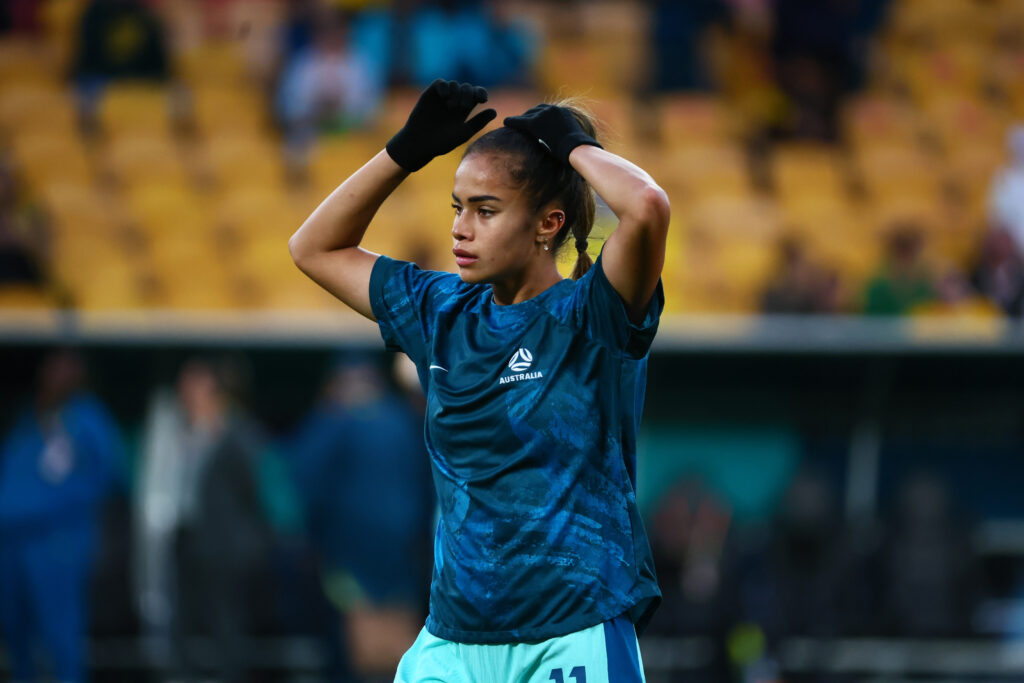
A superb century from Beth Mooney dragged defending champions Australia back from the brink of disaster before they completed a crushing 107-run win over Pakistan in a Women’s World Cup clash in Colombo on Wednesday.The Aussies were staring down the barrel at 76-7 and then 115-8 after being asked to bat first with the Pakistan bowlers causing mayhem, left-arm spinner Nashra Sandhu finishing with 3-37 from her 10 overs.But a record ninth-wicket stand between Mooney, who was dismissed off the final ball of the innings for 109, and Alana King, who made 51 not out, turned the tide.The pair dragged their side from the doldrums to a competitive 221-9 and that proved plenty as Pakistan’s brittle batting folded meekly for 114 all out in 36.3 overs.Sidra Amin was the only Pakistan batter to put up a fight with 35 while opening bowler Kim Garth, who used to compete for Ireland, was the pick of the Australian attack with 3-14.  In the end it was a comfortable win for the Australians but it hadn’t looked like that a little earlier. After a top order collapse that left the dugout stunned, Australia needed a saviour and up stepped the ever reliable Mooney. The left-hander produced her fifth ODI hundred while King played the perfect foil, matching grit with gumption in a 106-run partnership off 97 balls that breathed new life into the innings.It was not just a rescue act, it was record breaking. The partnership eclipsed Australia’s previous best for the ninth wicket — 77 between Garth and Ashleigh Gardner — and also set a new Women’s World Cup benchmark, surpassing South Africa’s 66-run effort by Yulandi van der Merwe and Kim Price back in 2000.Mooney’s innings was a masterclass in temperament, a classic backs-to-the-wall knock. She farmed the strike smartly, ran fast between the wickets and only unfurled the big shots towards the end.”It was a pretty tricky situation. We wanted to get a partnership going and really had to grind to reach 221,” said Mooney. “Alana King was incredible tonight. We’ve seen her do it before and it was nice to share that stand with her.”Having rebuilt brick by brick, Mooney brought up her century with a nudge to mid-on off Fatima Sana, while King capped her maiden fifty in style, hoisting the Pakistan captain for six as Australia plundered 21 runs off the final over.Mooney’s 109 off 114 deliveries, laced with 11 boundaries, ended when she holed out to cover off the final ball of the innings.King remained unbeaten on 51 off 49, peppered with three fours and as many sixes, the highest score ever made by a number 10 or lower in women’s ODIs.Pakistan never found their footing in reply, undone by Australia’s relentless discipline with the ball. The seven-time world champions climbed back to the top of the points table, while Pakistan’s third straight defeat leaves their knockout hopes hanging by a thread.

World economy not doing as badly as feared, IMF chief says

The global economy is doing better than expected, even as it faces prolonged uncertainty and underwhelming medium-term growth prospects, the head of the IMF said Wednesday. The world economy is doing “better than feared, but worse than we need,” International Monetary Fund Managing Director Kristalina Georgieva told reporters in Washington.She added that the Fund now expects global growth to slow “only slightly this year and next,” propped up by better-than-expected conditions in the United States, and among some other advanced, emerging market and developing countries. Georgieva’s remarks came ahead of next week’s gathering of finance ministers and central bank governors at the World Bank and the IMF in Washington. Trade is once again likely to dominate the agenda at the annual meetings, following US President Donald Trump’s decision earlier this year to unleash sweeping tariffs against many trading partners.- ‘Multiple shocks’ -“All signs point to a world economy that has generally withstood acute strains from multiple shocks,” Georgieva said, pointing to “improved policy fundamentals,” the adaptability of the private sector, lower-than-expected tariffs, and supportive financial conditions. “The world has avoided a tit-for-tat slide into trade war — so far,” she added. She noted that the average US tariff rate has fallen from 23 percent in April to 17.5 percent today, while the US effective tariff rate of around 10 percent remains “far above” the rest of the world.But, she warned, the full effect of those tariffs “is still to unfold,” adding that the resilience of the world economy has yet to be “fully tested.” Against this backdrop, the Fund still expects global growth to remain at roughly three percent over the medium term, in line with previous forecasts — below the 3.7 percent, on average, seen before the Covid-19 pandemic.”Global growth patterns have been changing over the years, notably with China decelerating steadily while India develops into a key growth engine,” Georgieva said. To boost lackluster growth prospects elsewhere, she called on countries to act swiftly to “durably” lift output, rebuild fiscal buffers, and address “excessive” trade imbalances. The Fund’s prescriptions for policymakers differed by region, with Asia urged to deepen its internal trade, and to strengthen the service sector and access to finance. Carried out correctly, this could raise economic output by as much as 1.8 percent in the long run, Georgieva said. African countries should promote “business-friendly reforms” and continue with efforts to build up the Continental Free Trade Area which, she said, could lift their real GDP per capita by “over 10 percent.””Gains from this region can be especially large,” she said. – Tough love for Europe -Georgieva reserved her harshest criticism for Europe, which has struggled with economic growth in recent years, in marked contrast to the United States.To raise competition in the bloc, Georgieva called on the European Union to appoint a new “single market czar” to drive reforms, a move that would simplify the EU’s structure and consolidate the power to make the changes required. These changes include steps to deepen EU single market integration in financial services and energy. “Catch up with the private sector dynamism of the US,” she said, adding that Europe must “recognize that there will be some sacrifices on the way.”For the world’s largest economy, Georgieva urged the Trump administration to address the country’s federal deficit and to take steps to incentivize household savings. And for China, the world’s second-largest economy, Georgieva reiterated the IMF’s ongoing calls for fiscal reforms to boost private consumption and reduce dependence on industrial policy to drive growth. 

Wildlife flee as floods swamp Indian parks

A herd of elephants, along with tigers and leopards, have escaped after raging floods in India submerged two of West Bengal’s famed wildlife sanctuaries, state officials said Wednesday.Since October 3, at least 36 people have been killed in floods and landslides across the state, as days of torrential rain destroyed hundreds of homes, washed away tea estates, and left roads impassable.The deluge also swamped large parts of Gorumara and Jaldapara national parks, protected reserves in the Himalayan foothills that shelter elephants, bison, tigers, and the endangered one-horned rhinoceros.”The two wildlife sanctuaries… have been submerged under floodwater forcing the animals to stray out,” West Bengal forest minister Birbaha Hansda told AFP.”A herd of 30 elephants strayed out and were seen running through water, trumpeting loudly… We don’t know how many elephants will survive,” she said.A leopard was spotted “negotiating choppy water”, she said, but has not been seen since.Other animals could not escape.”The carcasses of dead animals have started emerging on the riverbanks,” she said, listing two leopards, a rhino and several bison and deer among the dead.Some rescues were successful.”Two captive elephants were brought to pull out an adult rhino and two elephant calves stuck on a river bank,” she added.India’s one-horned Asian rhino population has almost tripled in the past four decades thanks to conservation and anti-poaching efforts, from 1,500 four decades ago to more than 4,000 today.