AFP Asia

India and China to resume direct flights as ties improve

India and China resume direct flights on Sunday after a five-year suspension, a move important both for trade and a symbolic step as Asia’s giants cautiously rebuild relations.The neighbours — the world’s two most populous nations — remain strategic rivals competing for regional influence, but ties have eased gradually since a deadly Himalayan border clash in 2020.India’s government said the resumption of flights will boost “people-to-people contact” and aid the “gradual normalisation of bilateral exchanges”.Warming relations with Beijing come as India’s ties with key trade partner Washington struggle, following US President Donald Trump’s order of punishing 50 percent tariffs.Trump’s aides have accused India of fuelling Russia’s war in Ukraine by buying Moscow’s oil.India’s largest commercial carrier, IndiGo, is set to operate the first daily flight to mainland China, departing Kolkata at 10:00 pm (1630 GMT) Sunday for Guangzhou.There are already regular flights between India and Hong Kong, while additional services from the capital New Delhi to Shanghai and Guangzhou will begin in November.”The direct air link will reduce logistics and transit time,” said Rajeev Singh, head of the Indian Chamber of Commerce in Kolkata, telling AFP it would benefit businesses.India’s eastern port city of Kolkata has centuries-old ties with China dating back to British rule, when Chinese migrants arrived as traders. Indo-Chinese fusion food remains a beloved staple of the city’s culinary identity.”It’s great news for people like us, who have relatives in China,” said Chen Khoi Kui, a civil society leader in Kolkata’s Chinatown district of Tangra. “Air connectivity will boost trade, tourism and business travel.”- ‘Long-term challenge’ -India runs a significant trade deficit with Beijing, relying heavily on Chinese raw materials for industrial and export growth.The thaw between New Delhi and Beijing followed meetings between their leaders in Russia last year and in China in August.India’s imports from China surged to more than $11 billion last month, up more than 16 percent compared with September 2024, according to New Delhi’s commerce ministry.Exports from India to China were $ 1.47  billion, modest by comparison, but up around 34 percent year-on-year.Direct flights between the two countries were suspended during the Covid-19 pandemic, halting roughly 500 monthly services.Relations then plummeted after the 2020 border skirmish between the nuclear-armed nations, when at least 20 Indian and four Chinese soldiers were killed.New Delhi responded by tightening restrictions on Chinese investments and banning hundreds of apps, including TikTok.India then deepened ties with the US-led Quad alliance — also including Japan and Australia — aimed at countering China’s influence in the Asia-Pacific.Both sides have troops posted along their contested 3,500-kilometre (2,175-mile) high-altitude frontier.But this month, soldiers on each side exchanged gifts of sweets on the Hindu festival of Diwali, “marking a gesture of goodwill”, said Yu Jing, the spokesperson of the Chinese Embassy in India.The Indian Express, in an editorial after Indian Prime Minister Narendra Modi and China’s President Xi Jinping met in August, said improving ties with Beijing “sends an appropriate signal” to Washington.But relations still have far to go.”Managing an increasingly assertive China remains India’s long-term challenge,” the newspaper added. “These fundamental realities remain unchanged, regardless of Trump’s whimsical diplomatic actions.”

Afghanistan, Pakistan seek to firm up truce in Istanbul talks

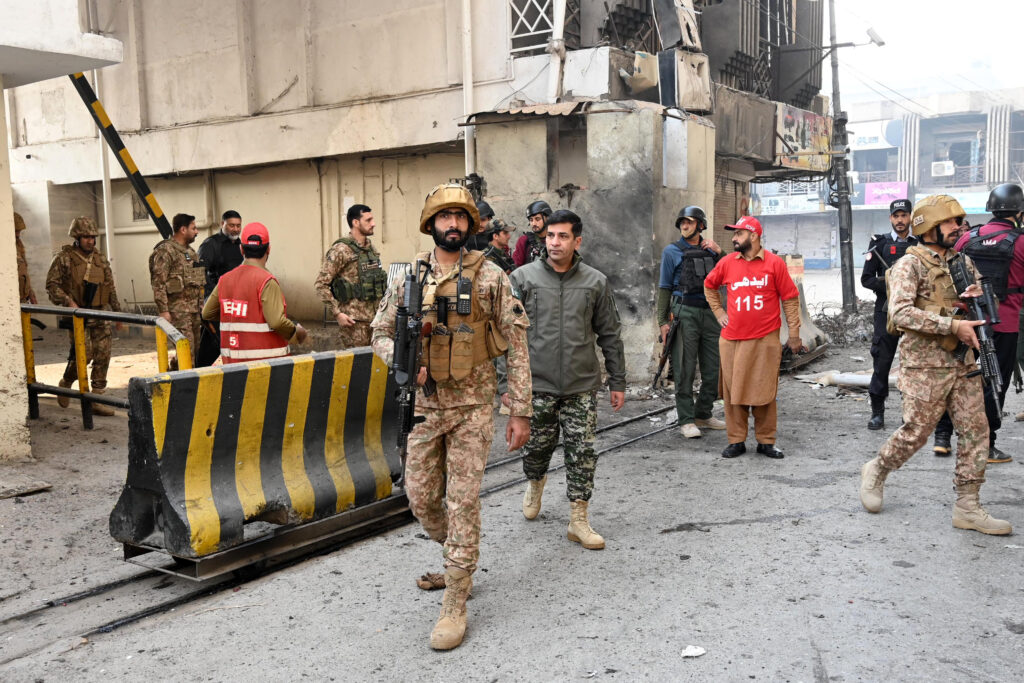
Afghan and Pakistani negotiators were locked in talks to hammer out a lasting ceasefire Saturday, with Islamabad warning that if the Istanbul talks failed it could lead to “open war”. Two weeks ago, the Taliban government launched an border offensive following explosions in Kabul which it blamed on its Pakistani neighbour, triggering an outbreak of unexpectedly intense clashes that left dozens dead, among them civilians.Vowing a strong response, Islamabad then carried out “precision strikes” against armed groups on Afghan soil which are at the heart of the dispute, security sources said. After further clashes that left soldiers and civilians dead, both sides declared an initial 48-hour ceasefire which collapsed two days later, with Kabul blaming Islamabad. A second truce took shape last weekend following talks in Doha thanks to mediation by Qatar and Turkey, although the terms remained unclear. In Istanbul, negotiators were expected to detail the “mechanisms” announced in Doha that would ensure a return to stability. “The (Istanbul) talks are going on,” Pakistan’s Defence Minister Khawaja Asif told reporters in the eastern city of Sialkot on Saturday, while warning that if they “do not yield a positive outcome, there will be an open war with Afghanistan”. It was not clear where exactly the negotiators were meeting in Turkey’s largest city, nor how long the talks would continue.The Afghan delegation is led by its deputy interior minister, Haji Najib. Islamabad has not said who it has sent to the talks. For the Taliban government, the goal is to ensure Afghanistan’s territorial integrity. For Islamabad, the negotiations must address “the menace of terrorism emanating from Afghan soil towards Pakistan,” its foreign ministry spokesman Tahir Hussain Andrabi said on Friday. – ‘Essential’ meeting -Security issues are at the heart of recurring bilateral tensions. Facing a resurgence of attacks against its security forces, Islamabad has repeatedly accused its Afghan neighbour of “harbouring” groups it views as “terrorist”, primarily the Pakistani Taliban (TTP) — a charge Kabul denies. Throughout the confrontation, Islamabad demanded that the Taliban authorities “regain control” over fighters present on Afghan soil.From the Pakistani perspective, this would be key to the Istanbul talks, explained Ibraheem Bahiss, an International Crisis Group analyst in Afghanistan. “The meeting in Istanbul is going to be quite essential because that’s where the so-called mechanism would be agreed on in terms of when Pakistan has concerns that anti-Pakistan elements inside Afghanistan are doing things against Pakistan,” he told AFP. He said such “mechanisms” could involve intelligence sharing on armed groups. “For example, Pakistan would give coordinates of where they suspect TTP fighters or commanders are, and instead of carrying out strikes, Afghanistan would be expected to carry out action against them,” he said.But it was unclear if that would end the problem. “I’m not so hopeful that a technical mechanism will really address the fundamental drivers of this escalatory cycle,” he admitted.Before the latest skirmishes, Pakistan had long been the Taliban’s biggest supporter, bolstering them in Afghanistan for so-called strategic depth against arch-rival India.Two weeks ago, the initial explosions in Kabul — which triggered the escalation — took place as the Taliban foreign minister was making an unprecedented visit to India.Turkey has not commented on Saturday’s meeting beyond hailing the sides’ joint decision in Doha “to establish mechanisms to strengthen peace and stability” and pledging to “continue to support the efforts” to achieve that. 

Rohit and Kohli turn back clock as India crush Australia in 3rd ODI

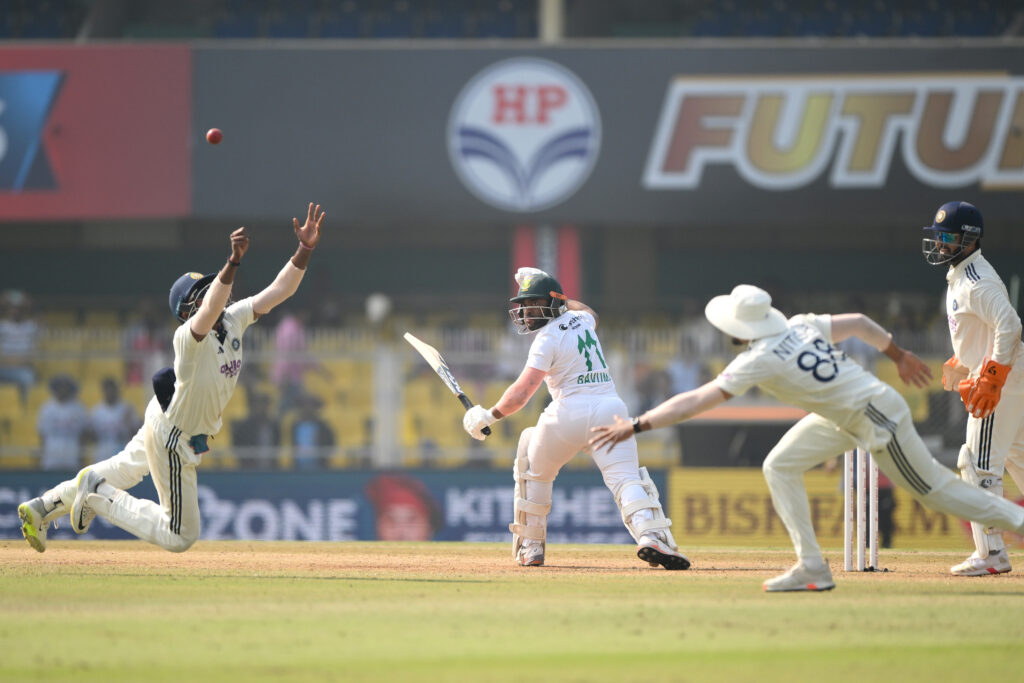
Rohit Sharma and Virat Kohli turned back the clock with a 168-run stand in what could be their Australian swansongs as India thrashed the hosts by nine wickets in the third one-day international on Saturday.Chasing a modest 237 to win, the visitors reached their target easily with 69 balls to spare at a sold-out Sydney Cricket Ground.Rohit top-scored with an unbeaten 121, but the biggest roar was for Kohli, who made ducks in the first two games won by Australia at Adelaide and Perth which clinched them the series.This time he was back to his best with a fluent 74 not out.Like Rohit, he has retired from Test and T20 duties and with no more ODI series scheduled Down Under before the 2027 World Cup it was almost certainly their final innings on Australian soil.”I don’t know if we’ll be coming back to Australia, but it was fun all these years that we played here,” said the 38-year-old Rohit. “You know, a lot of good memories, bad memories. But all in all, I’ll take the cricket that I played here.”India made a confident start to the chase after Mitchell Marsh won the toss and batted first only for Australia to be bowled out for 236.Rohit and Shubman Gill put on 69 before Josh Hazlewood enticed a faint edge from the Indian captain.That brought the 36-year-old Kohli to the crease and he and Rohit set about knocking off the runs quickly. Rohit was almost flawless in reaching a 33rd ODI ton, with 13 fours and three sixes in his 121, while Kohli brought up a 75th half-century to steer them home.”Going out there and having a situation is always something that brings the best out of me and when Rohit is batting it’s pretty easy to kind of rotate the strike, we know each other’s game pretty well,” said Kohli.”We want to say thank you, we’ve loved coming to this country,” he added. “We’ve played some of our best cricket here so thank you very much.”Earlier, Australia were ticking along nicely at 183-3 but lost their last seven wickets for just 53.Harshit Rana did the damage with 4-39 while Matt Renshaw top-scored with 56.Marsh and Travis Head made a watchful start but once they got their eye in the runs started flowing.Head looked dangerous, hitting six fours in reaching 29 off 25 balls, passing 3,000 one-day runs en route. But he failed to control a cut shot off Mohammed Siraj and was caught at backward point.Marsh was bowled for 41, confounded by the spin of Axar Patel, and when Matt Short (30) fell to Washington Sundar Australia were 124-3 after 23 overs.Shreyas Iyer pulled off a sensational backpeddling catch to remove Alex Carey (24) and it sparked a collapse.Renshaw reached a maiden ODI half-century, but with the runs drying up he charged at Sundar and was trapped lbw, before Mitchell Owen departed for one and Mitchell Starc for two leaving Australia in trouble at 201-7.Cooper Connolly made a late 23 but the tail failed to wag.

Afghanistan, Pakistan to firm up truce at Istanbul talks

Afghan and Pakistani negotiators are to meet in Istanbul Saturday to address security issues and establish a lasting ceasefire along their shared border after an outbreak of unexpectedly intense bloody clashes. The confrontation — which resulted in dozens of deaths, among them civilians — began two weeks ago following explosions in central Kabul, which the Taliban government blamed on its Pakistani neighbour, launching a retaliatory offensive at the border. Vowing a strong response, Islamabad then carried out “precision strikes” against armed groups on Afghan soil which are at the heart of the dispute, security sources said. After further clashes that left soldiers and civilians dead, both sides declared an initial 48-hour ceasefire which collapsed two days later, with Kabul blaming Islamabad. A second truce took shape on Sunday following talks in Doha thanks to mediation by Qatar and Turkey, which appears to have held, although the terms remained unclear. At Saturday’s talks, negotiators are expected to detail the “mechanisms” for ensuring the return to stability that were announced in Doha. It was not clear when the talks would begin nor where they were meeting in Istanbul. The Afghan delegation, which left for Turkey on Friday, will be led by its deputy Interior Minister Haji Najib. Islamabad has not said who it is sending for the talks. For the Taliban government, the goal is to ensure Afghanistan’s territorial integrity. For Islamabad, the negotiations must address “the menace of terrorism emanating from Afghan soil towards Pakistan,” its foreign ministry spokesman Tahir Hussain Andrabi said on Friday. – An essential meeting -Security issues are at the heart of recurring bilateral tensions. Facing a resurgence of attacks against its security forces, Islamabad has repeatedly accused its Afghan neighbour of “harbouring” groups it views as “terrorist”, primarily the Pakistani Taliban (TTP) — a charge Kabul denies. Throughout the confrontation, Islamabad demanded that the Taliban authorities “regain control” over fighters present on Afghan soil.From the Pakistani perspective, this would be key to the Istanbul talks, explained Ibraheem Bahiss, an International Crisis Group analyst in Afghanistan. “The meeting in Istanbul is going to be quite essential because that’s where the so-called mechanism would be agreed on in terms of when Pakistan has concerns that anti-Pakistan elements inside Afghanistan are doing things against Pakistan,” he told AFP. He said such “mechanisms” could involve intelligence sharing on armed groups. “For example, Pakistan would give coordinates of where they suspect TTP fighters or commanders are, and instead of carrying out strikes, Afghanistan would be expected to carry out action against them,” he said.But it was unclear if that would end the problem. “I’m not so hopeful that a technical mechanism will really address the fundamental drivers of this escalatory cycle,” he admitted.Before the latest skirmishes, Pakistan had long been the Taliban’s biggest supporter, bolstering them in Afghanistan for so-called strategic depth against arch-rival India.Two weeks ago, the initial explosions in Kabul — which triggered the escalation — took place as the Taliban foreign minister was making an unprecedented visit to India.Turkey has not confirmed any details about Saturday’s meeting beyond hailing their joint decision in Doha “to establish mechanisms to strengthen peace and stability” and pledging to “continue to support the efforts” to achieve that. 

Rana takes four as India bowl out Australia for 236 in 3rd ODI

Paceman Harshit Rana grabbed four wickets to bowl out Australia for 236 in the final one-day international as India strive to prevent a whitewash of the three-match series.The hosts were ticking along nicely at 183-3 in front of a sold-out Sydney Cricket Ground but lost their last seven wickets for just 53 to be all out with 3.2 overs left.Rana did the damage with 4-39 while Matt Renshaw top-scored on 56 after Mitchell Marsh won the toss and opted to bat.Australia have already clinched the series after a two-wicket win in Adelaide followed a seven-wicket victory at Perth, with India playing for pride.Marsh and Travis Head made a watchful start, with the visitors finding some early swing.But once they got their eye in, the runs started flowing with both going on the attack, picking off boundaries.Head looked dangerous, hitting six fours in reaching 29 off 25 balls, passing 3,000 one-day runs en route. But he failed to control a cut shot off Mohammed Siraj and was caught at backward point.Matt Short should have been run out without scoring in the same over but Shubman Gill missed a sitter with the throw and he survived.Marsh was bowled for 41, confounded by the spin of Axar Patel, and when Short (30) was well caught by Virat Kohli off Washington Sundar Australia were 124-3 after 23 overs.Shreyas Iyer pulled off a sensational backpeddling catch to remove Alex Carey (24), but hurt himself after falling heavily, casting doubt on whether he will bat.It sparked a collapse.Renshaw reached a maiden ODI half-century after being called up for the series following more than two years in the international wilderness.But with the runs drying up, he charged at Sundar and was trapped lbw, and when Mitchell Owen departed for one and Mitchell Starc for two Australia were in trouble at 201-7.Cooper Connolly made a late 23 but the tail failed to wag as India turned the screws.

India trials Delhi cloud seeding to combat deadly smog

India trialled cloud seeding over its smog-filled capital for the first time, spraying a chemical from an aeroplane to encourage rain and wash deadly particles out of the air.      Cloud seeding is the practice of using aeroplanes to fire salt or other chemicals into clouds to induce rain.New Delhi city authorities, working with the government’s Indian Institute of Technology Kanpur, launched a test run on Thursday afternoon using a Cessna light aeroplane over the city’s northern Burari area.”A trial seeding flight was done… in which cloud seeding flares were fired”, Delhi Minister Manjinder Singh Sirsa said in a statement late Thursday.”This flight was the proving flight for checking the capabilities for cloud seeding, the readiness and endurance of the aircraft, the capability assessment of the cloud seeding fitments and flares, and coordination among all involved agencies.”It comes ahead of a planned rollout of the scheme.Delhi’s Chief Minister Rekha Gupta said that “if conditions remain favourable, Delhi will experience its first artificial rain on October 29.”It was not immediately clear what chemical was used in the test to encourage the rain.New Delhi and its sprawling metropolitan region of 30 million people are regularly ranked among the world’s most polluted capitals, with acrid smog blanketing the skyline each winter.Cooler air traps pollutants close to the ground, creating a deadly mix of emissions from crop burning, factories and heavy traffic.Levels of PM2.5 — cancer-causing microparticles small enough to enter the bloodstream — at times rise to as much as 60 times UN daily health limits.Pollution rose this week after days of fireworks launched to mark Diwali, the Hindu festival of lights, shooting PM2.5 levels to more than 56 times the limit.That came after the Supreme Court this month eased a blanket ban on fireworks to allow the use of the less-polluting “green” crackers — developed to reduce particulate emission.At dawn on Thursday, PM 2.5 levels were 154 micrograms per cubic metre in parts of New Delhi, according to monitoring organisation IQAir, just more than 10 times World Health Organization limits.A study found in September that the noxious air is even turning Delhi’s iconic 17th-century Red Fort black.Scientists warned that the UNESCO World Heritage Site is being steadily disfigured by a black crust, according to a study published in the Heritage journal by a joint team of Indian and Italian researchers.Invented in the 1940s, countries have been seeding clouds for decades to alleviate drought, fight forest fires and even to disperse fog at airports.China used it in 2008 to try to stop rain from falling on Beijing’s Olympic stadium.But research on the effects of cloud seeding on neighbouring regions is mixed — and some evidence suggests it does not work very well even in the target area.

Harmer stars as South Africa beat Pakistan to draw series

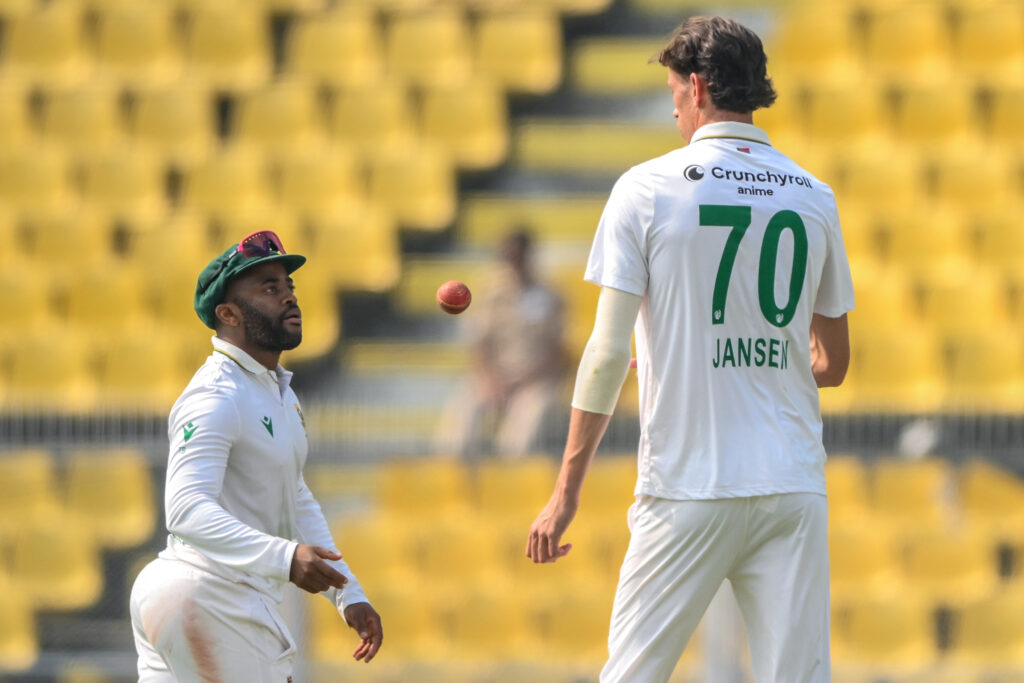
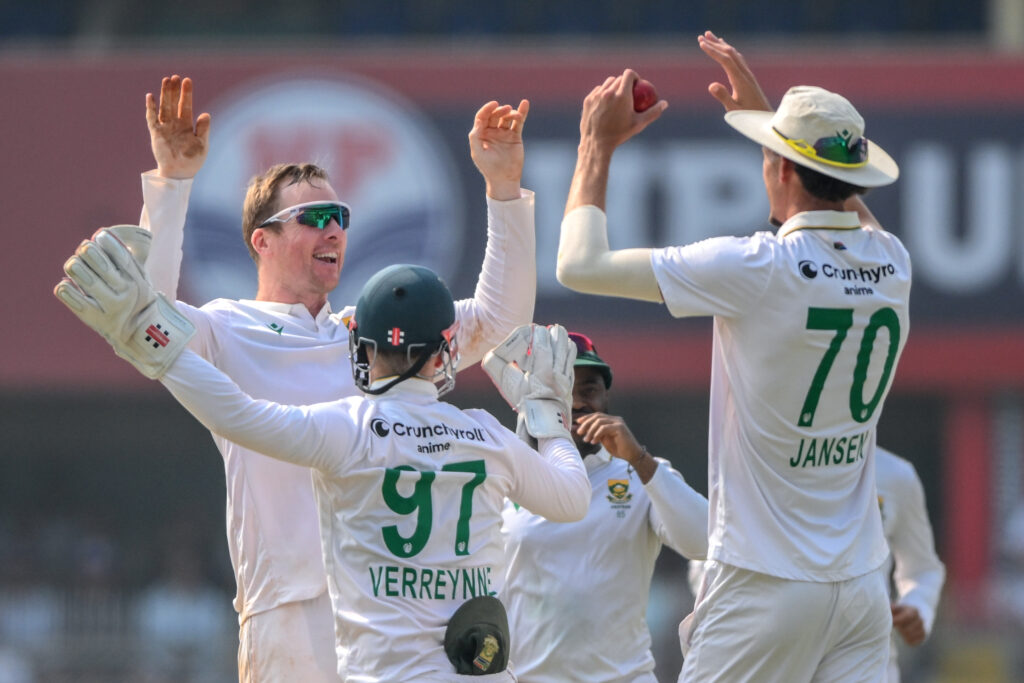
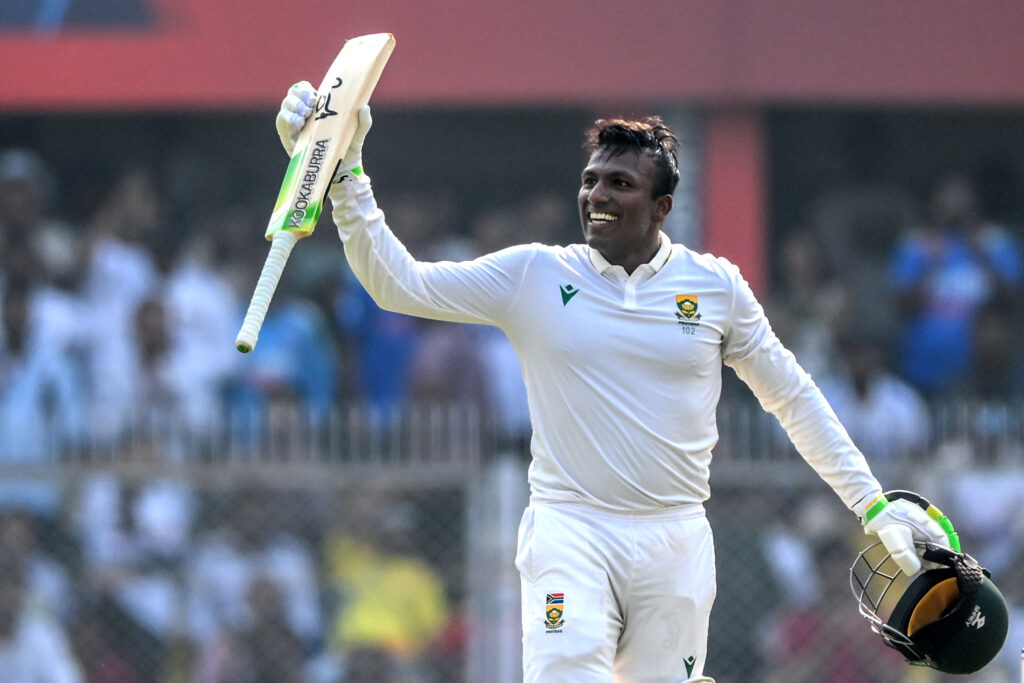
South Africa beat Pakistan by eight wickets in the second Test in Rawalpindi on Thursday to draw the series 1-1 with Simon Harmer taking a maiden five-wicket haul.The 36-year-old off-spinner finished with 6-50, taking his 1,000th first-class wicket in the process, on a deteriorating Rawalpindi stadium pitch.South Africa eased to the 68-run target for the loss of captain Aiden Markram (42) and Tristan Stubbs (nought), both to spinner Noman Ali, who finished with 2-40.Ryan Rickelton, who scored 25 not out, hit Sajid Khan for a six to seal an emphatic win minutes before the lunch break for the World Test Championship holders. Markram was delighted by his side’s display after losing the first Test by 93 runs.”It was a great response after Lahore,” said Markram, standing in for regular skipper Temba Bavuma, who missed the tour with a calf injury.Like Lahore — where spinners took 34 of the 40 wickets to fall — it was a battle of the slow bowlers.Pakistan made 333 in their first innings before the South African tail wagged to help them pile up 404 for a crucial 71-run lead.Thursday’s morning session saw Pakistan’s batters fold, adding just 44 runs after resuming the fourth day on 94-4.Harmer torpedoed Pakistan’s hopes of saving the Test when he trapped Babar Azam leg-before with the fifth ball of the day after the batsman had reached his 30th Test half-century.Markram said the performance of the South African spinners, especially Harmer and Keshav Maharaj, gave them a big boost with two Tests in India next month.”In South Africa you’d think just seamers and some spinners, but we are a work in progress heading to India,” he said.Pakistan captain Shan Masood said some of his side’s batting was “not up to the mark”.”You have to give credit to South Africa,” he said.”They have kept fighting and our lower-order batting, finishing innings off, third-innings collapses are not up to the mark.”- Azam drought goes on -Pakistan’s hopes had rested on Azam ending his century drought, having not scored a ton since December 2022.His lean spell goes on.Nine runs later Harmer had Mohammad Rizwan caught by close-in fielder Tony de Zorzi for 18.In his next over the spinner dismissed Noman for nought, caught behind for Harmer’s 1,000 wicket in his 235th first-class match.Harmer is the fourth South African to take 1,000 or more first-class wickets, behind Mike Procter (1,417), Allan Donald (1,216) and Charlie Llewellyn (1013).Harmer’s previous best figures of 4-51 came in the first Test in Lahore.Unlike South Africa, Pakistan’s tail did not last long as they lost their last five wickets for 33 runs in their second innings, just their latest batting slump in the series.Shaheen Shah Afridi was run out without scoring while Maharaj dismissed Salman Agha for 28 and Sajid Khan for 13 to swiftly wrap up the innings.Maharaj finished with 2-34 to follow up his 7-102 in the first innings.

Bangladesh court to deliver verdict against Hasina on November 13

The verdict in the crimes against humanity case against ousted Bangladesh prime minister Sheikh Hasina will be delivered on November 13, the attorney general said, as the trial ended on Thursday.Hasina, 78, has defied court orders to return from India to face charges of ordering a deadly crackdown in a failed attempt to crush a student-led uprising.”If she believed in the justice system, she should have returned,” Attorney General Md Asaduzzaman said in his closing speech of the nearly five-month-long trial in Dhaka.”She was the prime minister but fled, leaving behind the entire nation — her fleeing corroborates the allegations.”Her trial in absentia, which opened on June 1, heard months of testimony alleging Hasina ordered mass killings.Up to 1,400 people were killed between July and August 2024, according to the United Nations.Prosecutors have filed five charges, including failure to prevent murder, amounting to crimes against humanity under Bangladeshi law.They have demanded the death penalty if she is found guilty.Chief prosecutor Tajul Islam has accused Hasina of being “the nucleus around whom all the crimes were committed” during the uprising.Her co-accused are former interior minister Asaduzzaman Khan Kamal, also a fugitive, and ex-police chief Chowdhury Abdullah Al-Mamun, who is in custody and has pleaded guilty.- ‘We want justice’ -Witnesses included a man whose face was ripped apart by gunfire.The prosecution also played audio tapes — verified by police — that suggested Hasina directly ordered security forces to “use lethal weapons” against protesters.Hasina, assigned a state-appointed lawyer, has refused to recognise the court’s authority.Defence lawyer Md Amir Hossain said she was “forced to flee” Bangladesh, claiming that she “preferred death and a burial within her residence compound”.Her now-banned Awami League says she “categorically denies” all charges and has denounced the proceedings as “little more than a show trial”.Asaduzzaman, the attorney general, said it had been a fair trial that sought justice for all victims.”We want justice for both sides of the crimes against humanity case, that claimed 1,400 lives,” he said, listing several of those killed, including children.The verdict will come three months ahead of elections expected in early February 2026, the first since Hasina’s overthrow.

Bangladesh leader urges calm after cabinet neutrality questioned

Bangladesh’s interim leader has sought to calm rival political parties questioning the impartiality of his cabinet as they jostle for power ahead of the first elections since a 2024 uprising.The polls, expected in February 2026, will be the first in the South Asian nation of 170 million people since a student-led revolt ousted prime minister Sheikh Hasina, ending her 15-year hardline rule.Muhammad Yunus, the 85-year-old Nobel Peace Prize winner serving as the country’s “chief adviser”, had “taken measures to hold free, impartial, and fair elections”, his press team said Thursday.But Nahid Islam, convener of the National Citizen Party (NCP) — made up of many students who spearheaded the uprising — alleged some advisers were collaborating with parties to secure their “safe exit” in the future administration.”Major political parties are appointing party loyalists to various administrative posts ahead of the elections,” Islam told reporters late Wednesday.”Some advisers within the government are helping them.”He did not give further details, but those and similar accusations from other parties have sent political tensions soaring.Yunus met late Wednesday with leaders of Jamaat-e-Islami, the Muslim-majority nation’s largest Islamist party, in the latest of a series of talks aimed at easing tensions.Senior Jamaat leader Abdullah Muhammad Taher said they had told Yunus that some of his advisors had been “misleading” him, by “working on behalf of a certain political party”, without giving further details.”You should be aware of them,” Taher said in a message to Yunus, speaking to reporters.That followed meetings on October 21 with the Bangladesh Nationalist Party (BNP), seen as among the election front-runners.Senior BNP official Mirza Fakhrul Islam Alamgir, speaking to reporters after that meeting, said he had “requested the government remove any adviser found siding with political parties”.Almagir did not give further details, although Dhaka’s Prothom Alo newspaper reported the BNP had submitted two names.Hasina, 78, fled last year to New Delhi, where she has defied court orders to return to attend her ongoing crimes against humanity trial for ordering the deadly crackdown.Her Awami League has been outlawed and is barred from taking part in elections.

Inside India’s RSS, the legion of Hindu ultranationalists

Brandishing bamboo sticks and chanting patriotic hymns, thousands of uniformed men parade in central India, a striking show of strength by the country’s millions-strong Hindu ultranationalist group. The Rashtriya Swayamsevak Sangh — the National Volunteer Organisation, or RSS — marked its 100th anniversary this month with a grand ceremony at its headquarters in Nagpur. AFP was one of a handful of foreign media outlets granted rare access to the group, which forms the ideological and organisational backbone of Prime Minister Narendra Modi’s Bharatiya Janata Party (BJP), in power since 2014.Like the 75-year-old prime minister, critics accuse it of eroding the rights of India’s Muslim minority and undermining the secular constitutionAt the parade, RSS volunteers in white shirts, brown trousers and black hats marched, boxed and stretched in time to shrill whistles and barked orders.”Forever I bow to thee, loving Motherland! Motherland of us Hindus!” they sang, in a scene that evoked paramilitary drills of the past.”May my life… be laid down in thy cause!”- ‘Proud’ -Hindus make up around 80 percent of India’s 1.4 billion people.Founded in 1925, the RSS calls itself “the world’s largest organisation”, though it does not give membership figures.At the heart of its vision is “Hindutva” — the belief that Hindus represent not only a religious group but are India’s true national identity.”They are willing to fight against those who will come in their way… that means minorities, Muslims, Sikhs, Christians and other Hindus who do not subscribe to the idea,” historian Mridula Mukherjee said.RSS chief Mohan Bhagwat uses softer language, saying that minorities were accepted but that they “should not cause division”.Anant Pophali, 53, said three generations of his family had been involved with the group.”The RSS made me proud to be an Indian,” the insurance company worker said.- Bloody origins -The RSS was formed during the imperial rule of the British.But it diverged sharply from that of independence efforts by Mahatma Gandhi and the Congress Party, whose leader Jawaharlal Nehru considered them “fascist by nature”.Mukherjee said archives showed “a link between the RSS and fascist movements in Europe”.”They have said, very clearly, that the way the Nazis were treating the Jews should be the way our own minorities should be treated,” she told AFP. The RSS does not comment directly on such parallels, but Bhagwat insisted that “today we are more acceptable”.The RSS was an armed Hindu militia during the bloody 1947 partition of India and the creation of Muslim-majority Pakistan.Hindu extremists blamed Gandhi for breaking India apart.A former RSS member assassinated him in 1948, and the group was banned for nearly two years.But the RSS rebuilt quietly, focusing on local units known as “shakhas” to recruit.Today, it claims 83,000 of them nationwide, as well as over 50,000 schools and 120,000 social welfare projects.At a shakha in Nagpur, Alhad Sadachar, 49, said the unit was “meant to develop togetherness”.”You can get a lot of good energy, a lot of good values, like helping those in need”, he said.At a shaka that AFP was allowed to attend, dozens of members –- many middle-aged or elderly, and not in uniform –- gathered for an hour of calisthenics and song.But in a show of symbolism, they congregated beneath a saffron flag — the colour of Hinduism — rather than India’s tricolour.- ‘A country that is one’  -The RSS remains deeply political.The group re-emerged in the late 1980s, spearheading a movement that ended with a violent mob demolishing a centuries-old mosque in Ayodhya -– now replaced by a gleaming temple to the Hindu god Rama.”That was the turning point,” said Mukherjee, the historian, adding that the RSS was “able to create a mass mobilisation on religious issues, that became at its heart clearly anti-Muslim”.The group helped deliver Modi’s BJP party an electoral landslide in 2014.Since then, Modi -– a former RSS “pracharak”, or organiser —  has pursued policies that critics say marginalise India’s estimated 220 million Muslims, 15 percent of the population.”There has been a clear increase in terms of violence, lynching and hate speech since Modi has taken over,” said Raqib Hameed Naik, director of the US-based Center for the Study of Organized Hate.RSS leaders deny it has participated in atrocities.”Those allegations are baseless,” Bhagwat said.”Atrocities were never done by the RSS. And if it happens anyway, I condemn that.”Under Modi, it has expanded its reach.”The RSS has been able to stir Indian society in a direction that is more nationalistic, less liberal in a Western sense,” said Swapan Dasgupta, a former nationalist parliamentarian.But volunteer Vyankatesh Somalwar, 44, said the group only pushed “good values”. “The most important thing is to contribute to your country,” he said. “A country that is one, above all.”