AFP Asia

Indonesia’s Prabowo, Turkey’s Erdogan agree to bolster ties

Indonesian President Prabowo Subianto and Turkey’s Recep Tayyip Erdogan held talks Wednesday, signing a series of agreements to boost trade and defence ties between the Muslim-majority nations, including a joint venture to build drones.The Turkish leader was visiting Southeast Asia’s largest economy after travelling to Malaysia and before heading to Pakistan on a four-day tour of key allies in the Islamic world.He was greeted at a presidential palace in Bogor, a city south of the capital Jakarta, by a traditional marching band, national anthems and schoolchildren waving flags.”We are committed to increasing trade between the two countries, which is mutually beneficial,” Prabowo said after talks with Erdogan.”We also agree to increase joint production and cooperation in the defence industry.”Prabowo said that would include joint training for soldiers and closer collaboration on counter-terrorism and intelligence.A dozen agreements on trade, energy, higher education and religious affairs were signed by ministers and officials, including a deal to manufacture drones in Indonesia, as the pair watched on.Prabowo earlier called Erdogan “my close friend, my brother” after his arrival and said both sides were also trying to accelerate the signing of a free trade agreement.The leaders held their nations’ first High-Level Strategic Cooperation Council meeting before the agreements were signed.Erdogan said the pair talked about global issues including Syria and the Palestinian cause, alongside future deals seeking to boost their trade to $10 billion a year.Indonesia and Turkey’s trade in 2024 was worth $2.4 billion, according to Indonesia’s trade ministry.The leaders last met in July for talks in the Turkish capital Ankara before then-defence minister Prabowo was officially inaugurated as Indonesia’s president.Relations between the two countries grew closer under Prabowo’s predecessor Joko Widodo, who paid a state visit to Turkey in 2017.In 2023, Indonesia purchased 12 Turkish drones worth around $300 million in a push to upgrade its ageing military.Both are members of the 57-member Organisation of Islamic Cooperation where they are staunch supporters of Palestinians and vocal critics of Israel.

India’s Hindu mega-festival supercharges economy

The unfathomable scale of the world’s largest religious festival in India overshadows many nations in size — and for the economy, its impact is just as dramatic.”Business is booming everywhere for everyone across our city,” said taxi driver Manoj Kumar, whose northern Indian home of Prayagraj has swelled from its normal seven million residents dozens of times over.Religion, politics and the economy are deeply intertwined in India — and the six-week-long Hindu festival of the Kumbh Mela gives one of the clearest examples.The Hindu nationalist government of Prime Minister Narendra Modi has poured in funds for large-scale infrastructure upgrades.”We are seeing an unimaginable transformation of our city,” 37-year-old Kumar said.”There are new roads, bridges, additional flights and trains, new hotels and restaurants, and an unmet demand for workers.”The Kumbh’s extraordinary scale provides a major job boost, with millions of visitors splashing out on accommodation, transport and food.Kumar’s daily earnings shot up to around $250, roughly eight times as much as usual.”I’ve had some of the busiest 18-20 hour workdays of my life with little or no rest,” he said. “But I am not alone in benefiting — this is a life-changing event.”- ‘Big driver’ -The state government — led by firebrand Hindu monk Yogi Adityanath, chief minister of Uttar Pradesh state and a key leader in Modi’s Bharatiya Janata Party (BJP) — controls lucrative service contracts for its running. It is impossible to independently verify government statistics of a religious celebration that critics say is being cashed in on by Hindu nationalist leaders to burnish political credentials.That includes the reported more than 435 million pilgrims to have taken a ritual river dip so far — with the festival running until February 26 — that organisers say is based on artificial intelligence assessments from surveillance camera networks.It also includes the whopping $24 billion Adityanath projects it will contribute to the economy — that’s the equivalent of more than the population of the United States and Canada splashing out the entire annual GDP of Armenia.They are staggering statistics even for the world’s most populous nation of 1.4 billion people.Devendra Pratap Singh, president of Associated Chambers of Commerce and Industry in Uttar Pradesh and Uttarakhand states, puts the figure as even higher — at about $30 billion. “Our economy would obviously grow because of this mega event,” he told AFP. “We’re seeing its benefits at every stage, with impacts on transportation, hotels, food, and every other sector.”With the festival funnelling religious tourism on a vast scale, local reports say the state also expects $3 billion in additional government revenues including taxes and fees.”How gods drive India’s consumer economy,” The Economic Times newspaper said in a report last month. “The Kumbh is the most visible part of a big driver of India’s economy, the festival cycle.”Major household brands see the Kumbh as ripe for opportunity, setting up shops and pouring in advertising. In the crowded tent city along the river banks, where pilgrims come to take ritual dips, an army of vendors sells everything from food and clothes to prayer items, flowers and festival memorabilia.- ‘Phenomenal’ -Sanjeev Singh, from Adityanath’s office, says the Kumbh Mela makes global festivals look small — pointing to Brazil’s Rio Carnival with some seven million participants or the Muslim hajj in Saudi Arabia with nearly two million.”The sheer scale is mind-boggling,” Singh said. “This is phenomenal.”Hotel owner Deepak Kumar Mehrotra, 67, said his two properties have been fully booked. “Demand has really shot up,” Mehrotra said. “People across all strata are getting really good business.”Rooms, if available, are going for up to 10 times their regular rates — with top-end hotels charging $900-$1,200 per night — almost as much as the annual per capita income in Uttar Pradesh state.Meeting demand has been a challenge, with chefs, drivers and electricians in high demand.Travel agent Shahid Beg Romi, 62, who runs Sangam Travels, said businesses were struggling to “adjust to this drastic change in the footfall” in Prayagraj.”Even small areas 50 miles (80 kilometres) outside Prayagraj are packed,” Romi added. “People are staying and commuting to the Kumbh from there”.The impact is felt in other Hindu pilgrimage sites in the state, including Ayodhya and Varanasi, with devotees journeying on to pray there too.”Such mega-events obviously create new growth and work opportunities,” he said.

Modi hopes to rekindle Trump bromance

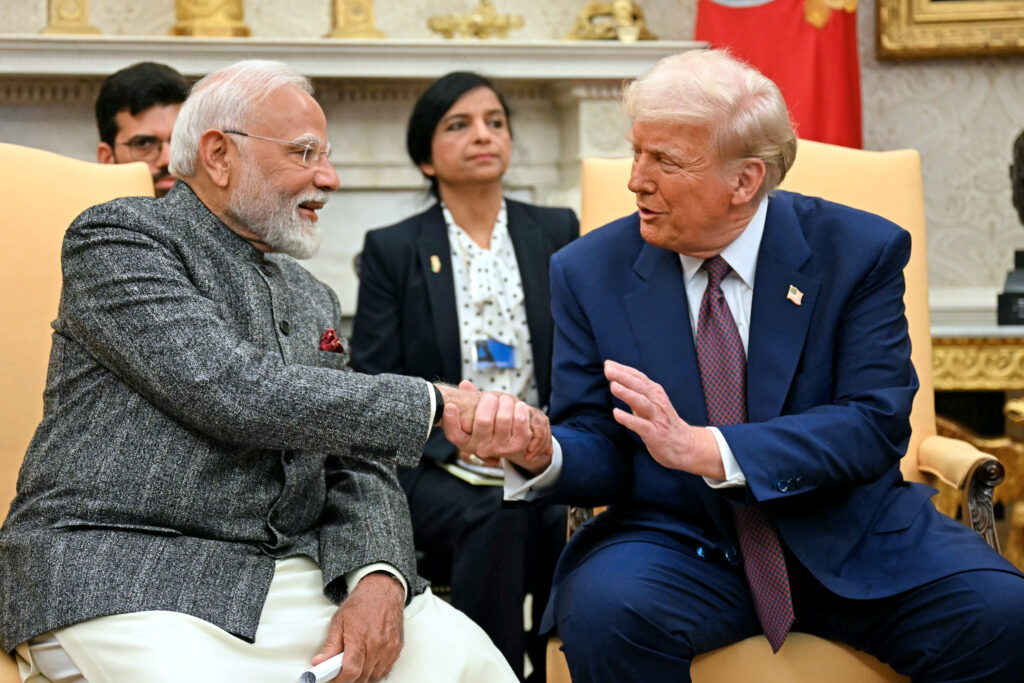
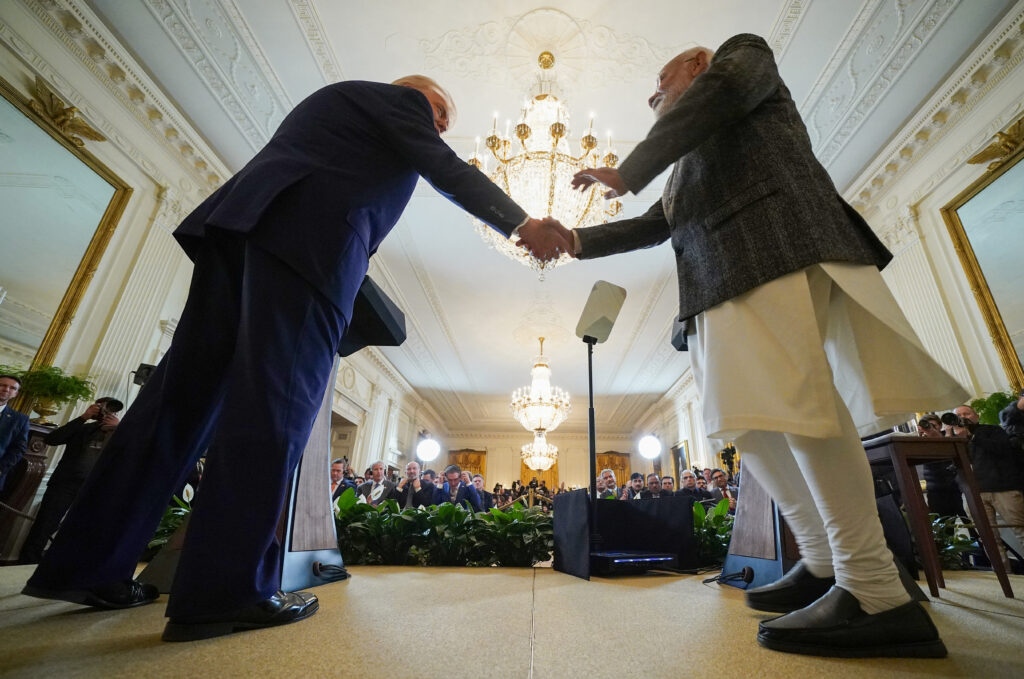
Indian Prime Minister Narendra Modi will try on a US visit to pick up where he left off four years ago in wooing Donald Trump, as he offered quick tariff concessions in hopes of avoiding the second-term president’s wrath.For nearly three decades, US presidents from both parties have prioritized building ties with India, seeing a natural partner against a rising China. But Trump has also raged against India over trade, in the past calling the world’s fifth-largest economy the “biggest tariff abuser.”Trump himself has unapologetically weaponized tariffs against friends and foes since returning to office last month. Ahead of Modi’s visit, the Indian government slashed duties on high-end motorcycles — a boost to Harley-Davidson, the iconic American company whose struggles in motorbike-loving India have captured Trump’s attention.India has “done its groundwork and has already taken positive steps to set a good tone” with Trump, said Lisa Curtis, the National Security Council director on South Asia during Trump’s first term.Modi “has prepared for this, and he is seeking to preempt Trump’s anger,” said Curtis, now a senior fellow at the Center for a New American Security.Modi has also obliged Trump on one of his top priorities — deporting undocumented immigrants.While public attention has focused on Latin American migrants, India is the third source of undocumented immigrants in the United States after Mexico and El Salvador.In an account that drew wide attention in India, some 100 migrants were flown back from the United States in shackles the whole journey. Angered activists in New Delhi burned an effigy of Trump.The main opposition Congress party called the treatment of Indian citizens an “insult” and accused Modi of weakness toward Trump.But Modi’s Hindu-nationalist government — which itself has vowed no tolerance for undocumented migrants from Muslim-majority Bangladesh — has promised cooperation.- ‘Recreate their bonhomie’ -Modi arrives Wednesday in Washington after an artificial intelligence summit in Paris and will see Trump on Thursday, making him the fourth world leader to visit him at the White House since his return, following the prime ministers of Israel and Japan and king of Jordan.Modi assiduously courted Trump during his first term. The two share much in common, with both campaigning on promises to promote the interests of their countries’ majority communities over minorities and both shifting long-held democratic norms by doggedly pursuing critics.In February 2020, Modi invited Trump before a cheering crowd of more than 100,000 people to inaugurate the world’s largest cricket stadium, later renamed for the prime minister himself, in his home state of Gujarat.It remains the last presidential trip made overseas by Trump, with the Covid-19 pandemic grounding him soon afterward.”Prime Minister Modi and his advisors hope that he and President Trump are able to recreate their bonhomie of the past and use that to ensure India avoids any negative trade-related actions or sanctions,” said Aparna Pande, a fellow at the Hudson Institute.India, she said, “remains one of the few countries that retains bipartisan support across the aisle in the US.”President Joe Biden kept building relations with Modi including by elevating the Quad — a four-way grouping of Australia, India, Japan and the United States, perceived by China as an attempt to box it in — by holding annual summits.India is scheduled to hold a Quad summit this year, which would mean another visit to India by Trump.The Biden administration, however, occasionally offered gentle critiques on Modi’s record on the rights of Muslims and other minorities, an issue unlikely to resonate with Trump.The Biden team issued stronger criticism, albeit privately, after US prosecutors said that India attempted to assassinate a Sikh separatist with US citizenship in New York.Curtis said that she believed that India has “learned a lesson” from Biden’s warning on the plot and that the issue was effectively closed.”I think that the Trump administration is hoping to move on from this issue,” she said.

Rushdie tells trial of ‘lake of blood’ after stabbing

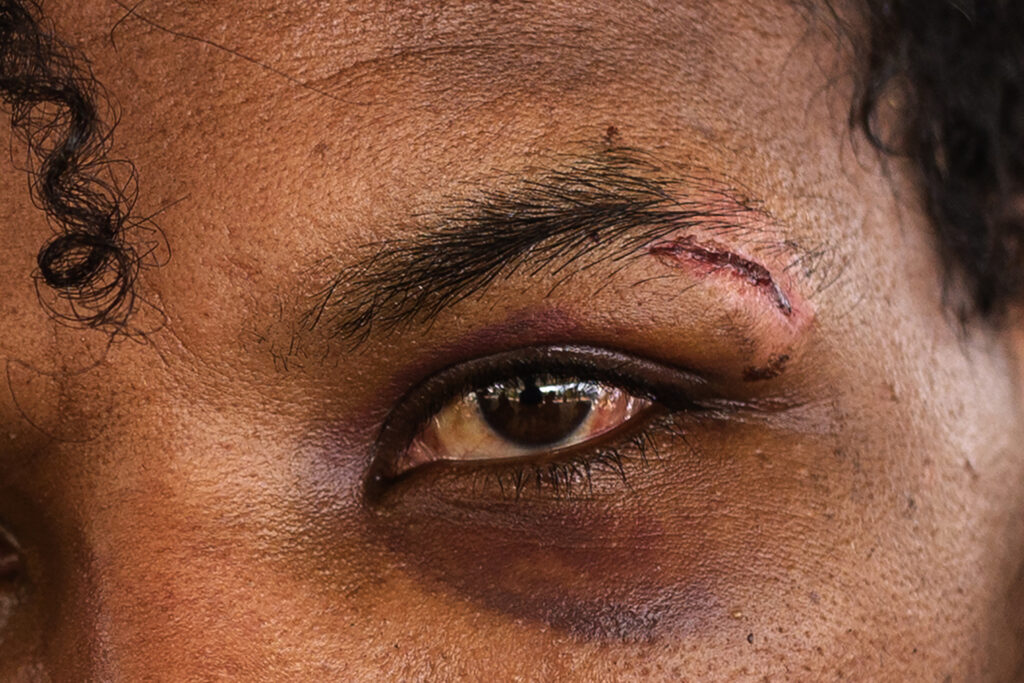
Novelist Salman Rushdie described Tuesday the moment a knife-wielding attacker stormed on stage and attempted to kill him in a frenzied attack that left him blind in one eye.”The Satanic Verses” author told jurors at the trial of his alleged attacker, 23-year-old American-Lebanese Hadi Matar, that Matar “was stabbing and slashing” at him.”I was aware of this person rushing at me on my right hand side,” he said, recounting how he was about to speak at an arts event in New York state in August 2022.”I only saw him at the last minute.””It was a stab wound in my eye, intensely painful, after that I was screaming because of the pain,” Rushdie said, adding that he was left in a “lake of blood.”He said it “occurred to me I was dying” before he was stretchered out of the cultural center and helicoptered to a trauma hospital.On Tuesday, Rushdie nodded and waved at his wife Rachel Eliza Griffiths, who was in court for her husband’s testimony on the second day of the trial.Matar’s legal team have sought to prevent witnesses from characterizing Rushdie as a victim of persecution following Iran’s 1989 fatwa calling for his murder over supposed blasphemy in “The Satanic Verses.”Matar is accused of stabbing Rushdie about 10 times with a six-inch blade.As on trial’s opening day, Matar said “Palestine will be free” as he was led into court Tuesday. He did not react as Rushdie began his evidence, biting his nails during the testimony.Rushdie, who wore distinctive glasses polarized in one lens to mask his damaged eye, described his treatment and current health.”The injuries were very serious and it took a long time to recover… the gash (in my neck) was so deep it had to be held together with metal staples,” he said.- Staff, guests fight attacker -Matar previously told media he had only read two pages of “The Satanic Verses” but believed the author had “attacked Islam.”New York-based British-American Rushdie, now 77, was rescued by bystanders.Venue employee Jordan Steves told the court Monday how he launched himself “with my right shoulder with as much force as I could manage” to help others subdue the attacker.He pointed to Matar, sitting just feet away in the ornate courtroom, when asked to identify the attacker.Steves’s colleague Deborah Moore Kushmaul said she picked up the discarded knife and gave it to police.The optical nerve of Rushdie’s right eye was severed, and he told the court that “it was decided the eye would be stitched shut to allow it to moisturize. It was quite a painful operation — which I don’t recommend.”Asked to describe the intensity of the pain over the attack, he said it was “a 10″ out of 10.His Adam’s apple was also partially lacerated, and his liver and small bowel penetrated.”The first thing I said on regaining the ability of speech was ‘I can speak’,” he said to stifled laughter from jurors.”How do you squeeze toothpaste onto a toothbrush with only one hand?” he explained when asked about injuries to his hand received as he tried to defend himself.- Freedom of expression case -Rushdie lived in seclusion in London for a decade after the 1989 fatwa, but for the past 20 years — until the attack — he lived relatively normally in New York.He became the center of a fierce tug-of-war between free speech advocates and those who insisted that insulting religion, particularly Islam, was unacceptable in any circumstances.Last year, he published a memoir called “Knife” in which he recounted the near-death experience.One of Matar’s lawyers, Lynn Schaffer, said Monday that prosecutors would seek to present the case as “open and shut” — but warned that police had made assumptions about Matar.The accused reportedly became more withdrawn and militant in his outlook following a 2018 trip to the Middle East.Iran-backed Lebanese Shiite militant organization Hezbollah endorsed the fatwa, the FBI has said, and Matar faces a separate prosecution in federal court on terrorism charges.Iran has denied any link to the attacker and said only Rushdie was to blame for the incident.

US foreign aid halt to have major hit on poorest countries: report

A suspension of US foreign aid and possible dismantling of the US Agency for International Development (USAID) will have a major impact on some of the world’s poorest countries, the Washington-based Center for Global Development (CGD) warned Tuesday.For more than 20 economies, a year-long pause on US aid could mean a loss of over one percent of their gross national income, the CGD said in a blog post.And eight economies including South Sudan, Somalia and Afghanistan could face a hit of three percent or more, the group added.The impact is especially severe for those eight economies as more than a fifth of their foreign assistance comes from USAID.The value comes up to 35 percent for Afghanistan, 36 percent for South Sudan and 40 percent for Somalia, the post added.While “US support is too large to be fully replaced,” the CGD noted that other providers’ official development assistance could be refocused and this could alleviate some of the worst effects.The poorest countries are among the main beneficiaries of aid from the International Development Association under the World Bank, which provides loans and grants to low-income countries.Other countries such as Germany, Canada, Japan and Sweden could also step up, the CGD added.”While there’s still time to change course and mitigate some of the worst effects, countries around the world would be wise to act now in response to a less globally engaged United States,” said the CGD blog post’s authors Ian Mitchell and Sam Hughes.US President Donald Trump has ordered a 90-day review of USAID, which runs health and emergency programs in around 120 countries, including the world’s poorest.Less than a week after Trump returned to the White House, USAID told non-governmental groups they would have to cease operations immediately because the new administration had frozen its budgets.

Key Bangladesh party warns over unrest after buildings smashed

Bangladesh’s powerful BNP political party has spoken out publicly for the first time against the interim government after a surge of unrest and a sweeping security crackdown.Police have arrested more than 1,500 people nationwide since Saturday as part of “Operation Devil Hunt”, targeting groups allegedly connected to ousted premier Sheikh Hasina, who was toppled in a student-led revolution in August.Mirza Fakhrul Islam Alamgir, Bangladesh National Party secretary-general, met interim leader Mohammed Yunus late on Monday to “raise concerns over the incidents that have swept across the country”.Protesters smashed buildings connected to Hasina’s family using excavators — including a museum to her late father, Bangladesh’s first president — on February 5, six months to the day since she fled as crowds stormed her palace in Dhaka.Police stood by as protesters torched the building.”It all happened in front of law enforcement agencies, so the government cannot avoid its responsibility,” Alamgir said.Those protests followed reports that 77-year-old Hasina, who has defied an arrest warrant to face trial for crimes against humanity, would appear in a live broadcast from exile in neighbouring India.There were also clashes between anti-Hasina protesters and members of her Awami League party.Members of the Students Against Discrimination protest group were attacked in the Dhaka district of Gazipur on Friday. The group, whose members are now in the government cabinet, is credited with sparking the uprising against Hasina.The vocal and powerful group then demanded action, sparking the security operation with mass arrests countrywide.”We have seen such drives before,” Alamgir said. “We cautioned the government to protect innocent civilians.”Human Rights Watch warned last month that the police had “returned to the abusive practices that characterized the previous government”.Yunus, 84, a Nobel Peace Prize winner, has warned against retaliation after Hasina’s ouster.”The sacrifices we made were aimed at bringing an end to injustices across all sectors,” Yunus said late on Monday.”If we engage in the same kind of actions as the fallen regime, there will be no difference between them and us,” he said.Also on Monday, police took publisher Shatabdi Bhaba into protective custody after dozens of furious Islamist students swarmed his stall at Dhaka’s Ekushey Book Fair.”They had been campaigning to vandalize the book stall,” said Sanjana Mehran, co-founder with Bhaba of Sabyasachi Publishers, saying the chanting protesters were angry over a book by exiled feminist author Taslima Nasrin.Yunus said that such “unwarranted acts undermine the inclusive cultural traditions” of Bangladesh.

NY jury hears attacker ‘dangerously close’ to killing Salman Rushdie

Prosecutors in the trial of the man accused of attacking Salman Rushdie told jurors Monday that the author came “dangerously close” to dying in a frenzied assault that left him blind in one eye.Hadi Matar, a 27-year-old Lebanese-American who said “free Palestine” as he entered court, is charged with attempted murder and assault over the August 12, 2022 attack at an arts event in western New York state.Matar is accused of stabbing Rushdie about 10 times with a knife, leaving him in grave condition and without sight in his right eye, and also slashing another speaker at the gathering.Prosecutor District Attorney Jason Schmidt told how Rushdie, who has faced death threats since the release of his 1988 novel “The Satanic Verses,” had just taken his seat in the amphitheater in front of about 1,000 people.”A young medium-build man wearing a dark colored facemask… appeared from the rear of the theater,” Schmidt said. “Once on the stage, he rapidly accelerated into a full-out run.””(Matar) forcefully and efficiently and with speed plunged the knife into Mr Rushdie over and over and over again… swinging, slashing into Mr Rushdie’s head, neck, abdomen, upper thigh.”Schmidt said Rushdie, an Indian-born British and American citizen, raised his hands to defend himself but remained seated after several blows landed.- Blood, screaming -“The Satanic Verses” was declared blasphemous by Iran’s supreme leader Ayatollah Ruhollah Khomeini, who issued a fatwa, or religious edict, in 1989 calling on Muslims anywhere in the world to kill Rushdie.Iran-backed Lebanese Shiite militant organization Hezbollah endorsed the fatwa, the FBI has said, and Matar faces a separate prosecution in federal court on terrorism charges.Matar, who wore a blue shirt and frequently conferred with his five-strong legal team in the ornate courtroom Monday, previously told the New York Post that he had only read two pages of Rushdie’s novel but believed the author had “attacked Islam.”New York-based Rushdie, now 77, suffered multiple stab wounds before bystanders subdued the attacker, later identified by police as Matar.Venue employee Deborah Moore Kushmaul said she picked up the discarded knife, which she indicated had a six-inch blade, and gave it to police.”I could see blood, I could see (bystanders) piling on. Our audience, many of whom were elderly, were screaming,” she said.  “My main concern was seeing all the bags that there might be a bomb, that there might be another attacker.” Matar came “dangerously close” to killing Rushdie, Schmidt said, reporting that the author was stabbed through the right eye with such ferocity that it severed the optical nerve.Rushdie’s Adam’s apple was also partially lacerated, and his liver and small bowel penetrated.”His blood pressure was low — he lost so much blood,” said the prosecutor.Rushdie was not in court Monday but is expected to testify at the trial.- Life under fatwa -One of Matar’s lawyers, Lynn Schaffer, said in an opening argument punctuated with Super Bowl references and bouts of coughing that prosecutors would seek to present the case as “straightforward — open and shut.””Pay attention to the assumptions that the police witnesses make… how does that color the way they investigate this case?” she said. “They assume things about Mr Matar that affect the way they investigate.”A large media presence has gathered in the small lakefront resort town of Mayville near the Canadian border to follow the trial.Matar’s defense team sought a delay in the case as his primary lawyer has been hospitalized, but judge David Foley denied the request.Matar’s side also sought to have the trial moved from Mayville, near where Rushdie was attacked, arguing a fair trial with local jurors was impossible.Rushdie lived in seclusion in London for a decade after the fatwa, but for the past 20 years — until the attack — he lived relatively normally in New York.Last year, he published a memoir called “Knife” in which he recounted the near-death experience.”Why didn’t I fight? Why didn’t I run? I just stood there,” Rushdie wrote.Iran has denied any link to the attacker — but said only Rushdie was to blame for the incident.The case continues Tuesday.

NY jury hears attacker repeatedly stabbed Salman Rushdie

Prosecutors in the trial of the man accused of attacking Salman Rushdie described to jurors Monday how the “Satanic Verses” author was stabbed repeatedly in a frenzied assault that left him blind in one eye.Hadi Matar, a 27-year-old Lebanese-American who said “free Palestine” as he was led into court, is charged with attempted murder and assault over the August 12, 2022 attack at an arts event in the west of New York state.Matar is accused of stabbing Rushdie about 10 times, leaving him in grave condition and without sight in his right eye.Prosecutor District Attorney Jason Schmidt told how Rushdie had just taken his seat in the amphitheater in front of about 1,000 people.”A young medium build man wearing dark colored facemask… appeared from the rear of the theater,” Schmidt said. “Once on the stage he rapidly, accelerated into a full-out run.”(Matar) forcefully and efficiently and with speed plunged the knife into Mr Rushdie over and over and over again… swinging, slashing into Mr Rushdie’s head, neck, abdomen, upper thigh.”Schmidt said Rushdie raised his hands to defend himself but remained seated after several blows had been landed.The celebrated Indian-born writer, a naturalized American based in New York, has faced death threats since his 1988 novel “The Satanic Verses” was declared blasphemous by Iran’s supreme leader.Ayatollah Ruhollah Khomeini issued a fatwa, or religious edict, in 1989 calling on Muslims anywhere in the world to kill Rushdie.Hezbollah endorsed the fatwa, the FBI has said, and Matar faces a separate prosecution in federal court on terrorism charges.Matar, who wore a blue shirt and frequently conferred with his five-strong legal team in the ornate courtroom, previously told the New York Post that he had only read two pages of Rushdie’s novel but believed the author had “attacked Islam.”Rushdie, now 77, suffered multiple stab wounds before attendees and guards could subdue the attacker, later identified by police as Matar.- Life under fatwa -A large media presence has gathered in the small lakefront resort town of Mayville near the Canadian border to follow the trial.Matar’s defense team sought a delay in the case as his primary lawyer has been hospitalized, but judge David Foley denied that.Matar’s side had previously sought to have the trial moved from Mayville, near where Rushdie was attacked, arguing a fair trial from the 12 jurors and four alternates recruited from the local area was impossible.Rushdie lived in seclusion in London for the first decade after the fatwa was issued, but for the past 20 years — until the attack — he lived a relatively normal life in New York.He was not in court Monday.Last year, he published a memoir called “Knife” in which he recounted the near-death experience.”Why didn’t I fight? Why didn’t I run? I just stood there like a pinata and let him smash me,” Rushdie wrote. “It didn’t feel dramatic, or particularly awful. It just felt probable… matter-of-fact.”Iran has denied any link to the attacker — but said only Rushdie was to blame for the incident.Rushdie explained in “Knife” that the attack has not changed his view on his most famous work. “I am proud of the work I’ve done, and that very much includes ‘The Satanic Verses.’ If anyone’s looking for remorse, you can stop reading right here,” he said.Rushdie has said that he did not want to attend the fateful talk, and two days before the incident he had a dream of being attacked by a gladiator with a spear in a Roman amphitheater.”And then I thought, ‘Don’t be silly. It’s a dream,'” he told CBS.

Indian police shut down Ed Sheeran’s street gig

Pop megastar Ed Sheeran has denied that he unlawfully serenaded the Indian public after police said he lacked the necessary permission to play and abruptly terminated a street performance.The British singer-songwriter and four-time Grammy winner is touring the world’s most populous country but took time out between concerts to busk to a surprised crowd in tech hub Bengaluru on Sunday. Videos shared on social media show a police officer disconnecting his microphone midway through a rendition of his hit “Shape of You” on Church Street, a bustling retail hub.Local authorities said that while Sheeran had a permit to play at concerts, that did not extend to impromptu outdoor performances.”He is a very famous singer and naturally there will be chaos. To prevent that, police had not given him permission,” Karnataka’s home minister G. Parameshwara said on Monday. “In spite of that, he has come and tried to perform, so police prevented him. Nothing beyond that.” Sheeran denied he had broken the law, saying he had been granted permission to busk “in that exact spot”. “It wasn’t just us randomly turning up,” he wrote on Instagram shortly after the incident, adding magnanimously that it was “all good though”.Local lawmaker PC Mohan said on Sunday that “even global stars must follow local rules — no permit, no performance!”Social media users were critical of the police yanking out Sheeran’s microphone cables, with one calling it “abysmal and embarrassing.”Another criticised Indian police for failing to effectively prosecute crimes against women, but Sheeran “singing on the street is where they draw the line”.Sheeran is currently on a six-city tour of India and also had a sold-out performance in Mumbai last year.Booming demand from young affluent Indians looking to splurge on new entertainment experiences are drawing international acts to play in the country.British rock band Coldplay performed what it called its “biggest-ever show” at a massive cricket stadium in the western city of Ahmedabad in January.