AFP Asia

Sri Lanka’s women-run hotel breaks down barriers

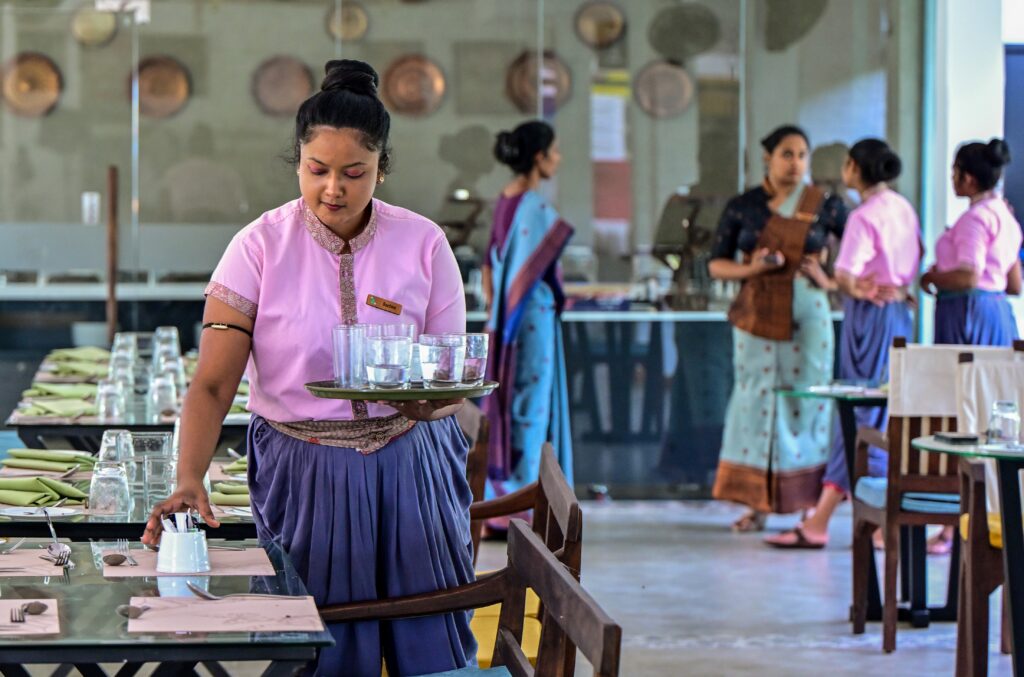
Time for the daily staff meeting at Sri Lanka’s Hotel Amba Yaalu where woman manager Jeewanthi Adhikari jokes: “This won’t look very serious, there are only girls around the table.”The hotel, on the shores of Lake Kandalama in the green hills of central Sri Lanka, opened in January with a unique selling point — its staff are exclusively women.It is a first in the country, designed to promote women in a tourism sector where men hold up to 90 percent of hotel jobs.”The chairman wanted to start a new hotel with a new concept,” said Adhikari.She explained how the idea sprouted from twin blows that hammered the island’s tourism industry — first Covid-19, then the 2022 financial crisis and subsequent political unrest that toppled the president.”It has been really a bad time,” the 42-year-old said, noting that when there were employment vacancies, only men got the job. “We wanted to give opportunity and attract more women.”Owner Chandra Wickramasinghe, president of the Thema Collection group which runs 14 hotels, said he wanted to showcase what women can do if given the chance.”Unfortunately, in Sri Lanka in the hotels, there is no gender equality,” he said.The blame rests on a mix of factors — lack of training, a culture where women are seen first and foremost as mothers, and very low wages which lead to the perception that women may as well stay at home.”In our men’s society, when it comes to women working in hotels, it’s one nice girl in the reception and housekeepers to clean,” he said. “I wanted to go a little bit further.”- ‘Skills and courage’ -For the 33 rooms of the Amba Yaalu  — meaning “best friend” in the island’s Sinhala language — a team of 75 women handle every task, including those traditionally seen as for men.They are enthusiastic, like maintenance worker Hansika Rajapaksa.”People think it’s difficult for women to be involved in maintenance,” the 28-year-old said.”But after coming here and undergoing training, we also can carry out the work that is expected of us without any difficulty”. Meanwhile, Dilhani, who gave only her first name, feels confident in her role as a security officer after 15 years in the army. “I have experienced war… I have manned roadblocks,” she said. “With that experience, it is very easy to do our work here.”Others want to set an example.”This a good opportunity for women to demonstrate their talents, to showcase our skills and courage to the new generations”, said 23-year-old chef Upeka Ekanayake.Old habits were initially hard to break, manager Adhikari said.”Our experienced staff were used to working around male colleagues,” she said. “Automatically, they waited for someone else to do things, because that is how they had been trained.”But the owner said he shrugged off the doubts of colleagues.”Some people didn’t believe in it,” said owner Wickramasinghe, who dismissed the misogynists who scoffed that an all-women team would just “start gossiping”.The hotel has been welcomed as an “excellent initiative” by Nalin Jayasundera, president of the association of tour operators.”We want to encourage even more women to join the tourism industry,” he said, adding it made a “very good impression on our customers”.Clients have taken notice.”I felt like I could speak up and answer questions ahead of my partner without them looking to him for confirmation,” one Canadian tourist wrote in a review on a booking website. – ‘Power of a woman’ -Women’s rights activist Nimalka Fernando said the initiative was “really path-breaking for Sri Lankan society”.While she noted Sri Lanka was the first nation to elect a woman as prime minister — Sirimavo Bandaranaike in 1960 — tradition, culture and the labour market continue to block women’s rights.She points out that women dominate the sectors that provide the country with its main sources of income: textiles, tea and foreign remittances. “Women are treated as an exploitable commodity,” she said. “The important thing now is to give dignity to female labour.”The Amba Yaalu is only the first step, acknowledges its manager, but it is making a change.”We have single mothers and mothers with two or three kids,” Adhikari said. “Here, they don’t have to suppress what they want to do in their life.”Wickramasinghe sees it as a way to highlight the lesson he learned as a boy.”I’m inspired by my mother… she became a single parent with eight children,” he said.”She was working in a hospital at the same time and she managed very well. So I realised the power of a woman… that they can do wonders.”

Starc stars as Delhi beat Rajasthan in Super Over

Delhi Capitals edged out Rajasthan Royals in the IPL’s first Super Over of the season after pace bowler Mitchell Starc defended nine off the last over on Wednesday.Left-arm quick Starc restricted Rajasthan to 188-4 after Delhi made 188-5, and then returned to bowl another disciplined over at the Feroz Shah Kotla ground.Rajasthan managed just 11 runs from their Super Over after Shimron Hetmyer and Riyan Parag hit a boundary each before both were run out, ending the innings with a ball to spare.Needing 12 to win, KL Rahul started with a two and then hit a four before Tristan Stubbs finished off with a six on the fourth ball from Sandeep Sharma.Delhi, led by Axar Patel, got back to winning ways and returned to take top spot in the 10-team table with five victories and just one defeat in six matches.Rajasthan, who have been chasing the IPL title since their inaugural triumph in 2008 under late Australia great Shane Warne, slumped to their fifth loss in seven matches.Opener Yashasvi Jaiswal and Nitish Rana hit 51 each to set up Rajasthan’s chase of 189, but wickets at regular intervals kept Delhi in the hunt.Australia’s Starc dismissed Rana in the 18th over before Dhruv Jurel hit back in his 26 and Hetmyer made 15 not out.With Rajasthan needing nine to win off the final over, Starc limited them to ones and twos before Jurel was run out attempting a second run off the last ball, leaving the teams tied and facing a one-over shootout.”I was thinking if Mitch can execute, we will be in this,” Axar said on his choice for the last over.- Starc’s yorkers -“He bowled almost 12 yorkers. That’s why he is such an Australian legend. I guess he missed only one ball as far as execution was concerned. The field was changed but he kept at it.”Starc was named player of the match and the 35-year-old won rich praise from Rajasthan skipper Sanju Samson.”I felt it was definitely a chaseable score,” said Samson. “I think as we all saw some fantastic bowling by Starcy. He is one of the best guys around in the world. I would like to give it to Starcy. He won them the game in the 20th over.”Earlier, Rajasthan raced to 50 in five overs with Jaiswal on fire and Samson going well before retiring hurt with rib pain after making 31 off 19 balls.Samson, after the match, said he “feels alright now”.Jaiswal brought up his third fifty of the season before being dismissed by left-arm wrist spinner Kuldeep Yadav but Rana kept up the batting surge.Rana survived a reprieve on 20 when Stubbs dropped the batter on the ropes and ball went for six. He made the most of his second chance but the batting effort was not enough. Delhi rode on Abishek Porel’s 49 and scores of 34 apiece from Axar and Stubbs.In-form Rahul made 38 and put on 63 runs with Porel.Axar then added 41 runs off 19 balls with South African Stubbs as the two hit the ball to all parts of the ground much to the delight of the home crowd as Delhi managed 77 runs from the last five overs.

India opposition slams graft charges against Gandhis

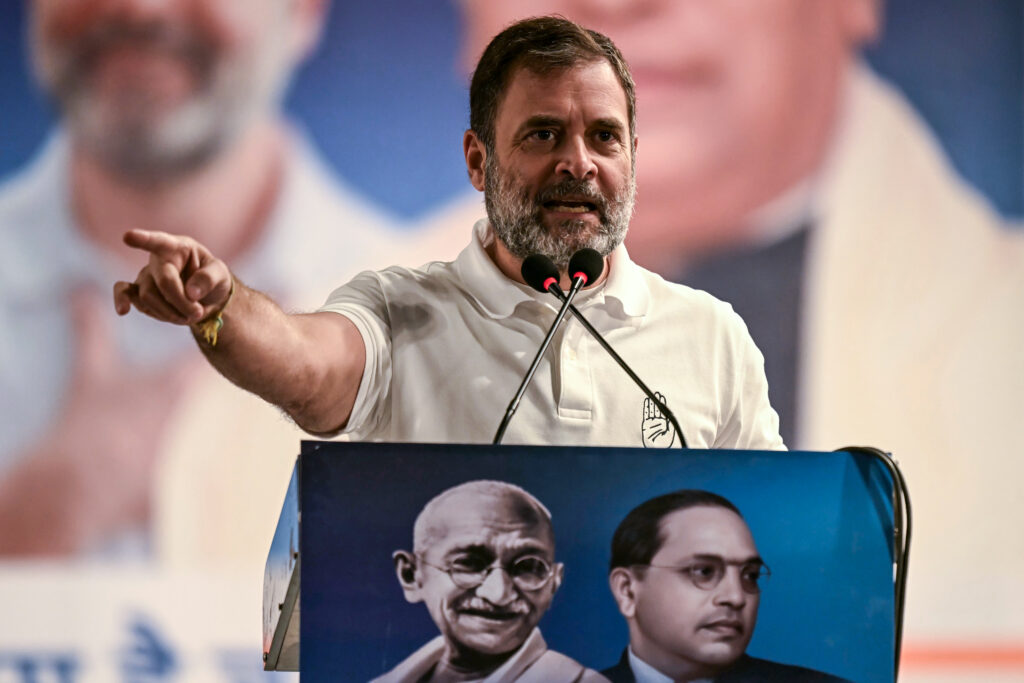
India’s main opposition Congress party accused the government of a “vendetta” on Wednesday after a federal agency filed charges against its top leaders in a years-long corruption case.Congress party leader Rahul Gandhi and his mother Sonia Gandhi were charged as part of a probe initiated by a member of Prime Minister Narendra Modi’s Bharatiya Janata Party (BJP).They have denied the allegations and have accused the BJP of using the state apparatus to target its rivals.Congress lawmaker Abhishek Singhvi said the case was “nothing but vendetta in legal disguise”.He also accused the government of using the Enforcement Directorate — a national agency that probes money laundering and financial crimes — of selectively targeting the opposition while sparing its allies. “Selective justice is nothing but political thuggery,” Singhvi added.The initial 2001 complaint against the Gandhis brought by BJP member Subramanian Swamy accused the Gandhis and others of “usurping” properties belonging to a now-defunct newspaper.He alleged that the Gandhis aimed to grab property worth $332 million owned by the publishing firm using fraudulent papers.Jairam Ramesh, a veteran lawmaker from the Congress party, described the case as “harassment and targeting of rivals”. “We can’t be forced to shut up,” Ramesh said. Critics in recent years have accused the BJP of using the justice system to target political rivals, with several opposition figures the subject of active criminal investigations.But BJP lawmaker Ravi Shankar Prasad said India’s judiciary was independent and investigative “agencies are free to work under PM Modi’s government”.”They (the opposition) have the right to protest — but what are the protesting about?”, Prasad said. “There is no license to loot in this country”, he added. Rahul Gandhi also faces several defamation cases and was expelled from parliament in 2023 after a defamation conviction. He returned months later after his two-year sentence was suspended by the Supreme Court.  He is the son, grandson and great-grandson of former Indian prime ministers, beginning with independence leader Jawaharlal Nehru.His party has struggled to challenge Modi and has lost the last three national elections.

WHO countries strike landmark agreement on tackling future pandemics

Years of negotiations culminated early Wednesday with countries agreeing the text of a landmark accord on how to tackle future pandemics, aimed at avoiding the mistakes made during the Covid-19 crisis.After more than three years of talks and one last marathon session, weary delegates at the World Health Organization’s headquarters finally sealed the deal at around 2:00 am (0000 GMT) Wednesday.”Tonight marks a significant milestone in our shared journey towards a safer world,” said WHO chief Tedros Adhanom Ghebreyesus.Five years after the emergence of Covid-19, which killed millions of people, devastated economies and upturned health systems, a sense of urgency hung over the talks, with new threats lurking — including H5N1 bird flu, measles, mpox and Ebola.The final stretch of the talks also took place under the shadow of cuts to US foreign aid spending and threatened tariffs on pharmaceuticals.- ‘It’s adopted’ -Right until the last minute, disagreement lingered over a few thorny issues.Negotiators stumbled over the agreement’s Article 11, which deals with transferring technology for pandemic health products towards developing nations.During the Covid-19 pandemic, poorer states accused rich nations of hoarding vaccines and tests.Countries with large pharmaceutical industries have strenuously opposed the idea of mandatory tech transfers, insisting they must be voluntary.But it appeared the obstacle could be overcome by adding that any transfer needed to be “mutually agreed”.The core of the agreement is a proposed Pathogen Access and Benefit-Sharing System (PABS), aimed at allowing the swift sharing of pathogen data with pharmaceutical companies, enabling them to quickly start working on pandemic-fighting products.In the end, the 32-page agreement was entirely highlighted in green, indicating all of it had been fully approved by WHO member states.”It’s adopted,” negotiations co-chair Anne-Claire Amprou announced, to thunderous applause.”In drafting this historic agreement, the countries of the world have demonstrated their shared commitment to preventing and protecting everyone, everywhere, from future pandemic threats.”The finalised text will now be presented for sign-off at the WHO’s annual assembly next month.- ‘Excellent news’ -Congratulations quickly poured in.”Excellent news from Geneva,” European Union chief Ursula von der Leyen said on X.”We have learnt the lessons of COVID. To beat a pandemic, you need tests, treatments and vaccines. And you equally need solidarity and global cooperation.”The EU had led the charge arguing for flexibility and voluntary measures in the text.The International Federation of Pharmaceutical Manufacturers and Associations (IFPMA), which participated in the talks, had also taken that stance.Looking ahead towards implementation, the leading pharma lobby said intellectual property and legal certainty would be essential for encouraging investment in high-risk research and development in the next crisis.”The pandemic agreement is a starting point,” insisted IFPMA chief David Reddy.Developing countries and NGOs also hailed the agreement, while acknowledging that not all of their ambitions were met.”While the process may not have yielded all the outcomes we aspired for, it has opened an important avenue for future collaboration,” Tanzania’s representative told the gathering, speaking on behalf of dozens of African countries.- ‘More equity’ -As intense talks in corridors and closed rooms drew towards an end late Tuesday, Tedros told reporters he thought a deal would bring “more equity”.While taking measures against pandemics could be costly, “the cost of inaction is much bigger”, he insisted.”Virus is the worst enemy. (It) could be worse than a war.”The United States, which has thrown the global health system into crisis by slashing foreign aid spending, was absent.US President Donald Trump ordered a withdrawal from the United Nations’ health agency and from the pandemic agreement talks after taking office in January.The US absence, and Trump’s threat to slap steep tariffs on pharmaceutical products, still hung over the talks, making manufacturers and governments more jittery.But in the end, countries reached consensus.- ‘Real work begins now’ -Many saw the approval of the text as a victory for global cooperation.”At a time when multilateralism is under threat, WHO member states have joined together to say that we will defeat the next pandemic threat in the only way possible: by working together,” said New Zealand’s former prime minister Helen Clark, co-chair of the Independent Panel for Pandemic Preparedness and Response.As the congratulatory speeches continued on towards daybreak, Eswatini’s representative cautioned that “whilst we celebrate this moment, we need not rest on our laurels”.”The real work begins now.”

Malnourished children in Afghanistan at ‘high risk of dying’ without US aid

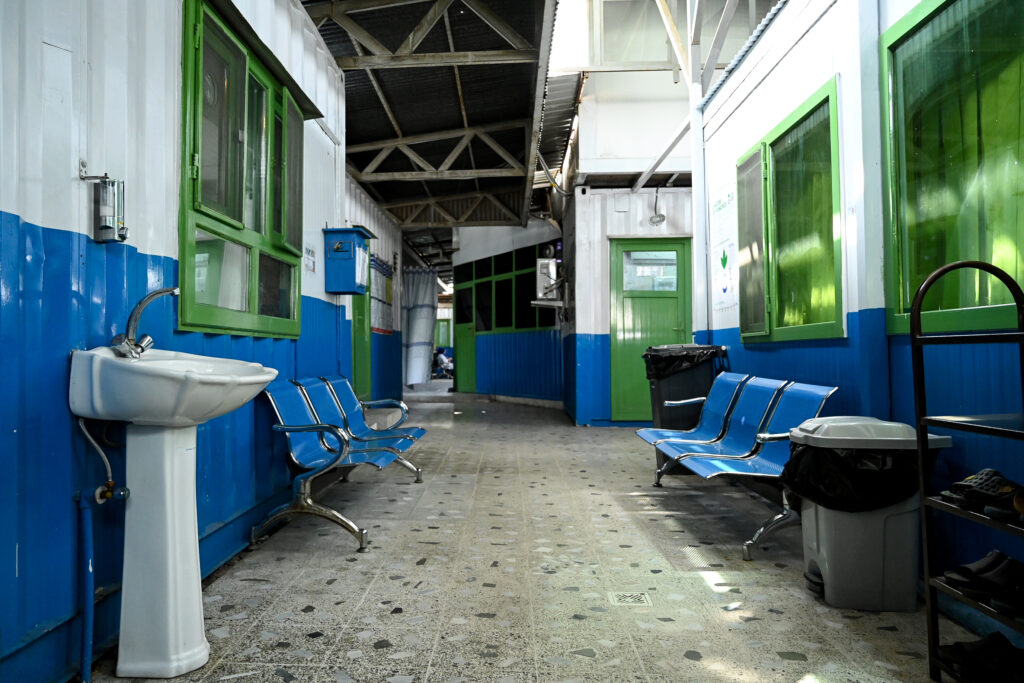
At a malnutrition treatment centre in Afghanistan’s capital, the cries of children have given way to a heavy silence, as patients are turned away and medical staff laid off due to US aid cuts. Entirely funded by Washington, the project had to shut down when the United States — until recently the largest aid donor in Afghanistan — froze all foreign assistance.The many children who would have come to the centre won’t be treated now, said Cobi Rietveld, country director for the non-governmental organisation Action Against Hunger (ACF), which manages the clinic in the west of Kabul.”If they don’t get treatment, there’s an extreme high risk of dying,” she told AFP. Without new funding, the stuffed animals, toys and baby bottles were put away and the pharmacy locked when the last patient left in March. “When malnourished patients come to our clinic, it’s a big challenge for our staff to explain the situation to them and to tell them that they need to go elsewhere for proper treatment,” said chief doctor Farid Ahmad Barakzai. After four decades of war and crises, Afghanistan faces the second-largest humanitarian crisis in the world, behind war-torn Sudan, according to the UN. – ‘So many shocks’ -On average, 65 children suffering from severe acute malnutrition with complications were treated at the clinic every month. They stay there for several days with their mothers not only to be fed but to prevent them from spiralling into illness. “Every infection a child can get, a malnourished child will get as well, with an increased risk of dying,” said Rietveld. It’s “painful” for the staff, finishing their last days of work, Rietveld added, because “they have to send them somewhere else where they don’t have the same specialized treatment”. Child malnutrition in Afghanistan, where 45 percent of the population is under 14 years old, is one of the most significant challenges because it affects entire generations in the long term.Some 3.5 million children under the age of five suffer from acute malnutrition and the country has one of the highest rates of stunting in the world, according to the UN.Adults are also affected: 15 million Afghans are currently food insecure, including 3.1 million who are already on the brink of famine. Last week, the World Food Programme said the United States had ended funding for its work in Afghanistan, having gone back on cuts to other countries. “This is a country that’s been through so many shocks,” the World Health Organization representative in Afghanistan, Edwin Ceniza Salvador, told AFP.”So with a fragile system, even basic care of screening, those are even not there,” he said, underscoring that “of course the most vulnerable are the most affected”.- ‘Only place we could work’ -The funding crisis has also led to numerous layoffs in the humanitarian sector, in a country where the unemployment rate reached 12.2 percent in 2024, according to the World Bank. Since the US cuts, ACF has had to lay off around 150 of its 900 staff. “I have crying people in my office,” said Rietveld. “We listen, we offer support, but we can’t get them a job.” Hit hardest by the layoffs were women, who made up the majority of the 40 staff at ACF’s child nutrition centre and who face severe restrictions imposed by the Taliban authorities since their return to power in 2021.They can no longer work in many sectors and are not allowed to study beyond primary school, unless they enrol in a religious school, leading the UN to label the system as “gender apartheid”.”For many of us, the only place we could work was in this health centre,” said 27-year-old nurse Wazhma Noorzai. “Now, we are losing even that.” To recover after the loss of US funding, which made up 30 percent of the ACF’s local budget, the organisation is “in the process of writing proposals” and “discussing with donors”, Rietveld said.”But I don’t think other donors can cover the gap.” 

WHO countries reach landmark agreement on tackling future pandemics

Years of negotiations culminated early Wednesday with countries agreeing the text of a landmark accord on how to tackle future pandemics, aimed at avoiding a repeat of the mistakes made during the Covid-19 crisis.After more than three years of talks and one last marathon session, weary delegates at the World Health Organization’s headquarters sealed the deal at around 2:00 am (0000 GMT) Wednesday.”Tonight marks a significant milestone in our shared journey towards a safer world,” WHO chief Tedros Adhanom Ghebreyesus said.”The nations of the world made history in Geneva today.”Five years after Covid-19 killed millions of people and devastated economies, a growing sense of urgency hung over the talks, with new health threats lurking, ranging from H5N1 bird flu to measles, mpox and Ebola.The final stretch of negotiations also took place with cuts to US foreign aid spending and threatened tariffs on pharmaceuticals casting a shadow over the talks.- ‘It’s adopted’ -Right until the last minute, disagreement had lingered over a few thorny issues.Negotiators stumbled over the agreement’s Article 11, which deals with transferring technology for pandemic health products towards developing nations.During the Covid-19 pandemic, poorer states accused rich countries of hoarding vaccines and tests.Countries with large pharmaceutical industries have strenuously opposed the idea of mandatory tech transfers, insisting they must be voluntary.But it appeared the obstacle could be overcome by adding that any transfer needed to be “mutually agreed”.The core the agreement is a proposed Pathogen Access and Benefit-Sharing System (PABS), aimed at allowing the swift sharing of pathogen data with pharmaceutical companies, enabling them to quickly start working on pandemic-fighting products.In the end, the 32-page agreement was entirely highlighted in green, indicating it had been fully approved by WHO member states.”It’s adopted,” negotiations co-chair Anne-Claire Amprou announced, to thundering applause.”In drafting this historic agreement, the countries of the world have demonstrated their shared commitment to preventing and protecting everyone, everywhere, from future pandemic threats.”The finalised text will now be presented for sign-off at the WHO’s annual assembly next month.- ‘More equity’ -As intense talks in corridors and closed rooms drew towards an end late on Tuesday, Tedros joined the negotiations, telling reporters he thought the current draft was “balanced”, and that a deal would bring “more equity”.While taking measures to coordinate pandemic prevention, preparedness and response could be costly, “the cost of inaction is much bigger”, he insisted.”Virus is the worst enemy. (It) could be worse than a war.”The United States, which has thrown the global health system into crisis by slashing foreign aid spending, was not present.US President Donald Trump ordered a withdrawal from the United Nations’ health agency and from the pandemic agreement talks after taking office in January.However, the US absence, and Trump’s threat to slap steep tariffs on pharmaceutical products, still hung over the talks, making manufacturers and governments more jittery.But in the end, countries reached consensus.Many saw the approval of the text as a victory for global cooperation.”At a time when multilateralism is under threat, WHO member states have joined together to say that we will defeat the next pandemic threat in the only way possible: by working together,” said former New Zealand prime minister Helen Clark, co-chair of the Independent Panel for Pandemic Preparedness and Response.As the congratulatory speeches continued on towards daybreak, Eswatini’s representative stressed that “whilst we celebrate this moment, we need not rest on our laurels”.”The real work begins now.”

Chahal stars as Punjab defend IPL’s lowest total of 111 in ‘best win’

Spinner Yuzvendra Chahal returned figures of 4-28 as Punjab Kings defended IPL’s lowest ever total of 111 to down holders Kolkata Knight Riders by 16 runs in a thriller on Tuesday.Kolkata looked to be cruising at 62-2 before Chahal cut through the chase with his leg-spin, and the side collapsed to 95 all out in 15.1 overs at Mullanpur, near Chandigarh.Punjab were earlier bowled out for 111 in 15.3 overs but Chahal and company turned the match on its head to better Chennai Super Kings’ record — they defended 116 against them (formerly Kings XI Punjab) in 2009.Kolkata’s Andre Russell attempted to pull off the chase from 79-8 when he hit two sixes and a four off Chahal but Punjab held their nerve.Arshdeep Singh sent back Vaibhav Arora and then fellow left-arm quick Marco Jansen bowled Russell to trigger wild celebrations in Punjab’s home ground.”I have coached a lot of games in the IPL and that might just be about the best win I ever had,” head coach Ricky Ponting said after the close contest.Kolkata skipper Ajinkya Rahane and impact substitute Angkrish Raghuvanshi put on 55 runs for the third wicket when Chahal broke through to get the captain back in the pavilion lbw.Ball tracker suggested the ball was outside the off stump, but Rahane did not take the review.- Rahane takes blame -“Pretty disappointed with the effort,” said Rahane. “I’ll take the blame, played the wrong shot, although it was missing.”Chahal, with his tail now up, got Raghuvanshi caught out in the next over for 37 and the Punjab were in the game when Glenn Maxwell had Venkatesh Iyer lbw for seven.Chahal then got two in two — Rinku Singh stumped and Ramandeep Singh out for a golden duck — before Harshit Rana avoided the hat-trick ball.But the day belonged Chahal and Punjab who moved into the top four of the 10-team table with their fourth win in six matches.Ponting said Chahal, who was named player of the match, had a fitness test before the game for a shoulder injury he picked in his previous outing.Earlier, Rana rattled the Punjab top-order after a brisk start by the openers and returned figures of 3-25 from his three overs.New batting sensation Priyansh Arya and Prabhsimran Singh made the hosts race to 39 in 3.1 overs, before Rana struck to send back the left-handed Arya caught at fine leg for 22.Rana got one more wicket two balls later when Ramandeep pulled off a stunning catch in the deep to dismiss skipper Shreyas Iyer, for a duck.Spinner Varun Chakravarthy joined forces in the next over to have Punjab’s England import Josh Inglis bowled for two.Prabhsimran, who made 30, attempted to hit back with two sixes off Rana but the bowler had the last laugh with Ramandeep once again taking a catch at point.Chakravarthy and fellow spinner Sunil Narine kept striking regular blows as Punjab’s batting faltered only for their bowlers to ultimately save the day.

Pakistan court refuses to hear Baloch activist case: lawyers

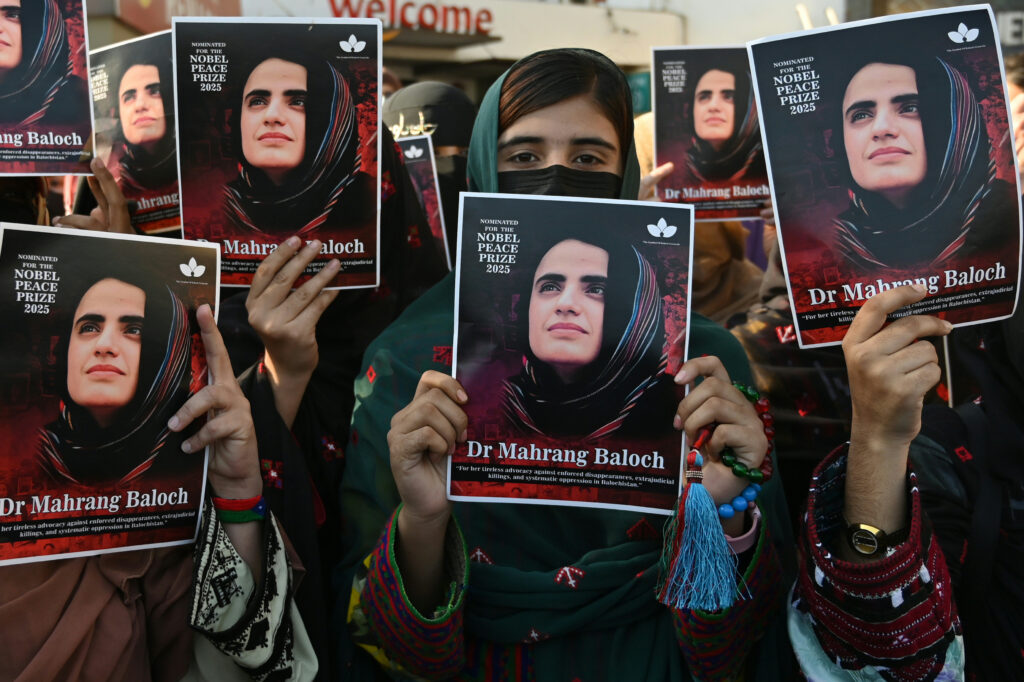
A Pakistan court refused on Tuesday to rule on the detention of activist Mahrang Baloch, a decision her lawyers said will delay her case and keep her behind bars.The 32-year-old was placed under administrative detention by the Balochistan provincial government on March 22, accused of terrorism, sedition, and murder after leading a protest.The Balochistan High Court refused to hear an appeal against her detention, instead referring her case to the provincial government, according to Baloch’s defence team.”They closed all doors for us to appeal and directed us to the government instead,” her lawyer Kamran Murtaza told AFP, calling it a “refusal of justice”.Imaan Mazari, a second lawyer, called it a “complete abdication of responsibility” by the justice system, which has “put her at the mercy of the same administration that detained her”.Baloch will now remain under administrative detention, a 30-day period renewable three times under Pakistani law. The UN has expressed “concern” for the trainee surgeon, who was named by Time Magazine as one of the 100 rising leaders of 2024. Balochistan, the country’s poorest province that borders Iran and Afghanistan, is in the grip of separatist militants who regularly carry out attacks on security forces.Baloch founded the Baloch Unity Committee which accuses the state of extrajudicial executions, enforced disappearances, and arbitrary arrests in their security operations, but advocates non-violence.At least 3,000 supporters have taken part in an ongoing sit-in, blocking key roads near the main city of Quetta for the past two weeks and demanding the release of Baloch and other activists.Authorities restrict access to many areas of Balochistan, where China has poured billions into energy and infrastructure projects, including a major port and an airport. 

Nearly 60,000 Afghans return from Pakistan in two weeks: IOM

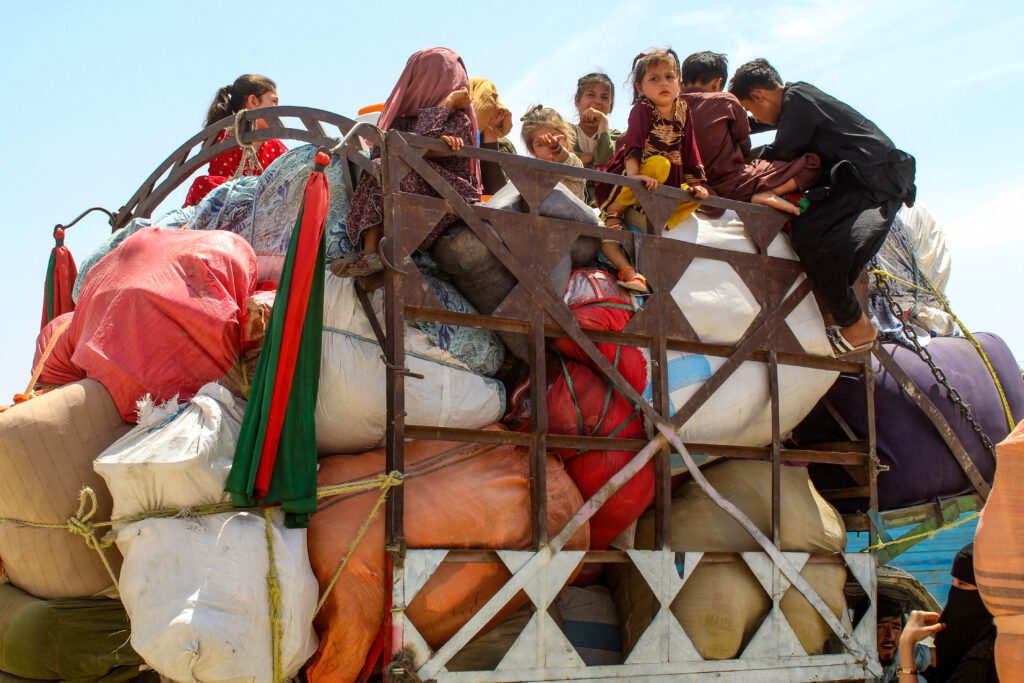
Nearly 60,000 Afghans have been forced to leave Pakistan since the start of April, the International Organization for Migration said Tuesday, after Islamabad ramped up a campaign to deport migrants to Afghanistan. Pakistan last month set an early April deadline for some 800,000 Afghans carrying Afghan Citizen Cards (ACC) issued by the Pakistani authorities to leave the country, in the second phase of efforts to remove Afghans. “Between 1 and 13 April 2025, IOM recorded a sharp rise in forced returns, with nearly 60,000 individuals crossing back into Afghanistan through the Torkham and Spin Boldak border points,” the UN agency said in a statement. Families with their belongings in tow have crowded the crossings at Torkham in the north and Spin Boldak in the south, recalling scenes in 2023 when tens of thousands of Afghans fled deportation threats in Pakistan.  “With a new wave of large-scale returns now underway from Pakistan, needs on the ground are rising rapidly — both at the border and in areas of return that are struggling to absorb large numbers of returnees,” said Mihyung Park, head of the IOM’s Afghanistan mission. The UN says nearly three million Afghans live in Pakistan, many having been there for decades, after fleeing successive conflicts in their country and following the Taliban’s return to power in Kabul in 2021. More than 1.3 million Afghans who hold Proof of Registration cards from the UN refugee agency, UNHCR, have also been told to move outside the capital Islamabad and the neighbouring city of Rawalpindi. The Taliban authorities have repeatedly called for Afghans to be allowed a “dignified” return to Afghanistan. As Afghans again began streaming over the border in large numbers, the Taliban Ministry of Refugees and Repatriation said: “The mistreatment of them (Afghans) by neighbouring countries is unacceptable and intolerable.”- ‘Halt the forced returns’ -Ties between the two countries have frayed since the Taliban takeover in Afghanistan.Islamabad has accused Kabul’s rulers of failing to root out militants sheltering on its soil, a charge the Taliban government denies, as Pakistan has seen a sharp rise in violence in border regions with Afghanistan. Talal Chaudhry, Pakistan’s deputy interior minister said last week that Islamabad was “taking these steps because Afghans are linked to terrorist and narcotics activities”. He added that Afghans waiting in Pakistan for visas to a third country “would be catered to case by case”.But, he added, “there will be no extension for anyone after April 30”.Human rights activists have for months been reporting harassment and extortion by Pakistani security forces against Afghans, as international rights organisations have condemned the forced return campaign. The IOM urged “all countries to immediately halt the forced returns of Afghans until conditions are in place to ensure safe, dignified, and voluntary returns, regardless of a person’s legal status”.The agency said that between September 2023 and April this year, more than 2.43 million undocumented Afghan migrants have returned from Pakistan and Iran, over half of them forcibly returned.burs-sw/tc

‘Tough’ Singapore election expected for non-Lee leader

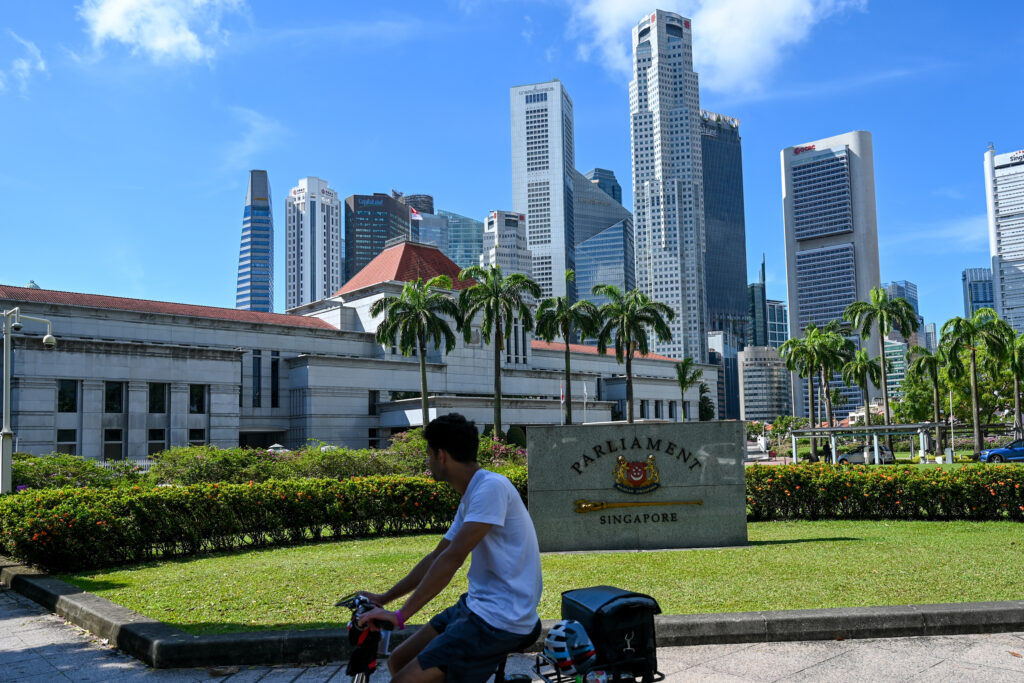
Singaporeans vote on May 3 in an election that will test Prime Minister Lawrence Wong’s leadership, as the wealthy city-state faces a turbulent global economy upended by US tariffs.This will be the first electoral battle for the ruling People’s Action Party (PAP) under Wong since he succeeded Lee Hsien Loong, the son of founding premier Lee Kuan Yew, last year after decades of leadership by the Lees.Parliament was dissolved Tuesday, clearing the way for the vote.Singapore has long been dominated by the PAP, which is expected to remain in power, but opposition gains are closely watched as a referendum on the government’s popularity.And the upcoming elections come at a precarious time.The global trading system that supported tiny, trade-reliant Singapore’s rapid ascent to prosperity is under severe strain since US President Donald Trump’s return to the White House.Singapore, one of the world’s biggest transhipment hubs, finds itself exposed after Trump imposed sweeping tariffs on dozens of countries, disrupting global supply chains and sparking fears of a full-blown trade war with China.On Monday, Singapore’s trade ministry downgraded its economic growth forecast for 2025 to between zero and 2.0 percent from 1.0-3.0 percent.In a stark warning to parliament last week, Premier Wong declared that the “era of rules-based globalisation and free trade is over”.”We risk being squeezed out, marginalised, and left behind,” he said.Wong, 52, is seeking a firm mandate to steer the country through choppy waters.It will “strengthen his hand and that of his government in putting in place policies and measures to protect the economy and to negotiate with other countries”, said Eugene Tan, associate professor of law at the Singapore Management University.- ‘Toughest battle’ -PAP is one of the world’s longest-running political parties having been in power since 1959.But the party’s dominance is increasingly being challenged by a more vocal electorate, especially among younger voters who appear open to alternative political voices.The upcoming elections “may well be the toughest electoral battle for the ruling party”, said Mustafa Izzuddin, a political analyst with Solaris Strategies Singapore, citing the “unpredictability of ground sentiments and the emergence of a better quality opposition”.Tan of SMU said “millennial and Gen-Z voters are much more receptive… to a credible opposition in parliament”.In 2020, the opposition Workers’ Party (WP) made historic gains, winning 10 of the 93 seats at stake — a significant jump from its previously held four seats.It is hoping to build on that momentum and is expected to field candidates like Harvard-trained senior counsel Harpreet Singh, 59.In an interview on the local podcast “Yah Lah BUT”, Singh said Singapore could be a “much better and strong country with a more balanced politics”.”We need to have a reset where we treat our critics, people with different ideas, people from outside the system, with more respect and not suspicion.”- ‘More political diversity’ – A total of 97 seats are up for grabs in this election — four more than in 2020 — following a redrawing of electoral boundaries that some opposition parties have criticised as gerrymandering.The majority of the seats will come from a bloc voting system that opposition parties say favours the PAP.”Depending on how the opposition performs, there is a possibility of an emergence of a one-and-a-half party system — where the ruling party retains dominance but faces a more substantial check from a strengthened opposition,” said Izzuddin.But he added that fragmentation threatens the opposition votes as smaller parties compete for influence in overlapping areas.It remains unclear how the economic uncertainty will shape voter behaviour.While Izzuddin suggested the climate could trigger a “flight-to-safety” move that benefits incumbents, Tan pointed to the 2020 election held amid the global pandemic which saw the opposition gain ground.Ultimately, the outcome lies on how much Singaporeans wish to have more alternative views in parliament, but still keep the PAP in power.”The challenge is whether PM Wong can convince Singaporeans that the tariffs war is a significant threat, and that giving the ruling party a secure victory will ultimately benefit Singaporeans — notwithstanding the desire for more political diversity,” said Tan.The opposition is banking on the growing sentiment, with WP rising star Singh saying that “the best governments are not the ones that have dominant control and are not challenged”.”The best governments are the ones that are pushed to be better,” he said. “That’s where Singapore needs to go.”