AFP Asia

‘The voice of God’: Filipinos wrestle with death of Pope Francis

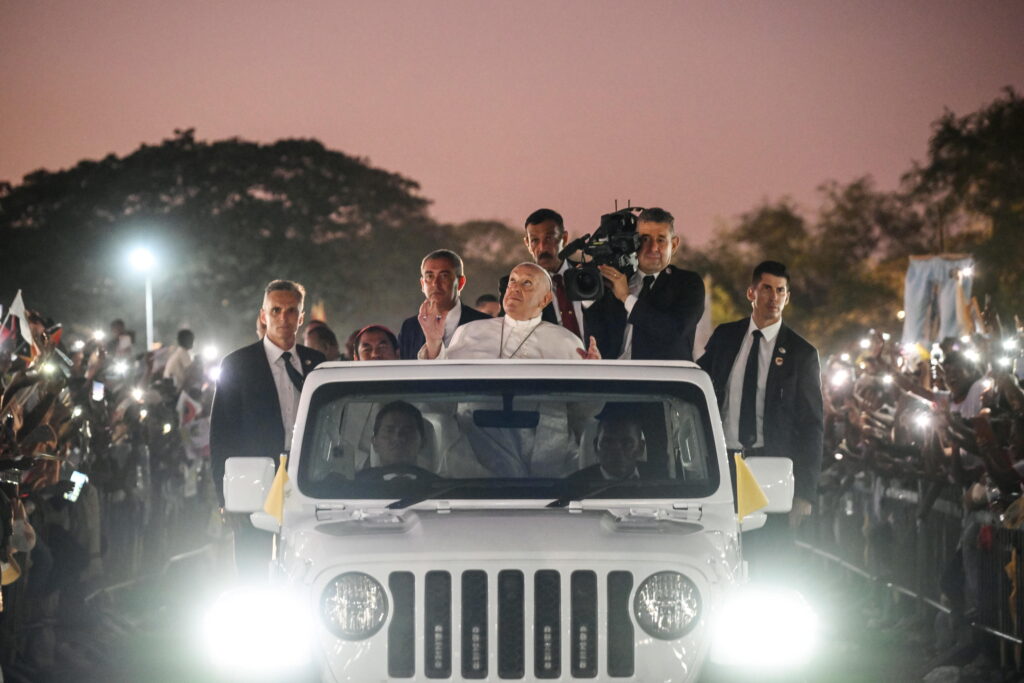
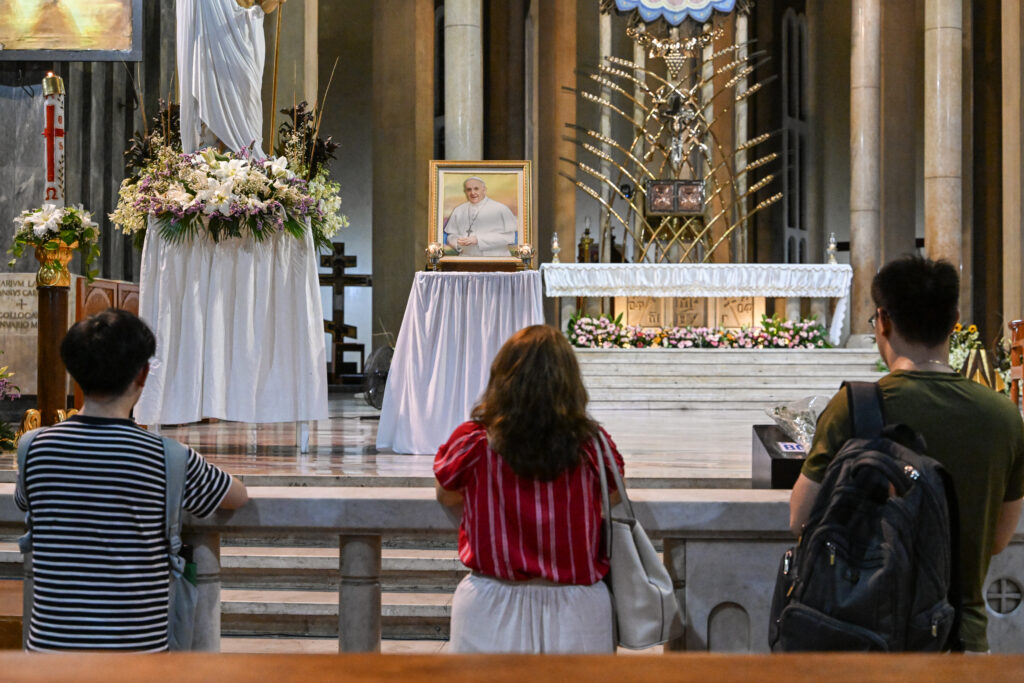
Church bells rang out across the Philippines early Monday evening as Asia’s bastion of Catholicism mourned the death of Pope Francis.Residents in the capital were still processing the news. Some rushed to cathedrals to pray while others who spoke to AFP were not yet aware of his passing.Outside the Baclaran Church in metro Manila, 23-year-old Jeslie Generan said the reality of the pope’s death was only just sinking in.”I was shocked because I had already read that he was OK, he was no longer sick, that his condition improved,” she told AFP.”When I opened Twitter and read it… I thought it was fake news.”Inside the soaring cathedral, a framed portrait of the pope affectionately known as “Lolo Kiko”, or “grandfather Francis”, sat next to a statue of Jesus, a candle to either side.A handful of parishioners filed down after the sermon, kneeling and praying for Pope Francis in front of his picture.”We feel the loss because he is the face of the Church,” parishioner Marlon Delgado told AFP.”I heard the news of his death on the television,” said the 40-year-old, who attends mass every week.”I was at first shocked and then a feeling of sadness overwhelmed me.”During an earlier visit to the capital’s Manila Cathedral, AFP reporters found the pews in the dimly lit sanctuary largely empty and the altar’s candles unlit shortly after news of the pontiff’s death emerged.But outside the massive structure, Jhayson Banquiles, 19, said the country’s 85 million Catholics had lost the “voice of God”. “The pope’s death is a big loss for Filipino Catholics. He is basically the voice of God here. Through him, we hear the word of God.”Vincent Abrena, 38, said he had learned of the death at his office.”That’s why after work I rushed to the cathedral … to pray for him.”Pope Francis, who appointed three of the 10 Filipino cardinals in Church history, visited the archipelago nation only once, when he led a mass for survivors of Super Typhoon Haiyan.He came just over a year after the most powerful storm in Philippine history devastated fishing and farming towns and left more than 6,000 people dead in November 2013.Hundreds of thousands of people turned out for his arrival, chanting “long live the pope” as he disembarked only to be pelted with rains and heavy winds.”When I saw in Rome that catastrophe (the typhoon), I felt I had to be here. And on those very days, I decided to come here. I’m here to be with you,” he said as many in the crowd clutched crucifixes and wept.On Monday, a video about his visit had garnered more than five million views within two hours of its posting by a local news outlet.

US VP Vance meets Indian PM Modi for tough talks on trade

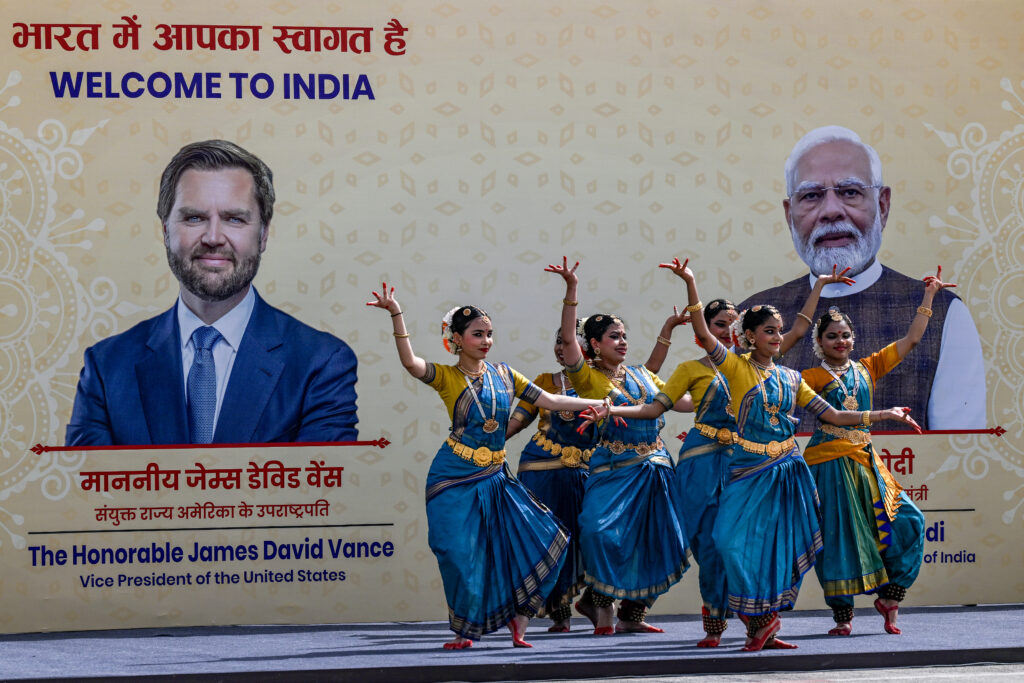
US Vice President JD Vance met with Indian Prime Minister Narendra Modi after a red carpet welcome in New Delhi on Monday, as India bids for an early trade deal to stave off punishing tariffs.Modi’s office said that there had been “significant progress in the negotiations” with the two countries negotiating the first tranche of a trade deal.New Delhi hopes to secure relief within the 90-day pause on steep tariffs announced by US President Donald Trump this month.Vance’s office similarly reported “significant progress” in the talks and said the two men had established a roadmap for how economic discussions would proceed.His four-day visit comes two months after Modi held talks at the White House with Trump, during which India pledged to buy more US oil and gas to offset its trade surplus with Washington.Yet that did not prevent India from being slapped with 26 percent tariffs by Trump, later lowered to 10 percent for the 90-day period.An honour guard and troupes of folk dancers greeted Vance after he stepped out into the sweltering sunshine of New Delhi on Monday morning, the start of a four-day tour that will include trips to the historic fort city of Jaipur and the Taj Mahal.”Ad-Vance-ing” US-India ties, broadcaster NDTV headlined its stories.Modi, who welcomed Vance to his residence on Monday evening with a bear hug, photographs released by the Indian government showed, later hosted the vice president and his family for dinner.The men discussed boosting “cooperation in energy, defence strategic technologies and other areas”, Modi’s office said, without giving further details.- ‘Boost’ -Vance’s visit comes during an escalating trade war between the United States and China. India’s neighbour and rival faces US levies of up to 145 percent on many products.Beijing has responded with duties of 125 percent on US goods. New Delhi has reacted cautiously so far.After Vance’s meetings Monday, US Trade Representative Jamieson Greer said he was “pleased to confirm” that Washington and India’s Ministry of Commerce “have finalized the Terms of Reference to lay down a roadmap for the negotiations on reciprocal trade”.Vance and Modi were also expected to discuss China, seen as a challenger in different domains by both governments. The two democracies are also a part of the “Quad” group with Australia and Japan. The US vice president is accompanied by his wife Usha, the daughter of Indian immigrants.Together with their three children, who were dressed in traditional flowing Indian attire, they visited the Hindu Akshardham Temple in New Delhi.Modi said during his visit to Washington that the world’s largest and fifth-largest economies would work on a “mutually beneficial trade agreement”.The United States is a crucial market for India’s information technology and services sectors. Washington in turn has made billions of dollars in new military hardware sales to New Delhi in recent years.Modi said he “looks forward” to a visit by Trump to India later this year, New Delhi said in a statement, with a potential Quad summit slated.Vance, 40, a devout Catholic convert, arrived in New Delhi a day after meeting Pope Francis in the Vatican.The vice president said his “heart goes out to the millions of Christians all over the world who loved him”, after the Vatican announced the death of the pope on Monday.

Gill, Sudharsan help toppers Gujarat boss Kolkata in IPL

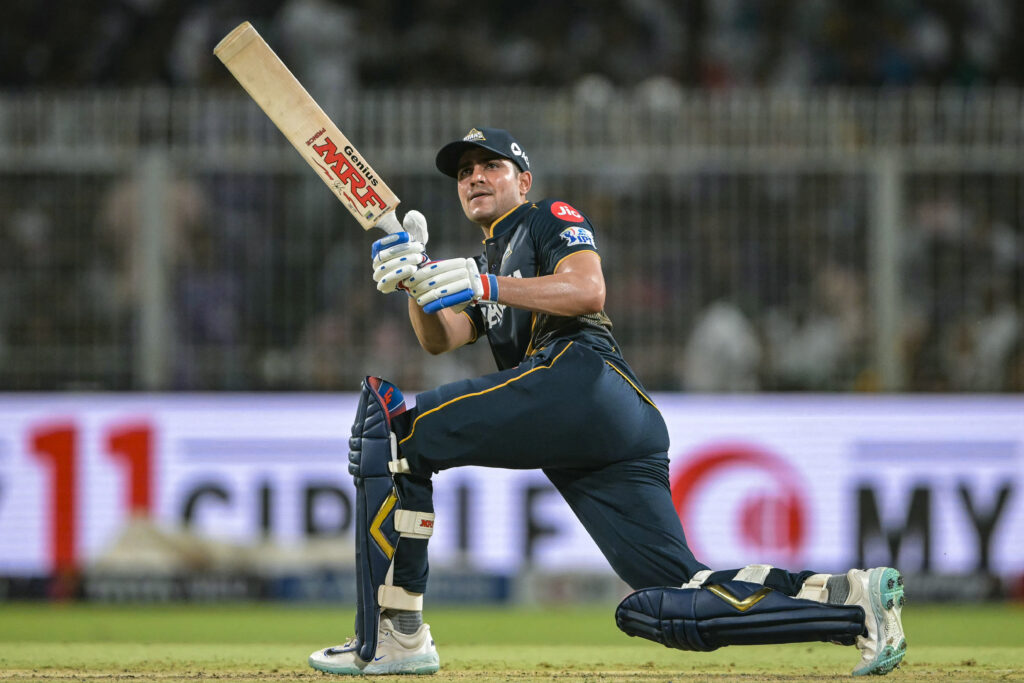
Shubman Gill led from the front with his 55-ball 90 to help Gujarat Titans hammer holders Kolkata Knight Riders by 39 runs on Monday and consolidate their top spot in the IPL.Gujarat posted 198-3 after Sai Sudharsan, who hit 52, and Gill put on 114 runs for the first wicket to lay the foundations of the total at Kolkata’s Eden Gardens.The bowlers then combined to restrict Kolkata to 159-8 with skipper Ajinkya Rahane playing a lone hand with 50 to register Gujarat’s sixth win in eight matches.Kolkata, who won their third title of the popular T20 tournament last year, slipped to their fifth defeat in eight matches.The batters set up victory for Gujarat with England’s Jos Buttler hitting an unbeaten 41 off 23 balls as he steered the team after the opening stand between the Sudharsan and Gill.Gill was watchful at the start but the left-handed Sudharsan hit a few boundaries to get Gujarat going after being invited to bat first.Gill took on Moeen Ali with a six and two fours in the second spell for the former England spinner and soon reached his third half-century of the season.The in-form Sudharsan raised his fifth 50-plus score in this edition as he went past 400 runs to nudge out Lucknow Super Giants batsman Nicholas Pooran (368) as the leading batsman.Buttler is third with 356 runs in his eight innings.Andre Russell handed Kolkata its first breakthrough as the pace bowler dismissed Sudharsan after his 36-ball knock but he came under attack from Buttler who hit him for three successive boundaries.Buttler and Gill kept up the attack before fast bowler Vaibhav Arora denied the Gujarat captain his hundred.Buttler lost another partner in Rahul Tewatia but Gujarat finished with a flourish in a 18-run 20th over from Arora.In reply, Kolkata lost Rahmanullah Gurbaz in the first over of the chase when Mohammed Siraj got the Afghanistan wicketkeeper-batsman trapped lbw for one.Sunil Narine, a left-hand opener, and Rahane hit back with regular boundaries in a brisk partnership of 41 until Afghanistan leg-spinner Rashid Khan broke the stand.Rashid had Narine caught out for 17 before Rahane and Venkatesh Iyer put on another stand to keep Kolkata in the hunt.Sai Kishore removed Iyer on 14 and fellow spinner Washington Sundar sent back Rahane stumped out after his fifty to derail the chase.Russell added some spark with a 15-ball 21 as he hit three fours and one six but Rashid picked up his second wicket to remove him thanks to a Buttler stumping.Season’s leading bowler Prasidh Krishna then took two wickets in one over to take his count to 16.

Sri Lanka recalls Pope Francis’ compassion on Easter bombing anniversary

Sri Lankan Catholics offered prayers for Pope Francis on Monday, the sixth anniversary of the Easter bombings that killed 279 people, recalling his “deep empathy” for the victims.Cardinal Malcolm Ranjith said the pontiff had met with a 41-member delegation of survivors at the Vatican three years ago, comforting each one individually and pledging continued support to ensure justice.”The Holy Father deviated from a prepared text to urge the Sri Lankan government to ensure a transparent investigation,” Ranjith said during a commemorative service for the victims at St Sebastian’s Church.Shortly before the pope’s death was announced, Ranjith told another commemorative service in the capital Colombo that the Vatican had recognised 167 Catholics killed in the Easter attacks as “Witnesses of the Faith”.The move, which followed a process that began a year ago, places the Catholic victims on a path to possible sainthood.”The purpose of this is to propagate and preserve the memory of the witness in perpetuity,” Ranjith said.St Sebastian’s Church in Katuwapitiya, a village north of Colombo, was the worst affected by the coordinated suicide bombings.Ranjith read out the names of 116 victims at the St Sebastian shrine and 41 others at St Anthony’s Church who were honoured by the Vatican.He said the pontiff had shed tears when shown a video of the aftermath of the April 21, 2019 bombings.”I saw the tears in the Holy Father’s eyes,” Ranjith said. “He had deep empathy for the victims.”Several investigations into the bombings — which targeted three churches and three hotels — concluded that the attacks were carried out by homegrown jihadists who claimed affiliation with the Islamic State group.However, the Church has accused successive governments of protecting those behind the attacks, and several high-level investigations have identified links between military intelligence units and the bombers.

Francis: radical leader who broke the papal mould

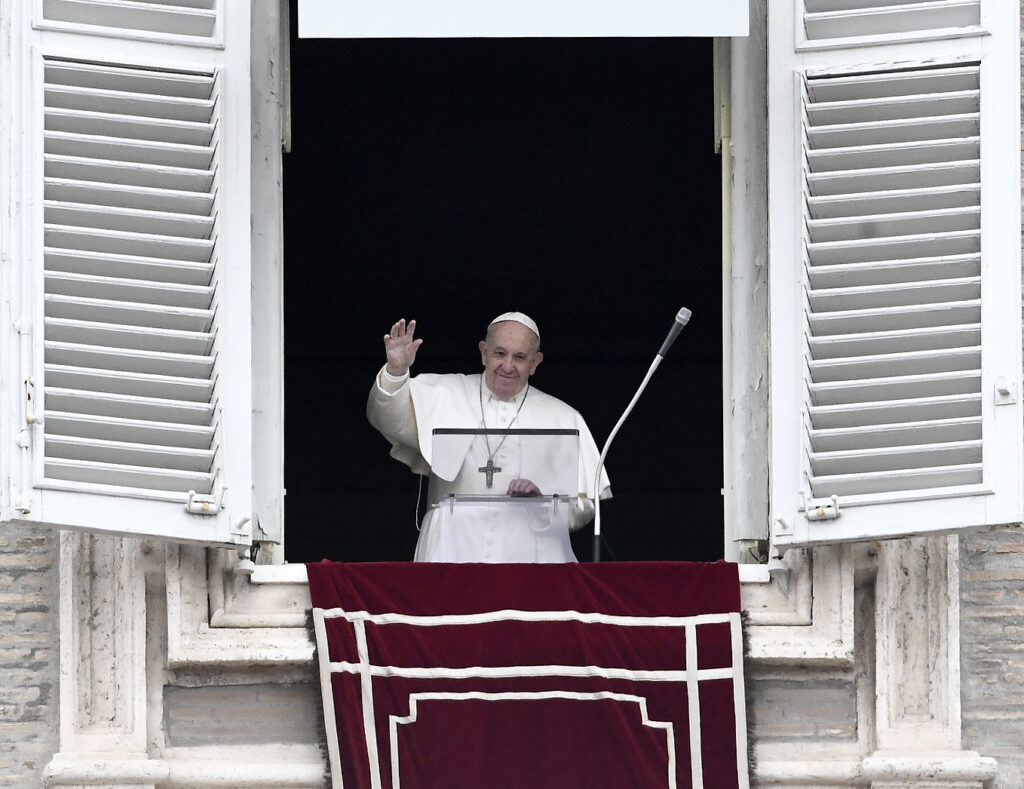
Pope Francis, who died Monday aged 88, will go down in history as a radical pontiff, a champion of underdogs who forged a more compassionate Catholic Church while stopping short of overhauling centuries-old dogma.Dubbed “the people’s Pope”, the Argentine pontiff loved being among his flock and was popular with the faithful, though he faced bitter opposition from traditionalists within the Church.The first pope from the Americas and the southern hemisphere, he staunchly defended the most disadvantaged, from migrants to communities battered by climate change, which he warned was a crisis caused by humankind.But while he confronted head-on the global scandal of sex abuse by priests, survivors’ groups said concrete measures were slow in coming.From his election in March 2013, Jorge Mario Bergoglio was eager to make his mark as the leader of the Catholic Church. He became the first pope to take the name Francis after Saint Francis of Assisi, a 13th-century mystic who renounced his wealth and devoted his life to the poor.”How I would like a poor church for the poor,” he said three days after his election as the 266th pope.He was a humble figurehead who wore plain robes, eschewed the sumptuous papal palaces and made his own phone calls, some of them to widows, rape victims or prisoners.The football-loving former archbishop of Buenos Aires was also more accessible than his predecessors, chatting with young people about issues ranging from social media to pornography — and talking openly about his health.Francis always left the door open to retiring like his predecessor Benedict XVI, who in 2013 became the first pontiff since the Middle Ages to step down.After Benedict died in December 2022, Francis became the first sitting pope in modern history to lead a papal funeral.He suffered increasingly poor health, from colon surgery in 2021 and a hernia in June 2023 to bouts of bronchitis and knee pain that forced him to use a wheelchair.His fourth hospitalisation, of more than a month for bronchitis in both lungs, was his longest, raising speculation he might step down. But he brushed off talk of quitting, saying in February 2023 that papal resignations should not become “a normal thing”.In a 2024 memoir, he wrote that resignation was a “distant possibility” justified only in the event of “a serious physical impediment”.- Kissed prisoners’ feet -Before his first Easter at the Vatican, he washed and kissed the feet of prisoners at a Rome prison.It was the first in a series of powerful symbolic gestures that helped him achieve enthusiastic global admiration that eluded his predecessor.For his first trip abroad, Francis chose the Italian island of Lampedusa, the point of entry for tens of thousands of migrants hoping to reach Europe, and slammed the “globalisation of indifference”.He also condemned plans by US President Donald Trump during his first term to build a border wall against Mexico as un-Christian.After Trump’s re-election, Francis denounced his planned migrant deportations as a “major crisis” that “will end badly”.In 2016, with Europe’s migration crisis at a peak, Francis flew to the Greek island of Lesbos and returned to Rome with three families of asylum-seeking Syrian Muslims.He was also committed to inter-faith reconciliation, kissing the Orthodox Patriarch Kirill of Moscow in a historic February 2016 encounter, and making a joint call for freedom of belief with leading Sunni cleric Sheikh Ahmed al-Tayeb in 2019.Francis re-energised Vatican diplomacy in other ways, helping facilitate a historic rapprochement between the United States and Cuba, and encouraging the peace process in Colombia.And he sought to improve ties with China through a historic — but criticised — 2018 accord on the naming of bishops.- Climate appeal -Experts credited Francis with having influenced the landmark 2015 Paris climate accords with his “Laudato Si” encyclical, an appeal for action on climate change that was grounded in science.He argued that developed economies were to blame for an impending environmental catastrophe, and in a fresh appeal in 2023 warned that some of the damage was “already irreversible”.An advocate of peace, the pontiff repeatedly denounced arms manufacturers and argued that in the myriad of conflicts seen around the globe, a Third World War was underway.But his interventions were not always well received, and he sparked outrage from Kyiv after praising those in war-torn Ukraine who had the “courage to raise the white flag and negotiate”.In his modest rooms in the Vatican’s Casa Santa Marta guesthouse, Francis dealt with stress by writing down his problems in letters to Saint Joseph.”From the moment I was elected I had a very particular feeling of profound peace. And that has never left me,” he said in 2017.He also loved classical music and tango, stopping off once at a shop in Rome to buy records.- ‘Who am I to judge?’ -Francis’s admirers credit him with transforming perceptions of an institution beset by scandals when he took over, helping to bring lapsed believers back into the fold.He will be remembered as the pope who, on the subject of gay Catholics, said: “Who am I to judge?”He allowed divorced and remarried believers to receive communion, and approved the baptism of transgender believers as well as blessings for same-sex couples.But he dropped the idea of letting priests marry after an outcry, and despite nominating several women to leading positions inside the Vatican, he disappointed those who wanted women allowed to be ordained.Critics accused him of tampering dangerously with tenets of Catholic teaching, and he faced strong opposition to many of his reforms.In 2017, four conservatives cardinals made an almost unheard of public challenge to his authority, saying his changes had sown doctrinal confusion among believers.But his Church showed no inclination to relax its ban on artificial contraception or opposition to gay marriage — and he insisted that abortion was “murder”.Francis also pushed reforms within the Vatican, from allowing cardinals to be tried by civilian courts to overhauling the Holy See’s banking system.He also sought to address the enormously damaging issue of sex abuse by priests by meeting victims and vowing to hold those responsible accountable.He opened up Vatican archives to civil courts and made it compulsory to report suspicions of abuse or its cover-up to Church authorities.But critics say his legacy will be a Church that remains reluctant to hand paedophile priests over to the police.- ‘Raised on pasta’ -Jorge Mario Bergoglio was born into an Italian emigrant family in Flores, a middle-class district of Buenos Aires, on December 17, 1936.The eldest of five children, he was “born an Argentine but raised on pasta”, wrote biographer Paul Vallely.From 13, he worked afternoons in a hosiery factory while studying to become a chemical technician in the mornings. Later he had a brief stint as a nightclub bouncer.He was said to have liked dancing and girls, even coming close to proposing to one before, at age 17, he found a religious vocation.Francis later recounted a period of turmoil during his Jesuit training, when he became besotted with a woman he met at a family wedding.By then he had survived a near-fatal infection that resulted in the removal of part of a lung. His impaired breathing scuppered his hopes of becoming a missionary in Japan.He was ordained a priest in 1969 and appointed the provincial, or leader, of the Jesuits in Argentina just four years later.His time at the helm of the order, which spanned the country’s years of military dictatorship, was difficult.Critics accused him of betraying two radical priests who were imprisoned and tortured by the regime. No convincing evidence of the claim ever emerged but his leadership of the order was divisive and, in 1990, he was demoted and exiled to Argentina’s second-largest city, Cordoba.Then, in his 50s, Bergoglio is seen by most biographers as having undergone a midlife crisis.He emerged to embark on a new career in the mainstream of the Catholic hierarchy, reinventing himself first as the “Bishop of the Slums” in Buenos Aires and later as the pope who would break the mould.

Mehidy’s five wickets help Bangladesh fight back in first Zimbabwe Test

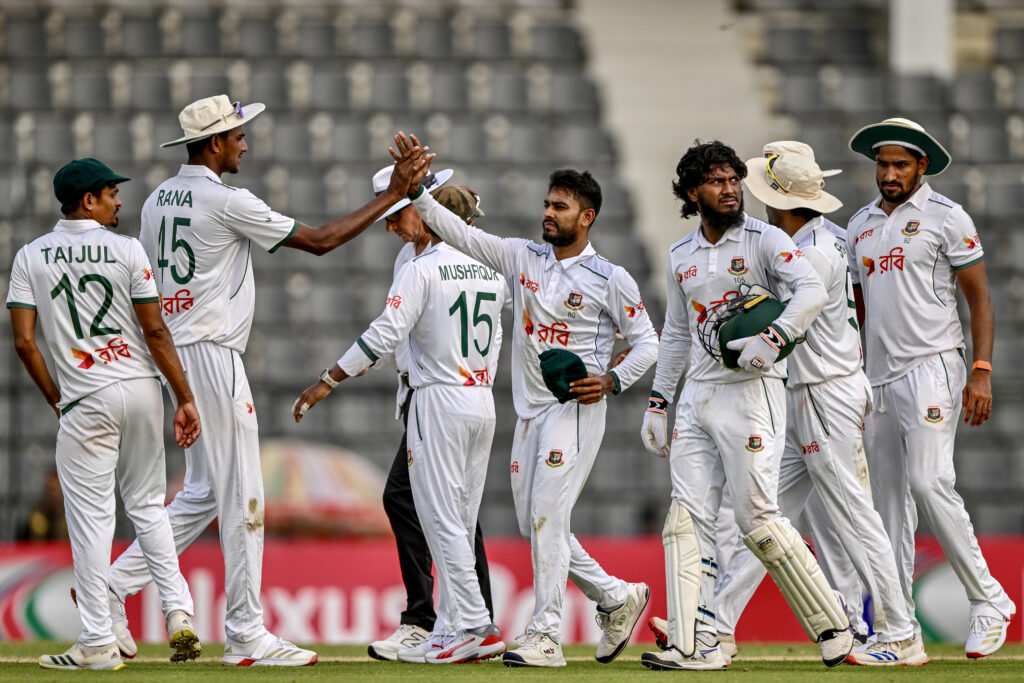
Bangladesh ended the second day of the first Test against Zimbabwe on Monday trailing by only 25 runs after spinner Mehidy Hasan Miraz took five wickets to restrict the visitors to 273 in their first innings.It was a comeback for Bangladesh after a disappointing first day when skipper Najmul Hossain Shanto won the toss in Sylhet and decided to bat first.However, his batters failed to capitalise and were bowled out by an impressive Zimbabwe attack for a modest 191.Zimbabwe then piled on the misery by racing to 67-0 by the end of play on the first day.Starting from a commanding position, both Zimbabwe openers fell early on the second day to aggressive pace bowling by Nahid Rana.Ben Curran was the first to go on 18 and his partner Brian Bennett, who hit an aggressive 64-ball 57, was removed soon after with the score on 88-2.Sean Williams (59) was the only other Zimbabwe batter to reach fifty.Wessly Madhevere (24), Nyasha Mayavo (35) and Richard Ngarava (28) all failed to build bigger scores.Off-spinner Mehidy took the key wickets of Williams, Mayavo and Ngarava to finish with 5-52 on a wicket that was expected to help the pace bowlers.Nahid took 3-74 with aggressive bowling in support of Mehidy.Starting the second innings with an 82-run deficit, Bangladesh lost Shadman Islam on 4 to Blessing Muzarabani with the score on 13. His opening partner Mahmudul Hasan Joy soldiered on to 28 in an unbeaten 44-run partnership with Mominul Haque, on 15, to end the day at 57-1.Shanto must now hope that they can make the most of the friendly home conditions to set an imposing target for the visitors.Bangladesh have been formidable on the slow and spin-friendly home pitches but have several veterans missing.They have won eight of the 18 Tests against Zimbabwe, their highest total against any Test side, including four of the past five.The second and final Test will be played in Chattogram from April 28.Day 2 scores:1st innings: Bangladesh 191 all out (Mominul Haque 56, Najmul Hossain Shanto 40; Blessing Muzarabani 3-50, Wellington Masakadza 3-21)1st innings: Zimbabwe 273 all out (Brian Bennett 57, Sean Williams 59; Mehidy Hasan Miraz 5-52, Nahid Rana 3-74)2nd innings: Bangladesh 57-1 (Mahmudul Hasan Joy 28 not out, Mominul Haque 15 not out; Blessing Muzarabani 1-21)

Prayers, disbelief in East Timor after Pope Francis death

Locals in Catholic-majority East Timor held prayers after the death of Pope Francis on Monday, while others refused to accept the news of the late pontiff’s passing.In capital Dili, Catholic worshippers took a moment to remember the pope, who died aged 88 months after he received a rockstar welcome in the city as part of a marathon four-nation tour.”When I hear and see (the news) on social media, I was… very, very sad because of the loss of a Pope that was known in the world, particularly in East Timor,” said 40-year-old Maria at a Catholic church, declining to give her last name.”He was a simple man, a very humble man, a figure that gets close with the common people. We really miss Pope Francis.”East Timor President Jose Ramos-Horta, who hosted Pope Francis, mourned his death but hailed his “very brave” fight for peace and the world’s poorest people.Cardinal Virgilio do Carmo da Silva, the archbishop of Dili, said the Vatican flag would be flown at half mast at his residence, while a mass would be held across the country’s churches in the coming days.The Argentine pontiff visited East Timor — one of the world’s poorest countries — in September on a trip that included Indonesia, Papua New Guinea and Singapore in between bouts of ill health.He held a mass on the outskirts of Dili that authorities said attracted almost half of the country’s 1.3 million people.”I am very shocked and sad to hear this news. I enjoyed seeing so many enthusiastic people who wanted to see the Pope,” said student Glenn Bawakana Soares, 22.On that visit the first Latin American pontiff made a pointed call to East Timor’s leaders to do more on all forms of abuse, after several high-profile child abuse scandals involving members of the nation’s clergy.”We are all called to do everything possible to prevent every kind of abuse and guarantee a healthy and peaceful childhood for all young people,” he said in a speech in Dili.- ‘Don’t accept’ -Recent abuse cases in East Timor include Nobel-winning Bishop Carlos Ximenes Belo, who the Vatican secretly punished over allegations he sexually abused young children for decades.In another case, defrocked American priest Richard Daschbach was found guilty in 2021 of abusing orphaned, disadvantaged girls and sentenced to 12 years in prison.Pope Francis did not mention a specific case or acknowledge any Vatican responsibility. Meanwhile some Timorese were refusing to accept that the energetic reformer had died, especially on Easter Monday.”There are those who believe it and also think this is a lie. They think this is fake news,” student Soares said. “They don’t accept reality.”Others saw his legacy as one paving a path for future pontiffs to speak out for the most underprivileged in society.”A revolutionary pope, he is the hope of marginalised people but his health did not let him live long enough to defend his work,” Ato Lekinawa Costa, chief editor of Timorese news site Neon Metin, told AFP.”The wave of goodbye in his visit last year means forever now, but hopefully next Pope will carry on Pope Francis good work and commitment.”

Asian scam centre crime gangs expanding worldwide: UN

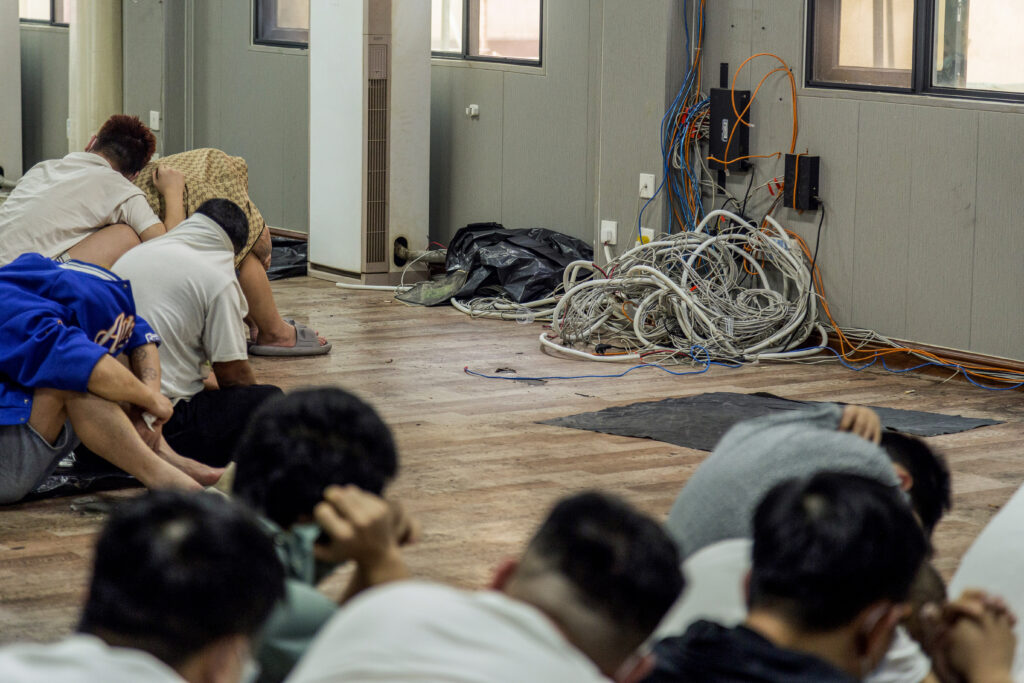
Asian crime networks running multi-billion-dollar cyber scam centres are expanding their operations across the world as they seek new victims and new ways to launder money, the UN said on Monday.Chinese and Southeast Asian gangs are raking in tens of billions of dollars a year targeting victims through investment, cryptocurrency, romance and other scams — using an army of workers often trafficked and forced to toil in squalid compounds.The activity has largely been focused in Myanmar’s lawless border areas and dubious “special economic zones” set up in Cambodia and Laos.But a new report from the UN Office on Drugs and Crime (UNODC) warned the networks are building up operations in South America, Africa, the Middle East, Europe and some Pacific islands.”We are seeing a global expansion of East and Southeast Asian organised crime groups,” said Benedikt Hofmann, UNODC Acting Regional Representative for Southeast Asia and the Pacific.”This reflects both a natural expansion as the industry grows and seeks new ways and places to do business, but also a hedging against future risks should disruption continue and intensify in Southeast Asia.”Countries in east and southeast Asia lost an estimated $37 billion to cyber fraud in 2023, the UNODC report said, adding that “much larger estimated losses” were reported around the world.The syndicates have expanded in Africa — notably in Zambia, Angola and Namibia — as well as Pacific islands such as Fiji, Palau, Tonga and Vanuatu.- Laundering through crypto -Besides seeking new bases and new victims, the criminal gangs are broadening their horizons to help launder their illicit income, the report said, pointing to team-ups with “South American drug cartels, the Italian mafia, and Irish mob, among many others”.Illicit cryptocurrency mining — unregulated and anonymous — has become a “powerful tool” for the networks to launder money, the report said.In June 2023 a sophisticated crypto mining operation in a militia-controlled territory in Libya, equipped with high-powered computers and high-voltage cooling units, was raided and 50 Chinese nationals arrested.The global spread of the syndicates’ operations has been driven in part by pressure from authorities in Southeast Asia.A major crackdown on scam centres in Myanmar this year, pushed by Beijing, led to around 7,000 workers from at least two dozen counrties being freed.But the UN report warns that while such efforts disrupt the scam gangs’ immediate activities, they have shown themselves able to adapt and relocate swiftly.”It spreads like a cancer,” UNODC’s Hoffman said.”Authorities treat it in one area, but the roots never disappear, they simply migrate.”Alongside the scam centres, staffed by a workforce estimated by the UN to be in the hundreds of thousands, the industry is further enabled by new technological developments.Operators have developed their own online ecosystems with payment applications, encrypted messaging platforms and cryptocurrencies, to get round mainstream platforms that might be targeted by law enforcement.

Himalayan snow at 23-year low, threatening 2 billion people: report

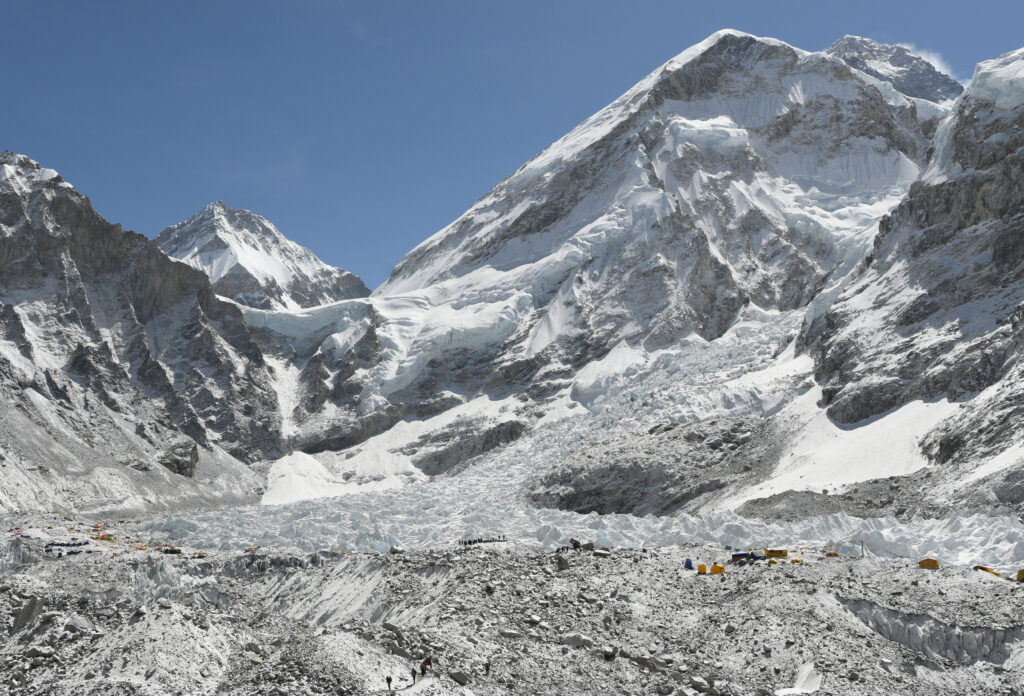
Snowfall in Asia’s Hindu Kush-Himalayan mountain range has reached a 23-year low, threatening nearly two billion people dependent on snowmelt for water, scientists warned in a report on Monday.The Hindu Kush-Himalayan range, which stretches from Afghanistan to Myanmar, holds the largest reserves of ice and snow outside the Arctic and Antarctica and is a vital source of fresh water for about two billion people.Researchers found “a significant decline in seasonal snow across the Hindu Kush Himalaya region, with snow persistence (the time snow remains on the ground) 23.6 percent below normal — the lowest in 23 years,” the International Centre for Integrated Mountain Development (ICIMOD) said. “This trend, now in its third consecutive year, threatens water security for nearly two billion people,” it said in its Snow Update Report.The study also warned of “potential lower river flows, increased groundwater reliance, and heightened drought risk”. Sher Muhammad, the lead author of the ICIMOD report, told AFP that “this year the snowfall started late in January and remained low in the winter season on average”.Several countries in the region have already issued drought warnings,  with upcoming harvests and access to water at risk for populations already facing longer, hotter, and more frequent heatwaves.The inter-governmental ICIMOD organisation is made up of member countries Afghanistan, Bangladesh, Bhutan, China, India, Myanmar, Nepal and Pakistan.It urged countries that rely on the 12 major river basins in the region to develop “improved water management, stronger drought preparedness, better early warning systems, and greater regional cooperation”.The Mekong and Salween basins — the two longest rivers in Southeast Asia supplying water to China and Myanmar — had lost around half of their snow cover, it noted.Pema Gyamtsho, ICIMOD’s director general, called for changes in policy to address the low snow levels in the long term.”Carbon emissions have already locked in an irreversible course of recurrent snow anomalies in the HKH (Hindu Kush-Himalayas),” Gyamtsho said.Asia is the region most affected by climate-related disasters, according to the UN’s World Meteorological Organization, which reported last month that five of the past six years have seen the most rapid glacier retreat on record.

Sri Lanka Catholics protest on Easter bombing anniversary

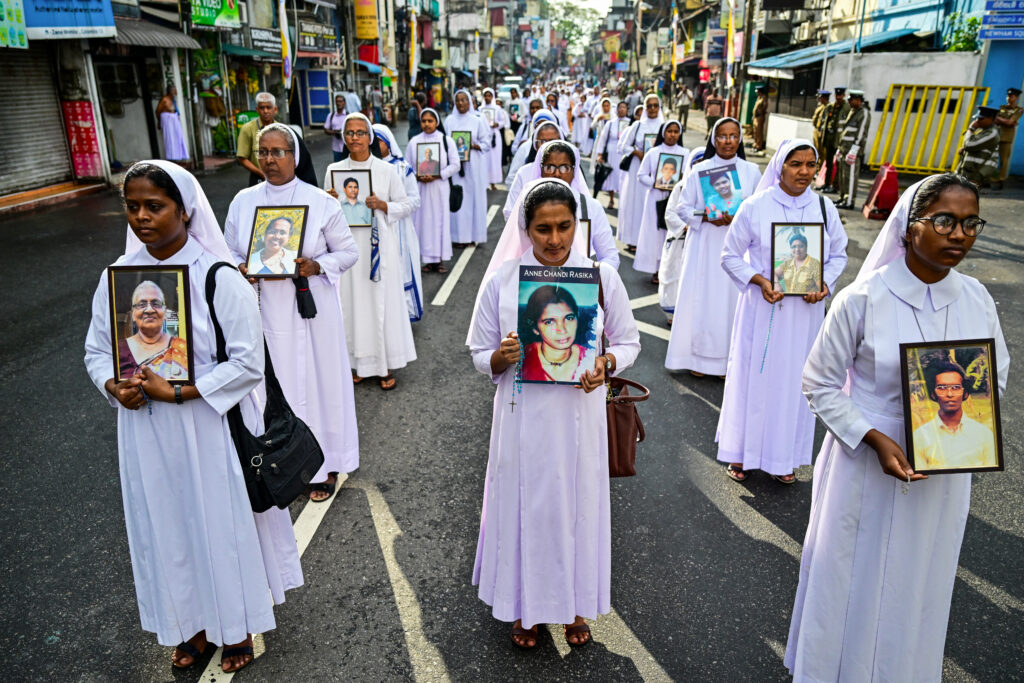
Sri Lanka’s Catholics marked on Monday the sixth anniversary of the Easter bombings that killed 279 people with a silent march and demands for justice.Several investigations into the April 21, 2019, bombings, which targeted three churches and three hotels, concluded that the attacks were carried out by homegrown jihadists who claimed affiliation with the Islamic State group.However, the island’s Catholic Church has accused successive governments of protecting those behind the attack and several high-level investigations have identified links between military intelligence units and the bombers.The head of the Church in Sri Lanka, Cardinal Malcolm Ranjith, led the march in the capital Colombo, where he presided over a multi-religious ceremony for the victims, who included 45 foreigners.Hundreds of relatives of the victims marched from St Lucia’s Cathedral to the nearby St Anthony’s Church, where the first suicide attack took place.All radio and television channels across the country muted their broadcasts for two minutes as a mark of respect.Ranjith announced that the Vatican had recognised 167 Catholics killed as “Witnesses of the Faith”, placing them on a path to possible sainthood.”The purpose of this is to propagate and preserve the memory of the witness in perpetuity,” Ranjith said.President Anura Kumara Dissanayake said on the eve of the anniversary there would be a review of the final report of the 2021 presidential commission of inquiry.Dissanayake’s office said the report had been handed to the police for action against those linked to the attacks.Church leaders have alleged that military intelligence officers orchestrated the bombings to bolster the political prospects of retired army officer Gotabaya Rajapaksa, who was campaigning on a platform of national security.He won the presidency seven months later.Rajapaksa was forced out of office in July 2022 following months of protests over an unprecedented economic crisis that led to shortages of food, fuel, and medicine.