AFP Asia

Mic check: Singapore’s podcast boom amplifies opposition voices

In a tiny studio, a former Wall Street banker and an ex-aviation executive are doing what critics say is lacking in Singapore’s tightly managed media landscape — giving opposition politicians unfiltered airtime ahead of an upcoming election.The popular podcast Yah Lah But — a colloquial Singlish way of saying “Yes, but” — promises “the most uncensored conversations and interviews from the much-censored country of Singapore”, according to its YouTube description.The show is part of a growing wave of podcasts deep-diving into the affluent city-state’s politics, providing alternative coverage of the May 3 polls.”We’re not scared. I think there’s a desire to really hear different voices,” said host Terence Chia.Despite its reputation as a modern global hub, Singapore’s domestic media is “tightly controlled by the government” and self-censorship is “widespread”, said Reporters Without Borders, ranking it 126th out of 180 countries. Its media landscape is also dominated by players linked to the government that critics say are too pro-establishment.However, mainstream election coverage of the opposition has improved over the past decade, with its news podcasts showing a willingness to feature alternative voices. Co-host Haresh Tilani said the independent Yah Lah But will not give their guests a free pass, no matter their party.”We don’t just bash the establishment. We, in fact, challenge them,” he told AFP.Ahead of the election, Yah Lah But has pivoted to political topics and conducted long interviews with politicians from both sides of the aisle, employing a candid tone that allows a peek into their personalities. “In parliament, rallies, and in mainstream media you see one side of them but podcasts allow you to see the human side of them,” Tilani said.- Mainstream media ‘won’t engage’ -Singapore’s ruling People’s Action Party (PAP) has held power since 1959 with an overwhelming majority of parliament seats, and is expected to win the May 3 election. But the opposition has made gains in recent years, and the election will be seen as a referendum on PAP’s popularity under Prime Minister Lawrence Wong when up against a rejuvenated opposition. Despite podcasts’ niche reach, Singapore Democratic Party (SDP) chairman Paul Tambyah said they are “definitely” a better platform than mainstream outlets for non-ruling party players. “The PAP government has made no secret of the need for agencies… to promote the views of the ‘government of the day’,” he told AFP. SDP leader Chee Soon Juan said he has never been invited for a long-form interview by mainstream media in his three decades in politics.Earlier this month, Chee was on The Daily Ketchup, another breakout podcast, for nearly an hour and a half.”Ask me the hard-hitting questions, the ones that drill into the issues — I’m happy to answer. But they (mainstream media) just won’t engage in that sense,” Chee told AFP.Legacy media’s “biggest problem” is “the government which controls the media”, said veteran former editor P.N. Balji.”Even if the government… opens up, I’m not sure the media knows what to do,” Balji said. “They’ve been used to a certain style of reporting.”Mainstream outletsdid not respond to comment when contacted by AFP.- ‘Pent-up demand’ -With the podcast microphones finally on, the opposition is not wasting time — and Singaporeans are taking note. When Workers’ Party’s rookie candidate Harpreet Singh appeared on Yah Lah But, his hour-plus-long episode racked up almost 100,000 views in two weeks — huge for a long-form interview in tiny Singapore.”This is literally the first time I’ve heard this man speak, but (he) has completely won me over,” said one commenter. SDP leader Chee’s episode on The Daily Ketchup got 126,000 views since its mid-April debut — a reflection of the “pent-up demand” for long interviews with politicians, said co-host Jonathan Chua. In JanuaryThe Daily Ketchup landed a coup, securing Prime Minister Wong for an interview. It now has 269,000 views. “The cast members on the show have been upfront on which political parties they are leaning towards… Instead of self-moderating, we cast people with different political views and let them be themselves,” Chua told AFP.Podcasts have “greatly expanded the opposition’s access to the public”, said Cherian George, a Singapore politics and media expert, adding that their presence also “pressured the mainstream media to take down their pro-establishment bias a notch”.Yah Lah But’s hosts believe podcasts will play a larger role in Singapore’s political discourse in the future. “Podcasts are really providing the platform to ask really tough questions that the mainstream media isn’t able to ask,” Chia said.
‘Like a dream’ as IPL’s 14-year-old Suryavanshi becomes youngest to hit T20 ton

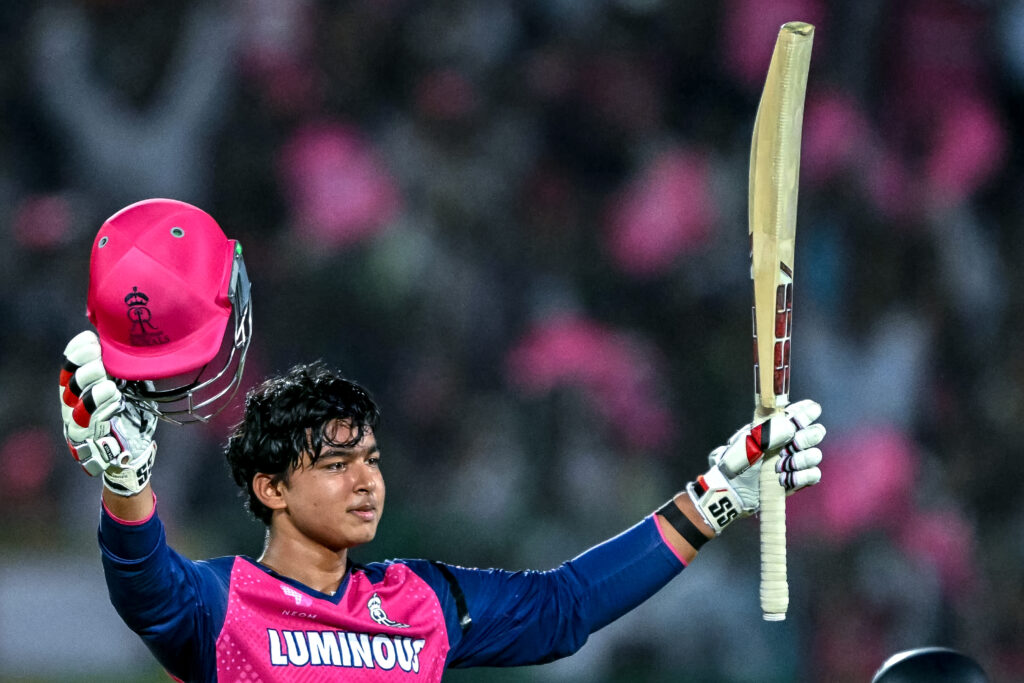
Indian batter Vaibhav Suryavanshi on Monday became the youngest to hit a senior T20 century at 14 years and 32 days as he powered Rajasthan Royals’ successful chase against Gujarat Titans in the IPL.Suryavanshi, a left-hand batsman who became the youngest IPL debutant on April 19, smashed 100 off 35 balls to pummel the opposition attack with seven fours and 11 sixes at Jaipur’s Sawai Mansingh Stadium.Suryavanshi went past the previous record, set by Vijay Zol of Maharashtra at 18 years and 118 days against Mumbai in an Indian domestic match in 2013.Suryavanshi’s ton is the second fastest in the popular T20 tournament, after Chris Gayle’s century in 30 balls for Royal Challengers Bengaluru in 2013.The chubby teenager finally fell bowled to fast bowler Prasidh Krishna for 101 off 38 balls and walked off to a standing ovation from the home crowd and the team dugout.”It is like a dream, to score a century in the IPL,” the new batting sensation, who had started his IPL journey nine days ago with a six, said after being named player of the match.Suryavanshi, who has been nicknamed “Boss baby” by TV commentators, said there is “no fear” facing world’s top bowlers.He earned a deal in the lucrative T20 tournament after Rajasthan bought him for $130,500 in the November auction when he was still just 13.Suryavanshi then made his debut against Lucknow Super Giants when he came in as an impact substitute and smacked his first ball for a six — a flat-batted hit over the extra-cover boundary — off pace bowler Shardul Thakur.- ‘Tremendous hitting’ -On Monday, his 166-run opening stand with fellow left-hander Yashasvi Jaiswal launched his team’s chase of 210.Rajasthan reached the target with 25 balls and eight wickets to spare and snap their five-match losing streak.Jaiswal hit an unbeaten 70 and put on an unbeaten stand of 41 with stand-in-skipper Riyan Parag who hit the winning six in his 15-ball 32.”Incredible innings, one of the best I have seen,” said Jaiswal. “Hope he will do it for us for a long time. I was telling him to just keep going.”Suryavanshi’s masterclass took the limelight from everything else  including opposition knocks from Gujarat skipper Shubman Gill, who hit 84, and Jos Buttler, who struck an unbeaten 50.Gujarat posted 209-4 but the total did not survive Suryavanshi’s blitz. He hit Afghanistan quick Karim Janat for three fours and three sixes in one 30-run over.Gill sat out the Rajasthan innings after his 50-ball batting knock and Afghanistan spin wizard Rashid Khan stood in as captain for Gujarat.Gill said a back spasm made him sit out as he lauded Suryavanshi’s “tremendous hitting”.Gujarat are third on the 10-team table with six wins from nine matches.Rajasthan’s chances of moving into the final four still hang by a thread as they are seventh with three wins and seven defeats.

UN food, refugee agencies warn of huge cuts after funding losses

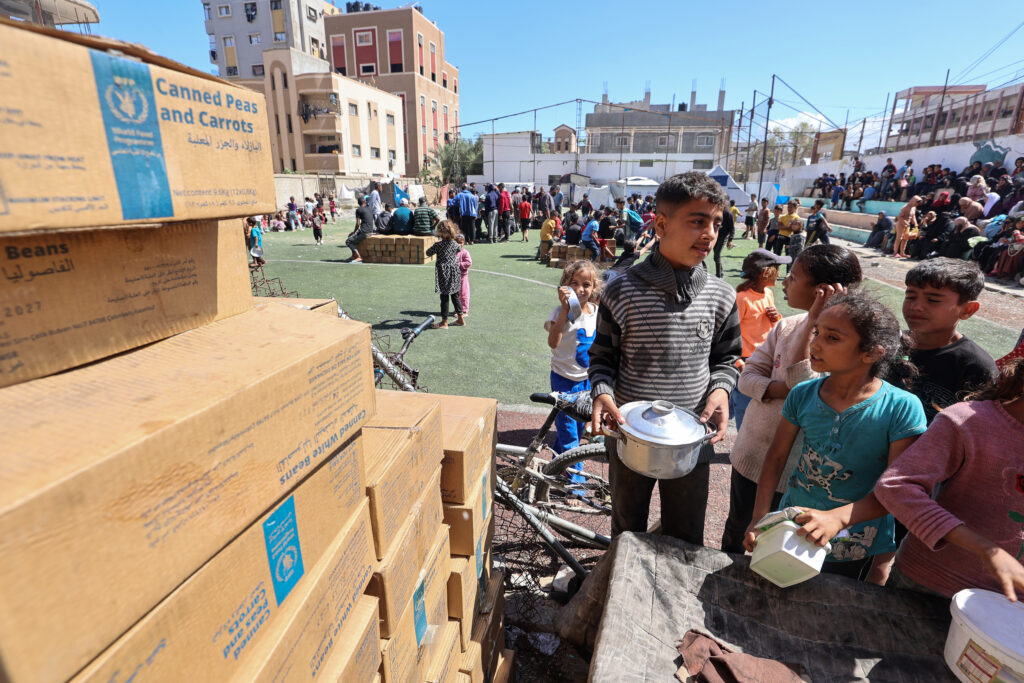
The UN’s food and refugee agencies have warned of dire cuts to their services as funding plummets, especially from key donor the United States under President Donald Trump.The UN World Food Programme (WFP) will cut staff by 25 to 30 percent as contributions to the global aid agency have dropped, according to an internal email seen Monday by AFP.The head of the UN refugee agency (UNHCR) warned Monday that reduced contributions could force a one-third reduction in its activities, despite worldwide conflicts that continue to strain its resources.Trump has moved to slash US contributions to the UN and its agencies since returning to the White House, causing funding chaos as Washington was previously the largest contributor to many budgets.So far his administration has scrapped 83 percent of humanitarian programs funded by the US Agency for International Development (USAID).The agency had an annual budget of $42.8 billion, representing 42 percent of total global humanitarian aid, including major contributions to UN agencies.Other countries have also cut funding to UN agencies this year, but the United States’ contributions dwarfed most others in the humanitarian aid sector. – ‘Less with less’ -The WFP is the world’s largest humanitarian organization, charged with preventing famine and serious hunger globally, playing a vital role in getting food to crises like the war in Sudan and disaster zones.”WFP must reduce its worldwide workforce by 25-30 percent, which could impact up to 6,000 roles,” the email said.”This structural shift — necessary to preserve resources in support of vital operations — will impact all geographies, divisions and levels in the organization.”Before the cuts, WFP, which was founded in 1961, had 23,000 staff and a presence in 120 countries, according to its website.”The scale of the workforce reductions needed is difficult news to say and even more difficult to hear. Yet it is the necessary and responsible decision given our tenuous funding outlook,” said the memo.At UNHCR, High Commissioner Filippo Grandi told the Security Council that funding cuts “may conclude with the retrenchment of my organization to up to one-third of its capacity.”The United States has traditionally been UNHCR’s top donor, making up more than 40 percent of total contributions received, amounting to approximately $2 billion per year, he noted.But for 2025, the UNHCR has so far received around $350 million from Washington and is trying to convince the US administration to release an additional $700 million, which has been frozen.”I cannot emphasize more how dramatic the situation is in this very moment,” Grandi said.”If this trend continues, we will not be able to do more with less. But as I have said many times, we will do less with less. We are already doing less with less,” he added.UNHCR employs more than 18,000 staff across 136 countries, with approximately 90 percent of those employees working in the field, according to its website.Many UN agencies and departments are already feeling the impact of drastic cuts in donor contributions, forcing them to scale back vital operations for millions of people around the world.The United States has defended its aid cuts, calling on other countries to do more.”Every member state needs to better share the burden of humanitarian response to conflict,” said acting US ambassador to the UN Dorothy Shea. “The United States has disproportionately shouldered this burden for decades.”

Conclave starts May 7, cardinals say new pope must tackle abuse

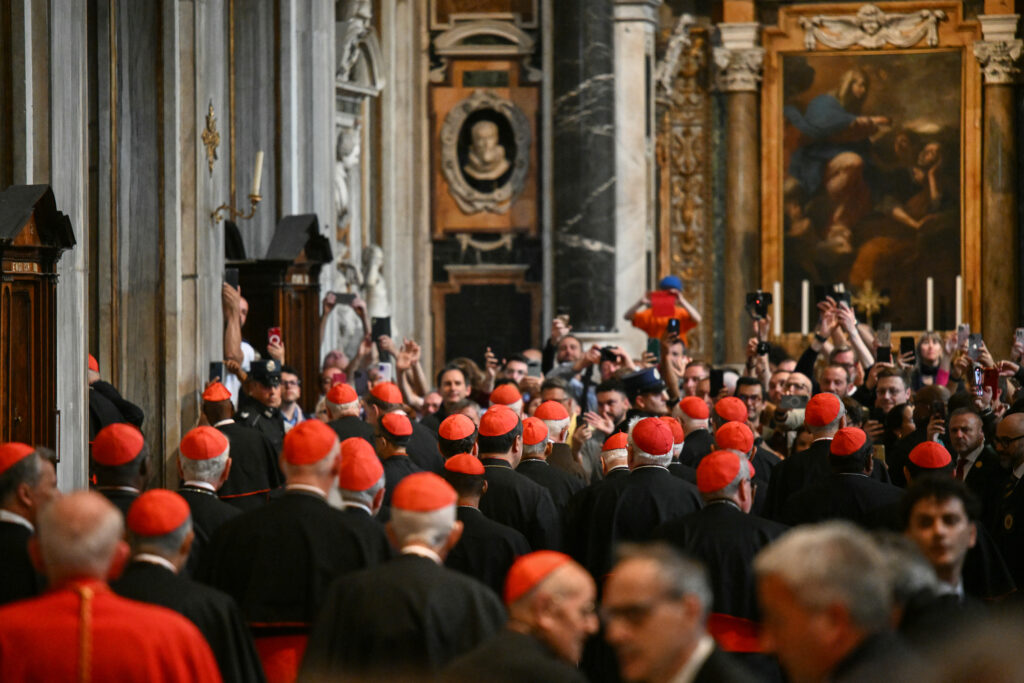
Catholic cardinals agreed on Monday to begin a conclave on May 7 to elect a new pope, and highlighted clerical sexual abuse as one of the key challenges facing Pope Francis’s successor.Cardinals under the age of 80 will meet in the Sistine Chapel to choose a new leader for the world’s 1.4 billion Catholics, in a mystery-shrouded ritual dating back to the Middle Ages.The date was decided at a meeting of cardinals of all ages early on Monday, two days after the funeral of Francis, who died on April 21 aged 88.The cardinals, known as “Princes of the Church”, outlined Catholicism’s most pressing challenges, including “evangelisation, the relationship with other faiths (and) the issue of abuse”, the Vatican said.”There was talk of the qualities that the new pontiff must possess to respond effectively to these challenges,” it added.The Church’s 252 cardinals were recalled to Rome after the Argentine pontiff’s death, although only 135 are eligible to vote in the conclave.They hail from all corners of the globe, and many of them do not know each other.But they already had four meetings last week, so-called “general congregations”, where they began to become better acquainted.- ‘Fraternal’ atmosphere -Cardinal Gualtiero Bassetti, 83, a former head of the Italian bishops’ conference, said there was a “beautiful fraternal atmosphere”.”Of course, there may be some difficulties because the voters have never been so numerous and not everyone knows each other,” he told Italy’s Corriere della Sera newspaper.On Monday, the Vatican closed the Sistine Chapel, where voting will take place under Michelangelo’s 16th-century ceiling frescoes, to begin preparations.So far there are few clues as to who the cardinals might choose.”I believe that if Francis has been the pope of surprises, this conclave will be too, as it is not at all predictable,” Spanish Cardinal Jose Cobo told El Pais in an interview published on Sunday.Francis was laid to rest on Saturday, a ceremony that drew 400,000 people, including royalty, world leaders and ordinary pilgrims.On Sunday, about 70,000 mourners filed past his marble tomb in the Santa Maria Maggiore Basilica in Rome, after the “pope of the poor” opted to be buried outside the Vatican’s walls.- ‘Sacred obligation’ -With conflicts and diplomatic crises raging around the world, Italian Cardinal Pietro Parolin is for many the favourite to succeed Francis.Parolin was secretary of state under Francis — the pope’s number two.British bookmakers William Hill put Parolin slightly ahead of Filipino Luis Antonio Tagle, the Metropolitan Archbishop emeritus of Manila, followed by Ghana’s Cardinal Peter Turkson.Next in their odds come Matteo Zuppi, the Archbishop of Bologna; Guinea’s Cardinal Robert Sarah; and Pierbattista Pizzaballa, the Latin Patriarch of Jerusalem.Francis’s successor will inherit a series of measures he introduced to combat clerical sexual abuse.But victims’ associations say he did not do enough, and the scandals show no sign of abating.Anne Barrett Doyle from BishopAccountability.org told AFP the abuse archive “applaud(s) the acknowledgment by the cardinals that ending the abuse crisis must be a priority”.”The Church worldwide, through its parishes, schools, hospitals and orphanages, cares for tens of millions of children. The next pope’s most sacred obligation must be to protect them”, she said.The challenge is significant. In many African and Asian countries, the subject remains taboo.Even in Europe, Italy has yet to launch an independent investigation into abuse allegations.- ‘Unity’ -While Francis’s efforts to create a more compassionate Church earned him widespread affection and respect, some of his reforms angered the Church’s conservative wing, particularly in the United States and Africa.Roberto Regoli, a professor of Church history and culture at the Pontifical Gregorian University in Rome, told AFP the cardinals would be looking “to find someone who knows how to forge greater unity”.”We are in a period in which Catholicism is experiencing various polarisations, so I don’t imagine it will be a very, very quick conclave,” he said.Bassetti, who is too old to participate, said that he thought it “will not be long”.Some 80 percent of the cardinal electors were appointed by Francis — although that is no guarantee they will pick a successor in his mould.Most are relatively young, and for many it is their first conclave.- ‘Courageous leader’ -The vote is highly secretive and follows strict rules and ceremonial procedures.The process could take several days or potentially longer.There are four votes per day — two each in the morning and afternoon — until one candidate secures a two-thirds majority.Fewer than half of those eligible to vote are European.”The future pope must have a universal heart (and) love all the continents. We must not look at colour, at origin, but at what is proposed,” Cardinal Dieudonne Nzapalainga from the Central African Republic told the Italian newspaper Il Messaggero.”We need a courageous leader, a bold one, capable of speaking forcefully, of holding the helm of the Church steady even in storms… offering stability in an era of great uncertainty.”Italian pensioner Emilia Greco said she hoped “all the doors that Pope Francis opened — to hope, to those marginalised, to the poor… can be kept open and expanded, (to create) a truly inclusive Church”.

Conclave starts May 7, with cardinals saying new pope must tackle abuse

Catholic cardinals agreed on Monday to begin a conclave on May 7 to elect a new pope, and highlighted clerical sexual abuse as one of the key challenges facing Pope Francis’s successor.So-called “Princes of the Church” under the age of 80 will meet in the Sistine Chapel to choose a new religious leader for the world’s 1.4 billion Catholics.The date was decided at a meeting of cardinals of all ages early on Monday, two days after the funeral of Francis, who died on April 21 aged 88.The cardinals outlined the most pressing Church challenges including “evangelisation, the relationship with other faiths (and) the issue of abuse”, the Vatican said.”There was talk of the qualities that the new pontiff must possess to respond effectively to these challenges,” it added.The Church’s 252 cardinals were recalled to Rome after the Argentine’s death, although only 135 are eligible to vote in the conclave.They hail from all corners of the globe and many of them do not know each other.But they already had four meetings last week, so-called “general congregations”, where they began to become better acquainted.Cardinal Gualtiero Bassetti, 83, a former head of the Italian bishops’ conference, said there was a “beautiful fraternal atmosphere”.”Of course, there may be some difficulties because the voters have never been so numerous and not everyone knows each other,” he told Italy’s Corriere della Sera newspaper. On Monday, the Vatican closed the Sistine Chapel, where voting will take place under Michelangelo’s 16th-century ceiling frescoes, to begin preparations.So far there are few clues as to who the cardinals might choose.”I believe that if Francis has been the pope of surprises, this conclave will be too, as it is not at all predictable,” Spanish Cardinal Jose Cobo told El Pais in an interview published on Sunday.Francis was laid to rest on Saturday with a funeral and burial ceremony that drew 400,000 people to St Peter’s Square and beyond, including royalty, world leaders and ordinary pilgrims.On Sunday, about 70,000 mourners filed past his marble tomb in the Santa Maria Maggiore Basilica in Rome, after the “pope of the poor” opted to be buried outside the Vatican’s walls.- Abuse -With conflicts and diplomatic crises raging around the world, Italian Cardinal Pietro Parolin is for many the favourite to succeed him.Parolin was secretary of state under Francis — the pope’s number two.British bookmakers William Hill put him slightly ahead of Filipino Luis Antonio Tagle, the Metropolitan Archbishop emeritus of Manila, followed by Ghana’s Cardinal Peter Turkson.Next in their odds come Matteo Zuppi, the Archbishop of Bologna; Guinea’s Cardinal Robert Sarah; and Pierbattista Pizzaballa, the Latin Patriarch of Jerusalem. The cardinals have put the Catholic Church’s global sex abuse crisis on their list of pressing issues the new pope will have to tackle.Francis introduced a series of measures to combat clerical sexual abuse.But victims associations say he did not do enough and the issue remains a major challenge for the Church, with the scandals showing no sign of abating.The challenge is significant. In many African and Asian countries, the subject remains taboo. Even in Europe, Italy has yet to launch an independent investigation into abuse allegations.While Francis’s efforts to create a more compassionate Church earned him widespread affection and respect, some of his reforms angered the Church’s conservative wing, particularly in the United States and Africa.Roberto Regoli, a professor of Church history and culture at the Pontifical Gregorian University in Rome, told AFP that the cardinals would be looking “to find someone who knows how to forge greater unity”.”We are in a period in which Catholicism is experiencing various polarisations, so I don’t imagine it will be a very, very quick conclave,” he said.Bassetti, who is too old to participate, said that he thought it “will not be long”.Some 80 percent of the cardinal electors were appointed by Francis — although that is no guarantee they will pick a successor in his mould.Most are relatively young, and for many it is their first conclave.- ‘We need a courageous leader’ -The vote is highly secretive and follows strict rules and ceremonial procedures. The process could take several days or potentially longer.There are four votes per day — two each in the morning and afternoon — until one candidate secures a two-thirds majority.Fewer than half of those eligible to vote are European.”The future pope must have a universal heart (and) love all the continents. We must not look at colour, at origin, but at what is proposed,” Cardinal Dieudonne Nzapalainga from the Central African Republic told the Italian newspaper Il Messaggero.”We need a courageous leader, a bold one, capable of speaking forcefully, of holding the helm of the Church steady even in storms… offering stability in an era of great uncertainty.”Patrizia Spotti, a 68-year-old Italian visiting Rome for the 2025 Jubilee holy year, told AFP on Monday that she hoped the new pontiff “will be a pope like Francis”.It was a difficult time for Catholicism, she said.”Churches are empty and the Church itself has made mistakes — all the scandals with the children,” she said, referring to the widespread revelations of clerical sex abuse.

Bangladesh spinner Taijul’s 5 wickets trigger Zimbabwe collapse in 2nd Test

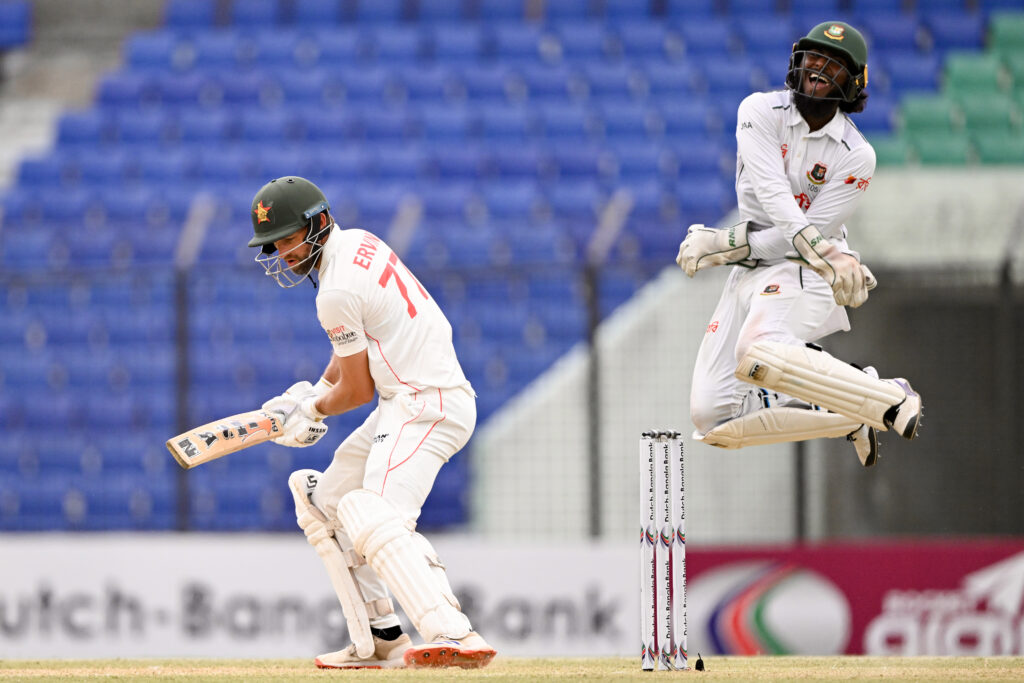
Bangladesh’s left-arm spinner Taijul Islam registered his 16th five-wicket haul as Zimbabwe slumped to 227-9 at the end of the first day of the second Test in Chattogram on Monday.Nick Welch and Sean Williams each scored fifties for the visitors but the day belonged to Bangladesh as they sought to level the two-match series after losing the opener.Zimbabwe got off to a decent start after winning the toss and opting to bat but lost both openers in quick succession. Debutant Tanzim Hasan Sakib made the first breakthrough, getting Brian Bennett caught behind off an outside edge.Taijul struck with the second delivery of his spell, removing Ben Curran when the opener chopped one onto his stumps for 21 off 50 balls.Welch and Williams steadied the innings but their dismissals triggered a collapse, with Taijul getting four wickets in the final session. He dismissed Wessly Madhevere for 15 in the 79th over and then struck twice more quickly, sending back Wellington Masakadza for six and Richard Ngarava for a first-ball duck.Taijul claimed his fifth wicket with five overs remaining in the day, removing Welch for 54 to leave Zimbabwe reeling.However, tailender Blessing Muzarabani held firm with Tafadzwa Tsiga to survive the rest of the day.Taijul finished with 5-60, while his spin partner Nayeem Hasan chipped in with two wickets.Bangladesh made three changes, recalling Anamul Haque and Nayeem Hasan, and handing right-arm paceman Sakib his Test debut. Anamul’s return came after four centuries in domestic cricket.Mahmudul Hasan Joy, Nahid Rana and Khaled Ahmed were dropped to make room for them.Zimbabwe brought in debutant leg-spinner Vincent Masekesa and Tsiga, replacing Victor Nyauchi and Nyasha Mayavo.Brief scores: Zimbabwe: 227-9 in 90 overs (Sean Williams 67, Nick Welch 54; Taijul Islam 5-60, Nayeem Hasan 2-42). Toss: Zimbabwe

Villagers on India’s border with Pakistan fear war

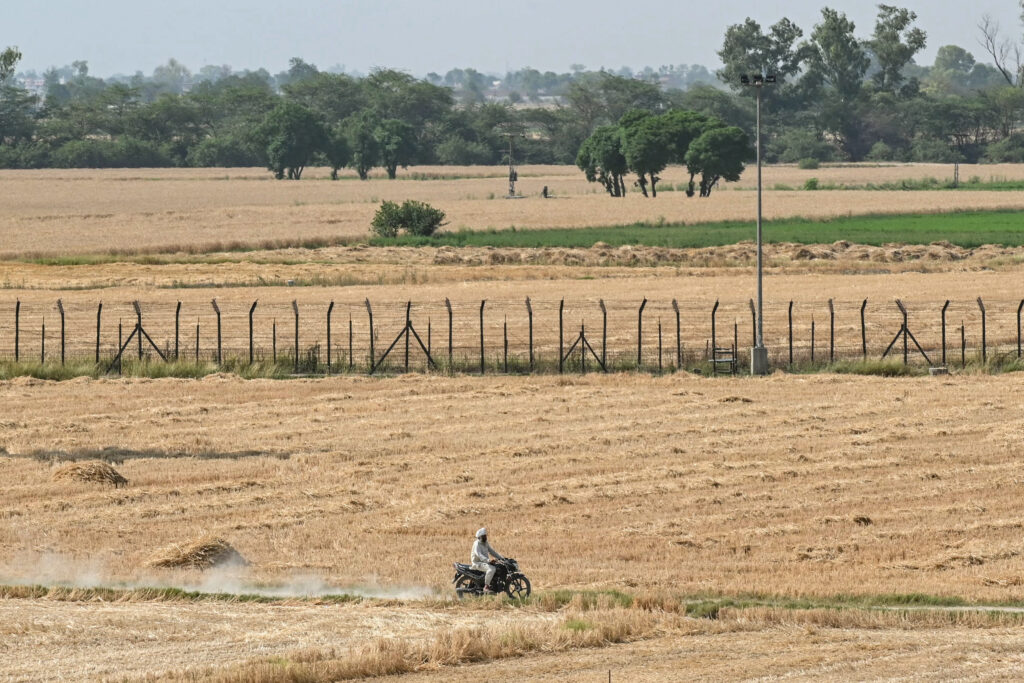
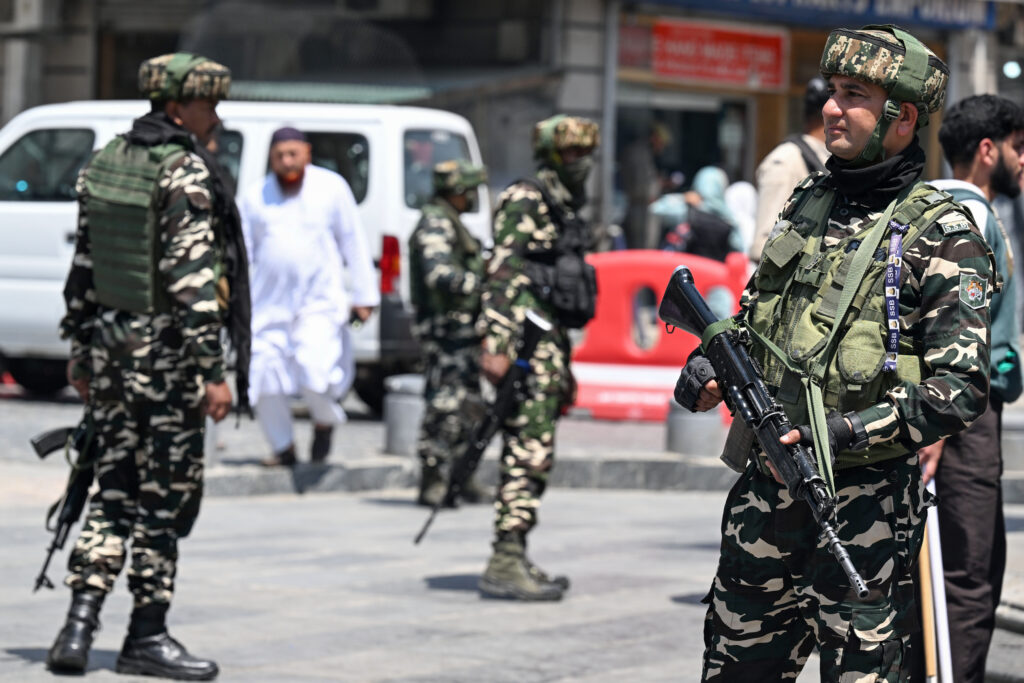
India’s Daoke village is fenced from Pakistan on three sides and 65-year-old resident Hardev Singh, who has lived through multiple wars between the arch-rivals, knows the drill if another erupts.”All women, children, cattle and most younger men moved back to safe shelters in 1999 and 1971,” Hardev said, referring to two of the worst outbreaks of fighting between the neighbours.”We couldn’t go to our fields,” he said, adding that it was only the village’s elderly men who “stayed back to ensure that our homes were not looted”.Relations between the nuclear-armed neighbours have plummeted after India accused Pakistan of backing the deadliest attack in years on civilians in Indian-administered Kashmir on April 22.Islamabad has rejected the charge, and both countries have since exchanged gunfire across the de facto frontier in contested Kashmir, diplomatic barbs, expelled citizens and ordered the border shut.Residents of the frontier villages in India’s Punjab state say nothing has changed on the ground yet — but there is a growing anxiety about the coming weeks.”The barbaric attack on the civilians in Kashmir was tragic, but no matter what, the lives lost are not coming back,” Hardev said.”Any war would push both our countries back by many years, and there would be an even bigger loss of human lives.”A border fence patrolled by troops slices in two the farmlands near Daoke, home to around 1,500 people. Gurvinder Singh, 38, recalls the last major conflict in 1999.Fighting then took place far from Punjab — in the icy Himalayan district of Kargil — but the sun-baked fields around his village did not escape unscathed.”Mines were planted on our fields, and we could not work,” Gurvinder said.He hopes that, if the bellicose statements issued by leaders on either side do turn into military action, his village will be left alone.”We feel that the actual conflict would happen only in the Himalayas,” Gurvinder said, adding that his village is “normal right now”.- ‘Not just us’ -In the nearby frontier village of Rajatal, between the Indian city of Amritsar and Lahore in Pakistan, residents remember the days when the golden farmland stretched without restriction.The frontier was a colonial creation at the violent end of British rule in 1947 which divided the sub-continent into Hindu-majority India and Muslim-majority Pakistan.Sardar Lakha Singh’s memory stretches back to before the fence was erected.”We used to go to the open ground on the other side to graze our cattle,” 77-year-old Lakha said, sitting about 100 metres (328 feet) from fences topped with barbed wire.Farmers can obtain special passes to go close to the border, including beyond the fence but still within Indian territory.But they must always be accompanied by a soldier.”We can’t go there whenever we want,” said farmer Gurvil Singh, 65. “This reduces the time we get to work on our fields”.Panic gripped border villages last week after rumours suggested farmers would be stopped from accessing fields too close to Pakistan.Sikh elder Sardar Lakha Singh advised younger villagers to accept their fate and not to worry.”Whatever is going to happen will happen anyway,” he said.”We didn’t know when the 1965 war suddenly started, same in 1971 when the planes suddenly started crossing the border,” the grey-beared farmer added.”So, if it happens again, we don’t need to worry in advance.”Gurvinder Singh, 35, said he tried to take the lesson to heart.”It would be a high-tech war, and not an invasion or a battle of swords like the past,” he said.”When the situation worsens, it would be for the entire country — and not just us.”

India says signs deal with France for 26 Rafale fighter jets

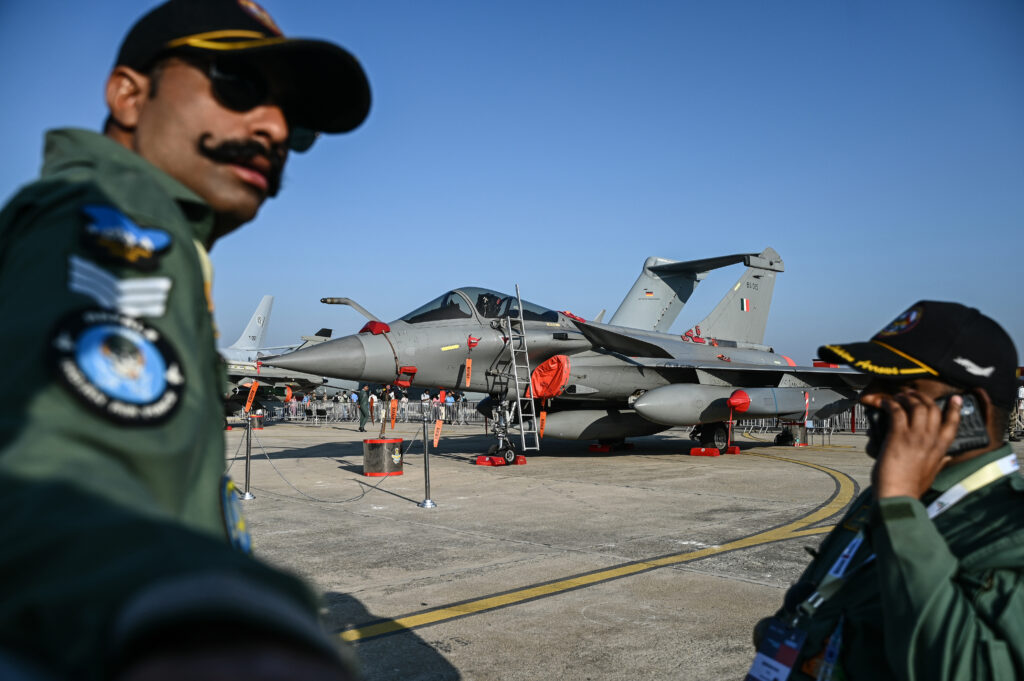
India has signed a contract to purchase 26 Rafale fighter jets from France, New Delhi’s defence ministry said Monday, with the multi-billion-dollar deal to include both single and twin-seat planes.When delivered, the jets would join 36 French-made Rafale fighters already acquired by New Delhi as part of its efforts to rapidly modernise its military hardware.”The governments of India and France have signed an inter-governmental agreement for the procurement of 26 Rafale Aircraft,” the defence ministry said in a statement.The jets made by French aerospace company Dassault Aviation are expected to operate from Indian-made aircraft carriers, replacing the Russian MiG-29K jets.”It includes training, simulator, associated equipment, weapons and performance-based logistics” as well as 22 single-seater and four twin-seater jets, said India’s defence ministry.”It also includes additional equipment for the existing Rafale fleet of the Indian Air Force (IAF).”The Indian government announced its intention to procure 26 Rafales in 2023, when Prime Minister Narendra Modi visited France for the Bastille Day celebrations.Despite historical ties with Russia as its key supplier for military equipment, India has diversified in recent years with key purchases including from France as well as from the United States and Israel.Dassault said that the jets will provide India with “state-of-the-art capabilities” and an “active role in guaranteeing national sovereignty and consolidating India’s role as a major international player”.India’s navy is the first user outside France of the Rafale Marine jet, the company said.- Tensions with Pakistan -Monday’s deal comes as India’s relations with arch-rival Pakistan plummet to fresh lows.New Delhi has accused Pakistan of backing the deadliest attack on civilians in Indian-administered Kashmir since 2000 — claims Islamabad denies.The two countries have exchanged gunfire, diplomatic barbs, expelled each other’s citizens and shut border since the April 22 attack, in which 26 men were killed.Analysts say there is also a serious risk of the crisis turning into a military escalation.The earlier contract for 36 Rafale aircraft, agreed in 2016, was worth about $9.4 billion. Many global arms suppliers see the world’s most populous nation — and fifth-largest economy — a key market.India has become the world’s largest arms importer with purchases steadily rising to account for nearly 10 percent of all imports globally in 2019-23, the Stockholm International Peace Research Institute (SIPRI) said last year.India has also eyed with worry its northern neighbour China, especially since a deadly 2020 clash between their troops.That sparked a wave of defence reforms in the country, with both a push for fresh contracts from foreign suppliers and simplified laws to push domestic manufacturing and co-production of critical military hardware.This decade India has opened an expansive new helicopter factory, launched its first homemade aircraft carrier, and conducted a successful long-range hypersonic missile test.That in turn has fostered a growing arms export market which saw sales last year worth $2.63 billion — still a tiny amount compared to established players, but a 30-fold increase in a decade.India has deepened defence cooperation with Western countries in recent years, including the Quad alliance with the United States, Japan and Australia.

India Kashmir crackdown sparks anger as Pakistan tensions escalate

Anger in Indian-run Kashmir escalated on Monday over sweeping detentions in the hunt for the gunmen who carried out a deadly attack last week that New Delhi blames on arch-rival Pakistan.New Delhi has accused Pakistan of supporting “cross-border terrorism” after gunmen killed 26 people on April 22, the worst attack on civilians in contested Muslim-majority Kashmir for a quarter of a century.Islamabad has denied any role, calling attempts to link Pakistan to the attack “frivolous” and vowing to respond to Indian action.Relations between the nuclear-armed rivals have plunged to their lowest level in years, sparking worries by analysts of possible military action.The attack also sparked a huge manhunt for the gunmen in Kashmir, with Indian security forces blowing up nine homes of suspected rebels, as well as detaining nearly 2,000 people for questioning, a senior police official told AFP.”Punish the guilty, show them no mercy, but don’t let innocent people become collateral damage,” Jammu and Kashmir’s Chief Minister Omar Abdullah said in a statement.Aga Ruhullah, a federal lawmaker from Kashmir, said: “Kashmir and Kashmiris are being given a collective punishment.”Security operations in the search for the gunmen come as India and Pakistani forces have exchanged fire across the de facto border in the rugged and remote high-altitude Himalayan outposts.- ‘Revolving door’ -India’s army said on Monday its troops and Pakistani forces had fired at each other for a fourth night in a row.There were no reported casualties. Islamabad did not immediately confirm the gunfire from Pakistan.”During the night of April 27-28… Pakistan Army posts initiated unprovoked small arms fire across the Line of Control,” the Indian army said in a statement, referring to the de facto border in contested Kashmir.”Indian troops responded swiftly and effectively,” it said.Muslim-majority Kashmir has been divided between India and Pakistan since their independence from British rule in 1947.Both claim the territory in full.Rebels in the Indian-run area have waged an insurgency since 1989, seeking independence or a merger with Pakistan.Indian police have issued wanted posters for three men — two Pakistanis and an Indian — who they say are members of the Pakistan-based Lashkar-e-Taiba group, a UN-designated terrorist organisation.They have announced a two million rupee ($23,500) bounty for information leading to each man’s arrest.India is also hunting several of its own citizens in connection to the killings, sweeping up those they suspect may have information on the attackers.”It’s a revolving door in police stations as part of the ongoing investigation,” said a senior police official who spoke on condition of anonymity because they were not authorised to talk to the media.”Some have already been let go, and more are being summoned to police stations,” the officer said.The homes of men suspected of having links to the attackers have also been blown up at night.Yasmeena, the sister of fugitive accused Ashif Sheikh, said her family was being punished, with their home demolished even though they had not seen her brother for three years.”If my brother is involved, how is it the family’s sin?” she said.”This house doesn’t belong to him alone.”- ‘Exercise restraint’ -New Delhi has downgraded diplomatic ties since the attack, withdrawn visas for Pakistanis, suspended a water-sharing treaty, and announced the closure of the main land border crossing with Pakistan.In response, Islamabad ordered the expulsion of Indian diplomats and military advisers, cancelled visas for Indian nationals and barred its airspace to Indian airplanes.India’s Defence Minister Rajnath Singh met with Prime Minister Narendra Modi on Monday after warning last week that those responsible for the attack in Kashmir would see a response “loud and clear”. The United Nations has urged the arch-rivals to show “maximum restraint” so that issues can be “resolved peacefully through meaningful mutual engagement”.China, which shares a border with both India and Pakistan, urged both sides on Monday to “exercise restraint, meet each other halfway” and “properly handle relevant differences through dialogue”, foreign ministry spokesman Guo Jiakun said.Iran has already offered to mediate, and Saudi Arabia has said Riyadh was trying to “prevent an escalation”.

Austrian climber dies on Nepal mountain

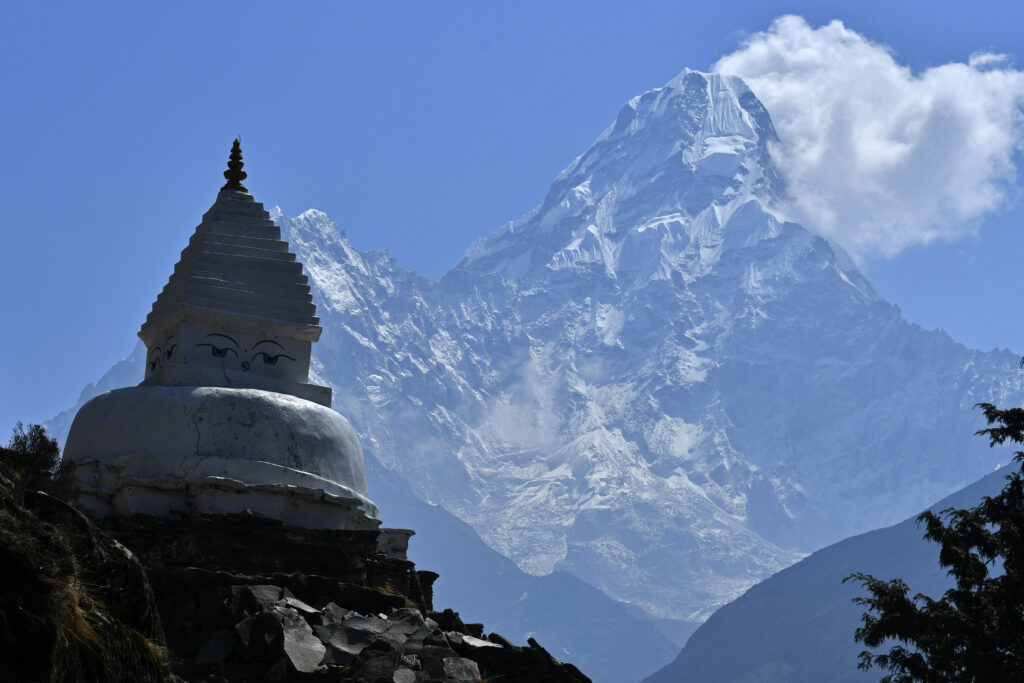
An Austrian climber has died while descending Nepal’s Ama Dablam after a successful summit, the country’s tourism department said Monday. Nepal named the climber as Martin Hornegger, 64, who went missing during his descent on Saturday morning after reaching the summit of the Himalayan peak.”It is learnt that he fell down while descending, and his body was found on the foot of the peak,” said Himal Gautam, director at the Mountaineering and Adventure Tourism Section of the tourism department.Hornegger had been climbing the 6,812-metre (22,349-foot) Ama Dablam with his daughter and son-in-law through a local agency, officials said.His body has been taken to the capital Kathmandu.”The tourism department is consulting with agencies to take the dead body back to his country,” Gautam added.Nepal is home to eight of the world’s 10 highest peaks, including Mount Everest, and welcomes hundreds of climbers every year during the spring and autumn climbing seasons.  But the dangerous terrain and extreme weather mean that accidents are common, particularly during the harsh winter. Scientists have said that climate change spurred by humans burning fossil fuels is making weather events more severe, super-charged by warmer oceans. Ama Dablam, located in the Khumbu region of eastern Nepal, is a popular training peak for mountaineers preparing for Everest.