
AFP Asia Business

Israel’s Netanyahu among partygoers at Trump’s New Year’s Eve fete
US President Donald Trump hosted Israeli Prime Minister Benjamin Netanyahu at a glittering New Year’s Eve party at his lavish Mar-a-Lago resort on Wednesday, according to social media.Netanyahu, who arrived at the US president’s Palm Beach residence on Monday, was spotted alongside tuxedo-clad Trump Wednesday night in a social media post from conservative influencer Michael Solakiewicz.Trump had joked that the Israeli leader could attend the party during meetings Monday to discuss the fragile Gaza ceasefire and other regional geopolitical concerns in the Middle East.The party guest list included Trump’s ardent supporters Rudy Giuliani and Emirati billionaire Hussain Sajwani, along with his sons Eric and Don Jr., and top members of his administration, including Department of Homeland Security Secretary Kristi Noem and White House deputy chief of staff Dan Scavino.The Gaza ceasefire in October is one of the major achievements of Trump’s first year back in power, but some White House officials fear Netanyahu is slow-walking the process.This week, Trump downplayed reports of tensions with Netanyahu over the second stage of the ceasefire, saying that Israel had “lived up” to its commitments and that the onus was on Palestinian militant group Hamas.Siding with the Israeli premier, Trump said he was “not concerned about anything that Israel’s doing.”This week’s talks mark the fifth such meeting in the United States since Trump’s return to power this year.
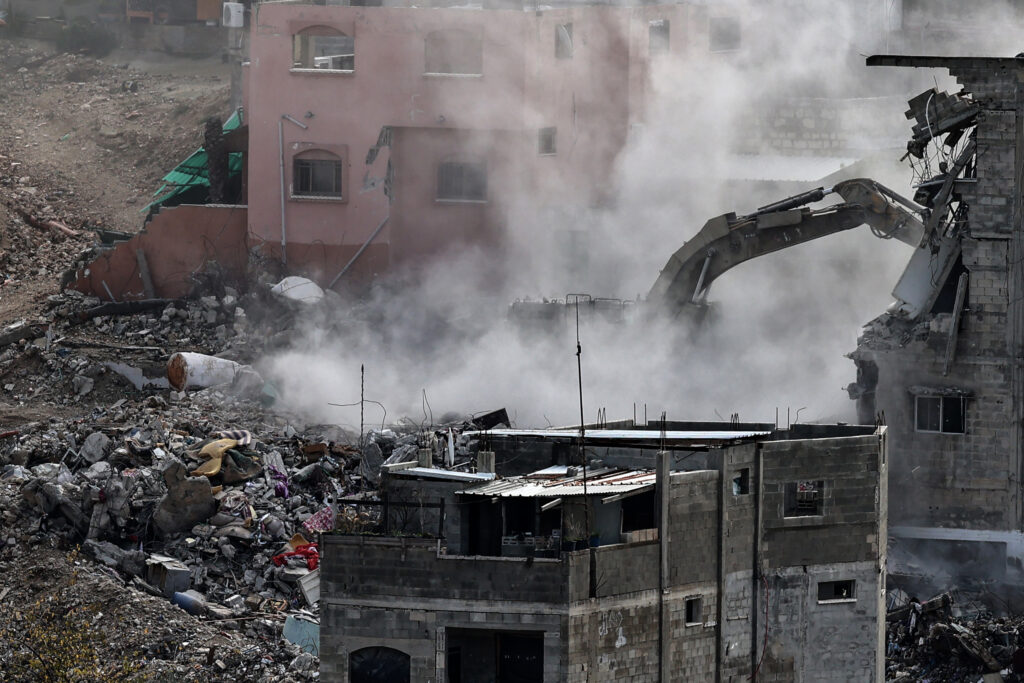
Israel begins demolishing 25 buildings in West Bank camp
Israeli bulldozers began demolishing 25 buildings housing Palestinians in a refugee camp on Wednesday, in what the military said was an effort to root out armed groups in northern areas of the occupied West Bank.The buildings, home to some 100 families, are in the Nur Shams camp, a frequent site of clashes between Palestinian militants and Israeli forces.Israeli military bulldozers and cranes tore through the structures early Wednesday, sending thick plumes of dust into the air, an AFP journalist reported. Many residents watched from a distance.”Being torn away from our homes, our neighbourhoods and our memories is deeply painful,” said Mutaz Mahr, whose building was being demolished.”The occupation tries by every means to wear us down and pressure us,” he told AFP. Nihaya al-Jendi, a member of Nur Shams’s popular committee, said hundreds of families had been forced out of their homes even before a military operation began earlier this year.”Today, more than 1,500 families from the camp are still unable to return,” Jendi said.”This is a major catastrophe — a real humanitarian disaster for Palestinian refugees — unfolding before the eyes of the world.”The military said the demolitions were part of an operation against militants.”Following ongoing counterterrorism activity by Israeli security forces in the area of Nur Shams in northern Samaria, the commander of the Central Command, Major General Avi Bluth, ordered the demolition of several structures due to a clear and necessary operational need,” the military told AFP in a statement.”Areas in northern Samaria have become a significant centre of terrorist activity, operating from within densely populated civilian areas.”- ‘Clear buffer’ -Earlier this year, the military launched an operation it said was aimed at dismantling Palestinian armed groups from camps in northern West Bank — including Nur Shams, Tulkarem and Jenin.”Even a year after the beginning of IDF operations in the area, forces continue to locate ammunition, weapons, and explosive devices used by terrorist organisations, which endanger IDF soldiers and impair operational freedom of action,” the military said on Wednesday.Israeli Defence Minister Israel Katz said that operations in Nur Shams, Tulkarem and Jenin had been “effective”, claiming they had reduced what he described as terrorist activity in Judea and Samaria by 80 percent.He added in a statement that troops would remain on the ground and act as a “clear buffer between the (Israeli) population and terrorist element”, with the stated aim of preventing their regrouping and thwarting attacks.Earlier in December, AFP reported residents of the targeted buildings retrieving their belongings, with many saying they had nowhere to go.The demolitions form part of a broader Israeli strategy aimed at easing access for military vehicles within the densely built refugee camps of the West Bank.Israel has occupied the Palestinian territory since 1967.Nur Shams, along with other refugee camps in the West Bank, was established after the creation of Israel in 1948, when hundreds of thousands of Palestinians were displaced from their homes in what is now Israel.With time, the camps they established inside the West Bank became dense neighbourhoods not under their adjacent cities’ authority. Residents pass on their refugee status from one generation to the next.Many residents believe Israel is seeking to destroy the idea of the camps themselves, turning them into regular neighbourhoods of the cities they flank, in order to eliminate the refugee issue.
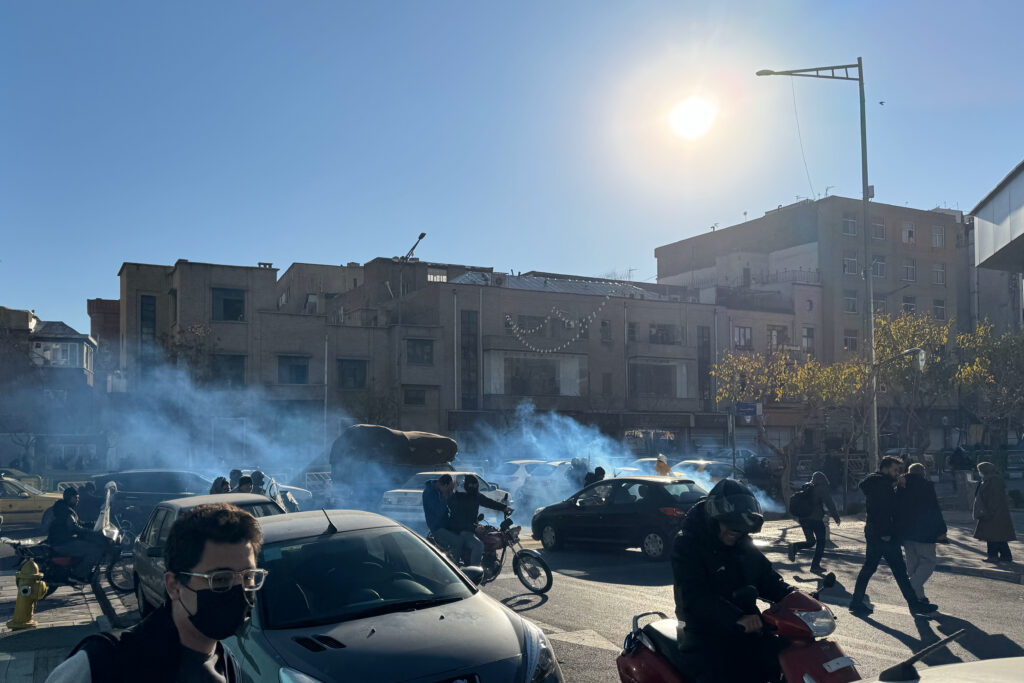
Iran government building attacked as top prosecutor responds to protests
A government building in southern Iran was attacked on Wednesday, authorities said, as the country’s top prosecutor warned of a “decisive response” to any attempt to create instability after days of economic protests.Spontaneous protests, driven by dissatisfaction at Iran’s economic stagnation, began on Sunday in Tehran’s largest mobile phone market, where shopkeepers shuttered their businesses, and have since drawn in students across the country.”A portion of the provincial governors’ office door and its glass were destroyed in an attack by a number of people,” said Hamed Ostovar, the head of the judiciary in the city of Fasa, as quoted by the justice ministry’s Mizan agency, without specifying how the attack was carried out.The attack came after the country’s prosecutor general said the protestor’s economic concerns were legitimate, but warned action would be taken if necessary.”Peaceful livelihood protests are part of social and understandable realities,” Mohammad Movahedi-Azad told state media.”Any attempt to turn economic protests into a tool of insecurity, destruction of public property, or implementation of externally-designed scenarios will inevitably be met with a legal, proportionate and decisive response.”His comments came days after the Mossad intelligence agency of Iran’s arch-foe Israel posted on social media that it was “with you on the ground” in a message to Iranian protesters.Posting on its Persian-language X account, the spy agency encouraged Iranians to “go out into the streets together”. Iran, which does not recognise Israel, has long accused it of conducting sabotage operations against its nuclear facilities and assassinating its scientists.- Fighting for food -The rallies have since built momentum, with students at 10 universities in the capital and in other cities, including Iran’s most prestigious institutions, joining in on Tuesday.The vice-president of the University of Tehran, Mohammad Reza Taghidokht, told the Iranian Students’ News Agency that four students were arrested on Tuesday and released overnight.Nevertheless, the protests remain limited in number and concentrated in central Tehran, with shops elsewhere in the sprawling metropolis of 10 million people unaffected.Before the attack in Fasa, Iranian media had not reported any new protests on Wednesday.Iran’s economy has been in the doldrums for years, with heavy US and international sanctions over Tehran’s nuclear programme weighing heavily on it.The currency, the rial, has also plunged in recent months, losing more than a third of its value against the US dollar since last year.In December, inflation stood at 52 percent year-on-year, according to official statistics. Some basic necessities are becoming unaffordable for a portion of the population, which has been suffering from international sanctions against Iran for decades. “Everyone here is fighting for a scrap of bread,” said one protester interviewed Tuesday by the daily newspaper Etemad.- Last-minute bank holiday -Schools, banks and public institutions were closed on Wednesday for a bank holiday, with officials saying the directive was due to the cold weather and the need to save energy. The capital’s prestigious Beheshti and Allameh Tabataba’i universities announced that classes would be held online throughout next week for the same reason, the state-run IRNA news agency reported.The authorities have not linked the bank holiday to the protests. Tehran is experiencing daytime temperatures in the low single digits, which is not unusual for the time of year.Weekends in Iran begin on Thursdays, while this Saturday marks a long-standing national holiday.Iran is no stranger to nationwide protests, but the latest demonstrations have not come close to the last major outbreak in 2022 triggered by the death in custody of Mahsa Amini, a young Iranian woman. Her death in custody after being arrested for allegedly violating the strict dress code for women sparked a wave of anger across the country.Several hundred people were killed, including dozens of members of the security forces.There were also widespread protests in 2019, sparked by a sharp increase in the price of petrol.
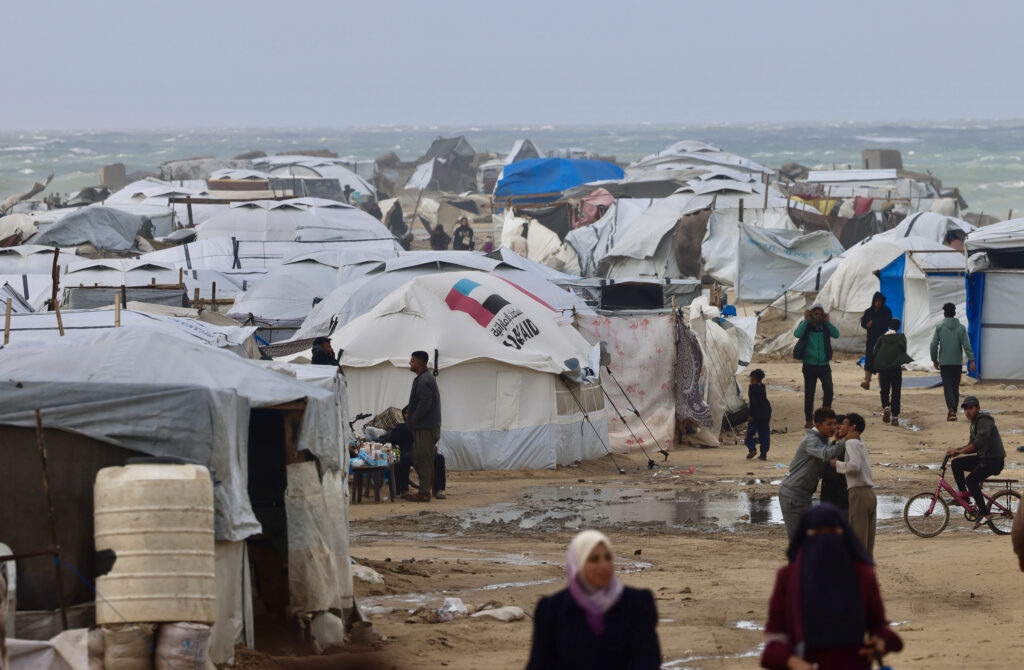
Israel to ban 37 aid groups operating in Gaza
Israel plans to ban 37 aid organisations from operating in Gaza from Thursday unless they hand over detailed information on their Palestinian staff, despite mounting criticism from the United Nations and the European Union.Several NGOs have told AFP the new rules will have a major impact on food and medical shipments to Gaza, and humanitarian groups warn there is already not enough aid to cover the devastated territory’s needs.Israel’s deadline for NGOs to provide the details expires at midnight on Wednesday.”They refuse to provide lists of their Palestinian employees because they know, just as we know, that some of them are involved in terrorism or linked to Hamas,” spokesman for the Ministry of Diaspora Affairs and Combating Antisemitism, Gilad Zwick, told AFP, naming 37 NGOs that had so far failed to meet the new requirements.”I highly doubt that what they haven’t done for 10 months, they will suddenly do in less than 12 hours,” Zwick said. “We certainly won’t accept any cooperation that is just for show, simply to get an extension.”For its part, Hamas, the armed Palestinian group which still controls part of Gaza, branded the Israeli decision “criminal behaviour” and urged the United Nations and broader international community to condemn it. Israel says the new regulation aims to prevent bodies it accuses of supporting terrorism from operating in the Palestinian territories. A fragile ceasefire has been in place in Gaza since October, following a deadly war waged by Israel in response to Hamas’s unprecedented attack on Israeli territory on October 7, 2023. On Tuesday, Israel specified that “acts of de-legitimising Israel” or denial of events surrounding Hamas’s October 7 attack would be “grounds for licence withdrawal”.Israel has singled out international medical charity Doctors Without Borders (MSF), alleging that it had two employees who were members of Palestinian militant groups Islamic Jihad and Hamas.”We continue to seek reassurances and clarity over a concerning request to share a staff list, which may be in violation of Israel’s obligations under international humanitarian law and of our humanitarian principles,” MSF said, urging Israel to allow it to operate.”We will be exploring all possible avenues to alter the outcomes of this decision.”Apart from MSF, some of the 37 NGOs to be hit with the ban are the Norwegian Refugee Council, World Vision International, CARE and Oxfam, according to the list given by Zwick.- ‘Guarantee access’ -On Wednesday, United Nations rights chief Volker Turk described Israel’s decision as “outrageous”, calling on states to urgently insist Israel shift course.”Such arbitrary suspensions make an already intolerable situation even worse for the people of Gaza,” he said.The European Union warned that Israel’s decision would block “life-saving” assistance from reaching Gazans.”The EU has been clear: the NGO registration law cannot be implemented in its current form,” EU humanitarian chief Hadja Lahbib posted on X.UN Palestinian refugee agency chief Philippe Lazzarini said the move sets a “dangerous precedent”.”Failing to push back against attempts to control the work of aid organisations will further undermine the basic humanitarian principles of neutrality, independence, impartiality and humanity underpinning aid work across the world,” he said on X.UNRWA itself has faced the ire of Israeli authorities since last year, with Lazzarini declared persona non grata by Israel.Israel had accused UNRWA of providing cover for Hamas militants, claiming that some of the agency’s employees took part in the October 7, 2023 attack.A series of investigations found some “neutrality-related issues” at UNRWA, the agency says, but insists Israel had not provided evidence for its headline allegation.On Tuesday, the foreign ministers of 10 countries, including France and the United Kingdom, had already urged Israel to “guarantee access” to aid in the Gaza Strip, where they said the humanitarian situation remains “catastrophic”. In a territory with 2.2 million inhabitants, “1.3 million people still require urgent shelter support”, the ministers of Britain, Canada, Denmark, Finland, France, Iceland, Japan, Norway, Sweden and Switzerland said.While a deal for a ceasefire that started on October 10 stipulated the entry of 600 trucks per day, only 100 to 300 are carrying humanitarian aid, aid groups say.COGAT, the Israeli defence ministry body responsible for Palestinian civilian affairs, said last week that on average 4,200 aid trucks enter Gaza weekly, which corresponds to around 600 daily.Israel’s ambassador to Belgium and Luxembourg, Idit Rosenzweig-Abu, said that 104 aid organisations had filed for registration according to the new guidelines.Nine were rejected, while 37 did not complete the procedures, she said on X, insisting the registration process “intended to prevent the exploitation of aid by Hamas”.