AFP Asia Business

First post-ceasefire aid trucks enter Gaza: UN

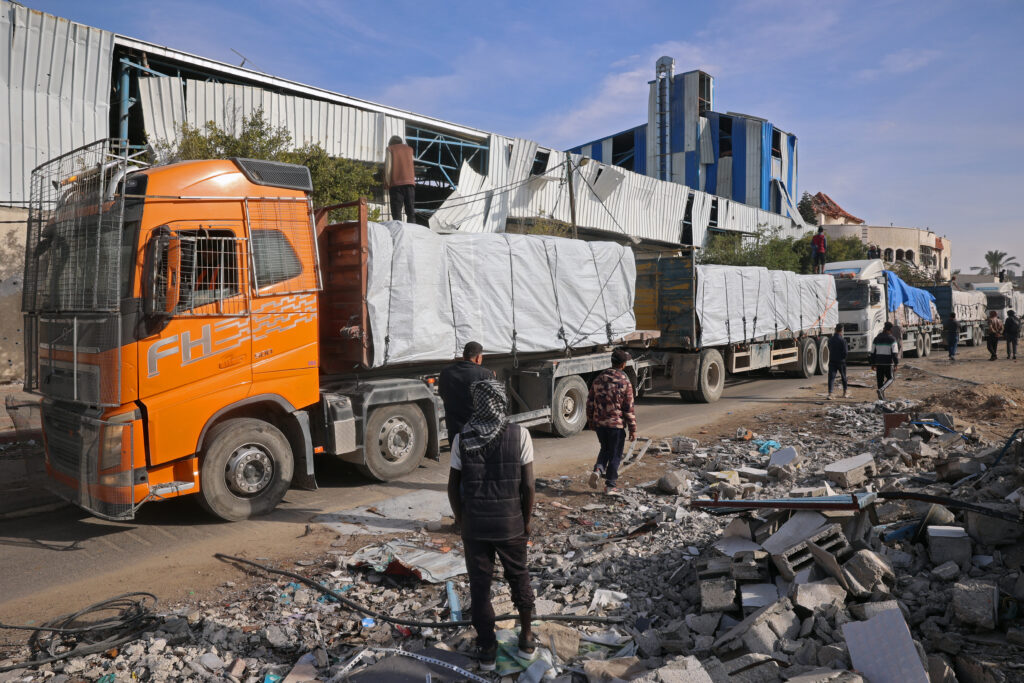
Trucks carrying humanitarian aid entered the Gaza Strip on Sunday after a long-awaited truce between Israel and Hamas came into effect, the United Nations said.”First trucks of supplies started entering” minutes after the ceasefire took effect on Sunday morning, UN aid official Jonathan Whittall, interim chief of the UN’s OCHA aid agency for the Palestinian territories, said on X.”A massive effort has been underway over the past days from humanitarian partners to load and prepare to distribute a surge of aid across all of Gaza.”An Egyptian source, speaking on condition of anonymity, said “260 trucks of aid and 16 of fuel” moved into the Israeli-controlled Kerem Shalom crossing between Israel and Gaza and the Nitzana crossing between Egypt and Israel before entering Gaza.On Saturday, Egyptian Foreign Minister Badr Abdelatty, whose country mediated the deal along with Qatar and the United States, said it provides for “the entry of 600 trucks per day to the Strip, including 50 trucks of fuel”.On Sunday, AFP journalists saw hundreds of trucks carrying aid at the Rafah border crossing and around El-Arish, 50 kilometres (31 miles) west.The vehicles were waiting to proceed to the Israeli crossings with Egypt at Kerem Shalom and Nitzana for screening before being allowed in to Gaza.Some trucks returned empty after offloading their cargo, and around a dozen ambulances were also seen driving out of the main Rafah gate.The Rafah crossing — previously a vital entry point for aid — has been closed since May, when Israeli forces seized it on the Palestinian side.Palestinian Red Crescent spokesperson Nebal Farsakh told AFP Sunday that “the Israeli authorities control the process of receiving aid”, adding that “the mechanisms for receiving these trucks and the crossing points through which they will enter remain unclear”.Humanitarian workers have warned of the monumental challenges that could impede aid operations, including the destruction of infrastructure that previously processed shipments.Sunday’s truce comes after more than 15 months of war sparked by Hamas’s attack on October 7, 2023, the deadliest in Israeli history.It follows a deal brokered by the three international mediators after months of negotiations, and comes on the eve of Donald Trump’s inauguration as US president.By December 1, nearly 69 percent of the Palestinian territory’s buildings had been destroyed or damaged in the conflict, according to the United Nations.Nearly all of Gaza’s 2.4 million people have been displaced at least once.The start of Sunday’s truce saw many of them begin heading to their home areas through an apocalyptic landscape piled with rubble and destroyed buildings.

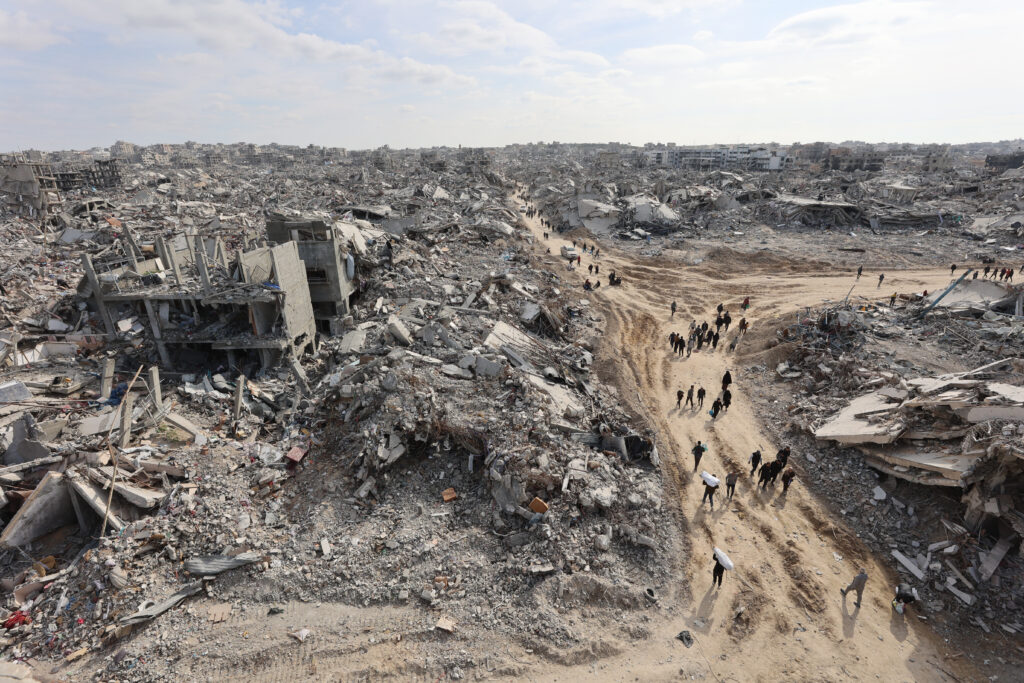
Displaced Gazans head home through rubble as Israel-Hamas truce begins

Thousands of displaced, war-weary Gazans set off across the devastated Palestinian territory to return to their home areas on Sunday, after a long-awaited truce between Israel and Hamas took effect following an initial delay.Minutes after the truce began, the UN said, the first trucks carrying humanitarian aid entered Gaza, where many residents are returning to nothing.The ceasefire began nearly three hours later than scheduled. During the delay, Israel’s military said it was continuing to operate, with the territory’s civil defence agency reporting 19 people killed and 25 wounded in bombardments. Thousands of Gazans carrying tents, clothes and their personal belongings were seen heading back to their homes, after more than 15 months of war that displaced the vast majority of Gaza’s population, in many cases more than once.In the northern area of Jabalia, hundreds streamed down a sandy path, returning to an apocalyptic landscape piled with rubble and destroyed buildings. “We came here at six in the morning to find massive, unprecedented destruction,” said Walid Abu Jiab, who returned to Jabalia.”There is nothing left in the north worth living for.” In the southern city of Khan Yunis, people who had not yet returned celebrated their pending homecoming.”I’m very, very happy,” said Wafa al-Habeel. “I want to go back and kiss the ground and the soil of Gaza. I am longing for Gaza (City) and longing for our loved ones.”- ‘Massive’ aid effort -Aid workers say northern Gaza is particularly hard-hit, lacking all essentials including food, shelter and water.Jonathan Whittall, interim chief of the UN’s OCHA humanitarian agency for the Palestinian territories, said on X that the first trucks started entering following the truce, after “a massive effort” to prepare for a surge of aid across the territory.Hundreds of trucks had been waiting at the Gaza border, poised to enter. Some were loaded with prefabricated houses.The truce had been scheduled to begin at 8:30 am (0630 GMT) but a last-minute dispute over the list of hostages to be freed on the first day led to the holdup.Qatar, a mediator of the truce, later confirmed it had gone into effect.The Hostage and Missing Families Forum campaign group identified the three women set to be released as Emily Damari, Romi Gonen and Doron Steinbrecher. Hamas said it was waiting for Israel to furnish “a list containing the names of 90 prisoners from the categories of women and children” also to be released on the first day.A total of 33 hostages taken by militants during Hamas’s October 7, 2023 attack on Israel will be returned from Gaza during an initial 42-day truce, in exchange for around 1,900 Palestinians in Israeli custody.The truce is intended to pave the way for a permanent end to the war, but a second phase has yet to be finalised.It follows a deal struck by Qatar, the United States and Egypt after months of negotiations that had generated false hopes.In a televised address on Saturday, Netanyahu called the  42-day first phase a “temporary ceasefire” and said Israel had US support to return to the war if necessary.In Gaza City, well before the ceasefire went into effect, people were already celebrating, waving Palestinian flags in the street.The Israeli army warned Gaza residents early Sunday not to approach its forces or Israeli territory.”We urge you not to head towards the buffer zone or IDF forces for your safety,” military spokesman Avichay Adraee said on Telegram, adding that “moving from south to north via Gaza Valley puts you at risk”.In Israel, the ceasefire was met with guarded optimism.”I don’t trust our side or their side,” said taxi driver David Gutterman. “Always at the last moment something, a problem, can pop up, but all in all I’m really happy.”Shai Zaik, an employee at Tel Aviv’s art museum, said he had “mixed feelings” but was “full of hope” that the hostages would return after so many disappointments in the last year.”  Israel has prepared reception centres to provide medical treatment and counselling to the freed hostages before they return to their families. Health workers have warned of the psychological challenges the captives will face upon release.- 600 trucks -Egyptian Foreign Minister Badr Abdelatty said 600 trucks a day would enter Gaza after the ceasefire took effect, including 50 carrying fuel.The war’s only previous truce, for one week in November 2023, also saw the release of hostages held by militants in exchange for Palestinian prisoners.Hamas’s October 7 attack, the deadliest in Israel’s history, resulted in the deaths of 1,210 people, mostly civilians, according to an AFP tally of Israeli official figures.Of the 251 people taken hostage, 94 are still in Gaza, including 34 the Israeli military says are dead.Israel’s retaliatory campaign has destroyed much of Gaza, killing at least 46,913 people, most of them civilians, according to figures from the Hamas-run territory’s health ministry that the United Nations considers reliable.The truce took effect on the eve of Donald Trump’s inauguration for a second term as president of the United States.Trump, who claimed credit for the ceasefire deal after months of effort by the outgoing administration of President Joe Biden, told US network NBC on Saturday that he had told Netanyahu the war “has to end”.”We want it to end, but to keep doing what has to be done,” he said.Under the deal, Israeli forces will withdraw from densely populated areas of Gaza and allow displaced Palestinians to return “to their residences”, Qatar’s prime minister said in announcing the deal.burs/smw/it/dv

Syria destroys millions of captagon pills, other drugs: official

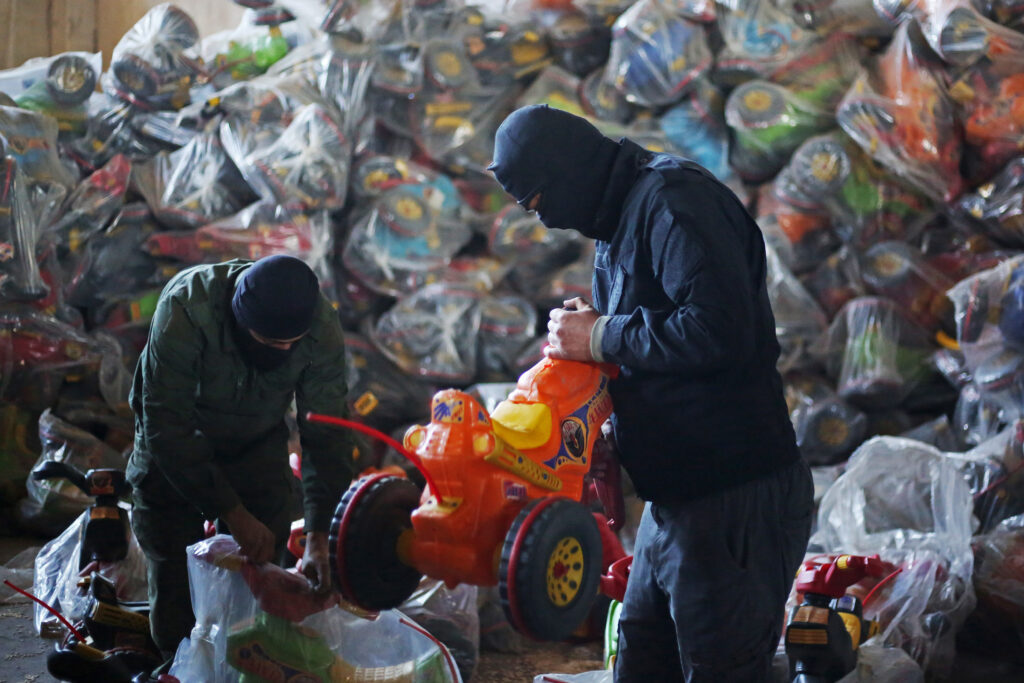
Syrian security forces destroyed seized drugs Sunday including around 100 million pills of the amphetamine-like stimulant captagon — whose production and trafficking flourished under ousted president Bashar al-Assad, an official said.A 2022 AFP investigation found that Syria under Assad had become a narco state, with the $10-billion captagon industry dwarfing all other exports and funding both his regime and many of his enemies.”We destroyed large quantities of narcotic pills,” said official Badr Youssef, including “about 100 million captagon pills and 10 to 15 tonnes of hashish” as well as raw materials used to produce captagon.He spoke from the Damascus headquarters of the defunct Fourth Division where the drugs were seized. The Fourth Division, a notorious branch of the Syrian army, was controlled by Assad’s brother Maher.The official SANA news agency said “the anti-narcotics department of the (interior) ministry is destroying narcotic substances seized at the headquarters of the Fourth Division”.An AFP photographer saw security personnel in a Fourth Division warehouse load dozens of bags filled with pills and other drugs into trucks, before taking them to a field to be burned.On December 8, Islamist-led rebels ousted Assad after a lightning offensive that lasted less than two weeks. The army and Assad’s security apparatus collapsed as the new authorities seized control of Damascus.On Saturday, SANA reported that authorities had seized “a huge warehouse belonging to the former regime” in the coastal city of Latakia. It said the factory “specialised in packing captagon pills into children’s toys and furniture”.On Sunday, an AFP photographer visited the warehouse near the port and saw security personnel dismantling children’s bicycles that contained the small white pills.Captagon pills had also been hidden inside objects such as doors, shisha water pipes and car parts, he reported.Abu Rayyan, a security official in Latakia, said that “about 50 to 60 million captagon pills” had been seized that “belonged to the Fourth Division”.”This is the largest such warehouse in the area,” he said.Abu Rayyan said the drugs had been packed for export from Latakia “to neighbouring countries”, and that they would be destroyed.strs-lk/aya/srm

The three women hostages to be freed from Gaza

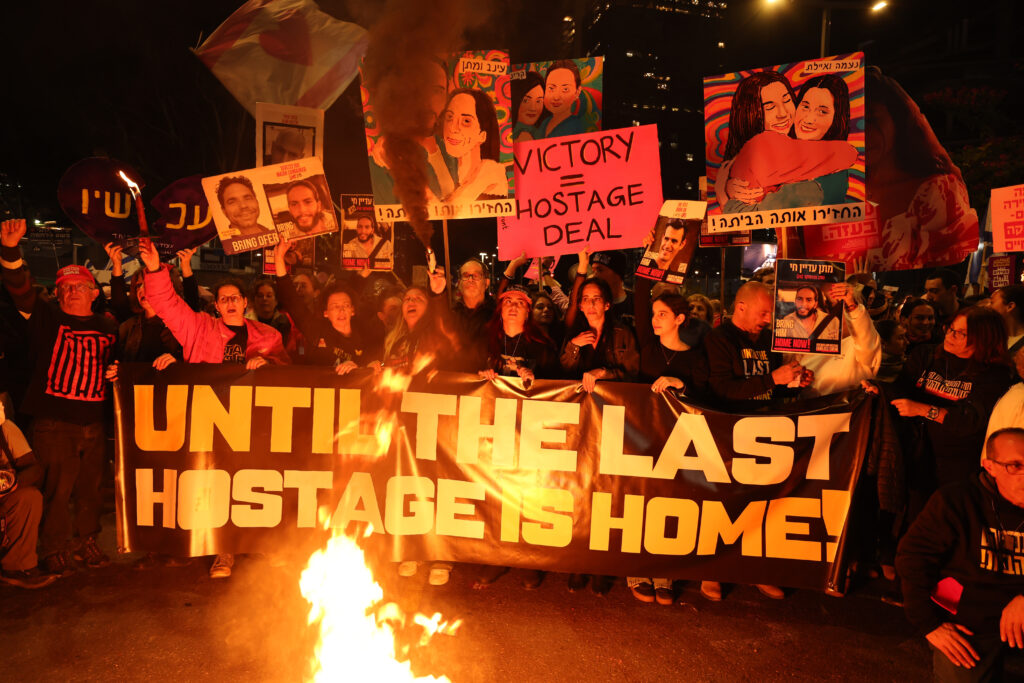
Three women hostages held by militants in the Gaza Strip for more than 15 months are on Sunday to become the first freed under a ceasefire between Israel and Hamas.Here are their short profiles:- Romi Gonen, 24 -Romi Gonen, from northern Israel, was among dozens captured when Hamas fighters ambushed the Supernova rave festival and killed 364 people on October 7, 2023.During the attack, from which she attempted to flee by car, Gonen phoned her mother Merav Leshem Gonen, who tried to comfort her above the din of explosions.The car was later found empty and Romi’s phone was traced to Gaza.A talented dancer and choreographer, she suffered hand injuries, according to her mother who said she received the information from freed hostages.- Emily Damari, 28 -Damari, whose father is Israeli, was born in Israel after her British mother, Mandy, moved there. She grew up in Kfar Aza, a kibbutz community near Israel’s southern border with Gaza.Damari was at home there when Hamas gunmen stormed her house, injuring her hands and legs in the process.Her beloved dog Choocha was killed by a gunshot to the neck, according to Damari’s mother.Mandy Damari had said in October that she feared Emily had been forgotten.- Doron Steinbrecher, 31 -The veterinary nurse was also kidnapped from Kfar Aza.On the day of the attack, Steinbrecher left a message for her parents telling them she had been abducted. An Israeli-Romanian dual national, she appeared with two other hostages in a video released by Hamas in January, 2024.”My life stopped on the 7th of October,” her mother Simona Steinbrecher said in July. “I know she is alone there and I cannot help her.”burs-it/srm

Gaza hostages face long road to recovery

As Israel prepares to welcome home the first of 33 hostages freed under a ceasefire with Hamas, health workers warn of the psychological challenges they face after their 15 months in captivity.Nearly 2,000 Palestinian prisoners in Israeli jails are also set to be released as part of the agreement that took effect on Sunday.Of the 251 hostages taken during Hamas’s October 7, 2023, attack that sparked the war, 94 remained in Gaza as the ceasefire began, including 34 the Israeli military says are dead.During a 42-day first phase of the ceasefire, Palestinian militants are due to free 33 hostages, starting with three women.Throughout the war, there has been only one other pause in the fighting — a week-long truce in November 2023 that also saw the exchange of hostages for prisoners.Amir Blumenfeld, a former chief of the Trauma branch of the Israeli army, said hostages released during that truce had suffered serious health issues.”After 50 days of captivity, the hostages suffered from many physical and psychological problems,” said the physician, a member of the health team of the Hostage Families Forum support group.”This time, after (more than 470 days of detention), it’s going to be horrible,” he said, predicting drastic weight loss of up to “half or a third” of original body weight.- Haunted by captivity -Blumenfeld said the time it would take to heal from the physical injuries and ailments would vary from patient to patient, though he expected their recovery would ultimately be satisfactory.But, he added, “the most difficult problem will be mental health”.Ilana Gritzewsky, freed during the November 2023 truce, described how a video released by Hamas of her partner, still held by the militant group, threw her back into her own ordeal.She said she lost 11 kilos (24 pounds) during nearly two months in captivity.”I also endured abuse. I was burned, lost partial hearing in my left ear, and dislocated my jaw,” she told AFP.”I was sexually harassed during the abduction” and “still suffer from the consequences”, she added.A December Israeli health ministry report sent to the United Nations highlighted testimonies of torture, including beatings, brandings, sexual assault, food deprivation and solitary confinement.It said many former hostages now suffer from symptoms of anxiety, depression, post-traumatic stress disorder and survivor’s guilt.Under health ministry guidelines, the newly released hostages will be hospitalised for at least four days, with women undergoing pregnancy tests and psychiatric care being made available immediately.- ‘Survived hell’ -Iris Gavrieli Rahabi, part of First Line Med (FLM), a collective of 450 psychoanalysts supporting survivors of the October 7 attack and their families, expressed concern.”The fear is that some of the hostages will be in a situation of total psychological collapse and that they will return in a critical condition,” Rahabi said.She said she was particularly worried about the young women, noting testimony from other freed hostages indicated that some women “were used as sexual and domestic slaves”.”There are big concerns, given the little information we have received, that they have been victims of serious sexual violence and that some of them may be pregnant,” she said.In addition to the trauma of detention, they will face the harsh reality of learning that “their loved ones have been killed, their homes and communities destroyed, and that a terrible war has unfolded”, she added.Psychological recovery is likely to take years for most of the hostages, and may even prove impossible for some, according to Blumenfeld.He said mental health professionals will need to expect to be “confronted with symptoms and issues that they are not familiar with”.But Rahabi said the freed hostages could find the power in themselves to start recovering because of their own resilience.”When you’ve survived hell and are still alive, it gives you immense strength,” she said.