
AFP Asia Business
Syria’s economy reborn after being freed from Assad
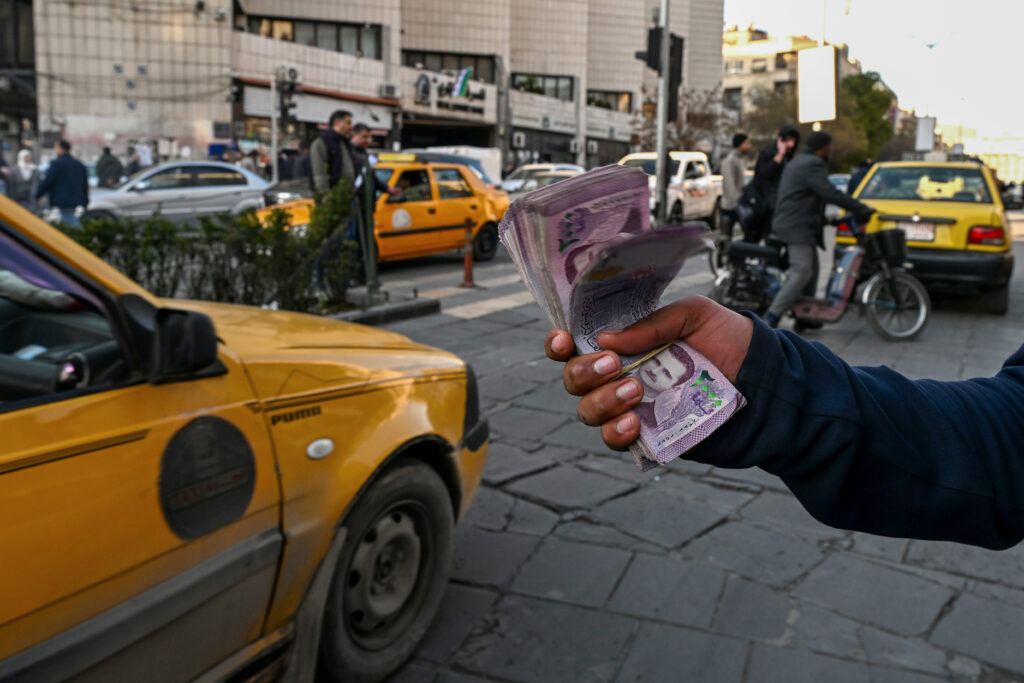
When Bashar al-Assad ruled Syria, merchants like Youssef Rajab kept much of their imported stock hidden for fear of arrest for breaking the law.But after an Islamist-led coalition toppled Assad in a lightning offensive last month, Rajab put previously banned foreign goods such as chocolate, biscuits and shampoo back on the shelf.Such products are now openly on sale in Damascus, and foreign currency is once again traded without fear.Under Assad, Syria was mired in corruption, under heavy economic sanctions, and in seemingly endless crisis.Foreign currency was in carefully controlled supply, and engaging in its trade or in the sale of banned goods could have meant a stay in one of the country’s notorious jails.”A day after the regime fell, I brought out all the foreign merchandise I’d been hiding and put it for sale, without having to worry,” Rajab told AFP.”It was a strange feeling, but I was happy,” added the 23-year-old, speaking beside shelves stacked with imported products.Previously, the few imported goods that were available were smuggled in from Lebanon by traders who risked arrest, or were acquired by bribing officials as businessmen controlled imports to a country wracked by 13 years of civil war.”It’s true that now we have great freedom to engage in business, but it has also been chaotic,” said Rajab.On every street corner, makeshift money changers now tout for business from passers-by.”It’s a job that was done in secret before,” said Amir Halimeh, sitting at a small table on which there were wads of Syrian pounds and US dollars.”We used to refer to dollars as ‘mint’ or ‘parsley’ or something else green” to bypass surveillance, he added.- Currency market ‘freed’ -Assad’s government kept a firm grip on foreign currency dealings as a way to control the economy, and any freelance operators faced punishment of seven years in prison and a heavy fine.”The market has now been completely freed… as has the exchange rate,” the moneychanger said. The pound lost about 90 percent of its value against the US dollar in 2011, the year Syria descended into civil war after a brutal crackdown on democracy protests.Now it is being traded at between 11,000 and 12,000 to the greenback.Before Damascus fell to the coalition led by the Hayat Tahrir al-Sham group, the black market rate soared to 30,000 pounds for one dollar.”The economy in the future Syria will be free and competitive,” the interim government’s Economy Minister Bassel Abdel Hanan told reporters.He said the new authorities would implement “policies aimed at protecting domestic output, supporting the industrial sector and protecting agriculture”.They have yet to elaborate on their future economic plans during the three-month interim phase that began in December.Economics professor Adnan Suleiman of Damascus University said that “the economic model that existed before the fall of the regime… was a market economy”, but a “distorted” one.- Sanctions -“Supply and demand were not free. Instead of competition there was a monopoly,” he said of people close to Assad who controlled different sectors of the economy.In an effort to turn the page, the interim government has been lobbying for international sanctions to be lifted.Earlier this month, the US Treasury Department announced it was providing additional sanctions relief on some activities for the next six months to ease access to basic services, including fuel and humanitarian aid.Asaad al-Shaibani, Syria’s top diplomat, told the World Economic Forum in Davos on Wednesday: “Removing economic sanctions is the key for the stability of Syria.”They had been imposed for the benefit of Syrians, but are now “against the Syrian people”, he said.”We inherited a collapsed state from the Assad regime, there is no economic system,” Shaibani said, adding that “the economy in the future will be open”.Under Assad, fuel sales were a monopoly and were severely limited.But now vendors openly sell cans of petrol and fuel oil on the streets of the capital — where new models of car have also made an appearance.Previously, the import of vehicles was tightly regulated. Syria’s war took a terrible toll not only on the people, but also on its infrastructure.Damage to power plants and pipelines has caused power cuts lasting up to 20 hours a day.”The former regime left a huge legacy,” said Suleiman.”The greatest task facing future governments is to finance development and reconstruction.”
Saudi crown prince promises Trump $600bn trade, investment boost
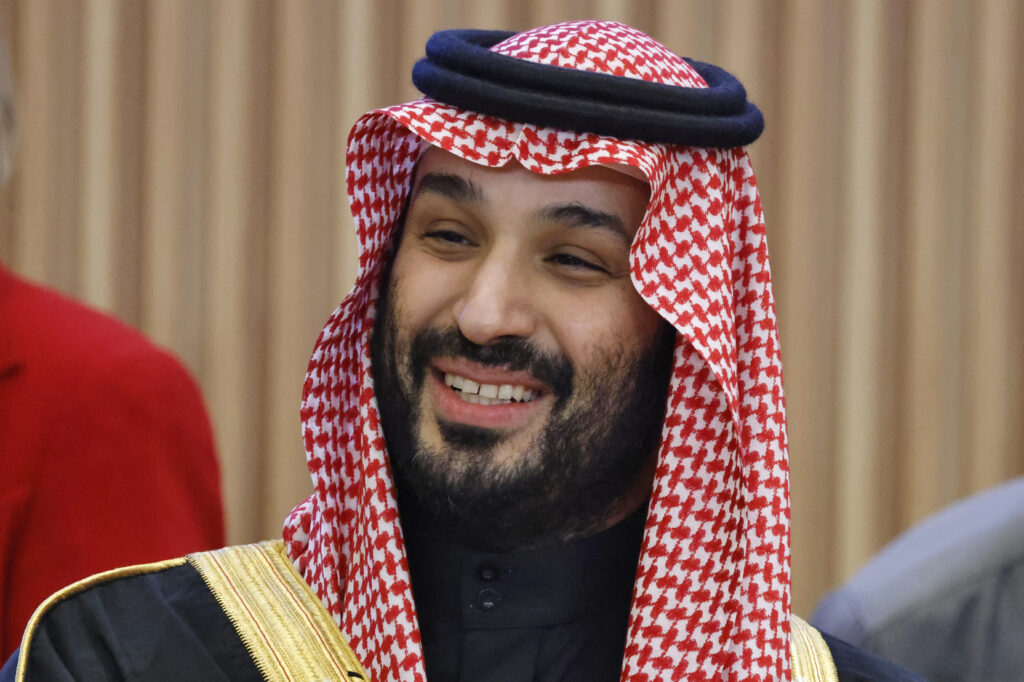
Saudi Crown Prince Mohammed bin Salman promised on Thursday to pile $600 billion into US trade and investments as he congratulated Donald Trump on his return to the White House.Prince Mohammed, de facto leader of the world’s biggest oil exporter, made the pledge in a phone call following Trump’s inauguration on Monday, state media said.Trump forged close relations with Riyadh in his first term and is now expected to push Saudi Arabia, home of Islam’s holiest sites, towards normalising ties with Israel as a major foreign policy objective.”The crown prince affirmed the kingdom’s intention to broaden its investments and trade with the United States over the next four years, in the amount of $600 billion, and potentially beyond that,” the Saudi Press Agency reported.It did not give details of the source of the funds, which represent more than half of Saudi GDP, or how they are expected to be used.Prince Mohammed, 39, also passed on congratulations from his father, King Salman, during the call with Trump.Trump’s first visit as president in 2017 was to Saudi Arabia, and this week he joked that a major financial commitment could persuade him to do the same again.”I did it with Saudi Arabia last time because they agreed to buy $450 billion worth of our product,” he said.Trump quipped he would repeat the visit “if Saudi Arabia wanted to buy another 450 or 500 (billion dollars) — we’ll up it for all the inflation”.During Trump’s first term, the United Arab Emirates, Bahrain and Morocco broke with longstanding Arab policy to recognise Israel under the Abraham Accords.The new Trump administration is expected to try to repeat the process with Saudi Arabia, following similar efforts under president Joe Biden.- Iran threats -Saudi Arabia broke off talks with US officials about ties with Israel early in the Gaza war, and has repeatedly insisted it will not recognise Israel without the existence of a Palestinian state.However, a long-awaited ceasefire in Gaza and a possible easing in regional tensions could pave the way for a resumption of dialogue.In exchange for recognising Israel, the Arab world’s richest country hopes to secure a US defence pact and Washington’s help with a civil nuclear programme.In his own call with the crown prince on Thursday, new US Secretary of State Marco Rubio discussed Syria, Lebanon, Gaza and “the threats posed by Iran and its proxies”, according to a statement.”They also discussed the benefits of the US-Saudi economic partnership and the opportunities to grow their economies in a variety of fields including AI,” a spokesperson for Rubio said. Trump actively courted Saudi Arabia, long an important energy and security partner for Washington, during his first term.When he arrived in Riyadh in 2017, he was treated to an elaborate welcome involving a sword dance and a fly-past of air force jets.Relations later cooled with Prince Mohammed faulting Trump for failing to respond more aggressively after a 2019 attack widely blamed on Iran halved the Gulf kingdom’s crude output.Riyadh and Trump’s team nevertheless sought to boost ties after his departure from the White House, in particular through investments and construction deals for his privately owned conglomerate the Trump Organization. Trump’s son-in-law, Jared Kushner, has defended receiving a Saudi investment in his private equity firm that reports put at $2 billion.
Stocks mainly rise after Wall Street’s AI-fuelled rally
Global stock markets mostly rose Thursday following a tech-fuelled rally on Wall Street spurred by US president Donald Trump’s massive AI-investment announcement.Investors have largely welcomed the first few days of Trump 2.0 as he held off immediately returning to the hardball trade policies of his first term.However, warnings that China, the European Union, Canada and …
Stocks mainly rise after Wall Street’s AI-fuelled rally Read More »
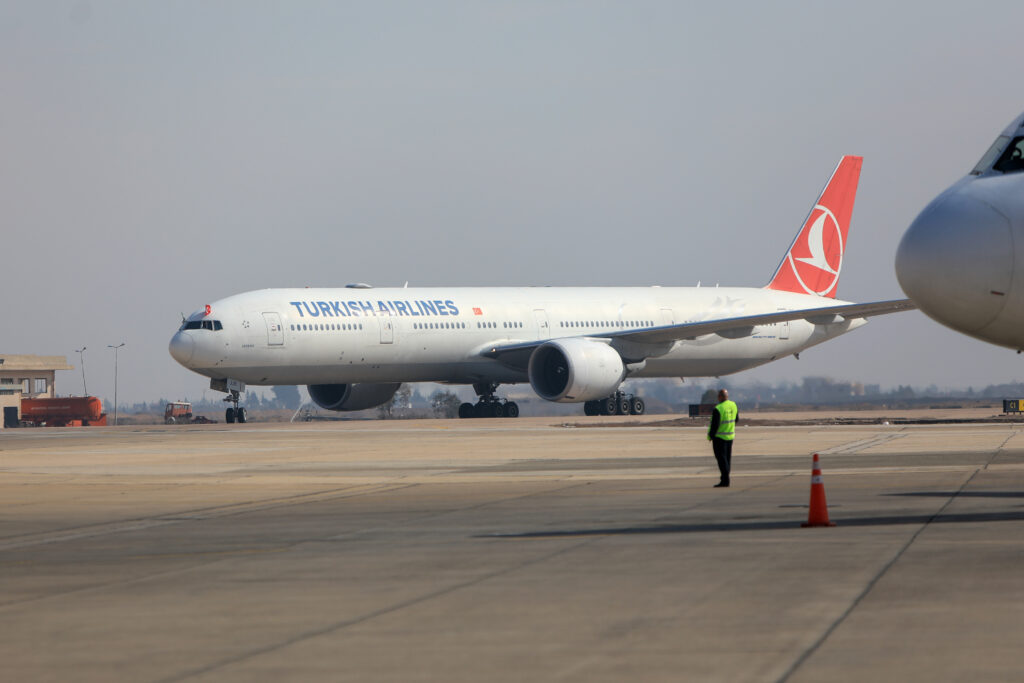
First Turkish Airlines plane lands in Syria in more than a decade
The first Turkish Airlines flight in 13 years landed in the Syrian capital Damascus on Thursday, an AFP correspondent reported.The plane arrived from Istanbul carrying aid and 345 passengers, including Turkish Airlines CEO Bilal Eksi and Turkish officials, the correspondent said.”The first Turkish Airlines passenger plane landed at Damascus International Airport after a hiatus of some 13 years, with Syrian passengers on board,” Syria’s official news agency SANA reported.Eksi told reporters that Turkish Airlines would operate three flights to Syria a week.”I hope that the flights we have restarted will contribute to the relations between our countries,” he said.Turkey, which has links to the Islamist-led coalition that overthrew longtime president Bashar al-Assad last month, had announced on January 15 that it would resume commercial flights to Damascus.Qatar Airways was the first international carrier to announce it would resume Damascus services, which began on January 7.A Syrian Airlines flight to Sharjah in the United Arab Emirates the same day was the first international commercial flight from the airport since Assad’s overthrow on December 8.Aid planes and foreign diplomatic delegations had already been landing in Syria, and domestic flights had also resumed. A flight from Damascus to second city Aleppo on December 18 was the first.