AFP Asia Business

UNRWA, a lifeline for Palestinians amid decades of conflict

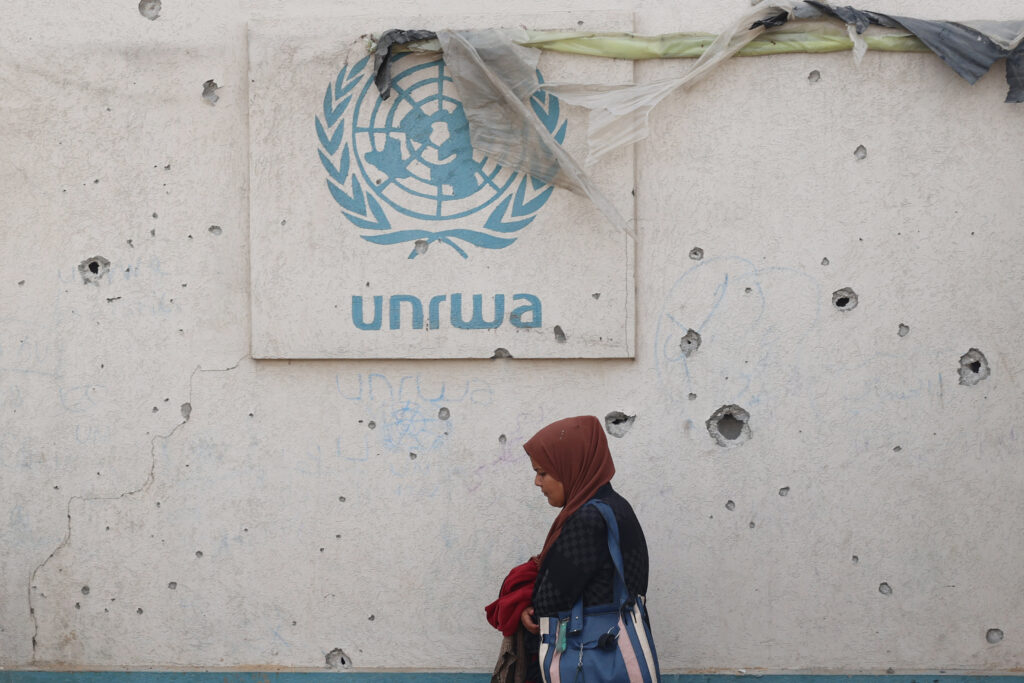
The UN agency for Palestinian refugees, which Israel has vowed to ban on Thursday, is seen by some as an irreplaceable humanitarian lifeline in Gaza, and as an accomplice of Hamas by others.The United Nations Relief and Works Agency for Palestine Refugees (UNRWA) has for more than seven decades provided essential aid and assistance to Palestinian refugees. UNRWA chief Philippe Lazzarini has described the organisation as “a lifeline” for nearly six million Palestinian refugees under its charge.But the agency has long been a lightning rod for harsh Israeli criticism, which ramped up dramatically after Hamas’s deadly attacks in Israel on October 7, 2023 sparked the war in Gaza.Israel has accused the agency of bias and of being “riddled with Hamas operatives”, and last October, Israeli lawmakers voted to bar the agency from operating on Israeli territory as of January 30.  – Created in wake of war -UNRWA was established in December 1949 by the UN General Assembly following the first Arab-Israeli conflict after Israel’s creation in May 1948.The agency began its operations on May 1, 1950, tasked with assisting some 750,000 Palestinians who had been expelled or fled during the war.It was supposed to be a short-term fix, but in the absence of a lasting solution for the refugees, the General Assembly has repeatedly renewed UNRWA’s mandate, most recently extending it until June 30, 2026.- Millions of refugees -The number of people under its charge has ballooned to nearly six million across Gaza, the West Bank, Lebanon, Jordan and Syria.Palestinian refugees are defined as “persons whose normal place of residence was Palestine during the period 1 June 1946 to 15 May 1948, and who lost both home and means of livelihood as a result of the 1948 conflict”. Their descendents also have refugee status.- Operations -UNRWA is the main provider of basic public services, including education, healthcare, and social services for registered Palestinian refugees. It employs more than 30,000, mainly Palestinian refugees themselves and a small number of international staff.The organisation counts 58 official refugee camps and runs more than 700 schools for over 540,000 students.It also runs 141 primary healthcare facilities, with nearly seven million patient visits each year, and provides emergency food and cash assistance to some 1.8 million people.- Gaza -In the Gaza Strip, controlled by Hamas since 2007, the humanitarian situation was already critical before the war between Israel and Hamas began in October 2023, with more than 80 percent of the population living below the poverty line. The territory, squeezed between Israel, Egypt and the Mediterranean Sea, counts eight camps and around 1.7 million refugees, the overwhelming majority of its 2.4 million inhabitants, according to the UN.Israel’s retaliatory military offensive has killed more than 47,300 people in Gaza, mostly civilians, according to figures from the Hamas-run territory’s health ministry, deemed reliable by the UN.Before a fragile ceasefire took effect on January 19, around two-thirds of all buildings in Gaza had been destroyed, and nearly the entire population had been displaced, many of them multiple times, according to the UN.UNRWA, which employs some 13,000 in Gaza, has seen 273 of its staff killed and two-thirds of its facilities there damaged or destroyed.The agency says it had brought in 60 percent of the food that has reached Gaza since the war began and had provided shelter to over a million displaced people.- Israeli criticism -Israel has long alleged that UNRWA is perpetuating the Palestinian refugee problem and that its schools use textbooks that promote hatred of Israel.Since October 7, the criticism has ballooned, particularly targeting UNRWA in Gaza.Israel claims that a dozen UNRWA employees were involved in the deadly 2023 attack.A series of probes found some “neutrality related issues” at UNRWA, but found no evidence for Israel’s chief allegations.The agency, which traditionally has been funded almost exclusively through voluntary contributions from governments, was plunged into crisis as a string of nations halted their backing over Israel’s allegations.Most donors have since resumed funding, although not the United States.Under US President Donald Trump, who returned to the White House earlier this month, the United States has thrown its weight behind Israel’s UNRWA ban.Both Israel and the US insist other agencies can pick up the slack to provide essential services, aid and reconstruction — something the UN and many donor governments dispute.Warning that implementation of the Israeli order would be “disastrous”, Lazzarini said this week that the agency was determined “to stay and deliver until it is no longer possible to do so”.UN chief Antonio Guterres meanwhile demanded that Israel retract its order, insisting that UNRWA was “irreplaceable”.


Asian markets diverge in thin trade, with AI impact in focus

Asian equities were mixed in another holiday-thinned trading day Thursday, with investors digesting broadly positive tech earnings that came days after the upheaval caused by China’s DeepSeek explosion onto the global AI scene.With most markets closed for the Lunar New Year break, there was little major reaction to the Federal Reserve’s widely expected pause in …

Asian markets diverge in thin trade, with AI impact in focus Read More »

Israel cuts ties with UN aid agency supporting Palestinians

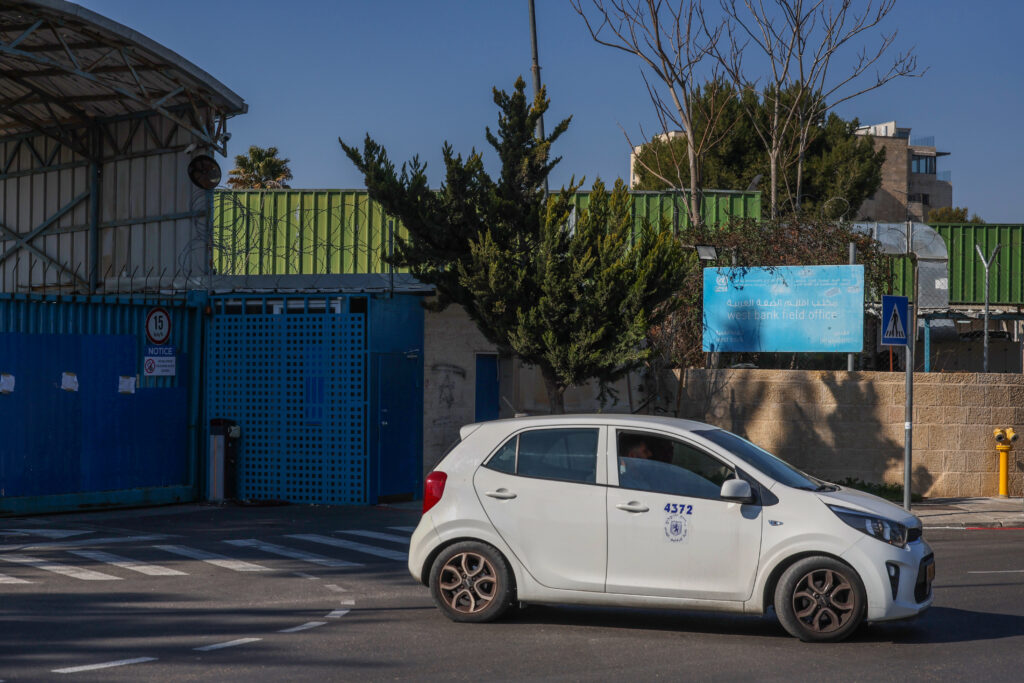
Israel will cut ties with the UN agency for Palestinian refugees on Thursday following accusations it provided cover for Hamas militants, a move likely to hamper delivery of its vital services after 15 months of war in Gaza.The agency, UNRWA, will be banned from operating on Israeli soil, and contact between it and Israeli officials will also be forbidden.UNRWA has provided support for Palestinian refugees around the Middle East for over 70 years, but has long clashed with Israeli officials, who have repeatedly accused it of undermining the country’s security.The hostility intensified in the wake of Hamas’s October 7, 2023 attack on Israel, with accusations that UNRWA employees participated in the assault.  “Humanitarian aid doesn’t equal UNRWA, and UNRWA doesn’t equal humanitarian aid. UNRWA equals an organization infested with Hamas terror activity,” Israeli foreign ministry spokesman Oren Marmorstein wrote on social media platform X ahead of the ban.”This is why, beginning on January 30 and in accordance with Israeli law, Israel will have no contact with UNRWA.”The agency’s offices and staff in Israel play a major role in the provision of healthcare and education to Palestinians, including those living in the Gaza Strip, which has been devastated by the war between Israel and Hamas.Government spokesman David Mencer told journalists on Wednesday that “UNRWA is riddled with Hamas operatives”, adding that “if a state funds UNRWA, that state is funding terrorists”.”UNRWA employs over 1,200 Hamas members, including terrorists who carried out the October 7 massacre,” Mencer said. “This isn’t aid, it’s direct financial support for terror.”- Terror accusations -Later on Wednesday, Israel’s Supreme Court rejected a petition by Palestinian human rights group Adalah contesting the UNRWA ban. The court did note that the legislation “prohibits UNRWA activity only on the sovereign territory of the State of Israel”, but “does not prohibit such activity in the areas of Judea-Samaria and the Gaza Strip”, referring to the West Bank by its biblical name.The ban does apply, however, to Israeli-annexed east Jerusalem, where UNRWA has a field headquarters for its operations in the West Bank.In a statement reacting to the judgement, Adalah said the law would come into effect “disregarding the catastrophic humanitarian consequences”.The move, which has been backed by Israel’s close ally the United States, has drawn condemnation from aid groups and US allies.The agency says it has brought in 60 percent of the food aid that has reached Gaza since the war started with Hamas’s 2023 attack on Israel.  Israeli envoy to the United Nations Danny Danon told the UN Security Council on Tuesday that UNRWA must cease its operations and evacuate all premises it operates in annexed east Jerusalem on Thursday.- ‘Relentless assault’ -In response, UN chief Antonio Guterres demanded that Israel rescind its order. “I regret this decision and request that the government of Israel retract it,” he said, stressing that UNRWA was “irreplaceable”.The agency’s chief, Philippe Lazzarini, said UNRWA’s capacity to distribute aid “far exceeds that of any other entity”.He called Israel’s actions against UNRWA a “relentless assault… harming the lives and future of Palestinians across the occupied Palestinian territory”. Israel claims that a dozen UNRWA employees were involved in the deadly 2023 attack, and insists that other agencies can pick up the slack to provide essential services, aid and reconstruction — something the UN and many donor governments dispute.A series of investigations, including one led by former French foreign minister Catherine Colonna, found some “neutrality-related issues” at UNRWA, but stressed Israel had not provided evidence for its headline allegation.Under US President Donald Trump, who returned to the White House earlier this month, Washington has thrown its weight behind Israel’s move, accusing UNRWA of overstating the impact of the decision.

At Syria cemetery, people search for missing loved ones

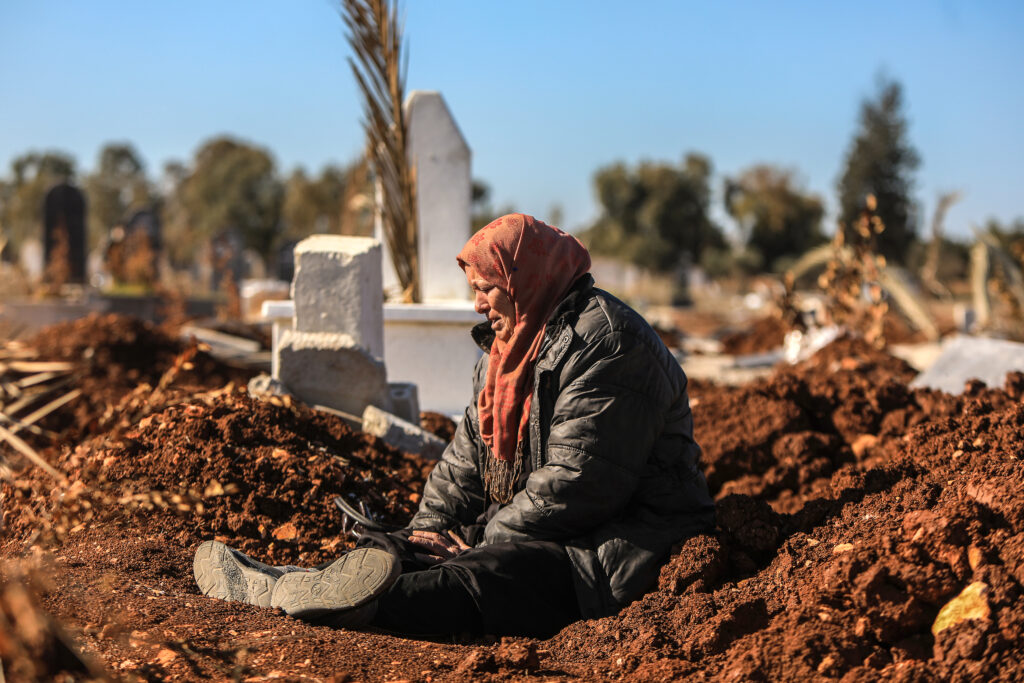
Weeping, Fairuz Shalish grasps the red earth at an unmarked grave in Syria that she believes may hold her son, one of tens of thousands of people who vanished under ousted president Bashar al-Assad.Thousands poured out of the country’s web of prisons in the final days of Assad’s rule and after Islamist-led rebels toppled him on December 8.But as the weeks go by, many families are still desperately searching for news of relatives who were detained or went missing during years of his iron-fisted rule.Shalish, 59, has not seen her 27-year-old son Mohammed since military security personnel stormed their home near Homs around dawn in early November, just weeks before Assad’s ouster.”I was screaming,” she said at the Tal al-Naser cemetery near Homs.”They shot him in the leg, he fell on the ground and two of them came and opened fire” repeatedly before taking him away, she said, a foul smell lingering in the crisp winter air.”He has four young children… he has a son who is two,” she told AFP.”I tell him that (his father) will be back tomorrow.”The fate of detainees and others who went missing remains one of the most harrowing legacies of Syria’s conflict, which started in 2011 when Assad’s forces brutally repressed anti-government protests.Arbitrary arrests, violence and torture were all part of a paranoid state killing machine that crushed any hint of dissent.”There were people who accused (Mohammed) of being in contact with revolutionaries in the north,” Shalish said.Her other son, detained at the same time, was later released, but she was told unofficially that Mohammed had died, without receiving any formal notification.- ‘Need to be certain’ -At the sprawling cemetery, pieces of construction blocks serve as makeshift headstones in the dirt where Shalish sits.At an earlier visit, she learnt that an individual buried there had the same date of death as her son.But she has been unable to obtain authorisation to exhume the body, which was identified only by a code.”If I have to go to the end of the Earth, I will go. I need to see if it’s my son or not,” she said.”I need to be certain, so my heart can be at rest.”Adnan Deeb, known as Abu Sham, who is in charge of burials at the Tal al-Naser cemetery, sorts through ledgers containing the names of people who are interred there, leafing through worn, handwritten pages of records, organised by date.He said that after the uprising started, authorities began bringing bodies from the military hospital to be buried at the cemetery.”Some had codes, while others were identified by name,” said the towering man in a long black robe, his head wrapped in a traditional keffiyeh.”Sometimes we’d get 10, sometimes five… They’d bring them in ambulances or in pick-ups or military vehicles,” he said, adding that some bore signs of torture.”It was an atrocious sight. Atrocious. But we had no choice but to do our job,” he added.- Still looking -Deeb estimated several thousand former detainees could be buried at the cemetery.He expressed hope that the military hospital’s computer systems would eventually reveal the names of the bodies identified only by codes.People need to “know where their children are buried”, Deeb said.The International Committee of the Red Cross has said determining the fate of the missing will be a massive task likely to take years.The Syrian Observatory for Human Rights, a Britain-based war monitor, has said more than 100,000 people have died in detention from torture or dire health conditions across Syria since 2011.Rafic al-Mohbani, 46, from Homs, has been searching for answers for more than a decade.His eyes flash with rage as he recounts how his brother Raef and brother-in-law Hassan Hammadi disappeared on their way home from work in June 2013.”They told us they were at the military security branch in Homs. We went and asked, and they said they transferred them to Damascus. After that, we don’t know what happened,” he said.”We paid several sums of money to several people” secretly, he said.”We got a lawyer, and still couldn’t find out anything.”After prisoners began streaming out of Assad’s jails last month, “we posted the photos again, we’ve been looking at cemeteries and hospitals”, Mohbani said.He also visited Tal al-Naser cemetery, with no success.But the gaunt man, who works as a mechanic, said he still had hope of learning the two men’s fate.”God willing, justice will prevail for us and everyone in Syria.”

Syria authorities name Sharaa interim president: state media

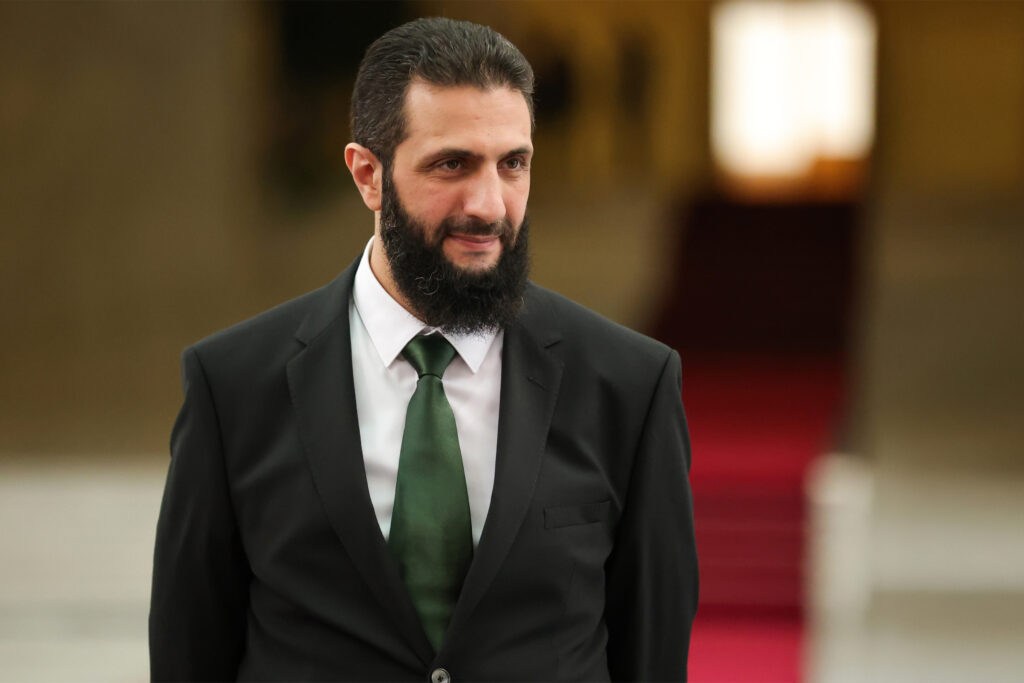
Syria’s new authorities announced Wednesday that Ahmed al-Sharaa, who took the helm after Bashar al-Assad’s ouster last month, has been appointed interim president and tasked with forming a transitional legislature, state media reported.A rebel alliance led by Sharaa’s Islamist group Hayat Tahrir al-Sham (HTS) ousted Assad on December 8 after a lightning offensive, ending five decades of his family’s iron-fisted rule, with a transitional government previously installed to steer the country until March 1.Sharaa was appointed “as the country’s president in the transitional phase”, state news agency SANA reported, quoting military official Hassan Abdel Ghani, without specifying a timeframe, adding that he would also represent the country “in international forums”.Sharaa was tasked with forming “a temporary legislative council… until a permanent constitution for the country is decided”, SANA said, adding that the Assad-era parliament had been dissolved and the 2012 constitution suspended.The announcements came during a conference on “the victory of the Syrian revolution” that was also attended by Sharaa, Foreign Minister Asaad al-Shaibani and the heads of armed factions.Abdel Ghani also announced the dissolution of all armed groups involved in Assad’s ouster, as well as the former government’s army and security agencies.”All military factions and political and civil revolutionary bodies are dissolved and integrated into state institutions”, SANA reported Abdel Ghani as saying.- ‘Civil peace’ -He also announced “the dissolution of the defunct regime’s army”, security agencies “and all the militias it established, and the formation of a new security apparatus that preserves citizens’ security” and the “reconstruction of the Syrian army”.The Syrian army has effectively collapsed, along with the other instruments of Assad’s rule.The Baath party which ruled Syria for decades was also dissolved, SANA reported.In a speech at the event, Sharaa set out Syria’s priorities as “filling the power vacuum, preserving civil peace, rebuilding state institutions and working to construct a development-oriented economy”, SANA said.”The mission of the victorious is heavy, and their responsibility is immense,” Sharaa added.Last month, he said it could take four years before elections could be held, and up to three years to rewrite the country’s constitution.Authorities had previously spoken of a national dialogue conference that would bring together Syrians of all political stripes, but SANA made no mention of any such conference on Wednesday.Civil war broke out in Syria after Assad suppressed peaceful anti-government protests in 2011. The conflict has killed more than 500,000 people and displaced millions more.HTS, rooted in Syria’s Al-Qaeda branch, is proscribed as a terrorist organisation by many governments including the United States, though it has recently sought to moderate its rhetoric and vowed to protect Syria’s religious and ethnic minorities.Since Assad’s ouster, a succession of Western diplomats have visited Syria to call for an inclusive transition.bur-tgg-kam-lk/lg/kir