AFP Asia Business

Hezbollah says Nasrallah funeral to be held on February 23

The funeral for Hezbollah leader Hassan Nasrallah will be held on February 23, the group’s current chief said on Sunday, months after his predecessor’s death in an Israeli air strike.Nasrallah was killed in a huge Israeli air strike on Beirut’s southern suburbs on September 27, as Israel scaled up its campaign against the Iran-backed group following almost a year of cross-border hostilities.After decades at the helm of the group once seen as invincible, the killing of the charismatic leader sent shockwaves across Lebanon and the wider region.”After security conditions prevented holding a funeral” during two months of all-out war that ended on November 27, Hezbollah has decided to hold “on February 23 a grand… public funeral” for Nasrallah, Naim Qassem said in a televised speech.”We hope that it will be a grand funeral procession befitting this great personality,” he said.Qassem also confirmed for the first time that leading official Hashem Safieddine had been chosen to succeed Nasrallah before he too was killed in an Israeli raid in October.Safieddine will be buried “as Secretary-General” or leader of Hezbollah, because “we had… elected His Eminence Sayyed Hashem as Secretary-General… but he was martyred on October 3, a day or two before the announcement”, Qassem said.The group will hold Safieddine’s funeral on the same day as Nasrallah’s.Nasrallah will be buried on the outskirts of Beirut “in a plot of land we chose between the old and new airport roads”, while Safieddine will be buried in his hometown of Deir Qanun in southern Lebanon, he said.Nasrallah had been temporarily buried elsewhere due to security concerns, he said.Shiite Muslim rites provide for such a temporary burial when circumstances prevent a proper funeral or the deceased cannot be buried where they wished.Last October, a source close to the group had told AFP that Nasrallah had been buried in a secret location, for fear Israel would target a large funeral.- ‘Israeli aggression’ -The deeply religious Safieddine, a cleric with family ties to Nasrallah, had been widely viewed as the most likely candidate for the party’s top job.Safieddine, a member of the group’s governing Shura Council, had strong ties to Iran after undergoing religious studies in the Islamic republic’s holy city of Qom.During his speech Sunday, Qassem also pressed Lebanese authorities to pressure Israel to stop ceasefire violations.The Israeli army missed a January 26 deadline to complete its withdrawal from southern Lebanon and has since launched strikes there. It now has until February 18 to withdraw.Israel had made clear it had no intention of meeting the initial deadline, charging that the Lebanese army had not fulfilled its end of the bargain. The Lebanese authorities have also accused Israel of violating the agreement.”The Lebanese state is fully responsible for following up, pressuring and trying to prevent as much as it can, through sponsors and international pressure, this violation and this Israeli aggression,” Qassem said.Under the terms of the November 27 ceasefire, the Lebanese army is to deploy in the south as Hezbollah pulls its forces back north of the Litani River, some 30 kilometres (20 miles) from the border.The militant group is also required to dismantle any remaining military infrastructure it has in the south.

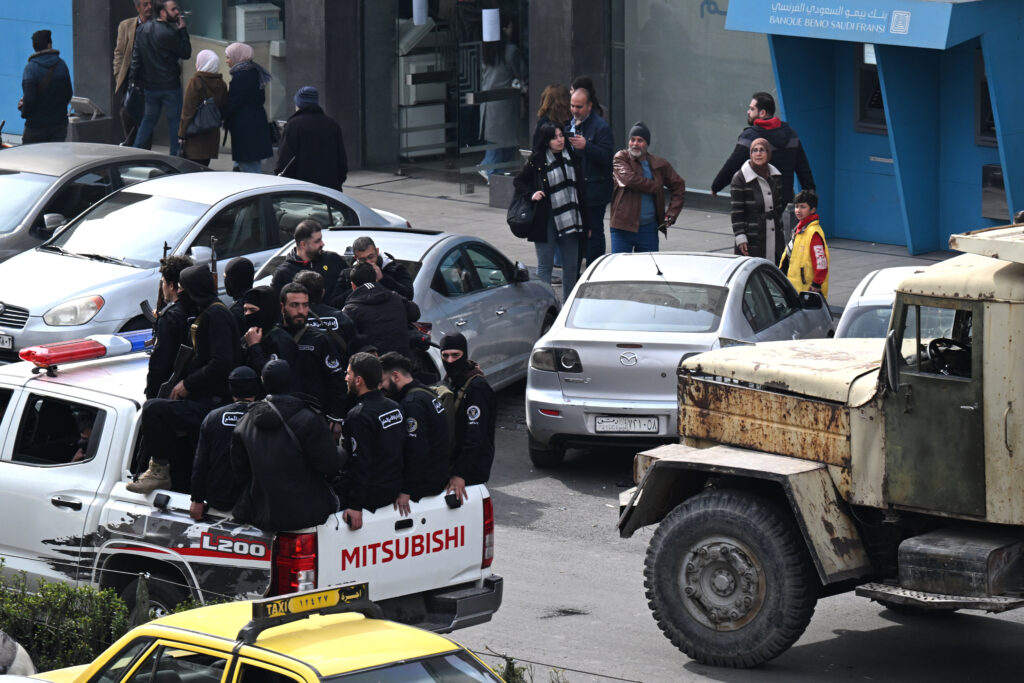
Syria leader says Saudis want to help rebuild war-torn country

Syria’s interim president Ahmed al-Sharaa said Saudi Arabia had a “genuine desire” to support his war-torn country, after meeting on Sunday with the oil-rich Gulf state’s crown prince.Accompanied by his foreign minister, Asaad al-Shaibani, Sharaa was greeted by Saudi officials on arrival in Riyadh, images from state television outlet Al-Ekhbariya showed.Sharaa was later received by Crown Prince Mohammed bin Salman, the official Saudi news agency reported.”We held a long meeting during which we felt and heard a genuine desire to support Syria in building its future,” Sharaa was quoted as saying in a statement on Telegram.The official Saudi Press Agency, meanwhile, said that Prince Mohammed and Sharaa discussed “ways to support the security and stability of sisterly Syria”, as well as “ways to strengthen bilateral relations”.Sharaa, whose Islamist group led the overthrow of Bashar al-Assad in December, was named Syria’s interim president on Wednesday.A Syrian diplomat did not respond to AFP when asked how long Sharaa’s visit would last.Saudi King Salman and his son Prince Mohammed were among the first to congratulate him on his official appointment.The Syrian authorities are counting on wealthy Gulf countries to finance the reconstruction of their war-ravaged nation and revive its economy.In late December, Sharaa said in an interview with the Saudi channel Al-Arabiya that the kingdom would “certainly play an important role” in Syria’s future, highlighting a “great opportunity for investment”.He told the channel he was born in Saudi Arabia, where his father worked, and that he had spent the first seven years of his life in the oil-rich Gulf state.- ‘Strategic service’ -Rabha Seif Allam, a regional expert at the Al-Ahram Center for Political and Strategic Studies in Cairo, said Riyadh was “playing a key role in reintegrating the new Syria into the Arab world and onto the international stage”.She said that Saudi Arabia, the Arab world’s largest economy, would “directly benefit” from the stabilisation of Syria.”Iran is now excluded from the Syrian landscape, weakening its regional influence, and drug trafficking from Syria to the Gulf countries, which had been a destabilising factor, is now a thing of the past.”Distancing Damascus from Tehran was a “strategic service” to Riyadh, she added.Though Saudi Arabia and Iran ended a seven-year diplomatic freeze in 2023, the regional heavyweights remain at odds over multiple geopolitical issues, including the civil war in Syria, where they backed opposing sides.Syria is also pressing for the lifting of international sanctions that have dragged down its economy.The sanctions date back to 1979, when the United States labelled Syria a “state sponsor of terrorism”, but they were ramped up significantly by Washington and other Western powers when Assad cracked down on anti-government protests in 2011 and sparked the civil war.Saudi Arabia’s foreign minister visited Damascus last month and promised to help secure an end to the restrictions.Prince Faisal bin Farhan said during his visit that Riyadh was engaged in “active dialogue with all relevant countries, whether the United States or the European Union, and we are hearing positive messages”.The new Syrian authorities have received a steady stream of diplomatic visitors since Assad was toppled.On Thursday in Damascus, Qatar’s Emir Sheikh Tamim bin Hamad Al-Thani “stressed the urgent need to form a government representing all spectrums” of Syrian society in order “to consolidate stability and move forward with reconstruction, development and prosperity projects”.

Netanyahu heads to US for pivotal Trump talks

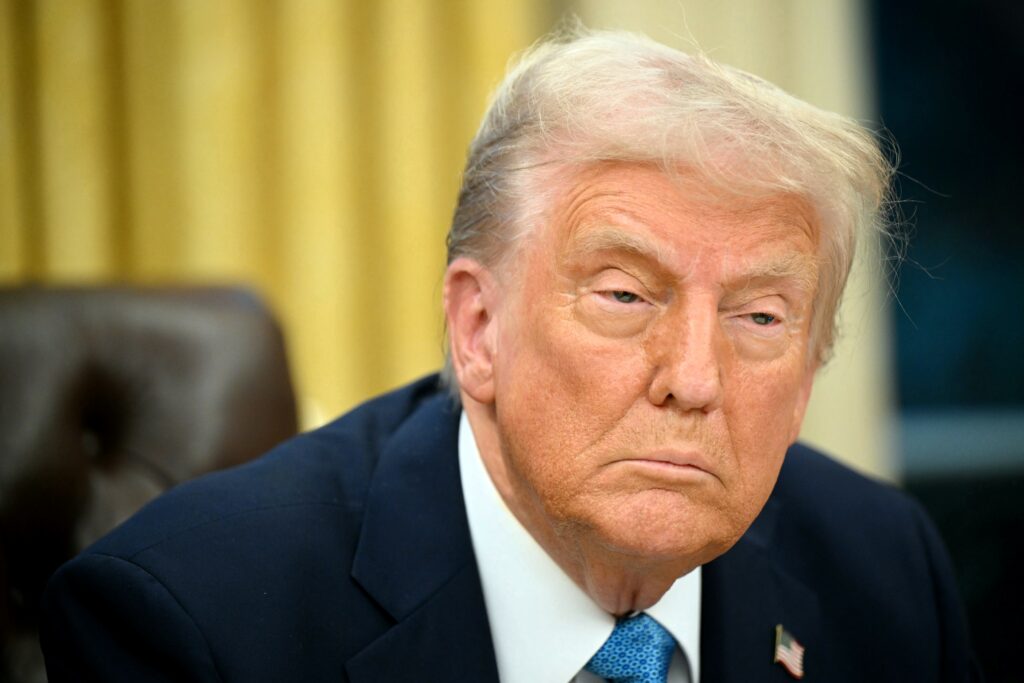
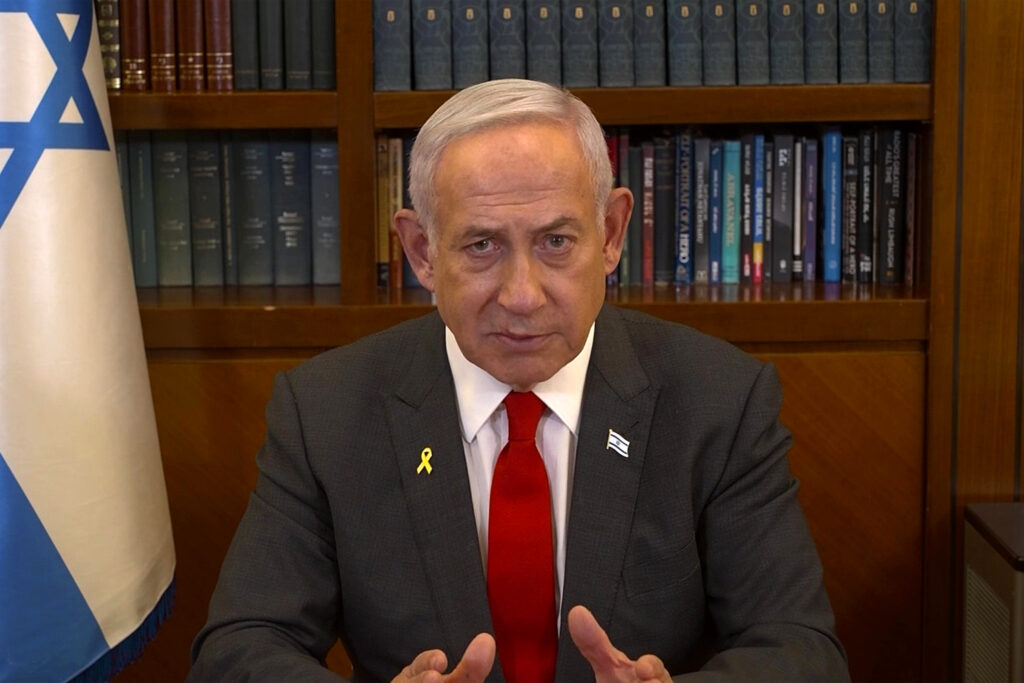
Israel’s Prime Minister Benjamin Netanyahu left Sunday for the United States where he will become the first foreign leader to meet Donald Trump since the US president returned to office.His visit comes as a fragile truce holds between Israel and Hamas in Gaza, and between Israel and Hezbollah in Lebanon. Both militant groups are backed by Iran.Before boarding his flight, Netanyahu said the pair would discuss “victory over Hamas, achieving the release of all our hostages and dealing with the Iranian terror axis”.During his first term, Trump declared Israel “never had a better friend in the White House”, an attitude that appears to have endured. Before departing, Netanyahu called it “telling” that he would be the first foreign leader to meet Trump since his inauguration.”I think it’s a testimony to the strength of the Israeli-American alliance,” he said.After Hamas’s October 7, 2023 attack on Israel, Trump’s predecessor Joe Biden had maintained military and diplomatic support for Israel.But the Biden administration also distanced itself over the mounting death toll from Israel’s ensuing war in Gaza and delays to aid deliveries.Trump has moved quickly to reset relations.Soon after returning to the White House, he reportedly approved a shipment of 2,000-pound bombs to Israel, which the Biden administration had blocked, and lifted sanctions on Israeli settlers accused of violence against Palestinians.After the ceasefire took effect in Gaza last month following 15 months of war, Trump touted a plan to “clean out” the Palestinian territory, calling for Palestinians to move to neighbouring countries such as Egypt or Jordan.His stance has reinforced Netanyahu’s need for strong US ties as he navigates domestic and regional pressures.Celine Touboul, co-director of the Foundation for Economic Cooperation, a Tel Aviv think-tank, said “for Netanyahu, a privileged relationship with the White House is an essential tool”.- Stabilising the region -Despite Trump’s early moves, Netanyahu will face a president determined to push his own agenda when the pair meet on Tuesday.Trump officials have warned that “renewed fighting in the Middle East would distract the new Trump team from addressing what Trump defines as more pressing priorities”, the New York-based Soufan Center said.These include “securing the southern US border from illegal migration and settling the Russia-Ukraine war”, the think tank said.Beyond that, “Trump wants to reorient his priorities towards Asia-Pacific”, said David Khalfa, a researcher at the Jean Jaures Foundation in Paris.”He believes, as did his predecessors, that he must stabilise the region first and create an anti-Iran coalition with his strategic partners,” including Israel and Saudi Arabia, he said.- ‘Political margin’ – Talks will also likely cover concessions Netanyahu must accept to revive normalisation efforts with Saudi Arabia.Riyadh froze discussions early in the Gaza war and hardened its stance, insisting on a resolution to the Palestinian issue before making any deal.”There is today an ideological alignment between the populist, Trumpist American right and the Israeli prime minister,” Khalfa said.But Netanyahu’s “political margin is very small in the face Trump who does not have the pressure of re-election”, he added.Indirect negotiations between Israel and Hamas are due to resume this week on the second phase of the Gaza truce agreement.If successful, the deal could lead to the release of the remaining hostages in Gaza, both dead and alive, and potentially end the war.Netanyahu’s office said he would begin the discussions with Trump’s Middle East envoy Steve Witkoff on Monday.But he faces intense pressure within his governing coalition from far-right politicians intent on restarting the Gaza war once the current six-week truce ends. Israeli Finance Minister Bezalel Smotrich has threatened to quit the government if the war does not restart, potentially stripping Netanyahu of his majority.The prime minister faces a choice between Washington’s demands and increasingly impatient political backers at home. “If Trump asks him to make concessions to the Palestinians in order to obtain normalisation between Israel and Saudi Arabia, Netanyahu will have to choose between a privileged relationship with the American president or maintaining his coalition,” Touboul said. 

Syria’s interim president arrives in Saudi Arabia for first foreign visit

Syria’s interim president Ahmed al-Sharaa arrived in Saudi Arabia on Sunday for his first international visit since the toppling of Bashar al-Assad, state media reported.Accompanied by his foreign minister Asaad al-Shaibani, Sharaa was greeted by Saudi officials as he disembarked, images from state television outlet Al-Ekhbariya showed. The broadcaster said Sharaa was expected to meet with de facto Saudi ruler Crown Prince Mohammed bin Salman, but did not specify when.Syrian state news agency SANA also reported the pair would meet with Prince Mohammed in Riyadh, without providing further details.The Syrian presidency had earlier posted a picture on X of Sharaa and Shaibani aboard what appeared to be a private jet on their way to Saudi Arabia, calling it a “first official visit”. Sharaa, whose Islamist group led the overthrow of Assad in December, was named interim president on Wednesday. Saudi Arabia’s King Salman and his son Prince Mohammed were among the first to congratulate him on his official appointment. The Syrian authorities are counting on wealthy Gulf countries to finance the reconstruction of their war-ravaged nation and revive its economy.In late December, Sharaa stated in an interview with the Saudi channel Al-Arabiya that the kingdom would “certainly play an important role” in Syria’s future, highlighting a “great opportunity for investment”.He told the channel he was born in Saudi Arabia, where his father worked, and that he had spent the first seven years of his life there.- ‘Strategic service’ -Rabha Seif Allam, a regional expert at the Al-Ahram Center for Political and Strategic Studies in Cairo, said Riyadh was “playing a key role in reintegrating the new Syria into the Arab world and onto the international stage”.She said that Saudi Arabia, the Arab world’s largest economy, would “directly benefit” from the stabilisation of Syria.”Iran is now excluded from the Syrian landscape, weakening its regional influence, and drug trafficking from Syria to the Gulf countries, which had been a destabilising factor, is now a thing of the past.”Distancing Damascus from Tehran was a “strategic service” to Riyadh, she added.Though Saudi Arabia and Iran ended a seven-year diplomatic freeze in 2023, the regional heavyweights remain at odds over multiple geopolitical issues, including the civil war in Syria, where they backed opposing sides.Syria is also pressing for international sanctions that have dragged down its economy to be lifted.The sanctions date back to 1979, when the United States labelled Syria a “state sponsor of terrorism”, but they were ramped up significantly by Washington and other Western powers when Assad cracked down on anti-government protests in 2011 and sparked the civil war.Saudi Arabia’s foreign minister visited Damascus last month and promised to help secure an end to the restrictions.Prince Faisal bin Farhan said during his visit that Riyadh was engaged in “active dialogue with all relevant countries, whether the United States or the European Union, and we are hearing positive messages”.The new Syrian authorities have received a steady stream of diplomatic visitors since toppling Assad in December.On Thursday, Damascus received Qatar’s Emir Sheikh Tamim bin Hamad Al-Thani, who “stressed the urgent need to form a government representing all spectrums” of Syrian society in order “to consolidate stability and move forward with reconstruction, development and prosperity projects”.

Trump unveils sweeping US tariffs on Canada, Mexico, China

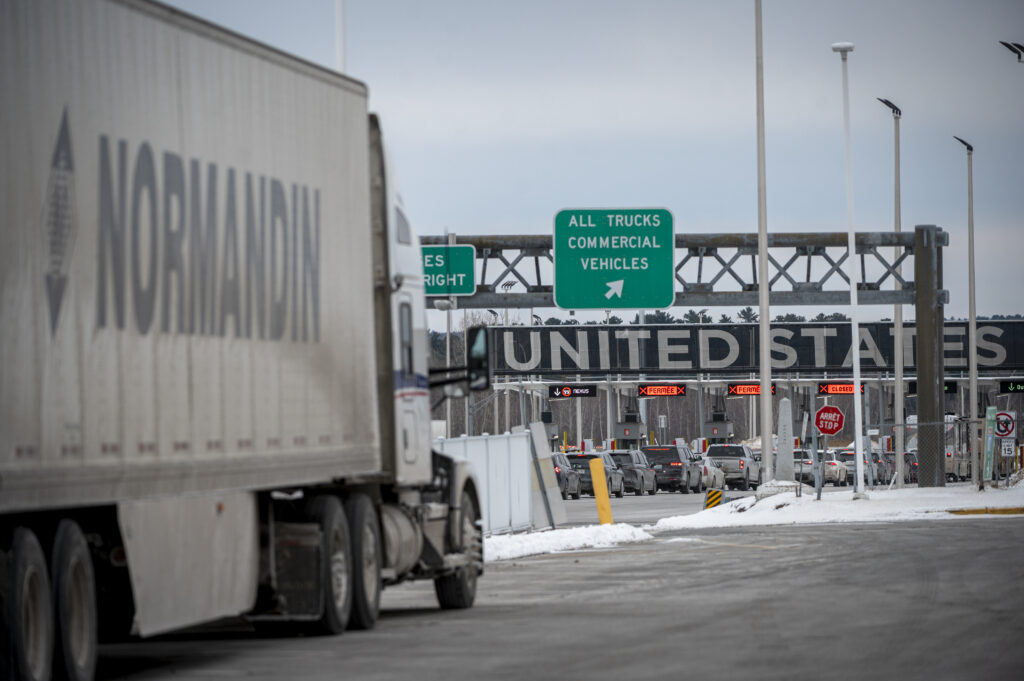
President Donald Trump announced broad tariffs Saturday on major US trading partners Canada, Mexico and China, claiming a “major threat” from illegal immigration and drugs — a move that sparked promises of retaliation.Canadian and Mexican exports to the United States will face a 25 percent tariff starting Tuesday, although energy resources from Canada will have …

Trump unveils sweeping US tariffs on Canada, Mexico, China Read More »

Netanyahu to begin talks on 2nd phase of Gaza truce

Israeli Prime Minister Benjamin Netanyahu will begin talks on a second phase to the Gaza ceasefire in Washington on Monday, his office said hours after the completion of the fourth hostage-prisoner exchange of the truce.Netanyahu spoke with the US President’s Middle East envoy Steve Witkoff on Saturday and agreed that negotiations would “begin when they meet in Washington”.A date for formal talks involving mediators and delegations from Hamas and Israel has not been set, with the 42-day first phase due to end next month.Netanyahu’s office said Witkoff would talk to Qatar and Egypt, key mediators, before discussing with the Israeli premier “steps to advance the negotiations, including dates for delegations to leave for talks”.The second phase is expected to cover the release of the remaining captives and to include discussions on a more permanent end to the war, something several members of Netanyahu’s government oppose.- Hostages, prisoners released -As part of the first phase, Hamas on Saturday freed three Israeli hostages in exchange for more than 180 Palestinian prisoners released from Israeli custody.Hostages Ofer Kalderon and Yarden Bibas were paraded on stage by Hamas fighters before being handed over to the Red Cross in the southern Gaza city of Khan Yunis. US-Israeli Keith Siegel was freed in a similar ceremony at Gaza City’s port in the north.The Israeli military later confirmed that all three were back in Israel.Israeli campaign group the Hostages and Missing Families Forum hailed their release as “a ray of light in the darkness”.”I hope that this is a sign of the rebirth of the people of Israel, not just of Ofer, not just of the hostages,” Kalderon’s uncle Shemi told AFP, overcome with emotion.Later in the day, a bus carrying released Palestinian prisoners was greeted by a cheering crowd in the West Bank city of Ramallah, while three other buses were met by hundreds of well-wishers in Khan Yunis.”I need a great deal of composure to control myself, to steady my nerves, to absorb this overwhelming moment,” said one released prisoner, Ata Abdelghani, as he prepared to meet his now 10-year-old twin sons for the first time.- ‘Mixed emotions’ -After holding the hostages for more than 15 months, militants in Gaza began releasing them on January 19 under the terms of the ceasefire deal with Israel.Hamas and its ally Islamic Jihad have so far handed over 18 hostages to the International Committee of the Red Cross, the Israelis among them in exchange for hundreds of Palestinian prisoners, many of them women and children.A total of 183 prisoners were freed Saturday, all of them Palestinian except for one Egyptian.Hamas sources said a fifth hostage-prisoner exchange would take place next Saturday.The ceasefire’s six-week first phase hinges on the release of a total of 33 hostages in exchange for around 1,900 people, mostly Palestinians, held in Israeli jails.During their October 7, 2023 attack on Israel which started the Gaza war, militants abducted Siegel from kibbutz Kfar Aza, and Bibas and Kalderon from kibbutz Nir Oz.Militants took a total of 251 people hostage that day. Of those, 76 remain in Gaza, including at least 34 the military says are dead.Those seized include Bibas’s wife Shiri and their two children, whom Hamas has declared dead, although Israeli officials have not confirmed that.Bibas’s sons — Kfir, the youngest hostage, whose second birthday was in January, and his older brother Ariel, whose fifth birthday was in August — have become symbols of the hostages’ ordeal.Footage released by the Israeli military showed Bibas being reunited with his sister and father, who held him in a lengthy embrace.In a statement issued via the Hostages and Missing Families Forum, the Bibas family said “a quarter of our heart has returned to us after 15 long months.”But the home remains incomplete,” the family said.Israel’s hostage coordinator, Gal Hirsch, said the government continued “to demand information” from the ceasefire’s brokers about the rest of the Bibas family.- Sighs of relief -Hundreds had gathered in the Tel Aviv plaza dubbed “Hostage Square” to watch live television coverage of the latest releases.Sighs of relief ran through the crowd as the three were freed, though the mood was mostly sombre.At Tel Aviv’s Sheba Hospital, Kalderon, a keen mountain biker, beamed and blew kisses as he was met by a contingent of cyclist friends chanting his name.”It’s amazing, amazing. A year-and-a-half is culminating in this moment,” said Navit Hermesh. “We missed him so much, we worried about him so much, and we are so happy that he’s coming back.”At Tel Aviv’s Ichilov Medical Centre, deputy director Gil Fire said Siegel’s health was good enough after his ordeal for him to have “spent his first few hours here in the greatest privacy with his family”.Ahead of the releases in Khan Yunis and Gaza City, scores of masked Hamas fighters stood guard in an apparent effort to prevent large crowds forming.It was a sharp contrast to the chaotic scenes that accompanied Thursday’s handover, which prompted Israel to briefly delay its release of Palestinian prisoners in protest.- ‘Difficult’ situation -After Saturday’s hostage release, Gaza’s key Rafah border crossing with Egypt was reopened, with the health ministry in the Hamas-run territory saying 50 Palestinian patients in need of specialist treatment had passed through.Egyptian state-linked channel Al-Qahera News showed footage of the first evacuees, who included 30 children with cancer.Gaza hospitals director Muhammad Zaqout said he hoped the numbers would increase.”We now have 6,000 cases ready to be transferred, and more than 12,000 cases that are in dire need of treatment,” he said.Rafah was a vital entry point for aid before the Israeli military seized the Palestinian side of the crossing in May.US President Donald Trump, who has claimed credit for the ceasefire deal, is expected to host Netanyahu at the White House on Tuesday.