AFP Asia Business

Thousands rally in Paris against Iran’s leaders

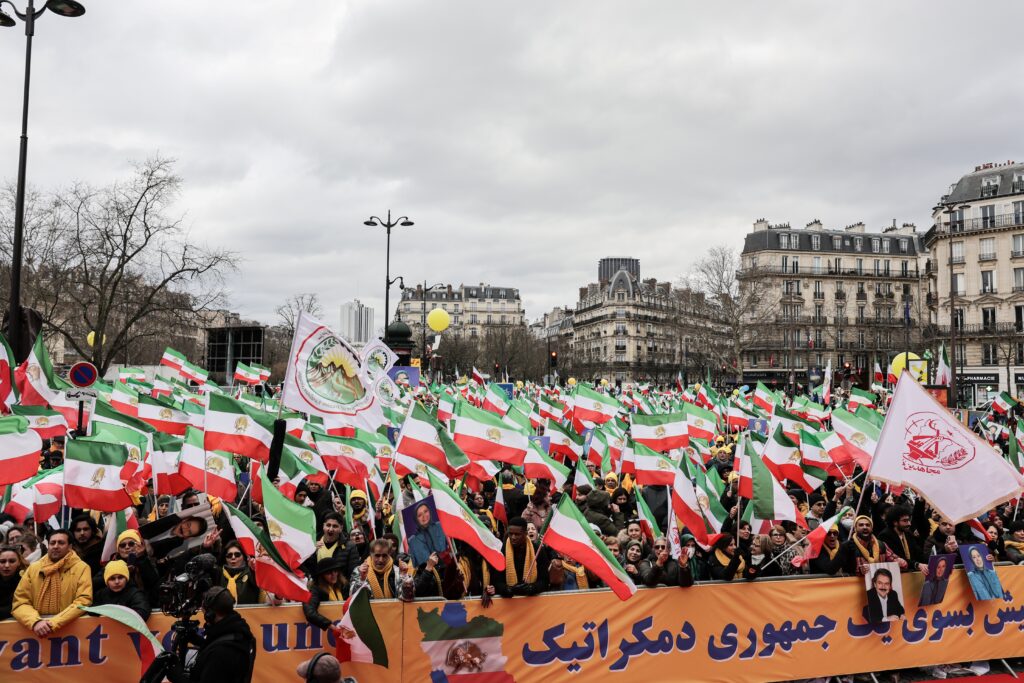
Several thousand Iranians came from across Europe to rally in Paris on Saturday, calling on world leaders to put greater pressure on the Islamic republic’s ruling clerics.”Instead of appeasing the mullahs, (the international community) should stand side by side with the Iranian people,” Maryam Rajavi, president of the National Council of Resistance of Iran (NCRI), told the rally.The NCRI is the political wing of the People’s Mujahedin of Iran, which Tehran regards as a “terrorist” group.Iran’s opposition abroad has been emboldened by the fall in late 2024 of Syrian President Bashar al-Assad, a longtime ally of Tehran.”As Syria did with Bashar al-Assad, the Iranian people will free themselves of the mullahs, and it will be in 2025,” said Belgium’s former prime minister Guy Verhofstadt.”The strategy of complacency has to change”, he argued, adding: “I don’t think it’s going to happen that way with the US administration this time”.”The Iranian regime will fall like the Syrian regime fell, at a speed that no one would have predicted,” former Syrian rebel leader Riad al-Asaad told the crowd by video link.Several speakers at Saturday’s rally voiced hopes that US President Donald Trump’s promise to exert “maximum pressure” against Tehran would help their cause.- ‘Cascade of failures’ -Trump has in the past lashed out at Tehran’s nuclear programme, but has also expressed a desire to reach a peace deal with Iran.On Friday, the Islamic republic’s supreme leader Ayatollah Ali Khamenei warned against negotiations with the United States.”You should not negotiate with such a government, it is unwise, it is not intelligent, it is not honourable to negotiate,” Khamenei told a meeting of military top brass.In Paris, Rajavi told the rally that the Iranian government’s “cascade of failures” had “pitted the regime’s internal factions against each other over the question of whether or not to negotiate with the United States”.Police put the turnout at the Paris demonstration at around 6,000.The throng was decked out in the flags of the NCRI, a lion holding a sword against a green, white and red backdrop, with a sprinkling of a few Ukrainian flags here and there.”Many of the weapons which are killing our children in Ukraine come from Iran,” said Lara, a Ukrainian living in the German town of Kassel who was bussed into the French capital by the NCRI.

Prisoners released in Gaza return to territory transformed by war

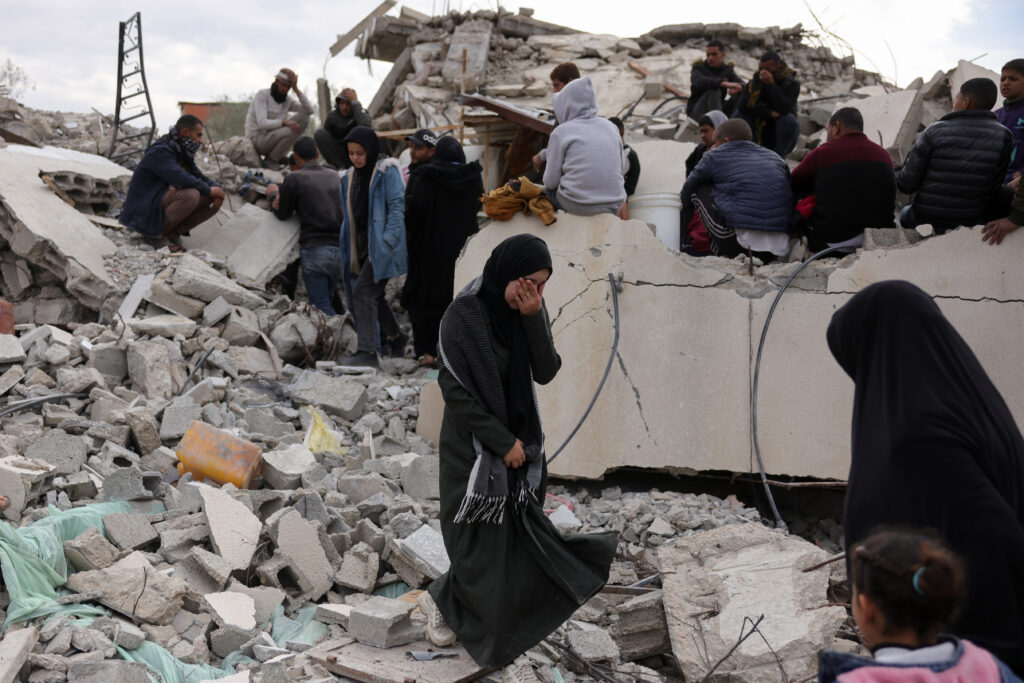
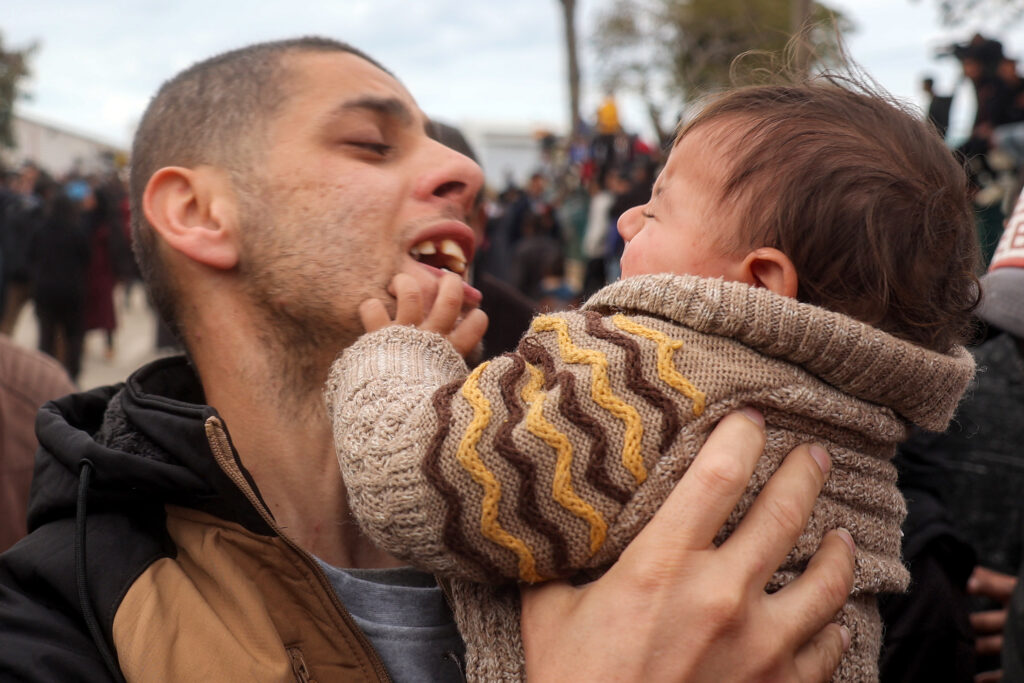
More than 100 Palestinians freed into Gaza on Saturday returned to the territory to find it rendered unrecognisable by 15 months of war, while for many the fate of their loved ones was unknown.”How is my family? Are they still alive?” one prisoner asked, calling out from a bus window as prisoners arrived in Khan Yunis in the southern Gaza Strip.”Have there been martyrs in my family?” he shouted again before a voice in the crowd responded.”They are all ok,” came the reply.In total, 183 Palestinians were released from Israeli prisons on Saturday in exchange for three Israelis held in Gaza in the fifth such swap as part of an ongoing ceasefire in Gaza.Of those released, 41 returned to the West Bank city of Ramallah, four were released in Israeli-annexed East Jerusalem, seven were deported to Egypt and 131 were sent to Gaza.Stepping off the Red Cross chartered coaches in the Palestinian territory, some looked weary and weak, while others exulted, looking to catch a glimpse of a familiar face.Family members, friends and loved ones in the crowd surged towards the returning prisoners, wanting to touch them, shake their hands or film the scene on their phones. In the background, loudspeakers blasted political chants, sometimes echoed by the crowd.Khadra al-Daghma, on the verge of collapse, struggled to make her way to her son before falling into his arms as he kissed her forehead.- ‘Waited for this day’ -“I’m so happy”, she said, struggling to find words. “I waited for this day to come for 15 years”.All around her, teary-eyed relatives and freed prisoners, some of whom had not seen each other in decades, were hugging and crying.”He’s changed so much”, al-Daghma said after holding her son Amar, who was arrested in 2009, in her arms.Following Hamas’s unprecedented attack on Israel in 2023, the Israeli army relentlessly bombarded Gaza for more than 15 months. An already impoverished territory before this latest war, it has now been left in ruins. With over 48,000 dead and 111,000 wounded, according to Hamas’s Ministry of Health, the population has been left drained and traumatised by the relentless violence.Over 90 percent of Palestinians in Gaza were displaced at least once during the war, according to the UN.Of those who returned home after a ceasefire took effect on January 19, many have had to pitch tents next to their old homes, which they found destroyed.The contrast between the land they left and the one they are returning to is stark for returning prisoners.”During our six months of detention, we were completely cut off from the world, we got no information on the war in Gaza”, Mohammed, a freed prisoner who declined to share his last name, said.”The scale of the destruction shocked us, Gaza is in ruins, there is rubble everywhere”, he said.”With the (Israeli) occupation of Gaza, I’m afraid they’ll arrest us again at any moment,” the recently freed prisoner added. 

Israel putting Gaza ceasefire at risk of collapse: Hamas official to AFP

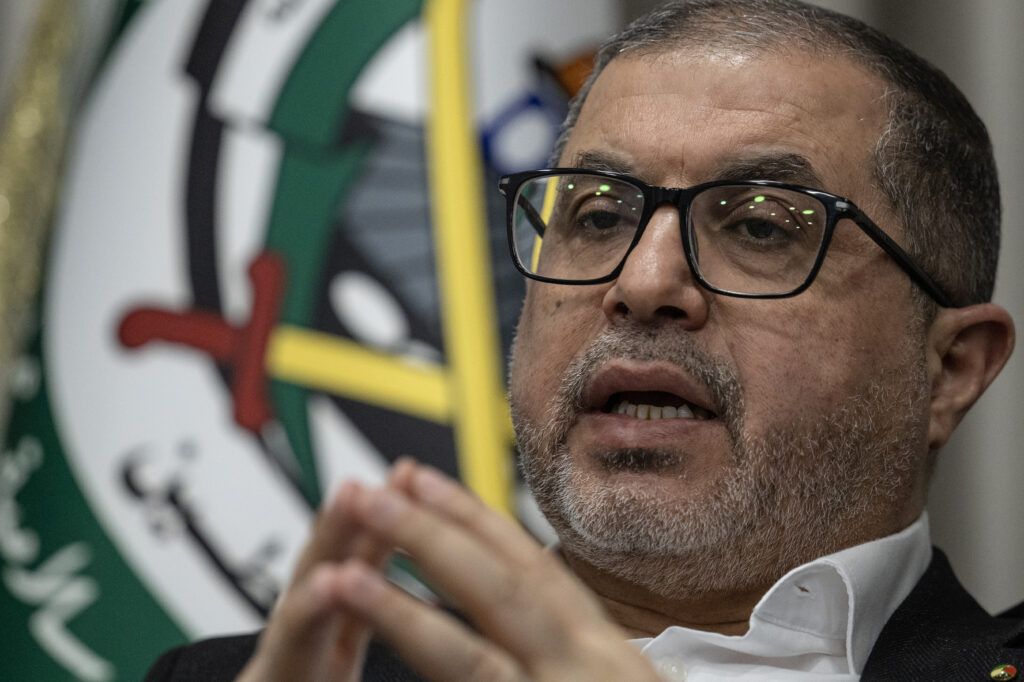
Israel’s “lack of commitment” is putting the Gaza ceasefire in danger of collapse, a senior Hamas official told AFP on Saturday with talks yet to start on its second phase.In an interview with AFP, Hamas political bureau member and former Gaza health minister Basem Naim warned the deal was in danger, but said the Palestinian militant group did not want to return to war.The fifth release of Israeli hostages and Palestinian prisoners took place on Saturday, about halfway through the six-week first phase of the ceasefire deal.The fragile ceasefire, which took effect last month, brought to a halt more than 15 months of war sparked by Hamas’s unprecedented attack on Israel on October 7, 2023.Israel’s retaliatory campaign in Gaza has left its Hamas rulers weakened but not crushed, and questions remain over how the devastated territory will be run in a post-war phase.Question: You say Hamas remains committed to negotiations to extend the ceasefire, but is there still the possibility of a return to war?Basem Naim: What we see from delay and lack of commitment in implementing the first phase and the attempt to create a political, international, diplomatic, and media environment to pressure the Palestinian negotiators upon entering the second phase, certainly exposes this agreement to danger and thus it might stop and collapse.The return to war is certainly not our wish or decision. But if one party decides to return to war, certainly our Palestinian people who endured for 15 months and have resistance in their heart will be ready to respond appropriately.Question: The negotiations for the ceasefire’s second phase were supposed to start this week in Doha. When will they take place?Basem Naim: We were expecting the dialogues for the second phase to start… last Monday. We are still ready to go. But the occupation is delaying… till now I do not have any specific date for starting the negotiation process… Maybe in the coming days there may be a start.Question: Israeli Prime Minister Benjamin Netanyahu has been talking about normalising ties with Saudi Arabia. What’s your response?Basem Naim: We call on them not to normalise. We call on all Arab countries, both those currently normalising and those considering normalisation, to retract from this because this entity that usurped Palestinian land 76 years ago poses a threat to the entire region, not just the Palestinians. It is the cause of most of the region’s problems, and we call on all of them to stop this normalisation or any new steps towards normalisation.Question: What is your reaction to US President Donald Trump’s plan to take over Gaza and move its inhabitants to other countries?Basem Naim: To force a whole population of two million people to leave their homeland for any reason is a crime against humanity and ethnic cleansing. This proposal is therefore rejected. All Arab countries without exception, Islamic countries, and many countries around the world took a clear stance rejecting this offer… because the Palestinian people will refuse to leave. And there is no state ready or prepared to receive them.

Hamas, Israel complete fifth hostage-prisoner swap under Gaza deal

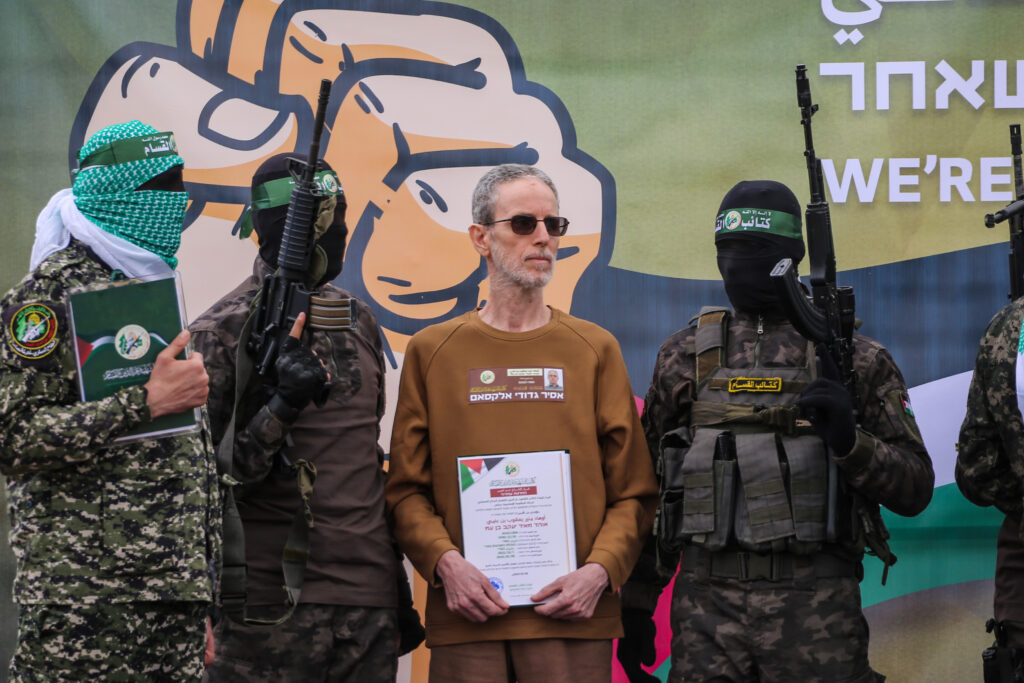
Israel and Hamas completed their fifth hostage-prisoner swap under a fragile Gaza ceasefire deal on Saturday, with the frail, disoriented appearance of the three freed Israelis sparking dismay among their relatives.Out of the 183 inmates released by Israel in return, the Palestinian Prisoners’ Club advocacy group said seven required hospitalisation, decrying “brutality” and mistreatment in jail.An AFP correspondent later reported that more than 100 Palestinian prisoners had arrived in Gaza.The fifth exchange since the truce took effect last month comes as negotiations are set to begin on the next phase of the ceasefire, which is intended to pave the way for a permanent end to the war.But senior Hamas official Bassem Naim on Saturday said Israel’s “procrastination and lack of commitment in implementing the first phase… exposes this agreement to danger and thus it may stop or collapse”.He also described, in an interview with AFP, the condition of the hostages as “acceptable under the difficult circumstances that the Gaza Strip was living”.Saturday’s swap followed remarks by President Donald Trump suggesting the United States should take control of the Gaza Strip and clear out its inhabitants, sparking global outrage.Or Levy, Ohad Ben Ami and Eli Sharabi, who were all seized by militants during Hamas’s October 7, 2023 attack that sparked the war, “crossed the border into Israeli territory” on Saturday, the Israeli military said.With their return, 73 out of 251 hostages taken during the attack now remain in Gaza, including 34 the Israeli military says are dead.Jubilant crowds in Israel’s commercial hub Tel Aviv cheered as they watched live footage of the three hostages, flanked by masked gunmen, brought on stage in Deir el-Balah before being handed over to the International Committee of the Red Cross.But the joy at their release was quickly overtaken by concern for their condition, with all three appearing thin and pale.Sharabi’s cousin Yochi Sardinayof said “he doesn’t look well”.”I’m sure he will now receive the right treatment and he will get stronger… He has an amazing family, and we will all be there for him.”- ‘Cruel spectacle’ -The choreographed handover included forced statements from the three on stage, in which they stated support for finalising the next phases of the Israel-Hamas truce.The “disturbing images” from Gaza show that “we must get them all out”, said the Hostages and Missing Families Forum campaign group.The office of Israeli Prime Minister Benjamin Netanyahu said the images from Gaza were “shocking”.President Isaac Herzog denounced the treatment of the hostages, who were paraded on stage “after 491 days of hell, starved, emaciated and pained” and “exploited in a cynical and cruel spectacle”.The ICRC meanwhile called on “all parties, including the mediators, to take responsibility to ensure that future releases are dignified and private”.Sharabi, 52, and Ben Ami, a 56-year-old dual German citizen, were both abducted from their homes in kibbutz Beeri when militants stormed the small community near the Gaza border.Sharabi lost his wife and two daughters in the attack.Levy was abducted from the Nova music festival, where gunmen murdered his wife.In the occupied West Bank city of Ramallah, relatives and supporters gathered to welcome inmates released by Israel, embracing them and cheering as they stepped off the bus that brought them from nearby Ofer prison.But Fakhri Barghouti, 71, whose son was among the prisoners, told AFP that Israeli soldiers had stormed his home and beaten him, warning him not to celebrate his son’s release.”They entered after midnight, smashed everything, took me into a side room, and beat me before leaving”, Barghouti told AFP.”I was taken to the hospital, where it was found that I had a broken rib.”The Israeli military said in a statement it had “conveyed messages that celebrations and processions in support of terrorism are prohibited during the release of the terrorists”, but did not give an immediate response when asked about Barghouti’s allegations.- ‘Slow killing’ -Israel’s prison service said that “183 terrorists… were released” to the West Bank, annexed east Jerusalem and Gaza.The Palestinian Prisoners’ Club advocacy group and the Palestinian Red Crescent said that seven of them had been admitted to hospital in the West Bank.”All the prisoners who were released today are in need of medical care… as a result of the brutality they were subjected” to in jail, said the advocacy group.Hamas in a statement accused Israel of undertaking a “policy of… the slow killing of prisoners”.Gaza militants have so far freed 21 hostages, including 16 Israelis in exchange for hundreds of mostly Palestinian prisoners released from Israeli jails.Five Thai hostages freed last week from Gaza were discharged on Saturday from a hospital in central Israel, where they had been treated since their release, and were headed back to their home country.The ceasefire, mediated by Qatar, Egypt and the United States, aims to secure the release of 17 more hostages during the remainder of the 42-day first phase.Negotiations on the second stage of the ceasefire were set to begin on Monday, but there have been no details on the status of the talks.Netanyahu’s office said that after Saturday’s swap, an Israeli delegation would head to Doha for further talks.Hamas’s October 2023 attack resulted in the deaths of 1,210 people, mostly civilians, according to an AFP tally based on official Israeli figures.Israel’s retaliation has killed at least 48,181 people in Gaza, the majority civilians, according to the Hamas-run territory’s health ministry. The United Nations considers the figures reliable.

PlayStation outages frustrate users around the world

From the United States to Thailand, users of the popular Sony PlayStation consoles might encounter “difficulties,” the Japanese group said Saturday, as game players around the world expressed their frustration.”You might have difficulty launching games, apps or network features,” Sony said on its status page. “We’re working to resolve the issue as soon as possible. …

PlayStation outages frustrate users around the world Read More »

‘Thousands’ in Gaza at risk from unexploded ordnance: aid group

Unexploded bombs and shells buried in the ruins of Gaza could kill or injure thousands of people in the war-ravaged Palestinian territory in the future, an aid organisation has warned.The volume of ordnance dropped on Gaza during 15 months of conflict between Israel and the Palestinian militant group Hamas was “mind-boggling”, said Simon Elmont, a demining expert with Handicap International – Humanity & Inclusion.”The amount of ordnance that has been fired is an enormous quantity,” Elmont told AFP, adding that between nine and 13 percent of munitions fail to explode on initial impact.”It is going to be tens of thousands of unexploded ordnance, that’s for sure,” he added.He said that the contamination level in Gaza was massive, and much of the ordnance “lies mainly within the rubble and underneath the surface of Gaza”.Hamas and Israel have agreed a ceasefire, which came into effect on January 19 and ushered in a fragile calm.- ‘Fatal’ -Elmont warned of the risk of multiple deaths and injuries as hundreds of thousands of displaced Palestinians return home to recover their belongings and try to rebuild.”The potential is for hundreds, if not thousands, of incidents where people potentially are injured. And unfortunately, some of those injuries will be fatal,” Elmont said.”We know that people will start to try to find their personal effects. They will be entering damaged and destroyed buildings. They will start moving the rubble around,” Elmont added.”Our great concern now is that as they’re doing that, they will come across ordnance.”Citing recent video footage, the expert said a Gazan child had been hospitalised after another child threw a grenade at him, “believing it was a toy”.Making the war-ravaged territory safe from unexploded bombs is especially difficult because it is impossible to evacuate the population from the territories to be decontaminated, he said.”The problem in Gaza is that there is nowhere to move them to,” Elmont said.Another problem, he said, was the lack of a security force or a functioning authority to enforce safety cordons during clearance operations.”In Gaza this is unique in that those don’t exist at the moment.”The war in Gaza began on October 7, 2023 with Hamas’s attack on Israel.The assault resulted in the deaths of 1,210 people, mostly civilians, according to an AFP tally based on official Israeli figures. The militants also took 251 hostages to Gaza.Israel’s retaliation has killed at least 48,181 people in Gaza, the majority civilians, according to data provided by Hamas-run territory’s health ministry. The United Nations considers the figures reliable.
Shock in Tel Aviv over the emaciated faces of freed Israeli hostages

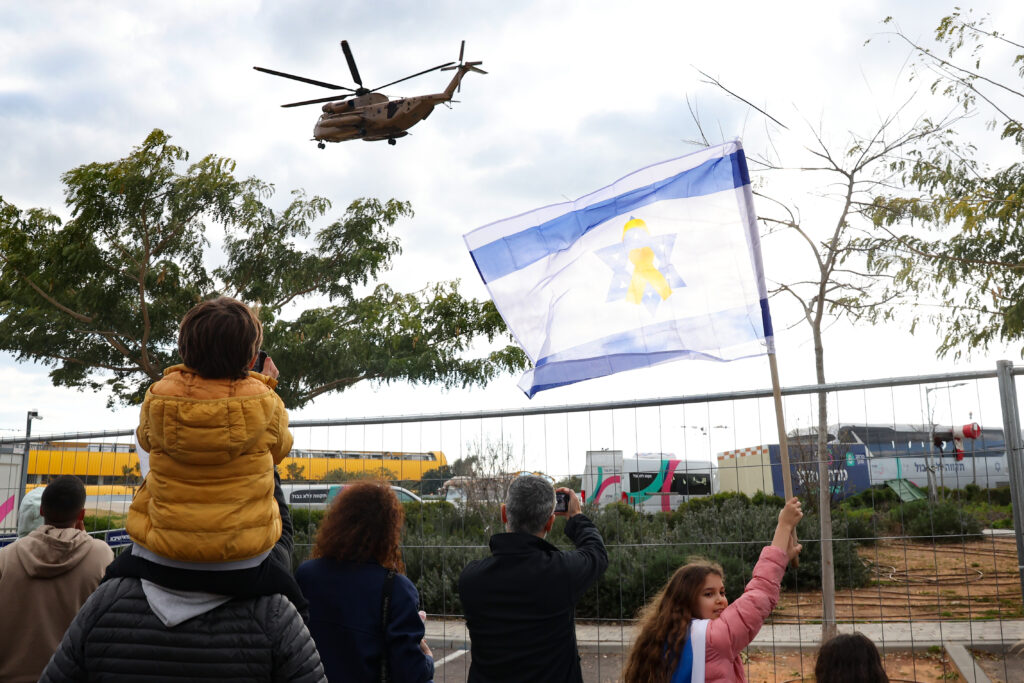
Horror swept through the crowd of onlookers in Tel Aviv’s “Hostage Square” on Saturday as the three emaciated faces of hostages freed by Hamas in Gaza appeared on screen. Ohad Ben Ami, Eli Sharabi and Or Levy appeared to the crowds of supporters, on the huge display in the square, flanked by Hamas fighters during the fifth such release of hostages as part of an ongoing ceasefire deal for Gaza.It was the first time, however, since the ceasefire came into effect on January 19 that hostages released by Hamas appeared so physically marked by their ordeal.The hundreds of people who flocked to the square, which has become the centre of the national movement supporting hostages and their families, stared in dismay at the three men.Moments earlier, a more cheerful atmosphere had prevailed, with regular outbreaks of applause as the crowd watched preparations for the hostage release being broadcast on Israeli television.But in the city on Israel’s Mediterranean coast, less than 100 kilometres (60 miles) from Deir el-Balah were the captives were freed, several onlookers put their hands to their mouths while others shook their heads in disbelief.The sober mood in the crowd was tempered, however, by the joy of seeing those released on their way back to Israel.A woman who had been crying began to smile as the three Israelis were finally handed over to the International Committee of the Red Cross (ICRC).A man who had briefly lowered his sign raised it again above his head. “Sorry it took so long, welcome home,” the sign read.- Resilience -As with previous hostages releases, the square was full of people carrying portraits of those still held in Gaza.On Or Levy’s picture, his age at the time of his capture, 33, had been crossed out. His 34th birthday passed in captivity.Levy was seized at the Nova music festival, which he attended with his wife Einav Levy, who was shot dead in the attack. Their three-year-old son, Almog, has been living with his grandparents ever since.Among onlookers in the crowd, the stories of the hostages are well known.Sharabi’s wife and two daughters were killed in their home in kibbutz Beeri in southern Israel during the Hamas attack on October 7, 2023.His brother Yossi was also taken hostage in the assault and later died in captivity, the Israeli military said in early 2024.The personal stories of other hostages released in recent exchanges added to the emotion among supporters in Tel Aviv.On Friday, former hostage Yarden Bibas, who was freed last week from Gaza, urged Prime Minister Benjamin Netanyahu to bring back his wife and two children from the Palestinian territory.Hamas has previously declared that Shiri Bibas and the two boys, Ariel and Kfir, had been killed in an Israeli air strike in November 2023, but Israel has not confirmed their deaths.Among the fluorescent T-shirts emblazoned with stickers saying “you are not alone” and “bring them all home”, the faces of the young Bibas brothers — whose fifth and second birthdays fell in captivity — could also be seen. On Israeli flags held by the crowd, the Star of David is entwined with the yellow ribbon that has come to symbolise the movement in support of the hostages, which has brought tens of thousands of people onto the country’s streets on a regular basis.Shortly after the Israeli army announced it had taken charge of the three men released on Saturday, a group of women began to dance and sing in front of the giant screen.

Israeli hostages forced by Hamas captors to speak in Gaza release

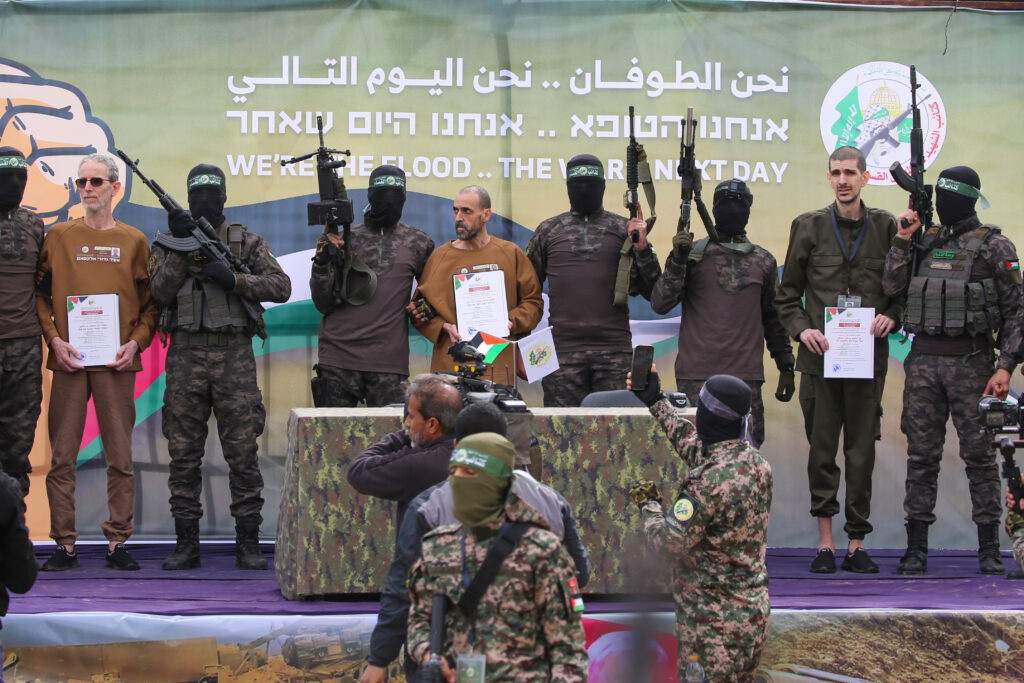
Emaciated and disoriented, three Israeli hostages freed in Gaza on Saturday were forced by their Hamas captors to speak on stage, in the latest of the increasingly familiar handover ceremonies.Ohad Ben Ami, Eli Sharabi and Or Levy were led on to a makeshift stage in the central Gaza city of Deir el-Balah and asked questions by a masked militant in Hebrew on a microphone in front of watching crowds, before being handed over to the Red Cross.Ben Ami, wearing a brown sweater and trousers with dark glasses, looked pale, needing support as he was led from the stage to three awaiting Red Cross SUVs, an AFP journalist reported.Eli Sharabi, also wearing the same brown uniform, was almost unrecognisable from the amount of weight lost in captivity.Or Levy, dressed in darker, heavier clothes and also stick-thin, appeared distressed as he was compelled to speak.On completing the choreographed interviews, the Hamas fighters broke into chants of Allahu Akbar (God is greatest).Before the exchange, hundreds of Hamas fighters and onlookers gathered in the central Gaza city, projecting enthusiastically triumphant scenes despite the devastation wrought on the Palestinian territory during more than a year of war.A banner across the edge of the platform erected for the exchange declared “total victory” for Hamas in Hebrew and bore images of destroyed and rusted Israeli military vehicles.A picture of Benjamin Netanyahu, Israel’s prime minister, dejected with his palm to his cheek was shown in the centre of the destruction.- Flowers and petals -The release in Dier el-Balah was the fifth since the start of the January 19 ceasefire and, unlike previous exchanges in the north and south of Gaza, the destruction of war in the Palestinian territory was largely absent from Hamas’s careful staging.A four-floor villa, its balconies lined with onlookers, and other intact buildings could be seen behind the stage, which was flanked by the movement’s green flags, along with pictures of killed commanders and leaders.On a row of Hamas’s white pickups next to the stage, fighters displayed the group’s heavy weaponry, including rocket-propelled-grenades, sniper rifles and large machine guns.Exultant martial music blared from loudspeakers around the platform.Scores of armed men, masked and wearing Hamas’s distinctive green headbands, formed a cordon in the city to control onlookers around the open area where the militant group had erected a makeshift stage for the swap.A source from Hamas’s armed wing, the Ezzedine Al-Qassam Brigades, told AFP 200 fighters were present at the handover.”Residents were allowed to attend the event, however are limited to a certain location to assure no confusion or chaos on site,” the source added on condition of anonymity.Crowds, modest compared to the handovers in the first week of the truce, gathered in rows three or four people deep around the cordon, while other onlookers clambered on a nearby advertising billboard for a better look at the hostages.A woman carrying a basket of flowers, and followed by half a dozen young girls in traditional Palestinian dress, scattered colourful petals over the fighters and onlookers.