AFP Asia Business

Trump launches ‘reciprocal tariffs’ targeting allies and adversaries

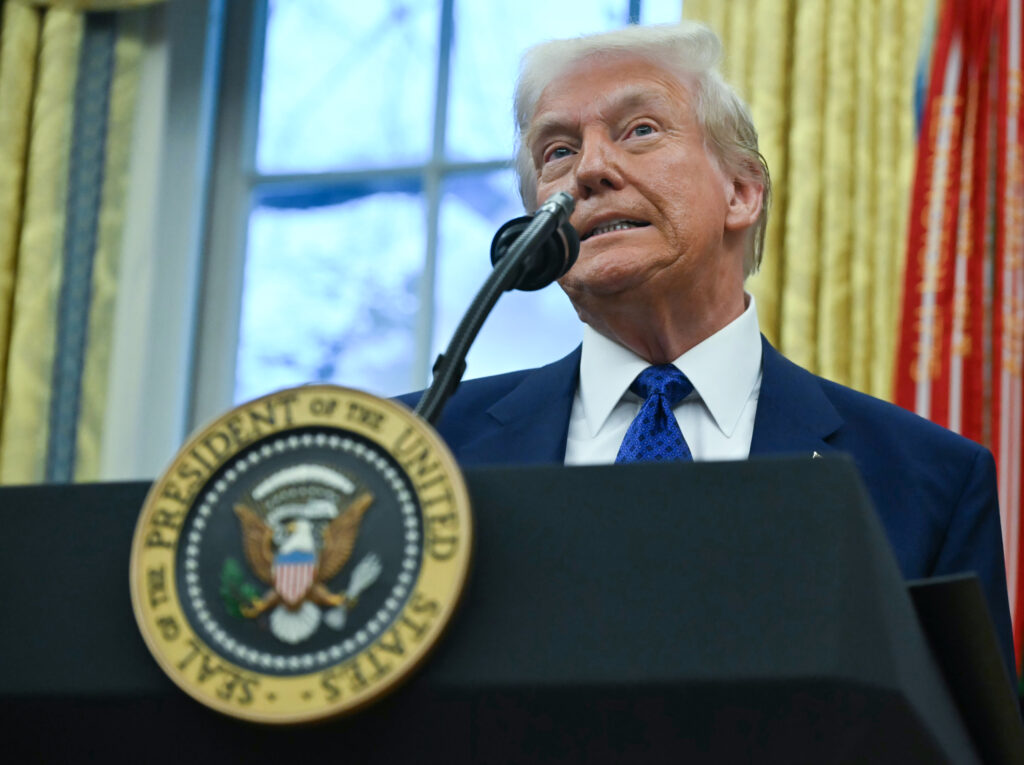
US President Donald Trump inked plans Thursday for sweeping “reciprocal tariffs” hitting both allies and competitors, in a dramatic escalation of an international trade war that economists warn could fuel inflation at home.Speaking in the Oval Office, Trump said he had decided to impose the reciprocal duties, telling reporters that US allies were often “worse than our enemies” on trade issues.The levies would be tailored to each US trading partner and consider non-tariff factors including value-added tax (VAT).”Major exporting nations of the world attack our markets with punishing tariffs and even more punishing non-tariff barriers,” Trump trade advisor Peter Navarro told reporters, taking aim at the European Union in particular over VAT.Washington will start by examining economies with which the United States has its biggest deficits or “most egregious issues,” said a White House official.”This should be a matter of weeks, in a few months, but not much longer than that,” the official added, speaking on condition of anonymity.Trump acknowledged Thursday that US prices “could go up” due to tariffs, but he expressed confidence that they would ultimately ease.Trump has announced a broad range of tariffs targeting some of the biggest US trading partners since taking office, arguing that they would help tackle unfair practices — and in some cases using the threats to influence policy.The president has referred to tariffs as a way to raise revenue, remedy trade imbalances and pressure countries to act on US concerns.The White House official said Thursday that the United States has been “treated unfairly,” saying a lack of reciprocity is a reason behind the country’s “persistent annual trade deficit in goods.”With the memo Trump signed on Thursday, the US Trade Representative, commerce secretary and other officials will work to propose remedies on a country-by-country basis.Trump’s announcement came hours before he was due to meet Indian Prime Minister Narendra Modi in Washington.Analysts have warned that reciprocal duties could bring a broad tariff hike to emerging market economies such as India and Thailand, which tend to have higher effective tariff rates on US products.Countries such as South Korea that have trade deals with Washington are less at risk from this move, analysts believe.- Inflation concerns -Cost-of-living pressures were a key issue in the November election that saw Trump sweep to power, and the Republican has promised to swiftly reduce prices.But economists caution that sweeping tariffs on US imports would likely boost inflation, not reduce it, in the near term and could weigh on growth eventually.Trump’s deputy chief of staff for policy Stephen Miller previously said countries use the VAT to get an unfair trade advantage, although analysts have challenged this characterization.During election campaigning, Trump promised: “An eye for an eye, a tariff for a tariff, same exact amount.”For example, if India imposes a 25-percent tariff on US autos, Washington will have a 25-percent tariff as well on imports of autos from India, explained a Nomura report this week.The consideration of non-tariff factors might shift this calculus.Modi will hold talks with Trump on Thursday and New Delhi offered some quick tariff concessions ahead of his visit, including on high-end motorcycles.”Trump’s objective of implementing reciprocal tariffs is to ensure fair treatment for US exports, which could indirectly also address US trade imbalances with partner countries,” analysts at Nomura said.Among Asian economies, India has a 9.5-percent weighted average effective tariff on US exports, while there is a three-percent rate on India’s exports to the United States.Thailand has a 6.2-percent rate and China a 7.1-percent rate on US products, Nomura noted.Higher tariffs are often imposed by poorer countries, who use them as a tool for revenue and protection because they have fewer resources to impose non-tariff barriers, Cato Institute’s Scott Lincicome earlier told AFP.
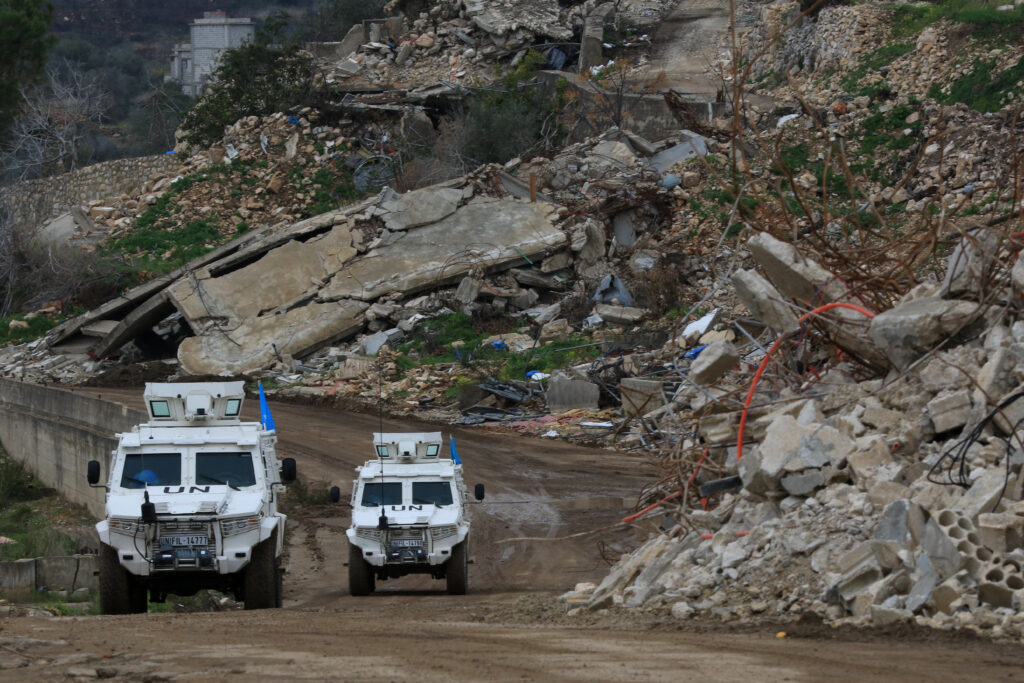

Lebanon says refuses Israeli demand to stay in five southern locations

Lebanon’s parliamentary speaker Nabih Berri said on Thursday that Beirut rejected Israel’s demand to remain in five southern locations after a February 18 deadline for fully implementing a ceasefire deal.Concerns have mounted ahead of a deadline for the fragile November 27 truce that ended more than a year of Israel-Hezbollah hostilities and has already been extended once, with both sides accusing each other of ceasefire violations.Under the deal, Lebanon’s military was to deploy in the south alongside United Nations peacekeepers as the Israeli army withdrew over a 60-day period, which was extended until February 18.Hezbollah was also meant to leave its positions in the south, near the Israeli border, over that period.The United States, a key mediator, “informed me that the Israeli occupation will withdraw from villages it still occupies on February 18, but it will remain in five points,” Hezbollah ally Berri told reporters, according to a statement released by his office.”I informed them in my name and on behalf of President General Joseph Aoun and Prime Minister Judge Nawaf Salam of our absolute rejection” of this proposal,” the statement added.Earlier, Berri had met with US ambassador to Lebanon Lisa Johnson and US Major General Jasper Jeffers.The American general co-chairs a committee involving the United States, France, Lebanon, Israel and UN peacekeepers tasked with ensuring any ceasefire violations are identified and dealt with.”I refused to discuss any extension to the deadline for (Israel’s) withdrawal,” Berri said.”It is the responsibility of the Americans to enforce the withdrawal, otherwise they will have caused the greatest setback for the government”.- ‘Honour commitments’ -On Saturday, Lebanon’s prime minister named a new government, with the weakening of long-dominant Hezbollah bringing to a close a two-year period of rule by caretaker authorities.UN Secretary-General Antonio Guterres’ deputy spokesman Farhan Haq said “we continue to urge Israel and Lebanon to honour their commitments to the cessation of hostilities understanding”. “Continued progress in Lebanese Armed Forces redeployment and Israeli Defence Force withdrawal is crucial,” Haq said, adding that “the parties must avoid any action that could raise tensions, endanger civilians and further delay their return to their towns and villages on both sides”.Haq added that the “UN continues to urge the full implementation of Resolution 1701 as a comprehensive path towards longer term peace, security and stability on both sides of the Blue Line.” He was referring to the UN Security Council decision that ended a 2006 war between Israel and Hezbollah. Under Resolution 1701, only the Lebanese army and UN peacekeepers can be deployed in southern Lebanon.

France’s Macron urges ‘representative’ governance in Syria

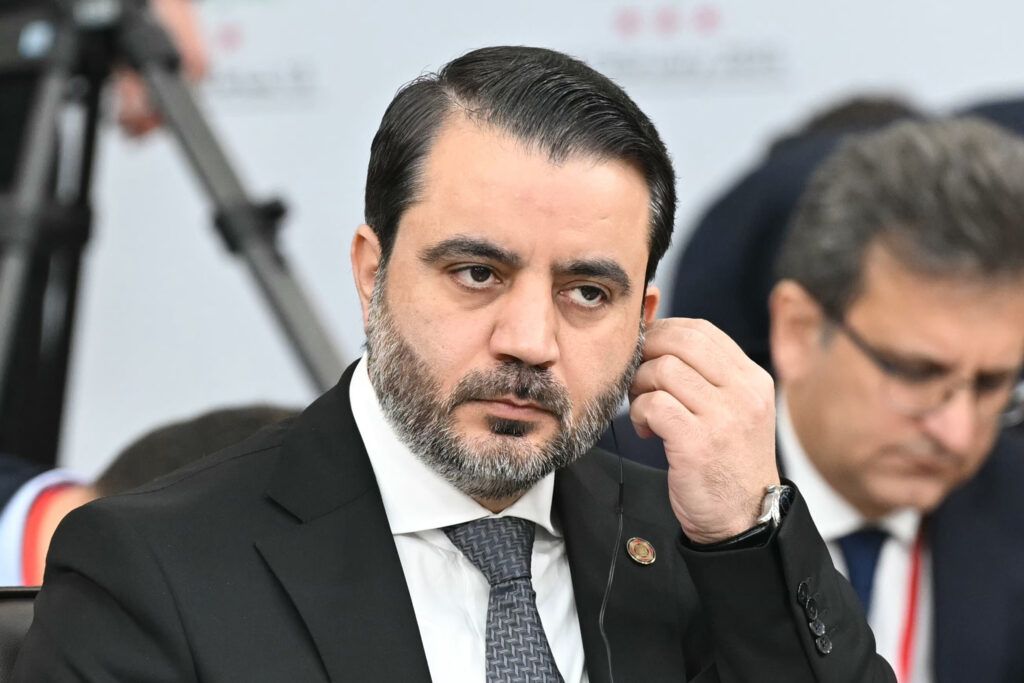
French President Emmanuel Macron on Thursday urged Syria’s new leaders to ensure “governance that is representative and respectful of all” at a Paris conference on the transition in the war-torn country after Bashar al-Assad’s fall.”The hope you carry on your shoulders is immense,” he said at the international meeting attended by Syria’s Foreign Minister Asaad al-Shaibani.Islamist-led rebels toppled Assad in December after a lightning offensive.The new authorities, headed by interim leader Ahmed al-Sharaa, have sought to reassure the international community that they have broken with their past and will respect the rights of minorities.They have been lobbying the West to ease sanctions imposed against Assad to allow the country to rebuild its economy after five decades of his family’s rule and almost 14 years of civil war.”This capacity to respect all communities… is key. Because it will be the condition of stability” that will allow refugees to return to the country, Macron said.Syria’s war has killed more than half a million people and displaced millions from their homes inside the country and abroad.Macron said he would “soon” be hosting Sharaa in Paris, but did not give a specific date.- Fight against IS ‘priority’ -Syria’s war evolved into a complex conflict after it started in 2011 with the brutal repression of anti-government protests.Islamic State group jihadists seized large swathes of the country and neighbouring Iraq in 2014, declaring a so-called cross-border “caliphate” there.But Kurdish-led Syrian fighters, backed by the air power of a US-led coalition dubbed “Inherent Resolve” that includes France, defeated that proto-state in 2019.Some IS cells however still operate in Syria’s vast desert.Macron urged the new Damascus authorities to join in the fight against IS, saying it was “an absolute priority”.France’s Foreign Minister Jean-Noel Barrot earlier said the European Union was working toward swiftly easing Syria sanctions.”We are working with my European counterparts towards a rapid lifting of sectorial economic sanctions,” Barrot said, after EU foreign ministers agreed last month to ease them, starting with key sectors such as energy.Conference attendees — including the United States, Germany, Britain, the European Union and the United Nations — wanted to see emerge “a free, sovereign, unified and stable Syria”, the foreign minister said.Barrot also called for “a global ceasefire in all Syrian territory, including the north and northeast”.Turkish-backed factions launched attacks against Kurdish-held areas in northern Syria at around the same time as the offensive that overthrew Assad, and have since seized strategic areas there.- ‘Essential women be represented’ -There has been concern among Western governments over the direction the new Syrian leadership will take, in particular on religious freedom, women’s rights and the status of the Kurdish minority in the northeast of Syria.Shaibani on Wednesday said a new government would take over next month from the interim cabinet, vowing that it would represent all Syrians in their diversity.German Foreign Minister Annalena Baerbock, ahead of the Paris meeting, emphasised the need for “all actors” in Syria to be included and said it was “essential that women be represented”.Britain plans to ease sanctions on Syria under a new plan announced by the government on Thursday.Foreign Office minister Stephen Doughty said that would “include the relaxation of restrictions that apply to the energy, transport and finance sectors”, but members of parliament still need to debate the proposals.After EU foreign ministers agreed on January 27 to ease sanctions on Syria, Shaibani welcomed the European Union’s move “to suspend sanctions on Syria for one year”.That decision came after the United States eased its own punitive measures, allowing fuel and electricity donations to Syria for six months.kol-cf-vl-ah/as/jhb

Turkey fines Adidas $15,000 for pigskin shoes

Turkey has hit German sporting equipment giant Adidas with a fine of more than $15,000 for failing to inform customers that one of its flagship footwear models contained pigskin.The Muslim-majority country’s advertising regulator slammed Adidas for describing its “Samba OG” trainers — sported in recent years by models Kendall Jenner and Bella Hadid — as made from “real leather”, without specifying it came from pigs.In a ruling seen by AFP on Thursday, it said the use of materials “contrary to the religious sensibilities of the majority of society must be clearly mentioned” in advertisements and product descriptions.The regulator fined the company 550,059 Turkish lira ($15,200).Contacted by AFP, Adidas admitted it had “updated” the specification on its website, without commenting on the fine. “Following an individual notification regarding a product description on our Turkish e-com website, we have updated the material specifications for the product accordingly,” it said in a brief statement. In 2020, Turkey’s Presidency of Religious Affairs ruled it was “not permissible to manufacture shoes or garments from pigskin or pigskin hair”.”It is accepted by nearly all Muslim scholars that pigskin cannot be made pure by tanning or similar processes,” it said.

US aircraft carrier collides with merchant ship in Mediterranean

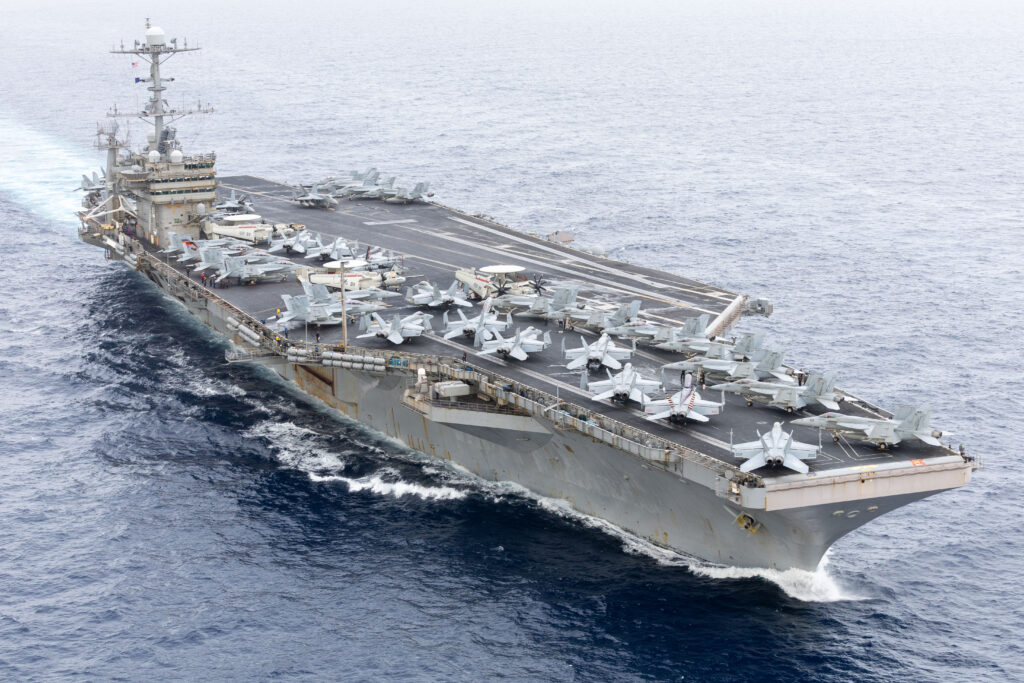
The USS Harry S. Truman aircraft carrier collided with a merchant vessel in the Mediterranean Sea, the US Navy said Thursday.The warship’s collision with the Besiktas-M took place late the previous day while the carrier was operating near Port Said in Egypt, US Sixth Fleet spokesperson Commander Timothy Gorman said in a statement.”The collision did not endanger the Harry S. Truman (CVN 75) as there are no reports of flooding or injuries. The propulsion plants are unaffected and in a safe and stable condition,” Gorman said, adding that the incident was under investigation.The statement did not mention the condition of the Besiktas-M after the collision.Shipping websites listed the merchant ship as being a bulk carrier that flies the Panamanian flag.The United States deploys aircraft carriers — massive warships that are crewed by thousands of sailors and which carry dozens of planes — in areas around the world.In December, two US Navy pilots safely ejected after the F/A-18 warplane they were flying off the Truman was mistakenly shot down over the Red Sea by a US guided missile cruiser.

What next for Honda and Nissan?

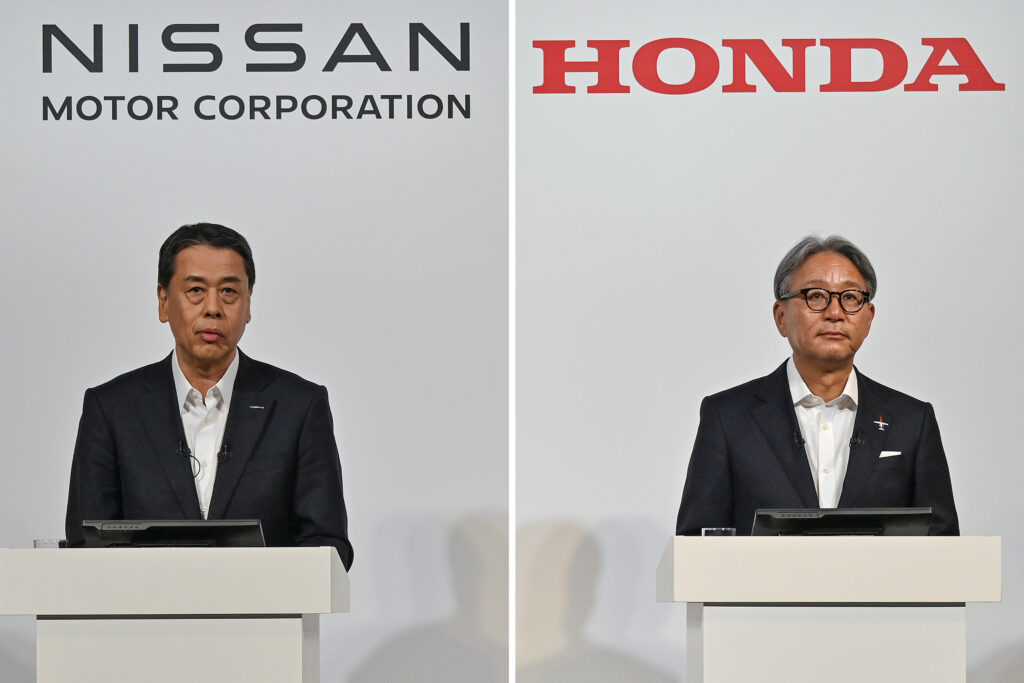
Honda and Nissan on Thursday announced the scrapping of merger talks that would have created the world’s third-biggest auto company by unit sales behind Toyota and Volkswagen.Here are some key points about why the Japanese companies explored a tie-up, the reasons for their failure, and where this leaves them in a difficult global auto industry.- What …

What next for Honda and Nissan? Read More »

President Trump says US ‘reciprocal tariffs’ to be announced Thursday

US President Donald Trump said that he would announce “reciprocal tariffs” on trading partners Thursday, opening new fronts in a trade war economists warn could fuel inflation at home.Trump has announced a broad range of tariffs targeting some of the biggest US trading partners since taking office, arguing that they would help tackle unfair practices — and in some cases using the threats to influence policy.He has referred to tariffs as a way to raise revenue, remedy trade imbalances and pressure countries to act on US concerns.On Thursday, the president said he would hold a news conference on reciprocal tariffs at the White House at 1:00 pm local time (1800 GMT).”Three great weeks, perhaps the best ever, but today is the big one: reciprocal tariffs!!! Make America great again!!!” Trump wrote in all capital letters on his Truth Social platform.The move is expected to match the United States’ tariff rates on imports to levels that other countries impose on US goods.Trump’s announcement came hours before he was due to meet Indian Prime Minister Narendra Modi in Washington.But it was unclear when the tariffs would take effect, if imposed.Analysts have warned that reciprocal duties could bring a broad tariff hike to emerging market economies such as India and Thailand, which tend to have higher effective tariff rates on US products.Countries such as South Korea that have trade deals with Washington are less at risk from this move, analysts believe.- Inflation concerns -Cost-of-living pressures were a key issue in the November election that saw Trump sweep to power, and the Republican has promised to swiftly reduce prices.But economists caution that sweeping tariffs on US imports would likely boost inflation, not reduce it, in the near term and could weigh on growth eventually.Trump’s nominee for commerce secretary Howard Lutnick, however, has pushed back on the idea that duties would cause widespread inflation, even as certain costs might rise.Another lingering question is whether the Trump administration would take aim at issues like value-added taxes (VATs) using reciprocal tariffs.Trump’s deputy chief of staff for policy Stephen Miller previously said countries use the VAT to get an unfair trade advantage, although analysts have challenged this characterization.During election campaigning, Trump promised: “An eye for an eye, a tariff for a tariff, same exact amount.”For example, if India imposes a 25-percent tariff on US autos, Washington will have a 25-percent tariff as well on imports of autos from India, explained a Nomura report this week.Modi will hold talks with Trump on Thursday and New Delhi offered some quick tariff concessions ahead of his visit, including on high-end motorcycles.”Trump’s objective of implementing reciprocal tariffs is to ensure fair treatment for US exports, which could indirectly also address US trade imbalances with partner countries,” analysts at Nomura said.Among Asian economies, India has a 9.5-percent weighted average effective tariff on US exports, while there is a three-percent rate on India’s exports to the United States.Thailand has a 6.2-percent rate and China a 7.1-percent rate on US products, Nomura noted.Higher tariffs are often imposed by poorer countries, who use them as a tool for revenue and protection because they have fewer resources to impose non-tariff barriers, Cato Institute’s Scott Lincicome earlier told AFP.It is unclear if Trump views reciprocal tariffs as an alternative to a universal tariff of at least 10 percent, which he floated in the lead-up to last year’s presidential election, or as a separate policy.