

AFP Asia Business
Iran’s early recordings revive forgotten sound heritage
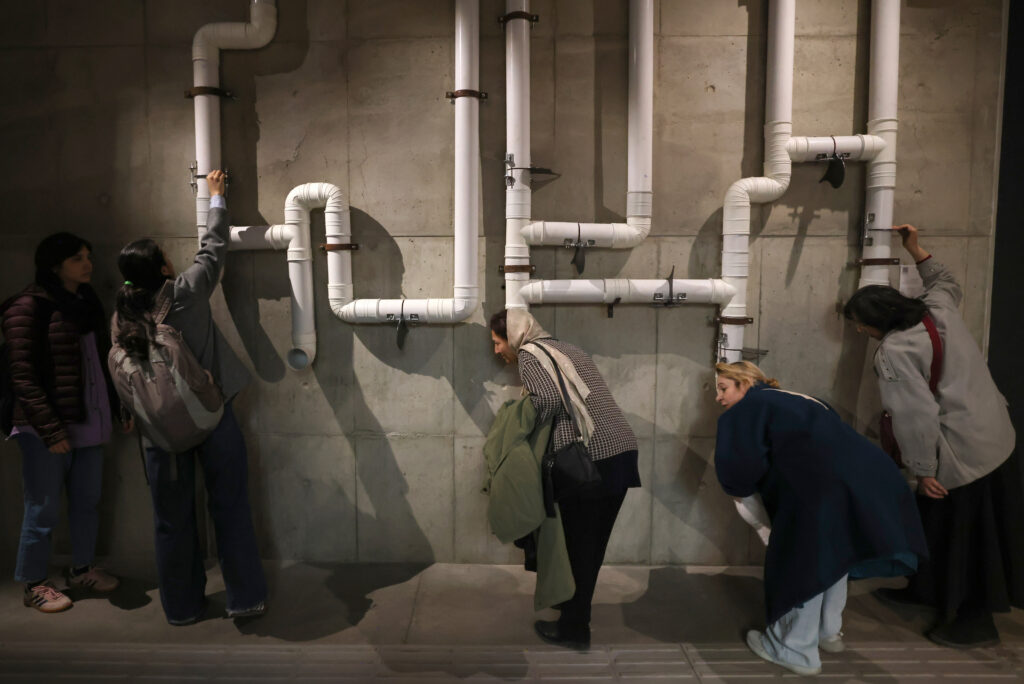
In a century-old building in Tehran, Saeed Anvarinejad turned the dial of a vintage radio to tune into some of Iran’s earliest recorded sounds, some serving as reminders of the seismic changes that shaped the country’s history.Along with a team of fellow enthusiasts, he spent months tracking down the earliest recordings of Iranian music, speeches, interviews, theatrical plays, radio broadcasts and even the hum of daily life from more than a century ago up to the present day. “Sound is a phenomenon we pay little attention to… although it’s very important,” said Anvarinejad, one of the organisers of the “SoundScape” exhibition.And “the era of early sound recording in Iran is a very important time in the socio-political history of the country”.He highlighted the emotional power of early voice recordings, saying they captured “in a very raw and pure way… the feeling that people have at that moment,” unlike written records.According to Anvarinejad, the oldest surviving sound recordings from Iran date back to 1898 and 1899, during the reign of Mozaffar al-Din Shah of the Qajar dynasty, which reigned over the country from the late 18th to the early 20th century.His rule saw the unfolding of the Constitutional Revolution, a pivotal moment in Iran’s political transformation that established a parliament and constitutional monarchy.”It was a time when… a new order was taking shape in the Iranian mind and very important things were happening politically, socially and culturally,” he added.”We thought it would be good to have a new approach to the sound (from that time) and engage audiences with it.”Upon tuning the wooden-framed antique radio, a chilling broadcast announced the overthrow of prime minister Mohammad Mosaddegh in 1953, who had pushed for the nationalisation of Iran’s oil industry sparking a coup d’etat orchestrated by the United States and Britain.”This is Tehran! Good news! Good news! People of the cities of Iran, be awake and alert, the traitor Mosaddegh has fled!” crackled the voice of a radio anchor.- ‘Mysterious void’ -Other audio included Iran’s first recorded call to prayer in either 1912 or 1913, and the 1959 report on the death of Qamar, the first woman singer to perform in public in the country.One striking installation at the exhibition involved a mechanical device mounted on a concrete wall with gears, chains, wheels and a lever which played old recordings of the stringed tar instrument through retro telephone handsets.Another, “Mowj Negar”, featured printed sound waves arranged in three rows on one wall, with a metal device which moved along the waves. When moved, the device activates melodies from the Qajar and early Pahlavi (1925-1979) eras that once echoed through Iran’s grand palaces and bustling city streets.Nearby stood a wooden cabinet named “The Silent Closet”, displaying a series of photos from the First World War -— but without a single accompanying sound.”There are no sound recordings from Iran during this period, not because technology was unavailable, but likely because the country was in such turmoil that recording sound was not a priority,” said Atabak Axon, another exhibition organiser. “There was a 12-year silence that remains a mysterious void in Iran’s auditory history.”For centuries, sound has played a central role in Persian culture, connecting belief with poetry and identity.For 21-year-old Sarvin Faizian, visiting the exhibition with friends was a deeply moving experience “as if I was experiencing my parents’ past.”Similarly, Fatemeh Sadeghi described feeling overwhelmed by nostalgia, while 63-year-old Kamran Asadi found the exhibition unexpectedly personal.”It is a very good and intimate atmosphere for me,” he said, lingering on an old song playing in the background.”It is good for the younger generation to learn where Iran’s heritage of music and art came from.”
Trump unveils ‘reciprocal tariffs’ plan targeting friends and foes
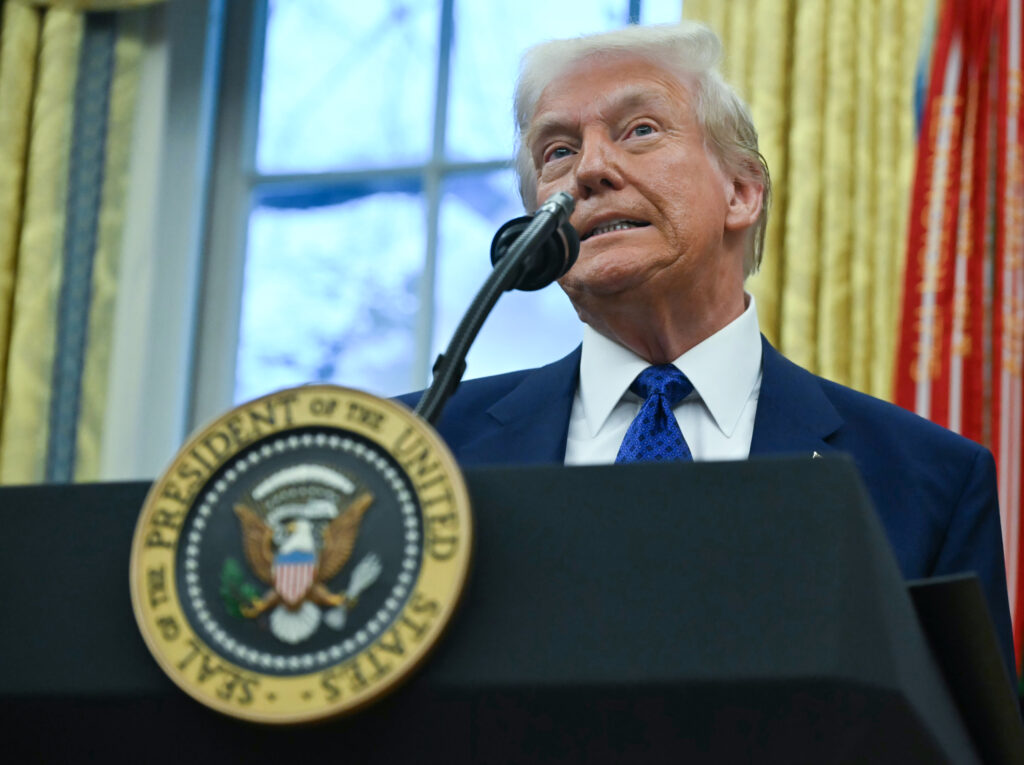
US President Donald Trump inked plans Thursday for sweeping “reciprocal tariffs” that could hit both allies and competitors, in a dramatic escalation of an international trade war that economists warn could fuel inflation at home.Since taking office, Trump has announced a broad range of tariffs targeting some of America’s biggest trading partners, arguing that they would help tackle unfair practices — and in some cases using the threats to influence policy.Speaking in the Oval Office, Trump said Thursday he had decided to impose reciprocal duties, telling reporters that US allies were often “worse than our enemies” on trade.”Whatever countries charge the United States of America, we will charge them,” Trump added.In particular, he called the European Union “absolutely brutal” in trade ties with Washington.The levies would be tailored to each US trading partner and consider the tariffs they impose on American goods, alongside taxes seen as “discriminatory,” such as value-added taxes (VATs), a White House official said on condition of anonymity.With the memo Trump signed Thursday, officials including the US trade representative and commerce secretary will propose remedies on a country-by-country basis.Trump’s commerce secretary nominee Howard Lutnick said Thursday that studies should be completed by April 1, and the president could start tariffs as early as April 2.Washington will begin by examining economies with which the United States has its biggest deficits or “most egregious issues,” the White House official added.”This should be a matter of weeks, in a few months,” the official said.- Inflation fears -Ahead of Trump’s Oval Office comments, Trump trade advisor Peter Navarro told reporters: “Major exporting nations of the world attack our markets with punishing tariffs and even more punishing non-tariff barriers.”Besides the EU, the White House also flagged differences in certain US tariff levels with India and Brazil, while noting Japan’s “high structural barriers.”Cost-of-living pressures were a key issue in the November election that saw Trump return to power, and the Republican has promised to swiftly reduce prices.But economists caution that sweeping tariffs on US imports would likely boost inflation, not reduce it, in the near term and could weigh on growth eventually.Trump acknowledged Thursday that US prices “could go up” due to tariffs, but he expressed confidence that they would ultimately ease.- ‘Unfair’ treatment -The White House official said the United States has been “treated unfairly,” saying a lack of reciprocity is a reason behind the country’s “persistent annual trade deficit in goods” which topped $1 trillion last year.One issue US officials pointed out was the EU’s 10 percent tariff on American autos, while the United States charges only 2.5 percent.But Sean Bray, policy director of Tax Foundation Europe, noted that the United States might have higher levies on other products, like a 25 percent rate on light truck imports.Trump also criticized “certain areas of Europe” for a VAT tax of about 20 percent, although some analysts have challenged the characterization that VATs provide unfair trade advantages.Trump’s announcement came shortly before he met Indian Prime Minister Narendra Modi in Washington, and the US president has since said he expected “wonderful trade deals” with India.Analysts have warned that reciprocal duties could bring a broad tariff hike to emerging market economies such as India and Thailand, which tend to have higher effective tariff rates on US products.Countries like South Korea that have trade deals with Washington are less at risk, analysts believe.New Delhi offered some quick tariff concessions ahead of Modi’s visit, including on high-end motorcycles.Christine McDaniel, a senior research fellow at the Mercatus Center, told AFP that Trump does not appear constrained by World Trade Organization norms.His memo forces countries to renegotiate tariff schedules with Washington, she said, adding that this could turn out well if others come to the table.”But if countries refuse, and the US raises its tariffs, then it is bad for the US” as American importers will face higher prices, said McDaniel, a former official in George W. Bush’s administration.
Stocks mostly up on Ukraine peace hopes, shrugging off latest US tariff talk
Major stock markets mostly rose Thursday on hopes for an end to the war in Ukraine and as US President Trump announced a trade policy shake-up but held off on specific new levies. London was a rare faller owing to sharp losses to share prices of big companies, including Unilever, Barclays and British American Tobacco, on …
Stocks mostly up on Ukraine peace hopes, shrugging off latest US tariff talk Read More »
International community vows support for Syria transition
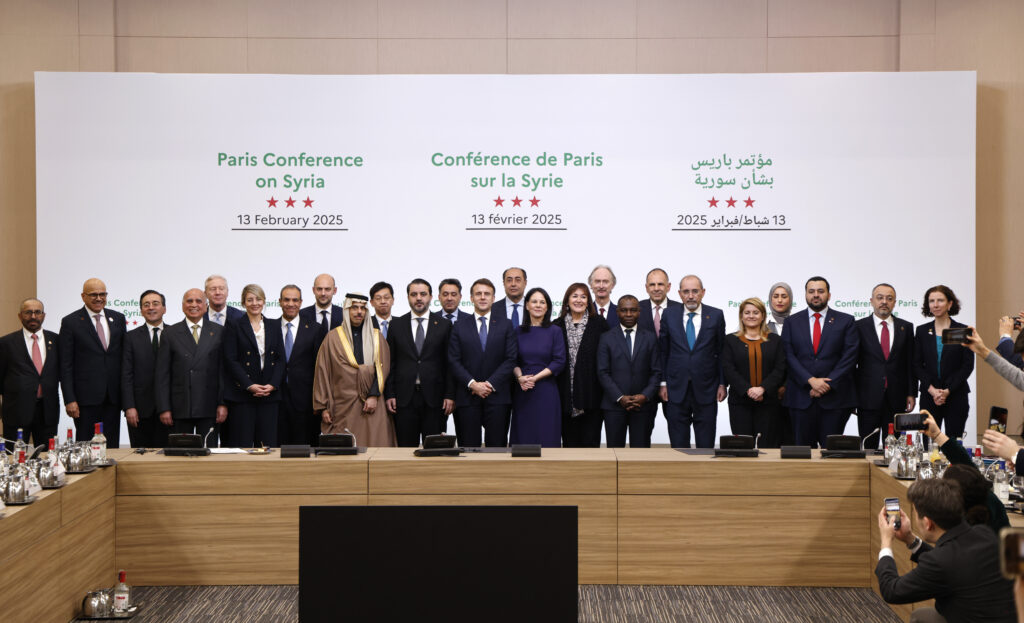
Western nations joined key players in the Middle East on Thursday in a pledge of support for war-torn Syria’s delicate transition after the fall of longtime leader Bashar al-Assad.Around 20 countries including Arab nations, Turkey, Britain, France, Germany, Canada and Japan agreed at the close of a conference in Paris to “work together to ensure the success of the transition in a process led by Syria”.The meeting’s final statement also pledged support for Syria’s new authorities in the fight against “all forms of terrorism and extremism”.Islamist-led rebels toppled Assad in December after a lightning offensive. The new authorities, headed by interim leader Ahmed al-Sharaa, have sought to assure the international community they have broken with their past and will respect the rights of minorities.They have been lobbying the West to ease sanctions imposed against Assad to allow the country to rebuild its economy after five decades of his family’s rule and almost 14 years of civil war.”The hope you carry on your shoulders is immense,” French President Emmanuel Macron said at the meeting, attended by Syria’s Foreign Minister Asaad al-Shaibani — who did not address the media.”This capacity to respect all communities… is key. Because it will be the condition of stability” that will allow refugees to return to the country, Macron added, saying he would “soon” host Sharaa in Paris.Syria’s war has killed more than half a million people and displaced millions from their homes.The United Nations estimates rebuilding will cost more than $400 billion.The United States was notably absent from the list of signatories of the conference’s final statement. A French diplomatic source said President Donald Trump’s administration was still deciding its approach to Syria.- Fight against IS ‘priority’ -Syria’s war evolved into a complex conflict after it started in 2011 with the brutal repression of anti-government protests.Islamic State group jihadists seized large swathes of the country and neighbouring Iraq in 2014, declaring a so-called cross-border “caliphate”.Kurdish-led Syrian fighters, backed by the air power of a US-led coalition dubbed “Inherent Resolve”, defeated that proto-state in 2019.But some IS cells still operate in Syria’s vast desert.Macron urged the new Damascus authorities to join the fight against IS, saying it was “an absolute priority”.France’s Foreign Minister Jean-Noel Barrot earlier said the European Union was working toward “a rapid lifting” of sanctions on Syria, after EU foreign ministers agreed last month to ease them, starting with key sectors such as energy.The United States has also eased sanctions, allowing fuel and electricity donations to Syria for six months.Barrot called for “a global ceasefire in all Syrian territory, including the north and northeast”.Turkish-backed factions launched attacks against Kurdish-held areas in northern Syria at around the same time as the offensive that overthrew Assad, and have since seized strategic areas there.For another regional trouble spot, Lebanon, Barrot proposed the UN peacekeeping mission in the country, UNIFIL, deploy troops to allow a “full and definitive withdrawal” by Israel.Under a fragile November truce to end more than a year of hostilities between Israel and the Islamist militant group Hezbollah, Israel is due to withdraw all troops from southern Lebanon by February 18.Israel wants to remain in five key points as a safeguard — a plan Lebanon rejects.- ‘Essential women be represented’ -There has been concern among Western governments over the direction the new Syrian leadership will take, in particular on religious freedom, women’s rights and the status of the Kurdish minority in Syria’s northeast.Shaibani had said Wednesday that a new government would take over next month from the interim cabinet, vowing that it would represent all Syrians in their diversity.German Foreign Minister Annalena Baerbock, ahead of the Paris meeting, emphasised the need for “all actors” in Syria to be included and said it was “essential that women be represented”.Britain plans to ease sanctions on Syria under a new plan announced by the government on Thursday, though parliament still need to debate the proposals.kol-cf-vl-ah/as/jhb/js
US sanctions ICC chief prosecutor over Israel investigations
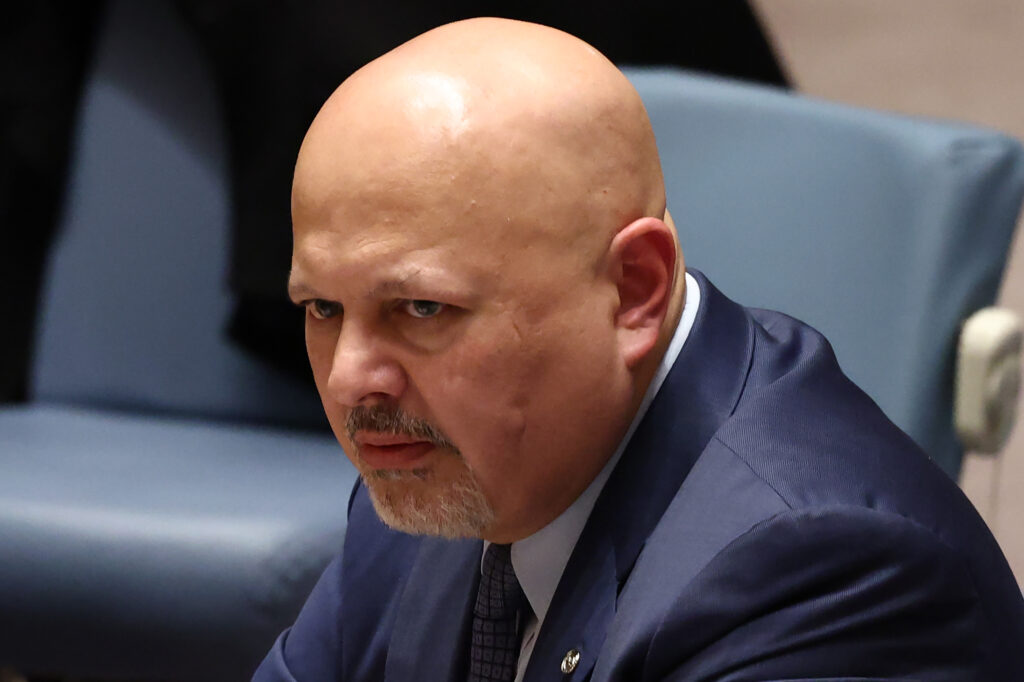
The United States on Thursday sanctioned the chief prosecutor at the International Criminal Court over the ICC’s investigations targeting US personnel as well as alleged Israeli war crimes in Gaza.The US Treasury Department said in a statement that it had imposed sanctions against Karim Khan in response to President Donald Trump’s February 6 executive order, which called for him to be sanctioned.The ICC has been investigating Israel’s conduct during its war against Hamas in Gaza, launched in response to the Palestinian militant group’s deadly October 7, 2023 attacks. Khan, who is a British national, was responsible for the request that led the ICC to issue arrest warrants late last year for Israeli Prime Minister Benjamin Netanyahu and his former defense minister Yoav Gallant. The court said it had found “reasonable grounds” to believe Netanyahu and Gallant bore “criminal responsibility” for the war crime of starvation as a method of warfare during the Gaza conflict, as well as the crimes against humanity of murder, persecution, and other inhumane acts.Alongside its probe into Israel, the ICC has also been investigating war crimes and crimes against humanity alleged to have been carried out during the US invasion and occupation of Afghanistan between 2001 and 2021.In his executive order, Trump accused the ICC of engaging in “illegitimate and baseless actions” targeting the United States and its ally Israel — neither of which are ICC members.Trump added that the Hague-based court had “abused its power by issuing baseless arrest warrants” targeting Netanyahu and Gallant, and he ordered asset freezes and travel bans against ICC officials, employees and their family members.The ICC condemned Trump’s executive order, which it said sought to “harm its independent and impartial judicial work.”This is not the first time Trump has targeted ICC officials: During his first term, he imposed financial sanctions and a visa ban on the ICC’s then-prosecutor, Fatou Bensouda, and other senior officials.Joe Biden lifted those sanctions soon after he became president in 2021.
Israel says Hamas must free three living hostages this weekend
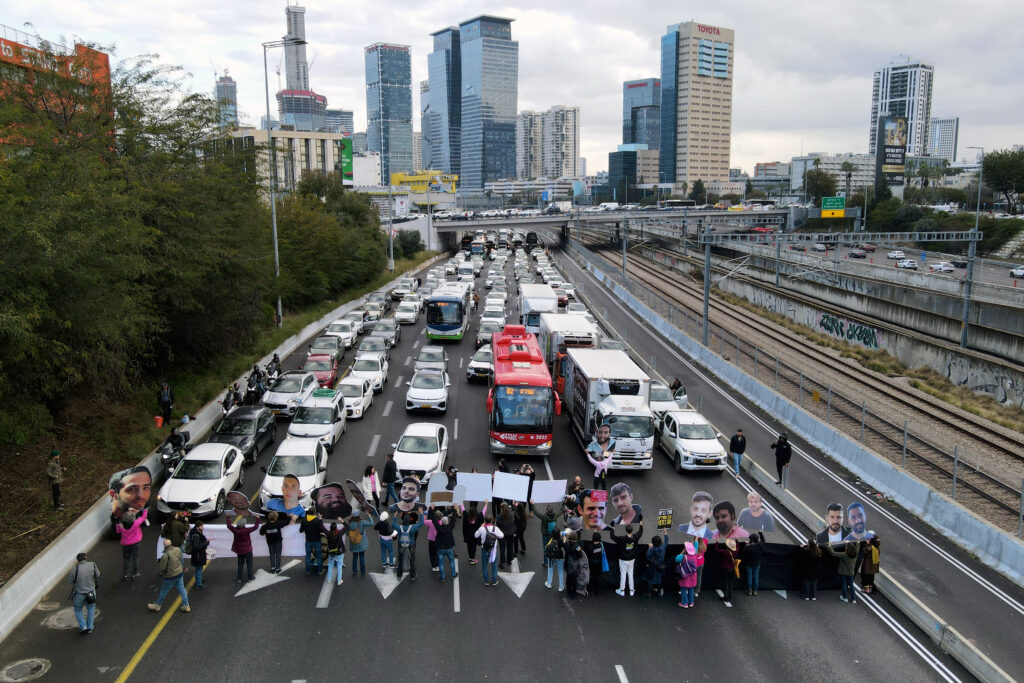
Israel warned Thursday that Hamas must release three living hostages this weekend or face a resumption of the war in Gaza, after the Palestinian militant group said it was committed to the truce agreement.Palestinian sources reported progress in efforts to salvage the ceasefire, which was plunged into crisis after Hamas said it would not release hostages on Saturday, citing Israeli violations.Israel countered that if Hamas failed to free captives on schedule, it would resume military operations.War raged for more than 15 months before the ceasefire took effect on January 19.”We are keen to implement it (the ceasefire) and oblige the occupation to fully abide by it,” Hamas spokesman Abdel Latif al-Qanou said, adding that mediators were pushing for Israel “to resume the exchange process on Saturday”.Hamas said it remained committed to carrying out the next exchange “according to the specified timetable”.Israel later insisted Hamas must release “three live hostages” on Saturday under the ceasefire framework.”If those three are not released, if Hamas does not return our hostages, by Saturday noon, the ceasefire will end,” said government spokesman David Mencer.Hamas has previously accused Israel of holding up the delivery of heavy machinery needed to clear war debris.On Egypt’s Rafah border crossing with Gaza, a row of bulldozers lined up waiting to enter the war-ravaged Palestinian territory on Thursday.Egyptian state-linked media said heavy equipment and trucks carrying mobile homes were ready to enter, but Israel said later they would not be allowed to go in via the Rafah crossing.The war damaged or destroyed around 69 percent of Gaza’s buildings, according to the UN.Jorge Moreira da Silva, head of the United Nations’ infrastructure agency (UNOPS), said Thursday following a visit to Gaza that he had seen not only “immense human suffering”, despite the ceasefire, but also massive destruction “and an overwhelming volume of rubble.” – ‘Power games’ -US President Donald Trump warned this week that “hell” would break loose if Hamas failed to release “all” the remaining hostages by noon on Saturday.If fighting resumes, Israeli Defence Minister Israel Katz said, “the new Gaza war… will not end without the defeat of Hamas and the release of all the hostages”.”It will also allow the realisation of US President Trump’s vision for Gaza,” he added.Trump, whose return to the White House has emboldened the Israeli far right, sparked global outcry with a proposal for the United States to take over Gaza and to move its 2.4 million residents to Egypt or Jordan.Yemen’s Iran-backed Huthi rebels threatened Thursday to launch new attacks on Israel if it and its ally the United States went ahead with Trump’s plan to move Palestinians out of Gaza.The ceasefire’s six-week first phase has seen Israeli captives released in small groups in exchange for Palestinians in Israeli custody.The two sides, which have yet to agree on the next phases of the truce, have traded accusations of violations, spurring concern that the violence could resume.On Thursday for the first time since the truce began, Israel’s military said it identified a rocket launch from Gaza. The rocket landed back inside the Palestinian territory and the military later said it had struck the launcher.Analyst Mairav Zonszein, of the International Crisis Group, said despite their public disputes Israel and Hamas were still interested in maintaining the truce and have not “given up on anything yet”.”They’re just playing power games,” she said.In Israel, dozens of relatives of hostages held in Gaza blocked a highway near Tel Aviv, waving banners and demanding the terms of the ceasefire be respected, an AFP photographer said.- Trump’s plan – Trump’s proposal for Gaza and for moving its more than two million residents to Jordan or Egypt would, according to experts, violate international law, but Israeli Prime Minister Benjamin Netanyahu has described it as “revolutionary”.Hamas called for worldwide “solidarity marches” over the weekend to denounce “the plans to displace our Palestinian people from their land”.Defence Minister Katz last week ordered the Israeli army to prepare for “voluntary” departures from Gaza. The military said it had already begun reinforcing its troops around the territory.Trump reaffirmed his Saturday deadline for the hostage release while hosting Jordan’s King Abdullah II on Tuesday.In a phone call Wednesday, Abdullah and Egypt’s President Abdel Fattah al-Sisi said they were united in supporting the ceasefire’s “full implementation”, and in their opposition to the displacement of Palestinians.Many Palestinians have also voiced opposition to the plan.”Who is Trump? Is he God almighty? The land of Jordan is for Jordanians, and the land of Egypt belongs to Egyptians,” said Gaza City resident Abu Mohamed al-Husari.”We are here, deeply rooted in Gaza — the resilient, besieged and unbreakable Gaza.”Hamas’s October 7, 2023 attack on Israel resulted in the deaths of 1,211 people, mostly civilians, according to an AFP tally of official Israeli figures.Militants also took 251 hostages, of whom 73 remain in Gaza, including at least 35 the Israeli military says are dead.Israel’s retaliatory campaign has killed at least 48,239 people in Gaza, the majority of them civilians, according to figures from the Hamas-run territory’s health ministry that the UN considers reliable.burs-smw/dv/it/ysm