

AFP Asia Business
Global stocks buffeted by tariff threats and data
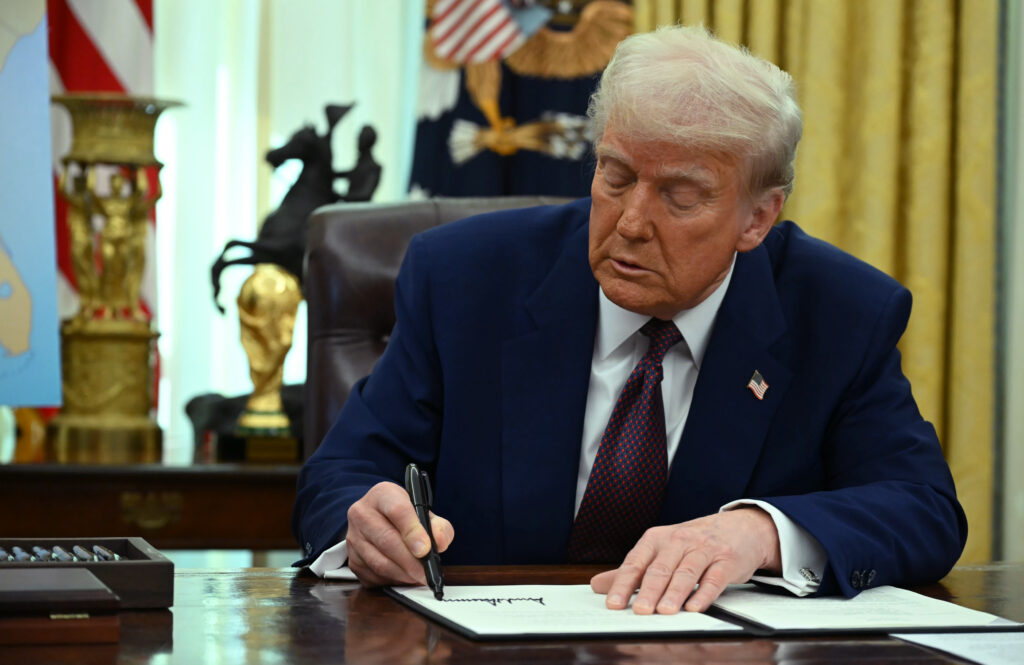
Stock markets diverged and the dollar dipped on Friday as traders tracked US President Donald Trump’s latest tariff announcement, economic data and earnings.Wall Street indices were mixed at the end of the session with the S&P 500 near flat.That came despite data showing that US retail sales fell by a more-than-expected 0.9 percent in January …
Global stocks buffeted by tariff threats and data Read More »
UN vehicle torched, commander wounded as Hezbollah supporters protest
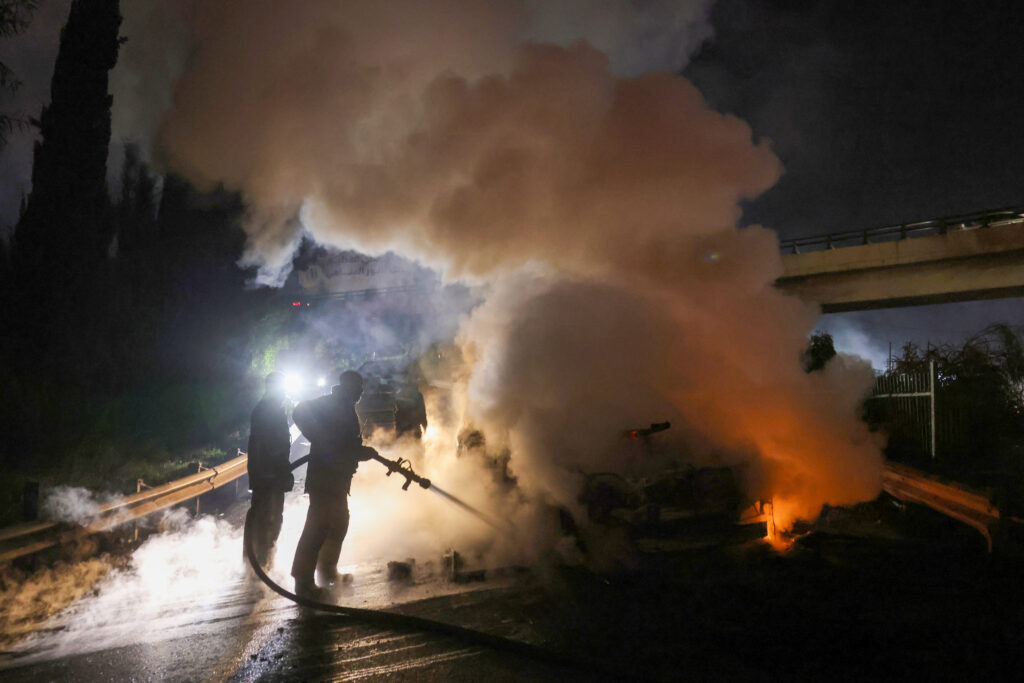
A UN peacekeeping force vehicle in Lebanon was torched Friday as supporters of militant group Hezbollah blocked the road to Beirut airport in protest, with UNIFIL reporting one commander wounded in the incident.Hezbollah supporters have blocked the road to the country’s only airport for two consecutive nights over a decision barring two Iranian planes from landing in the Lebanese capital.The Lebanese army pledged to take firm action against those behind the torching of the vehicle, which according to the force wounded its outgoing deputy commander.”Several areas, particularly the area around the airport… have been the scene of demonstrations marked by acts of vandalism and clashes, including assaults on members of the armed forces and attacks against vehicles” of the United Nations, the army posted on X. Troops will take “firm action to prevent any breach of public order and arrest troublemakers”, it added.The United Nations Interim Force in Lebanon demanded a “full and immediate investigation by Lebanese authorities”.”Attacks on peacekeepers are flagrant violations of international law and may amount to war crimes,” the UNIFIL peacekeeping force said. “We demand a full and immediate investigation by Lebanese authorities and for all perpetrators to be brought to justice.”UN Special Coordinator for Lebanon Jeanine Hennis-Plasschaert described the incident as “unacceptable”. “Such an act of violence threatens the safety of United Nations staff who work tirelessly to maintain stability in Lebanon, sometimes at great personal risk,” she said in a statement.- Ceasefire deadline -Hezbollah still has a sizeable power base in Lebanon even after a year of war with Israel and the ousting in neighbouring Syria of its ally Bashar al-Assad left it massively weakened.Israel has repeatedly accused Hezbollah of using Beirut airport to transfer weapons from Iran, claims Hezbollah and Lebanese officials have repeatedly denied.Lebanon’s Directorate General of Civil Aviation said on Thursday it had “temporarily rescheduled” some flights including from Iran until February 18 as it was implementing “additional security measures”.The date coincides with the deadline for the full implementation of a ceasefire agreement between Israel and Hezbollah.Violent protests are not rare in Lebanon, but there has been a major shift in the power balance in recent months.Up until last year, Hezbollah played a dominant role in Lebanese politics and few in the security or political establishment would dare openly confront it.Now, with its longtime leader Hassan Nasrallah dead and with the loss of Syria as its main conduit of weapons from Iran, its sway has been much diminished.Under the ceasefire that took effect November 27, Lebanon’s military was to deploy in the south alongside United Nations peacekeepers as the Israeli army withdrew over a 60-day period, later extended until February 18.The Israeli military is prepared to withdraw from Lebanese territory and hand over areas to the Lebanese army “within the timeline” set by a US-French-mediated ceasefire agreement, a senior Israeli security official said.Hezbollah was also expected to vacate its positions in the south, near the Israeli border, during the same period.

Three Gaza hostages set for release after ceasefire crisis abates
Israel said Friday it had received the names of three hostages to be freed by militants in exchange for Palestinian prisoners this weekend, after a crisis in the ceasefire threatened to plunge Gaza back into war.The hostages due for release Saturday are Israeli-American Sagui Dekel-Chen, Israeli-Russian Sasha Trupanov and Israeli-Argentinian Yair Horn, the office of Prime Minister Benjamin Netanyahu said.They have been held by Gaza militants since Hamas’s October 7, 2023 attack on Israel that sparked the war.The Palestinian Prisoners’ Club advocacy group said that Israel would release “36 prisoners serving life sentences” for attacks against Israelis, with 24 of them expected to be deported, as well as 333 Gazans taken into custody during the war.Israel had warned Hamas that it must free three living hostages this weekend or face a return to war, after the group said it would pause releases over what it described as Israeli violations of the truce.The January 19 ceasefire has been under massive strain since US President Donald Trump proposed a takeover of the territory, under which the Gaza Strip’s population of more than two million would be moved to Egypt or Jordan.Arab countries have come together to reject the plan, and Saudi Arabia will host the leaders of Egypt, Jordan, Qatar and the United Arab Emirates on Thursday for a summit on the issue.- Red Cross calls for access -The releases of Israeli hostages in exchange for Palestinian prisoners have brought much-needed relief to families on both sides of the war, but the emaciated state of the Israeli captives freed last week sparked anger in Israel and beyond.Some of the Palestinian prisoners released from Israeli custody have required medical treatment too, prompting the concern of the International Committee of the Red Cross, which has facilitated the exchanges.”The latest release operations reinforce the urgent need for ICRC access to those held hostage,” it said in a statement on Friday.Following Hamas’s staged handover last week, during which the captives were forced to speak, the ICRC appealed for future handovers to be more private and dignified.Hamas spokesman Hazem Qassem later defended the “civilised manner” in which last week’s handover was conducted, and said that “the handover of the new batch of Zionist prisoners will be done in an appropriate manner”.Israeli-American hostage Keith Siegel, who was released in a previous exchange nearly two weeks ago, described mistreatment during his captivity in a video message.”I am a survivor. I was held for 484 days in unimaginable conditions, every single day felt like it could be my last,” he said.”I was starved and I was tortured, both physically and emotionally.”- ‘Rooted in Gaza’ -Trump, whose proposal to take over Gaza and move its residents sparked global outcry, warned this week that “hell” would break loose if Hamas failed to release “all” remaining hostages by noon on Saturday.Israel later insisted Hamas release “three living hostages” on Saturday or “the ceasefire will end”.If fighting resumes, Defence Minister Israel Katz said it would not just lead to the “defeat of Hamas and the release of all the hostages” — Israel’s stated objectives since the start of the war — but also “allow the realisation of US President Trump’s vision for Gaza”.US Secretary of State Marco Rubio is due to arrive in Israel late Saturday ahead of expected talks with Netanyahu Sunday on the Gaza truce.Hamas said late on Friday that it expected talks on a second phase of the ceasefire to begin early next week.The next phase aims to secure the release of remaining hostages and lay out steps towards a more permanent end to the war.”We expect the second phase of the ceasefire negotiations to begin early next week,” Hamas official Taher al-Nunu told AFP.Arab countries have put on a rare show of unity in their rejection of Trump’s proposal for Gaza.After the Riyadh summit, the Arab League will convene in Cairo on February 27 to discuss the issue.Jordan is already home to more than two million Palestinian refugees. More than half of the country’s population of 11 million is of Palestinian origin.Egypt said it would put forward its own proposal for the reconstruction of Gaza under a framework that would allow for the Palestinians to remain in the territory.For Palestinians, any forced displacement evokes memories of the “Nakba”, or catastrophe — the mass displacement of their ancestors during Israel’s creation in 1948.”We are here, deeply rooted in Gaza — the resilient, besieged and unbreakable Gaza,” said Gaza City resident Abu Mohamed al-Husari.Hamas’s October 7, 2023 attack on Israel resulted in the deaths of 1,211 people, mostly civilians, according to an AFP tally of Israeli official figures.Militants also took 251 hostages, of whom 73 remain in Gaza, including at least 35 the Israeli military says are dead.Israel’s retaliatory campaign has killed at least 48,239 people in Gaza, the majority of them civilians, according to figures from the health ministry in the Hamas-run territory that the United Nations considers reliable.burs-ser/kir/ami
Tunisian startup takes on e-waste challenge
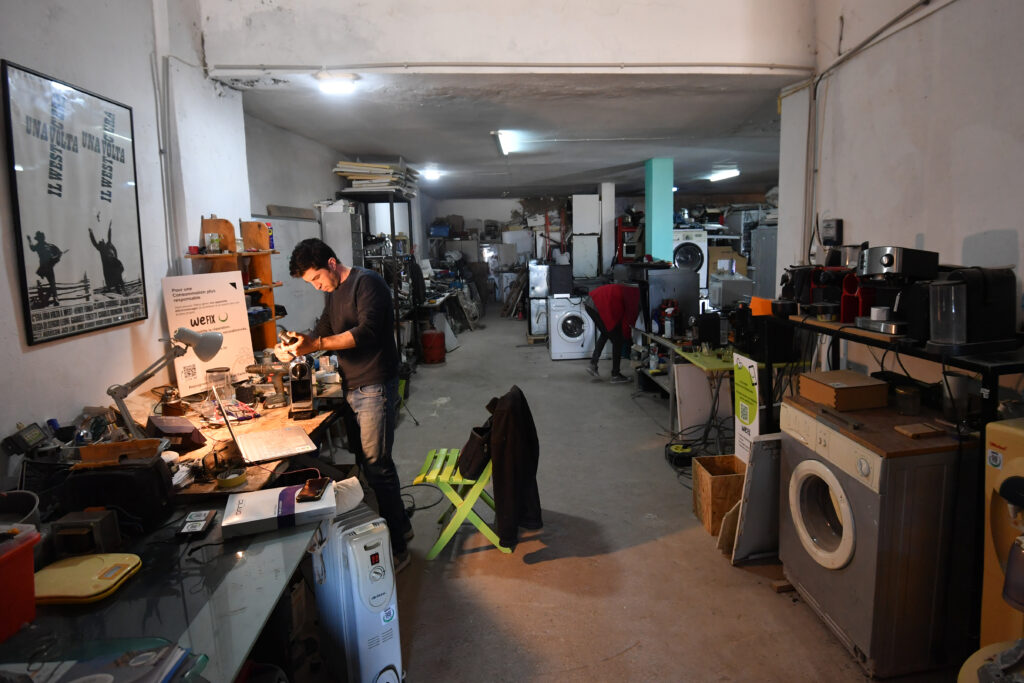
Engineer turned social entrepreneur Sabri Cheriha hunches over a washing machine at a small depot in a suburb of Tunisia’s capital, the unassuming home of a startup he launched to tackle the country’s mounting electronic waste problem.Cheriha said there were currently about eight million household appliances and nine million cellphones in use across Tunisia, but once these devices break down or are replaced, “there’s no service to properly dispose of them”.WeFix, the startup that won him a second-place regional social entrepreneur award last year, stands out by offering an “all-in-one service”, providingcollection, repairs and recycling to reduce e-waste.The aim is to have “an environmental and social impact, but also an economic gain”, Cheriha said, adding that refurbished products can be up to 60 percent cheaper in a country where the average monthly salary is around 1,000 dinars ($310).The startup “avoided” 20 tonnes of waste in 2023 and 80 tonnes last year, according to its founder, who anticipates handling another 120 tonnes this year.”When we talk about ‘avoided waste’, we’re also considering the resources needed to manufacture a single washing machine — 50 or 60 kilos of finished product require over a tonne of raw materials,” he explained.”So our environmental impact is twofold.”While Tunisia has vowed to tackle waste in general, e-waste presents a particular challenge, and there is a lack of institutional avenues for dealing with it.Tunisia produces an estimated 140,000 tonnes of e-waste per year, said Walid Merdassi, a waste management expert.The majority of that — an estimated 80,000 tonnes per year — is generated by households, which have no official recycling system to turn to, he added.Merdassi said the government should require manufacturers and retailers to take back used machines, and encourage the 13 local companies specialised in recycling to extract and export valuable raw materials like gold, copper and platinum from the devices they process.In the meantime, WeFix is making strides at its own pace, reducing Tunisian e-waste by promoting the sale of refurbished appliances instead of buying new, Cheriha said.Cheriha eventually hopes to expand WeFix to Morocco, despite the challenges of scaling up nationally, he said.”Finding skilled workers in the electronics sector is becoming increasingly difficult”, as many emigrate to Europe where demand for refurbished appliances is high, he said.
‘Bulldozer tore everything apart’: Israeli raid expands in West Bank
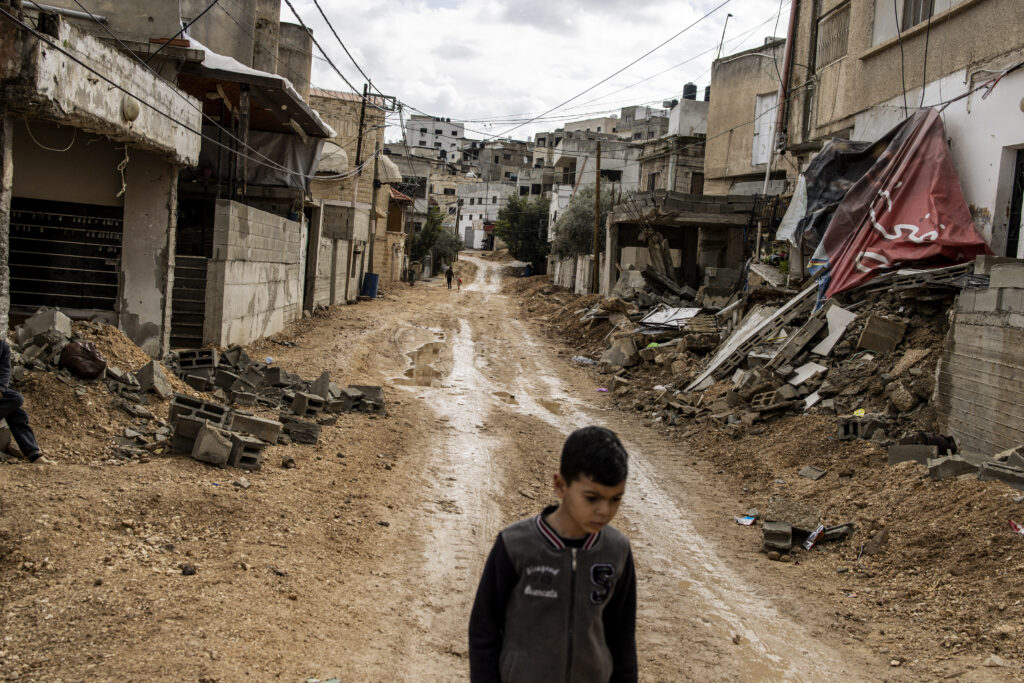
An intense Israeli military raid had already sent Qusay Farahat fleeing his home in the occupied West Bank, but the offensive has since expanded, threatening a relative’s house where he sought shelter.The raid, which according to Israel aims to dismantle “terrorist infrastructure”, has targeted Palestinian refugee camps in the northern West Bank including Jenin where 22-year-old Farhat is from.But since it began on January 21, the deadly Israeli offensive has gradually encroached upon more cities and towns.”Here, it feels like the camp all over again,” said Farahat, surveying wreckage outside the relative’s house in Jenin city where he had gone with his family for safety.An army bulldozer has ripped through the street, a common sight during Israeli raids which the military says aims to clear roads of explosives.”When the bulldozer came, it tore everything apart while we were inside,” said Farhat.”We shouted for help,” he said, adding the family was left “trapped” as the roaring machine left the front of the house in ruins.It had thrust a wrecked car and rubble against the house’s raised entrance, and further down the street, now stripped of tarmac, disfigured storefronts and tore down walls.Israel has occupied the West Bank since 1967 and carries out regular raids against Palestinian militants, but the current offensive in the north is the longest continuous one in the territory in two decades.According to the United Nations, the military operation has killed at least 39 Palestinians and displaced 40,000. The Israeli military said it had taken some 90 Palestinians into custody over the past week alone.Since last month, according to UN figures, nearly 18,000 people have fled the Jenin camp, normally home to 24,000 residents including the Farhat family.With much of the camp damaged and Israeli forces still present, few Palestinian residents have been able to return.- Raided offices -In Jenin’s eastern neighbourhood, on the opposite side of the city from the camp, an elderly man struggled up a hill on an old bicycle ill-suited to deal with the mud left in the bulldozers’ wake, and a woman carrying groceries picked her way through the mounds of debris.One shopkeeper, fixing a bent metal awning, told AFP he already had to repair it just six months ago, following another Israeli raid.Adding to the destruction, an air strike on Thursday hit a car in the neighbourhood, starting a small fire that burned for hours.Parents warned their children to stay away from the smouldering remains fearing unexploded ordnance.The Israeli army said its forces had “located a rigged vehicle and dismantled it”, sharing a video of the drone strike.In one high-rise overlooking the camp, residents said Israeli soldiers had raided offices, searching them and possibly using them as a vantage point — as troops have done before in that area.AFP journalists saw safes pried open, their contents scattered on the floor, and glass windows shattered.In one office, a small Palestinian desk flag was burned and another larger one torn in half. Another room had portraits of iconic Palestinian poet Mahmoud Darwish defaced with a stamp from the legal office that was raided.- ‘Nothing left’ -Inside the Jenin camp, army jeeps patrolled on a wide dirt road where nearly two dozen houses stood before being demolished in the operation.Farhat said he felt lucky to have made it out of the camp alive.In the early days of the raid, “we were surrounded, and suddenly Israeli special forces appeared and began firing intensely,” he recalled.”People died, and others fled”, said Farhat.”Miraculously, we escaped.”Sabha Bani Gharra, a 95-year-old resident of the camp, was receiving treatment for a fracture at a hospital in Jenin city when the raid began.She has not been able to return home since, living instead in a sewing workshop of a charity based outside the camp.From a video taken by a neighbour, she has learned that her house was destroyed.”The house is gone. All I have is one outfit, the one I’m wearing,” said the woman, clutching an old cookie tin where she keeps here medicine — now one of her only few material possessions.”I have nothing left, except the kindness of strangers who help me survive day to day”.

Pique summoned in probe over Spanish Super Cup move to Saudi
Barcelona and Spain legend Gerard Pique will appear in court on March 14 in a corruption investigation into the Spanish Super Cup’s move to Saudi Arabia, a legal document seen by AFP on Friday showed.The probe has further sullied the image of Spanish football and ensnared disgraced former federation chief Luis Rubiales who was in charge when the decision was made.A Madrid court placed Pique under investigation in May last year over the contracts to take the Super Cup to the oil-rich Gulf country from 2020.The deals are worth 40 million euros ($41.2 million) a year and were brokered by Kosmos, a company owned by Pique, while the former defender was still playing for Barcelona.The court said there were “possible illegalities with criminal implications”, including a clause to “guarantee the payment of a commission of four million euros per year to Kosmos”.A document dated Thursday from a court in Majadahonda outside Madrid said “the declaration of Mr Gerard Pique as an investigated party is agreed on March 14”.Rubiales, who faces possible jail time for his forced kiss on star forward Jenni Hermoso in 2023, has always defended the legality of the deal to take the Super Cup to Saudi Arabia. Pique has also insisted that everything was “legal”, saying he was “proud” of the deal.
Saudi Arabia to host Arab summit on Trump’s Gaza plan
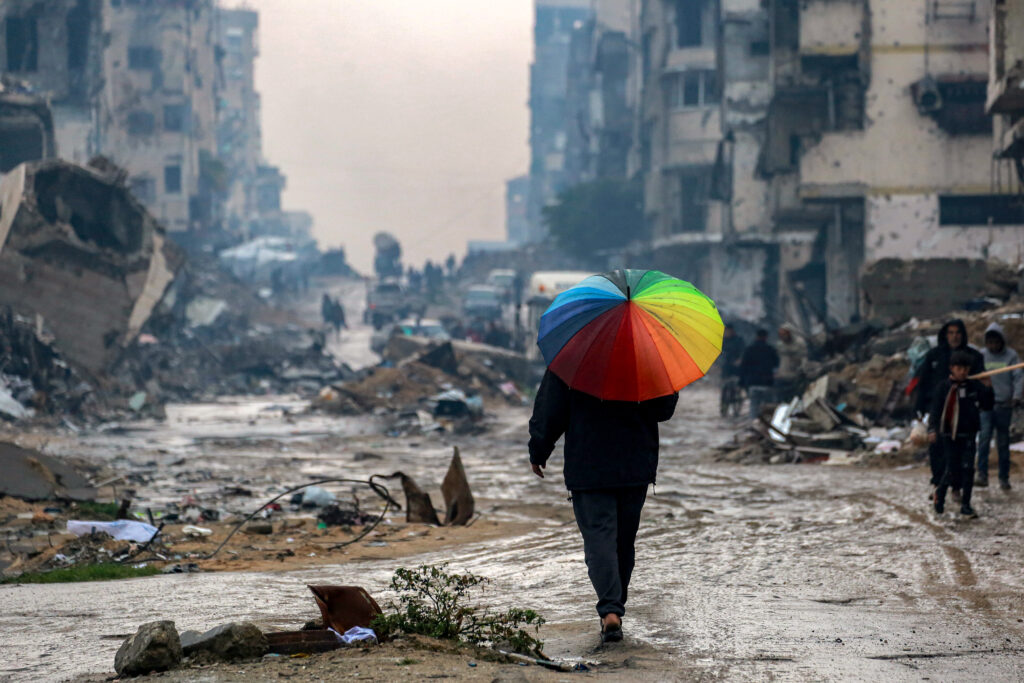
Saudi Arabia will host the leaders of four Arab countries at a summit on February 20 to discuss President Donald Trump’s proposal for a US takeover of Gaza, a source with knowledge of the preparations said on Friday.The leaders of Egypt, Jordan, Qatar and the United Arab Emirates will attend the summit, to take place ahead of an Arab League meeting in Cairo one week later on the same issue, the source said.Speaking on condition of anonymity, another source said Palestinian president Mahmud Abbas would also attend.Trump sparked a global outcry with his proposal for the United States to “take over” the Gaza Strip and to move more than two million Palestinians out of the war-devastated territory, citing Egypt or Jordan as possible destinations.Trump made the proposal during a visit by Israeli Prime Minister Benjamin Netanyahu to Washington.Arab countries have come together in a rare united front, outraged by the idea of displacing the Palestinians en masse.For Palestinians, any forced displacement evokes memories of the “Nakba”, or catastrophe — the mass displacement of their ancestors during Israel’s creation in 1948.But Trump has floated the possibility of cutting off aid to longstanding allies Jordan and Egypt should they refuse his plan.Jordan is already home to more than two million Palestinian refugees. More than half of the country’s population of 11 million is of Palestinian origin.Egypt put forward its own proposal for the reconstruction of Gaza under a framework that would allow for the Palestinians to remain in the territory.- ‘The only plan’ -Secretary of State Marco Rubio said Thursday the United States was eager to hear new proposals on Gaza from Arab governments but that, “right now the only plan — they don’t like it — but the only plan is the Trump plan”.In January, Rubio’s predecessor Antony Blinken outlined a roadmap for post-war Gaza and warned it required Israel’s acceptance of a path to a Palestinian state — something the Israeli government strongly opposes. Regional states including Saudi Arabia have repeatedly called for a Palestinian state, existing alongside Israel.Rubio was on his way to Europe on Friday. He was set to join Vice President JD Vance in a meeting with Ukrainian President Volodymyr Zelensky, after Trump spoke by phone with his counterpart Vladimir Putin and said he would pursue talks to end the war in Ukraine, which Russia invaded in 2022.Afterwards Rubio is set to fly on to Israel, Saudi Arabia and the United Arab Emirates to discuss the fragile Gaza ceasefire in effect since January 19.Following his surprise call with Putin, Trump said the two leaders were “going to meet probably in Saudi Arabia the first time”.Riyadh, which has been increasingly prominent on the international diplomatic stage, on Friday expressed “its welcome to hosting the summit in Saudi Arabia”, without confirming whether or when the meeting would go ahead.Mutlaq al-Mutairi, of King Saud University, said Saudi Arabia is seeking to emphasise the importance of its role in any solution to the Israeli-Palestinian conflict.It wants “to emphasise that it stands behind Egypt and Jordan, the Arab countries threatened with displacement”, he said, adding that would include economic backing should the United States withdraw support. Saudi analyst Suleiman Aloqeliy said the meeting will seek to “lay out the rules of engagement and the foundations of an Arab alternative solution to the issue of displacement”. Two of the governments invited, Qatar and Egypt, are mediators in the Gaza war.They and the other participants “are now the core countries with regards to Palestine”, said Umar Karim, a specialist on Saudi politics at the University of Birmingham.”So the purpose is to develop a unified stance and then rally all other Arab countries around it,” Karim said.