AFP Asia Business

Hamas set to hand over Israel bodies of four Gaza hostages

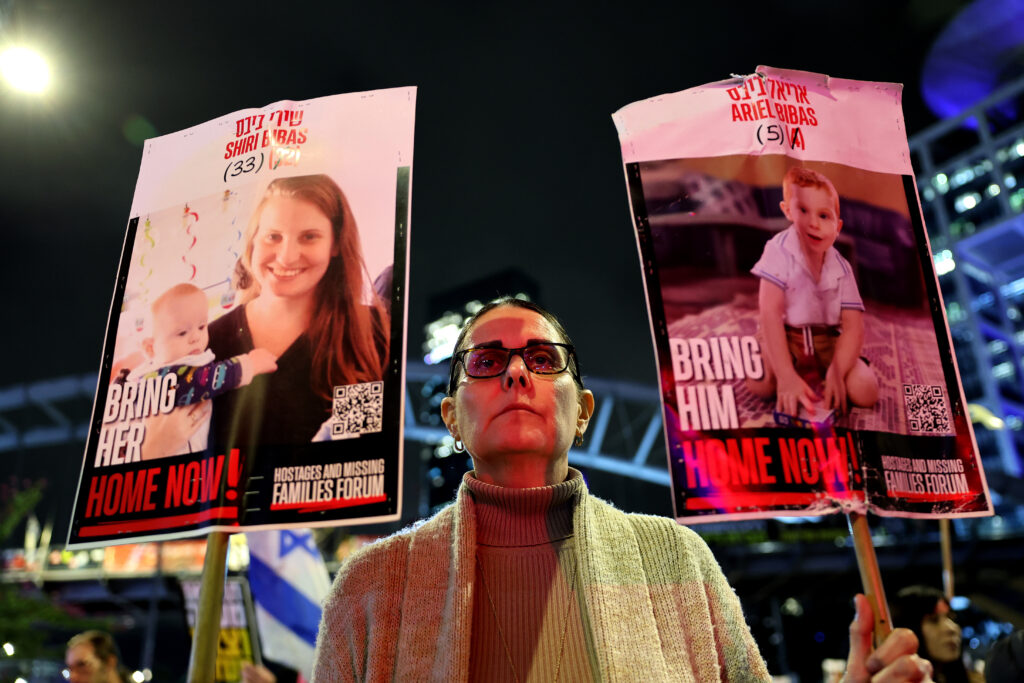
Hamas is due to hand over the bodies of four hostages Thursday, including those of the Bibas family, who have become symbols of the hostage crisis that has gripped Israel since the Gaza war broke out.The transfer of the bodies is the first such handover of remains by Hamas since its October 7, 2023 attack on Israel triggered the war.The Palestinian militant group said the return of the bodies of Shiri Bibas, her two young boys —- Kfir and Ariel -— and a fourth captive, Oded Lifshitz, would take place in the southern Gaza city of Khan Yunis.Footage of their abduction, filmed and broadcast by Hamas militants during their attack on Israel, showed the mother and her sons Ariel, then four, and Kfir, just nine months old, being seized from their home near the Gaza border. Yarden Bibas, the boys’ father and Shiri’s husband, was abducted separately on October 7, 2023 and was released from the Gaza Strip in a previous hostage-prisoner exchange on February 1.The repatriation of their bodies is part of the first phase of a fragile ceasefire between Israel and Hamas, which took effect on January 19 after more than 15 months of fighting in the Gaza Strip.Israeli Prime Minister Benjamin Netanyahu said that Thursday would be “a very difficult day for the State of Israel -— a heartbreaking day, a day of grief”.Under the ceasefire’s first phase, 19 Israeli hostages have been released by militants so far in exchange for more than 1,100 Palestinian prisoners in a series of Red Cross-mediated swaps.Of the remaining 14 Gaza hostages eligible for release under phase one, Israel says eight are dead.The Bibas family members have become national symbols of the hostage ordeal, encapsulating the despair that has gripped the nation since the Hamas attack.While their deaths are largely accepted as fact abroad after Hamas said they were killed in an Israeli air strike early in the war, Israel has never confirmed the claim and many remain unconvinced — including the Bibas family.Late on Wednesday, the Israeli campaign group the Hostages and Missing Families Forum said it had been informed about the “heart-shattering” news of the deaths of the three Bibas family members.The Bibas family said it would wait for a confirmation from official channels.”Should we receive devastating news, it must come through the proper official channels after all identification procedures are completed,” it said in a statement late Wednesday.Israeli authorities have not officially named any of those to be returned, but Netanyahu’s office said on Wednesday that it had received a list of the hostages whose bodies were to be handed over and that the families had been informed.The national forensic medicine institute in Tel Aviv has mobilised 10 doctors to expedite the identification process, public broadcaster Kan reported on Wednesday.- Single swap -Israel and Hamas announced a deal earlier this week for the return of the remains of eight hostages in two groups this week and next, as well as the release of six living Israeli captives on Saturday. The hostages forum named the six as Eliya Cohen, Tal Shoham, Omer Shem Tov, Omer Wenkert, Hisham al-Sayed, and Avera Mengistu.The ceasefire in Gaza has held despite accusations of violations on both sides.Israeli Foreign Minister Gideon Saar said on Tuesday that talks would begin “this week” on the second phase, which is expected to lay out a more permanent end to the war.Senior Hamas official Taher al-Nunu told AFP on Wednesday that Hamas was ready to free all remaining hostages held in Gaza in a single swap during phase two. He did not clarify how many hostages were currently being held by Hamas or other militant groups.Hamas and its allies took 251 people hostage during the attack, of whom 70 remain in Gaza, including 35 the Israeli military says are dead.That attack resulted in the deaths of 1,211 people, mostly civilians, according to an AFP tally of Israeli official figures.Israel’s retaliatory campaign has killed at least 48,297 people in Gaza, the majority of them civilians, according to figures from the health ministry in the Hamas-run territory that the United Nations considers reliable.
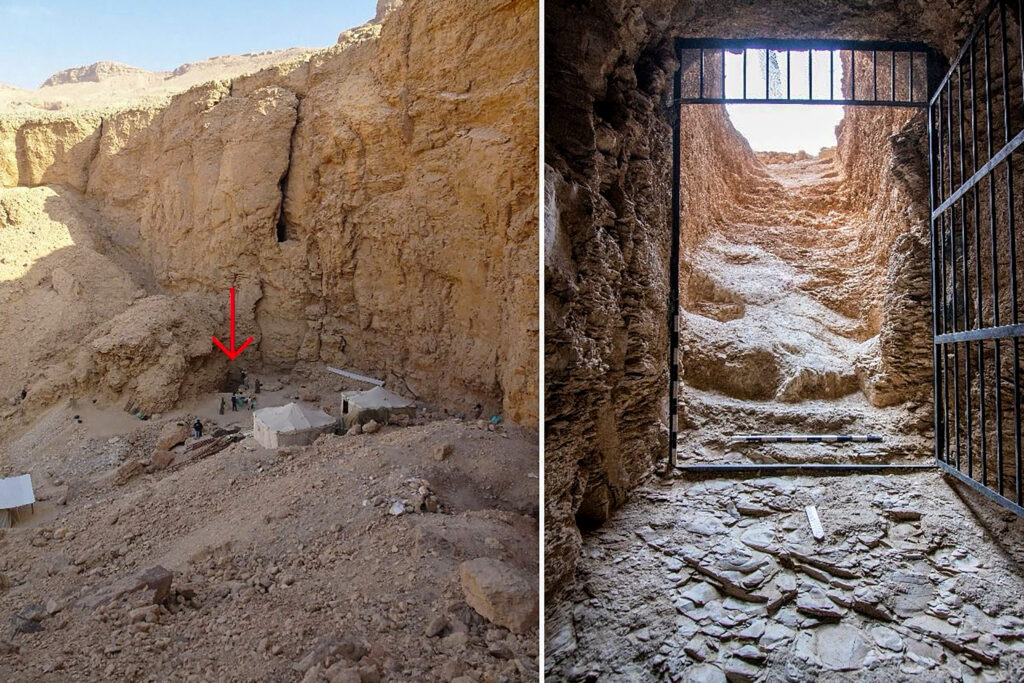

Egypt unveils first ancient royal tomb since Tutankhamun

Egypt’s antiquities authority says it has found the ancient tomb of King Thutmose II, the first royal burial to be located since the famed discovery of Tutankhamun’s tomb in 1922.The tomb, discovered near the Valley of the Kings in Luxor in southern Egypt, belonged to King Thutmose II of the 18th dynasty, who lived nearly 3,500 years ago.Thutmose II was an ancestor to Tutankhamun himself, and his half-sister and queen consort was Pharaoh Hatshepsut.Her giant mortuary temple stands on the west bank of the Nile at Luxor a few kilometres (miles) from where the tomb of Thutmose II was found.Although preliminary studies suggest its contents were moved in ancient times — leaving the tomb without the iconic mummy or gilded splendour of the Tutankhamun find — the antiquities ministry on Tuesday called the discovery “one of the most significant archaeological breakthroughs in recent years”.It has been excavated by a joint Egyptian-British mission, led by the Supreme Council of Antiquities and the New Kingdom Research Foundation.The tomb’s entrance was first located in 2022 in the Luxor mountains west of the Valley of the Kings, but was believed at the time to lead to the tomb of a royal wife.But the team then found “fragments of alabaster jars inscribed with the name of Pharaoh Thutmose II, identified as the ‘deceased king’, alongside inscriptions bearing the name of his chief royal consort, Queen Hatshepsut”, confirming whose tomb it was, the ministry said.Shortly after the king’s burial, water flooded the burial chamber, damaging the interior and leaving fragments of plaster that bore parts of the Book of Amduat, an ancient mortuary text on the underworld.Some funerary furniture belonging to Thutmose II has also been recovered from the tomb in “the first-ever find” of its kind, according to the ministry.It quoted mission chief Dr Piers Litherland as saying the team will continue its work in the area, hoping to find the tomb’s original contents.There has been a surge of major archaeological discoveries in recent years, as Egypt seeks to boost its tourism industry as a key source of foreign currency revenue.Last year, Egypt hosted 15.7 million tourists and aims to attract 18 million visitors in 2025.The crown jewel of the government’s strategy is the long-delayed inauguration of the Grand Egyptian Museum at the foot of the pyramids in Giza, which Egypt has said will finally open this year.

Hezbollah readies massive funeral for slain leader Nasrallah

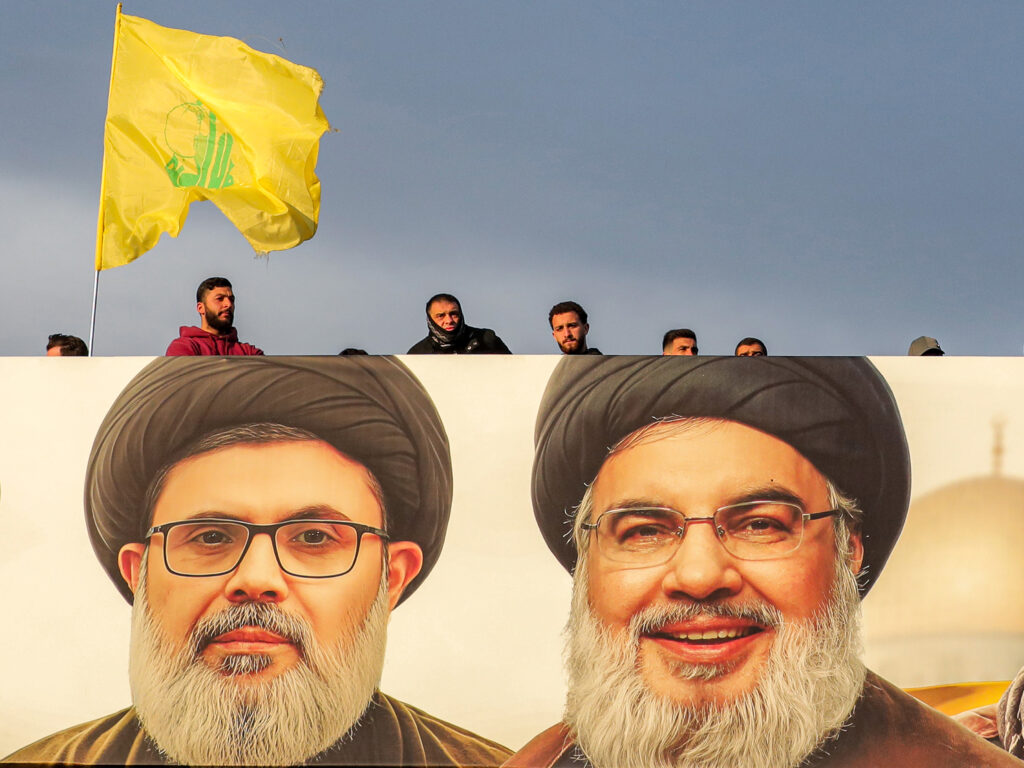
Lebanon’s Hezbollah is preparing for a massive turnout for the funeral on Sunday of its slain leader Hassan Nasrallah, an opportunity for a show of strength by the Iran-backed group after a bruising war with Israel.Nasrallah’s death nearly five months ago in a huge Israeli strike on Beirut’s southern suburbs left Hezbollah supporters in disbelief and sent shockwaves across Lebanon and the region.The country will stop for Sunday’s funeral, to be held at 1:00 pm (1100 GMT) at the Camille Chamoun sports stadium on the capital’s outskirts.Hezbollah has announced strict security measures and urged security forces to help manage crowds that are expected to number in the tens of thousands, with people pouring in from Hezbollah strongholds across the country, as well as from abroad.Hassan Wehbe, 60, an electrician in Beirut’s southern suburbs, said the funeral would be “a historic day”.”There will be huge participation. Israel will see that we are not afraid,” he said.Hezbollah has invited senior Lebanese officials including the president.Its key foreign backer Iran has said it will participate “at a high level”, without specifying who will attend.Nicholas Blanford, a Beirut-based Hezbollah expert and senior fellow at the Atlantic Council, said it was important for Hezbollah “to be able to demonstrate that they haven’t been cowed — that they are still a popular force” within the Shiite community.The funeral “is going to be exactly the event for that”, he told AFP.- ‘Moral duty’ -The ceremony is expected to last around an hour, including a speech by current leader Naim Qassem, who has called for a huge turnout.A procession will follow to Nasrallah’s burial site near the airport road, now lined with yellow Hezbollah flags and images of him and other slain Hezbollah figures.Civil aviation authorities said Beirut airport will close exceptionally and flights will be suspended from midday until 4:00 pm.The US embassy has urged Americans to avoid the area.Hezbollah was battered by more than a year of hostilities with Israel that culminated in two months of full-blown war before a ceasefire took effect on November 27.After Nasrallah was killed on September 27, the group delayed his funeral due to security concerns.The ceremony will also be for Hashem Safieddine, who was chosen to succeed Nasrallah before being killed in a later Israeli strike.Safieddine will be buried on Monday in his southern hometown of Deir Qanun al-Nahr.The charismatic, bespectacled Nasrallah has long enjoyed cult status among his supporters.For Ahmed Hallani, 35, taking part is “a religious and moral duty”.Nasrallah is “our leader and the leader of our victories. We will stay beside him, alive or dead,” he said.- Cult status -Iraqi Airways and Lebanon’s Middle East Airlines have increased services between Baghdad and Beirut ahead of the funeral.Representatives of Iraq’s main pro-Iran factions are to participate, while several Iraqi lawmakers are expected to attend privately.One of Hezbollah’s founders in 1982, Nasrallah was elected secretary-general a decade later after Israel killed his predecessor.He won renown in the Arab world after Israel withdrew its troops from south Lebanon under relentless Hezbollah attack in May 2000, ending 22 years of occupation of the border strip.Nasrallah’s years at the helm saw the group expand from guerrilla faction into the most powerful political force in Lebanon, only to be battered in the latest conflict.Lebanon has said more than 4,000 people have been killed since hostilities began in October 2023, most of them after Israel ramped up its campaign in September, later sending in ground troops.Among the dead are hundreds of Hezbollah fighters and a slew of senior commanders.Israel has missed two deadlines to complete its withdrawal under the ceasefire agreement, and still has troops deployed in five places on the Lebanese side of the border after its latest pullback earlier this week. 

Heartbreaking day ahead for Israel, says Netanyahu

An Israeli group campaigning for the release of hostages described the deaths of three members of the Bibas family as “heart-shattering” Wednesday as Hamas prepared to hand over their bodies.”We received the heart-shattering news that Shiri Bibas, her children Ariel and Kfir, and Oded Lifshitz are no longer with us,” the Hostages and Missing Families Forum said in a statement.Yarden Bibas, the boys’ father and Shiri’s husband, was abducted separately on October 7, 2023 and was released from the Gaza Strip in a previous hostage-prisoner exchange on February 1.The remains of his family and those of another dead hostage are due to be handed over by Hamas on Thursday, ahead of the release Saturday of six living hostages.Prime Minister Benjamin Netanyahu’s office said it had the names of the hostages whose bodies Hamas is set to hand over, and had “updated the families”.In a separate statement, Netanyahu said: “Tomorrow will be a very difficult day for the State of Israel — a heartbreaking day, a day of grief. We are bringing home four of our beloved hostages — fallen heroes.”Hamas on Wednesday signalled a willingness to free all remaining hostages held in the Palestinian territory in a single swap during the next phase of an ongoing ceasefire.Israel and Hamas are currently in the process of implementing phase one of the fragile truce, which has held since taking effect on January 19 despite accusations of violations on both sides.Israel’s foreign minister said Tuesday talks would begin “this week” on the second phase, expected to lay out a more permanent end to the war.”We have informed the mediators that Hamas is ready to release all hostages in one batch during the second phase of the agreement, rather than in stages as in the current first phase,” senior Hamas official Taher al-Nunu told AFP.He did not clarify how many hostages were currently being held in Gaza.Nunu said this step was meant “to confirm our seriousness” and “to continue steps towards cementing the ceasefire and achieving a sustainable truce”.Under the ceasefire’s first phase, 19 Israeli hostages have been released so far in exchange for more than 1,100 Palestinian prisoners in Israeli jails in a series of Red Cross-mediated swaps.Wednesday’s Hamas offer came after both sides announced a deal for the return of all six remaining living hostages eligible for release under phase one in a single swap this weekend.Hamas agreed on Tuesday to return the bodies of eight dead hostages in two groups this week and next.After the first phase is completed, 58 hostages will remain in Gaza.- ‘Room to pressure Hamas’ -Muhammad Shehada, of the European Council on Foreign Relations, said that after more than a year of devastating Israeli assault in Gaza, “Hamas wants to prevent the war resuming at any cost”, albeit with some “red lines”.”And one of those red lines is that they should continue to exist, basically, whereas Netanyahu’s position is that they should dismantle themselves.”Netanyahu has vowed to destroy Hamas’s capacity to fight or govern.The appearance that Washington is now completely aligned with Netanyahu’s government, as displayed by US Secretary of State Marco Rubio’s visit this week, strengthened Netanyahu’s hand in negotiations, according to Michael Horowitz at risk management consultancy Le Beck International.It gives Netanyahu “more room to pressure Hamas”, Horowitz said, adding that US President Donald Trump “prefers that the agreement moves forward, but he’s leaving the field open to Netanyahu… as long as the ceasefire is maintained”.- ‘Held onto hope’ -While Hamas said Shiri Bibas and her boys were killed in an Israeli air strike early in the war, Israel never confirmed this, and members of the Bibas family had hoped they might still be alive.”We have held onto hope for 16 months, and we are not giving up now,” the boys’ aunt, Ofri Bibas, wrote on Facebook late Tuesday.The International Committee of the Red Cross, which has acted as go-between in the exchanges, called for a respectful handover of the hostages’ remains.”We once again call for all releases to be conducted in a private and dignified manner, including when they tragically involve the deceased,” it said.Hamas and its allies took 251 people hostage during the October 7, 2023 attack on Israel, of whom 70 remain in Gaza, including 35 the Israeli military says are dead.The attack resulted in the deaths of 1,211 people, mostly civilians, according to an AFP tally of Israeli official figures.Israel’s retaliatory campaign has killed at least 48,297 people in Gaza, the majority of them civilians, according to figures from the health ministry in the Hamas-run territory that the United Nations considers reliable.- Soldiers charged -Since the war began, Israeli forces have detained hundreds of Gazans, some of whom have been released in previous rounds of hostage-prisoner exchanges.On Wednesday, the Israeli military said it had filed charges of “causing severe injury and abuse under aggravating circumstances” against five reservist soldiers for assaulting a Palestinian detainee in July last year.It said the incident took place at the Sde Teiman detention facility near the border which was created early in the war to hold detainees from Gaza.

Tunisia court orders release of top rights activist

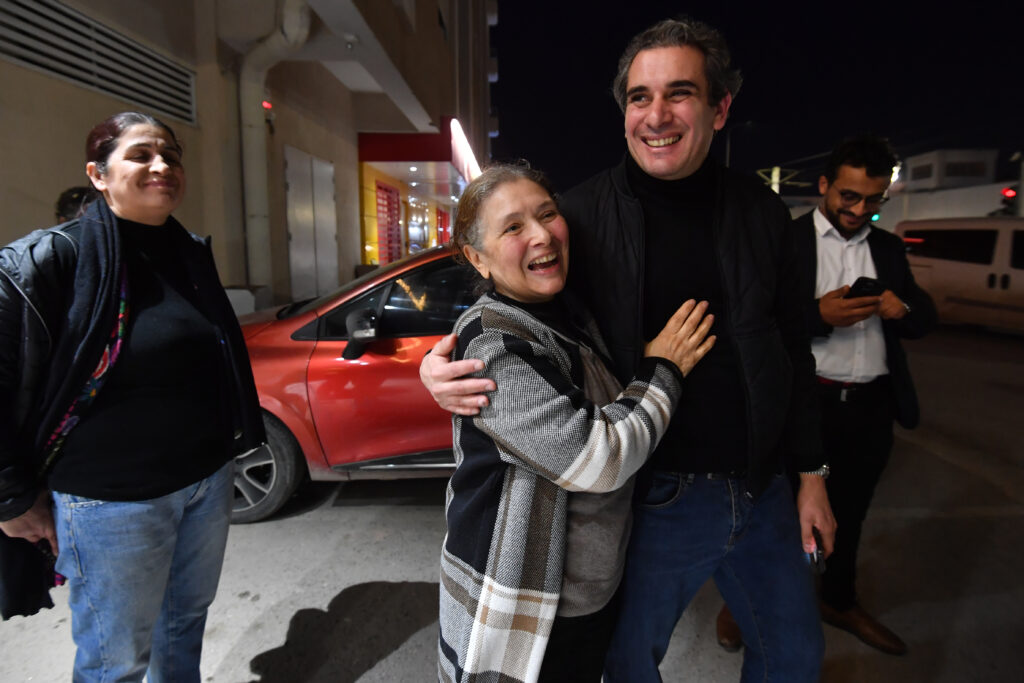
Prominent Tunisian human rights activist Sihem Bensedrine was released from jail on Wednesday after an appeals court ruling, AFP journalists said, although she remains barred from leaving the country.A court spokesman earlier said Bensedrine cannot leave Tunisia as she still faces charges in other cases.”I can only be happy, as no one wants to be in this hole,” she said upon her release on Wednesday evening from Manouba prison in the suburbs of the capital.”Breathing the air of freedom like this afternoon and after seeing a just a small patch of blue sky (from her cell), I prayed to God to see the entire sky, and my wish was granted.”Bensedrine, 74, headed the now-defunct Truth and Dignity Commission (IVD), which was tasked with uncovering abuses under the country’s past autocratic rulers.She had been detained since August for allegedly “falsifying” the commission’s final report, which was published in 2020.She has also been accused of accepting a bribe to include a passage accusing the Franco-Tunisian Bank (BFT) of corruption, an allegation she has denied.Her husband, Omar Mestiri, told AFP before her release that Bensedrine “had suffered but is in good spirits”.”She is determined to fight to assert her rights,” he said.In January, Bensedrine, a former journalist, said she was going on hunger strike in protest at her detention. She was hospitalised 10 days later.Announcing the hunger strike in a letter from Manouba, she had said she would “no longer tolerate the injustice that has struck me. Justice cannot be based on lies and slander, but on concrete and tangible pieces of evidence.”- ‘Persecution’ -Established in 2014 in the aftermath of Tunisia’s 2011 revolution, the IVD was tasked with documenting state-led human rights violations between 1955 and 2013.The period includes authoritarian rule in the North African country under presidents Habib Bourguiba and Zine El Abidine Ben Ali, who was ousted during the revolution.The IVD received testimony from tens of thousands of Tunisian victims of abuses including rape and torture.On Tuesday, the United Nations human rights chief denounced the “persecution of political opponents” in Tunisia, urging the authorities to halt a wave of arrests and arbitrary detentions.Bensedrine’s lawyer, Abderraouf Ayadi, said in December that the charges were part of a “politically motivated case fabricated against her”.”Tunisia’s judiciary is currently under political influence,” he added, arguing that the charges stemmed from her role as an outspoken critic of the government.President Kais Saied was elected in 2019, after Tunisia emerged as the only democracy from the Arab Spring. But in 2021, he staged a sweeping power grab. Critics and human rights groups have since warned of a rollback on freedoms.Last August, a group of UN experts had called for Bensedrine to be given a fair trial, saying her arrest could amount to judicial harassment.”In a context marked by the suppression of numerous dissenting voices, the arrest of Ms Bensedrine raises serious concerns about the respect of the right to freedom of opinion and expression in Tunisia and has a chilling effect on journalists, human rights defenders and civil society in general,” they said in a joint statement.

Syrian Jews say held first group prayer in decades in Damascus synagogue

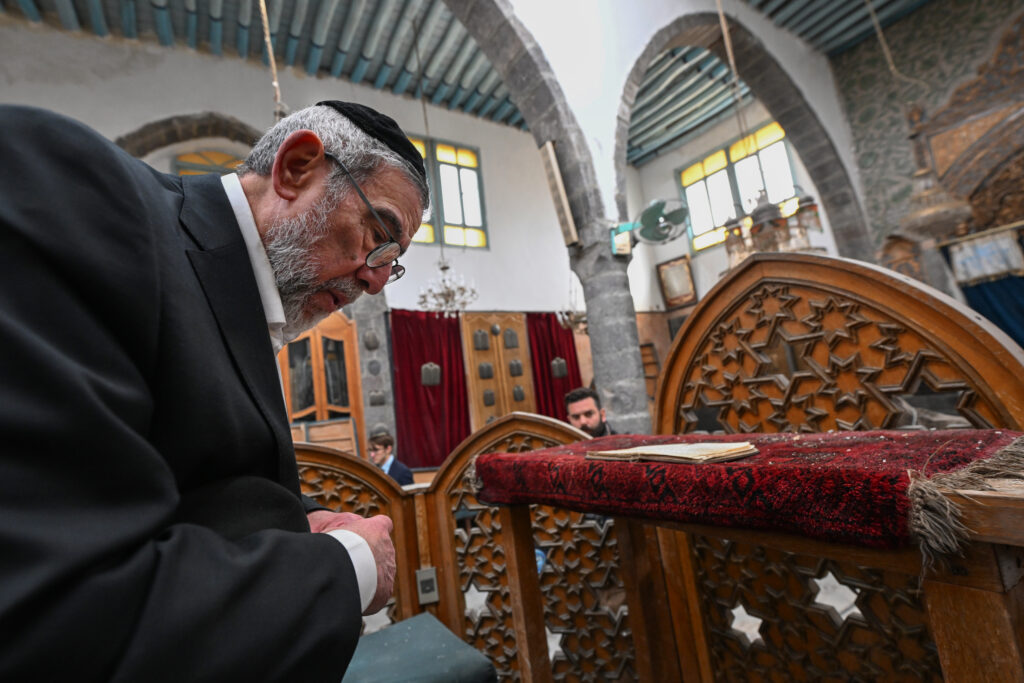
Syria’s tiny Jewish community said they held their first group prayer in decades Wednesday, in a synagogue in Damascus’s Old City, expressing joy at the long-awaited return to public worship.In the Faranj synagogue, Syrian-American Rabbi Yusuf Hamra led the prayer for the first time since arriving this week from the United States, where he has lived since the 1990s.”The last time I visited the synagogue here and prayed was before I travelled to America,” said Hamra, 77.”After arriving in Damascus two days ago, I came to pray for the first time… after 34 years,” he told AFP in the Jewish quarter of the capital’s Old City.Hamra said he was the last rabbi to quit Syria — one of thousands of members of the Jewish community to leave in the 1990s.Syria’s centuries-old Jewish community was able to practise their religion under then president Hafez al-Assad, but the strongman prevented them from leaving the country until 1992.After that, their numbers plummeted from around 5,000 at the time.Now just seven elderly Jews are believed to live in Damascus.After an Islamist-led rebel alliance overthrew Hafez’s son Bashar al-Assad in December last year, Hamra said he seized the opportunity to return with his son.All of Syria’s synagogues closed when civil war erupted in 2011, Hamra said.A historic synagogue in the Damascus suburb of Jobar once drew Jewish pilgrims from around the world but was looted and heavily damaged during the war.The whole suburb was devastated during the conflict.The Assad family had presented itself as a protector of minorities in multi-ethnic, multi-confessional Syria.Syria’s new Islamist-led authorities have repeatedly sought to reassure minorities that they will be protected, and have pledged to involve all Syrians in building the country’s future.At the end of the prayer, community leader Bakhour Chamntoub expressed happiness at Hamra’s return to the synagogue.”I need Jews with me in the neighbourhood,” he said of the Jewish quarter, where he lives.He expressed hope that “Jews will return to their neighbourhood and their people” in Syria.”For nearly 40 years, I haven’t prayed with others. The feeling is indescribable,” he said.

Trump auto tariff threat prompts pushback in Germany

Germany’s car lobby on Wednesday warned that tariffs threatened by US President Donald Trump would raise prices for American drivers after Trump said he might hike taxes on imports of cars, pharmaceuticals and semiconductors.Speaking at his Mar-a-Lago resort in Florida on Tuesday, Trump told reporters that tariffs on the automobile industry will “be in the neighbourhood …

Trump auto tariff threat prompts pushback in Germany Read More »