

AFP Asia Business
Chinese workers from Myanmar scam centres start arriving home via Thailand
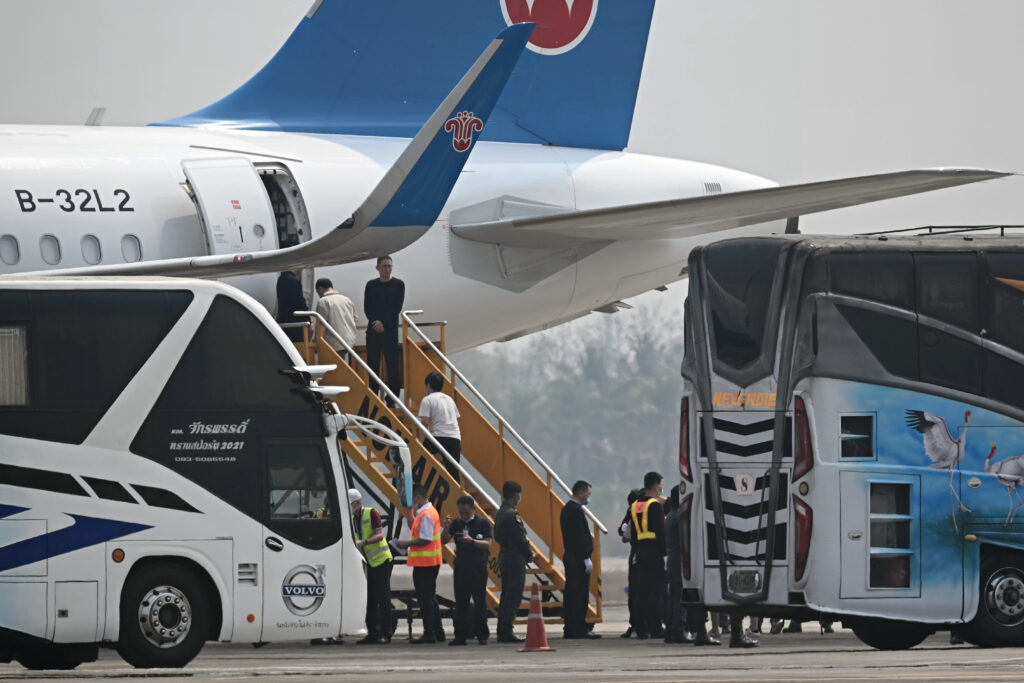
Hundreds of Chinese workers started to arrive home on Thursday after being freed from online scam centres in Myanmar, as authorities crack down on the illegal operations.Thousands of foreigners are expected to be repatriated from Myanmar in the coming weeks, starting with hundreds of Chinese nationals over the next three days.The compounds are run by …
Chinese workers from Myanmar scam centres start arriving home via Thailand Read More »
Hamas says hands over bodies of Israel’s Bibas family, elderly hostage
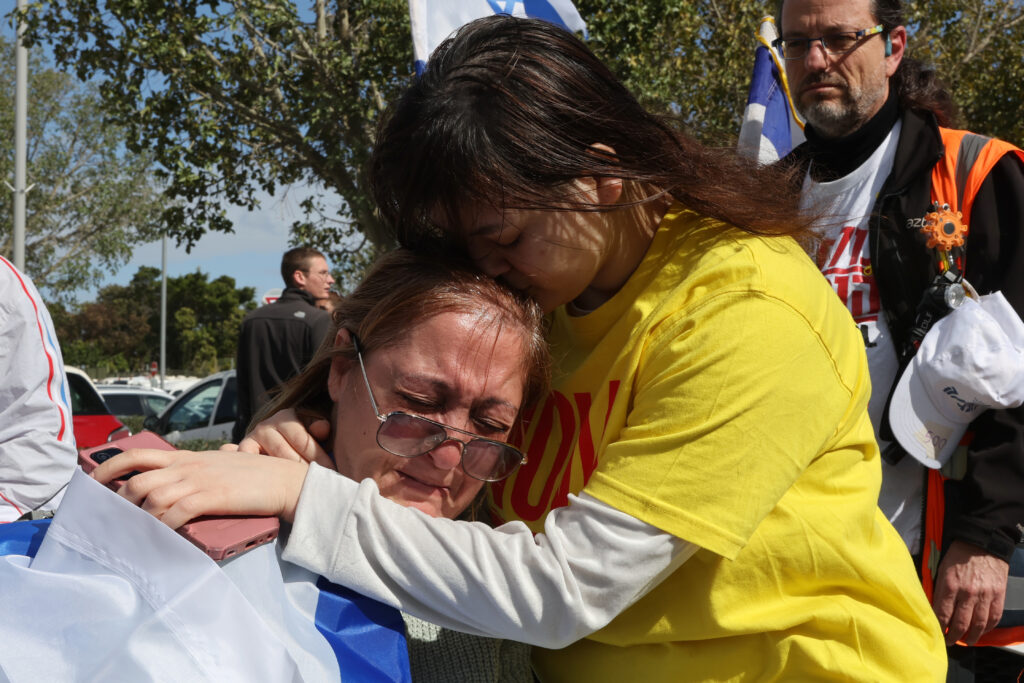
Militants on Thursday handed over the bodies of four hostages taken into Gaza during their October 7, 2023 attack, with Hamas saying they include the Bibas family — symbols of Israel’s ordeal since the Gaza war began.This is the first release of dead hostages under a fragile ceasefire which has so far seen only living captives exchanged for Palestinians held in Israeli prisons.The ceremony to return the bodies of Shiri Bibas, her two young red-headed boys —- Kfir and Ariel -— and a fourth captive, Oded Lifshitz, 83 at the time of his capture, took place at a former cemetery in the southern Gaza city of Khan Yunis.Israel has “received the caskets of four fallen hostages”, Prime Minister Benjamin Netanyahu’s office said.”Our hearts — the hearts of the entire nation — lie in tatters,” President Isaac Herzog said in a statement after the handover. He asked “forgiveness for not protecting you”.Flag-waving Israelis lined the route which a convoy carrying the bodies took from southern Israel to Tel Aviv following the transfer via the Red Cross.Among those waiting at “Hostages Square” in Tel Aviv was museum manager Tania Coen Uzzielli, 59.”This is one of the hardest days, I think, since October 7th,” she said, adding that “maybe we didn’t do enough to prevent this tragedy.”Israel’s military said the bodies would “undergo an identification procedure” at the city’s national forensic medicine institute, where onlookers wept as the convoy arrived.Ahead of the handover, Hamas and members of other armed Palestinian groups displayed four black coffins on a stage erected on the sandy patch of ground. A banner behind them depicted Netanyahu as a blood-stained vampire. Each casket bore a small photo of the deceased. White mock-up missiles nearby carried the message: “They were killed by USA bombs,” a reference to Israel’s top military supplier.- The youngest hostage -Under a cold drizzle, a militant with his face wrapped in a red and white keffiyeh scarf sat on the stage to complete documents with a Red Cross official.The coffins were loaded into Red Cross vehicles.Tahani Fayad, 40, was among the hundreds of people gathered to witness the ceremony which he called “a confirmation of the victory of the Palestinian people and proof that the occupation will not defeat us”.Buildings bombed during more than 15 months of war surrounded the site.Armed men in military fatigues and wearing Hamas headbands were ubiquitous at the ceremony — carefully choreographed as in previous hostage transfers.During their attack that triggered the Gaza war, Hamas filmed and later broadcast footage showing the Bibas family’s abduction from their home near the Gaza border.Ariel was then aged four. Kfir was the youngest hostage at just nine months old.Yarden Bibas, the boys’ father and Shiri’s husband, was abducted separately and released in a previous hostage-prisoner swap on February 1.The bodies’ repatriation is part of the six-week initial phase of a ceasefire between Israel and Hamas, which took effect on January 19.Under the first phase, militants have so far freed 19 living Israeli hostages in exchange for more than 1,100 Palestinian prisoners.Of the remaining 14 Gaza hostages eligible for release under phase one, Israel says eight are dead.- Under strain -Hamas said an Israeli air strike killed the Bibas family early in the war but Israel has never confirmed the claim.Hamas and its armed wing “did everything in their power to protect the prisoners (hostages) and preserve their lives, but the barbaric and continuous bombing by the occupation prevented them from being able to save all”, the militants said in a statement.Israel and Hamas announced a deal earlier this week for the return of eight hostages’ remains in two groups this week and next, as well as the release of six living Israeli captives on Saturday.Palestinian prisoners are also to be freed in Saturday’s swap but were not part of Thursday’s handover.The ceasefire in Gaza has held despite accusations of violations on both sides.It has also been under strain from US President Donald Trump’s widely condemned idea to take control of rubble-strewn Gaza and relocate its population of more than two million Palestinians.Israeli Foreign Minister Gideon Saar has said talks will begin this week on the truce’s second phase, aiming to lay out a more permanent end to the war.Senior Hamas official Taher al-Nunu told AFP on Wednesday that Hamas was ready to free all remaining hostages held in Gaza in a single swap during phase two.Hamas and its allies took 251 people captive during their attack. Prior to Thursday’s handover, there were 70 hostages in Gaza, including 35 the Israeli military says are dead.That attack resulted in the deaths of 1,211 people, mostly civilians, according to an AFP tally of Israeli official figures.Israel’s retaliatory campaign has killed at least 48,297 people in Gaza, the majority of them civilians, according to figures from the health ministry in the Hamas-run territory that the United Nations considers reliable.
Seven civilians killed in Syria UXO blast: monitor
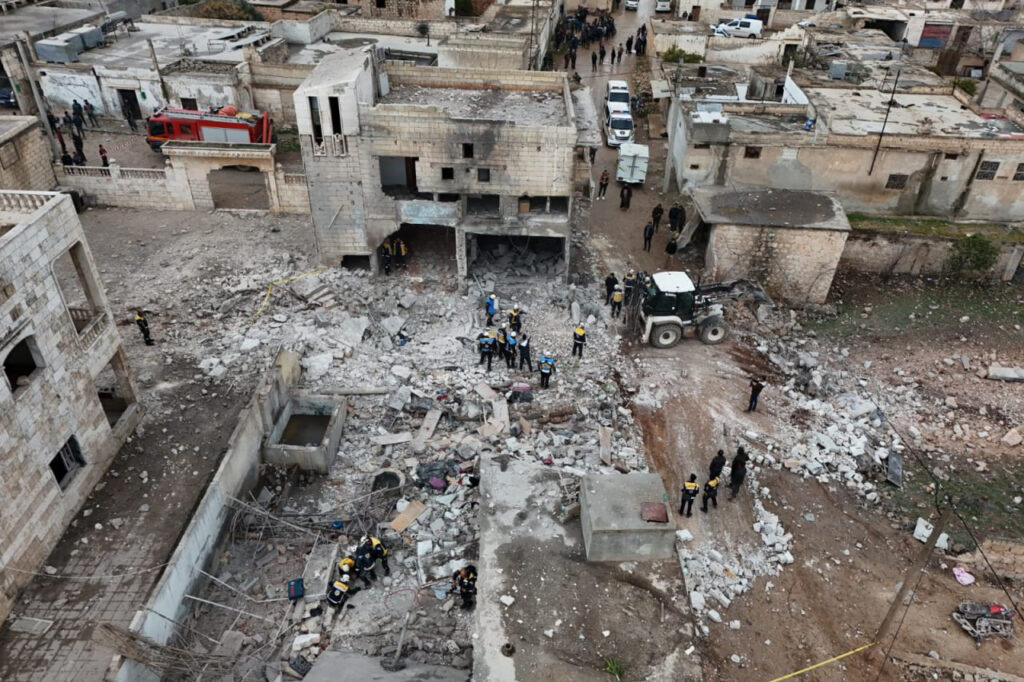
At least seven civilians, including a woman and a child, were killed on Thursday when unexploded munitions ignited at a house in northwestern Syria, a war monitor said.The Syrian Observatory for Human Rights reported the deadly blast a day after another organisation said two-thirds of Syrians risked being killed or wounded by unexploded ordnance.”Seven civilians, including a woman and a child, were killed when leftover munitions stored inside a house” in Idlib province exploded, the Observatory said.An AFP correspondent saw civil defence teams retrieving bodies from the rubble of the destroyed house in Al-Nayrab on the outskirts of the main northern city of Aleppo.Civil defence worker Mohammed Ibrahim said they had been called to the scene of an “explosion of unknown provenance”. “When teams headed to the site, they found unexploded ordnance,” he added.The Observatory said the owner of the house was a scrap dealer who collected unexploded ordnance for its metal content.Residents told AFP that the owner had stored the munitions adjacent to the house.Journalists were not allowed to approach the site for fear of further explosions.Non-governmental organisation Humanity and Inclusion had warned on Wednesday of the dangers posed by unexploded munitions left over from the devastating civil war that erupted in 2011.It said experts estimated that between 100,000 and 300,000 of the roughly one million munitions used during the war had never detonated.- ‘Absolute disaster’ -It’s “an absolute disaster”, the group’s Syria programme director Danila Zizi said, adding that “more than 15 million people (are) at risk” out of a resident population of some 23 million.As hundreds of thousands of Syrians return to their homes after Islamist-led rebels finally toppled Bashar al-Assad in December, “urgent action is needed to mitigate the risk of accident”, the group said.According to UN figures, more than one million people have returned to their homes since Assad fled, 280,000 of them from abroad.Zizi said that the crude barrel bombs used in large numbers by Assad’s air force during the war had a “higher rate of failing” than other munitions.She said that mines planted by Islamic State group jihadists during their slow retreat in the late 2010s meant there were also “lots of booby traps that have never been really marked or mapped”.In January alone, 125 unexploded ordnance accidents were recorded in which at least 85 people were killed and 152 injured, Humanity and Inclusion said.Most of the casualties have been farmers tending their fields or flocks, or children playing outdoors, it said.
‘One of the hardest days’: Israelis gather for return of hostage bodies
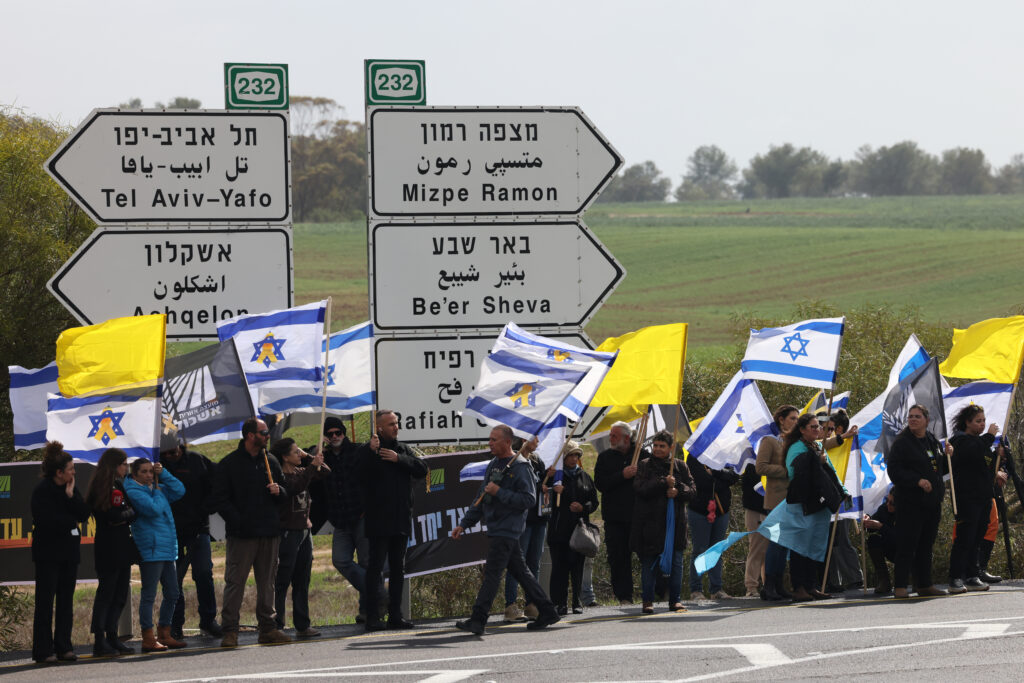
Dozens of flag-waving Israelis gathered under a stormy sky Thursday lining the route of a convoy bringing home the bodies of four deceased hostages handed over by Hamas in Gaza.The Palestinian militants had handed over black coffins they said contained the bodies of Shiri Bibas and her two young boys, Kfir and Ariel — who became symbols of the ordeal that has gripped Israel since the Gaza war began.The Red Cross-mediated handover, which Hamas said also included the body of elderly captive Oded Lifshitz, took place at a former cemetery in the south Gaza city of Khan Yunis.It is the first handover of bodies by Hamas since its October 7, 2023 attack on Israel triggered the Gaza war, and is taking place under a fragile ceasefire that has seen living hostages exchanged for Palestinians held in Israeli prisons.Some 100 Israelis had also gathered at the Tel Aviv plaza dubbed Hostages Square — site of regular protests for the release of the hostages.”This is one of the hardest days, I think, since October 7,” said museum manager Tania Coen Uzzielli, 59, who had gathered in the square with around 100 others.”I think the feeling of personal guilt is something each of us carries — that maybe we could have done more, that maybe we didn’t do enough to prevent this tragedy.”Large screens in the square showed images of the Bibas family and Lifshitz, while orange balloons symbolised the red hair of the two Bibas children, who were aged four and nine months at the time of their capture.The family became national symbols of the despair that has gripped the nation since the Hamas attack and hostage takings.Footage of their abduction, filmed and broadcast by Hamas during its attack, showed them being seized from their home near the Gaza border.Yarden Bibas, the boys’ father and Shiri’s husband, was abducted separately and released in a hostage-prisoner exchange on February 1.While their deaths have largely been accepted as fact abroad since Hamas said an Israeli air strike killed them early in the war, Israel had never confirmed.”There are no other words, I am heart broken,” said Sharon Gazit, 60, a Tel Aviv resident who had also gathered in Hostages Square.- ‘Ask for forgiveness’ -Israel confirmed the convoy carrying the coffins had reached its territory but refrained from identifying the dead hostages.The bodies were to be taken from Kissufim in southern Israel to an institute of forensic medicine in Tel Aviv for identification.President Isaac Herzog said “the hearts of an entire nation lie in tatters”.”On behalf of the State of Israel, I bow my head and ask for forgiveness. Forgiveness for not protecting you on that terrible day. Forgiveness for not bringing you home safely”, he said in a statement.Hundreds of Gazans had gathered in Khan Yunis to witness the handover. Large numbers of armed men in military fatigues and Hamas headbands stood near the stage for the ceremony, which was carefully choreographed like previous handovers of live hostages.Each coffin bore a small photograph of the deceased.Under the first phase of the ceasefire which took effect on January 19, militants have so far freed 19 living Israeli hostages in exchange for more than 1,100 Palestinian prisoners.Another six living hostages are to be released on Saturday while four more bodies are to be handed over next week.Hamas and its allies took 251 people hostage during their attack. Prior to Thursday’s handover, there were 70 hostages in Gaza, including 35 the Israeli military says are dead.
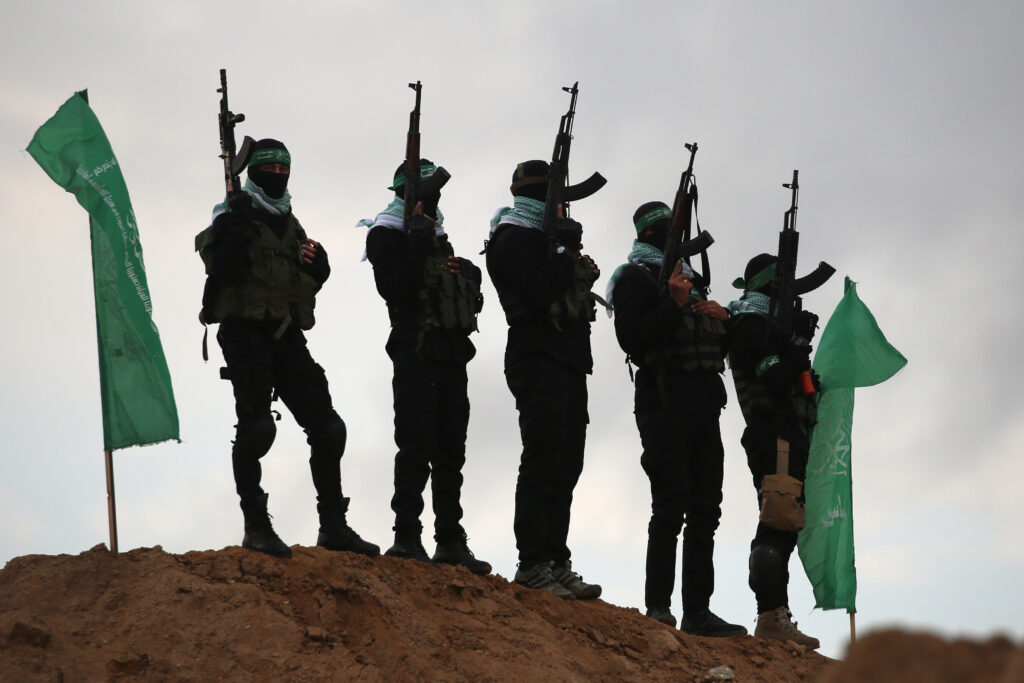
Hamas hands over dead Israeli hostages in black coffins
Hundreds watched on Thursday as four black coffins, which Hamas said held the remains of Israel’s Bibas family and an elderly hostage, were carried off stage by Palestinian militants in southern Gaza.The ceremony, held on a sandy area that was once a cemetery before its destruction by Israeli forces, marked the first handover of deceased captives under a fragile Israel-Hamas truce.It began with a militant, his face wrapped in a red and white keffiyeh scarf, seated on the stage to complete paperwork with a Red Cross official. The stage featured a banner with an image of Israeli Prime Minister Benjamin Netanyahu as a bloodied vampire over photos of the four returned Israelis.”War Criminal Netanyahu and his army killed them with missiles and Zionist warplanes”, read the sign.The coffins — which bore photos of the deceased as well as of Netanyahu — were placed one by one into separate Red Cross vehicles after being covered in a white shroud as a cold drizzle fell.Photographers and videographers wearing Hamas headbands walked around, cameras in hand, to capture the moment. Hamas said it was returning the bodies of Shiri Bibas and her sons Ariel and Kfir — who at only nine months old was the youngest hostage taken during Hamas’ unprecedented attack on October 7, 2023. The fourth hostage was Oded Lifshitz, 83 at the time of his capture.- Destroyed cemetery -“We preserved the lives of the occupation prisoners (hostages), provided them with what we could, and treated them humanely, but their army killed them along with their captors,” the Islamist movement said in a statement.Israeli President Isaac Herzog said, in a statement released after Hamas handed over the bodies to the Red Cross, “our hearts — the hearts of the entire nation — lie in tatters”.Armed men in military fatigues and wearing Hamas green headbands were ubiquitous on the lot which was cleared for the transfer. They stood around the stage and lined up on both sides of the road where the Red Cross vehicles passed.”The dead were respected despite the occupation’s humiliation of prisoners and martyrs,” Said Ubade, 32, told AFP, after the Red Cross called for the “dignified and private” transfer of hostages and prisoners after a swap last weekend. “I thank the resistance for fulfilling its promise and safeguarding the captives and bodies until our prisoners are freed,” Ubade said.Hamas set up its stage in the Bani Suheila cemetery, east of Khan Yunis, where dozens of members of its armed Ezzedine Al-Qassam Brigades, Palestinian Islamic Jihad’s Al-Quds Brigades, and the Mujahideen Brigade had gathered.A Hamas source said the site was chosen in part because the Israeli army destroyed the cemetery during the war, exhuming hundreds of graves and transferring dozens of bodies for examination inside Israel before returning most of them.Abu Bilal, spokesman for the Mujahideen Brigade told AFP that his group “completed all arrangements for the handover of the remains of three bodies from the Bibas family”, suggesting the lesser-known militants had held the three relatives.Before and after the transfer, Hamas fighters paraded, holding their weapons aloft, while the crowd looked on, surrounded by the remnants of buildings bombed during more than 15 months of war. Below the stage, the slogan “We never forgave nor forgot, Al-Aqsa Flood was our promise” could be read.The message was a response to a message Israel’s Prison Service printed on the uniforms of the Palestinian prisoners it freed last Saturday.”We don’t forgive and we don’t forget,” the Israeli message had said. Among the weapons Hamas fighters displayed to suggest their brigades remained intact were dozens of Kalashnikovs, M-16 rifles and a few hand-held grenade launchers.Large speakers blasted chants, as children and youth pressed themselves around a table where fighters displayed a large automatic rifle and its long ammunition belt, as well as anti-tank mines.
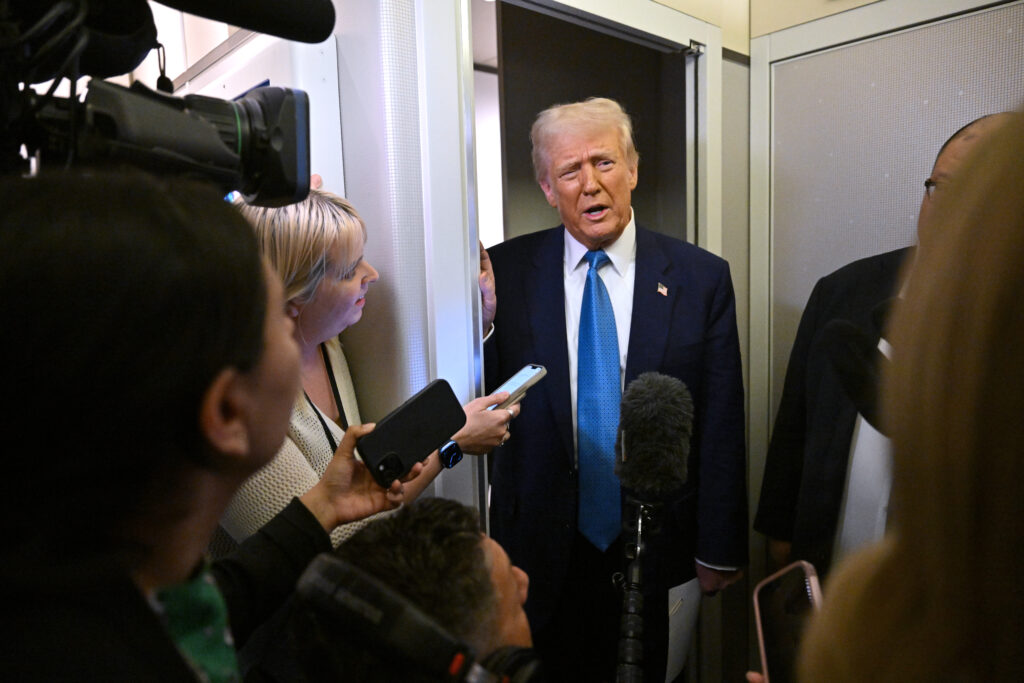
Trump says trade deal with China ‘possible’
US President Donald Trump suggested on Wednesday that a trade deal was “possible” with China — a key target in the US leader’s tariffs policy.In 2020, the United States had already agreed to “a great trade deal with China” and a new deal was “possible,” Trump told reporters aboard Air Force One.Asked about the comments, …