AFP Asia Business

The last carriage horses of Indonesia’s capital endure harsh lives

In a dark stable under a heaving highway in Indonesia’s capital, trucks rumble past emaciated carriage horses tied to pillars in ramshackle wooden stalls, their ribs protruding.The steeds are used to pull traditional wooden carriages known as delman, once a staple of colonial-era transportation, but fading from view in Jakarta in an era dominated by …

The last carriage horses of Indonesia’s capital endure harsh lives Read More »

Arab leaders meet in Saudi Arabia to hash out Gaza plan

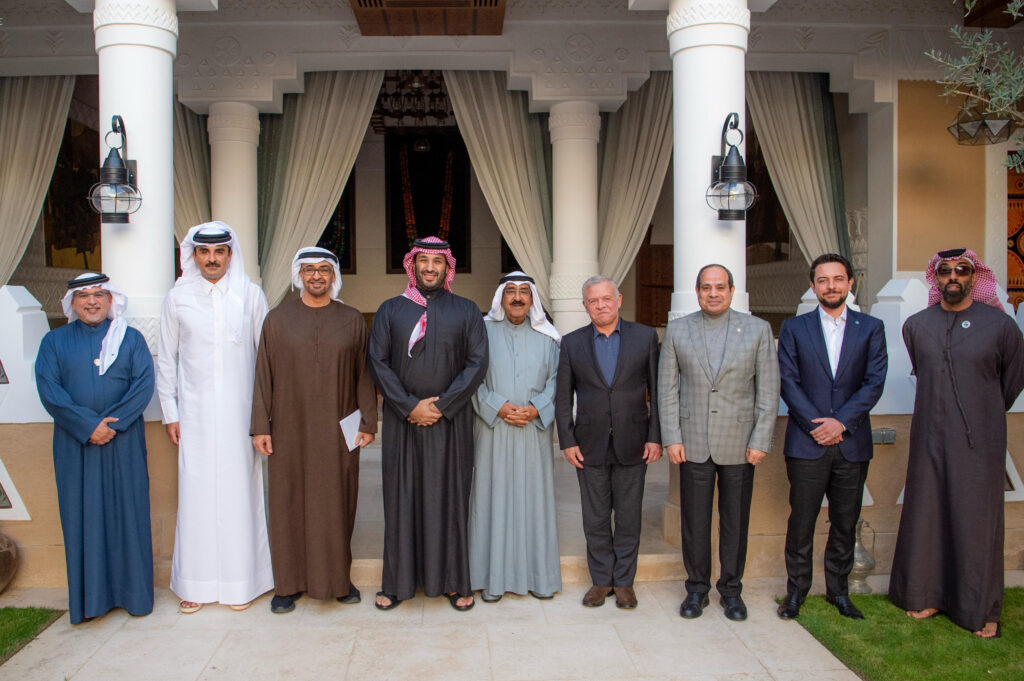
Arab leaders met in Riyadh on Friday to craft a plan for Gaza’s post-war reconstruction to counter Donald Trump’s proposal for the United States to take over the territory without its Palestinian residents.Trump’s plan has united Arab states in opposition to it, but disagreements remain over who should govern Gaza and how its reconstruction can be funded.A photo from the meeting showed the kingdom’s de facto leader Crown Prince Mohammed bin Salman with the leaders of other Gulf Arab states, as well as Egypt and Jordan. A source close to the Saudi government confirmed the meeting had finished. He said he did not expect a final statement to be issued as the “discussion was confidential”.The official Saudi Press Agency said the “fraternal consultative” meeting saw an “exchange of views on various regional and international issues, especially joint efforts in support of the Palestinian cause, and developments in the situation in the Gaza Strip”.Egyptian President Abdel Fattah al-Sisi’s office said he had left the Saudi capital after the sit-down with the leaders of Bahrain, Jordan, Kuwait, Qatar, Saudi Arabia and the United Arab Emirates.- ‘Historic juncture’ -Trump triggered global outrage when he proposed the United States “take over” the Gaza Strip and relocate its more than two million residents to Egypt and Jordan.”We’re at a very important historic juncture in the Arab-Israeli or Israeli-Palestinian conflict… where potentially the United States under Trump could create new facts on the ground that are irreversible,” Andreas Krieg of King’s College London said ahead of the meeting.The Saudi source had told AFP that the summit participants would discuss “a reconstruction plan to counter Trump’s plan for Gaza”.The Gaza Strip is largely in ruins after more than 15 months of war between Israel and Hamas, with the United Nations recently estimating that reconstruction will cost more than $53 billion.During a meeting with Trump in Washington on February 11, Jordan’s King Abdullah II said Egypt would present a plan for a way forward.The Saudi source had said ahead of the talks that the delegates would discuss “a version of the Egyptian plan”.The Saudi Press Agency said the decisions taken at the “unofficial” meeting would be put on the agenda of an emergency Arab League summit to be held in Egypt on March 4.- Financing -Arab leaders see an alternative plan for Gaza’s reconstruction as essential after Trump pointed to the scale of the task as a justification for relocating its Palestinian residents.Cairo has yet to release the details of its proposal, but former Egyptian diplomat Mohamed Hegazy outlined a plan “in three technical phases over a period of three to five years”.The first phase, lasting six months, would focus on “early recovery” and the removal of debris, he said.The second would require an international conference to set out detailed plans for reconstruction and restoring infrastructure.The final phase would see the provision of housing and services and the establishment of a “political track to implement the two-state solution”, an independent Palestine alongside Israel.An Arab diplomat familiar with Gulf affairs said: “The biggest challenge facing the Egyptian plan is how to finance it.”It would be inconceivable for Arab leaders to meet without reaching a common vision, but the main thing lies in the content of this vision and the ability to implement it.”Krieg said it was a “unique opportunity” for the “Saudis to rally all the other GCC countries, plus Egypt and Jordan, around on this matter, to find a common position to answer what is a kind of very coercive statement that Trump has been making”. 

Netanyahu vows militants to pay as Hamas cites ‘error’ over Bibas body

Israel’s prime minister accused Hamas on Friday of killing two Israeli children in Gaza and said the militants would pay for failing to return their mother, Shiri Bibas, which Hamas blamed on a possible “mix-up” of bodies. Israeli military spokesman Rear Admiral Daniel Hagari said after an analysis of the remains that Palestinian militants had killed the Bibas boys “with their bare hands”, while Hamas has long maintained an Israeli air strike killed them and their mother early in the war.Relatives of the Bibas family, however, suggested Prime Minister Benjamin Netanyahu was also accountable for the deaths, saying he would receive “no forgiveness” for abandoning the mother and her children during their ordeal. More than 15 months of war have left much of Gaza in ruins after Palestinian militants attacked Israel and seized 251 hostages on October 7, 2023. Sixty-seven hostages remain in Gaza, including more than 30 the Israeli military has said are dead.Despite the tensions over Thursday’s handover of remains, the next swap of live hostages for Palestinian inmates in Israeli prisons was still expected to go ahead Saturday under an ongoing truce deal.Hamas had said the four bodies returned on Thursday included those of Bibas and her two sons Ariel, aged four at the time of his abduction, and Kfir, the youngest hostage at just nine months old. On Friday, however, after forensic analysis, Israel said the body purported to be that of Shiri Bibas was not hers, with Netanyahu saying Hamas had “placed the body of a Gazan woman in a coffin”. Hamas admitted “the possibility of an error or mix-up”, which it attributed to Israeli bombing of the area.Netanyahu vowed to “ensure that Hamas pays the full price for this cruel and evil violation of the agreement”. In response, Hamas affirmed its “seriousness and full commitment” to its responsibilities under the ceasefire, and said it had “no interest in failing to comply or holding on to any bodies”. It also asked Israel to return the body of the Gazan woman.And later Friday, the International Committee of the Red Cross confirmed it had transferred more human remains “at the request of both parties” to Israeli authorities, but was not able to say if they included the body of Shiri Bibas.- ‘Fear for her fate’ -“Who kidnaps a little boy and a baby and murders them? Monsters. That’s who,” Netanyahu said. “I vow that I will not rest until the savages who executed our hostages are brought to justice.”But the sister-in-law of Shiri Bibas said in a statement that the family was “not seeking revenge right now”, while levelling a measure of the blame at Netanyahu.”There is no forgiveness for abandoning them on October 7, and no forgiveness for abandoning them in captivity,” Ofri Bibas said.”We are still waiting for Shiri and fear for her fate.”British foreign minister David Lammy said that her “body must be returned”, while denouncing the “sick and abhorrent” killing of her sons.”The hostages must be released,” he added. “This nightmare must end.”In Jerusalem, musician David Shemer, 72, said he hoped Israeli would not retaliate.”There are voices about totally destroying Gaza and all this. For me, it’s not only inappropriate, it’s immoral,” he said. “Revenge is a very human impulse, but it is useless.”Hamas also handed over a fourth body on Thursday, that of Oded Lifshitz, a veteran journalist and long-time defender of Palestinian rights who was aged 83 at the time of his capture.The repatriations were part of the first phase of the ceasefire between Israel and Hamas, which took effect on January 19 and is to expire in early March. The deal has so far led to the release of 19 living Israeli hostages in exchange for more than 1,100 Palestinian prisoners.Hamas’s armed wing confirmed that it would release six Israelis on Saturday in the seventh swap of the ceasefire.The Palestinian Prisoners’ Club advocacy group said Israel would free 602 inmates in return. Most were arrested after the October 7 attack, it said.Israeli campaign group the Hostages and Missing Families Forum has published the names of the six Israelis to be freed — Eliya Cohen, Tal Shoham, Omer Shem Tov, Omer Wenkert, Hisham al-Sayed and Avera Mengistu.Sayed and Mengistu have been held in Gaza for around a decade.- West Bank operation -Israeli Foreign Minister Gideon Saar has said talks will begin this week on the truce’s second phase, aiming to lay out a more permanent end to the war.A Hamas spokesman accused Netanyahu on Thursday of “procrastinating” on phase two, saying the group was “ready to engage” in negotiations.Alongside the Gaza war, violence has surged in the Israeli-occupied West Bank.Netanyahu ordered an “intensive operation against centres of terrorism” in the West Bank before visiting troops operating in Tulkarem refugee camp on Friday, his office said.His order came after bombs exploded on three buses in central Israel without causing any injuries. Hamas’s 2023 attack resulted in the deaths of 1,214 people, mostly civilians, according to an AFP tally of Israeli official figures.Israel’s retaliatory campaign has killed at least 48,319 people in Gaza, the majority of them civilians, according to figures from the health ministry in the Hamas-run territory that the United Nations considers reliable. 

Netanyahu orders army to step up West Bank offensive after bus bombs

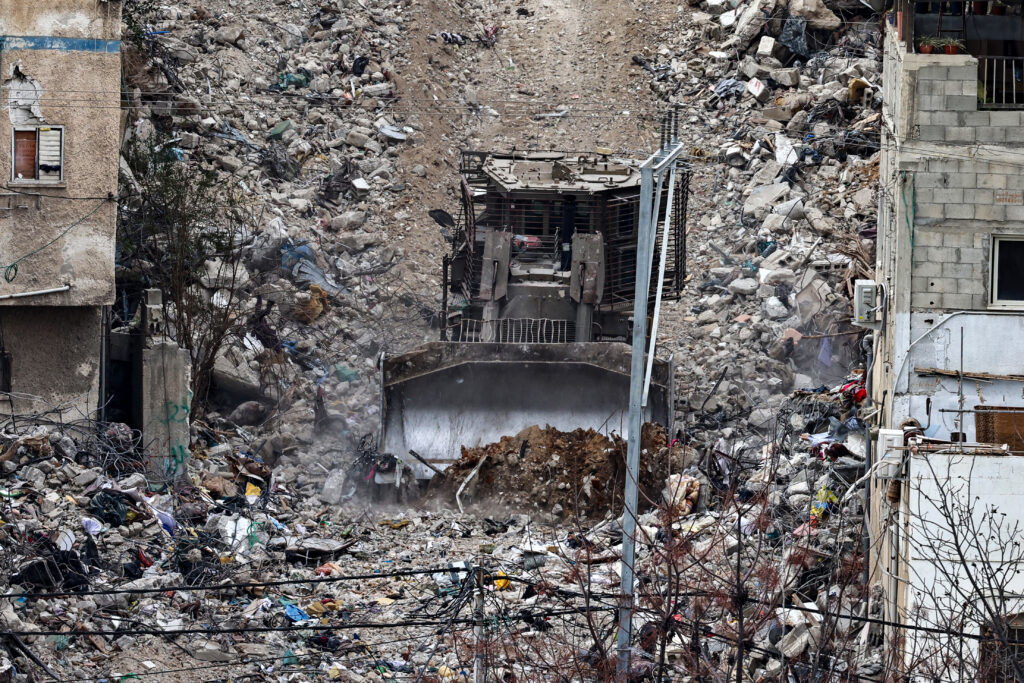
Israeli Prime Minister Benjamin Netanyahu ordered the army to step up its operations in the occupied West Bank on Friday as he paid a rare visit to troops in the territory that drew Palestinian condemnation.Netanyahu’s visit to Tulkarem refugee camp in the north of the territory came after bombs that Israeli officials said resembled those used by militants in the West Bank exploded on multiple buses in central Israel on Thursday.The prime minister’s office said he ordered more “operational activity” in the northern West Bank in response to the bomb blasts.Days after a ceasefire took effect in Gaza on January 19, Israel launched a large-scale military operation in the northern West Bank dubbed “Iron Wall”, spanning multiple refugee camps near the cities of Jenin, Tulkarem and Tubas.”We are entering terrorist strongholds, flattening entire streets that terrorists use, and their homes. We are eliminating terrorists, commanders,” Netanyahu said.At least 51 Palestinians, including seven children, and three Israeli soldiers have been killed since the assault began, according to the United Nations.On Friday, “live fire” from Israeli troops killed a 13-year-old girl in Jenin refugee camp, the Palestinian health ministry said.Israeli fire also killed a 13-year-old boy near the southern West Bank city of Hebron, the ministry said.On Thursday, a Palestinian was killed when his car was struck by an armoured vehicle just outside Tulkarem camp, provincial governor Abdallah Kamil told AFP.The Israeli offensive has displaced at least 40,000 people, according to the UN Office for the Coordination of Humanitarian Affairs.The operation is now the longest in the West Bank since the second Palestinian intifada, or uprising, in the early 2000s.Netanyahu said the army was doing “very important work against Hamas and other terrorist organisations’ desire to harm us”.He said Israel had intensified its raids over the past year, fighting in camps it deems to harbour Palestinian militant groups.- ‘Storming’ -In both Tulkarem and Jenin, the army has demolished dozens of homes with explosives, opening up new access routes into the densely built camps.Armoured bulldozers have wreaked havoc in the camps, upturning tarmac, cutting water pipes and tearing down roadside facades.Palestinians on social media expressed shock at a photograph shared by Netanyahu’s office showing him meeting with army officers in a command centre that appeared to have been established inside a camp resident’s home.The Palestinian foreign ministry accused Netanyahu of “storming” the camp.Netanyahu’s visit came after three buses exploded in the central Israeli city of Bat Yam late Thursday without causing any casualties.A police commander from central Israel, Haim Sargarof, said in a televised briefing that the devices used to set off the blasts were similar to those found in the West Bank.Violence in the West Bank has surged since the war in Gaza broke out in October 2023.Israeli troops or settlers have killed at least 900 Palestinians, including many militants, in the territory since the start of the war, according to the Palestinian health ministry.At least 32 Israelis have been killed in Palestinian attacks or during Israeli military operations in the territory over the same period, according to Israeli official figures.

Syrian Jews hope for revival of ancient heritage

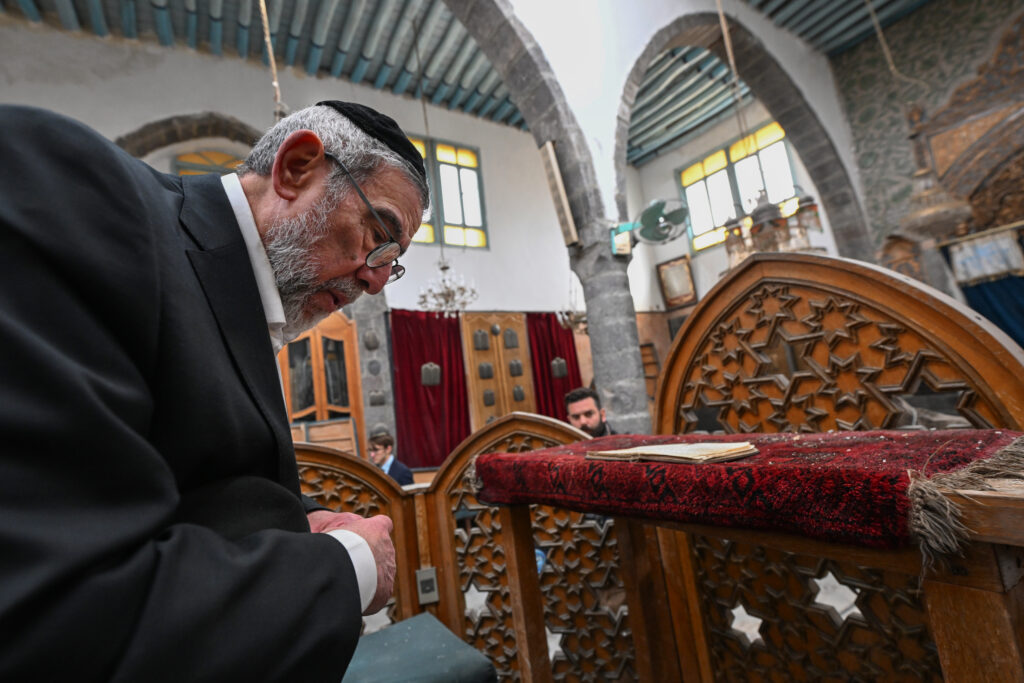
Syria’s tiny Jewish community and Syrian Jews abroad are trying to build bridges after Bashar al-Assad’s ouster in the hope of reviving their ancient heritage before the community dies out. This week, a small number of Jews living in Damascus, along with others from abroad, held a group prayer for the first time in more than three decades, in the Faranj synagogue in Damascus’s Old City.”There were nine of us Jews (in Syria). Two died recently,” community leader Bakhour Chamntoub told AFP in his home in the Old City’s Jewish quarter.”I’m the youngest. The rest are elderly people who stay in their homes,” the tailor in his sixties added in a thick Damascus accent.After Islamist-led rebels finally toppled Assad in December last year after nearly 14 years of conflict, the country’s dwindling community has recently welcomed back several Syrian Jews who had emigrated.Syria’s millennia-old Jewish community was permitted to practise their faith under Assad’s father, Hafez, and had friendly relations with their fellow countrymen.But the strongman restricted their movement and prevented them from travelling abroad until 1992. After that, their numbers plummeted from around 5,000 to just a handful of individuals, headed by Chamntoub, who oversees their affairs.AFP correspondents met with Chamntoub, known to neighbours and friends as “Eid”, after he returned from burying an elderly Jewish woman.”Now there are seven of us,” he said, adding that a Palestinian neighbour had looked after the woman during her final days.- ‘Tree uprooted’ -The 1967 Arab-Israeli war cast a heavy cloud over the Jewish communities in several Arab countries. Syria lost most of the strategic Golan Heights to Israel, which later annexed them in a move never recognised by the international community as a whole.Chamntoub said the community did not experience any “harassment” under Bashar al-Assad’s rule.He said an official from the new Islamist-led administration had visited him and assured him the community and its properties would not be harmed.Chamntoub expressed hope of expanding ties between the remaining Jews in Syria and the thousands living abroad to revive their shared heritage and restore places of worship and other properties.On his Facebook page, he publishes news about the community — usually death notices — as well as images of the Jewish quarter and synagogues in Damascus.He says nostalgic Syrian Jews abroad often make comments, recalling the district and its surroundings. At the Faranj synagogue, Syrian-American Rabbi Yusuf Hamra, 77, led what he said was the first group prayer in decades.”I was the last rabbi to leave Syria,” he said, adding that he had lived in the United States for more than 30 years.”We love this country,” said Hamra, who arrived days earlier on his first visit since emigrating.”The day I left Syria with my family, I felt I was a tree that had been uprooted,” he said.- ‘Family ties’ abroad -His son Henry, travelling with him, said he was happy to be in the synagogue.”This synagogue was the home for all Jews — it was the first stop for Jews abroad when they would visit Syria,” the 47-year-old said.When war erupted in Syria in 2011 with Assad’s brutal suppression of anti-government protests, synagogues shuttered and the number of Jews visiting plummeted.In the now devastated Damascus suburb of Jobar, a historic synagogue that once drew pilgrims from around the world was ransacked and looted, with a Torah scroll believed to be one of the world’s oldest among the items stolen.Chamntoub said his joy at publicly worshipping in the Faranj synagogue again was “indescribable”.He expressed hope that “Jews will return to their neighbourhood and their people” in Syria, saying: “I need Jews with me in the neighbourhood.”Hamra said that like many emigrants, he was hesitant about returning permanently.”My freedom is one thing, my family ties are another,” he said, noting that many in the 100,000-strong diaspora were long established in the West and reluctant to give up their lives and lifestyles there.Chamntoub said many Jews had told him they regretted leaving Syria but that he doesn’t expect “a full return”. “Maybe they will come for trips or to do business” but not to stay, he said.He expressed hope of establishing a museum in Syria to commemorate its Jewish community.”If they don’t return or get married and have children here, we will end soon,” he said.

US, China economic leaders raise ‘serious concerns’ in first call

US Treasury Secretary Scott Bessent and his Chinese counterpart He Lifeng raised mutual concerns on trade and economic issues in their introductory call Friday, as tensions between the world’s two biggest economies simmer under President Donald Trump’s second term.The talks came shortly after Trump imposed additional tariffs on imports from China over its alleged role …

US, China economic leaders raise ‘serious concerns’ in first call Read More »