AFP Asia Business

Tens of thousands vow support for Lebanon’s Hezbollah at slain leader’s funeral

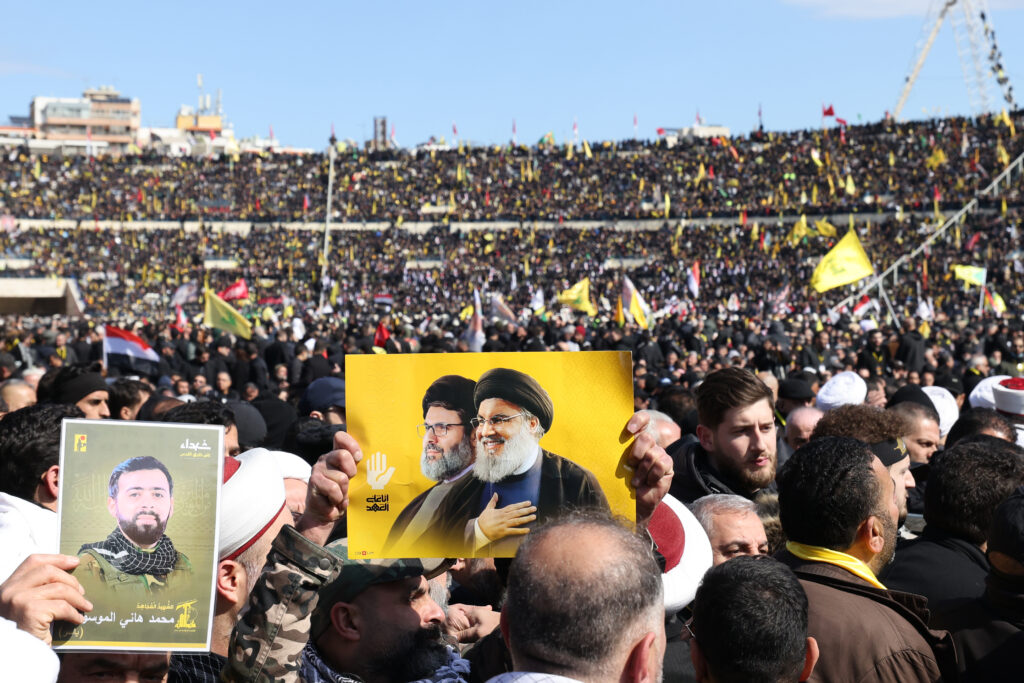
Tens of thousands of black-clad mourners vowed support for Hezbollah at the Beirut funeral of slain leader Hassan Nasrallah on Sunday, after the group was dealt major blows in its last round of hostilities with Israel.Women wailed as a truck carrying the coffins of Nasrallah and Hashem Safieddine — Nasrallah’s chosen successor killed in another Israeli air strike — slowly moved through the crowd, topped with two black turbans and draped in Hezbollah’s yellow flag.The September killing of the charismatic leader, who led Hezbollah for more than three decades, in a massive Israeli strike dealt a heavy blow to the Iran-backed group.But Hezbollah, which dominated Lebanon’s politics for decades, has long had a support base in the country’s majority Shiite Muslim community.As the funeral began at the Camille Chamoun Sports City Stadium, Israeli warplanes flew at a low altitude over Beirut in what Defence Minister Israel Katz said was a “clear message” against anyone who threatens Israel.In a televised address to the ceremony, Nasrallah’s successor Naim Qassem said Hezbollah would keep following his “path” and rejected any control of “tyrant America” over Lebanon.”The resistance is not over, the resistance is still present and ready” to face Israel, he said.Nasrallah speeches were blasted as the mourners raised their fists in the air and chanted “We are at your service, Nasrallah” and “We are loyal to the promise, Nasrallah”.Men, women and children walked in the biting cold to reach the site of the ceremony, that was delayed for months over security concerns.One of them was Umm Mahdi, 55, who had come to see Nasrallah “one last time and see his shrine”.”This is the least we can do for Sayyed, who gave up everything,” she added, using an honorific.AFP correspondents at the stadium, which organisers said could accommodate roughly 78,000 people, was fully packed.- ‘Heroes of the resistance’ -As crowds gathered, the official National News Agency (NNA) reported Israeli strikes in Lebanon’s south, including a location about 20 kilometres (12 miles) from the border, but also in the east.Israel’s military said it had struck “sites containing rocket launchers and weapons” in those areas.The Israeli army in a tweet ahead of the start of the funeral said “the world is a better place”. Israel has carried out multiple strikes in Lebanon since a November 27 ceasefire deal with Hezbollah ended more than a year of hostilities including two months of all-out war.The funeral comes days after the deadline for Israel to withdraw from Lebanon’s south, with Israeli troops pulling out from all but five locations. Both sides have accused each other of violating the truce.President Joseph Aoun asked parliament speaker Nabih Berri, a Hezbollah ally, to represent him at the ceremony, while Prime Minister Nawaf Salam was to be represented by a minister.Hezbollah’s weakening in the war was widely seen as having contributed to the election of Aoun, who named Salam as his premier last month after two years of leadership vacuum.Iran’s parliament speaker Mohammad Bagher Ghalibaf and Foreign Minister Abbas Araghchi were in attendance, with representatives of Iraq’s main pro-Iran factions also expected to come.Araghchi, in a speech from Beirut, described the slain leaders as “two heroes of the resistance” and vowed that “the path of resistance will continue”.Sam Heller of the Century Foundation think-tank said it was “important for the group to demonstrate that it remains a major social and political force, despite some of the setbacks it’s been dealt”.Since Saturday, roads into Beirut have been clogged with carloads of supporters travelling in from Hezbollah’s other power centres in south and east Lebanon.Khouloud Hamieh, 36, came from the east to mourn the leader that she said was “dearest to our souls”.Despite the cold weather and massive crowds, she said she would not have missed the funeral for anything.- ‘Dearest to our souls’ -A funeral procession will take place to the site near the airport highway where Nasrallah will be buried. Safieddine will be interred in his southern hometown of Deir Qanun al-Nahr on Monday.Hezbollah’s Al-Manar television said the movement deployed 25,000 members for crowd control. A security source said 4,000 troops and security personnel were on duty.Civil aviation authorities said Beirut airport would close exceptionally for four hours.A founding member of Hezbollah in 1982, Nasrallah won renown around the Arab world in May 2000 when Israel ended its 22-year occupation of south Lebanon under relentless attack by the group under his leadership.In the decades since, Lebanese have been divided over Hezbollah, with many criticising the group for initiating hostilities with Israel in support of Palestinian militant group Hamas.
Israel says army to stay in evacuated West Bank camps for ‘coming year’

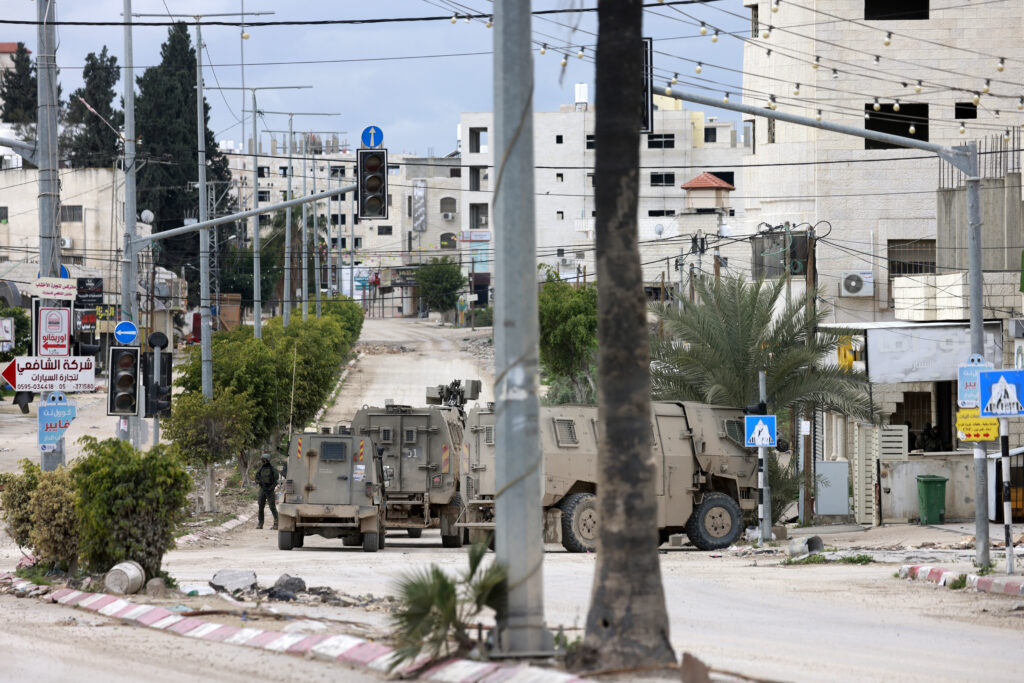
Israel on Sunday said troops would stay in West Bank refugee camps for the coming year, announcing expanded military operations including tank deployments, after the displacement of tens of thousands of Palestinians.The military one month ago began a major raid against Palestinian militants in the West Bank just after a truce began in the Gaza Strip, another Palestinian territory.The Israeli operation in the West Bank spans multiple refugee camps near the cities of Jenin, Tulkarem and Tubas.”So far, 40,000 Palestinians have evacuated from the refugee camps of Jenin, Tulkarem, and Nur Shams, which are now empty of residents,” Defence Minister Israel Katz said in a statement. “I have instructed (troops) to prepare for a prolonged presence in the cleared camps for the coming year and to prevent the return of residents and the resurgence of terrorism,” he added.According to the United Nations, the Israeli offensive has so far killed at least 51 Palestinians, including seven children, and three Israeli soldiers, as well as displacing at least 40,000 people.On Sunday, Israel’s military said “a tank division will operate in Jenin” as part of “expanding” operations in the area. This is the first time tanks have operated in the territory since the end of the second intifada, or uprising, in 2005.”The Nahal (infantry) Brigade and (elite) Duvdevan Unit forces have begun to intervene in other villages” in the north of the territory, Katz’s statement said, adding that the forces “are continuing their operations in the Jenin and Tulkarem regions.”The statement comes two days after Prime Minister Benjamin Netanyahu, during a rare visit to troops in the territory, ordered the army to step up its operations in the West Bank, which Israel has occupied since 1967.His visit to Tulkarem refugee camp drew Palestinian condemnation.- ‘Flattening entire streets’ -Netanyahu’s announcement came after bombs that Israeli officials said resembled those used by militants in the West Bank exploded on multiple empty buses in central Israel on Thursday, without causing any injuries.”We are entering terrorist strongholds, flattening entire streets that terrorists use, and their homes. We are eliminating terrorists, commanders,” Netanyahu said.In both Tulkarem and Jenin, the army has demolished dozens of homes with explosives, opening up new access routes into the densely built camps.Armoured bulldozers have wreaked havoc, upturning tarmac, cutting water pipes and tearing down roadside facades.Violence in the West Bank has surged since the war in Gaza broke out in October 2023.Israeli troops or settlers have killed at least 900 Palestinians, including many militants, in the territory since the start of the Gaza war, according to the Palestinian health ministry.At least 32 Israelis have been killed in Palestinian attacks or during Israeli military operations in the territory over the same period, according to Israeli official figures.

Tens of thousands pour in for Beirut funeral of slain Hezbollah leader

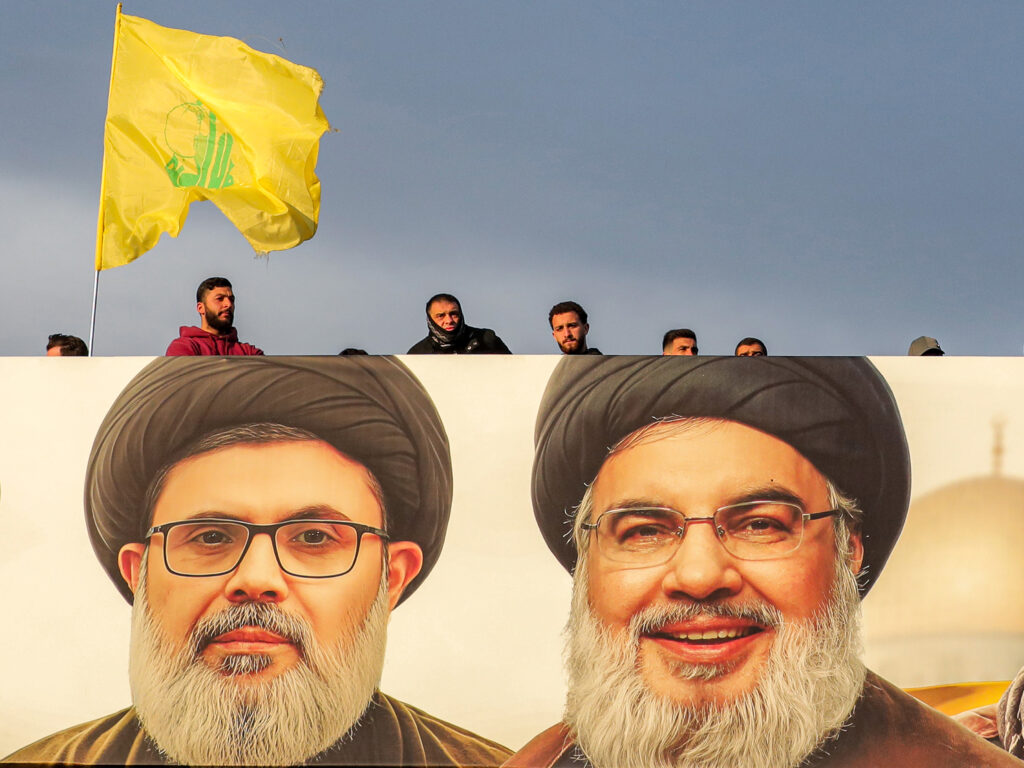
Tens of thousands of mourners dressed in black, some waving Hezbollah flags or carrying portraits of the group’s slain leader Hassan Nasrallah, flocked to his funeral Sunday in a stadium on the outskirts of Beirut.The killing of the charismatic leader, who guided the Lebanese movement for more than three decades, dealt a heavy blow to the Iran-backed group’s reputation as a fighting force.But Hezbollah, which also played a major role in the country’s politics for decades, has long had a support base in the country’s majority Shiite Muslim community by providing social and economic services.Many men, women and children from Lebanon and beyond walked on foot in the biting cold to reach the site of the ceremony, delayed for security reasons after Nasrallah’s death in a massive Israeli strike on Hezbollah’s south Beirut bastion in September.One of them was Umm Mahdi, 55, who had come “to see him (Nasrallah) one last time and see his shrine… Of course, we feel sadness”.”This is the least we can do for Sayyed who gave up everything,” she added, using an honorific.As the crowds gathered, Lebanese state media reported Israeli strikes on areas in Lebanon’s south, including a location about 20 kilometres (12 miles) from the border.Israel’s military said it had struck in southern Lebanon “several rocket launchers that posed an imminent threat to Israeli civilians”.Israel has carried out multiple strikes in Lebanon since a ceasefire deal with Hezbollah went into effect on November 27.Giant portraits of the bushy-bearded Nasrallah and of Hashem Safieddine — Nasrallah’s chosen successor killed in another Israeli air strike before he could assume the post — have been plastered on walls and bridges across south Beirut.One was also hung above a stage erected on the pitch of the packed Camille Chamoun Sports City Stadium on the outskirts of the capital where the funeral for both leaders is to be held.The stadium has a capacity of around 50,000 but Hezbollah organisers have installed tens of thousands of extra seats on the pitch and outside, where mourners will be able to follow the ceremony on a giant screen.Hezbollah has invited top Lebanese officials to the ceremony, with Iranian speaker of parliament, Mohammad Bagher Ghalibaf and Foreign Minister Abbas Araghchi in attendance.Araghchi, in a speech from Beirut, described the slain leaders as “two heroes of the resistance” and vowed that “the path of resistance will continue”.- ‘Dearest to our souls’ -Since Saturday, roads into Beirut have been clogged with carloads of Hezbollah supporters travelling in from the movement’s other power centres in south Lebanon and the Bekaa Valley, in Lebanon’s east.Khouloud Hamieh, 36, said she came from the east to mourn the leader she said was “dearest to our souls”.”The feeling is indescribable, my heart is beating (so fast),” she said, her eyes filled with tears.Despite cold weather and large crowds, she said she would not have missed the funeral for anything.”Even if we had to crawl to get here, we would still come” she said.The funeral is due to start at 1:00 pm (1100 GMT).A procession will then follow to the site near the airport highway where Nasrallah will be buried. Safieddine will be interred in his southern hometown of Deir Qanun al-Nahr on Monday.Hezbollah’s Al-Manar television said the movement was deploying 25,000 members for crowd control. A security source said 4,000 troops and security personnel would also be deployed to the area.Representatives of Iraq’s main pro-Iran factions are also expected to attend and additional flights were laid on between Baghdad and Beirut.Civil aviation authorities said Beirut airport will close exceptionally from midday until 4:00 pm.Hezbollah has asked mourners to refrain from firing in the air, a dangerous but common practice at funerals in parts of Lebanon.The defence ministry said it would freeze gun licences from February 22 to 25.A founding member of Hezbollah in 1982, Nasrallah won renown around the Arab world in May 2000 when Israel ended its 22-year occupation of south Lebanon under relentless attack by the group under his leadership.In the decades since, views about Hezbollah in Lebanon have become increasingly polarised.Many criticise the movement for its readiness to take the country to war with Israel in support of Palestinian militant group Hamas.The war and almost a year of conflict that preceded it killed more than 4,000 people in Lebanon, according the health ministry. The United Nations says reconstruction costs are expected to top $10 billion.

Israel delays Palestinians’ release after six Gaza hostages freed

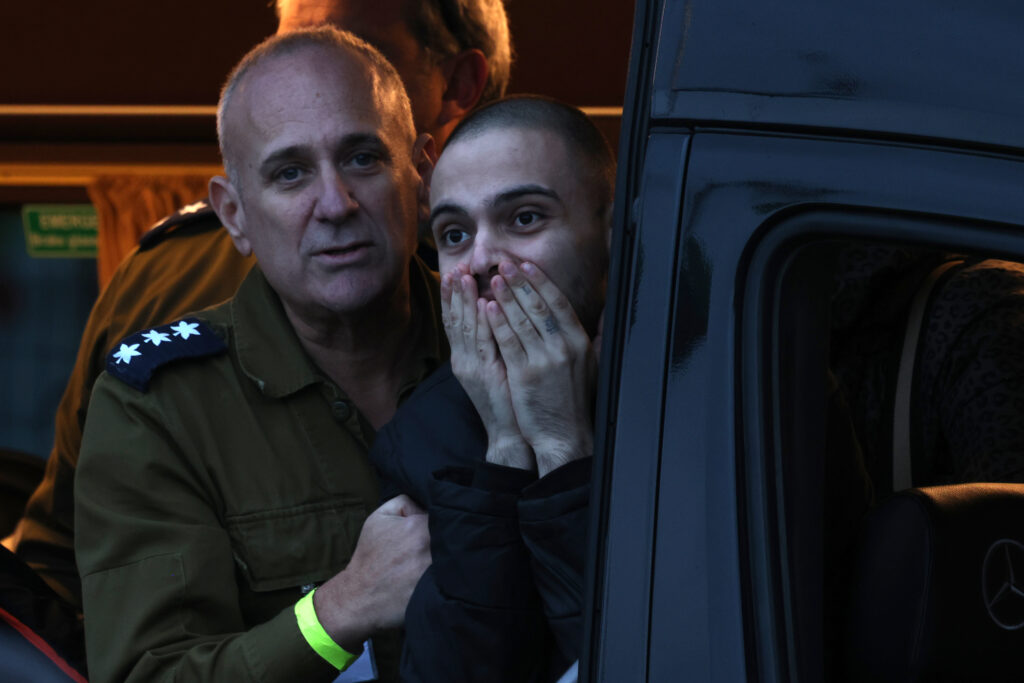
Israeli Prime Minister Benjamin Netanyahu said Sunday that freeing Palestinian prisoners under the Gaza ceasefire deal will be delayed until Hamas ends its “humiliating ceremonies” while releasing Israeli hostages.Since the ceasefire came into effect on January 19, Hamas has released 25 Israeli hostages in well-rehearsed handovers, with masked militants parading the captives on stage and forcing them to wave at Gazans gathered to watch.In the seventh scheduled prisoner-hostage swap, Hamas released six Israeli captives on Saturday while Israel put off releasing Palestinian prisoners. The Palestinian militant group called the move a “blatant violation” of the truce deal.Israel had been expected to release more than 600 Palestinian prisoners.”In light of Hamas’ repeated violations — including the disgraceful ceremonies that dishonour our hostages and the cynical use of hostages for propaganda — it has been decided to delay the release of terrorists”, Netanyahu’s office said in a statement Sunday.The delay will last “until the release of the next hostages is ensured, without the humiliating ceremonies”, it added.From Washington, US Secretary of State Marco Rubio warned that Hamas would be “destroyed” if it did not release all remaining hostages.Families of the Palestinian prisoners, meanwhile, waited hours on Saturday for their loved ones to be released from Israeli custody, only to be disappointed.”We wait for them, to hug them, and see them, but Netanyahu is always stalling,” said Fatiha Abu Abdullah, a mother in the southern Gaza city of Khan Yunis.”God willing, they will be released soon,” added Abdullah, whose son has been in an Israeli prison since November.- ‘Coming back home’ -The Palestinian Prisoners’ Club advocacy group had said Israel would free 620 inmates on Saturday, most of them Gazans taken into custody during the war.Before Netanyahu’s announcement, Hamas spokesperson Abdel Latif al-Qanou said Israel’s “failure to comply with the release… at the agreed-upon time constitutes a blatant violation of the agreement”.Qanou called on the truce mediators to pressure Israel to “implement its provisions without delay or obstruction”.The six Israelis released Saturday were the last group of living hostages set to be freed under the truce’s first phase.The deal is due to expire in early March.Negotiations for a second phase, which is meant to lead to a permanent end to the war triggered by Hamas’ October 7, 2023 attack on Israel, have yet to begin.At a ceremony in Nuseirat, central Gaza, Eliya Cohen, 27, Omer Shem Tov, 22, and Israeli-Argentine Omer Wenkert, 23, waved from a stage, flanked by masked Hamas militants, before their handover to the Red Cross.”I saw the look on his face, he’s calm, he knows he’s coming back home… He’s a real hero,” said Wenkert’s friend Rory Grosz.Under the cold winter rain in Rafah, southern Gaza, militants handed over Tal Shoham, 40, and Avera Mengistu, 38, who both appeared dazed.A sixth hostage, Hisham al-Sayed, 37, was later released in private and taken back to Israeli territory, the military said.Sayed, a Bedouin Muslim, and Mengistu, an Ethiopian Jew, had been held in Gaza for about a decade after they entered the territory individually.Sayed’s family called it “a long-awaited moment”.- ‘Mix-up’ -On Thursday, the first transfer of dead hostages under the truce sparked anger in Israel after analysis concluded that captive Shiri Bibas’s remains were not among the four bodies returned.Bibas and her two young sons, among the dozens of captives taken during Hamas’ October 2023 assault, had become symbols of the ordeal suffered by Israeli hostages.Hamas admitted a possible “mix-up of bodies”, and late Friday handed over more human remains, which the Bibas family said had been identified as Shiri’s.The family said in a statement she “was murdered in captivity and has now returned home… to rest”.Hamas militants had claimed that Shiri and her sons were killed in an Israeli air strike.Forensics expert Chen Kugel, however, said an autopsy conducted on their remains found “no evidence of injuries caused by a bombing”.Israel’s military said that, after an analysis of the remains, Palestinian militants had killed the Bibas boys, Ariel and Kfir, “with their bare hands” in November 2023.Hamas dismissed this account as “baseless lies”.Out of 251 people taken hostage during the October 2023 attack, 62 are still in Gaza including 35 the Israeli military says are dead.The Hamas attack resulted in the deaths of 1,215 people, mostly civilians, according to an AFP tally of Israeli official figures.Israel’s retaliatory campaign has killed at least 48,319 people in Gaza, the majority of them civilians, according to figures from the health ministry in the Hamas-run territory that the United Nations considers reliable.burs-jj/sco/lb