
AFP Asia Business
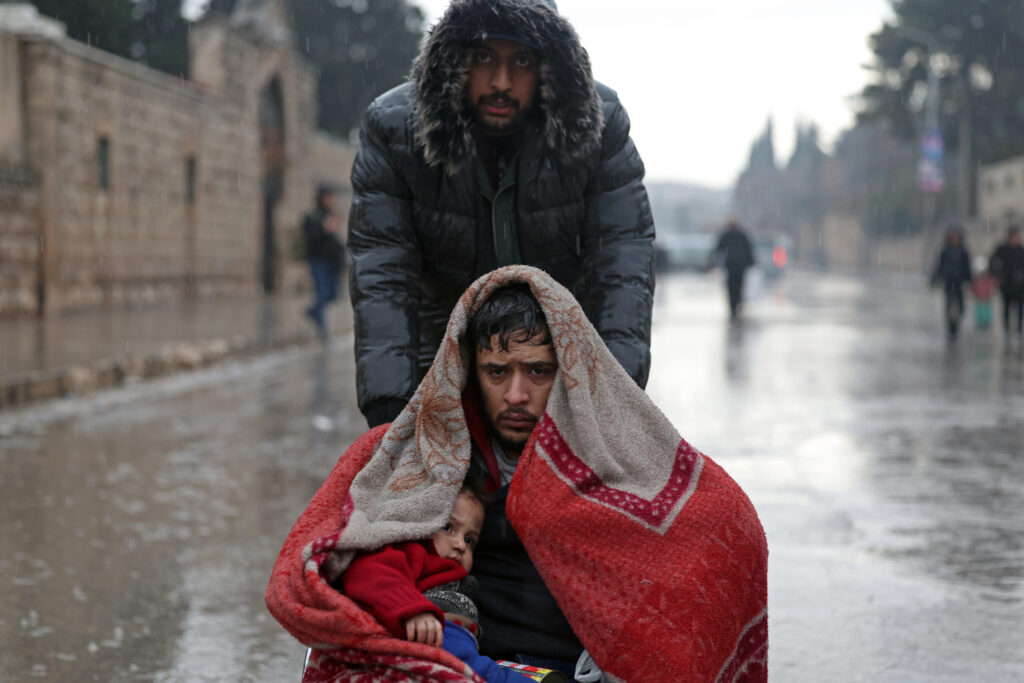
Syria strikes Kurdish area of Aleppo as fighters refuse to evacuate
Syria’s army renewed strikes on a Kurdish district of Aleppo on Friday after fighters from the minority refused to leave in defiance of a ceasefire that sought to halt days of fighting.The government and Kurdish forces have traded blame over who started the violence in Syria’s second city on Tuesday as they struggle to implement a deal to merge the Kurds’ de facto autonomous administration and military into the country’s new government.At least 21 civilians have been killed according to figures from both sides and tens of thousands have fled the worst clashes in Aleppo since Syria’s new Islamist authorities took power.The fighting presents yet another challenge for a country struggling to forge a new path since the ousting of longtime ruler Bashar al-Assad a year ago.Early Friday, Syrian authorities announced a truce with Kurdish forces linked to the US-backed, Kurdish-led Syrian Democratic Forces (SDF) and said fighters and their light weapons would be sent to Kurdish areas further east.But Kurdish fighters rejected any “surrender” and said they would stay and defend their districts.Hours later, Syria’s army warned it would renew strikes on what it said were military targets in the Kurdish-majority district of Sheikh Maqsud and urged residents to evacuate.The defence ministry said an ammunition depot at one of the sites had been destroyed.An AFP correspondent had seen residents laden with belongings fleeing before a two-hour humanitarian corridor closed.- Flights still suspended -In the late evening, an AFP correspondent reported the sound of heavy artillery shelling and gunfire.The army said three soldiers had been killed by Kurdish forces’ fire and announced “the start of combing operations” for fighters in Sheikh Maqsud ahead of the district’s handover to security forces.Kurdish forces reported shelling on Sheikh Maqsud, while state television accused the Kurds of launching drones on residential areas of Aleppo.A flight suspension at Aleppo airport was extended until late Saturday.Turkey’s Defence Minister Yasar Guler welcomed the government operation, saying “we view Syria’s security as our own security and that we support Syria’s fight against terrorist organisations”.Sheikh Maqsud and Ashrafiyeh have remained under the control of Kurdish units linked to the SDF, despite Kurdish fighters agreeing to withdraw from the areas in April.The SDF controls swathes of Syria’s oil-rich north and northeast, and was key to the defeat of the Islamic State group in 2019. But Ankara views its main component as an extension of the Kurdistan Workers’ Party (PKK), which earlier this year agreed to end its four-decade armed struggle against Turkey.Elham Ahmad, a senior official in the Kurdish administration in Syria’s northeast, accused Syria’s authorities of “choosing the path of war” by attacking Kurdish districts and of “seeking to put an end to the agreements that have been reached”.”We are committed to them and we are seeking to implement them,” she told AFP.- ‘Apply pressure’ -The March integration agreement was meant to be implemented last year, but differences, including Kurdish demands for decentralised rule, have stymied progress.Ahmad said that “the United States is playing a mediating role… we hope they will apply pressure to reach an agreement”.A diplomatic source told AFP that US envoy Tom Barrack was headed to Damascus.Syrian President Ahmed al-Sharaa discussed the situation in a call with Turkish leader Recep Tayyip Erdogan and said he was determined to “end the illegal armed presence” in the city, a Syrian presidency statement said.Turkey, which shares a 900-kilometre (550-mile) border with Syria, has launched successive offensives to push Kurdish forces from the frontier.Separately, French President Emmanuel Macron told Sharaa of his country’s keenness on a united Syria “where all society’s components are represented and protected”, a French foreign ministry statement said, urging the implementation of the March integration deal.Syria’s authorities have committed to protecting minorities, but sectarian bloodshed rocked the country’s Alawite and Druze communities last year.Nanar Hawach, senior Syria analyst at the International Crisis Group, said the renewed clashes cast further doubt on the March integration deal.”If the fighting escalates, international actors will wonder about Damascus’s capacity to govern Syria’s heterogeneous society,” he added.burs-str-lg/jfx
Defiant Khamenei slams protests as Iran presses internet shutdown
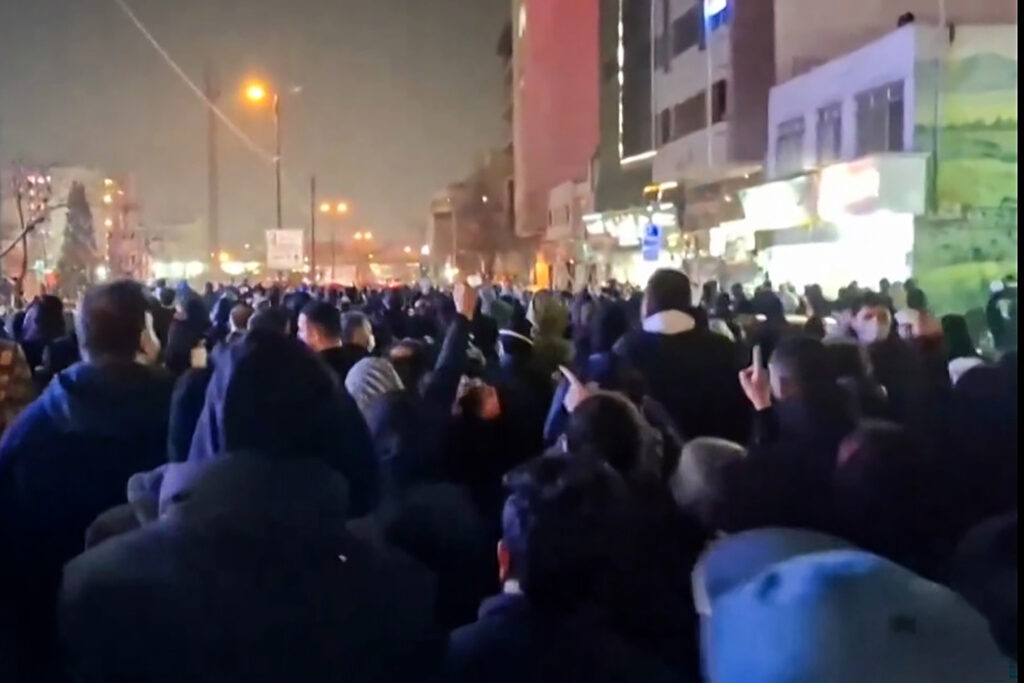
Iran’s supreme leader Ayatollah Ali Khamenei on Friday vowed the Islamic republic would not back down in the face of the biggest protests in years, as authorities pressed an internet blackout as part of a crackdown that has left dozens dead.Protests have taken place across Iran for 13 days in a movement sparked by anger over the rising cost of living that is now marked by calls for the end of the clerical system that has ruled Iran since the 1979 Islamic revolution that ousted the pro-Western shah.The biggest protests seen yet in the movement took place late Thursday with large crowds marching through Tehran chanting slogans including “death to the dictator”.Internet monitor Netblocks said authorities had now imposed a “nationwide internet shutdown” for the last 24 hours that was violating the rights of Iranians and “masking regime violence”.In a separate statement, Amnesty International said the “blanket internet shutdown” aims to “hide the true extent of the grave human rights violations and crimes under international law they are carrying out to crush” the protests.Norway-based NGO Iran Human Rights, raising a previous toll of 45 issued the day earlier, said at least 51 protesters, including nine children under the age of 18, have been killed by security forces and hundreds more injured.The demonstrations represent one of the biggest challenges yet to the Islamic republic in its over four-and-a-half decades of existence.- ‘Stained with blood’ -The protests late Thursday were the biggest in Iran since 2022-2023 rallies nationwide sparked by the death in custody of Mahsa Amini after she was arrested for allegedly violating the Islamic republic’s strict dress code.But Khamenei struck a defiant tone in his first comments on the escalating protests since January 3, calling the demonstrators “vandals” and “saboteurs”, in a speech broadcast on state TV.Khamenei said US President Donald Trump’s hands “are stained with the blood of more than a thousand Iranians”, in apparent reference to Israel’s June war against the Islamic republic which the US supported and joined with strikes of its own.He predicted the “arrogant” US leader would be “overthrown” like the imperial dynasty that ruled Iran up to the 1979 revolution.”Last night in Tehran, a bunch of vandals came and destroyed a building that belongs to them to please the US president,” he said in an address to supporters, as men and women in the audience chanted the mantra of “death to America”.”Everyone knows the Islamic republic came to power with the blood of hundreds of thousands of honourable people, it will not back down in the face of saboteurs.”Trump said late Thursday that “enthusiasm to overturn that regime is incredible” and warned that if the Iranian authorities responded by killing protesters, “we’re going to hit them very hard. We’re ready to do it.”In the Fox News interview, Trump went as far as to suggest 86-year-old Khamenei may be looking to leave Iran. “He’s looking to go someplace,” he said. Iranian Foreign Minister Abbas Araghchi, on a visit to Lebanon, on Friday accused Washington and Israel of “directly intervening” to try to “transform the peaceful protests into divisive and violent ones”.- ‘Red line’ -The son of the shah of Iran ousted by the 1979 Islamic Revolution, US-based Reza Pahlavi, urged Trump to intervene to help the protesters, adding “the people will be on the streets again in an hour”.But judiciary chief Gholamhossein Mohseni Ejei warned that punishment of “rioters” would be “decisive, the maximum and without any legal leniency”.Quoted by state television, he said a district prosecutor in the town of Esfarayen in eastern Iran and several members of the security forces had been killed late Thursday in the protests.The intelligence branch of the Revolutionary Guards, the security force entrusted with ensuring the preservation of the Islamic republic, said the “continuation of this situation is unacceptable” and protecting the revolution was its “red line”.Meanwhile, Iranian state television on Friday broadcast images of thousands of people attending counter-protests and brandishing slogans in favour of the authorities in some Iranian cities.The Haalvsh rights group, which focuses on the Baluch Sunni minority in the southeast, said security forces fired on protesters in Zahedan, the main city of Sistan-Baluchistan province, after Friday prayers, causing an unspecified number of casualties.There were few videos emerging of other new protest actions late Friday, with some sources blaming this on the internet shutdown.Amnesty International and Human Rights Watch said in a joint statement that since the start of the protests on December 28, security forces “have unlawfully used rifles, shotguns loaded with metal pellets, water cannon, tear gas and beatings to disperse, intimidate and punish largely peaceful protesters”.
Syria threatens to bomb Kurdish district in Aleppo as fighters refuse to evacuate
Syria’s army said it would renew strikes on a Kurdish district of Aleppo on Friday after fighters from the minority refused to leave, as a fragile ceasefire deal to halt days of fighting faltered.The government and Kurdish forces have traded blame over who started the violence in Syria’s second city on Tuesday as they struggle to implement a deal to merge the Kurds’ de facto autonomous administration and military into the country’s new government.At least 21 people have been killed and tens of thousands have fled the worst clashes in Aleppo since Syria’s new Islamist authorities took power, with the fighting presenting yet another challenge for a country struggling to forge a new path since the ousting of longtime ruler Bashar al-Assad a year ago.Early on Friday, Syrian authorities announced a truce with Kurdish forces linked to the US-backed, Kurdish-led Syrian Democratic Forces (SDF) and said fighters and their light weapons would be sent to Kurdish areas further east.But Kurdish fighters rejected any “surrender” and said they would stay and defend their districts.Later on Friday, Syria’s army warned it would renew strikes on the Kurdish-majority district of Sheikh Maqsud and urged residents to evacuate, publishing maps of what it said were military targets and urging Kurdish fighters to lay down their weapons.An AFP correspondent saw residents laden with belongings fleeing before a two-hour humanitarian corridor closed at 6:00 pm (1500 GMT).- ‘Apply pressure’ -The Kurds then said in a statement the neighbourhood was coming “under intense and heavy shelling”.State television accused the Kurds of launching drones on residential areas of Aleppo.Turkey’s Defence Minister Yasar Guler welcomed the government operation, saying “we view Syria’s security as our own security and that we support Syria’s fight against terrorist organisations”.Sheikh Maqsud and Ashrafiyeh have remained under the control of Kurdish units linked to the SDF, despite Kurdish fighters agreeing to withdraw from the areas in April.The SDF controls swathes of Syria’s oil-rich north and northeast, and was key to the defeat of the Islamic State group in 2019. But Ankara views their main component as an extension of the Kurdistan Workers’ Party (PKK), which earlier this year agreed to end its four-decade armed struggle against Turkey.Elham Ahmad, a senior official in the Kurdish administration in Syria’s northeast, accused Syria’s authorities of “choosing the path of war” by attacking Kurdish districts in Aleppo and of “seeking to put an end to the agreements that have been reached. We are committed to them and we are seeking to implement them”.The March integration agreement was meant to be implemented last year, but differences, including Kurdish demands for decentralised rule, have stymied progress.Ahmad said that “the United States is playing a mediating role… we hope they will apply pressure to reach an agreement”.A diplomatic source told AFP that US envoy Tom Barrack was headed to Damascus.- ‘More coercive’ leverage -Syrian President Ahmed al-Sharaa discussed the situation in a telephone call with Turkish leader Recep Tayyip Erdogan and said he was determined to “end the illegal armed presence” in the city, a Syrian presidency statement said.Turkey, which shares a 900-kilometre (550-mile) border with Syria, has launched successive offensives to push Kurdish forces from the frontier.Separately, French President Emmanuel Macron told Sharaa of his country’s keenness on a united Syria “where all society’s components are represented and protected”, a French foreign ministry statement said.Paris urged the implementation of the March integration deal, and is seeking to facilitate dialogue between the government and the SDF in coordination with Washington, the statement added.Syria’s authorities have committed to protecting minorities, but sectarian bloodshed rocked the country’s Alawite and Druze communities last year.Nanar Hawach, senior Syria analyst at the International Crisis Group, said the clashes “are testing the already fragile Damascus–SDF integration framework” and “highlighting the growing gap between the framework on paper and realities on the ground”.”The turn to military pressure reflects a shift away from technical negotiation toward more coercive forms of leverage,” Hawach said in a statement.burs-str-lg/dcp
Defiant Khamenei insists ‘won’t back down’ in face of Iran protests
Iran’s supreme leader Ayatollah Ali Khamenei on Friday insisted the Islamic republic would “not back down” in the face of protests after the biggest rallies yet in an almost two-week movement that has shaken the clerical authorities.Chanting slogans including “death to the dictator” and setting fire to official buildings, crowds of people opposed to the leadership marched through major cities late Thursday.Internet monitor Netblocks said authorities had imposed a total connectivity blackout and added early Friday that the country has “now been offline for 12 hours… in an attempt to suppress sweeping protests”.The demonstrations represent one of the biggest challenges yet to the Islamic republic in its over four-and-a-half decades of existence, with protesters openly calling for an end to its theocratic rule.But Khamenei struck a defiant tone in his first comments on the escalating protests since January 3, calling the demonstrators “vandals” and “saboteurs”, in a speech broadcast on state TV.Khamenei said US President Donald Trump’s hands “are stained with the blood of more than a thousand Iranians”, in apparent reference to Israel’s June war against the Islamic republic which the US supported and joined with strikes of its own.He predicted the “arrogant” US leader would be “overthrown” like the imperial dynasty that ruled Iran up to the 1979 revolution.”Last night in Tehran, a bunch of vandals came and destroyed a building that belongs to them to please the US president,” he said in an address to supporters, as men and women in the audience chanted the mantra of “death to America”.”Everyone knows the Islamic republic came to power with the blood of hundreds of thousands of honourable people, it will not back down in the face of saboteurs.”Trump said late Thursday that “enthusiasm to overturn that regime is incredible” and warned that if the Iranian authorities responded by killing protesters, “we’re going to hit them very hard. We’re ready to do it.”In the Fox News interview, Trump went as far as to suggest 86-year-old Khamenei may be looking to leave Iran. “He’s looking to go someplace,” he said. Iranian Foreign Minister Abbas Araghchi on a visit to Lebanon on Friday accused Washington and Israel of “directly intervening” to try to “transform the peaceful protests into divisive and violent ones”.- ‘Red line’ -The son of the shah of Iran ousted by the 1979 Islamic Revolution, US-based Reza Pahlavi, said the rallies showed how “a massive crowd forces the repressive forces to retreat”.But judiciary chief Gholamhossein Mohseni Ejei warned that punishment of “rioters” would be “decisive, the maximum and without any legal leniency”.Quoted by state television, he said a district prosecutor in the town of Esfarayen in eastern Iran and several members of the security forces had been killed late Thursday in the protests.The intelligence branch of the Revolutionary Guards, the security force entrusted with ensuring the preservation of the Islamic republic, said the “continuation of this situation is unacceptable” and protecting the revolution was its “red line”.AFP-verified videos showing crowds of people filling a part of the Ayatollah Kashani Boulevard late on Thursday.The crowd could be heard chanting “death to the dictator” in reference to Khamenei, who has ruled the Islamic republic since 1989.Other videos showed significant protests in other cities, including Tabriz in the north and the holy city of Mashhad in the east, as well as the Kurdish-populated west of the country, including the regional hub Kermanshah.Meanwhile, Iranian state television on Friday broadcast images of thousands of people attending counter-protests and brandishing slogans in favour of the authorities in some Iranian cities.- ‘Entrenched as state policy’ -The protests late Thursday were the biggest in Iran since 2022-2023 rallies nationwide sparked by the death in custody of Mahsa Amini after she was arrested for allegedly violating the Islamic republic’s strict dress code.Rights groups have accused authorities of firing on protesters in the current demonstrations, killing at least 45 people according to Norway-based rights group Iran Human Rights (IHR).The Haalvsh rights group, which focuses on the Baluch Sunni minority in the southeast, said security forces fired on protesters in Zahedan, the main city of Sistan-Baluchistan province, after Friday prayers, causing an unspecified number of casualties.Amnesty International and Human Rights Watch said in a joint statement that since the start of the protests on December 28, security forces “have unlawfully used rifles, shotguns loaded with metal pellets, water cannon, tear gas and beatings to disperse, intimidate and punish largely peaceful protesters”.EU foreign policy chief Kaja Kallas said “shutting down the internet while violently suppressing protests exposes a regime afraid of its own people”.
‘Palestine 36’ director says film is about ‘refusal to disappear’
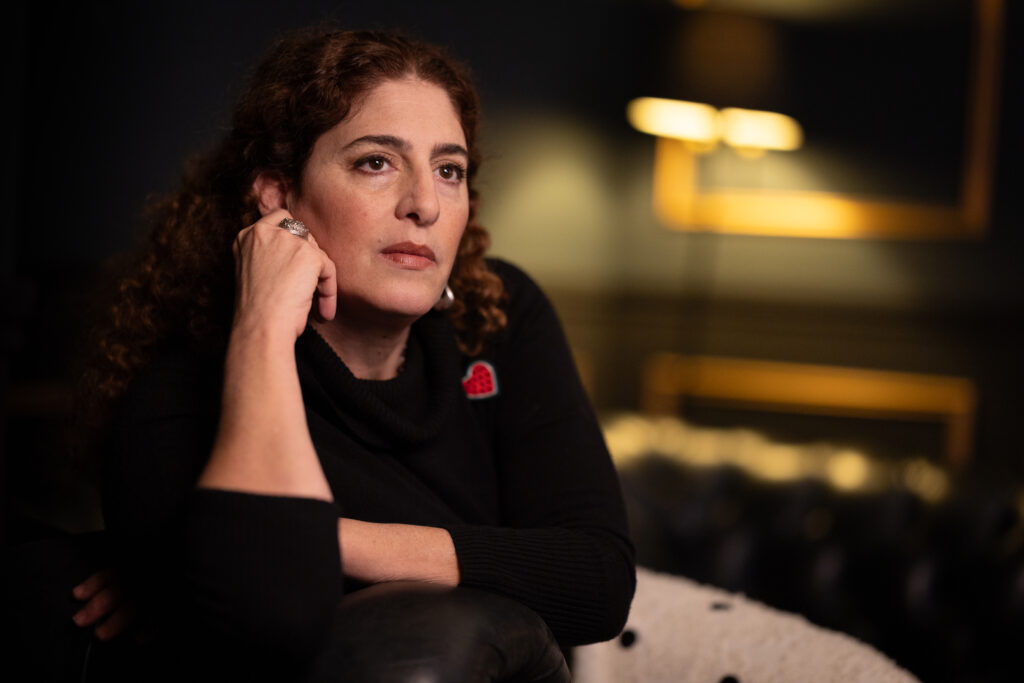
The director of Oscar-shortlisted film “Palestine 36” said her big-budget production about a crucial but little-known Arab rebellion is a statement about Palestinians “refusal to disappear”.Veteran filmmaker Annemarie Jacir started production on the sweeping historical epic just before Israel’s devastating invasion of Gaza in October 2023.Making the movie was a “financial disaster”, she admitted in an interview with AFP, but encouraging critical reaction since its debut last September and its shortlisting for an Oscar have offered solace. Nominated by Palestine for Best International Feature, it is the most cinematically ambitious of four productions that deal with the Israeli-Palestinian conflict that are in the running for an Academy Award in March.”The cinema is not going to save us,” said Jacir, a Palestinian born in Bethlehem in 1974 but now living in the Israeli port Haifa. “But it’s about the refusal to disappear and this film for us was our refusal.”The Gaza war, sparked by an unprecedented attack by the Hamas militant group on Israel, saw US President Donald Trump and far-right Israeli government ministers openly discuss displacing Palestinians or annexing their remaining ancestral land. Jacir explained that most accounts of modern Palestinian history begin with the creation of the state of Israel after World War II which led to the “Nakba” in 1948, the uprooting of nearly half the Palestinian population.”We always start Palestinian history with the Nakba,” she said.As the title of her film suggests, she focuses on 1936 when colonial-era Britain was struggling to administer the holy land for which it assumed responsibility at the end of World War I.Palestine was a hotbed of resentment and the scene of clashes between the Muslim-majority Palestinian population and newly arrived Jewish immigrants, most of whom were fleeing persecution in Europe.”1936 is so critical and there’s really been nothing done about it. And it sets the stage for everything,” Jacir explained.- ‘Disaster’ – She follows a large cast of characters, from villagers losing their land to Zionist settlers, members of the corrupt Palestinian economic elite, as well as the brutally repressive British army and administrators. Its mostly Arabic-speaking cast includes Oscar-winning British actor Jeremy Irons as a cynical British High Commissioner and Franco-Palestinian actress Hiam Abbass from “Succession” as a defiant village elder.The project almost never made it to screens with the war in Gaza starting just as filming was about to start in the West Bank in late 2023.Jacir had built a typical village from the 1930s over 12 months, but then had to abandon the site and move the cast to Jordan.”We planted crops, and we built the bus, all the vehicles, the tanks, we made guns, the costumes” she told AFP. “Then we lost it all after October 7th… It was a nightmare, a financial disaster.”Thank God for our financiers, including the BBC, the British Film Institute. Nobody abandoned us,” she added.The film is a sweeping fictionalised story set in the context of real events, with the dramatic climax being the Peel Commission which proposed the partition of Palestine and the creation of a Jewish state.Ninety years later, with Palestinians limited to the destroyed Gaza enclave and the Israeli-controlled West Bank, and under constant pressure from settlers, Jacir says she no longer believes in a two-state solution.Her vision? “You live as one people, one place without borders, without control. There is no other way.”She will find out later this month film her film gets the nod for an Oscar nomination as Best International Feature.Another film about Palestinians, the gut-wrenching “The Voice of Hind Rajab” about a girl killed during the Gaza war, also made the 15-strong shortlist which is set to be reduced to five.
Russia joins Chinese, Iran warships for drills off S.Africa
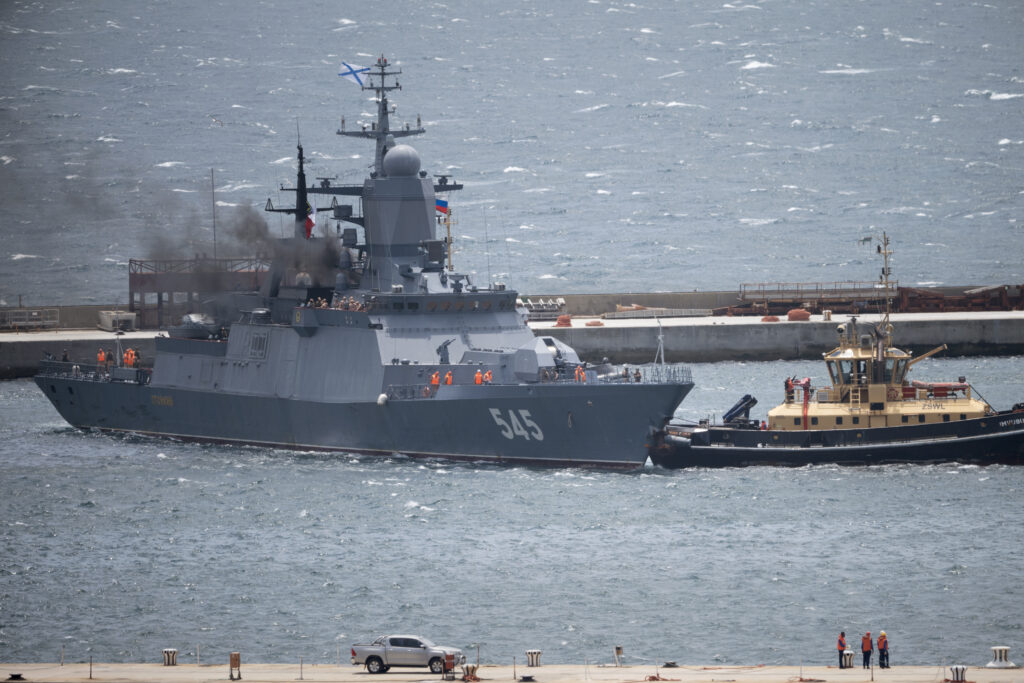
A Russian warship arrived off South Africa’s main naval base Friday to join Chinese and Iranian vessels in military exercises that risk further damaging Pretoria’s relations with Washington.The exercises draw together several nations feuding with the US administration and come at a time of heightened tensions following Washington’s raid on Venezuela.A Chinese destroyer and replenishment ship, and an Iranian forward base ship sailed into South African waters earlier this week ahead of the week-long manoeuvres due to kick off with an opening ceremony Saturday.AFP journalists near the Simon’s Town base saw the Russian-flagged corvette vessel pull into False Bay. China is the lead nation in the “Will for Peace 2026” drill involving navies from the 11-nation BRICS group of emerging nations which US President Donald Trump has labelled “anti-American”.The South African navy said it would confirm details of the vessels present later Friday.The United Arab Emirates was also expected to send ships, Deputy Defence Minister Bantu Holomisa told Newzroom Afrika television late Thursday.Other BRICS nations Indonesia, Ethiopia and Brazil will send observers, he said. The remaining members of the grouping are India, Egypt and Saudi Arabia. The drills will allow the navies “to exchange best practices and improve joint operational capabilities, which contributes to the safety of shipping routes and overall regional maritime stability,” South Africa’s defence force said.- Global tensions -Washington this week seized a Russian-flagged oil tanker it said was part of a shadow fleet that carried oil for countries such as Venezuela, Russia and Iran. It has also threatened action against Iran should protesters be killed in mounting demonstrations sparked by anger over the rising cost of living.Asked about the timing of the navy exercises, Holomisa said: “This exercise was planned long before these tensions we are witnessing today.” “Let us not press panic buttons because the USA has got a problem with countries,” he said. “Those are not our enemies,” he said. The joint drills were initially scheduled for November 2025 but were postponed due to a clash with the G20 summit in Johannesburg.Washington boycotted the summit amid a row with Pretoria that includes anger over its ties with Russia and Iran.”Washington has clearly been attempting to put Pretoria in its bad book since the beginning of the current Trump administration,” Priyal Singh, senior researcher at the Institute for Security Studies, told AFP.”The optics surrounding the upcoming naval exercise will likely be used by policymakers in Washington as another prime example of why its bilateral relations with South Africa should be reviewed,” he said.