AFP Asia Business

Yemen rebels in Trump’s sights free 150 war prisoners

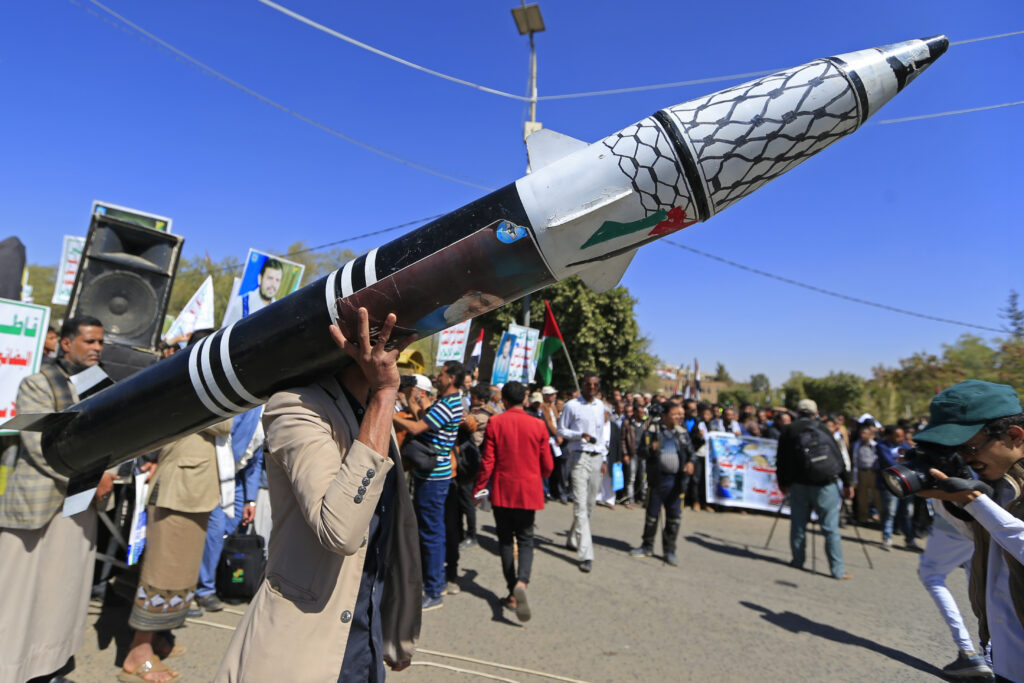
Yemen’s Iran-backed Huthi rebels, who are poised to return to the US terrorism blacklist, released more than 150 prisoners of war in tearful scenes on Saturday.Those freed, who included elderly men with long, grey beards, hugged and kissed relatives, some of them crying, as they were reunited in the rebel-held capital Sanaa.The second unilateral release in eight months took place with the Huthis in the sights of not only US President Donald Trump but also the United Nations, after they detained seven UN humanitarian staff on Thursday.The rebels, part of Iran’s “axis of resistance”, have also been firing on Israel and Red Sea shipping during the Gaza war, claiming solidarity with the Palestinians.Prisoners in traditional izar skirts, sandals and keffiyah scarves were led out under the eyes of heavily armed Huthi soldiers in combat fatigues.”We can’t describe our feelings, as if we are born again,” said Mohammed Nasser, one of the released prisoners.”We thank God that we are out of this prison. We thank everyone who helped in the success of this initiative.”The International Committee of the Red Cross, which had interviewed the prisoners and carried out medical checks during preparations for the release, said 153 “conflict-related” prisoners were freed.”This operation has brought much-needed relief and joy to families who have been anxiously waiting for the return of their loved ones,” said Christine Cipolla, the ICRC’s head of delegation in Yemen.”We know that many other families are also waiting for their chance to be reunited. We hope that today’s release will lead to many more moments like this.”- ‘Sick, wounded, elderly’ -Abdulqader al-Murtada, head of the Huthis’ Committee for Prisoners’ Affairs, said: “The initiative is for humanitarian reasons and unilaterally.”Most of those released are humanitarian cases, including the sick, the wounded, the elderly,” he said in a statement.The release follows the Huthis’ latest detention of United Nations staff, which prompted a protest from Secretary-General Antonio Guterres on Friday.”Their continued arbitrary detention is unacceptable,” Guterres said in a statement, calling for the immediate release of all UN personnel held in Yemen.The Huthis have detained dozens of staff from UN and other agencies, most since the middle of last year, alleging an American-Israeli spy ring.Saturday’s prisoner release also comes after Trump signed an executive order that moves to return the Huthis to the list of foreign terrorist organisations.Re-listing the Huthis will trigger a review of UN and other aid agencies working in Yemen that receive US funding, according to the order signed on Wednesday.A decade of war has plunged Yemen into one of the world’s worst humanitarian crises, with 18 million people needing assistance and protection, according to the UN.Last May, the Huthis freed 113 prisoners in a similar unilateral release. In April 2023, the rebels and Yemen’s government exchanged about 1,000 prisoners of war.The Huthis’ seizure of Sanaa in September 2014 prompted a Saudi-led intervention the following March in a war that has killed hundreds of thousands of people either directly or through indirect causes, such as disease.A UN-brokered ceasefire in 2022 has sharply reduced the fighting. But during the Gaza war, the rebels’ attacks on Israel and shipping have prompted reprisal strikes from US, Israeli and British forces.bur/th/kir

The four Israeli women hostages freed on Saturday

Four women soldiers, abducted by Palestinian militants on October 7, 2023 while doing their military service near the Gaza border, were released on Saturday, following more than 15 months in captivity.Liri Albag, Karina Ariev, Daniella Gilboa and Naama Levy were reunited with their families in Israel, the military said, with crowds shedding tears of joy as they gathered to watch their release at a plaza in Tel Aviv known as Hostage Square.The four women, aged between 19 and 20, were captured together while deployed in a surveillance unit at the Nahal Oz military base, close to the Gaza border. Militants filmed their abduction.Three other women soldiers were taken hostage with them: Agam Berger, who is still held in Gaza and presumed alive; Noa Marciano, whose body has since been repatriated to Israel; and Ori Megidish, who was freed alive by the Israeli military in late October 2023.- Liri Albag, 19 -According to press reports, hostages released earlier told Liri Albag’s parents that she was forced by her captors to cook, clean and babysit.The Jerusalem Post reported in July that she had passed messages to her family via hostages who had been released, telling her sister Shai not to cancel her traditional post-army trip and most of all not to touch her favourite shoes.In January, she appeared in a video of around three and a half minutes released by Hamas.”She loves travelling, singing, photography and cooking,” Israeli campaign group the Hostages and Missing Families Forum said in a statement.Her parents Shira and Eli Albag have campaigned for the hostages’ release.- Karina Ariev, 20 -A video of Karina Ariev’s capture showed her being wounded. In January 2024 a new video released by Hamas on Telegram showed her alongside hostage Daniella Gilboa. Ariev turned 20 in captivity.”She dreams of becoming a psychologist and is known for being compassionate and for bringing people together,” the Hostages and Missing Families Forum said.- Daniella Gilboa, 20 -Daniella Gilboa, from Petah Tikva, was identified as a hostage by the clothes she wore in videos she sent to her boyfriend on the morning of the attack.Gilboa also turned 20 in captivity.She “is a passionate musician who studies piano and singing, aspiring to pursue a professional career in music,” the Forum said.- Naama Levy, 20 -In a video of her capture released by Hamas, Naama Levy is shown being escorted to a vehicle wearing trousers which appeared to be covered with blood. In other images, the granddaughter of survivors of the Nazi death camps appears with a swollen face.The second child of four, she grew up in India where she studied at a United States international school. As a child, she took part in the Hands of Peace programme, which promotes peace between young Israelis and Palestinians.Levy, now 20, is a keen triathlete.”Family and friends describe her as gentle and quiet, yet full of light, joy, strength and determination,” the Forum said.

Hamas frees four Israeli hostages in Gaza under truce deal

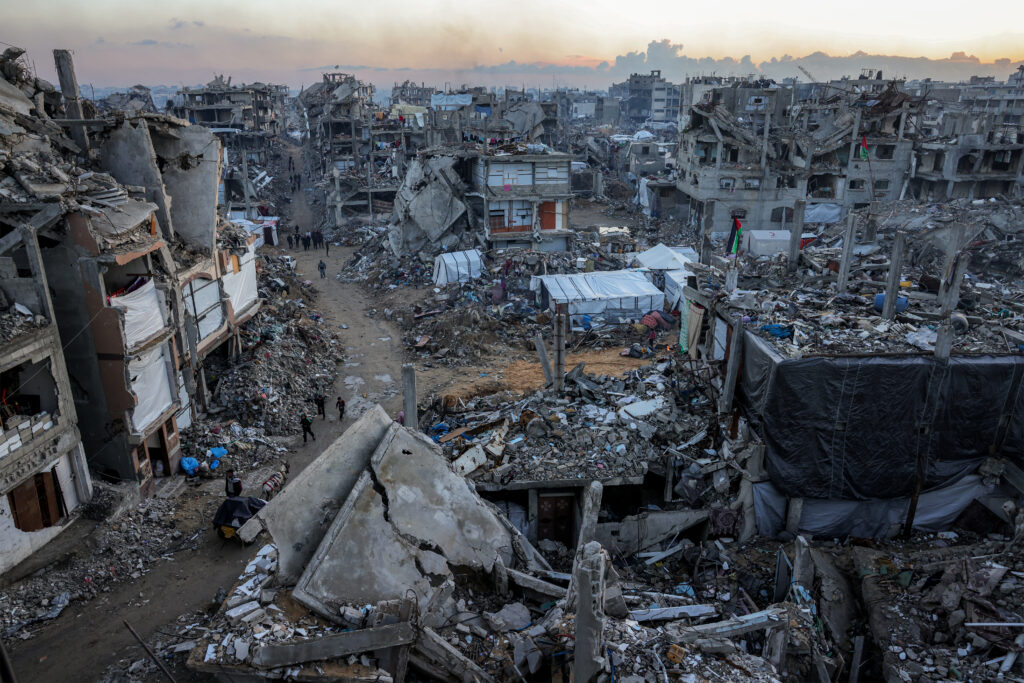
Four freed Israeli women hostages were home in Israel Saturday, ending more than 15 months of captivity after Hamas militants handed them over to the Red Cross under a truce deal in the Gaza war.The deal is also expected to see a second group of Palestinian prisoners freed.An AFP journalist witnessed the handover after the four were presented on a stage at a main square in Gaza City, where dozens of masked, armed militants had gathered earlier.Karina Ariev, Daniella Gilboa, Naama Levy, all aged 20, and Liri Albag, 19, are all soldiers. Dressed in military fatigues, they smiled and waved on a stage in Gaza City adorned with the message, in Hebrew, “Zionism will not prevail”.In Tel Aviv, where a crowd gathered to watch the release on a large TV screen at a plaza known as Hostage Square, there were tears of joy and applause as Israeli flags waved.After their handover to the Red Cross, Israel’s military said the women were then transferred back into Israel.Fighters from Hamas and Islamic Jihad, carrying assault rifles and rocket-propelled grenade launchers, gathered in rows, many carrying their groups’ banners and wearing green headbands, as crowds of Gaza residents gathered to watch the handover in Gaza City.On Saturday, Palestinian sources said Israel is to free 200 Palestinian prisoners in exchange for the hostages.Palestinians displaced by the war to southern Gaza should be able to begin returning to the north following Saturday’s releases, Bassem Naim, a member of Hamas’s political bureau based in Qatar, told AFP on Friday.The truce has also led to a surge of food, fuel, medical and other aid into rubble-strewn Gaza, but Israel’s UN ambassador on Friday confirmed that the UN agency for Palestinian refugees, Gaza’s main aid agency, must end all operations in Israel by Thursday.The hostage-prisoner exchange is part of a fragile ceasefire agreement between Israel and Hamas that took effect last Sunday, and which is intended to pave the way to a permanent end to the war.Mediators Qatar and the United States announced the agreement days ahead of US President Donald Trump’s inauguration. Trump has since claimed credit for securing the deal after months of fruitless negotiations.Abu Obeida, spokesman for the Ezzedine al-Qassam Brigades, Hamas’s armed wing, said on Telegram Friday that “as part of the prisoners’ exchange deal, the Qassam brigades decided to release tomorrow four women soldiers”.- ‘Worry and fear’ -According to Israel’s prison service, some of the Palestinians released will go to Gaza, with the rest returning to the Israeli-occupied West Bank.The ceasefire agreement should be implemented in three phases, but the last two stages have not yet been finalised.”The worry and fear that the deal will not be implemented to the end is eating away at all of us,” said Vicky Cohen, the mother of hostage Nimrod Cohen.In Gaza, families displaced by more than a year of war longed to return home, but many will find only rubble where houses once stood.”Even if we thought about returning, there is no place for us to put our tents because of the destruction,” Theqra Qasem, a displaced woman, told AFP.During the first, 42-day phase that began Sunday, 33 hostages Israel believes are still alive should be freed in staggered releases in exchange for around 1,900 Palestinians held in Israeli jails.Three hostages — Emily Damari, Romi Gonen and Doron Steinbrecher — returned home on the first day of the truce.Ninety Palestinians, mostly women and minors, were released in exchange.The deal’s second phase is to see negotiations for a more permanent end to the war, but analysts have warned it risks collapsing because of the deal’s multi-phase nature and deep distrust between Israel and Hamas.During their October 7, 2023 attack, Hamas militants took 251 hostages, 91 of whom remain in Gaza, including 34 the Israeli military has confirmed are dead.The attack resulted in the deaths of 1,210 people, mostly civilians, according to an AFP tally based on official Israeli figures.Israel’s retaliatory response has killed at least 47,283 people in Gaza, a majority civilians, according to the Hamas-run territory’s health ministry, figures which the UN considers reliable.- ‘Situation remains dire’ -Almost the entire Gaza population of 2.4 million has been displaced by the warAccording to the United Nations, by December 1, nearly 69 percent of buildings in the Gaza Strip had been destroyed or damaged, and the UN Development Programme estimated last year that it could take until 2040 to rebuild all destroyed homes.Hundreds of truckloads of aid have entered Gaza daily since the ceasefire began, but the UN says “the humanitarian situation remains dire”.The UN agency for Palestinian refugees, UNRWA, will be effectively barred from operating as of Thursday.In a letter addressed to United Nations chief Antonio Guterres, Ambassador Danny Danon confirmed: “UNRWA is required to cease its operations in Jerusalem, and evacuate all premises in which it operates in the city, no later than 30 January 2025.”UNRWA chief Philippe Lazzarini warned on social media platform X on Friday that preventing the agency from operating “might sabotage the Gaza ceasefire, failing once again hopes of people who have gone through unspeakable suffering.” burs-jd/ser/it/jsa

Gaza development put back 60 years by war: UNDP chief

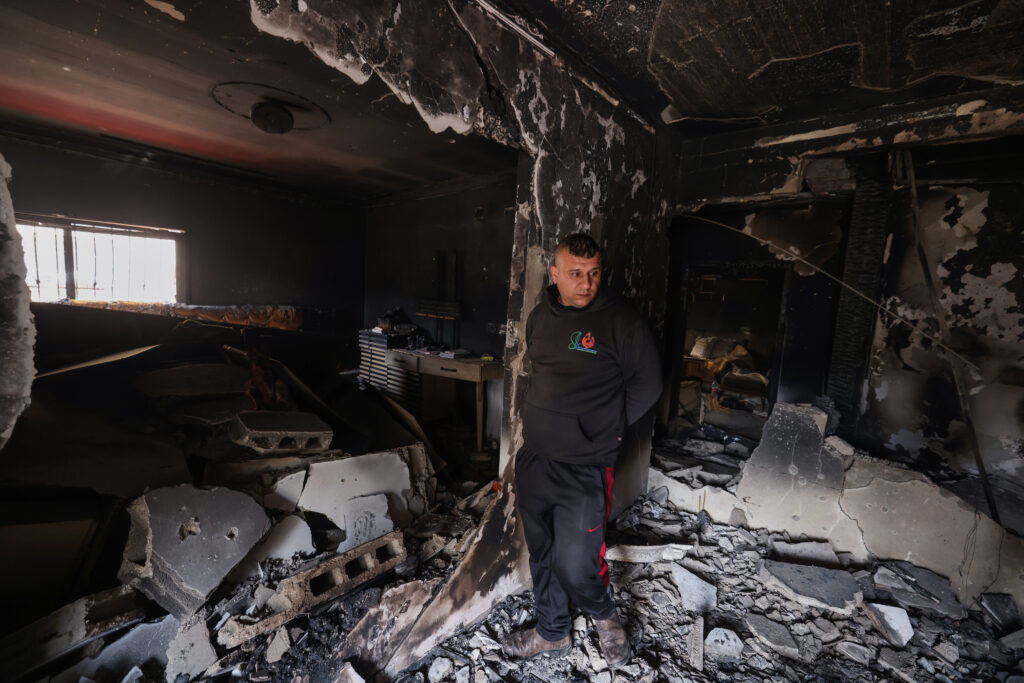
The Israel-Hamas war has put back development in Gaza by 60 years and mobilising the tens of billions of dollars needed for reconstruction will be an uphill task, the United Nations said.Around two-thirds of all buildings in the Gaza Strip have been destroyed or damaged, and removing the estimated 42 million tonnes of rubble will be dangerous and complex, the head of the UN Development Programme told AFP.”Probably between 65 percent to 70 percent of buildings in Gaza have either been entirely destroyed or damaged,” Achim Steiner said in an interview at the World Economic Forum annual meeting in the Swiss ski resort town of Davos.”But we’re also talking about an economy that has been destroyed, where we estimate that roughly 60 years of development have been lost in this conflict over 15 months.”Two million people who are in the Gaza Strip have lost not only their shelter: they’ve lost public infrastructure, sewage treatment systems, freshwater supply systems, public waste management. All of these fundamental infrastructure and service elements simply do not exist.”And for all these towering numbers, Steiner stressed: “Human desperation is not just something that you capture in statistics.”- ‘Years and years’ -The fragile ceasefire agreement between Israel and Hamas in the Gaza war took effect on Sunday.Steiner said it was difficult to put a timeframe on reconstruction due to the “volatile” nature of the ceasefire, and because the UN’s immediate focus is on life-saving aid.”When we talk about reconstruction, we are not talking about one or two years here,” he said.”We are talking about years and years, until you even come close to rebuilding, first of all, the physical infrastructure, but it’s also an entire economy.”People had savings. People had loans. People had invested in businesses. And all of this is lost. So we are talking about the physical and economic, and in some ways even the psychosocial phase for reconstruction.”He said the physical reconstruction alone would cost “tens of billions of dollars”, and “we do face an enormous uphill struggle on how to mobilise that scale of finance”.- ‘Extraordinary’ destruction -The estimated volume of rubble may yet rise and will leave the reconstruction effort with vast challenges.”This is not a simple undertaking of just loading it and transporting it somewhere. This rubble is dangerous. There are often still bodies that may not have been recovered. There’s unexploded ordnance, landmines,” Steiner explained.”One option is recycling. With reconstruction, there is a significant degree to which you can recycle these materials and use them in the reconstruction process,” Steiner said.”The interim solution will be to move the rubble into temporary dumps and deposits from where it could then later be either taken for permanent processing or disposal.”In the meantime, if the ceasefire endures and firms up, Steiner said huge amounts of temporary infrastructure would be needed.”Virtually every school and every hospital has been either severely damaged or destroyed,” he said.”It’s an extraordinary physical destruction that has happened.”

Hamas to release four Israeli hostages in truce swap Saturday

Hamas was set Saturday to release four Israeli women soldiers held hostage since its October 7, 2023 attack, under a truce deal in the Gaza war that is also expected to see a second group of Palestinian prisoners freed.Israel confirmed Friday that it had received a list of names of hostages who are due to return home, though neither side has specified how many Palestinians will be released from Israeli detention if everything goes to plan.According to the Israeli Hostage and Missing Families Forum, the women due for release are Karina Ariev, Daniella Gilboa, Naama Levy and Liri Albag.Albag turned 19 while in captivity, while the others are all now 20 years old.The exchange is part of a fragile ceasefire agreement between Israel and Hamas that took effect last Sunday, and which is intended to pave the way to a permanent end to the conflict.Mediators Qatar and the United States announced the agreement days ahead of US President Donald Trump’s inauguration, and he has since claimed credit for securing it after months of fruitless negotiations.Abu Obeida, the spokesman for the Ezzedine al-Qassam Brigades, Hamas’s armed wing, said on Telegram Friday that “as part of the prisoners’ exchange deal, the Qassam brigades decided to release tomorrow four women soldiers”.Israeli Prime Minister Benjamin Netanyahu’s office confirmed it had received the names through mediators.Palestinian sources told AFP the releases could begin before noon (1000 GMT), though neither Hamas nor Israel has issued a statement on expected timings.According to Israel’s prison service, some of the Palestinians released will go to Gaza, with the rest to return to the occupied West Bank.Families of hostages held in Gaza since Hamas staged the deadliest attack in Israeli history awaited the return of their loved ones after 15 months of agony.”The worry and fear that the deal will not be implemented to the end is eating away at all of us,” said Vicky Cohen, the mother of hostage Nimrod Cohen.In Gaza, families displaced by more than a year of war longed to return home, but many found only rubble where houses once stood.”Even if we thought about returning, there is no place for us to put our tents because of the destruction,” Theqra Qasem, a displaced woman, told AFP.- Three phases -The ceasefire agreement should be implemented in three phases.During the first, 42-day phase that began last Sunday, 33 hostages Israel believed were still alive should be returned in exchange for around 1,900 Palestinian prisoners held in Israeli jails.Three hostages — Emily Damari, Romi Gonen and Doron Steinbrecher — have already returned home.Ninety Palestinians, mostly women and minors, were released in exchange.The next phase should see negotiations for a more permanent end to the war, while the last phase should see the reconstruction of Gaza and the return of the bodies of dead hostages.During their October 7, 2023 attack on Israel, Hamas militants took 251 hostages, 91 of whom remain in Gaza, including 34 the Israeli military has confirmed are dead.The attack resulted in the deaths of 1,210 people, mostly civilians, according to an AFP tally based on official Israeli figures.Israel’s retaliatory response has killed at least 47,283 people in Gaza, a majority civilians, according to the Hamas-run territory’s health ministry, figures which the UN considers reliable.- Return to the north -Bassem Naim, a member of Hamas’s political bureau based in Qatar, on Friday told AFP that Palestinians displaced by the war to southern Gaza should be able to begin returning to the north following Saturday’s releases.Hundreds of truckloads of aid have entered Gaza since the ceasefire began, but its distribution inside the devastated territory remains a huge challenge.The needs are enormous, particularly in the north, where Israel kept up a major operation right up to the eve of the truce.In hunger-stricken makeshift shelters set up in former schools, bombed-out houses and cemeteries, hundreds of thousands lack even plastic sheeting to protect from winter rains and biting winds, aid workers say.burs-jd/ser/phz/tym