

AFP Asia Business
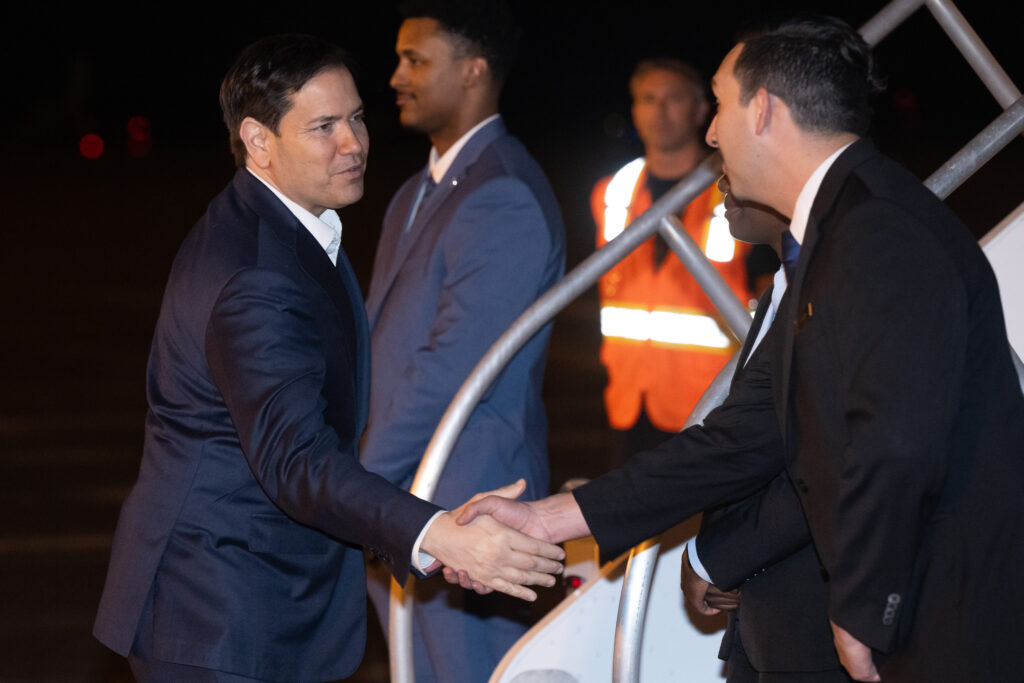
Rubio heads to Saudi Arabia to gauge if Ukraine has shifted
US Secretary of State Marco Rubio set off on Sunday to fly to Saudi Arabia for talks with Ukraine, as President Donald Trump decides whether to relent on a freeze in military and intelligence support.Rubio will then travel on to Group of Seven (G7) talks in Canada, making him the first major US official to visit since Trump returned to office, launched a trade war the neighboring country and mocked its sovereignty.In three days of talks in Jeddah, Rubio will discuss how to “advance the president’s goal to end the Russia-Ukraine war,” said State Department spokeswoman Tammy Bruce.She avoided characterizing the crisis as a “Russian invasion of Ukraine” as the previous administration and US allies have done.Ukrainian President Volodymyr Zelensky has previously announced that he will be in Jeddah for the talks, as has Trump confidant and envoy Steve Witkoff. Rubio left Miami’s Homestead Air Base at around 08:00 pm local time (midnight GMT).Trump, asked separately on his own plane about the hopes for a quick resolution, told reporters Sunday: “I think we’re going to have a good result in Saudi Arabia… we have a lot of good people going out there.”And I think Ukraine’s going to do well, and I think Russia is going to do well. I think some very big things could happen this week. I hope so.”Trump suspended aid and intelligence sharing with Ukraine after a disastrous February 28 meeting with Zelensky at the White House.The Republican leader and his vice president, JD Vance, publicly dressed Zelensky down for alleged ingratitude over billions of dollars worth of previous US weapons shipments.Zelensky left without signing an agreement demanded by Trump in which Ukraine would hand over much of its mineral wealth to the United States, which Trump argues will compensate US taxpayers for the assistance provided under former president Joe Biden.Zelensky has since said he is ready to sign the minerals deal and has sent a conciliatory letter to Trump, who read it at his address to Congress on Tuesday.- Frozen aid -Keith Kellogg, the US special envoy on Russia and Ukraine, said Thursday he would support resuming assistance once Zelensky signs the deal — but that the decision was ultimately up to Trump.NBC News, quoting unnamed sources, said Trump was unlikely to relent just with the minerals deal and would want to be assured that Zelensky is ready to make concessions to Russia.Trump told reporters Sunday he did not think Ukraine had yet shown they “want peace.””Right now they haven’t shown it to the extent that they should… but I think they will be, and I think it’s going to become evident over the next two or three days.”Stunned European leaders have been racing to find ways to make up for US aid, although Zelensky himself has said that there is no substitute for Washington’s security guarantees in a deal with Russia.Russia, which invaded three years ago, has not let up in striking Ukraine, including its energy infrastructure. Trump on Friday also threatened to tighten sanctions on Russia if it does not come to the table.Rubio last month met his Russian counterpart, breaking a Biden-era freeze on such high-level contacts, and spoke of future economic cooperation if the war ends.Those talks also took place in Saudi Arabia, which has positioned itself as a key diplomatic partner for Trump.Rubio will also meet in Jeddah with Crown Prince Mohammed bin Salman, the kingdom’s de facto ruler, the State Department said.Trump is expected to push hard for Saudi Arabia to recognize Israel, a prospect that seems remote until a permanent end to the Gaza war — a priority for Witkoff as he travels the region. Rubio will then head to Quebec for a meeting of the Group of Seven foreign ministers where his spokeswoman said he will work to “further US interests in peace and security, strategic cooperation, and global stability.”She made no mention of tensions with Canada, which Trump has mocked as the “51st state” as he unleashes tariffs, although he has partially backed off faced with a slide on stock markets.
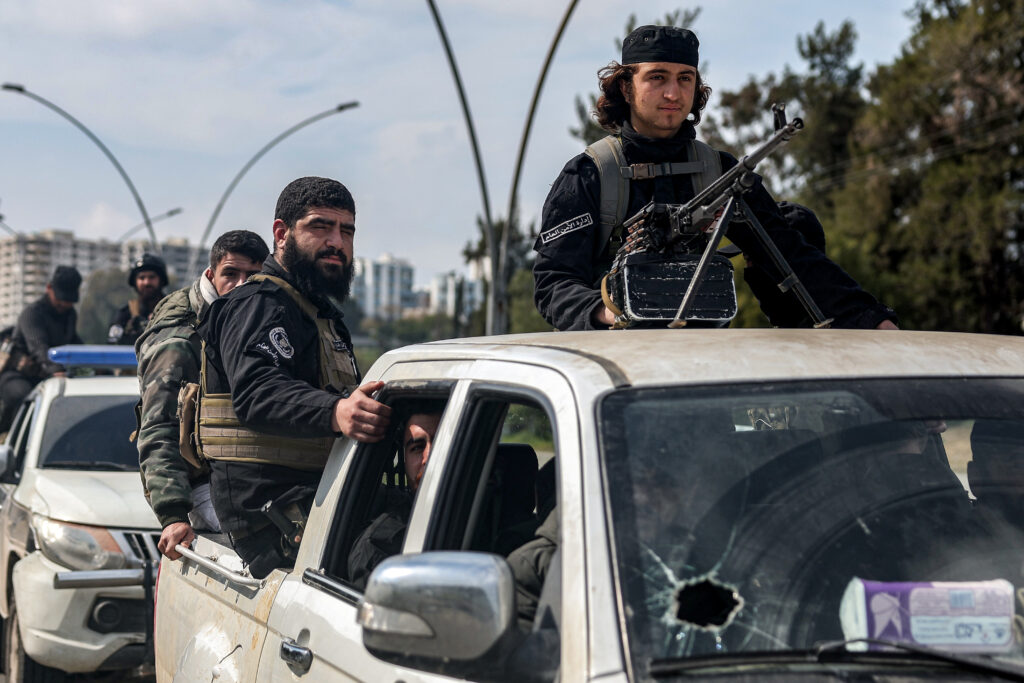
Syria vows accountability after reports of mass killings
Syria’s new leader has vowed accountability and an investigation after reports of mass killings of Alawite civilians triggered an international backlash against the worst violence since Bashar al-Assad’s overthrow.In its latest toll Monday, the Syrian Observatory for Human Rights war monitor said 973 civilians had perished since March 6 in “killings, field executions and ethnic cleansing operations” by security personnel or pro-government fighters in the coastal heartland of the Alawite minority community to which the toppled president belongs.Its previous toll of 830 had specified the “executions” targeted Alawites in the Mediterranean coastal provinces of Latakia and Tartus.United Nations rights chief Volker Turk said Sunday the killings “must cease immediately”, while the Arab League, the United Nations, the United States, Britain and other governments have condemned the violence.”We will hold accountable, firmly and without leniency, anyone who was involved in the bloodshed of civilians… or who overstepped the powers of the state,” Syria’s interim president Ahmed al-Sharaa said in a video posted by state news agency SANA.Earlier Sunday, the presidency announced on Telegram that an “independent committee” had been formed to “investigate the violations against civilians and identify those responsible for them”, who would face the courts.Fighting between the new security forces and loyalists of the former government erupted last Thursday, after earlier tensions, and escalated into reported mass killings.The fighting has killed hundreds of security forces as well as pro-Assad fighters, according to the Observatory, with the overall death toll exceeding 1,300. Sharaa, in a separate address from a Damascus mosque, appealed for national unity.”God willing, we will be able to live together in this country,” he said.- ‘They gathered all the men’ -Images on social media showed Syrian security forces on pickups and trucks driving past thick black smoke that drifted over the road on their way into the city of Jableh, between Latakia and Tartus.The interior ministry said on Sunday that government forces were conducting “sweeping operations” in an area of Tartus province to “pursue the remnants of the toppled regime”.SANA quoted a defence ministry source as saying there were clashes in Tanita village in the same area.An AFP photographer in Latakia city reported a military convoy entering a neighbourhood to search homes.In Baniyas, a city further south, resident Samir Haidar, 67, told AFP two of his brothers and his nephew were killed by armed groups that entered people’s homes, adding there were “foreigners among them”.”They gathered all the men on the roof and opened fire on them,” Haidar said.The mass killings followed clashes sparked by the arrest of a wanted suspect in a predominantly Alawite village, the Observatory said, reporting a “relative return to calm” in the coastal region on Saturday.Chief US diplomat Marco Rubio said Syria “must hold the perpetrators of these massacres against Syria’s minority communities accountable”, while Britain’s Foreign Secretary David Lammy said Damascus authorities “must ensure the protection of all Syrians and set out a clear path to transitional justice”.In Jordan, Syria’s Foreign Minister Asaad al-Shaibani said that, “Anyone involved in this matter will be referred to the judiciary.”The semi-autonomous Kurdish administration in Syria’s north and east condemned the “crimes” and underlined “that these practices take us back to a dark period that the Syrian people do not want to relive.”- ‘Rule of law’ -Sharaa’s Islamist group Hayat Tahrir al-Sham (HTS), which led the toppling of Assad in December, has its roots in the Syrian branch of Al-Qaeda. It is still listed as a terrorist organisation by the United States and other governments.The group has sought to moderate its image in recent years. Since the rebel victory, it has vowed to protect Syria’s religious and ethnic minorities.The new government has received diplomats from the West and its neighbours. It is seeking an easing of sanctions along with investment to rebuild a country devastated by 13 years of civil war under the repressive rule of Assad.Sharaa has said Syria must be built “on the rule of law”.Israeli Foreign Minister Gideon Saar, speaking to German newspaper Bild, said Europe “must wake up” and “stop granting legitimacy” to the new Syrian authorities who he insisted were still jihadists.The Alawite heartland has been gripped by fear of reprisals for the Assad family’s five-decade rule which included widespread torture and disappearances.Social media users have shared posts documenting the killing of Alawite friends and relatives.The Britain-based Observatory, which relies on a network of sources in Syria, reported multiple “massacres” in recent days, with women and children among the dead.During a sermon in Damascus, the Greek Orthodox Patriarch of Antioch John X said Christians were among those killed and called on Sharaa to “put a stop to these massacres… and give a sense of safety and security to all the people of Syria, regardless of their sect”.Later on Sunday, Syrian security forces fired into the air to disperse rival protesters in Damascus who engaged in physical altercations over the killings in the coastal areas.
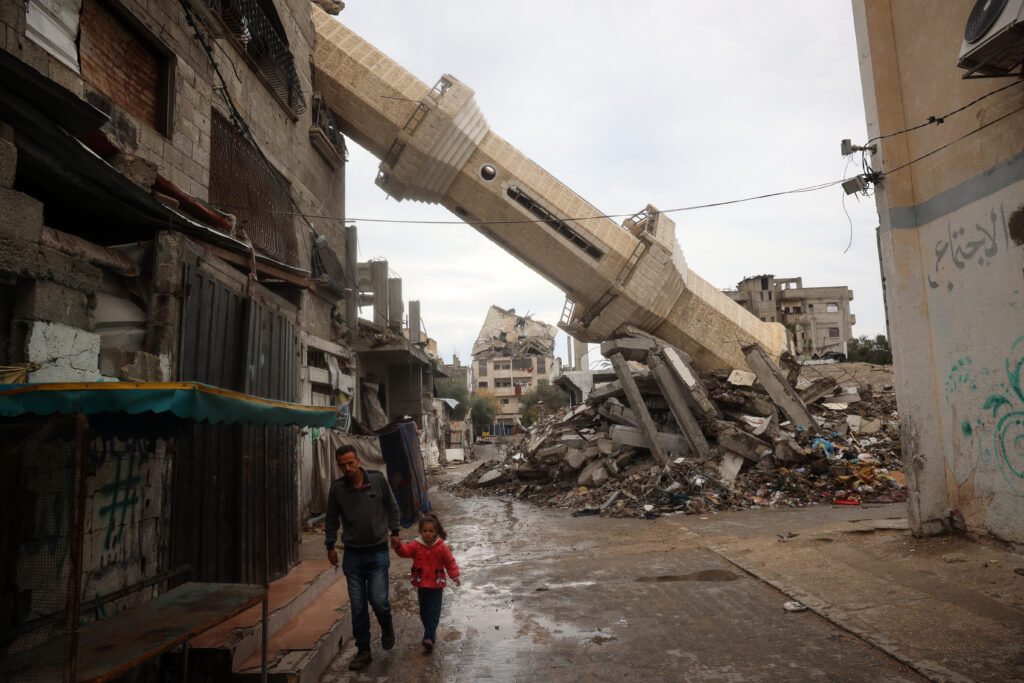
Israel halts Gaza electricity supply ahead of new truce talks
Israel ordered an immediate halt to Gaza’s electricity supply Sunday in an effort to pressure Hamas into releasing hostages, even as it prepared for fresh talks on the future of its truce with the Palestinian militants.Israel’s decision comes a week after it blocked all aid supplies to the war-battered territory, a move reminiscent of the initial days of the war when Israel announced a “siege” on Gaza.Hamas described the electricity cut as “blackmail,” a term it had also used after Israel blocked the aid.The truce’s initial phase ended on March 1 and both sides have refrained from returning to all-out war, despite sporadic violence including an air strike Sunday that Israel said targeted militants.Hamas has repeatedly called for an immediate start to negotiations on the ceasefire’s second phase, aiming to end the war permanently.Israel says it prefers extending phase one until mid-April, and halted aid to Gaza over the impasse.On Sunday it ordered a cut in the electricity supply.”I have just signed the order to stop supplying electricity immediately to the Gaza Strip,” Energy Minister Eli Cohen said in a video statement.”We will use all the tools at our disposal to bring back the hostages and ensure that Hamas is no longer in Gaza the day after” the war, he said.Izzat al-Rishq, a member of Hamas’s political bureau, described Israel’s move as “a desperate attempt to pressure our people and their resistance through cheap and unacceptable blackmail tactics”.Just days after the war erupted on October 7, 2023 after Hamas’s attack, Israel cut electricity to Gaza, only restoring it in mid-2024.The sole power line between Israel and Gaza supplies the main desalination plant, and Gazans mainly rely now on solar panels and fuel-powered generators to produce electricity.Hundreds of thousands of Palestinians in Gaza live in tents, with night-time temperatures now forecast around 12 degrees Celsius (54 Fahrenheit).- Situation ‘dire’ -Hamas representatives met Egyptian mediators over the weekend, emphasising the urgent need to resume aid deliveries “without restrictions or conditions”, a Hamas statement said.”We call on mediators in Egypt and Qatar, as well as the guarantors in the US administration, to ensure that the (Israeli) occupation complies with the agreement… and proceeds with the second phase according to the agreed-upon terms,” spokesman Hazem Qassem told AFP.Hamas’s key demands for the second phase include a hostage-prisoner exchange, Israel’s complete withdrawal from Gaza, a permanent ceasefire, border crossings reopening and lifting the blockade, he said.Former United States president Joe Biden had also outlined a second phase involving the release of remaining living hostages, the withdrawal of all Israeli forces left in Gaza, and establishment of a permanent ceasefire.After meeting mediators, another Hamas spokesman, Abdel Latif al-Qanoua, said indicators were so far “positive”.Israeli Prime Minister Benjamin Netanyahu’s office said it would send delegates to Doha on Monday.The truce largely halted more than 15 months of fighting in Gaza, where virtually the entire population was displaced by Israel’s relentless military campaign in response to the October 7 attack.The six-week first phase led to the exchange of 25 living Israeli hostages and eight bodies for the release of about 1,800 Palestinian prisoners held in Israel.It also allowed in much-needed food, shelter and medical assistance.After Israel cut off the aid flow, UN rights experts accused the government of “weaponising starvation”.At a UN distribution of flour in Jabalia, northern Gaza, Abu Mahmoud Salman, 56, said that with the territory now closed off from fresh supplies, there are “fears of renewed famine in Gaza, where the situation remains dire”.- Fears for hostages -Last week, US President Donald Trump threatened further destruction of Gaza if all remaining hostages were not released, issuing what he called a “last warning” to Hamas leaders.He also said Gazans who “hold Hostages… are DEAD!”The threats came after his administration confirmed it had unprecedented direct talks with Hamas, which Washington had previously refused contact with since designating it a terrorist organisation in 1997.The official who held the talks with Hamas, US hostage envoy Adam Boehler, told CNN on Sunday that a deal could be reached “within weeks” to “get all of the prisoners out, not just the Americans”.Of the 251 hostages taken by the Palestinian militants during the October 7 attack, 58 remain in Gaza, including five Americans of which four have been confirmed dead.Trump has floated a widely condemned plan to expel Palestinians from Gaza, prompting Arab leaders to offer an alternative that would see reconstruction financed through a trust fund, with the Ramallah-based Palestinian Authority returning to govern the Hamas-ruled territory.On Sunday Israel’s far-right Finance Minister Bezalel Smotrich said that proposal was “taking shape”.Hamas’s 2023 attack resulted in the deaths of 1,218 people on the Israeli side, most of them civilians, while Israel’s retaliatory campaign has killed at least 48,458 people in Gaza, also mostly civilians, according to data from both sides.
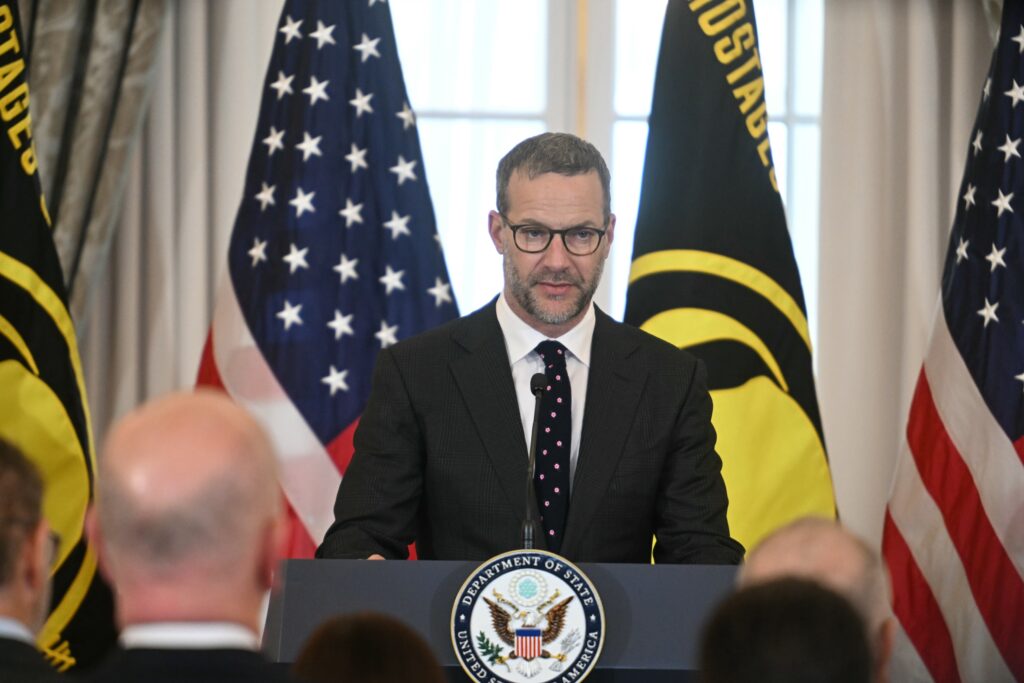
US envoy says Gaza hostage deal possible ‘within weeks’
The US envoy who held unprecedented direct talks with Hamas said Sunday the meeting had been “very helpful” and he was confident a hostage release deal could be reached “within weeks.”Speaking to CNN, Adam Boehler acknowledged that as a Jewish American it had been “odd” sitting face-to-face with leaders of a group that the United States has listed as a “terrorist” organization since 1997, but he did not rule out further meetings with the Palestinian militants.Boehler said he understood Israel’s “consternation” that the United States had held talks at all with the group, but said he had been seeking to jump-start the “fragile” negotiations.”In the end, I think it was a very helpful meeting,” he said, adding: “I think something could come together within weeks… I think there is a deal where they can get all of the prisoners out, not just the Americans.”Boehler suggested there was a chance of further talks with the militants, telling CNN: “You never know. You know sometimes you’re in the area and you drop by.”Hamas attacked Israel on October 7, 2023, taking 251 hostages including a number of Americans. An estimated 58 hostages remain in Gaza.Israel invaded Gaza in response, waging a relentless war for more than 15 months and displacing much of the population. The first phase of a truce revolving around the release of some hostages ended earlier this month, and both sides are disputing when to move into the second phase, which aims at a more permanent peace.Last week, US President Donald Trump threatened further destruction of Gaza if all remaining hostages were not released, issuing what he called a “last warning” to Hamas leaders.- Vow to bring Tice home -“I understand the consternation and the concern” on Israel’s part at the talks, Boehler said, adding: “We’re the United States. We’re not an agent of Israel.”He described his feelings on sitting across from the militants.”I think when you walk and you sit in front of somebody, and you know what they’ve done, it’s hard not to think of it,” he said.He said it was important to identify with their humanity, but admitted, “It definitely feels a little odd knowing what they really are.”Hamas’s attack resulted in the deaths of 1,218 people on the Israeli side, most of them civilians, according to official figures.Israel’s retaliatory campaign has killed at least 48,458 people in Gaza, the majority of them civilians, according to the Hamas-run territory’s health ministry. The UN considers these figures reliable.Later in the evening, Boehler spoke to Israel’s Channel 12, where he was asked if the United States would support Israel if it decided to return to intense fighting in Gaza.”As of right now, the president said that he would support Israel in that, that it’s Israel’s call,” Boehler said, adding: “until I have different direction from the president, that would be the US position and my position.”In his earlier interview with CNN, Boehler also promised to go to Syria to bring home Austin Tice, an American journalist kidnapped there in 2012.Tice was working as a freelance journalist for Agence France-Presse, The Washington Post, and other outlets when he was detained at a checkpoint in August 2012.The toppling of Syrian president Bashar al-Assad in December by rebels had ignited fresh hopes that Tice might be released and brought home. Boehler said he did not know if Tice was still alive. “If he’s there, I’m going to bring him home,” he told CNN. “If he’s dead, I’m going to dig up his remains with the FBI… and we’ll bring them home to his mom.”
US ends waiver for Iraq to buy Iranian electricity
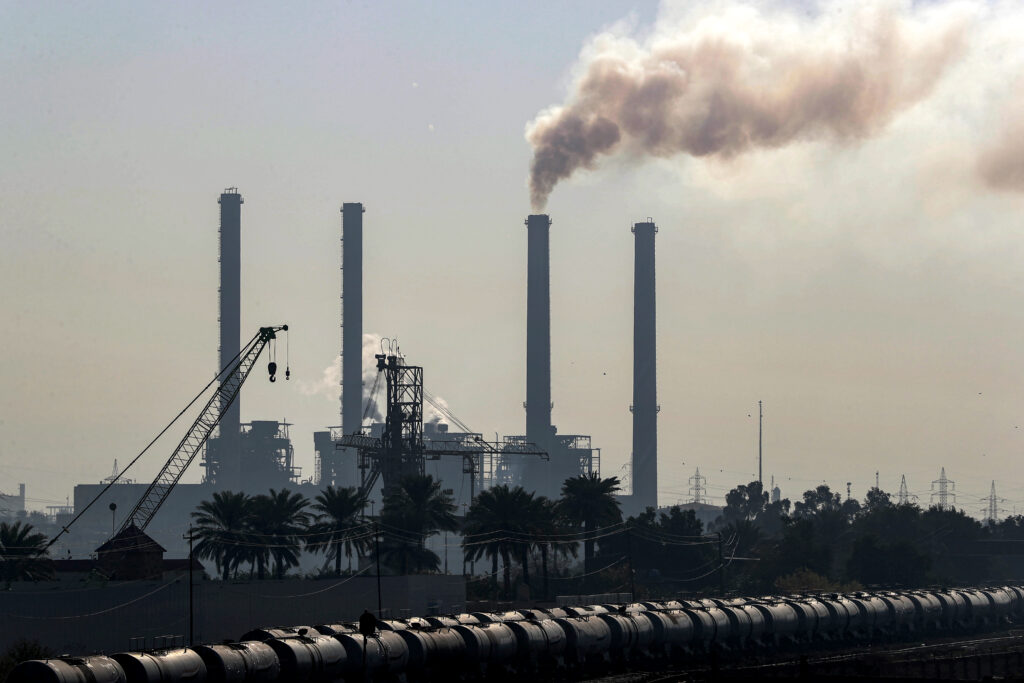
The United States has ended a sanctions waiver that allowed Iraq to buy electricity from neighboring Iran, in line with President Donald Trump’s policy of exerting “maximum pressure” on Tehran.In a statement Sunday, the State Department said the decision not to renew the waiver was made to “ensure we do not allow Iran any degree of economic or financial relief.”The move comes two days after Trump said he had written Iran’s supreme leader Ayatollah Ali Khamenei to press for new talks on Tehran’s nuclear program.The US president warned of possible military action if Iran did not give in — a message that prompted Khamenei to reject “bullying” by foreign powers. Iran supplies a third of Iraq’s gas and electricity, providing Tehran with substantial income.- ‘Never take place’ -The Iranian mission to the United Nations on Sunday suggested Tehran might be willing to discuss certain issues — but not the complete end of its nuclear program.”If the objective of negotiations is to address concerns vis-a-vis any potential militarization of Iran’s nuclear program, such discussions may be subject to consideration,” said a statement from the mission.”However, should the aim be the dismantlement of Iran’s peaceful nuclear program to claim that what Obama failed to achieve has now been accomplished, such negotiations will never take place.”The waiver was introduced in 2018, when Washington reimposed sanctions on Tehran after Trump abandoned a nuclear deal with Iran negotiated under President Barack Obama.Since returning to the White House in January, Trump has reinstated his policy of exerting “maximum pressure” against Iran.”The President’s maximum pressure campaign is designed to end Iran’s nuclear threat, curtail its ballistic missile program, and stop it from supporting terrorist groups,” a spokesman for the US embassy in Baghdad said earlier Sunday.The spokesman urged Baghdad “to eliminate its dependence on Iranian sources of energy as soon as possible.”The landmark 2015 deal that Obama helped negotiate between Tehran and major powers promised sanctions relief in return for Iran curbing its nuclear program.Tehran, which denies seeking nuclear weapons, initially adhered to the nuclear deal after Trump pulled out of it, but then rolled back commitments.US officials estimate Iran would now need mere weeks to build a nuclear bomb if it chose to.- ‘All scenarios’ -Trump pulled out of the agreement over the objections of European allies, instead imposing sweeping US sanctions on any other country buying Iran’s oil. The waiver was extended to Iraq as a “key partner” of the US.Iraq, despite having immense oil and gas reserves, remains dependent on such energy imports. But Baghdad said it had prepared “for all scenarios” regarding the waiver.The ending of the energy waiver is expected to worsen the power shortages that affect the daily lives of 46 million Iraqis.Gulf analyst Yesar Al-Maleki of the Middle East Economic Survey (MEES) said Iraq will now face challenges in providing electricity, especially during summer.To alleviate the impact, Iraq has several options including increasing imports from Turkey.
Syria security forces disperse rival protests in Damascus
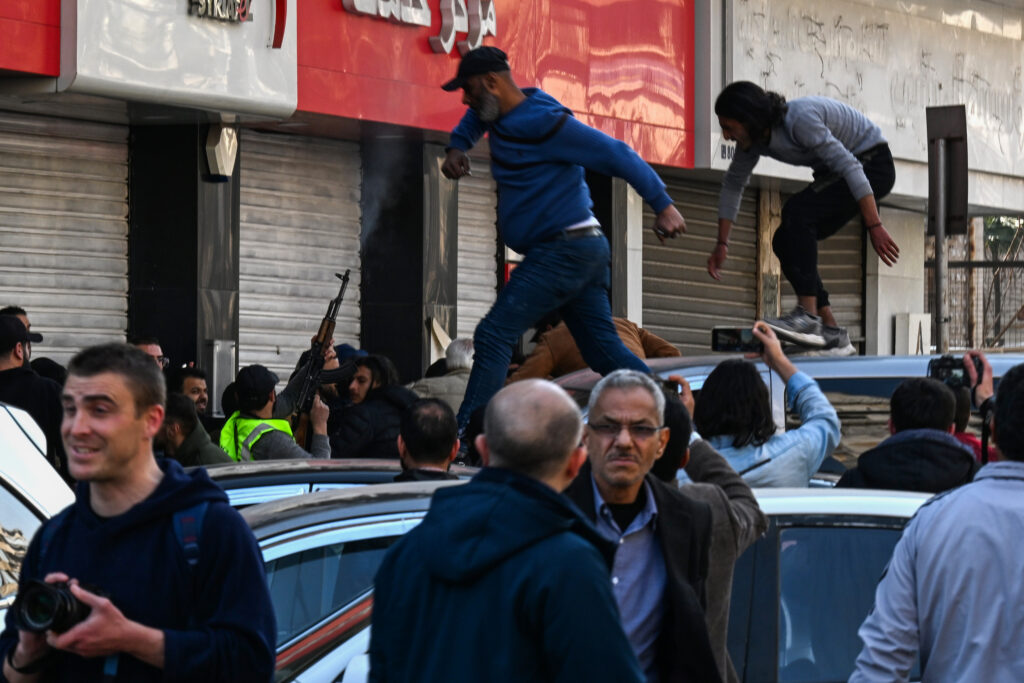
Syrian security forces on Sunday fired in the air to disperse rival protests after pro-government demonstrators clashed with a gathering mourning dead civilians, following the reported mass killings of Alawites.The incident came after deadly violence in Syria’s Alawite heartland that saw hundreds killed, according to a war monitor, in attacks targeting the religious minority or in clashes between security forces and armed groups loyal to toppled president Bashar al-Assad.Activists had called for a silent protest in Damascus “to mourn the souls of the civilians and the martyrs among the security forces”.Dozens gathered for the demonstration, some raising signs saying “Syrian lives are not cheap”, before they were confronted by counter-protesters who chanted anti-Alawite slogans and called for a “Sunni Muslim state”.About 200 protesters had gathered in total on both sides, AFP journalists said.Physical altercations broke out between the demonstrators, before security forces intervened and dispersed them, firing gunshots into the air.”We were slaughtered for 14 years and we didn’t hear a word from you,” one of the counter-protesters was heard shouting before the demonstrations broke up.A woman from the original demonstration responded, calling on them to settle “your score with Assad, we have nothing to do with his crimes”.Bilal Abdullah, 37, said he joined that demonstration “to mourn the souls of the martyrs among the general security and the army, as well as the civilians who were killed recently on the coast and in the countryside”.Clashes erupted on Thursday between the new security forces and gunmen loyal to Assad, with the Syrian Observatory for Human Rights on Sunday reporting 231 members of the security forces and 250 pro-Assad fighters killed.The Observatory also said security forces and allied groups killed 830 Alawite civilians in the provinces of Latakia and Tartus.The violence is the fiercest since Islamist-led rebels toppled Assad on December 8 following a lightning offensive.
Syria president calls for unity after reports of mass killings
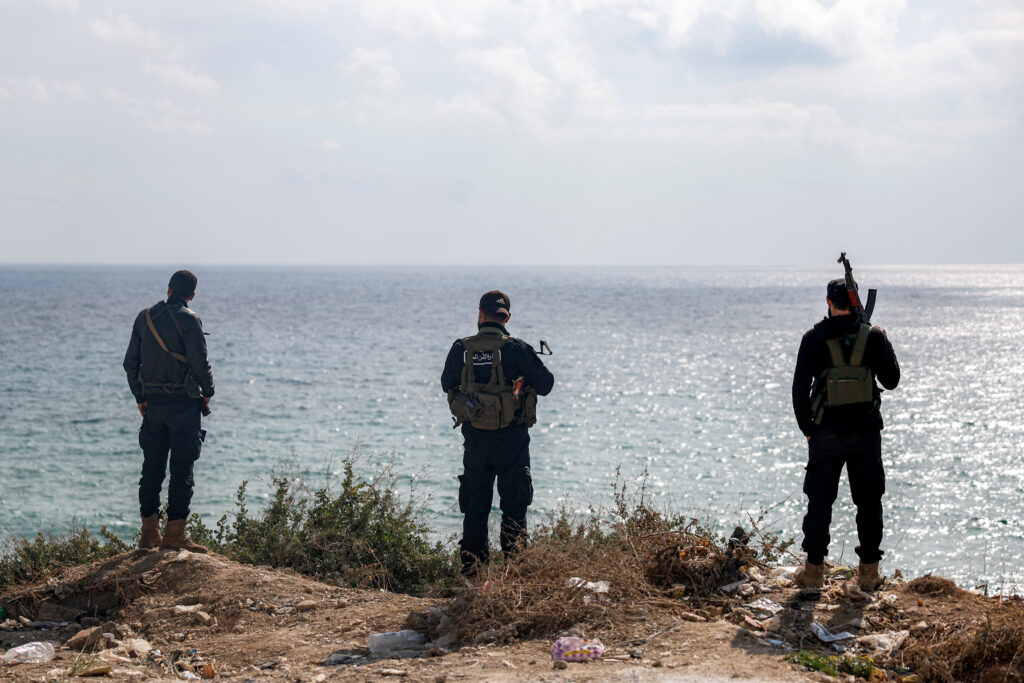
Syrian President Ahmed al-Sharaa called for national unity and peace on Sunday amid a growing international backlash following the killing of Alawite civilians in the worst violence since the overthrow of Bashar al-Assad.United Nations rights chief Volker Turk said the killings “must cease immediately”, while the Arab League, the United Nations, the United States and other governments have condemned the violence.The presidency announced on Telegram that an “independent committee” had been formed to “investigate the violations against civilians and identify those responsible for them”, who would face the courts.Clashes between the new security forces and loyalists of the former government erupted on Thursday in the heartland of the Alawite minority to which Assad belongs and have since escalated into reported mass killings.Speaking from a mosque in Damascus, Sharaa said: “We must preserve national unity (and) civil peace as much as possible and, God willing, we will be able to live together in this country.”The Syrian Observatory for Human Rights war monitor has reported that 745 Alawite civilians were killed in the coastal Latakia and Tartus provinces.The Britain-based Observatory said they were killed in “executions” carried out by security personnel or pro-government fighters, and were followed by looting.The fighting has also killed 125 members of the security forces and 148 pro-Assad fighters, according to the Observatory, taking the overall death toll to 1,018.- ‘They gathered all the men’ -The interior ministry said on Sunday that government forces were conducting “sweeping operations in Qadmous and the surrounding villages” in Tartus province to “pursue the remnants of the toppled regime”.State news agency SANA quoted a defence ministry source as saying there were violent clashes ongoing in Tanita, another Tartus village.An AFP photographer in the city of Latakia reported a military convoy entering the Bisnada neighbourhood to search homes.In Baniyas, a city to the south, resident Samir Haidar, 67, told AFP two of his brothers and his nephew were killed by armed groups that entered people’s homes, adding that there were “foreigners among them”.”They gathered all the men on the roof and opened fire on them,” Haidar said.Defence ministry spokesman Hassan Abdul Ghani said on Saturday the security forces had “reimposed control” over areas that had seen attacks by Assad loyalists.The mass killings followed clashes sparked by the arrest of a wanted suspect in a predominantly Alawite village, the Observatory said, reporting a “relative return to calm” in the coastal region on Saturday.The head of the World Health Organization Tedros Adhanom Ghebreyesus said medical facilities had been damaged in the clashes and that the UN agency was “working to deliver medicines and trauma supplies”.Chief US diplomat Marco Rubio said Syria “must hold the perpetrators of these massacres against Syria’s minority communities accountable”, while Germany’s foreign ministry said the Syrian authorities had “a responsibility to prevent further attacks”.A defence ministry source told SANA that troops had blocked roads leading to the coast to prevent “violations”, without specifying who was committing them.Latakia province security director Mustafa Kneifati told the news agency: “We will not allow for sedition or the targeting of any component of the Syrian people.”- Fear of reprisals -Sharaa’s Islamist group Hayat Tahrir al-Sham (HTS), which led the toppling of Assad in December, has its roots in the Syrian branch of Al-Qaeda and remains proscribed as a terrorist organisation by many governments including the United States.Since the rebel victory, it has vowed to protect Syria’s religious and ethnic minorities.The UN’s Turk said in a statement there had been a “continuous spike in hate speech both online and offline” in Syria and insisted there was an “urgent need for a comprehensive transitional justice process”.Israeli Foreign Minister Gideon Saar, speaking to German newspaper Bild, said Europe “must wake up” and “stop granting legitimacy” to the new Syrian authorities who he insisted were still jihadists.The Alawite heartland has been gripped by fear of reprisals for the Assad family’s brutal five-decade rule which included widespread torture and disappearances.Social media users have shared posts documenting the killing of Alawite friends and relatives.The Observatory, which relies on a network of sources in Syria, reported multiple “massacres” in recent days, with women and children among the dead.The Observatory and activists released footage showing dozens of bodies piled outside a house. Other videos appeared to show men in military garb shooting people at close range.AFP could not independently verify the images or accounts.During a sermon on Sunday in Damascus, the Greek Orthodox Patriarch of Antioch John X said Christians were among those killed and called on Sharaa to “put a stop to these massacres… and give a sense of safety and security to all the people of Syria, regardless of their sect”.Aron Lund of the Century International think tank said the violence was “a bad omen”.He said the new government lacks the tools, incentives and local support base to engage with disgruntled Alawites.”All they have is repressive power, and a lot of that… is made up of jihadist zealots who think Alawites are enemies of God.”
Israeli air strike in Gaza ahead of new talks on truce with Hamas
Israel carried out an air strike on militants in northern Gaza on Sunday, rattling an already fragile ceasefire as it prepared for fresh talks in Doha on the future of its truce with Hamas.Despite the end of the truce’s initial phase a week ago, both sides have refrained from returning to all-out war, though there have been sporadic episodes of violence. Sunday’s air strike was the latest of daily strikes reported by Israel since Thursday.The Palestinian militant group has repeatedly called for an immediate start to negotiations on the ceasefire’s second phase, which was negotiated by the United States, Qatar and Egypt aiming to bring a permanent end to the war.Israel says it prefers an extension of phase one until mid-April, and cut off aid to Gaza over the impasse.Hamas representatives met mediators in Cairo over the weekend, emphasising the urgent need to resume humanitarian aid deliveries to the territory “without restrictions or conditions”, a Hamas statement said.”We call on mediators in Egypt and Qatar, as well as the guarantors in the US administration, to ensure that the occupation complies with the agreement… and proceeds with the second phase according to the agreed-upon terms,” Hamas spokesman, Hazem Qassem, told AFP.Hamas’s key demands for the second phase include a hostage-prisoner exchange, a complete withdrawal of Israel from Gaza, a permanent ceasefire, reopening of border crossings and lifting of the Israeli blockade, he said.Former United States president Joe Biden had also outlined a second phase involving the release of remaining living hostages, the withdrawal of all Israeli forces left in Gaza, and establishment of a permanent ceasefire.Following talks with mediators, another Hamas spokesman, Abdel Latif al-Qanoua, said indicators were so far “positive”.Israeli Prime Minister Benjamin Netanyahu’s office said it would send delegates to Doha on Monday, and Israeli media reported the security cabinet would discuss the matter later on Sunday.- ‘Among dogs and rats’ -Israel’s military said its air strike Sunday targeted militants who “were identified operating in proximity to IDF troops and attempting to plant an explosive device in the ground in northern Gaza”.The truce largely halted more than 15 months of fighting in Gaza, where virtually the entire population was displaced by Israel’s relentless military campaign in response to Hamas’s October 7, 2023, attack.The six-week first phase led to the exchange of 25 living Israeli hostages and eight bodies for the release of about 1,800 Palestinian prisoners held in Israel.It also allowed much-needed food, shelter and medical assistance to re-enter Gaza. Since Israel subsequently cut off the aid flow, United Nations rights experts accused the government of “weaponising starvation”.”To date, only 10 percent of the required medical supplies have been allowed in, exacerbating the crisis,” Gaza health ministry spokesman Khalil al-Dakran said, adding that the “continued closure of the crossings threatens the lives of patients in Gaza”.Displaced Palestinian widow Haneen al-Dura told AFP she and her children spent weeks living on the street “among dogs and rats” before receiving a tent.- Fears for hostages -Last week, US President Donald Trump threatened further destruction of Gaza if all remaining hostages were not released, issuing what he called a “last warning” to Hamas leaders.He also alluded to repercussions for all Gazans, telling them: “A beautiful Future awaits, but not if you hold Hostages. If you do, you are DEAD!”The threats came after his administration confirmed the start of unprecedented direct talks with Hamas, which Washington had previously refused contact with since designating it a terrorist organisation in 1997.Of the 251 hostages taken by the Palestinian militants during the October 7 attack, 58 remain in Gaza, including five Americans of which four have been confirmed dead.Trump had previously floated a widely condemned plan to expel Palestinians from Gaza, and on Sunday Israel’s far-right Finance Minister Bezalel Smotrich said that proposal was “taking shape”.Trump’s idea has prompted Arab leaders to offer an alternative.Their proposal would see Gaza’s reconstruction financed through a trust fund, with the Ramallah-based Palestinian Authority returning to govern the territory.International support for the Arab plan grew on Saturday when the 57-member Organisation of Islamic Cooperation, which calls itself the “collective voice of the Muslim world”, adopted it.Britain, France, Germany and Italy separately gave their backing.At a weekend rally in Tel Aviv, family members of Israeli hostages demanded their government fully implement the ceasefire.”The war could resume in a week,” Einav Zangauker, the mother of Matan Zangauker, told the crowd. “The war won’t bring the hostages back home. It will kill them.”Hamas’s attack resulted in the deaths of 1,218 people on the Israeli side, most of them civilians, according to official figures.Israel’s retaliatory campaign has killed at least 48,458 people in Gaza, the majority of them civilians, according to the Hamas-run territory’s health ministry. The UN considers these figures reliable.