AFP Asia Business

Iran says won’t negotiate under ‘intimidation’ as Trump ramps up pressure

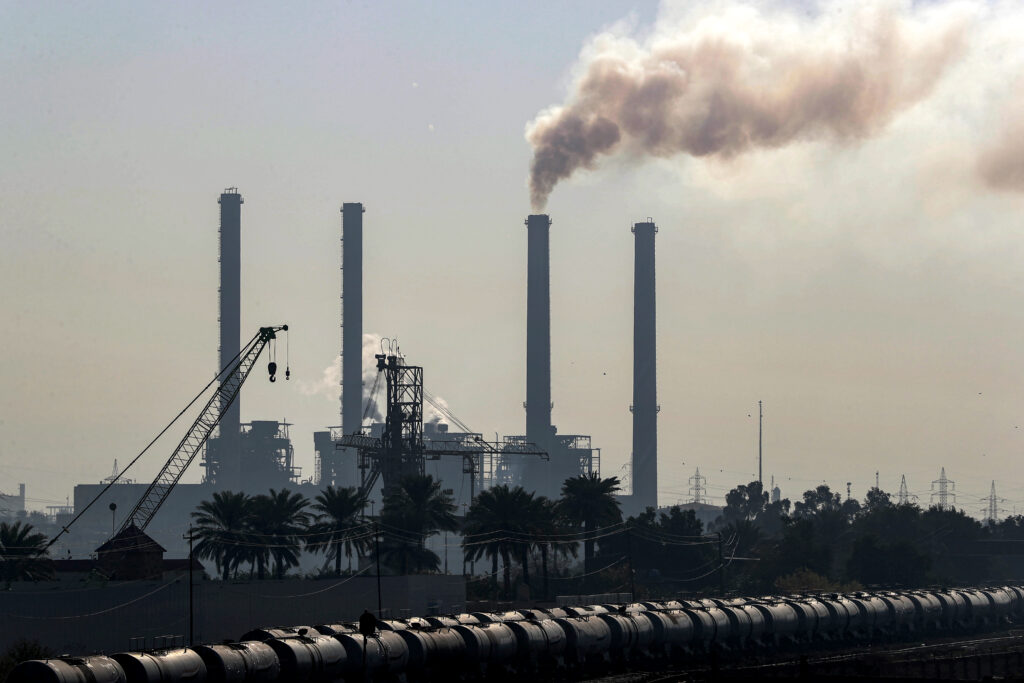
Iran said Monday it would not negotiate under “intimidation”, after US President Donald Trump sought to ratchet up pressure on Tehran by ending a sanctions waiver that had allowed Iraq to buy electricity from its Shiite neighbour.Iran’s mission to the United Nations had indicated Sunday that Tehran might be open to talks aimed at addressing US concerns about the potential militarisation of its nuclear programme — though not to ending the program completely.But on Monday, Iran’s top diplomat seemed to slam the door on such discussions, saying Tehran’s nuclear programme was and always will be entirely peaceful and so there was “no such thing as its ‘potential militarization'”.”We will NOT negotiate under pressure and intimidation. We will NOT even consider it, no matter what the subject may be,” foreign minister Abbas Araghchi said on social media platform X.Since returning to the White House in January, Trump has reinstated his policy of exerting “maximum pressure” against Iran, reimposing sweeping sanctions aimed at crushing its oil industry in particular.The US State Department said Sunday the decision not to renew Iraq’s sanctions waiver was made to “ensure we do not allow Iran any degree of economic or financial relief.”Iran supplies a third of Iraq’s gas and electricity, providing Tehran with substantial income.- ‘Never take place’ -On Sunday, the Iranian mission to the United Nations had sounded a more conciliatory note, suggested Tehran might be willing to discuss certain issues.”If the objective of negotiations is to address concerns vis-a-vis any potential militarization of Iran’s nuclear program, such discussions may be subject to consideration,” said a statement from the mission.”However, should the aim be the dismantlement of Iran’s peaceful nuclear program to claim that what (President Barack) Obama failed to achieve has now been accomplished, such negotiations will never take place,” it said.The waiver for Iraq was introduced in 2018, when Washington reimposed sanctions on Tehran after Trump abandoned a nuclear deal with Iran negotiated under Obama.A spokesman for the US embassy in Baghdad on Sunday urged Baghdad “to eliminate its dependence on Iranian sources of energy as soon as possible.””The President’s maximum pressure campaign is designed to end Iran’s nuclear threat, curtail its ballistic missile program, and stop it from supporting terrorist groups,” the spokesman said.The landmark 2015 deal that Obama helped negotiate between Tehran and major powers promised sanctions relief in return for Iran curbing its nuclear programme.Tehran, which denies seeking nuclear weapons, initially adhered to the nuclear deal after Trump pulled out of it, but then rolled back commitments.US officials estimate Iran would now need mere weeks to build a nuclear bomb if it chose to.- ‘All scenarios’ -Trump pulled out of the agreement over the objections of European allies, instead imposing US sanctions on any other country buying Iran’s oil. The waiver was extended to Iraq as a “key partner” of the United States.Iraq, despite having immense oil and gas reserves, remains dependent on such energy imports. But Baghdad said it had prepared “for all scenarios” regarding the waiver.The ending of the energy waiver is expected to worsen the power shortages that affect the daily lives of 46 million Iraqis.Gulf analyst Yesar Al-Maleki of the Middle East Economic Survey said Iraq will now face challenges in providing electricity, especially during summer.To alleviate the impact, Iraq has several options including increasing imports from Turkey.

Trump admin detains pro-Palestinian campus protest leader

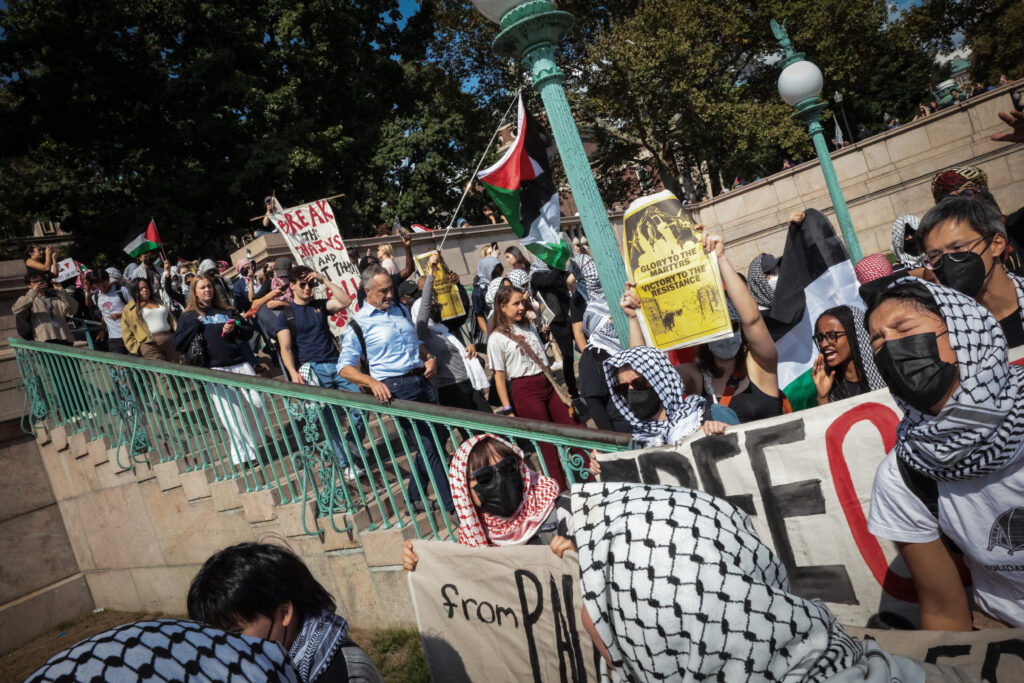
Immigration officers have arrested a leader of the protests at Columbia University against Israel’s war in Gaza, authorities said Sunday, after US President Donald Trump vowed to deport foreign pro-Palestinian student demonstrators.Mahmoud Khalil, one of the most prominent faces of the university’s protest movement that erupted in response to Israel’s conduct of the war, was arrested on Sunday, the Department of Homeland Security (DHS) said on X.The agency said the action was taken “in support of President Trump’s executive orders prohibiting anti-Semitism, and in coordination with the Department of State.”The Student Workers of Columbia Union said in a statement that Khalil had been detained on Saturday, describing him as “a Palestinian recent Columbia graduate and lead negotiator for last spring’s Gaza solidarity encampment.”US campuses including Columbia’s in New York were rocked by student protests against Israel’s war in Gaza following the October 7, 2023 Hamas attack. The demonstrations ignited accusations of anti-Semitism.Protests, some of which turned violent and saw campus buildings occupied and lectures disrupted, pitted students protesting Israel’s conduct against pro-Israel campaigners, many of whom were Jewish. US Secretary of State Marco Rubio wrote on X that “we will be revoking the visas and/or green cards of Hamas supporters in America so they can be deported.”Khalil, who remains in immigration enforcement detention, held permanent residency at the time of his arrest prompting thousands of people to sign a petition calling for his release, the union statement added.”We are also aware of multiple reports of Immigration and Customs Enforcement agents accessing or attempting to access Columbia campus buildings on Friday and Saturday, including undergraduate dorms,” the union said.Columbia did not directly address Khalil’s arrest in response to inquiries, but in a statement said “there have been reports of ICE in the streets around campus.” “Columbia has and will continue to follow the law. Consistent with our longstanding practice and the practice of cities and institutions throughout the country, law enforcement must have a judicial warrant to enter non-public University areas, including University buildings,” Columbia said.In its post on X, the DHS said Khalil “led activities aligned to Hamas, a designated terrorist organization,” without further details.Trump railed against the student protest movement linked to the conflict in Gaza, and vowed to deport foreign students who had demonstrated.He also threatened to cut off federal funding for institutions that he said were not doing enough to combat anti-Semitism.His administration announced Friday it was cutting $400 million in federal grants to Columbia University, accusing it of failing to protect Jewish students from harassment.

Ukraine set for crucial talks with US on ending war with Russia

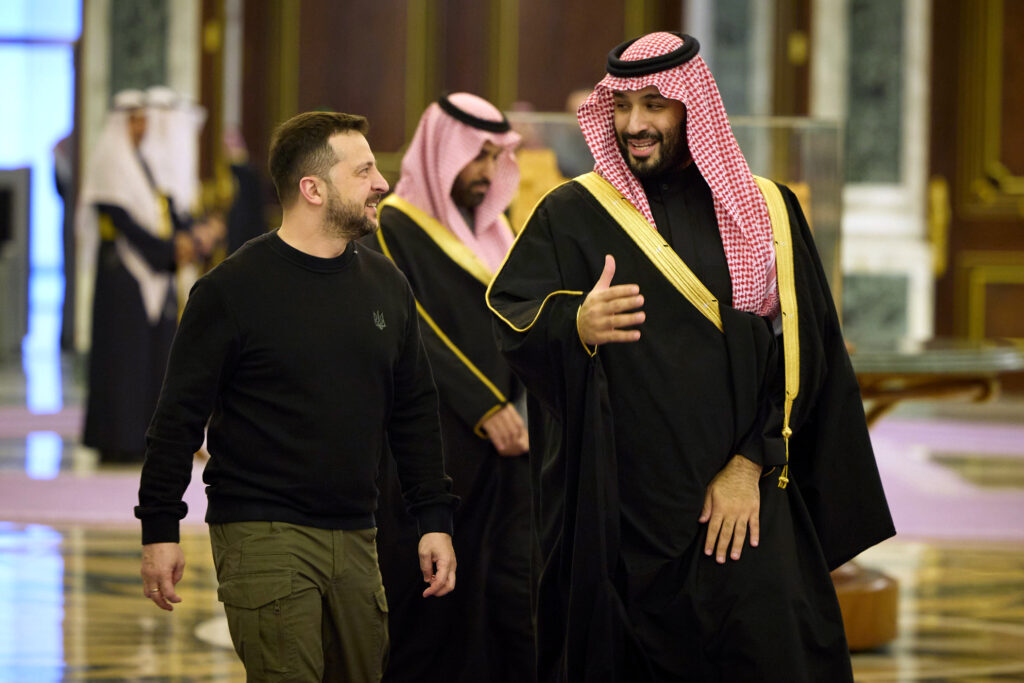
Ukrainian President Volodymyr Zelensky is due to arrive in Saudi Arabia on Monday, a day ahead of crucial talks between Ukrainian and US officials on ending the war with Russia.Highly anticipated negotiations on Tuesday on resolving the three-year conflict will see US and Ukrainian officials meet for the first time since Zelensky’s disastrous White House visit last month.Zelensky said he would on Monday meet Saudi Crown Prince Mohammed bin Salman, the country’s de facto leader, after which his team “will stay for a meeting on Tuesday with the American team”.At the talks in the Red Sea port city of Jeddah, US Middle East envoy Steve Witkoff has said Washington wants “to get down a framework for a peace agreement and an initial ceasefire as well”.Zelensky has said Ukraine is “fully committed to constructive dialogue”, but wants its interests to be “taken into account in the right way”.  “We hope for results, both in terms of bringing peace closer and continuing support,” he said in his evening address on Sunday.US Secretary of State Marco Rubio will fly to Jeddah on Monday, the US State Department said. Mike Waltz, US President Donald Trump’s national security adviser, has also confirmed his participation.- ‘In constant contact’ -Zelensky said his negotiators will include Foreign Minister Andriy Sybiga and Defence Minister Rustem Umerov, his chief of staff Andriy Yermak and Pavlo Palisa, a military commander and Yermak’s deputy. Kyiv is in “constant contact with the US team,” Zelensky said.Washington has currently suspended military aid to Ukraine as well as intelligence sharing and access to satellite imagery in a bid to force it to the table with Moscow, which launched its all-out invasion in February 2022 on orders from President Vladimir Putin.Trump has renewed communication with Putin and criticised Zelensky, raising fears in Kyiv and among European allies that the US leader may try to force Ukraine to accept a settlement favouring Russia.On Friday, however, Trump said he was considering further sanctions on Russia for “pounding” Ukraine on the battlefield.Ukraine’s European allies last week held a summit with Zelensky and announced they would greatly increase defence spending.Britain and France have proposed a truce for Ukraine, at sea and in the air, and a halt to Russia’s bombardment of Ukraine’s power facilities.Ukrainian and British diplomats held talks in Kiyv at the weekend, Zelensky said.The Saudi talks come after the public altercation between Zelensky and Trump in the White House led to the Ukrainian leaving without signing a minerals deal demanded by the US leader.Zelensky later called the incident “regrettable” and said he was ready to work with Trump’s “strong leadership”.He also expressed readiness to sign the deal on strategic mineral reserves.Witkoff said Trump received a letter from Zelensky, calling it “a very positive first step” and “an apology”.Asked if Ukraine would sign the deal in Saudi Arabia, Witkoff said: “I think Zelensky has offered to sign it, and we’ll see if he follows through.”- ‘Not ready for peace’ -Witkoff visited Moscow in February to secure the release of a jailed US teacher, and later said he spent a long time talking to Putin and “developing a relationship” with him.Waltz was in the Oval Office during Zelensky’s combative meeting with Trump and JD Vance.He later told Fox News that Zelensky “is not ready to talk peace” but “time is not on his side”.In an interview with CNN, Waltz said that if Zelensky’s “personal motivations or political motivations are divergent from ending the fighting… then I think we have a real issue”.  – Saudi mediator -Saudi Arabia has become a key host for US diplomacy with Russia and Ukraine.Russian Foreign Minister Sergei Lavrov and Rubio met in Riyadh last month, agreeing to resume dialogue and start talks on the Ukraine conflict. Zelensky has visited Saudi Arabia several times since Russia’s invasion in 2022 but postponed a trip last month, citing a lack of an invitation to the Russia-US talks. In 2022, five prisoners held in Russian-controlled Ukraine were flown to Riyadh to be exchanged after negotiations involving the crown prince.Putin said the crown prince also helped secure the release of jailed Wall Street Journal reporter Evan Gershkovich, jailed by Russia for “espionage” last year.A historic ally of the US, the oil-rich state became an international pariah following the assassination of dissident Saudi journalist Jamal Khashoggi in Turkey in 2018.But Witkoff has said Trump’s team has a “really good relationship with the Saudis”.

Rubio heads to Saudi to gauge if Ukraine ready for peace talks

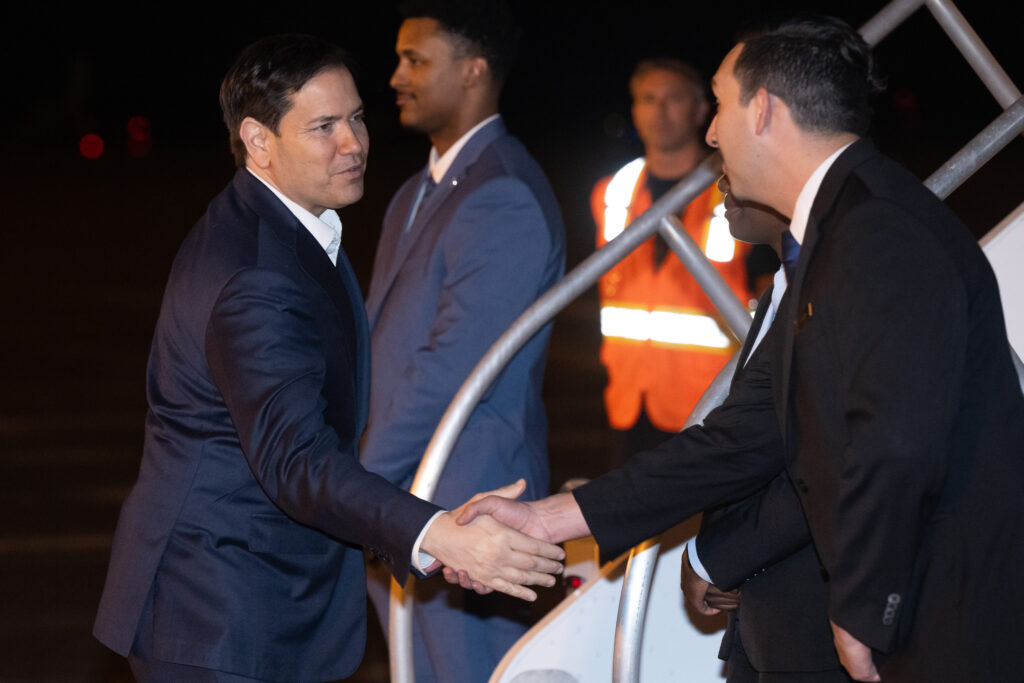
US Secretary of State Marco Rubio set off on Sunday to fly to Saudi Arabia for talks with Ukraine, as President Donald Trump decides whether to relent on a freeze in military and intelligence support.Rubio will then travel on to Group of Seven (G7) talks in Canada, making him the first major US official to visit since Trump returned to office, launched a trade war the neighboring country and mocked its sovereignty.In three days of talks in Jeddah, Rubio will discuss how to “advance the president’s goal to end the Russia-Ukraine war,” said State Department spokeswoman Tammy Bruce.The talks in Jeddah on Tuesday are expected to involve Rubio and Trump’s national security advisor, Mike Waltz, with Zelensky’s national security advisor and foreign and defense ministers. “The fact that they are coming here at senior levels is a good indication to us that they want to sit down and they’re ready to move forward,” a senior State Department official said.Ukraine’s President Volodymyr Zelensky is also expected in Saudi Arabia, but to pay a visit to Riyadh and not to participate directly in the Jeddah talks.Trump, asked separately about the hopes for a quick resolution, told reporters Sunday: “I think we’re going to have a good result in Saudi Arabia… we have a lot of good people going out there.”And I think Ukraine’s going to do well, and I think Russia is going to do well. I think some very big things could happen this week. I hope so.”Trump suspended aid and intelligence sharing with Ukraine after a disastrous February 28 meeting with Zelensky at the White House.The Republican leader and his vice president, JD Vance, publicly dressed Zelensky down for alleged ingratitude over billions of dollars worth of previous US weapons shipments.Zelensky left without signing an agreement demanded by Trump in which Ukraine would hand over much of its mineral wealth to the United States, which Trump argues will compensate US taxpayers for the assistance provided under former president Joe Biden.Zelensky has since said he is ready to sign the minerals deal and has sent a conciliatory letter to Trump, who read it at his address to Congress on Tuesday.- Frozen aid -Keith Kellogg, the US special envoy on Russia and Ukraine, said Thursday he would support resuming assistance once Zelensky signs the deal — but that the decision was ultimately up to Trump.NBC News, quoting unnamed sources, said Trump was unlikely to relent just with the minerals deal and would want to be assured that Zelensky is ready to make concessions to Russia.Trump told reporters Sunday he did not think Ukraine had yet shown they “want peace.””Right now they haven’t shown it to the extent that they should… but I think they will be, and I think it’s going to become evident over the next two or three days.”Stunned European leaders have been racing to find ways to make up for US aid, although Zelensky himself has said that there is no substitute for Washington’s security guarantees in a deal with Russia.Rubio last month met his Russian counterpart, breaking a Biden-era freeze on such high-level contacts, and spoke of future economic cooperation if the war ends.Those talks also took place in Saudi Arabia, which has positioned itself as a key diplomatic partner for Trump.Rubio will also meet in Jeddah with Crown Prince Mohammed bin Salman, the kingdom’s de facto ruler, the State Department said.Trump is expected to push hard for Saudi Arabia to recognize Israel, a prospect that seems remote until a permanent end to the Gaza war — a priority for Witkoff as he travels the region. Rubio will then head to Quebec for a meeting of the Group of Seven foreign ministers where his spokeswoman said he will work to “further US interests in peace and security, strategic cooperation, and global stability.”She made no mention of tensions with Canada, which Trump has mocked as the “51st state” as he unleashes tariffs, although he has partially backed off faced with a slide on stock markets.

China-US trade war heats up as Beijing’s tariffs take effect

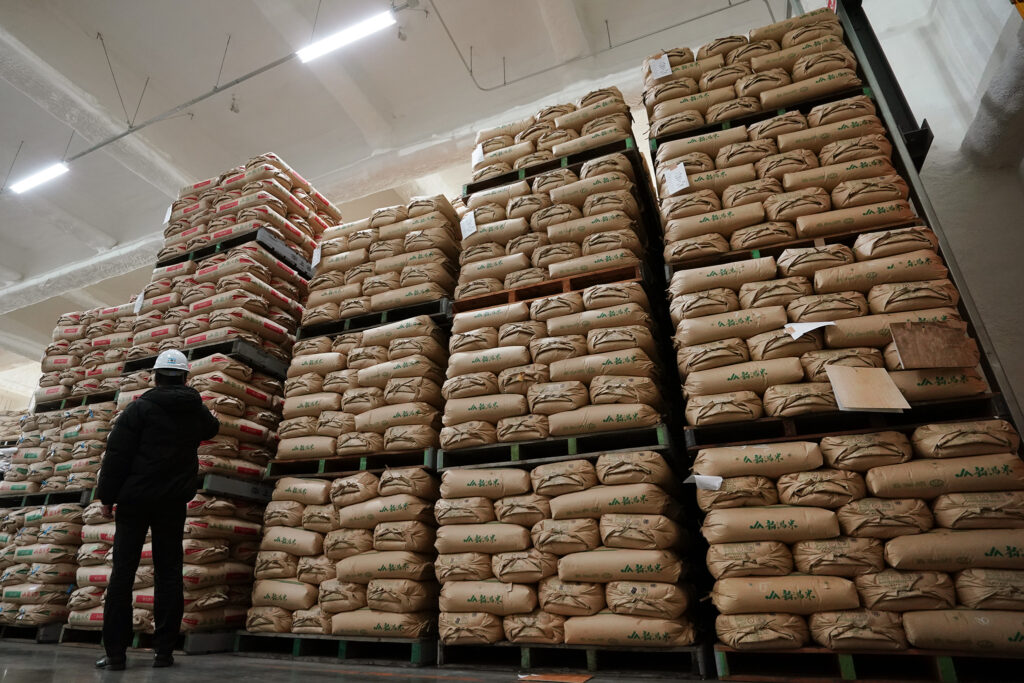
Beijing’s tariffs on certain US agricultural goods in retaliation for President Donald Trump’s latest hike on Chinese imports came into force Monday, as trade tensions mount between the world’s two leading economies. Since retaking office in January, Trump has unleashed a barrage of tariffs on major US trading partners, including China, Canada and Mexico, citing their …

China-US trade war heats up as Beijing’s tariffs take effect Read More »