AFP Asia Business

Arrest of pro-Palestinian activist sparks outrage, Trump says ‘first of many’

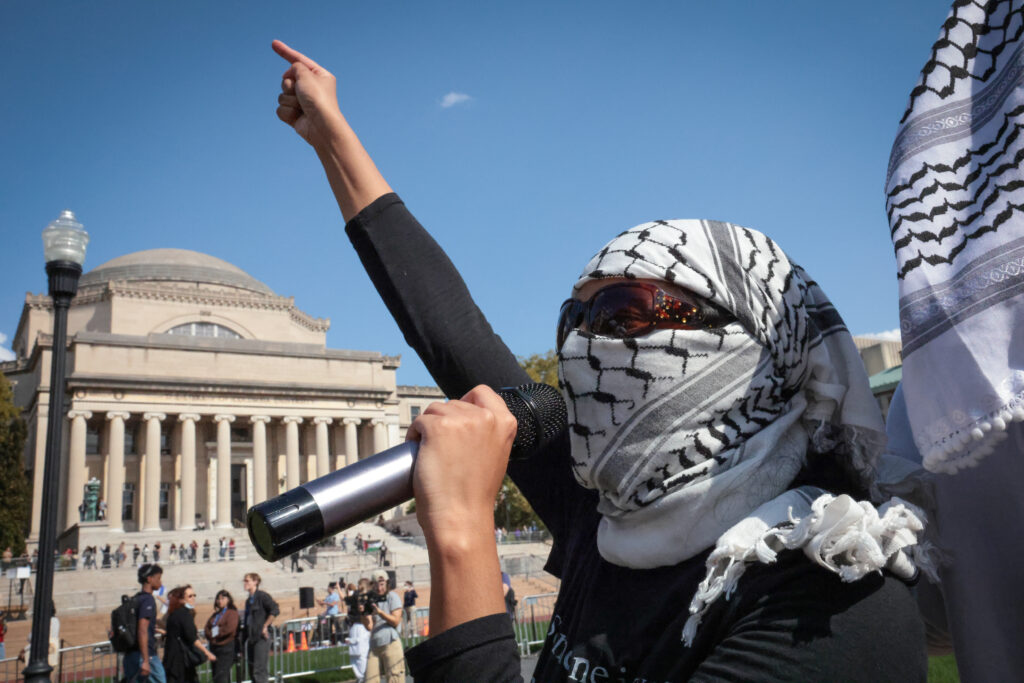
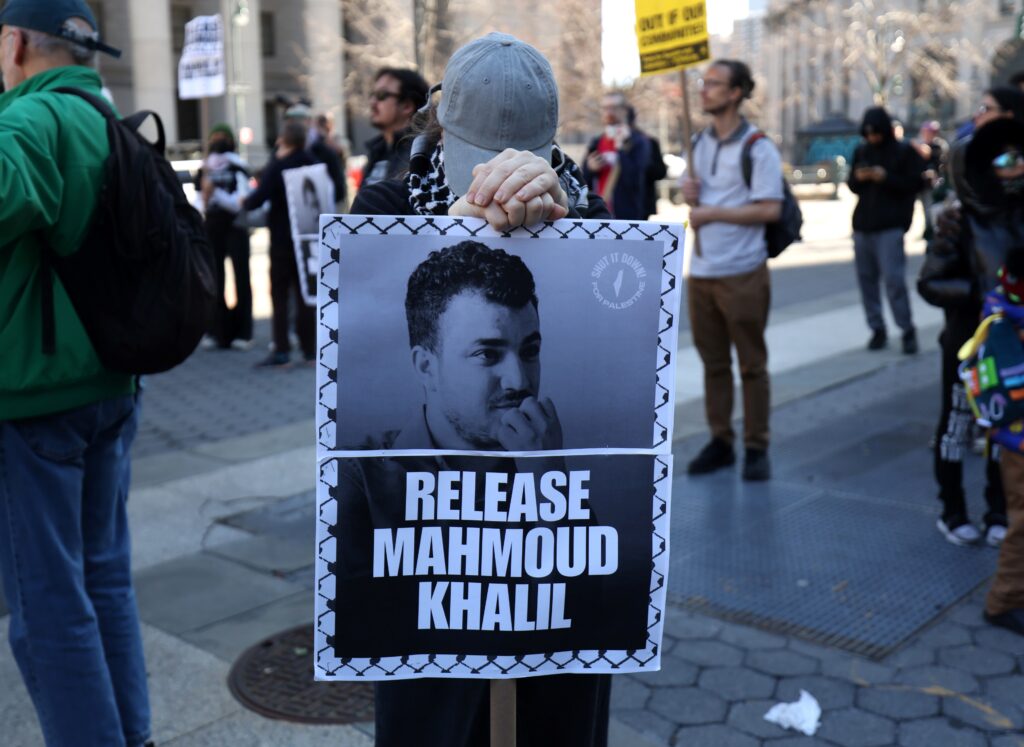
Protesters in New York and rights groups expressed outrage Monday over the arrest of a leader of pro-Palestinian demonstrations at Columbia University, as President Donald Trump vowed further crackdowns.Mahmoud Khalil, a recent graduate and one of the most prominent faces of the university’s high-profile protests, was arrested by US immigration officials over the weekend despite holding a permanent residency green card.The Department of Homeland Security, confirming Khalil’s arrest on Sunday, claimed he had “led activities aligned to Hamas” and that the DHS action was taken “in coordination with the Department of State.””We know there are more students at Columbia and other Universities across the Country who have engaged in pro-terrorist, anti-Semitic, anti-American activity, and the Trump Administration will not tolerate it,” the president wrote Monday on his Truth Social platform.”This is the first arrest of many to come,” he pledged.The protests at Columbia, launched last year in opposition to Israel’s devastating war in Gaza, brought widespread media attention as tensions mounted on campus and spread to other universities around the country.Some protests turned violent and saw campus buildings occupied, while students protesting Israel’s conduct were frequently pitted against pro-Israel campaigners, many of whom were Jewish.Trump and other Republicans have broadly accused the protesters of supporting Hamas, the Palestinian militant group and US-designated terrorist group whose deadly attack on October 7, 2023 against Israel sparked the war.While the Trump administration moves to quickly deport Khalil, who has reportedly been moved to the southern state of Louisiana, a federal judge on Monday ordered authorities to halt proceedings.The order, seen by AFP, by Judge Jesse Furman of the Southern District of New York also called for a preliminary hearing on Wednesday.- ‘A kidnapping’ -The American Civil Liberties Union (ACLU) condemned Khalil’s arrest, calling it “unprecedented, illegal, and un-American.””The government’s actions are obviously intended to intimidate and chill speech on one side of a public debate,” said Ben Wizner, director of the ACLU’s Speech, Privacy and Technology Project, in a statement.On Monday afternoon, over 1,000 protesters gathered in New York to express their outrage at Khalil’s arrest.”This was essentially a kidnapping,” said 42-year-old Tobi, who declined to give her last name for fear of retaliation.”It seems like a clear targeting of activists, which is a really, really dangerous precedent,” she said.According to his supporters, Khalil was arrested late Saturday night while returning with his pregnant wife to their residence in Columbia student housing.”This is a dismal moment in American history. We must not go down this authoritarian path one step further,” said Michael Thaddeu, one of around 50 professors who expressed their concern Monday at a press conference.The Trump administration has particularly targeted Columbia over its handling of the protests, threatening to revoke billions in federal funding if more action is not taken.On Friday, four government agencies announced initial cuts of $400 million.The arrest also prompted an outcry from the United Nations, with the spokesman for Secretary-General Antonio Guterres saying Monday “it is crucial to underscore the importance of respecting the right of freedom of expression and the right to peaceful assembly everywhere.”

Syrian presidency announces agreement to integrate Kurdish institutions

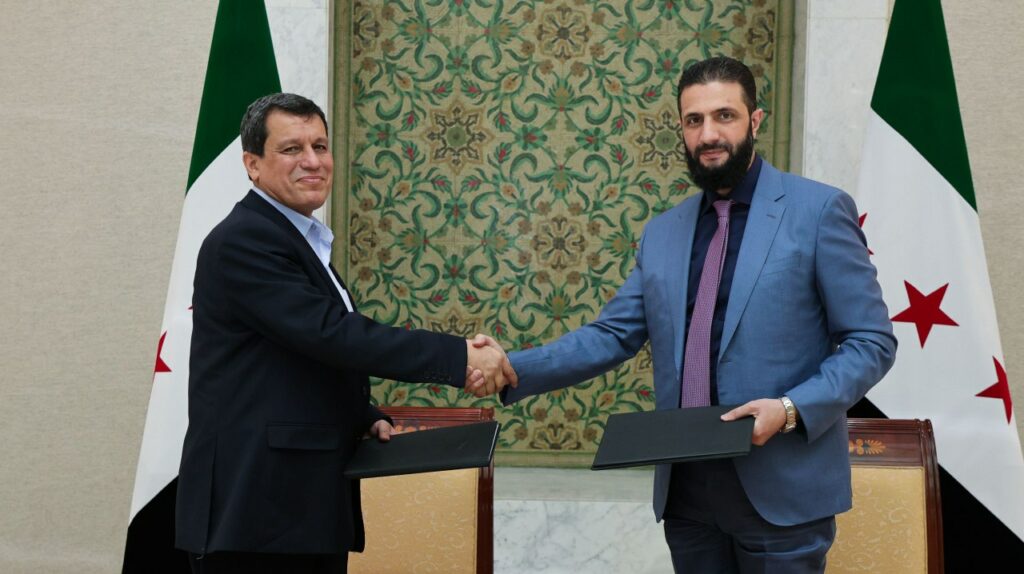
The Syrian presidency announced on Monday an agreement with the head of the Kurdish-dominated Syrian Democratic Forces (SDF) to integrate the institutions of the autonomous Kurdish administration in the northeast into the national government.Syria’s new authorities under interim President Ahmed al-Sharaa have sought to disband armed groups and establish government control over the entirety of the country since ousting long-time leader Bashar al-Assad in December after more than 13 years of civil war.The new accord, which is expected to be implemented by the end of the year, comes after days of violence in the heartland of Syria’s Alawite minority that has posed the most serious threat yet to the country’s stability since Assad’s fall. The presidency published a statement on Monday signed by both parties laying out the agreement on “the integration of all the civilian and military institutions of the northeast of Syria within the administration of the Syrian state, including border posts, the airport, and the oil and gas fields”.State media released a photo of Sharaa shaking hands with SDF leader Mazloum Abdi following the signing of the agreement.The statement said “the Kurdish community is an essential component of the Syrian state”, which “guarantees its right to citizenship and all of its constitutional rights”.It also rejected “calls for division, hate speech and attempts to sow discord” between different segments of Syrian society.Abdi said Tuesday that the accord was a “real opportunity to build a new Syria”. “We are committed to building a better future that guarantees the rights of all Syrians and fulfills their aspirations for peace and dignity,” the SDF leader said on X.- ‘Supporting the state’ -The SDF serves as the de facto army of the de facto autonomous Kurdish administration that controls large swathes of northern and eastern Syria, including most of the country’s oil and gas fields, which may prove a crucial resource for the new authorities as they seek to rebuild the country.The new agreement also references “supporting the Syrian state in its fight against Assad’s remnants and all threats to (the country’s) security and unity”.Syria’s new authorities announced on Monday the end of an operation against loyalists of Assad that the Syrian Observatory for Human Rights said had killed at least 1,068 civilians, most of them members of the Alawite minority who were executed by the security forces or allied groups.The violence in the coastal heartland of the Alawite community, to which Assad belongs, broke out last week after gunmen loyal to the deposed president attacked Syria’s new security forces.The fighting has also killed 231 security personnel and 250 pro-Assad fighters, according to the Britain-based Observatory.- Marginalised and repressed -Marginalised and repressed during decades of Assad family rule, the Kurds were deprived of the right to speak their language and celebrate their holidays and, in many cases, of Syrian nationality.The SDF took advantage of the withdrawal of government forces during the civil war which broke out in 2011 to establish de facto autonomy in the north and northeast.The US-backed SDF played a key role in the fight against the Islamic State group, which was defeated in its last territorial stronghold in 2019.Since Assad’s overthrow, the Kurds have shown a degree of willingness to engage with the new authorities, but they were excluded from a recent national dialogue conference over their refusal to disarm.The agreement comes nearly two weeks after a historic call by jailed Kurdistan Workers’ Party (PKK) founder Abdullah Ocalan for the militant group to lay down its weapons and disband.The SDF maintains it is independent from the PKK, which has waged a decades-long insurgency against the Turkish government.It is dominated, however, by the Kurdish People’s Protection Units (YPG), which Ankara views as an offshoot of the PKK.The Turkish government, which is close to Syria’s new authorities, has designated the PKK a terrorist organisation, as have the United States and the European Union.The Turkish army, which has troops deployed in northern Syria, regularly carries out strikes on areas controlled by Kurdish forces, and Turkish-backed groups have been attacking SDF-held areas of northern Syria since November. 

Syria announces end to ‘military operation’ after mass killings

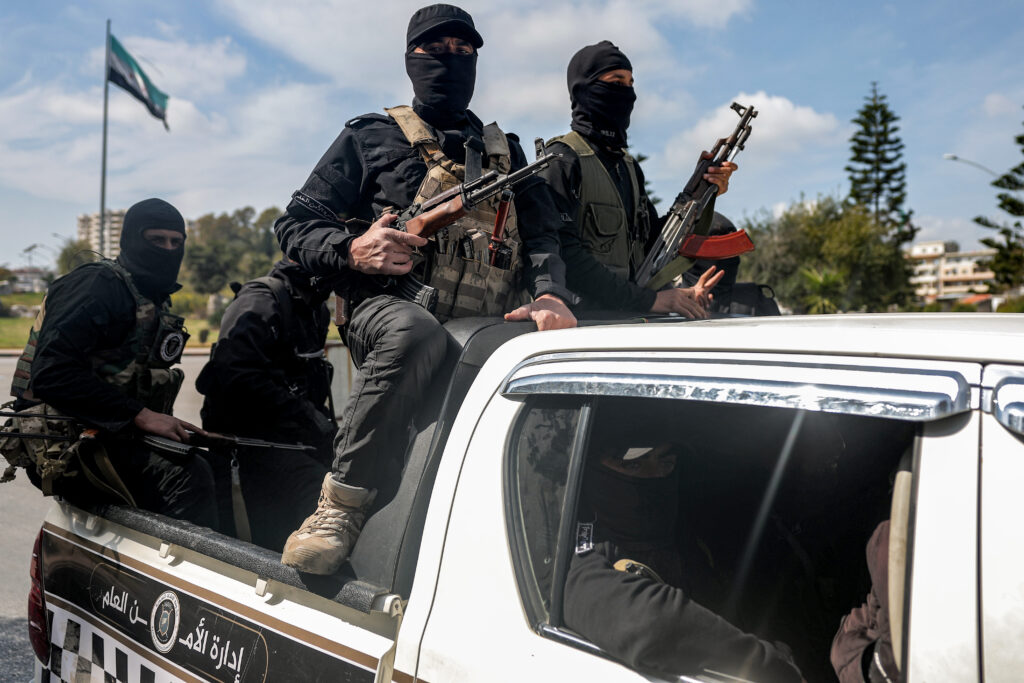
Syria’s new authorities announced on Monday the end of an operation against loyalists of deposed president Bashar al-Assad, after a war monitor reported more than 1,000 civilians killed in the worst violence since his overthrow.The Syrian Observatory for Human Rights said the overwhelming majority of the 1,068 civilians killed since Thursday were members of the Alawite minority who were executed by the security forces or allied groups.The violence in the coastal heartland of the Alawite community, to which the ousted president belongs, has threatened to throw into chaos the country’s fragile transition after decades of the Assad clan’s iron-fisted rule.The authorities on Monday ended their sweeping “military operation” against security threats and “regime remnants” in Latakia and Tartus provinces on the Mediterranean coast, defence ministry spokesman Hassan Abdul Ghani said in a statement.The announcement came after interim President Ahmed al-Sharaa, whose Islamist group led the offensive that toppled Assad on December 8, said the country would not be pulled back into civil strife.”Syria… will not allow any foreign powers or domestic parties to drag it into chaos or civil war,” Sharaa said in a speech.He also vowed to “hold accountable, firmly and without leniency, anyone who was involved in the bloodshed of civilians… or who overstepped the powers of the state”.Clashes broke out in the area on Thursday after gunmen loyal to the deposed president attacked Syria’s new security forces.The fighting has killed 231 security personnel and 250 pro-Assad fighters, according to the Britain-based Observatory, which relies on a network of sources inside Syria. The authorities did not provide any casualty figures.In Jableh in Latakia province, a resident who requested anonymity over safety concerns spoke to AFP in tears about being terrorised by armed groups who had taken control of the town.”More than 50 people from among my family and friends have been killed. They gathered bodies with bulldozers and buried them in mass graves.”- ‘Extreme fear’ -In some areas, residents had begun tentatively venturing out, but many were still afraid to leave home after dark and complained of a lack of basic supplies.”Today the situation in Latakia is a little calmer, people are out and about after five days of anxiety and extreme fear,” said Farah, a 22-year-old university student who gave only her first name.But with the situation still “very tense”, she said that “after six o’clock… the neighbourhood turns into a ghost town”.An AFP journalist said the road between Latakia and Jableh further south was largely empty, with only military vehicles and ambulances passing through.Vehicles damaged in clashes also littered the sides of the road.During a sermon in Damascus on Sunday, the Greek Orthodox Patriarch of Antioch John X said that “many innocent Christians were also killed” alongside Alawites.Obituaries were shared on social media for several members of the small Christian community living on the coast, seven of whom AFP was able to confirm were killed.”We are all victims, from all sects,” said Michel Khoury, 42, a Christian lawyer in Latakia.”We are all on a sinking ship, and no one will protect us except ourselves.”The Syrian presidency has announced the formation of an “independent committee” to “investigate the violations against civilians and identify those responsible”.Amnesty International said on Monday that the authorities should also “grant independent national and international investigators access to Syria… so that they can conduct their own fact-finding work”.- ‘Not in control’ -Sharaa — whose Hayat Tahrir al-Sham (HTS) has its roots in the Syrian branch of jihadist network Al-Qaeda — has vowed to protect Syria’s religious and ethnic minorities since toppling Assad.HTS is still listed as a terrorist organisation by the United States and other governments.Analysts have said the latest violence calls into question the new authorities’ ability to rule and rebuild a country devastated by 13 years of civil war.”The militia chaos that we saw in the Alawite coastal cities tells us… that the new Syrian army is not in control,” said Joshua Landis, an expert on Syria at the University of Oklahoma.The violence “will hinder Ahmed al-Sharaa’s efforts to consolidate his rule and to convince the international community that he is in control”, Landis added.Iran, a key backer of Assad, on Monday rejected as “completely ridiculous” accusations that Tehran may have been involved in the latest violence.Turkish President Recep Tayyip Erdogan, meanwhile, pledged to continue providing “every kind of support for our neighbour Syria to recover… and to achieve peace with all its ethnic and sectarian minorities”.The Syrian presidency announced on Monday evening an agreement to integrate into the national government the institutions of the autonomous Kurdish administration that controls large parts of the country’s northeast, including vital oil and gas fields.The statement, signed by Sharaa and the head of the Kurdish-dominated Syrian Democratic Forces (SDF), called the Kurds “an essential component” of Syria, and made reference to “supporting the Syrian state in its fight against Assad’s remnants”.

Only a functioning Palestinian state could replace UNRWA: agency chief

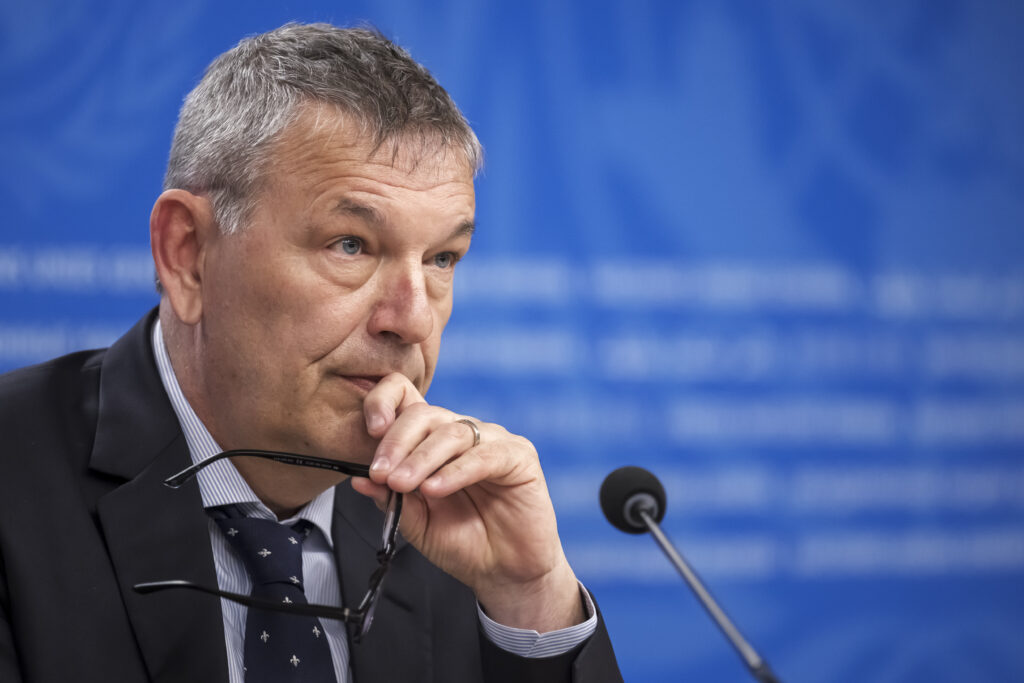
The head of the UN agency for Palestinian refugees on Monday rejected Israel’s assertion that other organisations could replace it in Gaza, insisting that only a Palestinian state “institution” could take over.Israel has banned UNRWA from operating in Gaza and agency chief Philippe Lazzarini hit back after Israel’s ambassador Daniel Meron told reporters  that his country was “working to find substitutes to the work of UNRWA inside Gaza”.Israel was actively “encouraging UN agencies and NGOs to take over,” he said.Lazzarini told reporters that UNRWA was still “it can’t be an NGO, it can’t be another UN agency”.”The only viable alternative are capable Palestinian institutions … in a Palestinian state.”For more than seven decades, the United Nations Relief and Works Agency for Palestine Refugees has provided aid and assistance to Palestinian refugees across the Middle East.But after Israel said some UNRWA staff took part in the October 7, 2023 Hamas attacks, Israeli legislation severing ties with the agency came into force at the end of January.UNRWA has been banned from operating on Israeli soil and from contacting Israeli officials.The UN says the move would hamper vital services delivered by the agency in Gaza, which has been ravaged by 15 months of war.UNRWA is “continuing to operate in Gaza. We are continuing to operate in the West Bank”, Lazzarini said.The agency said Sunday that since January it had “delivered food assistance to the entire population of the Gaza Strip”. It also carried out “over 412,000 health consultations and reached more than half a million people with shelter and non-food items”.- ‘More vulnerable’ -Lazzarini stressed the Israeli ban meant the agency was facing “serious operational challenges”, and warned that agency staff “feel much more vulnerable” without the ability to coordinate with the Israeli military.UN agencies and other aid organisations have repeatedly said that UNRWA could not be replaced. The agency is also the main provider of basic public services in Gaza, including education and social services for registered  refugees.Meron said Israel was urging other specialist organisations to step in. For instance, he said, the UN’s World Food Programme could deal with food, while “others deal with other issues”.”There has been serious work… with the different agencies and making sure that the people of Gaza will not suffer because of the this… switch from UNRWA to other agencies,” he said.Lazzarini acknowledged that if the only objective is to “bring trucks into Gaza” to address the humanitarian crisis caused by the war, others could step in.But he insisted that UNRWA’s role was far broader.”When it comes to the acute humanitarian emergency, yes of course you will find other NGOs and UN agencies who could scale up,” he said.”The real question is, who will provide primary health? Who will provide education?”

Trump says pro-Palestinian campus protester ‘first arrest of many to come’

US President Donald Trump said Monday that the detention of a leader of pro-Palestinian protests at Columbia University in New York is “the first arrest of many to come.””We know there are more students at Columbia and other Universities across the Country who have engaged in pro-terrorist, anti-Semitic, anti-American activity, and the Trump Administration will not tolerate it,” Trump wrote on his Truth Social platform.Mahmoud Khalil, one of the most prominent faces of the university’s protest movement that erupted last year in opposition to Israel’s war in Gaza, was arrested by immigration officials over the weekend.The Department of Homeland Security said the action was taken “in support of President Trump’s executive orders prohibiting anti-Semitism, and in coordination with the Department of State.”Khalil, a Columbia graduate, held a permanent residency green card at the time of his arrest, according to the Student Workers of Columbia union.Trump threatened in his post further action against other campus protesters, some of whom he alleged without evidence to be “paid agitators.””We will find, apprehend, and deport these terrorist sympathizers from our country — never to return again,” he wrote.The American Civil Liberties Union (ACLU) condemned Khalil’s arrest, calling it “unprecedented, illegal, and un-American.” “The government’s actions are obviously intended to intimidate and chill speech on one side of a public debate,” said Ben Wizner, director of the ACLU’s Speech, Privacy and Technology Project, in a statement.The arrest also prompted an outcry from the United Nations, with the spokesman for UN Secretary-General Antonio Guterres saying Monday “it is crucial to underscore the importance of respecting the right of freedom of expression and the right to peaceful assembly everywhere.”US campuses including Columbia’s were rocked by student protests against Israel’s war in Gaza following the October 7, 2023 Hamas attack. The demonstrations ignited accusations of anti-Semitism.Protests — some of which turned violent and saw campus buildings occupied and lectures disrupted — pitted students protesting Israel’s conduct against pro-Israel campaigners, many of whom were Jewish. 

‘What electricity?’: In Gaza without power, Israeli decision compounds woes

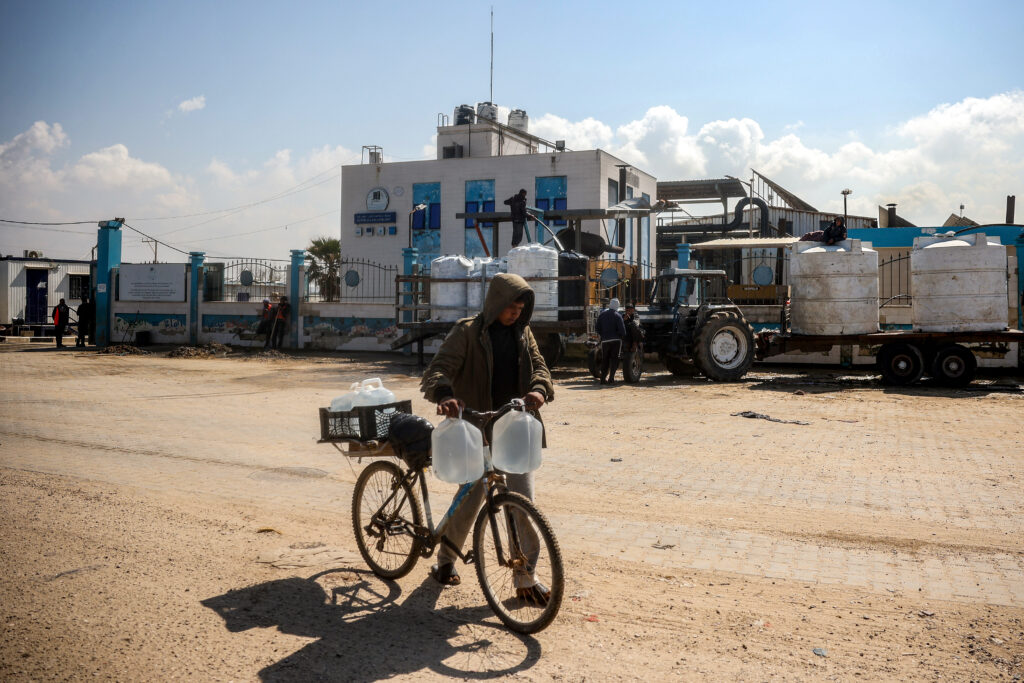
For Gazan teacher Abdullah Mortaja, Israel’s decision to cut off electricity to the war-battered territory was “a joke”, having already lived with little power supply since war began more than 16 months ago.The announcement Sunday by Israeli Energy Minister Eli Cohen followed a decision to block the entry of aid into the Gaza Strip in a bid to pressure Hamas to extend a fragile ceasefire on Israel’s terms.But for many in the Palestinian territory where Israel had imposed a “complete siege” at the start of the war in October 2023, living without electricity has become the norm.”What electricity do they want to cut?” said Mortaja, 40.”There is no electricity in Gaza”.Of the nearly dozen high-voltage power lines cut at the start of the war — along with food and water supply — one was reconnected by Israel in November to restart Gaza’s main water desalination plant.On Monday, employees at the facility in the central city of Deir el-Balah filled large tanks with water that had been treated before the cut-off, which brought the plant to a near-complete halt.Around 600,000 people — about a quarter of Gaza’s population — rely on the plant’s supply of drinking water, according to UN figures.Solar panels, which together with fuel-powered generators have become key sources of electricity in Gaza, allow only for extremely limited activity at the desalination plant, said a UN source.Instead, many people are now left to rely on brackish well water or the occasional supply of potable water from international humanitarian aid groups, added the source involved in work in the Gaza Strip.- Power grid ravaged -Announcing the electricity cut on the eve of a new round of ceasefire negotiations in Qatar, Cohen said Israel “will use all the tools at our disposal” to secure the release of hostages held by Gaza militants since Hamas’s October 7, 2023 attack that sparked the war.Hamas called Cohen’s decision “cheap and unacceptable blackmail” as the sides fail to agree a path toward a permanent end to their war.The first phase of the fragile Gaza truce began on January 19 and ended in early March, with no agreement yet on subsequent stages.More than 15 months of intense Israeli bombardment and fighting before the truce began had left electricity pylons collapsed and mangled across Gaza.One official from the Gaza Electricity Company, speaking to AFP on condition of anonymity, said Israeli attacks “destroyed 70 percent of the electricity distribution networks”.At night, the territory is plunged into almost total darkness.In the relatively few buildings left standing, the odd window is illuminated by a small square of white LED light.The war has displaced nearly all of Gaza’s 2.4 million inhabitants and triggered widespread hunger, according to the UN, with hundreds of thousands living in tents as their homes were damaged or destroyed.”Cutting electricity will only worsen our suffering,” said Jihan Khalil, 35, who has taken shelter in a school building in Nuseirat refugee camp.- ‘Went back to 50 years ago’ -For 47-year-old Baha al-Helou, living conditions were as if “we went back to 50 years ago”.”We sleep without electricity, wash our clothes by hand, cook with wood, and there is no gas for cooking,” he told AFP.”Now our lives depend on wood, fire and candles.”From apartment blocks to hospitals, fuel-powered generators have been a common alternative for years in Gaza, where the electricity supply was precarious even before the war, in part due to a crippling Israeli-led blockade.Israel’s power supply to Gaza depended on payments from the Palestinian Authority — based in the occupied West bank, a separate territory, and dominated by political rivals of Hamas.The Palestinian Authority had previously withheld funds as a means of exerting pressure on Hamas, which has ruled Gaza since 2007.Carpenter Hani Ajour said he had little choice but to use a public generator in the street.But that option is expensive, and he can only afford to plug in his machines for a few minutes a day.Some Gazans rely on solar panels, but these are less efficient and sell for around $2,000, a fortune in the impoverished territory.For the most destitute, street vendors offer to charge telephones on a multi-socket cable for a few Israeli shekels, the equivalent of several quarter dollars.