

AFP Asia Business
EU hosts donor drive for post-Assad Syria
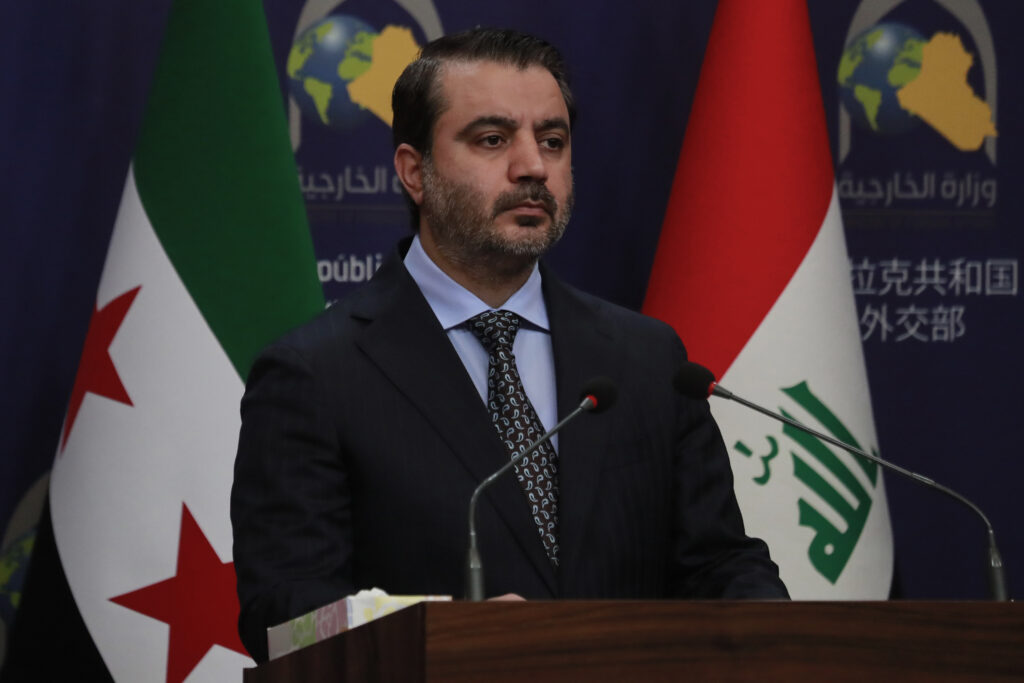
The European Union will bring together international donors on Monday to try to rally financing for Syria’s fragile recovery after the ouster of its longtime ruler Bashar al-Assad.For the first time the Syrian authorities will be represented at the annual gathering in Brussels — with interim foreign minister Assaad al-Shibani set to attend.Western and regional powers are desperate to steer Syria onto the road to stability after 14 years of civil war that have sent millions of refugees over its borders.But an outbreak of deadly violence this month — the worst since Assad was toppled in December — has rocked confidence in the new Islamist-led authorities.”Our objective with this conference is to stand with Syria while stressing the need for a successful transition,” an EU official said, speaking on condition of anonymity.The EU has held its annual donor drive for Syria for the past eight years — but it mainly focused on supporting refugees in neighbouring countries and avoided any contacts with the Assad regime. “This year, of course, the conference will be different,” the official said.”It’s a window of opportunity. It’s not very, very wide open. So we’ve got to benefit from the moment, otherwise it could be too late.”Syria’s needs are massive as swathes of the country lie in ruins and the economy has been ravaged by years of international isolation after Assad’s 2011 crackdown on opposition sparked the civil war.The United Nations says that at current growth rates, Syria would need more than 50 years to get back to its economic level before the outbreak of its devastating civil war.The country still faces a dire humanitarian situation with an estimated 16.7 million people in need of assistance.”What we want to do is respond to the immediate needs straight away,” the EU official said.- US pullback? -Syria’s new rulers — headed by former Islamist rebel commander Ahmed al-Sharaa — have been clamouring for assistance to help the country’s recovery.The EU has eased sanctions on key sectors of the economy, but along with other powers it insists the authorities must make good on promises for an inclusive transition.There have been positive moves from Damascus, including Sharaa signing a constitutional declaration laying out a five-year transitional period and rights for women and freedom of expression.But hopes were shaken by the violence on Syria’s Mediterranean coast, which a war monitor said saw security forces kill nearly 1,500 civilians, most of them members of the Alawite minority to which the Assad family belongs.Last year’s donor drive raised 7.5 billion euros ($8.2 billion) dollars in grants and loans to help the people of Syria. Efforts to top that level this time round could however be hit by US President Donald Trump’s axing of Washington’s foreign aid budget.A representative from the US government is expected at the Brussels event, EU officials said.Up until now the United States has been the single biggest individual donor to fund humanitarian efforts in Syria, according to the United Nations. “The global system of humanitarian aid in general was based on two pillars — one was the United States, a very large one, and the other one was the EU and its member states,” a second EU official said.”Now one of the two pillars is somehow reducing very much, if not cutting completely, some of their operation, and this implies a scarcity of humanitarian funds worldwide.”Even before Trump’s return to power the United Nations’ humanitarian response plan remained woefully underfunded at just 35 percent of the $4.1 billion demanded. EU officials said they hope Arab countries in the Middle East will step up to help fill any gaps left by the United States.There are expected to be other conferences focused on funding reconstruction in Syria in the future, they said.
UNRWA chief confident he is on ‘right side of history’
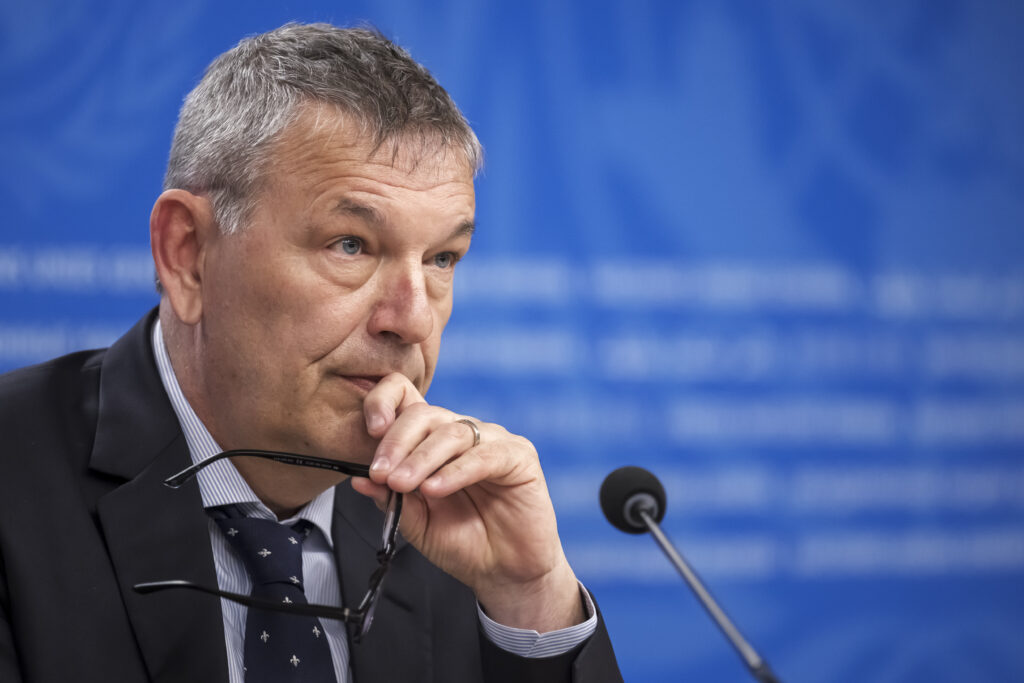
UNRWA chief Philippe Lazzarini acknowledges that it has been “stressful” leading the embattled UN agency for Palestinian refugees, but says he is confident he is “on the right side of history”.The 61-year-old head of the United Nations Relief and Works Agency for Palestine Refugees has, along with his organisation, withstood a barrage of criticism and accusations from Israel since Hamas’s deadly October 7, 2023 attack inside Israel and the devastating war in Gaza that followed.”Of course it is stressful. No one could really be prepared for something like this,” Lazzarini told AFP in a recent interview.It has been rough from the start.The softly-spoken Swiss father of four began his tenure in 2020 under Covid lockdown, as UNRWA was reeling after the United States — traditionally its largest donor — dramatically slashed its contribution during President Donald Trump’s first term.But that was nothing compared to what was to come.”October 7 basically … destroyed the last protection dikes that UNRWA might have had,” he said, lamenting the “arsenal” it unleashed “to try to discredit the agency, attack the agency, get rid of the agency”.- ‘No visibility’ -Relations between Israel and UNRWA, which supports nearly six million Palestinian refugees across Gaza, the West Bank, Jordan, Lebanon and Syria, have long been strained, but they have fallen off a cliff in the past year and a half.Israel’s allegation that some UNRWA staff took part in the October 7 attack spurred a string of nations early last year to at least temporarily halt their backing for the already cash-strapped agency.Lazzarini warned of “the real risk of the agency collapsing and imploding”.Serving as the “backbone” of the aid operation in Gaza, UNRWA should have funding until June, he said.”I have no visibility” beyond that, added Lazzarini, speaking to AFP on the sidelines of the FIFDH human rights film festival in Geneva where a film about UNRWA was featured. Funding gaps are not the only problem the agency faces.Amid accusations that UNRWA was “infested with Hamas terror activity”, Israel in January took the unprecedented step of severing ties with the UN agency and banning it from operating on Israeli soil.While UNRWA can still operate in Gaza and the West Bank, it has been barred from contact with Israeli officials, making it difficult to coordinate the safe delivery of aid in the Palestinian territories.No aid is meanwhile going into Gaza, since Israel halted deliveries to the Strip amid a deadlock over a fragile ceasefire.”This decision threatens the life and survival of civilians in Gaza,” Lazzarini warned.- ‘Damocles sword’ -He also described the situation in the West Bank, where Israel has for weeks been carrying out a major offensive, “deeply, deeply troubling”.While uncertain how things would evolve, he said the threat of an Israeli annexation of the West Bank was hanging like “a Damocles sword over the head of the Palestinians (and) the international community”.Israel has said that UNRWA can be replaced by other UN agencies or NGOs.But Lazzarini argued that while other organisations could handle distributing humanitarian aid, they could not replace UNRWA’s delivery of “government-like services” such as education and healthcare. Without UNRWA, “we would definitely sacrifice a generation of kids, who would be deprived from proper education”, he warned.- ‘Voiceless’ -Education should also be a top priority for Israel, he insisted.”If you deprive 100,000 girls and boys in Gaza (of an) education, and if they have no future, and if their school is just despair and living in the rubble, I would say we are just sowing the seeds for more extremism.”Israel has for years accused UNRWA schools teaching anti-Semitism and a hatred of Israel. Lazzarini decried “an extraordinary war of disinformation” against the agency.Lazzarini, who himself has been the target of virulent attacks, acknowledged that “certainly I don’t read everything and don’t listen to everything”.”Otherwise you wouldn’t sleep anymore.” He added: “If I didn’t feel that I am still on the right side of history, I don’t think I would continue to carry on.”But, he said, “I have been given a voice, and obviously I need to use this voice”. “That is the minimum we owe to the Palestinian refugees who are pretty voiceless.”
NGOs fear new rules will make helping Palestinians ‘almost impossible’
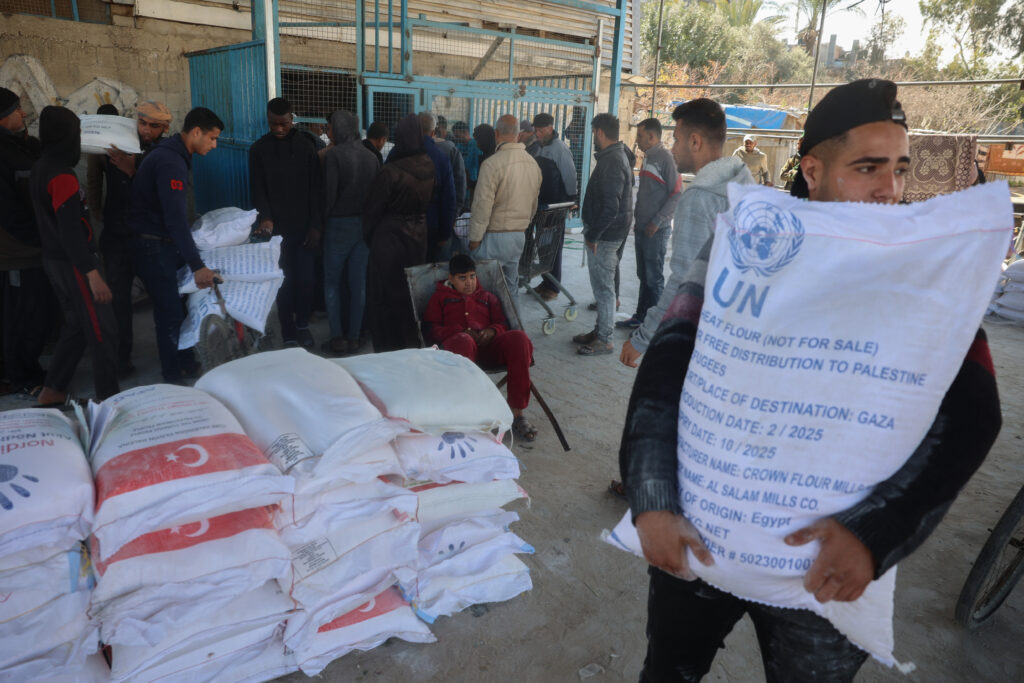
Aid workers in the Palestinian territories told AFP they are concerned that rules recently floated by Israel could make already difficult humanitarian work “almost impossible”.Since the war in Gaza broke out with Hamas’s October 7, 2023 attack on Israel, aid organisations have been contending with a “slippery slope” when it comes to Israeli authorities’ tolerance for their work, said one senior NGO staffer.But after COGAT, the Israeli body responsible for overseeing Palestinian affairs, presented a plan last month for reorganising aid distribution, that slope has gotten “much steeper”, with some NGOs deeming the proposed changes unacceptable, she added.COGAT did not respond to AFP’s request for comment.The staffer and others interviewed requested anonymity for fear of repercussions for their operations in the occupied West Bank and the besieged Gaza Strip, where responding to the acute humanitarian crisis brought on by the war had already been a Herculean undertaking.”The ability to deliver aid and adhere to humanitarian principles in Gaza, the access restrictions we’re facing in the West Bank… All of these things, when you put them together, you just feel like you’re watching the apocalypse,” she said.”We basically have a fire extinguisher trying to put out a nuclear bomb.”- Supply chain control -According to NGOs, COGAT presented a plan at the end of February that aims to reinforce Israeli oversight of aid by establishing logistics centres linked to the army and by enforcing tighter control over the entire humanitarian supply chain.”Logistically, it will be almost impossible,” said one member of a medical NGO, wondering whether such organisations would be forced to declare individual recipients of various medications.COGAT’s stated objective, according to the NGOs, is to combat looting and the misappropriation of aid by militants.But the NGOs say they believe looting is currently marginal, and that the best way of avoiding it is to step up deliveries.Israel, meanwhile, cut off aid deliveries to Gaza entirely early this month over an impasse with Hamas on how to proceed with a fragile ceasefire.”The thinking (of COGAT) was that Hamas would rebuild itself thanks to humanitarian aid,” said a representative of a European NGO, “but that’s false, and humanitarian aid won’t bring them rockets or missiles.”Israel “just wants more control over this territory”, he added.The NGOs said COGAT did not specify when the new rules would take effect.- ‘Lives are at stake’ -A separate government directive that came into force in March established a new, stricter framework for registering NGOs working with Palestinians.It requires organisations to share extensive information on their staff, and gives the government the right to reject employees it deems to be linked to the “delegitimisation” of Israel.NGOs operating in the Palestinian territories already face numerous difficulties, and even outright danger, particularly in Gaza.At least 387 employees have been killed in Gaza since the start of the war, according to a recent UN estimate.Philippe Lazzarini, head of the UN’s Palestinian refugee agency UNRWA, which was recently banned from operating in Israel, said the humanitarian community is wondering “how far can we go while remaining principled,” and at what point that would no longer be the case under the new rules.Amjad Shawa, director of the Palestinian NGO network PNGO, said organisations “need to all work against” the new restrictions, adding that he believed the rules’ actual goal was to “prevent accountability and any kind of criticism on Israel towards what they committed” in Gaza and the West Bank.”Lives are at stake,” he added.The head of an international NGO agreed that a “red line has been crossed and I think we should oppose it”.But one humanitarian in the medical sector said a principled stand would only draw flak from the Israelis, and “given the needs (of the Palestinians), principled positions don’t hold water”.
Data shows patchy Chinese economy in first two months of the year
China’s economy charted an uneven trajectory in the first two months of the year, a slew of key indicators showed Monday, muddying Beijing’s drive to boost flagging consumption.Officials have looked in recent months to revive confidence in the world’s second-largest economy, which has been beset by persistent property sector woes and is now under increasing …
Data shows patchy Chinese economy in first two months of the year Read More »