AFP Asia Business

EU vows 2.5 bn euros to help Syrians after Assad ouster

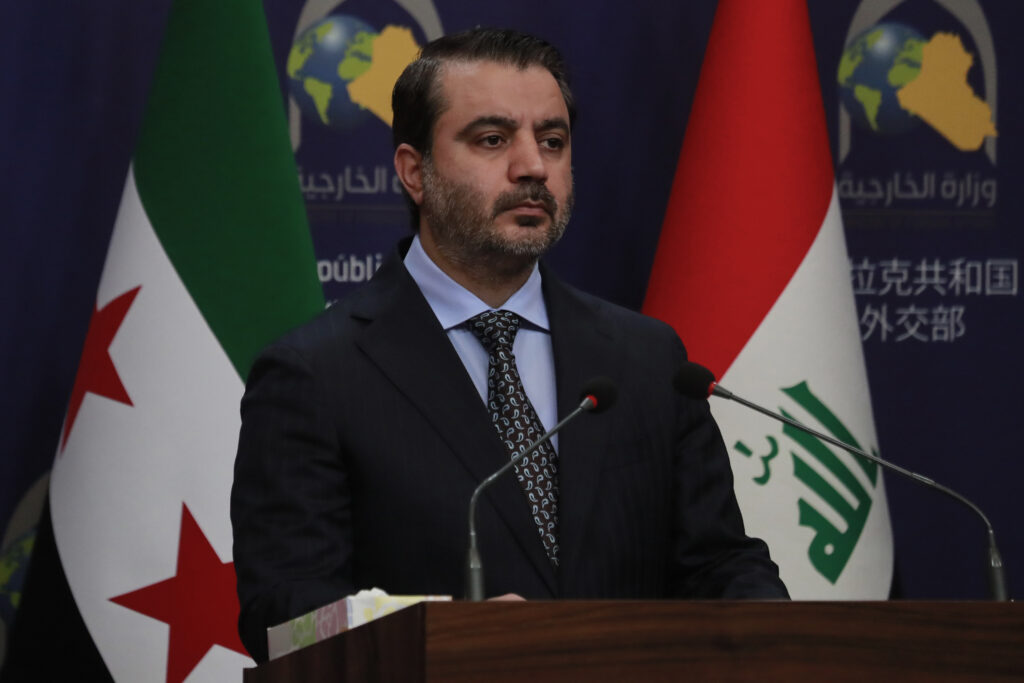
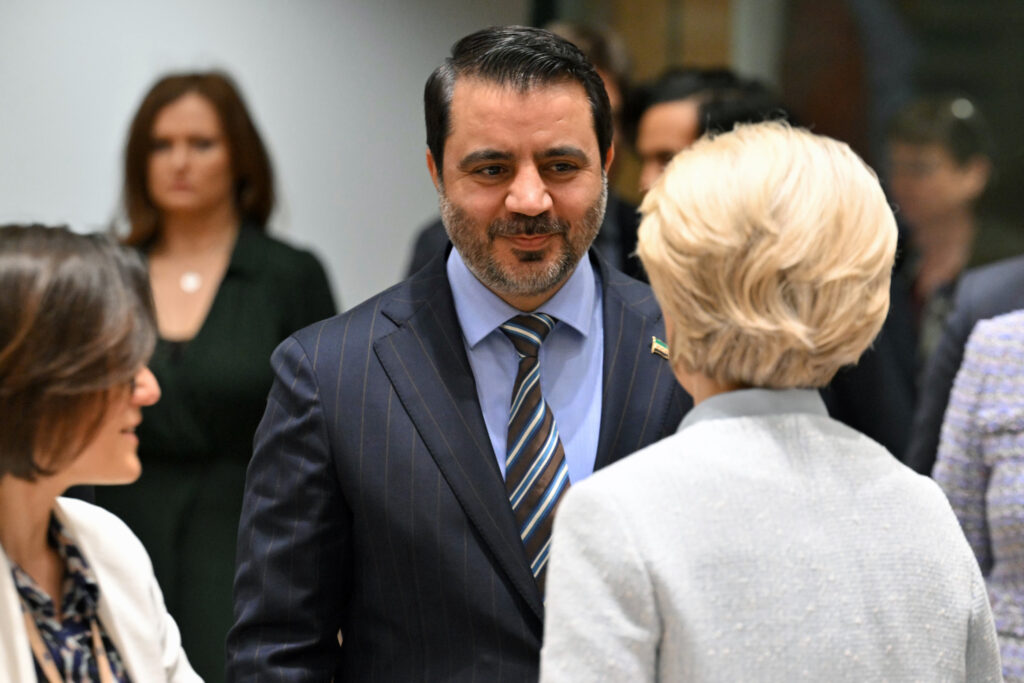
The EU led the way on pledging aid for Syria on Monday at a donor drive in Brussels — but the call for funding to help the war-torn country after Bashar al-Assad’s ouster risked falling short of last year as US support dries up.Western and regional powers are desperate to steer Syria onto the road to stability after 14 years of civil war that have sent millions of refugees over its borders.For the first time, the Syrian authorities were represented at the annual conference in Brussels — with interim foreign minister Assaad al-Shibani attending.But an outbreak of deadly violence this month — the worst since Assad was toppled in December — has rocked confidence in the new Islamist-led authorities.European Commission head Ursula von der Leyen said Brussels was stepping up its commitment for this year and next to almost 2.5 billion euros ($2.7 billion) to help those in Syria and neighbouring countries.”Syrians need greater support, whether they are still abroad, or they decide to go home,” she told the Brussels conference.The vow from Brussels came on top of significant contributions from individual countries, including some $330 million from Germany and $210 million from Britain.Last year’s donor drive raised 7.5 billion euros in grants and loans to help the people of Syria. The overall total for this year will be announced later Monday.  Efforts to top that level this time around look set to be hit by US President Donald Trump’s axing of Washington’s foreign aid budget.Up until now, the United States has been the single biggest individual donor to fund humanitarian efforts in Syria, according to the United Nations.Syria’s new rulers — headed by former Islamist rebel commander Ahmed al-Sharaa — have been clamouring for assistance to help the country’s recovery.- Syria urges sanction relief -The EU has eased sanctions on key sectors of the economy, but along with other powers it insists the authorities must make good on promises for an inclusive transition.”We do appreciate the major measures taken by the European Union, such as the lifting or suspending of the sanctions,” Shibani said. “However, these measures did not live up so far to our expectations. We want further measures in order to help us secure our recovery.”There have been positive moves from Damascus, including Sharaa signing a constitutional declaration laying out a five-year transitional period, and rights for women and freedom of expression.But hopes were shaken by the violence on Syria’s Mediterranean coast, which a war monitor said saw security forces kill nearly 1,500 civilians, most of them members of the Alawite minority to which the Assad family belongs.Shibani insisted that the new authorities would bring to justice “anyone who perpetrated any crime, whose hands are stained with blood”.”We believe in the true sense of citizenship, the citizenship of every single citizen of Syria, regardless of their ethnicity or religion,” he said. The EU has held its annual donor drive for Syria for the past eight years but it mainly focused on supporting refugees in neighbouring countries and avoided any contacts with the Assad regime.Syria’s needs are massive as swathes of the country lie in ruins and the economy has been ravaged by years of international isolation after Assad’s 2011 crackdown on opposition sparked the civil war.The country still faces a dire humanitarian situation, with an estimated 16.7 million people in need of assistance.”It would be a mistake to disinvest from Syria now,” said Mirjana Spoljaric, president of the International Committee of the Red Cross.”Humanitarian aid remains a lifeline that millions of Syrians depend on. Severing it now would only deepen their suffering and prolong the country’s recovery,” she said.The United Nations says that, at current growth rates, Syria would need more than 50 years to get back to its economic level before the outbreak of the war. 
Major rallies in rebel-held Yemen after deadly US strikes

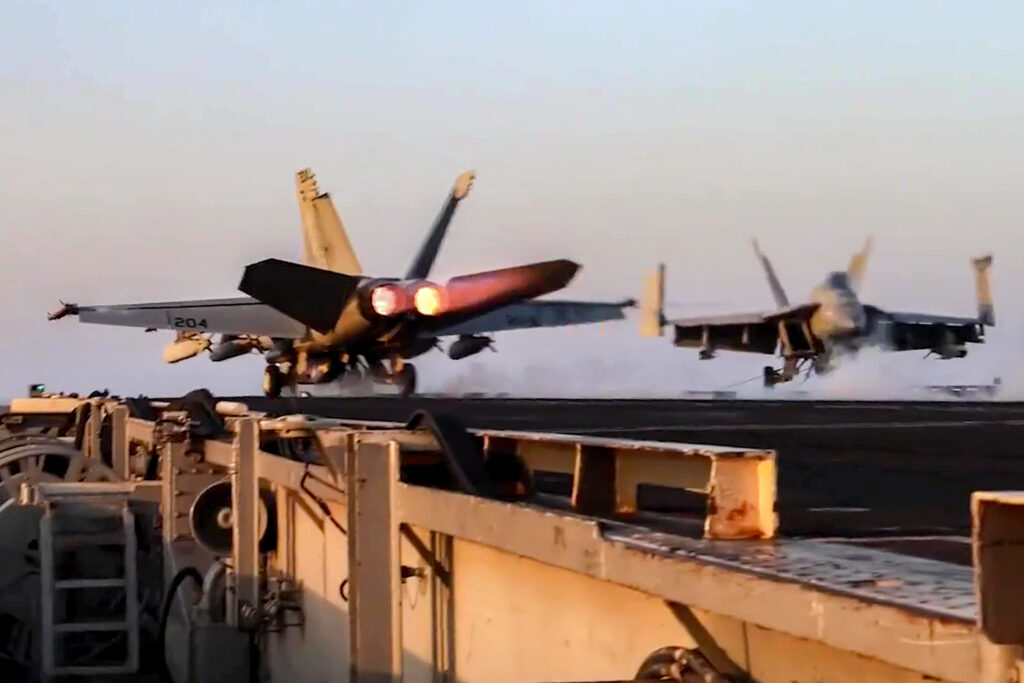
Huge crowds joined protests in rebel-controlled Yemen on Monday after deadly US strikes killed dozens and sparked fears of a new cycle of violence in the conflict-torn country.Tens of thousands of demonstrators, many waving assault rifles, daggers or Korans, chanted “Death to America, death to Israel!” in the capital Sanaa.There were also large crowds in Saada, birthplace of the Iran-backed Huthi movement, and demonstrations in Dhamar, Hodeida and Amran, footage from the rebels’ Al-Masirah TV station showed.”Yemen will never back down — we defy the Americans, we defy the Zionists,” said a man shouting slogans to the Sanaa crowd, who chanted back: “We are the men of the Prophet.”The protests came after the first US strikes on Yemen under President Donald Trump, aimed at ending the Huthis’ Red Sea harassment campaign, which killed 53 people and wounded 98 on Saturday.The rebels, at war with a Saudi-led coalition for a decade, launched scores of attacks on ships in the vital route during the Gaza war, claiming solidarity with the Palestinians.  Earlier on Monday they said they had attacked the USS Harry S. Truman aircraft carrier group twice within 24 hours. There was no comment from the United States.Washington has vowed to keep hitting Yemen until the rebels stop attacking Red Sea shipping, with Trump warning he would use “overwhelming lethal force”.Monday’s rallies were called by Huthi leader Abdulmalik al-Huthi to coincide with the anniversary of the Battle of Badr — a celebrated military victory by the Prophet Mohammed.- Heavy strikes -In the capital Sanaa, controlled by the Huthis since 2014, giant Yemeni and Palestinian flags punctuated a sea of demonstrators at Al-Sabeen Square, which has hosted large-scale demonstrations on a weekly basis throughout the Gaza war.Just two days ago the Huthi-controlled capital was hit by heavy strikes, including in northern districts frequented by the rebels’ leadership.They were the first US strikes since Trump came to office in January despite a pause in the Huthis’ attacks coinciding with a ceasefire in the Gaza war.On Sunday, US officials vowed further bombardments until the rebels ended their campaign against Red Sea shipping, while also threatening action against the group’s sponsor Iran.Huthi media reported more explosions late on Sunday, accusing the Americans of targeting a cotton facility in the Hodeida region and the Galaxy Leader, a cargo ship hijacked in November 2023.- ‘Hell will rain down’ -The United Nations urged both sides to “cease all military activity”, while expressing concern over Huthi threats to resume the Red Sea attacks.Beijing called for “dialogue and negotiation” and a de-escalation of tensions.”China opposes any action that escalates the situation in the Red Sea,” foreign ministry spokeswoman Mao Ning told a regular briefing.Before this weekend’s targeting of the US carrier group, the Huthis had not claimed any attacks in the Red Sea and Gulf of Aden since January 19, when the ceasefire in Gaza began.However, the group had threatened to resume its campaign over Israel’s blocking of humanitarian aid to the Palestinian territory. It said it would “move to additional escalatory options” if the “American aggression” continued.US National Security Advisor Michael Waltz told ABC News that Saturday’s strikes “targeted multiple Huthi leaders and took them out”. The Huthis have not responded to Waltz’s claim.Trump, meanwhile, has warned the Yemeni group that “hell will rain down upon you” if it did not stop its attacks. In a social media post he also addressed Iran, demanding it stop supporting “Huthi terrorists”.Iran’s Foreign Minister Abbas Araghchi condemned the US strikes and said Washington had “no authority” to dictate Tehran’s foreign policy.- Costly detour -A database set up by ACLED, a non-profit monitor, shows 136 Huthi attacks against warships, commercial vessels, and Israeli and other targets since October 19, 2023.While the Red Sea trade route normally carries around 12 percent of world shipping traffic, Huthi attacks have forced many companies into costly detours around southern Africa.The United States had already launched several rounds of strikes on Huthi targets under former president Joe Biden.Israel has also struck Yemen, most recently in December, after Huthi missile fire towards Israeli territory.The rebels control large swathes of Yemen, including most of its population centres, after ousting the internationally recognised government from Sanaa.They have been at war with a Saudi-led coalition backing the government since 2015, a conflict that has triggered a major humanitarian crisis.Fighting has largely been on hold since a UN-brokered ceasefire in 2022, but the peace process has stalled following the Huthi attacks over Gaza.burs/th/dcp

Stench of death as Sudan army, paramilitaries battle for capital

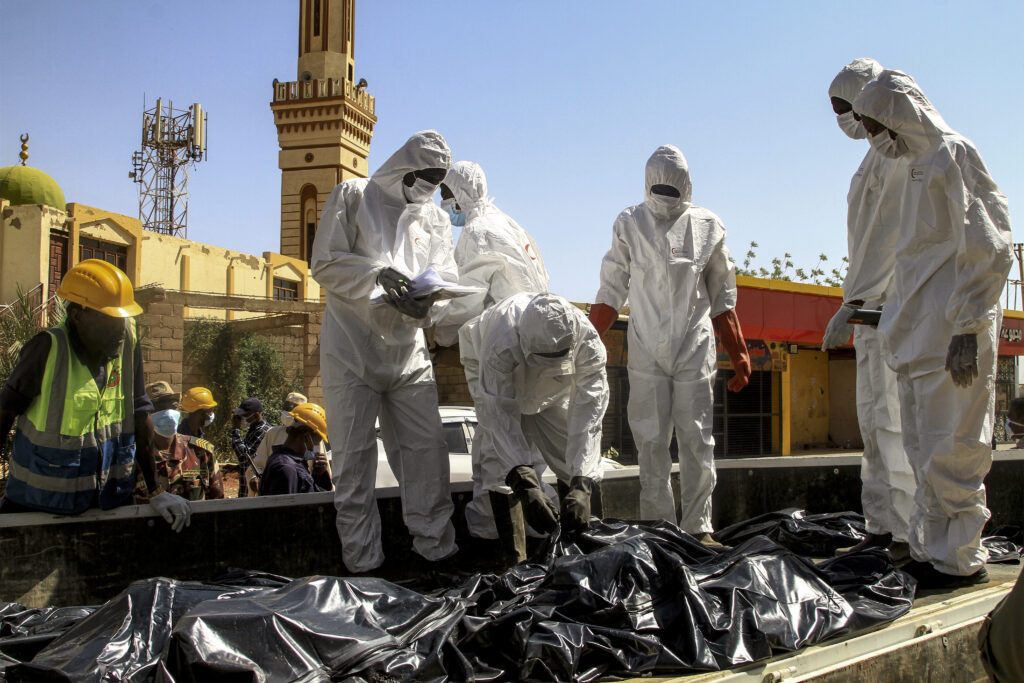
In a war-ravaged neighbourhood of Sudan’s capital Khartoum, the stench from a gaping sewage pit is unbearable as Red Crescent workers pull a bloated body from deep underground.The volunteers say 14 more remain below.”They were shot in the head, some have crushed skulls,” Hisham Zein al-Abdeen, head of forensic medicine at Sudan’s health ministry, told AFP at the scene.The victims, he said, were either shot or beaten to death before being thrown in.Behind him, a truck idles, its flatbed already filling with bodies retrieved from the sewer well in East Nile, an eastern district of Khartoum now reduced to ruins.Nearly two years of war between the army and the paramilitary Rapid Support Forces (RSF) have left large swathes of the capital unrecognisable.Once a bustling metropolis, Khartoum has seen well over 3.5 million of its people flee since the war began, according to the United Nations.Millions more, unable or unwilling to leave, live among abandoned buildings, wrecked vehicles and what the army says are hidden mass graves.- A city destroyed -Since April 2023, the conflict has pitted army chief Abdel Fattah al-Burhan against his former deputy and RSF commander Mohamed Hamdan Daglo.The war has left tens of thousands dead and uprooted more than 12 million, according to UN figures, with many living in makeshift camps and over 3.5 million fleeing across borders.The RSF initially seized the streets of Khartoum, but in recent months, the army has clawed back territory, regaining control of Bahri — also known as Khartoum North — and East Nile to its east.Now, less than a kilometre separates army units in central Khartoum from the presidential palace, overtaken by RSF troops at the start of the war.Despite these advances, Daglo remains defiant, vowing that his forces will not withdraw from the capital.”We will not leave the Republican Palace,” Daglo said in a video address shared on Telegram.”We are coming for Port Sudan,” he added, referring to the de facto capital on the Red Sea, where the government has been based since Khartoum fell.An AFP team, travelling under military escort, crossed from Khartoum’s twin city of Omdurman — recaptured by the army last year — into Bahri and its war-ravaged outskirts.The convoy passed through eerie, abandoned neighbourhoods including Al-Haj Yousif, where the skeletal remains of shuttered shops and crumbling pavements stretch along the streets.Rubble, debris and discarded tires litter the roads.Every few blocks, small clusters of people sit outside empty buildings and stores pockmarked with bullet holes.Hospitals and schools no longer function. The army says it has uncovered multiple mass graves, including one at the Omdurman courthouse.The civilians still in the city appear visibly shaken by the trauma of war.”At night, I used to hear gunshots. Then, I saw them carrying bodies and throwing them in the well,” said Salha Shams El-Din, who lives near the pit where she said RSF troops dumped bodies.- Starvation -For those who survived to see the army recapture the district early this month, life remains a constant struggle.There is no electricity, and clean water and food are scarce.On a quiet street in Bahri, some 40 women sit beneath a makeshift tent, preparing Ramadan meals at a community kitchen, one of many that struggled under RSF control.They stir large pots of aseeda — a thick porridge made from cornflour — and lentils over open flames, using firewood.Gas is no longer available. Water trucks now come from Omdurman, an improvement from when residents had to risk sniper fire just to reach the Nile River, itself a health risk with no sanitation.The soup kitchens have become civilians’ last line of defence against mass starvation, according to the UN. But throughout the war, they have struggled to stay afloat.With roads cut off, markets devastated and RSF fighters robbing volunteers at gunpoint, feeding those in need was nearly impossible.”When the RSF was here, we couldn’t get money in. Any money we’d receive, they would take,” said Mouayad al-Haj, a volunteer at the community kitchen in Bahri.”Now things are different, phone networks are back and we can at least go to Omdurman every two weeks to buy supplies,” he told AFP.What began as a power struggle between Burhan and Daglo has spiralled into the world’s largest displacement and hunger crisis.The conflict has decimated Sudan’s infrastructure, crumbled an already weak economy and pushed millions to the brink of mass starvation.Famine has been declared in three displacement camps, according to the UN-backed Inegrated Food Security Phase Classification.In Khartoum alone, at least 100,000 people are suffering famine conditions, the IPC found.

‘More and faster’: UN calls to shrink buildings’ carbon footprint

Countries must move rapidly to slash CO2 emissions from homes, offices, shops and other buildings — a sector that accounts for a third of global greenhouse gas pollution, the United Nations said Monday. Carbon dioxide emissions from the building sector rose around five percent in the last decade when they should have fallen 28 percent, according to a new report by the United Nations Environment Programme (UNEP).      It said emissions had plateaued since 2023 as climate policies began to have an impact, particularly green building standards, the use of renewable energy and electrified heating and cooling. But the building sector still consumes 32 percent of the world’s energy and contributes 34 percent of CO2 emissions, the report found. “The buildings where we work, shop and live account for a third of global emissions and a third of global waste,” said Inger Andersen, Executive Director of UNEP. “The good news is that government actions are working. But we must do more and do it faster.”She called on nations to include targets to “rapidly cut emissions from buildings and construction” in their climate plans. The report said that while most of the countries that signed up to the 2015 Paris climate deal — nearly 200 have signed — mention the sector, so far only 19 countries have sufficiently detailed goals in their national carbon cutting plans. The report said that as of 2023, important metrics like energy-related emissions and the adoption of renewable energy “remain well below required progress rates”. That means that countries, businesses and homeowners now need to dramatically pick up the pace to meet the 2030 emissions reduction targets. – ‘Critical challenge’ -Direct and indirect CO2 emissions will now need to fall more than 10 percent per year, more than double the originally envisaged pace. The rollout of renewables is a similar story. The share of renewables like solar and wind in final energy consumption rose by only 4.5 percentage points since 2015, well behind the goal of nearly 18 percentage points.That now needs to accelerate by a factor of seven to meet this decade’s goal of tripling renewable energy use worldwide, UNEP said.The report urged countries to accelerate the roll-out of renewable technologies and increase the share of renewables in the final energy mix to 46 percent by 2030 — a rise of around 18 percent.  It also called on policymakers to increase energy efficiency retrofits to include better design, insulation and the use of renewables and heat pumps. More work also needs to be done to improve the sustainability of materials like steel and cement, whose manufacture accounts for nearly a fifth of all emissions from the building sector.   But the report did say that circular construction practices were increasing in some areas, with recycled materials accounting for 18 percent of construction inputs in Europe. The authors urged all major greenhouse gas emitters to take action by introducing zero-carbon building energy codes by 2028, and called on other countries to create and tighten their regulations within the next 10 years.The report highlighted positive national policies from China, France, Germany, Mexico and South Africa among others.  But it said financing remained a “critical challenge”. In 2023, it found that global investment in energy efficiency in buildings fell seven percent from a year earlier to $270 billion, driven by higher borrowing costs and the winding back of government support programmes, notably in Europe. Those investments now need to double — to $522 billion — by 2030, it said.

Yemen’s Huthis claim US aircraft carrier attacks

Yemen’s Iran-backed Huthi rebels said they attacked an American aircraft carrier group twice within 24 hours as they prepared for huge rallies on Monday after US strikes left dozens dead.The response from the Huthis follows attacks on Saturday ordered by President Donald Trump that hammered the rebel-held capital, Sanaa, and several other areas, killing 53 people, according to the rebels.The United States struck the Huthis over their repeated attacks on Red Sea shipping sparked by the Gaza war, which have put a major strain on the vital trade route.The rebels said they had hit back by firing 18 missiles and a drone at the USS Harry S. Truman aircraft carrier group on Sunday, before launching a second strike hours later.There was no immediate comment from the United States about the Huthis’ claimed attacks.In a statement posted to Telegram, a Huthi spokesperson said the attacks were “in retaliation to the continued American aggression against our country”.Washington has vowed to keep striking Yemen until the rebels stop attacking Red Sea shipping, with Trump warning he would use “overwhelming lethal force”.Huthi leader Abdulmalik al-Huthi called for large-scale rallies on Monday, the anniversary of the Battle of Badr — an against-the-odds, seventh-century military victory by the Prophet Mohammed.”I call on our dear people to go out tomorrow on the anniversary of the Battle of Badr in a million-strong march in Sanaa and the rest of the governorates,” he said in a televised address late on Sunday.- Heavy strikes -Sanaa’s Al Sabeen Square, the scene of regular major protests during the Israel-Hamas war, looked set to be packed once again for Monday’s rally.Late on Saturday, the Huthi-controlled capital was hit by heavy strikes, including in northern districts frequented by the rebels’ leadership.The Huthi health ministry said women and children were among the 53 people killed and 98 wounded.”The house shook, the windows shattered, and my family and I were terrified,” father of two Ahmed, who declined to give his full name, told AFP.The strikes were the first since Trump came to office in January, and came despite a pause in the Huthis’ attacks during a ceasefire in the Gaza war.On Sunday, US officials vowed further strikes until the rebels ended their campaign against Red Sea shipping, also threatening action against Iran.Huthi media reported more explosions late on Sunday night, accusing the Americans of targeting a cotton facility in the Hodeida region and the Galaxy Leader, a cargo ship hijacked in November 2023.In response to the latest escalation along the maritime trade route, the United Nations urged both sides to “cease all military activity”, while China reiterated calls for diplomacy.”The reasons behind the situation in the Red Sea and the Yemen issue are complex and should be properly resolved through dialogue and negotiation,” said foreign ministry spokeswoman Mao Ning.- ‘Hell will rain down’ -The Iran-backed Huthis, who control much of the Arabian Peninsula’s poorest country, have attacked Israel and shipping vessels throughout the Gaza war, saying they are acting in solidarity with Palestinians.Before this weekend’s targeting of the US carrier group, the Huthis had not claimed attacks in the Red Sea and Gulf of Aden since January 19, when the ceasefire in Gaza began.However, the group had recently threatened to resume its attacks over Israel’s blocking of humanitarian aid to the Palestinian territory. It said it would “move to additional escalatory options” if the “American aggression” continued.US National Security Advisor Michael Waltz told ABC News that Saturday’s strikes “targeted multiple Huthi leaders and took them out”. The Huthis have not responded to Waltz’s claim.Trump, meanwhile, has warned the Yemeni group that “hell will rain down upon you” if it did not stop its attacks. In a social media post he also addressed Iran, demanding it stop supporting “Huthi terrorists”.Iran’s Foreign Minister Abbas Araghchi condemned the US strikes and said Washington had “no authority” to dictate Tehran’s foreign policy.A database set up by ACLED, a non-profit monitor, shows 136 Huthi attacks against warships, commercial vessels, and Israeli and other targets since October 19, 2023.While the Red Sea trade route normally carries about 12 percent of world shipping traffic, Huthi attacks have forced many companies into costly detours around southern Africa.The United States had already launched several rounds of strikes on Huthi targets under former president Joe Biden.Israel has also struck Yemen, most recently in December, after Huthi missile fire towards Israeli territory.In addition to their actions in the Red Sea, the rebels have been at war for nearly a decade with a Saudi-led coalition supporting Yemen’s internationally recognised government, from which the Huthis have seized large swathes of territory.Fighting in that conflict has largely been on hold since a 2022 ceasefire, but the promised peace process has stalled in the face of the Huthi attacks on shipping.burs/th/smw

EU hosts aid drive for post-Assad Syria

Germany on Monday kicked off a new pledging round of aid for Syria, as the EU hosted a donor drive for the war-torn country after the ouster of Bashar al-Assad.For the first time, the Syrian authorities will be represented at the annual conference in Brussels — with interim foreign minister Assaad al-Shibani attending.Western and regional powers are desperate to steer Syria onto the road to stability after 14 years of civil war that have sent millions of refugees over its borders.But an outbreak of deadly violence this month — the worst since Assad was toppled in December — has rocked confidence in the new Islamist-led authorities.”There can only be a peaceful future for Syria if there is an inclusive political process,” German Foreign Minister Annalena Baerbock said. She announced Berlin would provide an additional 300 million euros ($327 million) for the United Nations and other organisations providing assistance for Syrians in the country and around the region. The EU has held its annual donor drive for Syria for the past eight years but it mainly focused on supporting refugees in neighbouring countries and avoided any contacts with the Assad regime.The conference is focused on bolstering funds for the most urgent humanitarian needs facing Syrians and refugees living around the region.Syria’s needs are massive as swathes of the country lie in ruins and the economy has been ravaged by years of international isolation after Assad’s 2011 crackdown on opposition sparked the civil war.The country still faces a dire humanitarian situation, with an estimated 16.7 million people in need of assistance.The United Nations says that at current growth rates, Syria would need more than 50 years to get back to its economic level before the outbreak of the war.- ‘Gap left by US’ -Syria’s new rulers — headed by former Islamist rebel commander Ahmed al-Sharaa — have been clamouring for assistance to help the country’s recovery.The EU has eased sanctions on key sectors of the economy but along with other powers it insists the authorities must make good on promises for an inclusive transition.”We need to continue with the lifting of sanctions, because if there is hope for the people, then there is also less chaos,” EU foreign affairs chief Kaja Kallas said.There have been positive moves from Damascus, including Sharaa signing a constitutional declaration laying out a five-year transitional period and rights for women and freedom of expression.But hopes were shaken by the violence on Syria’s Mediterranean coast, which a war monitor said saw security forces kill nearly 1,500 civilians, most of them members of the Alawite minority to which the Assad family belongs.Kallas said the EU wanted to see the new Syrian leadership “holding accountable those people who have done these massacres”. Last year’s donor drive raised 7.5 billion euros in grants and loans to help the people of Syria. Efforts to top that level this time around look set to be hit by US President Donald Trump’s axing of Washington’s foreign aid budget.A US government representative is expected at the Brussels event, EU officials said.Up until now the United States has been the single biggest individual donor to fund humanitarian efforts in Syria, according to the United Nations.”The EU stays committed, we will improve our commitment,” EU humanitarian aid commission Hadja Lahbib said.”We will give more, but we cannot fill the gap left by the US.”Even before Trump’s return to power the UN’s humanitarian response plan remained woefully underfunded at just 35 percent of the $4.1 billion demanded.EU officials said they hope Arab countries in the Middle East will step up to help fill any gaps left by the United States.There are expected to be other conferences focused on funding reconstruction in Syria in the future, they said.