

AFP Asia Business
Sudan army makes gains as battle for Khartoum intensifies
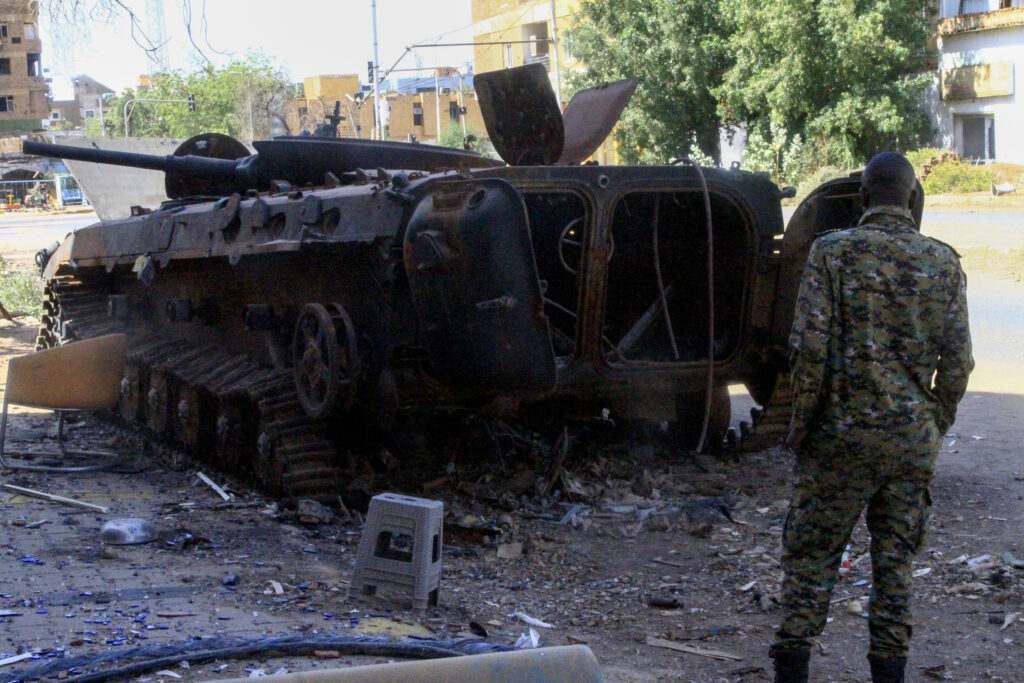
Sudanese army forces advancing on Khartoum converged on Monday with troops in the capital’s centre, a military spokesman said, increasing pressure on rival paramilitaries and inching closer to retaking the city.The latest push by the army, at war with the paramilitary Rapid Support Forces (RSF) since April 2023, comes after troops had broken prolonged sieges on key military sites after months of apparent stalemate in Khartoum.Army spokesman Nabil Abdullah Ali said Armoured Corps troops advancing from the south captured a key hospital from the RSF, enabling them to merge with General Command forces already in the city centre.A Sudanese military expert, speaking to AFP on condition of anonymity for safety concerns, said that the latest army manoeuvre would cement its control over much of central Khartoum.It would also increase pressure on RSF fighters near the presidential palace, with army forces now approaching them from both the south and the east, the expert said.The war between the RSF and the army has escalated in recent months, with army forces seeking to reclaim territory lost to the RSF early in the conflict in the capital Khartoum and beyond.The Armoured Corps last October broke out of a months-long paramilitary siege on its headquarters, and in January the army ended an almost two-year RSF siege of its General Command headquarters.Later on Monday evening, RSF artillery fire killed ten people in Omdurman, Khartoum’s twin city just across the Nile River, a medical source told AFP.AFP journalists in the area reported a series of artillery rounds striking Omdurman, under army control since last year.A day before, RSF shelling had killed six civilians and wounded 36 others, a doctor at Al-Nao Hospital told AFP, also requesting anonymity for security reasons.Two of the dead and half of those wounded were children, said the doctor.The media office of the army-aligned Khartoum regional government said Sunday’s bombardment had struck residential areas in northern Omdurman, hitting civilians inside their homes and children playing on a football field.- Intensified fighting -In a video address shared on Telegram Saturday, RSF commander Mohamed Hamdan Daglo vowed his troops “will not leave the Republican Palace”, the seat of power in central Khartoum.AFP journalists saw thick plumes of smoke rising over the city centre as fighting raged across the capital, with gunfire and explosions heard in several areas.Nationwide, the conflict has killed tens of thousands of people, uprooted more than 12 million, and created the world’s largest hunger and displacement crises.In Khartoum alone, at least 3.5 million people have been forced from their homes due to the violence, according to the United Nations.Away from the capital, in the North Kordofan state capital of El-Obeid — about 400 kilometres (250 miles) southwest of Khartoum — RSF shelling killed two civilians and wounded 15 others on Monday, a medical source at the city’s main hospital told AFP.Last month, the military broke through a nearly two-year RSF siege of the southern city, a key crossroads linking Khartoum to the vast Darfur region in the west, which is under near-total RSF control.Across North Kordofan, more than 200,000 people are currently displaced, while nearly a million are facing acute food insecurity, according to UN figures.Clashes have also erupted in Blue Nile state, which borders South Sudan and Ethiopia, and where the RSF claimed Sunday to have destroyed military vehicles and taken prisoners from the army and allied forces.In almost two years, the war has nearly torn Sudan into two, with the RSF in control of nearly all of Darfur in the west and parts of the south, while the army holds the country’s north and east.The army has made gains in central Sudan and Khartoum in recent months, and appears to be on the verge of reclaiming the entire capital.

China stimulus hopes help stock markets rise
Global stock markets started the week on the front foot on Monday as investors welcomed China’s plans to kickstart consumption in the world’s number two economy, with upcoming central bank rate decisions also in focus.Major Wall Street stock indices advanced for a second straight session, as US retail sales for February showed a 0.2 percent …
Donors pledge 5.8 bn euros for Syria, down on last year
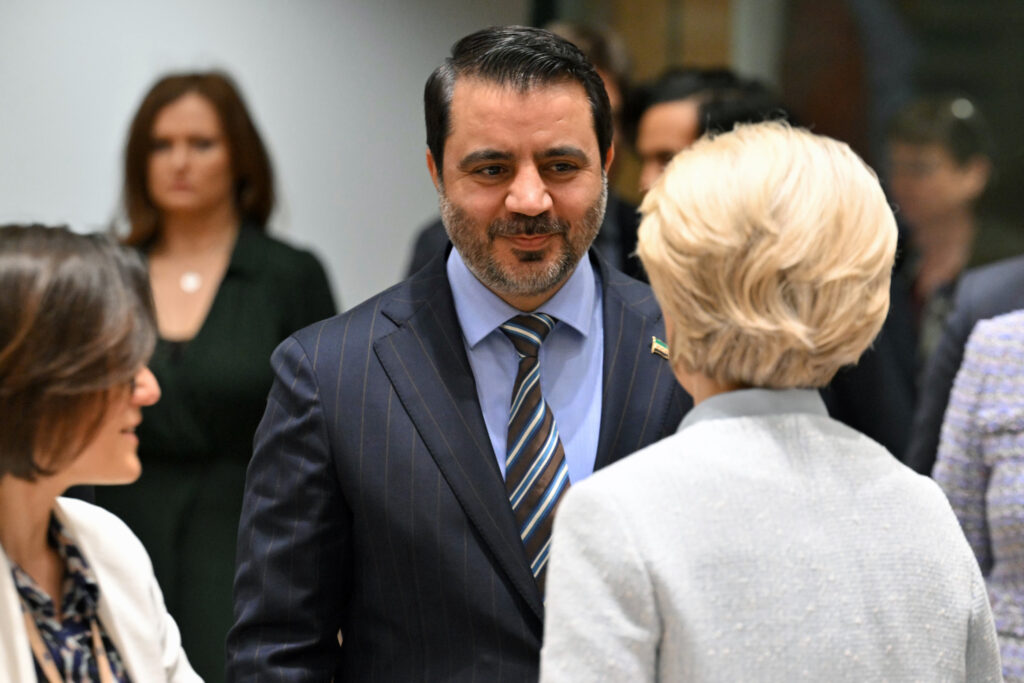
The EU led the way as donors on Monday pledged $5.8 billion euros in aid for Syria at a conference in Brussels — but the call for funding to help the war-torn country after Bashar al-Assad’s ouster fell short of last year as US support dries up.Western and regional powers are desperate to steer Syria onto the road to stability after 14 years of civil war that have sent millions of refugees over its borders.For the first time, the Syrian authorities were represented at the annual aid conference in Brussels — with interim foreign minister Assaad al-Shibani attending.But an outbreak of deadly violence this month — the worst since Assad was toppled in December — has rocked confidence in the new Islamist-led authorities.Overall the EU said international donors pledged 5.8 billion euros ($6.3 billion), consisting of 4.2 billion euros in grants and 1.6 billion in loans.That was down on the 7.5 billion promised overall at the conference last year.The drop came despite European Commission head Ursula von der Leyen saying Brussels was stepping up its commitment for this year and next to almost 2.5 billion euros ($2.7 billion) to help those in Syria and neighbouring countries.”Syrians need greater support, whether they are still abroad, or they decide to go home,” she told the Brussels conference.The vow from Brussels came on top of significant contributions from individual countries, including some $330 million from Germany and $210 million from Britain.But US President Donald Trump’s slashing of Washington’s aid budget appeared to have an impact.US representative Natasha Franceschi did not specify whether the US was promising any funds, but insisted other countries needed to do more.”During the last 14 years, the United States has provided more assistance for the Syrian people than any other nation, more than $18.3 billion,” Franceschi said.”We will continue to provide certain assistance in line with US policies and laws, but we also now expect that other nations are going to help shoulder the financial burden the United States has long carried.”- Syria urges sanction relief -Syria’s new rulers — headed by former Islamist rebel commander Ahmed al-Sharaa — have been clamouring for assistance to help the country’s recovery.The EU has eased sanctions on key sectors of the economy, but along with other powers it insists the authorities must make good on promises for an inclusive transition.”We do appreciate the major measures taken by the European Union, such as the lifting or suspending of the sanctions,” Shibani said.”However, these measures did not live up so far to our expectations. We want further measures in order to help us secure our recovery.”There have been positive moves from Damascus, including Sharaa signing a constitutional declaration laying out a five-year transitional period, with rights for women and freedom of expression.But hopes were shaken by the violence on Syria’s Mediterranean coast, which a war monitor said saw security forces kill nearly 1,500 civilians, most of them members of the Alawite minority to which the Assad family belongs.Shibani insisted that the new authorities would bring to justice “anyone who perpetrated any crime, whose hands are stained with blood”.”We believe in the true sense of citizenship, the citizenship of every single citizen of Syria, regardless of their ethnicity or religion,” he said.The EU has held its annual donor drive for Syria for the past eight years but it mainly focused on supporting refugees in neighbouring countries and avoided any contacts with the Assad regime.Syria’s needs are massive as swathes of the country lie in ruins and the economy has been ravaged by years of international isolation after Assad’s 2011 crackdown on opposition sparked the civil war.The country still faces a dire humanitarian situation, with an estimated 16.7 million people in need of assistance.”It would be a mistake to disinvest from Syria now,” said Mirjana Spoljaric, president of the International Committee of the Red Cross.”Humanitarian aid remains a lifeline that millions of Syrians depend on. Severing it now would only deepen their suffering and prolong the country’s recovery,” she said.The United Nations says that, at current growth rates, Syria would need more than 50 years to get back to its economic level before the outbreak of the war.

Hong Kong property tycoon Lee Shau-kee dies aged 97
Hong Kong’s second-richest man Lee Shau-kee has died aged 97, the property tycoon’s firm Henderson Land Development announced Monday.Lee died peacefully on Monday evening in the company of his family, Henderson said in a press release.Known as “Uncle Four” because he had three elder siblings, Lee was one of the most influential players in Hong …
Hong Kong property tycoon Lee Shau-kee dies aged 97 Read More »
Netanyahu’s move to fire security agency chief threatens new crisis in Israel
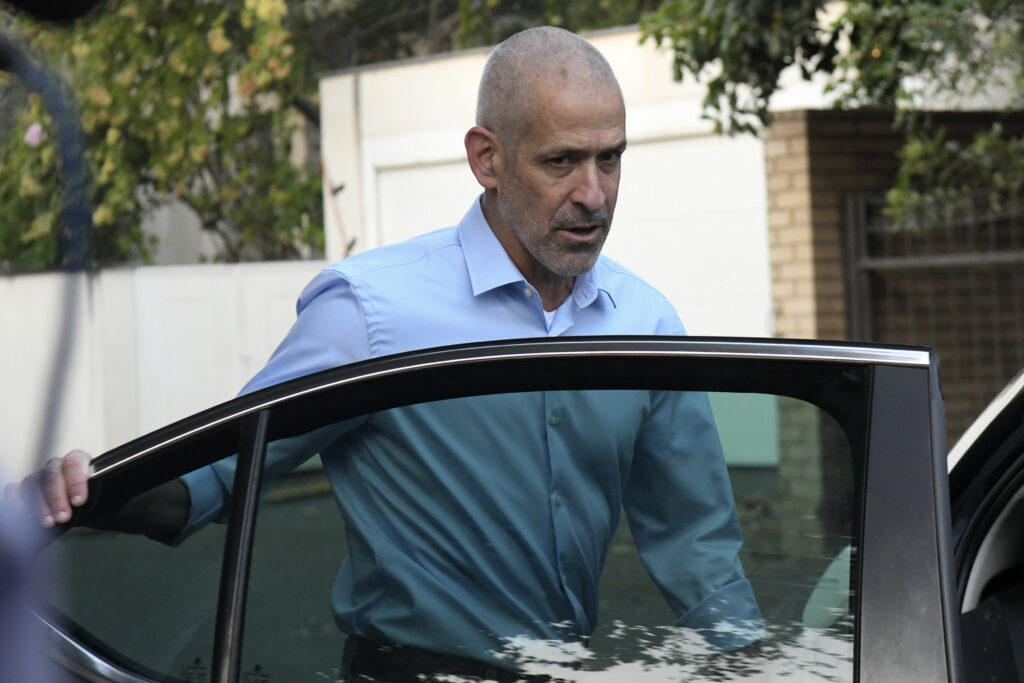
Prime Minister Benjamin Netanyahu’s bid to dismiss a top security official has threatened to plunge Israel back into deep political crisis, with opponents on Monday organising protests and a former court president warning against the “dangerous” move.Netanyahu on Sunday cited an “ongoing lack of trust” as the reason for moving to sack Ronen Bar, head of the Shin Bet internal security agency, following a similar bid by the government to oust the attorney general.Bar, who has been engaged in a public spat with Netanyahu in recent weeks over reforms to the agency, suggested there were political motives behind the premier’s decision to ask the government to dismiss him.Attorney General Gali Baharav Miara — the executive’s top legal adviser who has often taken positions that clashed with those of Netanyahu’s government — said the move was “unprecedented” and its legality needed to be assessed.Netanyahu in turn addressed a letter to Baharav Miara accusing her of attempting “to strip the government of its discretion” in a “dangerous denial of the government’s explicit authority”.Shin Bet chief Bar said the bid to remove him stemmed from his own refusal to meet Netanyahu’s demands for “personal loyalty”.The agency led by Bar has been accused of failing to prevent the October 7, 2023 Hamas attack that triggered war in Gaza.Several opposition parties have already announced they will jointly petition the High Court against Bar’s dismissal, and the attorney general said in a letter to Netanyahu that he could not initiate the process “until the factual and legal foundation of your decision is fully clarified”.Israeli media reports say the Shin Bet was investigating some of Netanyahu’s aides for allegedly receiving payments from Qatar, which hosts leaders of Palestinian militant group Hamas, even as the Gaza war raged.In his response to the attorney general, Netanyahu said that “the intention to end the tenure of the Shin Bet head did not arise in the context of the investigation.”The prime minister claimed that “on the contrary, the ‘investigation’ emerged after the possibility of ending his tenure was raised and published in the media.”- ‘Blow to national security’ -The attorney general is herself under threat of a no-confidence motion submitted by Justice Minister Yariv Levin, who has spearheaded efforts to reform the judiciary and curb the court’s powers — a plan that sparked major protests before coming to an abrupt halt with Hamas’s 2023 attack.Levin has accused Baharav Miara, a fierce defender of the judiciary’s independence, of “inappropriate conduct” and cited “significant and prolonged disagreements between the government and the attorney general”.The proceeding against the two figures promise to be lengthy, risking a repeat of the 2023 protest movement that was one of the most significant in Israel’s history and had deeply fractured the country.The Movement for Quality Government, an anti-corruption NGO, said it had petitioned the High Court demanding it block the government from meeting to vote on Bar’s dismissal.Several protest groups on Monday announced they were joining rallies in Jerusalem and Tel Aviv this week against the proposed sacking of Bar.The move to dismiss Bar, who has been involved in negotiations over the fragile ceasefire in Gaza, comes at a crucial time for the talks.Since the Gaza war began, Netanyahu has dismissed his defence minister, Yoav Gallant, while several senior military officials have resigned including army chief Herzi Halevi.Benny Gantz, an opposition figure who once served as defence minister under Netanyahu, said on X that “the dismissal of the head of the Shin Bet is a direct blow to national security and a dismantling of unity within Israeli society, driven by political and personal considerations.”Former Supreme Court president Dorit Beinisch told Kan public radio that Netanyahu was leading “processes that are dangerous for society”.- ‘Power-grab’ -For Netanyahu’s allies, the move against Bar falls within the normal rights of the head of government.”In what normal country is a special reason even needed to remove the head of an intelligence organisation who is personally responsible for a massive intelligence failure that led to the greatest disaster in the history of Israel?” far-right Finance Minister Bezalel Smotrich wrote on Telegram.Nahum Barnea, columnist for the daily Yedioth Ahronoth, warned of the dangers stemming from the clash between Netanyahu and Bar.”A prime minister who has lost his brakes will rule as he sees fit, and his failed government will follow in his wake,” he wrote.Amir Tibon, writing for the left-wing daily Haaretz, said: “Israeli democracy is now in grave danger”, describing Netanyahu’s move as a “hostile power-grab”.
Huthis report new US strikes after major rallies in rebel-held Yemen
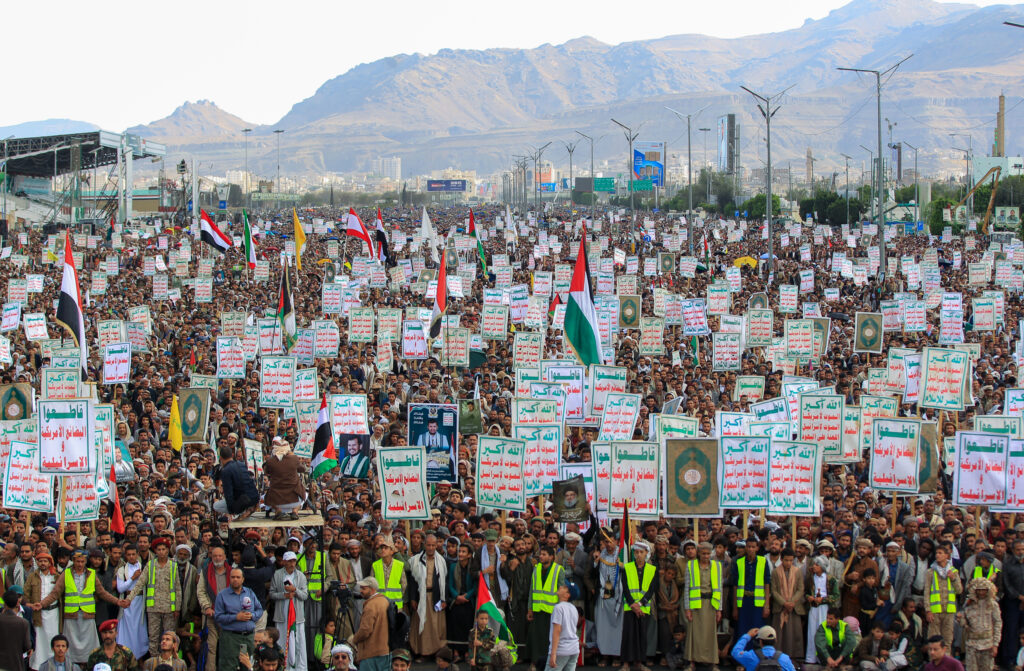
Huthi media said fresh US strikes hit Yemen on Monday, after huge crowds gathered in the conflict-torn country to protest earlier bombings targeting the Iran-backed rebel group.Tens of thousands of demonstrators, many waving assault rifles, daggers or Korans, chanted “Death to America, death to Israel!” in the capital Sanaa.There were also large crowds in Saada, birthplace of the Huthi movement, and demonstrations in Dhamar, Hodeida and Amran, footage from the rebels’ Al-Masirah TV station showed.”Yemen will never back down — we defy the Americans, we defy the Zionists,” said a man shouting slogans to the Sanaa crowd, who chanted back: “We are the men of the Prophet.”The protests came after the first US strikes on Yemen under President Donald Trump, aimed at ending the Huthis’ Red Sea harassment campaign.The strikes killed 53 people and wounded 98 on Saturday.The rebels’ Al-Masirah channel and Saba press agency on Monday evening reported new US strikes in the Hodeida and Al-Salif regions.The Huthis launched scores of attacks on ships in the vital route during the Gaza war, claiming solidarity with the Palestinians.Earlier on Monday they said they had attacked the USS Harry S. Truman aircraft carrier group twice within 24 hours. There was no comment from the United States.Washington has vowed to keep hitting Yemen until the rebels stop attacking shipping in the Red Sea and Gulf of Aden, with Trump warning he would use “overwhelming lethal force”.- Heavy strikes -In the capital Sanaa, controlled by the Huthis since 2014, giant Yemeni and Palestinian flags punctuated a sea of demonstrators at Al-Sabeen Square, which has hosted large-scale demonstrations on a weekly basis throughout the Gaza war.Just two days ago the Huthi-controlled capital was hit by heavy strikes, including in northern districts frequented by the rebels’ leadership.They were the first US strikes since Trump came to office in January despite a pause in the Huthis’ attacks coinciding with a ceasefire in the Gaza war.On Sunday, US officials vowed further bombardments until the rebels ended their campaign, while also threatening action against the group’s sponsor Iran.Huthi media reported more explosions late on Sunday, accusing the Americans of targeting a cotton facility in the Hodeida region and the Galaxy Leader, a cargo ship hijacked in November 2023.- ‘Hell will rain down’ -The United Nations urged both sides to “cease all military activity”, while expressing concern over Huthi threats to resume the Red Sea attacks.Beijing called for “dialogue and negotiation” and a de-escalation of tensions.”China opposes any action that escalates the situation in the Red Sea,” foreign ministry spokeswoman Mao Ning told a regular briefing.Before this weekend’s targeting of the US carrier group, the Huthis had not claimed any attacks in the Red Sea and Gulf of Aden since January 19, when the ceasefire in Gaza began.However, the group had threatened to resume its campaign over Israel’s blocking of humanitarian aid to the Palestinian territory. It said it would “move to additional escalatory options” if the “American aggression” continued.US National Security Advisor Michael Waltz told ABC News that Saturday’s strikes “targeted multiple Huthi leaders and took them out”. The Huthis have not responded to Waltz’s claim.Trump, meanwhile, has warned the Yemeni group that “hell will rain down upon you” if it did not stop its attacks.On Monday, he broadened the warning to include Iran, saying he would hold Tehran responsible for “every shot fired” by the Huthis and that it would “suffer the consequences”.Iran’s Foreign Minister Abbas Araghchi earlier condemned the US strikes and said Washington had “no authority” to dictate Tehran’s foreign policy.- Costly detour -A database set up by ACLED, a non-profit monitor, shows 136 Huthi attacks against warships, commercial vessels, and Israeli and other targets since October 19, 2023.While the Red Sea trade route normally carries around 12 percent of world shipping traffic, Huthi attacks have forced many companies into costly detours around southern Africa.The United States had already launched several rounds of strikes on Huthi targets under former president Joe Biden.Israel has also struck Yemen, most recently in December, after Huthi missile fire towards Israeli territory.The rebels control large swathes of Yemen, including most of its population centres, after ousting the internationally recognised government from Sanaa.They have been at war with a Saudi-led coalition backing the government since 2015, a conflict that has triggered a major humanitarian crisis.Fighting has largely been on hold since a UN-brokered ceasefire in 2022, but the peace process has stalled following the Huthi attacks over Gaza.burs/th/dcp/ami