AFP Asia Business

Gazans plunged back into chaos with resumption of Israeli strikes

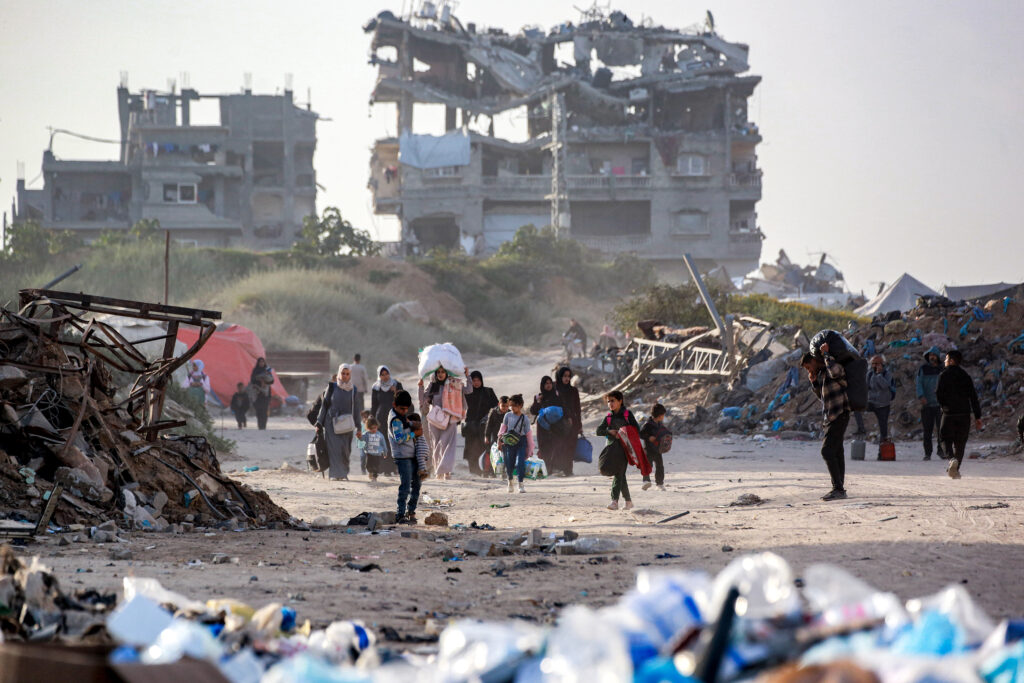
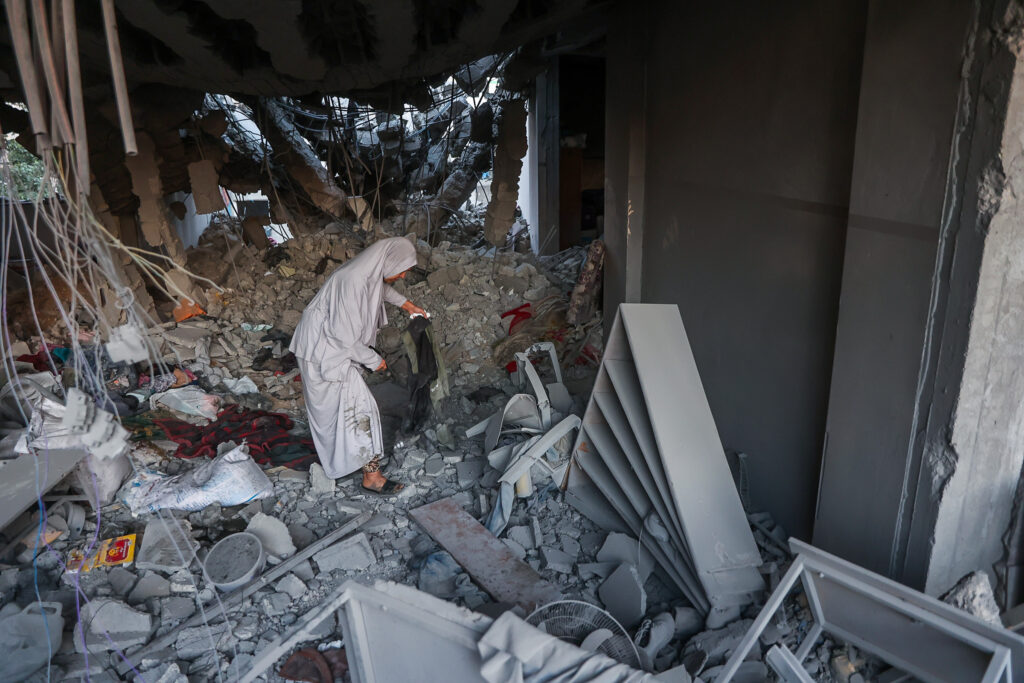
Mourners cried over the bodies of their loved ones with drones buzzing overhead early on Tuesday, as a wave of Israeli strikes plunged Gazans back into chaos.”They opened the fire of hell again on Gaza,” said Ramez al-Amarin, 25, a displaced Palestinian who lives in a tent in the southeast of Gaza City.”There are bodies and limbs on the ground, and the wounded cannot find any doctor to treat them,” he added.Amarin said he transported several of his neighbours’ children to hospital but there were no beds for them.Outside the Al-Ahli hospital, which was already functioning at reduced capacity due to Israel blocking the entry of humanitarian aid to the territory, dozens of bodies had been lined up.The bare feet of the dead protruded from under some of the shrouds, while relatives sat alongside them and held their heads in their hands and cried.Amarin said he didn’t “expect the war to return because (US President Donald) Trump said he doesn’t want wars”.Overnight, Israel unleashed its most intense strikes on the Gaza Strip since a fragile ceasefire commenced on January 19, with the health ministry in the Hamas-run territory reporting more than 400 people killed.Israel has vowed to continue fighting in Gaza until all hostages held in the Palestinian territory are returned, with Prime Minister Netanyahu’s office saying the operation was ordered after Hamas’s “repeated refusal to release our hostages”.Hamas accused Netanyahu of deciding to “resume war” after an impasse in truce negotiations and warned that a return to fighting could be a “death sentence” for the hostages that Palestinian militants are still holding alive in Gaza.The initial phase of the ceasefire took effect in January, largely halting more than 15 months of fighting which devastated the Gaza Strip.The war, sparked by Palestinian militant group Hamas’s October 7, 2023, attack on Israel, has displaced almost the entire population of Gaza and triggered widespread hunger while destroying or damaging more than 69 percent of the territory’s buildings according to the United Nations.- ‘Real hell’ -Israel announced in early March that it was blocking all aid into the strip and a week later cut off electricity supplying the territory’s main water desalination plant.Gaza’s civil defence agency has for weeks said that it lacks the supplies to provide first aid to the territory’s population of some 2.4 million people.”There is bombing everywhere, today I felt that Gaza is a real hell,” said Jihan Nahhal, 43, a mother living in northwest Gaza City, adding that some of her relatives were wounded or killed in the strikes.  Nahhal said she heard Israeli air force planes flying overhead as she prepared her pre-dawn meal — the bombardment came with Muslims celebrating the holy month of Ramadan in which they fast during daylight hours.”Suddenly there were huge explosions, as if it were the first day of the war,” she said.”Everywhere there was screaming and fires raging, and most of them were children.””It is a real war of extermination,” she added, condemning Israel.In Beit Hanoun, a northern town close to the Israeli border, residents began to flee with bags and blankets piled on their heads, even before the army urged them to evacuate on Tuesday morning. In Gaza City, residents left a school that had been turned into a shelter for the displaced.Some scoured through the rubble of buildings destroyed in the strikes in search of casualties. Families in Deir el-Balah inspected the damage to their homes, as a woman held a shaken-looking young boy in her arms.”This is my grandson, he was rescued from under the rubble,” said Um Abdullah Masmah.Standing amid debris, her neighbour, Eyad Sabah, said he felt like he’d “gone back to square one, back to zero.””This night reminded us of the return of war once again,” he said.”How long will this situation continue?”

Israel strikes on Gaza spark global condemnation

Israel’s deadly strikes on Gaza drew global condemnation on Tuesday, as it said it had “no alternative” other than to resume military operations in order to bring home hostages.The strikes, by far the deadliest since a truce took effect in January, killed more than 400 people, according to the health ministry in Hamas-run Gaza.Israel vowed to continue fighting until all the hostages seized by Palestinian militants were returned, while Hamas, which has not responded militarily so far, accused it of attempting to force it to “surrender”.Netanyahu warned Hamas this month of consequences it “cannot imagine” if it did not free the hostages still in Gaza, and Israeli media has reported on a scheme aimed at ramping up pressure on Hamas dubbed the “Hell Plan”.”Without the release of our hostages, Israel has no alternative but resuming military operations,” Foreign Minister Gideon Saar said.The White House said Israel consulted US President Donald Trump’s administration before launching the strikes, while Israel said the return to fighting was “fully coordinated” with Washington.The United Nations and countries around the world condemned the strikes, while the families of Israeli hostages pleaded with Netanyahu to halt the violence.Netanyahu’s office said the operation was ordered after “Hamas’s repeated refusal to release our hostages, as well as its rejection of all of the proposals it has received from US Presidential Envoy Steve Witkoff and from the mediators”.”Israel will, from now on, act against Hamas with increasing military strength,” the statement said.US National Security Council spokesman Brian Hughes blamed Hamas, saying it “could have released hostages to extend the ceasefire but instead chose refusal and war”.Hamas said Israel had “decided to overturn the ceasefire agreement”, calling it “a decision to sacrifice the occupation’s prisoners and impose a death sentence on them”.Hamas said the head of its government in Gaza, Essam al-Dalis, was among several officials killed.The group’s leader, Sami Abu Zuhri, told AFP the aim of the strikes was “to undermine the ceasefire agreement and attempt to impose a surrender agreement, writing it in the blood of Gaza”.- ‘Fire of hell’ -In the southern Gaza Strip, AFP footage showed people rushing stretchers with wounded people, including young children, to hospital. Bodies covered with white sheets were also taken to the hospital’s mortuary.Mohammed Jarghoun, 36, was sleeping in a tent near his destroyed house in Khan Yunis when he was awakened by huge blasts.”I thought they were dreams and nightmares, but I saw a fire in my relatives’ house. More than 20 martyrs and wounded, most of them children and women.”Ramez al-Amarin, 25, described carrying children to hospital southeast of Gaza City.”They unleashed the fire of hell again on Gaza,” he said of Israel.The health ministry in Hamas-run Gaza said the bodies of 413 people had been received by Gaza hospitals, adding “a number of victims are still under the rubble”.A spokesman for the International Federation of Red Cross and Red Crescent Societies said at a briefing in Geneva “that many medical facilities are literally overwhelmed across Gaza”.- UN chief ‘shocked’ -Families of Israeli hostages in Gaza called for a protest in front of Netanyahu’s residence, with a campaign group accusing him and other officials of dodging meetings with them “because they were planning the explosion of the ceasefire, which could sacrifice their family members”.UN chief Antonio Guterres was “shocked” by the renewed strikes, a spokesperson said, while UN rights chief Volker Turk said he was “horrified”.Britain and France both called for the renewed hostilities to end.Hamas backer Iran denounced the wave of attacks as a “continuation of the genocide and ethnic cleansing” in the Palestinian territories.Russia and China warned against an escalation, while Egypt, Qatar, Jordan and Turkey condemned the violence.Egyptian President Abdel Fattah al-Sisi said in a statement that the strikes were part of “deliberate efforts to make the Gaza Strip uninhabitable and force the Palestinians into displacement”.Trump has floated a proposal to move Palestinians out of Gaza, suggesting that Egypt or Jordan could take them in.Both countries have rejected the notion, but some right-wing politicians in Israel have embraced it.Netanyahu’s Likud movement said Tuesday that the far-right Otzma Yehudit party would rejoin the government, having withdrawn in January in protest of the truce.- Deadlock -Brokered by Qatar, Egypt and the United States, the ceasefire took effect on January 19, largely halting the war triggered by Hamas’s October 7, 2023 attack on Israel.That first phase of the deal ended in early March, and the two sides have been unable to agree on the next steps.US envoy Witkoff told CNN on Sunday he had offered a “bridge proposal” that would see five living hostages, including Israeli-American Edan Alexander, released in return for freeing a “substantial amount of Palestinian prisoners” from Israeli jails.Hamas had said it was ready to free Alexander and the remains of four others.Witkoff said Hamas had provided “an unacceptable response”.During the truce’s first phase, Hamas released 33 hostages, including eight deceased, in exchange for Israel freeing around 1,800 Palestinian detainees.Hamas has consistently demanded negotiations for the second phase, which should lead to a lasting ceasefire.Israel had sought to extend the first phase until mid-April, cutting off aid and electricity to Gaza over the deadlock.Hamas’s October 7 attack resulted in 1,218 deaths, mostly civilians, while Israel’s retaliation in Gaza has killed at least 48,577 people, also mostly civilians, according to figures from the two sides.Of the 251 hostages seized during the attack, 58 are still in Gaza, including 34 the Israeli military says are dead.

Huthis announce new attack on American warships, fresh US strikes

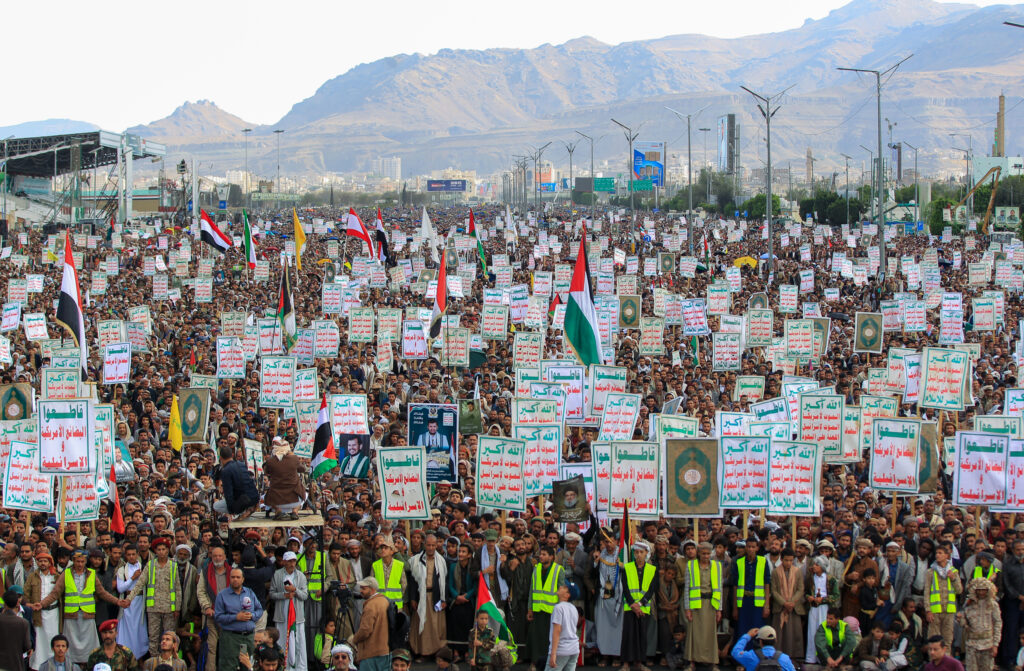
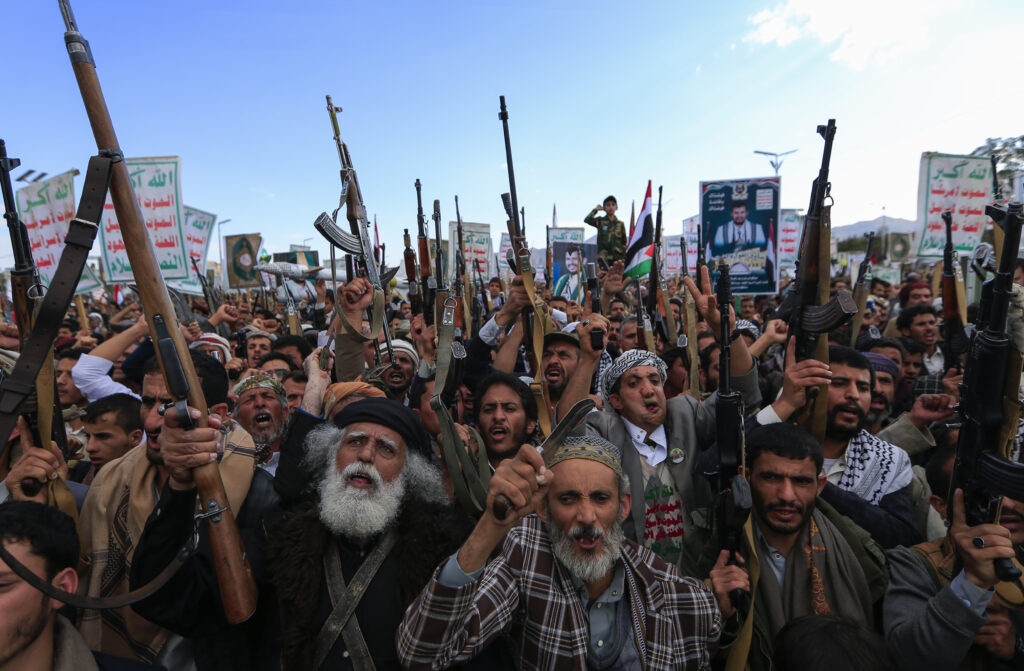
Yemen’s Huthis said on Tuesday they carried out their third attack on American warships in 48 hours, following US strikes on the Iran-backed rebels that sparked mass protests in areas under their control.The rebels also condemned Israel’s wave of strikes on Gaza, which the health ministry in the Hamas-run territory said killed more than 400 people, vowing to escalate their own operations in support of ally Hamas.The Huthis had targeted ships in the Red Sea after the start of the Gaza war and until a January ceasefire, claiming solidarity with Palestinians. But last week, they threatened to renew attacks on Israeli shipping over Israel’s aid blockade on the Palestinian territory, triggering the first US strikes on Yemen since President Donald Trump took office in January.In their latest retaliation, the Huthis said on Telegram on Tuesday that they fired missiles and drones at the USS Harry S. Truman, calling it the “third in the past 48 hours” on the fleet in the northern Red Sea.A US defence official said the Huthis “continue to communicate lies and disinformation”, adding the Iran-backed group is “well known for false claims minimising the results of our attacks while exaggerating the successes of theirs”.US Air Force Lieutenant General Alexus Grynkewich earlier told reporters it was “hard to confirm” the attacks claimed by the Huthis as the rebels were missing their targets “by over 100 miles” (160 kilometres).- No Huthis ‘without Iran’ -Huthi media said fresh US strikes hit the Hodeida and Al-Salif regions Monday and Sanaa early Tuesday — hours after tens of thousands demonstrated, chanting “Death to America, death to Israel!” in the capital.There were also large crowds in Saada, the birthplace of the Huthi movement, and demonstrations in Dhamar, Hodeida and Amran on Monday.The protests came after Washington launched its fresh campaign of air strikes on Yemen beginning Saturday, killing 53 people and wounding 98 according to the Huthi-run health ministry.Washington has vowed to keep hitting Yemen until the Huthis stop firing on shipping, with Trump warning he will hold Iran accountable for their attacks. “Every shot fired by the Huthis will be looked upon, from this point forward, as being a shot fired from the weapons and leadership of IRAN,” Trump posted on social media.Tehran called his statement “belligerent”.In a televised interview with Fox News, US Secretary of State Marco Rubio said the Huthis do “not exist” without Iran.”Without Iran, there is no Huthi threat of this magnitude,” he said. “They created this Frankenstein monster, and now they got to own it.”Iranian Foreign Minister Abbas Araghchi condemned the US strikes and said Washington had “no authority” to dictate Tehran’s foreign policy.- ‘Hell will rain down’ -On Saturday, the Huthi-controlled capital was hit by heavy strikes, including in northern districts frequented by the rebels’ leadership.US National Security Advisor Michael Waltz told ABC News that Saturday’s strikes “targeted multiple Huthi leaders and took them out”. The Huthis have not responded to Waltz’s claim.The Pentagon said on Monday it had struck 30 targets in its ongoing campaign in Yemen.The United Nations urged both sides to “cease all military activity”, while expressing concern over Huthi threats to resume their Red Sea attacks.Before this weekend’s targeting of the US carrier group, the Huthis had not claimed any attacks in the Red Sea and Gulf of Aden since January 19, when the ceasefire in Gaza began.Trump has warned the Yemeni group that “hell will rain down upon you” if it does not stop its attacks.- Costly detour -While the Red Sea trade route normally carries around 12 percent of world shipping traffic, Huthi attacks have forced many companies into costly detours around southern Africa.A database set up by ACLED, a non-profit monitor, showed more than 130 Huthi attacks against warships, commercial vessels and Israeli and other targets since October 19, 2023.The United States had already launched several rounds of strikes on Huthi targets under president Joe Biden.Israel has also struck Yemen, most recently in December, after Huthi missile fire towards Israeli territory.The rebels control large swathes of Yemen after ousting the internationally recognised government from Sanaa.They have been at war with a Saudi-led coalition backing the government since 2015, a conflict that has triggered a major humanitarian crisis.Fighting has largely been on hold since a UN-brokered ceasefire in 2022, but the peace process has stalled since the Huthis began their attacks.burs-aya/th/kir

Indonesia activists condemn amendment allowing more military in government

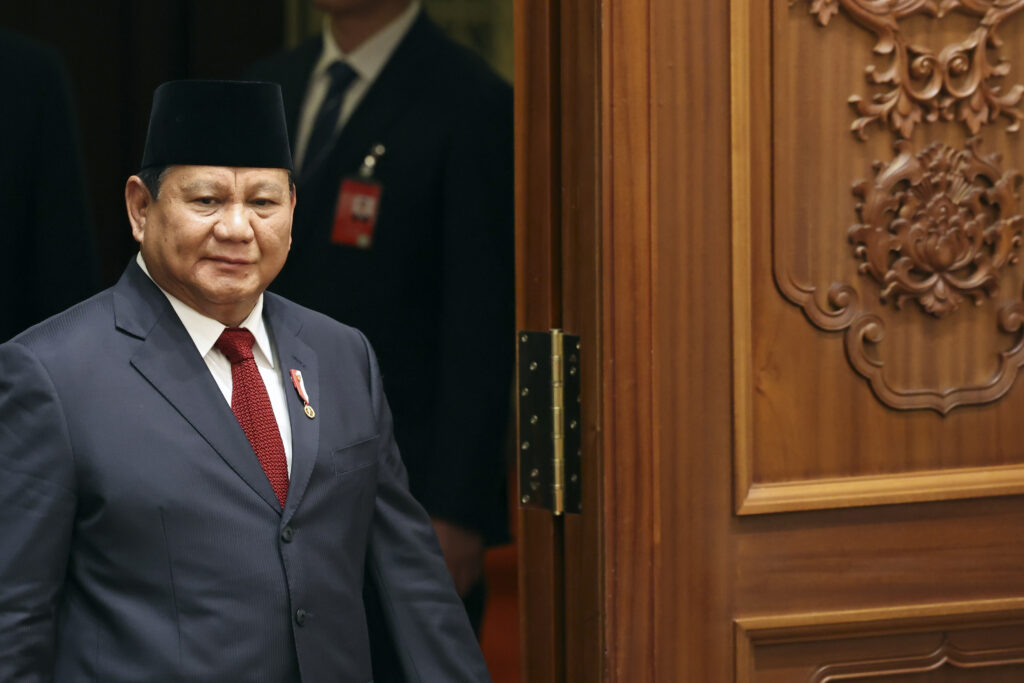
Indonesian activists on Tuesday condemned plans to change a law that would allow the army to have more government positions, a move they say could lead to “abuse” in a country long influenced by its powerful military.The revision to a military law will be voted on Thursday in a parliament dominated by President Prabowo Subianto’s …

Indonesia activists condemn amendment allowing more military in government Read More »

‘Resilent fighters’: why Yemen’s Huthis are no pushover for US

US military, be warned: after years of fighting in rugged terrain and weathering thousands of air strikes, Yemen’s Huthi rebels are not to be taken lightly, experts say.Despite a heavy US bombardment announced by President Donald Trump that left dozens dead, the battle-hardened, Iran-backed Huthis remain defiant, and with good reason.The group from the mountainous north, which controls swathes of impoverished Yemen, has withstood a decade of war against a well-armed, Saudi-led international coalition.If anything, the Huthis, from the Zaidi branch of Shia Islam, are now even more entrenched, and were moving towards a peace process with Riyadh before the Gaza war put talks on hold.”The challenge of defeating the Huthis should not be underestimated,” said Elisabeth Kendall, director of Girton College at the University of Cambridge, calling them “resilient fighters”.Saturday’s US attacks killed 53 people and wounded 98, according to Huthi authorities, who said they hit back with multiple strikes on a US aircraft carrier group.The US action was aimed at ending Huthi threats to Red Sea shipping after the rebels warned they would resume their months-long campaign, which they say is in solidarity with Palestinians in Gaza.On Monday, tens of thousands of people joined Huthi-organised rallies to protest the US strikes.”They will not be easy to defeat,” Kendall said.- ‘Dispersal of weapons’ -After the rebels seized the capital, Sanaa, in 2014, ousting the internationally recognised government, the Saudi-led coalition — which includes the United Arab Emirates, and is aided by Western weaponry — declared war the following March.Since then, Kendall said, more than 25,000 coalition air strikes have rained down on Huthi-held Yemen, which encompasses most of the 38 million plus population of the Arabian Peninsula’s poorest country.For more than a year, the Huthis have also faced American, British and Israeli strikes aimed at curbing the Red Sea harassment campaign that has choked the vital trade route.According to Alex Plitsas of the Atlantic Council, Yemen’s weaponry, including mobile missile launchers, is hard to find and destroy.”The Huthis’ ability to persist stems from their dispersal of weapons across Yemen’s rugged terrain, complicating targeting efforts,” Plitsas wrote on the think tank’s website.And while intelligence operations badly weakened Iran-allied Hamas and Hezbollah — both hobbled by Israeli assassinations — the Huthis are not infiltrated in the same way.Long thought to be “a regional problem” for Riyadh and Abu Dhabi, Yemen “was not the main priority for intelligence collection”, said Fabian Hinz, research fellow at the London-based International Institute for Strategic Studies.Yemen is strategically located on the main maritime route connecting Europe and Asia, with the rebels operating out of hard-to-access mountain strongholds. Their attacks, often with home-assembled drones and missiles, are simple but effective, dramatically reducing Red Sea shipping volumes as cargo companies stay away.In the past, the Huthis repeatedly hit neighbouring Saudi Arabia, including its oil facilities, and in early 2022 they launched deadly strikes on the UAE.- ‘Powerful military’ -A United Nations report in November 2024 found that the Huthis had become a “powerful military organisation” due to “unprecedented” foreign support, particularly from Iran and Hezbollah.The report said the Huthis had carried out a vast recruitment project, resulting in a force that numbered 350,000 in mid-2024, up from 220,000 in 2022.According to Hinz, Iran has been key to upgrading the Huthis’ anti-ship missile capabilities and is its main source of weapons.The rebels have ballistic and cruise missiles with ranges of up to 2,000 kilometres (1,240 miles), and drones that can travel even further, he told AFP.Despite their high failure rate, Hinz warned: “There is always a chance something gets through.”While the Huthis cannot compete with the might of the US military, they “stand to benefit from the asymmetric nature of the conflict”, Kendall said.”The mere fact of continuing to launch missiles and drones into the Red Sea, however primitive, will disrupt global maritime trade and freedom of navigation,” she told AFP.- No ground offensive -Washington has been ramping up pressure on Iran and its allies, sanctioning Huthi leaders and redesignating the group as a foreign terrorist organisation.But Kendall said that crushing the Huthis, who control territory about 20 times the size of Lebanon and 500 times that of Gaza, is another matter.And although Hamas and Hezbollah are badly weakened, the fight against them involved a ground offensive, Hinz said.”This is not going to happen in Yemen. The Americans are not going to send ground troops,” he said.For Maged Al-Madhaji, co-founder of the Sanaa Centre for Strategic Studies think tank, substantially weakening the Huthis requires depriving them of access to the Red Sea — their main source of revenue and weapons.An air campaign alone “will not pose an existential threat to the Huthis”, he said.