AFP Asia Business

Nvidia chief confident chip maker can weather US tariffs

Nvidia boss Jensen Huang expressed confidence Wednesday that the artificial intelligence (AI) chip giant can handle US President Donald Trump’s trade war.”We have a really agile network of suppliers; they are not just in Taiwan or Mexico or Vietnam,” Huang said while meeting with journalists at Nvidia’s annual developers conference in San Jose, California.”If we …

Nvidia chief confident chip maker can weather US tariffs Read More »

Israelis return to streets in anger over Netanyahu’s policies

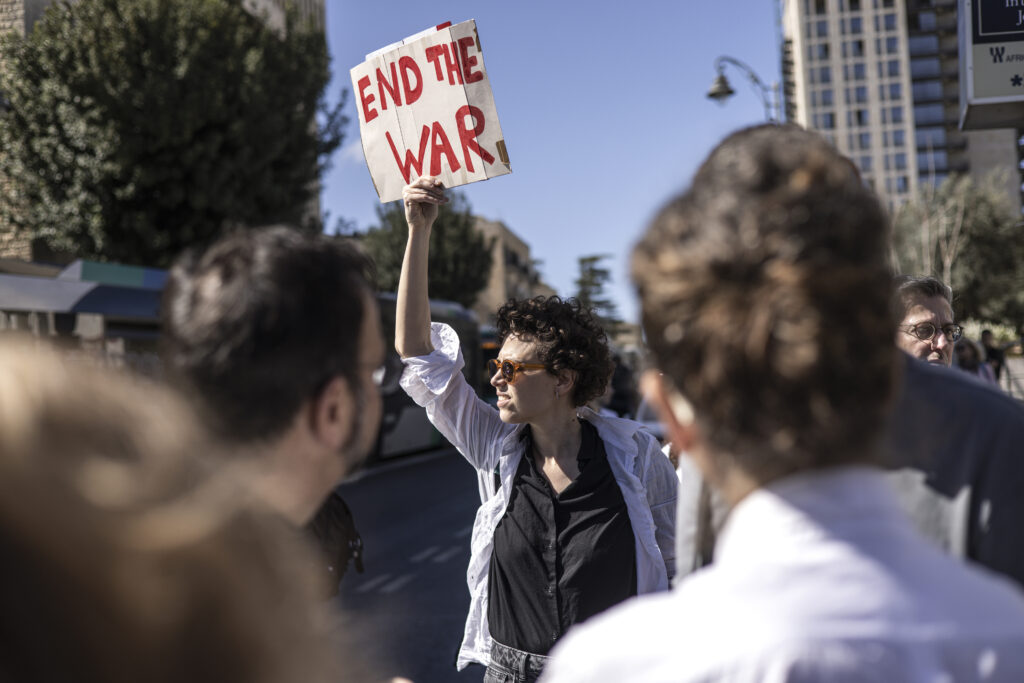
Blowing foghorns and beating drums, thousands of Israelis on Wednesday took over the winding Jerusalem street outside the prime minister’s residence to protest what they see as Benjamin Netanyahu’s bid to weaken democracy.”We’ve all been taken hostage by the government of blood,” some chanted.Others called for the long-serving Netanyahu to stand down, yelling: “You’re the head, you’re to blame for this catastrophe” — a reference to the failure to prevent Hamas’s October 7, 2023 attack on southern Israel, which led to full-blown war in Gaza.On Tuesday, Israel launched a series of deadly air strikes on the Palestinian territory after a nearly two-month ceasefire that largely halted violence and saw the handover of 33 Israeli hostages seized during the Hamas attack.Among the banners held by protesters in Jerusalem were many calling on the government to end the war and return the hostages, with some reading: “We are all hostages.”Some relatives of the hostages still being held in Gaza also joined the protest, after expressing anger that the decision to resume strikes could “sacrifice” their loved ones.Of the 251 hostages seized during the Hamas attack, 58 are still held in Gaza, including 34 the Israeli military says are dead.”We want him to know that the most important issue is to get the hostages back,” Nehama Krysler, 67, told AFP, explaining why she was protesting outside Netanyahu’s house.Arriving from across the country, protesters marched by foot the final ascent into Jerusalem early in the morning, first rallying outside the parliament, and then sitting down defiantly on the black asphalt as close as they could get to Netanyahu’s residence.A tense police force manned makeshift barricades around the protest, which grew throughout the day. By the afternoon police said that four protesters were arrested for “attempting to break through the protest area fences”.Wednesday’s demonstration was organised by a broad conglomeration of anti-Netanyahu groups, who called to protest the premier’s move to oust Ronen Bar, the head of the Shin Bet internal security agency.Similar protests were widespread throughout the year leading up to October 2023.At that time, the government had been attempting to reform the country’s judicial branch, a move that was halted when the war broke out.But it has returned to the government’s agenda in recent weeks as attorney general and government legal adviser, Gali Baharav-Miara, has contested some of Netanyahu’s moves.Justice Minister Yariv Levin has been clear about his intentions to remove Baharav-Miara from her position.- ‘Democracy under threat’ -“They still want to change the judiciary because they want to do whatever they like without any limits,” Raffi Lipkin, 76, from Tel Aviv said of Netanyahu’s government.”Our democracy is under threat from this government.”Opposition leader and former prime minister Yair Lapid joined the protest, saying “he had come to tell the world what is happening to our democracy.”In a post on X on his way to the demonstration, Lapid said: “This government is tearing us apart, it is dismantling us, it is an illegitimate government and we are taking to the streets.” Some of those demonstrating also accused Netanyahu of using the war against Hamas to distract from his personal troubles, including a series of criminal cases against him for which he is currently on trial.”The protest is to stop this government from taking Israel on this awful path, to losing our democracy,” said Eyal Ben-Reuven, 70, a former parliament member and vocal Netanyahu critic.”This prime minister needs to go home, he has failed and by staying in power, he is hurting the country and its citizens,” Ben-Reuven, a retired army general, told AFP.Earlier, outside the parliament, 18-year-old Roni Sharon, a student from the city of Rehovot, told AFP that she had skipped school to join the protest.”This is my country, and at this rate we won’t have a country left — not a democratic one. It will be a dictatorship,” she said.

Israel announces ground operations, issues ‘last warning’ to Gazans

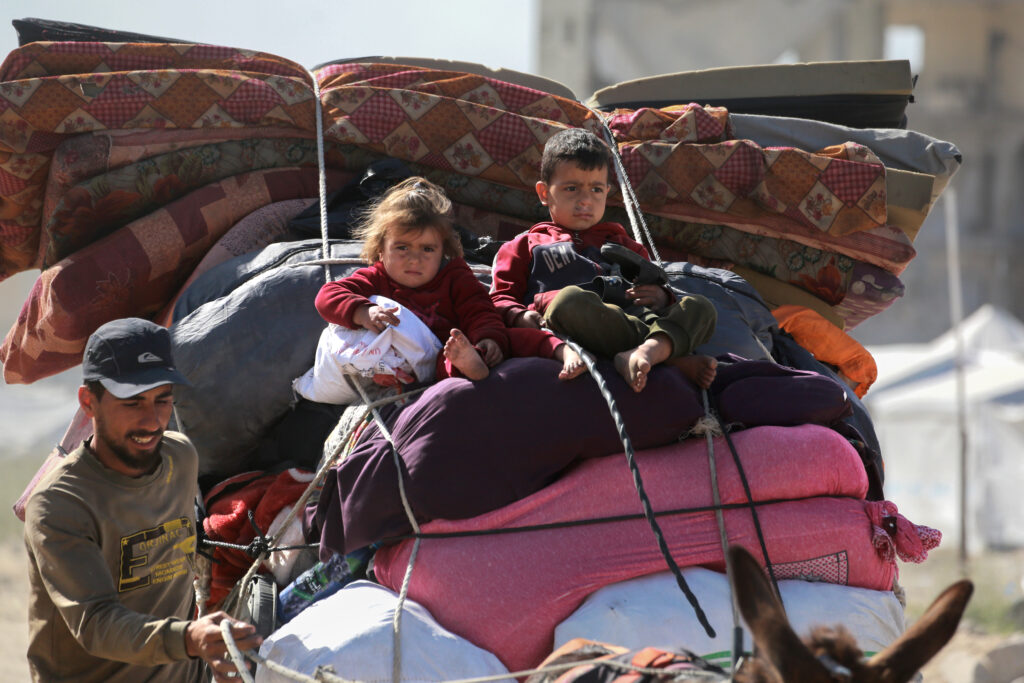
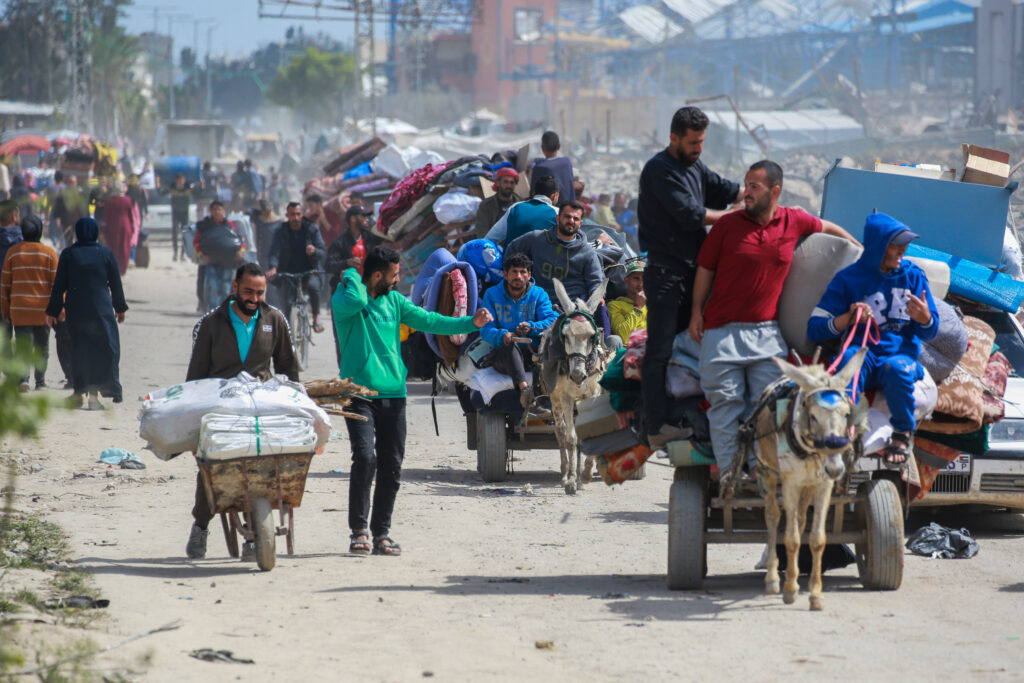
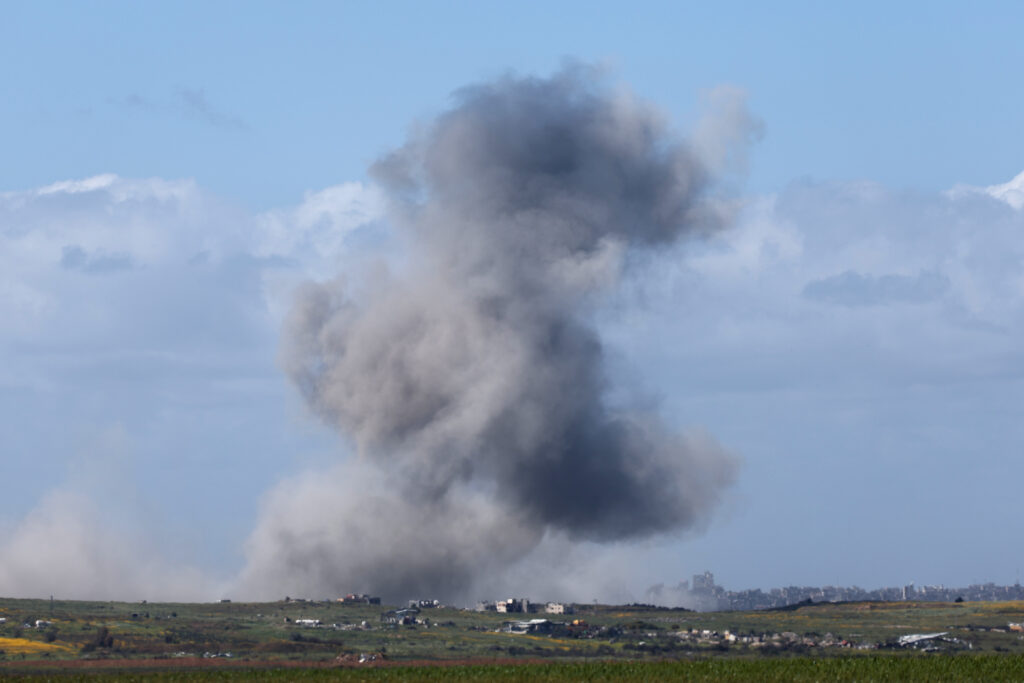
Israel announced renewed ground operations in Gaza on Wednesday and issued what it called a “last warning” to residents of the Palestinian territory to return hostages and remove Hamas from power.Israeli forces this week conducted the deadliest wave of air strikes since the start of a truce in January, killing hundreds of people, according to the health ministry in the Hamas-run Gaza Strip.The military said it had “begun targeted ground operations in the central and southern Gaza Strip to expand the security perimeter and create a partial buffer between the north and south”.As Israel kept up its renewed bombardment despite a chorus of calls from foreign governments to preserve the ceasefire, long lines of fleeing civilians filled the roads of Gaza on Wednesday.Families with young children fled northern Gaza for areas further south, fearing for their lives after Israel urged civilians to leave areas it described as “combat zones”.Fred Oola, senior medical officer at the Red Cross field hospital in Rafah, said the renewed strikes had shattered the relative calm of the past two months.”Now, we can feel the panic in the air… and we can see the pain and devastation in the faces of those we are helping,” he said in a statement.Addressing the “residents of Gaza” — ruled by Hamas since 2007 — Israeli Defence Minister Israel Katz said in a video statement: “This is the last warning.””Take the advice of the president of the United States. Return the hostages and remove Hamas, and other options will open up for you — including the possibility of leaving for other places in the world for those who want to.”He was referring to a warning earlier this month by US President Donald Trump, who said: “To the People of Gaza: A beautiful Future awaits, but not if you hold Hostages. If you do, you are DEAD!”Of the 251 hostages seized during Hamas’s October 7, 2023 attack that sparked the war, 58 are still held by Gaza militants, including 34 the Israeli military says are dead.- Impasse -So far, Hamas has not responded militarily to the strikes, and an official from the group said it was open to talks on getting the ceasefire back on track.He rejected, however, Israeli demands to renegotiate the three-stage deal agreed with Egyptian, Qatari and US mediators.”Hamas has not closed the door on negotiations but we insist there is no need for new agreements,” Taher al-Nunu told AFP, demanding that Israel “begin the second phase of negotiations”.Talks have stalled over how to proceed with the ceasefire, whose first phase expired in early March.Israel and the United States have sought to change the terms of the deal by extending phase one — a stance rejected by Hamas.That would delay the start of phase two, which was meant to establish a lasting ceasefire and an Israeli withdrawal from Gaza while the remaining hostages are released in exchange for Palestinian prisoners.”Moving to the second phase seems to be a non-option for Israel,” said Ghassan Khatib, a political analyst and former Palestinian Authority minister.”They don’t like the second phase because it involves ending the war without necessarily achieving their objective of ending Hamas.”- ‘Shattering’ hopes -Israel and its ally the United States have portrayed Hamas’s rejection of an extended phase one as a refusal to release more hostages.The intense Israeli bombardment sent a stream of new casualties to the few hospitals still functioning in Gaza and triggered fears of a return to full-blown war after two months of relative calm.A UN Office for Project Services employee was killed and at least five other people were wounded when a UN building in the central city of Deir el-Balah was hit, the agency said.The health ministry in the Hamas-run territory blamed Israel, while the Israeli military denied striking the compound.United Nations Secretary-General Antonio Guterres was “shocked” by the staff member’s death and called for “a full investigation”, said spokesman Farhan Haq.Israel’s foreign ministry later announced that “the circumstances of the incident are being investigated”, expressing “sorrow over the death of the Bulgarian citizen, a UN worker”, and stressing there was “no connection to IDF activity whatsoever”.Hamas called the incident “part of (Israel’s) systematic policy of targeting civilians and aid workers, aiming to terrorise them and prevent them from fulfilling their humanitarian duty”.Britain’s foreign minister David Lammy said on X he was “appalled” by the incident, that it “must be investigated transparently and those responsible held to account”.Thousands of Israeli protesters massed in Jerusalem, accusing Israeli Prime Minister Benjamin Netanyahu of resuming strikes on Gaza without regard for the safety of the remaining hostages.”We want him to know that the most important issue is to get the hostages back,” said 67-year-old Nehama Krysler.German Foreign Minister Annalena Baerbock said Israel’s raids on Gaza “are shattering the tangible hopes of so many Israelis and Palestinians of an end to suffering on all sides”.European Union foreign policy chief Kaja Kallas called the new strikes on Gaza “unacceptable”.The war began with Hamas’s 2023 attack on Israel, which resulted in 1,218 deaths, mostly civilians, according to Israeli figures.The Gaza civil defence agency’s spokesman Mahmud Bassal said late on Wednesday that at least 470 people had been killed in the territory since Israel resumed large-scale air strikes overnight from Monday to Tuesday.The agency reported 14 members of the same family killed in an Israeli strike in the north.As of Monday, before the intense strikes resumed, the overall death toll in Gaza since the start of the war stood at more than 48,570, according to the territory’s health ministry.burs-ami/rlp/bc

Gazans living through ‘hell’ Israel threatened for Hamas

A man in tears struggled Wednesday to retrieve the body of a small boy from under the rubble of a building in Gaza City hit by a recent wave of Israeli air strikes.One by one, relatives and neighbours used a sledgehammer to try to break apart the large chunks of concrete trapping the young boy. His eyes closed and wearing a Spiderman sweater, the boy was visible but unreachable.”The civil defence tried to retrieve people but couldn’t get anyone out so they left,” said Muhammad al-Deiri, a neighbour who had come to help.Each strike of the sledgehammer echoed from the building’s collapsed second floor through the eerily quiet surrounding streets of what was once a bustling city.In the early hours of Tuesday, Israel launched its most intense air strikes since a ceasefire took hold in Gaza in January, killing more than 400 people according to the health ministry in the Hamas-run territory.Israel vowed to keep up the pressure until the Palestinian Islamist movement Hamas releases the hostages still held in Gaza. Of the 251 captives seized during Hamas’s October 7, 2023 attack on Israel that triggered the war, 58 are still held in Gaza, including 34 the Israeli military says are dead.Hamas says it is willing to negotiate and has called on the international community to act to bring the war to an end.- ‘Random bombings’ -In Gaza City’s al-Sabra neighbourhood where the boy was trapped under rubble, surrounding buildings had also been damaged in the strikes.Flattened floors lay atop one another.”Random bombings started everywhere,” said 21-year-old Sundus al-Imam.”The Al-Hattab family’s house — our neighbours — was hit, leaving some with minor injuries among us girls.””Since (President Donald) Trump’s time, the United States has been sending massive military aid to Israel, making it more powerful than before,” she added.Trump and Israeli Prime Minister Benjamin Netanyahu have promised “hell” for Hamas if the remaining hostages held in Gaza are not immediately released.As part of its escalating pressure, Israel first blocked the entry of humanitarian aid into Gaza in early March, then cut the limited electricity supply to the territory’s main water desalination plant.Since then, humanitarian organisations operating on the ground have been reporting on the dire situation for the population.Rafat Ramadan, another resident of al-Sabra, painfully remembered seeing “bodies hanging from the rubble, needing cranes to remove them”.Ramadan’s own house was struck, trapping his daughters under concrete until he managed to free them with the help of his nephews.They took the girls to Gaza City’s Baptist Hospital, he said, only to find the facility overwhelmed. “What we lived through was hell,” said Ramadan, who says he lost his son in the war.- ‘Pray for your loved ones’ -After almost two months under the truce, Gazans are once again experiencing the panic of more than 15 months of war between Hamas and Israel.In the courtyard of Al-Aqsa Hospital in central Gaza’s Deir al-Balah, dozens of men gathered in mourning next to white plastic body bags.They said that four members of the same family were caught by overnight bombing while reciting a traditional Ramadan prayer.”Remember Allah, pray for your loved ones, your heart will be in peace,” read a poster near the bodies.A young man cried in silence while the body bags were loaded into a truck for burial.The Israeli military urged residents of several areas in Gaza’s border areas to evacuate “combat zones”, in particular Beit Hanun, in the territory’s far north.Residents took to the road, mainly by foot — and for most of them, not for the first time — in order to seek shelter in Gaza City.Children pulled water jerrycans next to donkey carts loaded with cheap foam mattresses, plastic bowls and tents. Residents carried only the most basic necessities for daily life, nearly a year and a half after the war started.Around them stood bombed-out buildings, piles of rubble and mountains of waste, while Israeli planes roared and drones buzzed above their heads.

Hamas in no win situation as Israeli strikes resume

Israel’s renewed attacks on the Gaza Strip have put Hamas in a very difficult situation, experts believe, with the Palestinian Islamist movement left with few options.The group may be now pinning its last hopes on external international pressure being exerted against Israel and internal pressure forcing Prime Minister Benjamin Netanyahu to end the war.The renewed attacks come with deadlock in indirect talks on the second phase of the January ceasefire, with neither side prepared to budge from its position.Hamas has yet to respond militarily to the latest Israeli attacks, and said on Wednesday it remained open to negotiations, urging the international community to “take urgent action”.”Hamas is betting on mediators and internal divisions in Israel” to make the war end, Hamas expert Leila Seurat, a senior lecturer at SciencesPo in Paris, told AFP.Israel has said it will pound the Palestinian territory until Hamas releases the remaining 58 hostages held there, despite many inside Israel believing that this strategy will only endanger the captives’ lives.Ghassan al-Khatib, a Palestinian political analyst and former Palestinian Authority minister, believes Hamas will only release hostages if it is given guarantees that Israel will uphold the terms of the stalled January ceasefire.”If the hostages are released under the pressure of the Israeli attacks, then Hamas will be (left) with no guarantees,” he told AFP.”Hamas will not trust any word from Israel, but the guarantees should come from third parties” such as mediators Egypt, the United States or Qatar, Khatib added.- ‘Time for political options’ -Hamas now faces a militarily dominant Israel no longer restrained by its US ally.Khatib said fighting back is “not an option” for Hamas, “due to the difficult military reality on the ground” and because of diminished support from its allies Iran and Lebanon’s Hezbollah.All the while, Israel has the upper hand as it benefits from US President Donald Trump’s backing for the war in Gaza.As the ceasefire talks stalled, Israel blocked the entry of all humanitarian aid and cut off power to a desalination plant in southern Gaza.”(The Israelis) are under much less pressure and therefore they don’t feel that they need the second phase (of the ceasefire) and war is less costly for them,” Khatib said.Under the second phase of the truce drafted under former US president Joe Biden’s administration, Israel would have withdrawn from Gaza in exchange for more hostage releases.All this means that Hamas’s “manoeuvering room is narrowing, that’s why now is the time for political options”, Khatib said.Echoing this, Seurat from SciencesPo pointed to the fact that Hamas cannot change the balance of power on the ground.She said Hamas can instead hope to fold proposals from Trump’s special Middle East envoy Steve Witkoff into the existing ceasefire framework.She said that beyond mediator pressure, Hamas is instead hoping that dissident voices within the Israeli military, or public pressure, bring an end to the war.Jamal al-Fadi, a political science professor at Gaza’s al-Azhar University, noted in an editorial that Hamas, which believes in Palestinian liberation by armed struggle, once condemned mediation in interactions with Israel.Hamas has long criticised its rival movement Fatah, which dominates the Palestinian Authority in the occupied West Bank — a separate Palestinian territory — for its strategy of appealing to the international community.- ‘Fantasies’ -Palestinian affairs expert Michael Milshtein of Tel Aviv University’s Moshe Dayan Center said that cornering Hamas militarily with no exit strategy would not force it to back down.He said Hamas wants precise guarantees from the United States over how and when the war would end and Israel will withdraw from Gaza.Without that, he said “Hamas prefers right now to continue the fighting but not to release hostages”.As for Hamas’s future after the war, the main sticking point remains the Islamist movement’s militarisation. “They’ll never back down on that,” said Seurat. “It’s a movement that calls itself a resistance movement.”Milshtein agreed, saying that without a military wing “it’s not Hamas, it’s something else”.He argued that the only two viable options are for Israel to occupy Gaza, which he says Israel lacks the motivation for, or a deal that would end the war and force Israel to withdraw.Anything short of that, including “all the ideas that we will convince the Egyptians to deploy their forces in Gaza” or that Israel will “create a kind of regime based on clans in Gaza”, are “fantasies and nothing else”, Milshtein said.

Fleeing civilians fill Gaza roads as Israel keeps up strikes

Long lines of fleeing civilians filled the roads of Gaza Wednesday as Israel kept up its renewed bombardment of the territory for a second day despite a chorus of calls from foreign governments to preserve a fragile January ceasefire.The ministry of health in Hamas-run Gaza has previously said more than 400 people have been killed in the strikes. It published a much higher death toll on Wednesday for the last 48 hours, but an official later withdrew it, citing a “technical error”.Families with young children fled northern Gaza for areas further south, fearing for their lives after Israel urged civilians to leave areas it described as “combat zones”.A Hamas official said the group was open to talks on getting the ceasefire back on track but rejected Israeli demands to renegotiate the three-stage deal agreed with Egyptian, Qatari and US mediators.”Hamas has not closed the door on negotiations but we insist there is no need for new agreements,” Taher al-Nunu told AFP.”We have no conditions, but we demand that the occupation be compelled to immediately halt its aggression and war of extermination, and begin the second phase of negotiations.”Negotiations have stalled over how to proceed with a ceasefire whose first phase expired in early March, with Israel and Hamas disagreeing on whether to move to a new phase intended to bring the war to an end.Israel and the United States have sought to change the terms of the deal by extending stage one.That would delay the start of phase two, which was meant to establish a lasting ceasefire and an Israeli withdrawal from Gaza, and was swiftly rejected by Hamas, which demanded full implementation of the original deal.”There is no need for new agreements in light of the existing agreement signed by all parties,” Nunu said.- ‘Only the beginning’ -Israel and the United States have portrayed Hamas’s rejection of an extended stage one as a refusal to release more Israeli hostages in exchange for Palestinian prisoners.Netanyahu’s office said he ordered the renewed strikes on Gaza after “Hamas’s repeated refusal to release our hostages”.In a televised address late Tuesday, the premier said: “Hamas has already felt the strength of our arm in the past 24 hours. And I want to promise you –- and them –- this is only the beginning.”The White House said Israel consulted US President Donald Trump’s administration before launching the strikes.The intense Israeli bombardment sent a stream of new casualties to the few hospitals still functioning in Gaza and triggered fears of a return to full-blown war after two months of relative calm.Two people, including a United Nations employee, were killed when a UN building in Deir el-Balah, in the central Gaza Strip, was hit, according to a UN source.One of those killed was employed by the UN Office for Project Services (UNOPS), the source told AFP.According to a UN statement, “an explosive ordnance was dropped or fired at the infrastructure and detonated inside the building.”We don’t know at this stage what type it was (airdrop weapons, artillery, rocket),” the statement said.The health ministry in the Hamas-run territory blamed Israel, while the Israeli military denied it had struck the UN compound in Deir el-Balah.AFPTV footage showed UN vehicles and an ambulance transporting three men to Al-Aqsa Martyrs Hospital.Two of them appeared to have leg injuries and a third had bandages on both arms and abdomen, with traces of blood on his chest.Thousands of Israelis massed in Jerusalem on Wednesday, accusing Netanyahu of resuming strikes on Gaza without regard for the safety of the remaining hostages. “Many people here in Israel are so frustrated with the operation that began yesterday because it’s obvious it will not… make Hamas more flexible and bring the release of hostages,” said Palestinian affairs expert Michael Milshtein of Tel Aviv University’s Moshe Dayan Center.- ‘Shattering’ hopes -Governments in the Middle East, Europe and beyond called for the renewed hostilities to end.German Foreign Minister Annalena Baerbock said Israel’s raids on Gaza “are shattering the tangible hopes of so many Israelis and Palestinians of an end to suffering on all sides”.European Union foreign policy chief Kaja Kallas said she told her Israeli counterpart Gideon Saar that the new strikes on Gaza were “unacceptable”.Both Egypt and Qatar, which brokered the Gaza ceasefire alongside the United States, condemned Israel’s resort to military action.Israel’s resumption of military operations in Gaza, after it already halted all humanitarian aid deliveries to Gaza this month, drew an immediate political dividend for Netanyahu.The far-right Otzma Yehudit party, which quit his ruling coalition in January in protest at the Gaza ceasefire, rejoined its ranks with its firebrand leader Itamar Ben Gvir again becoming national security minister.The war began with Hamas’s October 7, 2023 attack on Israel, which resulted in 1,218 deaths, mostly civilians, according to Israeli figures.Of the 251 hostages seized during the attack, 58 are still in Gaza, including 34 the Israeli military says are dead.burs/kir/ser/smw