AFP Asia Business

Israel expands Gaza ground operation as missiles intercepted

Israel’s military on Thursday expanded ground operations across Gaza, after it reported missiles intercepted from Yemen and Hamas militants said they fired rockets towards Tel Aviv.The rocket fire from Hamas was its first military response to the growing civilian death toll from Israel’s resumption of aerial bombardment and ground operations in Gaza this week.The offensive has drawn widespread condemnation and shattered a relative calm in the war-ravaged Palestinian territory where a ceasefire began on January 19. Talks on extending the truce reached an impasse, and Israel resumed intensive bombing of Gaza on Tuesday.Early Friday, the head of Shin Bet — Israel’s domestic intelligence agency — was sacked, days after Prime Minister Benjamin Netanyahu said he no longer trusts him, and fallout from a report on the October 7, 2023 Hamas attack that sparked the conflict.Netanyahu on Sunday cited an “ongoing lack of trust” as the reason for moving to dismiss Ronen Bar, who joined the agency in 1993.Late Thursday the military said troops had begun “conducting ground activity” in the Shabura area of Rafah, Gaza’s southernmost city near the Egyptian border.”As part of the activity, the troops dismantled… terrorist infrastructure,” the military said in a statement, adding that “troops are continuing ground activity in northern and central Gaza.”Israel earlier said it had closed off the territory’s main north-south route as part of expanding ground operations that resumed on Wednesday.Gaza’s civil defence agency said 504 people had been killed since Tuesday, including more than 190 under the age of 18.The toll is among the highest since the war started more than 17 months ago with Hamas’s attack on Israel.The armed wing of Hamas, the Ezzedine al-Qassam Brigades, said it fired rockets at Israel’s commercial centre in response to “massacres” of Gaza civilians.The Israeli army said it intercepted a missile launched from Yemen, claimed by Iran-backed Huthi rebels who say they act in support of the Palestinians, for the second time within a day.US President Donald Trump “fully supports” Israel’s renewed Gaza operations, White House Press Secretary Karoline Leavitt told reporters when asked if he was trying to get a Gaza ceasefire back on track.Israel’s military said an air strike had “in recent days” killed Rashid Jahjouh, the head of Hamas’s internal security agency.In Beit Lahia, northern Gaza, Alaa Abu Nasr said 17 members of his family were killed in an air strike.”They are targeting civilians, not fighters,” he said among the rubble.- Fleeing south -Military spokesman Avichay Adraee said on X that Israeli troops “have begun a targeted ground operation in the central and southern Gaza Strip in order to expand the security zone between the northern and southern parts”.Movement along Salaheddin Road between northern and southern Gaza is prohibited “for your safety”, he said.Palestinians were seen fleeing south along a section of Salaheddin Road still open, near central Gaza’s Nuseirat refugee camp, atop donkey-drawn carts piled high with belongings.In Gaza’s south, the army warned people to evacuate Bani Suheila before a strike on militants “firing rockets from populated areas”.Government spokesman David Mencer said Israel controlled central and southern Gaza and was “expanding the security zone” and creating a buffer between the north and south.An official from Gaza’s interior ministry said the Israeli army had closed what it calls Netzarim Junction, just south of Gaza City on Salaheddin Road.The official said Israeli tanks had deployed at the junction after the withdrawal of American private security contractors stationed there since the pullback of Israeli forces in February, under the ceasefire.The first stage of the ceasefire, under which Israeli hostages held by Hamas were exchanged for Palestinian prisoners, expired early this month.Israel rejected negotiations for a second stage, demanding the return of all remaining hostages under an extended first stage. Hamas insisted on engaging in talks for phase two.Under the agreed truce deal, as outlined by then-US president Joe Biden, negotiations towards phase two were to begin during the initial six-week phase.- ‘Unthinkable’ -Mkhaimar Abusada, an associate professor at Al-Azhar University in Gaza, said that if Netanyahu “was really interested in releasing all Israeli hostages, he could have gone with a second phase of the ceasefire. But he has never made any commitment to an end to the war”.Speaking before the UN Security Council, former hostage Eli Sharabi called on the world to “bring them all home”, referring to the dozens still held by Gaza militants.He said he was “chained, starved, beaten and humiliated” during his Hamas captivity.Resumption of fighting in Gaza has coincided with a reignited protest movement by Israelis who see Netanyahu’s policies as a threat to democracy.On Thursday President Isaac Herzog, whose role is largely ceremonial, spoke of “controversial initiatives that create deep rifts within our nation.”He also called it “unthinkable to resume fighting while still pursuing the sacred mission of bringing our hostages home.”Hamas appealed to Arab and Islamic nations “to take urgent action” in the United Nations Security Council and other forums to halt the renewed fighting.Iran’s supreme leader Ayatollah Ali Khamenei called Israel’s latest strikes on Gaza a “catastrophic crime” and said the United States “shares responsiblity”.Hamas’s October attack on Israel that began the war resulted in 1,218 deaths, mostly civilians, according to Israeli figures.The overall death toll in Gaza since the start of the war is 49,617, according to the Hamas-run territory’s health ministry.burs-dv/it/fox
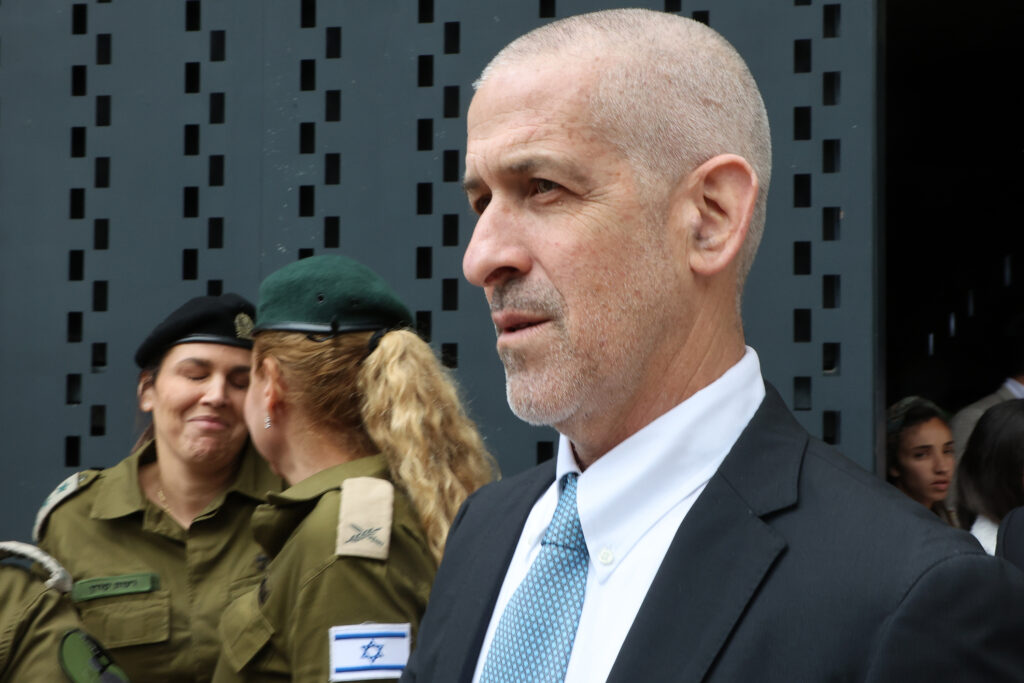

Israel government sacks Shin Bet intelligence chief

The head of Shin Bet, Israel’s domestic intelligence agency, was sacked Friday, days after Prime Minister Benjamin Netanyahu said he no longer trusts him, and fallout from a report on the October 7, 2023 Hamas attack.”The Government unanimously approved Prime Minister Benjamin Netanyahu’s proposal to end ISA Director Ronen Bar’s term of office,” a statement said.He will leave his post when his successor is appointed or by April 10 at the latest, the statement said.Netanyahu on Sunday cited an “ongoing lack of trust” as the reason for moving to dismiss Bar, who joined the agency in 1993.Bar, meant to end his tenure only next year, was appointed Shin Bet chief in October 2021 by the previous Israeli government that briefly forced Netanyahu from power between June 2021 and December 2022.His relations with Netanyahu were strained even before the unprecedented October Hamas attack which sparked the war in Gaza, notably over proposed judicial reforms that had split the country.Relations worsened after the March 4 release of the internal Shin Bet report on the Hamas attack.It acknowledged the agency’s own failure in preventing the attack, but also said “a policy of quiet had enabled Hamas to undergo massive military buildup”.Bar had already hinted that he would resign before the end of his term, taking responsibility for his agency’s failure to prevent the attack.- Secret motives -Bar’s dismissal provoked the anger of the opposition and led to demonstrations accusing Netanyahu of threatening democracy.Several thousand people braved bad weather late Thursday to demonstrate outside Netanyahu’s private residence in Jerusalem and then the Israeli parliament, where ministers were meeting.In a letter made public on Thursday, Bar said Netanyahu’s arguments were “general, unsubstantiated accusations that seem to hide the motivations behind the decision to terminate (his) duties”.He wrote the real motives were based on “personal interest” and intended to “prevent investigations into the events leading up to October 7 and other serious matters” being looked at by the Shin Bet.He referred to the “complex, wide-ranging and highly sensitive investigation” involving people close to Netanyahu who allegedly received money from Qatar, a case dubbed “Qatargate” by the media.Bar’s dismissal comes after the Israeli army launched a series of massive and deadly bombardments on the Gaza Strip on Tuesday, following a two-month truce and “targeted” ground operations.Netanyahu said the operations were intended to put pressure on Hamas to release the 58 hostages remaining in the territory.In rare criticism of Netanyahu, Israeli President Isaac Herzog said Thursday that he was worried the resumption of strikes in a time of crisis could undermine “national resilience”.

Algeria prosecutors seek 10 years’ jail for writer Boualem Sansal: media

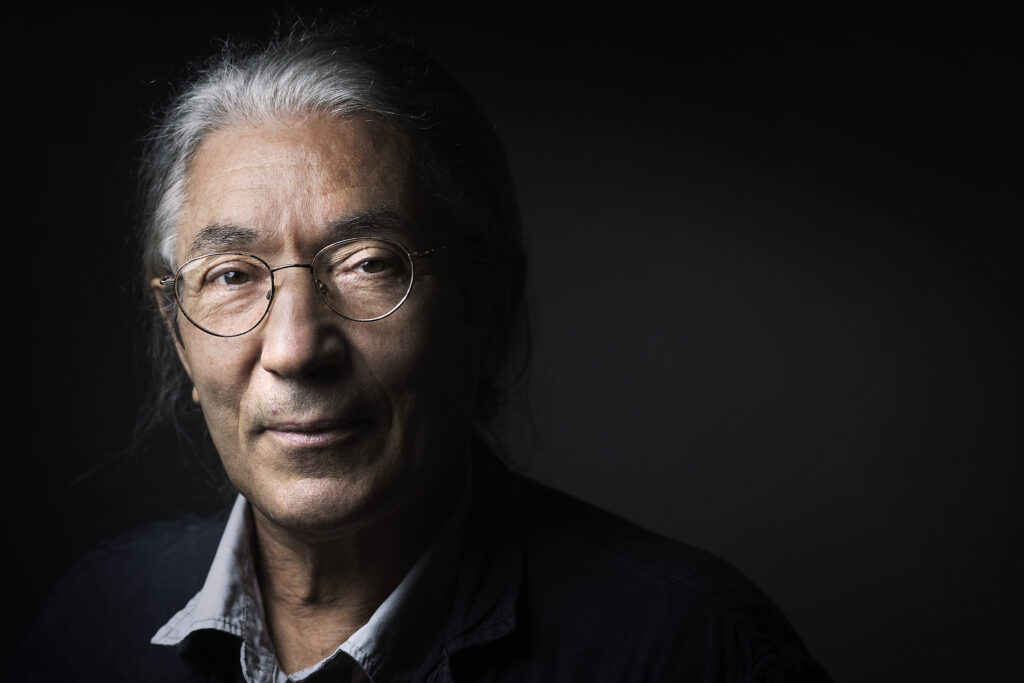
Algerian prosecutors have requested a 10-year prison sentence for French-Algerian writer Boualem Sansal, accused of undermining the country’s territorial integrity, local media reported Thursday.Sansal, a prominent figure in North African modern francophone literature, is known for his criticism of Algerian authorities as well as of Islamists.The 80-year-old was detained in November upon arrival at Algiers airport, at a time of growing tensions between France and its former colony.A verdict in the case, which has received widespread attention in France, is expected on March 27.Relations between France and Algeria have deteriorated since President Emmanuel Macron in July 2024 expressed support for Morocco’s autonomy plan for the disputed territory of Western Sahara.The former Spanish colony is mostly controlled by Morocco but claimed by the Algeria-backed pro-independence Polisario Front, which seeks a UN-backed self-determination referendum that has never materialised since a 1991 ceasefire.Macron said Thursday he hoped for “a swift resolution” so that Sansal could “regain his freedom”.”We are dealing with a great writer, who is also ill,” Macron told reporters in Brussels, saying he trusted that Algerian President Abdelmadjid Tebboune would appreciate that the case had little basis.According to the Algerian media outlet TSA, Sansal was charged with “affecting national unity, insulting a constitutional body, practices of a nature likely to harm the national economy, and possession of videos and publications threatening the security and stability of the country”. Prosecutors accuse him of making statements undermining the country’s territorial integrity.In an October interview with the far-right French media outlet Frontieres, Sansal said France had reduced Moroccan territory to the benefit of Algeria during its colonisation of North Africa.According to French newspaper Le Monde, the comments infuriated authorities in Algeria.- Health concerns -At a court near Algiers, Sansal on Thursday denied any intention of attacking Algeria, the newspaper Echorouk reported. He said that he had only “expressed an opinion like any Algerian citizen”.He admitted that he had not considered the fact that his comments could be considered as attacks on Algerian institutions, and said that he is an “Algerian who loves his country”, Echorouk said.It added that Sansal had no lawyer and “preferred to act in his own defence”.Sansal’s French lawyer, Francois Zimeray, last week said his client had neither proper access to lawyers nor to medical care, accusations the authorities denied.In 2015, Sansal won the Grand Prix du Roman of the French Academy, the guardians of the French language, for his book “2084: The End of the World”, a dystopian novel set in an Islamist totalitarian world in the aftermath of a nuclear holocaust.

Stocks fall, oil prices rise in choppy trade after Fed decision

Wall Street stocks slipped Thursday after the US Federal Reserve sought to calm fears over President Donald Trump’s tariffs, while eurozone equities slumped.Meanwhile, oil prices jumped and gold hit a new record high on continued geopolitical tensions — particularly concerning Gaza and Yemen — and fresh US sanctions on Iranian oil.All three major indices on …

Stocks fall, oil prices rise in choppy trade after Fed decision Read More »

Hamas fires at Tel Aviv in first riposte to deadly Israel assault

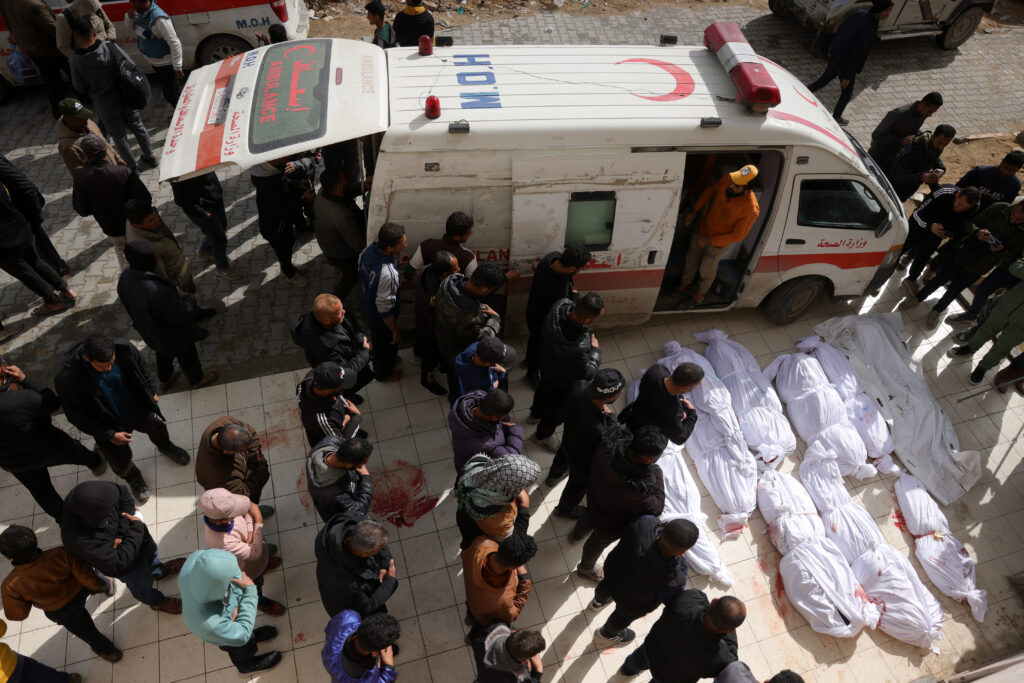
Hamas said it fired rockets at Israeli commercial hub Tel Aviv on Thursday in its first military response to the growing civilian death toll from Israel’s resumption of air and ground operations in Gaza.Israel said it had closed off the territory’s main north-south route as troops expanded the ground operations they resumed on Wednesday.Gaza’s civil defence agency said 504 people had been killed so far in the Israeli assault this week, including more than 190 children.The armed wing of Hamas, the Ezzedine al-Qassam Brigades, said it fired rockets at Tel Aviv in response to Israel’s “massacres” of Gaza civilians.The Israeli army said it intercepted one projectile fired from Gaza and that two others struck an uninhabited area.After weeks of stalemate, Israel resumed its air campaign early Tuesday with a wave of deadly strikes that drew widespread condemnation.The offensive shattered a relative calm that had pervaded in the war-ravaged Palestinian territory since a ceasefire took hold on January 19.US President Donald Trump “fully supports” Israel’s deadly resumption of air and ground operations in Gaza, White House Press Secretary Karoline Leavitt told reporters on Thursday when asked if he was trying to get a Gaza ceasefire back on track.At the Indonesian Hospital in northern Gaza, grieving families knelt by the bodies of their loved ones enveloped in blood-stained white shrouds.”We want a ceasefire! We want a ceasefire!” one of them, Mohammed Hussein, told AFPTV, appealing for the international community to stop the killing.”We are defenceless Palestinian people,” he added.On Thursday, the Israeli army banned traffic on the territory’s main north-south artery.- Palestinians flee south -Palestinians were seen fleeing south along Salaheddin Road near the Nusseirat refugee camp atop donkey-drawn carts piled high with belongings.Army spokesman Avichay Adraee said on X that Israeli troops “have begun a targeted ground operation in the central and southern Gaza Strip in order to expand the security zone between the northern and southern parts”.Movement along Salaheddin Road between the north and south of the Gaza Strip is prohibited “for your safety”, he said, adding travel south along the coast was possible but without clarifying if movement north was banned.The army warned people to evacuate Bani Suheila before a strike on militants “firing rockets from populated areas”.Government spokesman David Mencer said Israel controlled central and southern Gaza and was “expanding the security zone” and creating a buffer between the north and south.An official from Gaza’s interior ministry said the Israeli army had closed what it calls Netzarim Junction, on Salaheddin Road just south of Gaza City, on Wednesday evening.The official said Israeli tanks had deployed at the junction, where the road artery crosses Israel’s main supply route, “following the withdrawal of American special security forces yesterday (Wednesday) morning”. He was referring to American private security contractors deployed in February after the pullback of Israeli forces under the terms of the January ceasefire.The first stage of the ceasefire expired early this month amid deadlock.Israel rejected negotiations for a second stage, demanding the return of all remaining hostages under an extended first stage, which Hamas dismissed as an attempt to renegotiate the original deal.The army said later it had killed Rashid Jahjouh, the head of Hamas’s internal security agency, in an air strike on Gaza.- ‘Inhumane ordeals’ -The head of the UN agency for Palestinian refugees, UNRWA, on Thursday deplored “an endless unleashing of the most inhumane ordeals” on the people of Gaza since Israel resumed its military offensive.”Israeli Forces bombardment continues from air & sea for the third day,” Philippe Lazzarini wrote on X. “People in Gaza are again & again going through their worst nightmare.”Iran’s supreme leader Ayatollah Ali Khamenei called Israel’s latest strikes on Gaza a “catastrophic crime” and said the United States “shares responsiblity”.The war began with Hamas’s 2023 attack on Israel, which resulted in 1,218 deaths, mostly civilians, according to Israeli figures.The overall death toll in Gaza since the start of the war stands at 49,617, according to the Hamas-run territory’s health ministry.A worker for the UN Office for Project Services (UNOPS) was killed on Wednesday, in what the Gaza health ministry said was an Israeli strike on the agency’s headquarters in Deir el-Balah.British Foreign Secretary David Lammy called for a “transparent investigation” into the strike on the UN compound in which a UK citizen was among five wounded.burs-dv/ami

Trump ‘fully supports’ Israeli actions in Gaza: White House

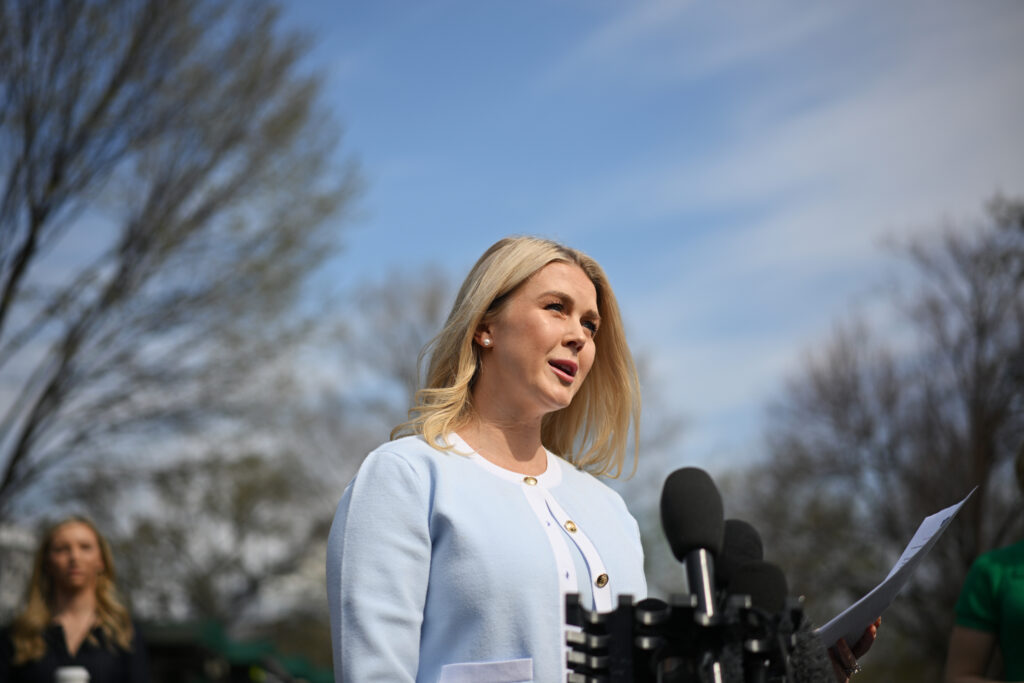
US President Donald Trump “fully supports” Israel’s deadly resumption of air and ground operations in Gaza, White House Press Secretary Karoline Leavitt said Thursday, blaming Hamas for the violence.”He fully supports Israel and the IDF and the actions that they’ve taken in recent days,” Leavitt told reporters when asked if Trump was trying to get a Gaza ceasefire back on track.”The president made it very clear to Hamas that if they did not release all of the hostages there would be all hell to pay, and unfortunately, Hamas chose to play games in the media with lives.”Leavitt said the situation was “completely the fault of Hamas” for their October 7, 2023 attack on Israel, adding that Trump wants “all of those hostages” seized by Palestinian militants to be released.Gaza’s civil defense agency said 504 people had been killed so far in the Israeli assault, including more than 190 children. Its previous death toll was at least 470.Israel resumed its air campaign early Tuesday with a wave of deadly strikes, shattering a relative calm that had pervaded in the war-ravaged Palestinian territory since a ceasefire took hold on January 19.Hamas said it fired rockets at Israeli commercial hub Tel Aviv on Thursday in its first military response to the growing civilian death toll.Israel said it had closed off the territory’s main north-south route as troops expanded the ground operations they resumed on Wednesday.

German foreign minister on Syria visit reopens Damascus embassy

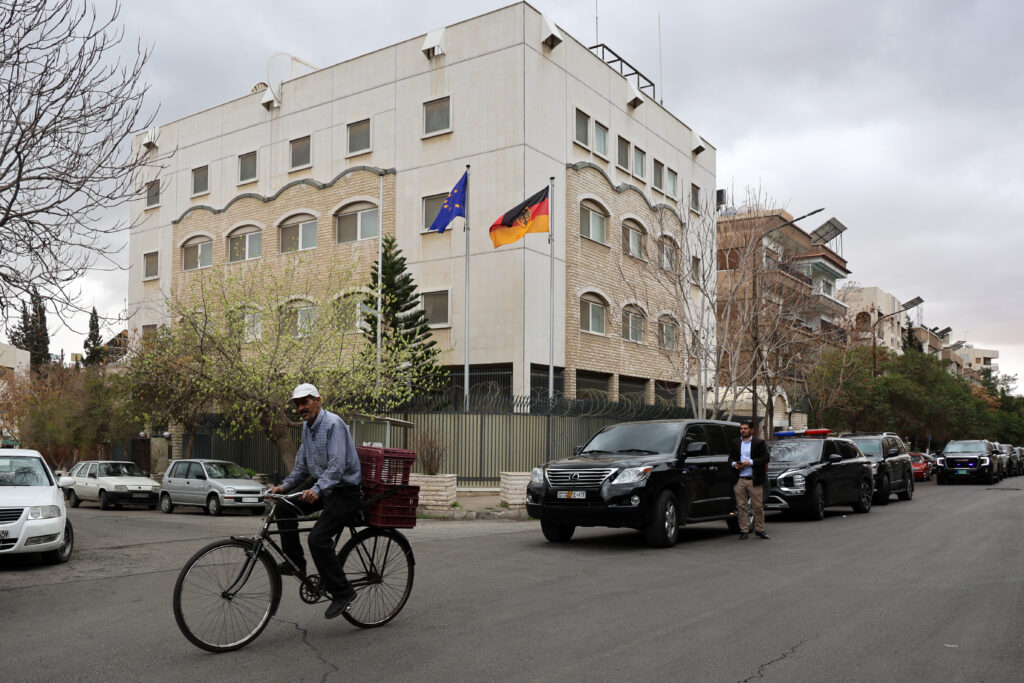
Germany’s Foreign Minister Annalena Baerbock officially reopened her country’s embassy in war-ravaged Syria during a one-day visit to Damascus on Thursday.Baerbock reopened the mission, which closed in 2012 amid the Syrian civil war, on her second visit there since the fall of president Bashar al-Assad over three months ago.Her trip also came weeks after sectarian massacres claimed more than 1,500 lives on Syria’s Mediterranean coast — the heartland of Assad’s Alawite minority.”The horrific outbreaks of violence two weeks ago have caused a massive loss of trust,” said Baerbock. “The targeted killing of civilians is a terrible crime.”She called on the transitional government of interim president Ahmed al-Sharaa to “control the actions of the groups within its own ranks and hold those responsible accountable”.But she stressed that “we want to support the Syrians together with our European partners and the United Nations” as they rebuild their country.She later met with Sharaa and interim foreign minister Assaad al-Shibani, the Syrian presidency said.Germany on Monday announced 300 million euros ($325 million) for reconstruction aid in Syria, as part of a donor conference that gathered total pledges of 5.8 billion euros.A German foreign ministry source said Berlin had officially reopened its embassy with an initially small diplomatic team working in Damascus.Consular affairs and visas would continue to be handled from the Lebanese capital Beirut for practical reasons and due to the security situation in Syria.Among EU countries, the Italian embassy has already resumed operations in Damascus. France has raised its flag on its embassy building but not yet conducted consular activities there. Spain also announced it had raised its flag over its embassy in mid-January.- ‘New start’ -The ministry source said: “Germany has a paramount interest in a stable Syria. We can better contribute to the difficult task of stabilisation on the ground.”We can build important diplomatic contacts and thus, among other things, push for an inclusive political transition process that takes into account the interests of all population groups.” The source added that “with our diplomats on the ground, we can now also once again engage in important work with civil society. And we can respond directly and immediately to serious negative developments”.Baerbock in her statement warned Syria’s interim authorities that a “new start” with Europe was conditional on it delivering security to all Syrians, regardless of faith, gender or ethnicity. Many Syrians “are scared that life in the future Syria will not be safe for all Syrians”, she said.In the days after March 6, Syria’s coast was gripped by the worst wave of violence since Assad’s overthrow. According to the Syrian Observatory for Human Rights, security forces and allied groups killed more than 1,500 civilians, most of them Alawites, the minority to which Assad belongs. Since Assad’s overthrow, Israel has launched hundreds of strikes on military sites in Syria, arguing the weapons must not fall into the hands of the new authorities whom it considers jihadists. It has also deployed troops to a UN-patrolled buffer zone on the Golan Heights.Baerbock said “the influence of foreign actors has brought nothing but chaos to Syria in the past.”Even today, attacks on Syrian territory threaten the country’s stability. All sides are called upon to exercise maximum military restraint and not to torpedo the intra-Syrian unification process.”