

AFP Asia Business
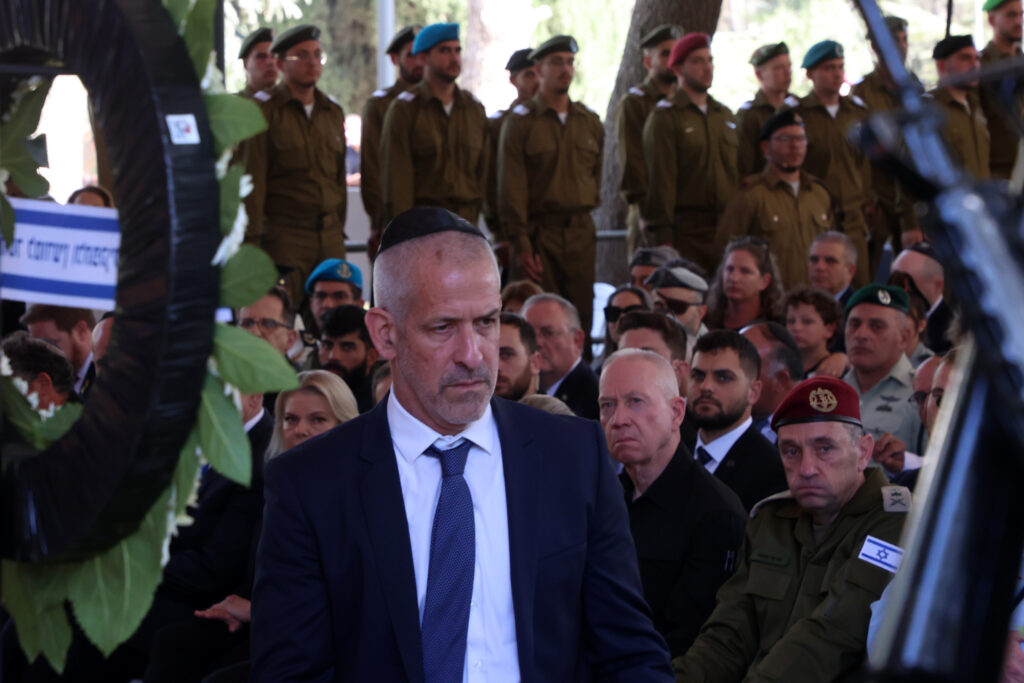
Ronen Bar: ex-Shin Bet chief who incurred right-wing wrath
The days of Ronen Bar as Israel’s Shin Bet chief were already numbered after Hamas’s deadly attack on October 7, 2023, having hinted he would resign to take responsibility for failing to prevent it. But he was sacked on Friday before he could depart himself, after incurring the wrath of the country’s right wing over his positions, including on the attack.The 59-year-old, with a salt and pepper buzz cut and beard, rose through the ranks to lead the internal security agency after three decades.But he courted anger for speaking of “Jewish terrorism” and opening investigations that targeted those in power after his October 2021 appointment by the previous government.Prime Minister Benjamin Netanyahu cited a “persistent loss of professional and personal trust” for Bar’s dismissal, due to take effect by 10 April. Bar, an Arabic speaker, was a former member of the Israeli army’s elite Sayeret Matkal unit, like Netanyahu, but their relationship was strained.In a letter made public late Thursday, Bar described his dismissal as being motivated by Netanyahu’s “personal interests”.The security chief referred to the conclusions drawn by his agency’s probe into the unprecedented Hamas attack on October 7, 2023, which said “a policy of quiet had enabled Hamas to undergo massive military buildup”.He also pointed to alleged payments from Qatar to people close to the leader, as he vowed to defend himself to the “appropriate bodies”.- Operations -Bar joined the internal security service in 1993 after obtaining degrees in political science and philosophy from Tel Aviv University and a master’s degree in public administration from Harvard, according to Israeli media reports.Born in 1965, Bar began as a field officer in the Shin Bet’s operational unit, taking part in numerous operations in the Gaza Strip, the occupied West Bank and Lebanon. In 2011, he was appointed head of the Shin Bet’s Operations Division and took charge of the mission that led to the assassination of Ahmed Jabari, a leader of Hamas’s military wing.Three years later, he led search efforts for three Israeli teenagers kidnapped in the occupied West Bank and the hunt for their killers after their bodies were found.In 2018 he was promoted to number two in the organisation. Then in late 2021, he took over as head of the Shin Bet for a five-year term.His positions soon created opposition from within Netanyahu’s government, which came back to power at the end of 2022, backed by the country’s extreme right.Bar claimed to fight against “Jewish terrorism” which he said helped fuel “Palestinian terrorism”, according to his comments quoted by the Israeli media. – Investigations -In 2023, Bar warned far-right National Security Minister Itamar Ben Gvir that police action in Israeli-annexed East Jerusalem was creating a feeling of collective punishment and harassment among Palestinian residents.He also asked Ben Gvir not to go to the Temple Mount, also known as the Haram al-Sharif, a highly sensitive site in the Old City of Jerusalem revered by both Muslims and Jews. The minister ignored his warnings.In March 2023, amid protests against judicial reforms, he told Netanyahu there was a link “between security threats and the social situation in Israel”, according to remarks reported by Israeli media.His fate was ultimately sealed by implicating the government in the Hamas attack on October 7 and a probe into the “Qatargate” affair, said Yossi Shain, a professor of political science at Tel Aviv University.The affair saw senior Netanyahu advisers accused of being paid to promote Qatari interests.Bar had become the right-wing’s “bete noire” and his dismissal was “a promise (Netanyahu) had made to Itamar Ben Gvir and Bezalel Smotrich to secure his coalition”, said Shain, referring to Israel’s far-right Finance Minister.Ben Gvir was reinstated as national security minister on Wednesday after leaving the government in January in protest against a truce agreed with Hamas.That decision came three days after Netanyahu announced Bar’s imminent dismissal.

Forbidden K-pop to centre stage: North Koreans set for music debut
Growing up in North Korea, Hyuk’s childhood was about survival. He never listened to banned K-pop music but, after defecting to the South, he’s about to debut as an idol.Hyuk is one of two young North Koreans in a new K-pop band called 1Verse — the first time that performers originally from the nuclear-armed North …
Forbidden K-pop to centre stage: North Koreans set for music debut Read More »
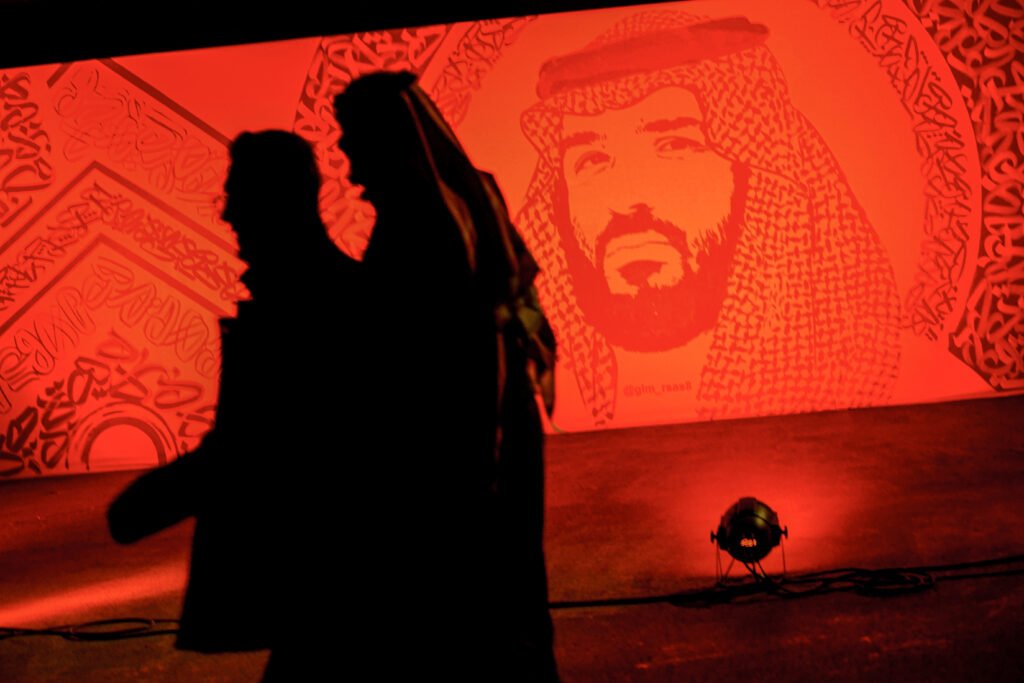
Saudi Arabia frees prisoners in apparent easing of crackdown
Last year, Saudi teacher Asaad al-Ghamdi was given 20 years in prison for criticising the government online — one of a wave of heavy sentences that drew international condemnation.Last month he was unexpectedly released, joining dozens of political prisoners to be freed as the authorities seek to improve their image overseas. According to an AFP tally, more than 30 dissidents, many jailed for social media posts, have been released since December, in an apparent rollback of “bad laws” singled out by Crown Prince Mohammed bin Salman, Saudi Arabia’s de facto ruler.”Some judges think they’re pleasing the government by issuing 30-year prison sentences for a tweet,” one source close to the government told AFP.”The crown prince did not ask for that and he is not pleased with it.”Even fringe figures with small online followings have been handed multi-decade sentences by Saudi Arabia’s Specialised Criminal Court, which handles terrorism cases.While there are signs of an apparent shift, many dissidents remain behind bars. Analysts have said recent releases are likely part of a bid by Saudi rulers to soften their image abroad, rather than of any systemic reform. Among those swept up in the crackdown was Salma al-Shehab, a University of Leeds PhD student and mother of two, who received a 34-year term in 2022 before it was commuted to four years in 2024.Shehab, who had posted in support of women’s rights to her 2,600 followers on X, then Twitter, was released last month after serving the reduced term.Mother-of-five Nourah al-Qahtani, whose anonymous X account had fewer than 600 followers, saw an initial six-and-a-half-year sentence jump to 45 years on appeal in 2022.Fitness blogger Manahel al-Otaibi received an 11-year sentence in January 2024 for, according to rights groups, challenging male guardianship laws and requirements for women to wear the body-shrouding abaya robe.- Royal shame -The draconian punishments jarred with efforts to repackage ultra-conservative Saudi Arabia, the world’s biggest oil exporter, as a business and tourism hub.But the tide appeared to turn after Ghamdi’s brother Mohammed, a retired teacher who had criticised the government online, received the death sentence in 2023.Prince Mohammed later told Fox News he was “ashamed” and “not happy” about the case, saying Saudi Arabia was working to change certain “bad laws”.That year, Prince Mohammed set up a committee to review political cases, some of whom were dealt “severe injustice”, said the source.Last August, Mohammed al-Ghamdi’s death sentence was overturned on appeal, although he was sentenced to 30 years jail the following month.Among recent releases was rights defender Mohammed al-Qahtani who was freed in January, more than two years after his 10-year sentence expired.Also freed were university student Malik al-Ahmed and preacher Mohammed al-Habdan, both arrested during a widespread round-up in September 2017.”What we’re seeing now is the result of this committee’s ongoing work to ensure justice,” the source said, speaking on condition of anonymity.- Khashoggi killing -Saudi Arabia achieved worldwide notoriety after the murder and dismemberment of US-based Saudi journalist Jamal Khashoggi, a government critic, at the Saudi consulate in Istanbul in 2018.A UN probe accused Saudi Arabia of organising the killing, and US intelligence agencies alleged that Prince Mohammed approved the operation. Riyadh denied the accusation and blamed rogue operatives.The furore eventually faded and Saudi Arabia has since hosted several Western leaders.Umar Karim, a Saudi expert at Britain’s University of Birmingham, said conditions are “ripe for sending a positive gesture to Saudi dissidents outside the kingdom” now that Prince Mohammed and his father King Salman, crowned in 2015, have consolidated their power.”As the kingdom is emerging as a critical player in global politics… improving its reputation in the human rights domain seems to be a pertinent strategy.”After repairing relations with Iran and hosting US-Russia and US-Ukraine talks, prisoner releases “generate further goodwill”, Karim said.But many critics remain behind bars, including prominent clerics Salman al-Awdah and Awad al-Qarni, both detained in 2017.Awdah’s son Abdullah Alaoudh, who heads the Washington-based Middle East Democracy Center, welcomed the releases, saying he hoped Riyadh would end “arbitrary detention and the arrest of prisoners of conscience once and for all”.In a televised interview this month, state security chief Abdul Aziz bin Mohammed Al-Howairini assured exiled dissidents they could return “without punishment”.But cleric Saeed bin Nasser al-Ghamdi, the brother of Asaad and Mohammed, who lives in self-imposed exile in London, said a total overhaul was needed before critics could return.The absolute monarchy does not tolerate political opposition, has no elected parliament and judges are appointed by royal decree.Saudi Arabia needs “comprehensive reforms… including political participation, judicial independence and general freedoms without exception”, Ghamdi said.”Otherwise any steps would remain superficial.”
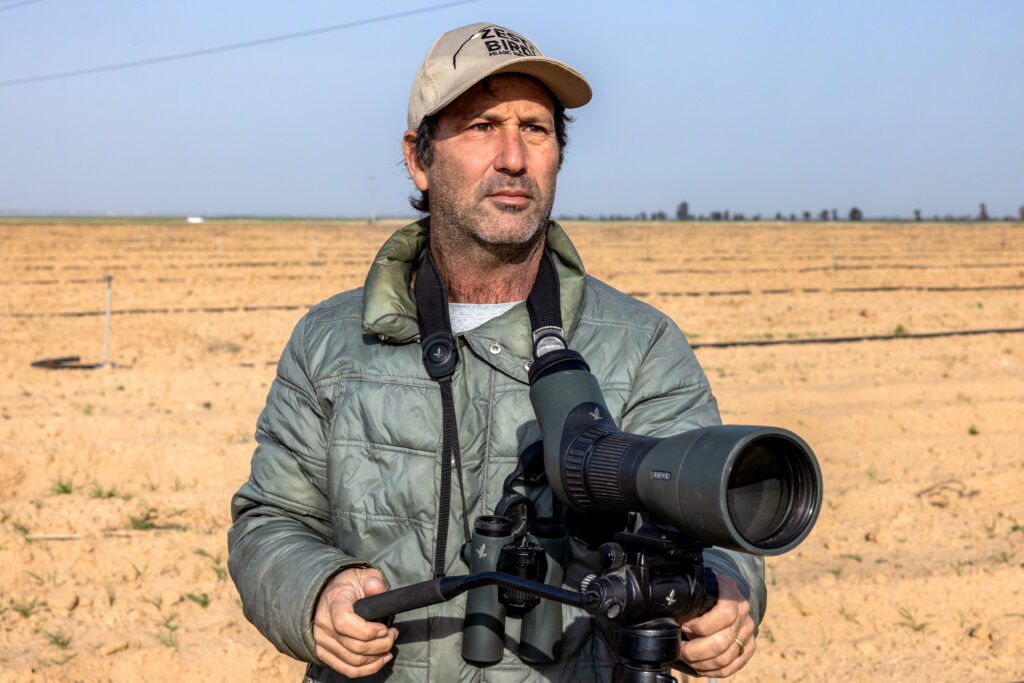
The watchers who prey on Israel’s falcon poachers
For the volunteer watchers scanning southern Israel’s wheatfields, protecting migratory falcons from poachers is a highly coordinated security operation.The raptors may top the food chain in the wild, but here the predators can themselves become the prey.Many protected species of migratory birds spend their winters in this agricultural area close to the Gaza Strip.And some species are big business. A single falcon can fetch up to tens of thousands of dollars on the black market, especially in Gulf countries where falconry is a treasured tradition.Meidad Goren, director of the Ramat Hanegev Birding Center, told AFP that poaching has soared in recent years.Falcons are captured alive by Bedouin Arabs living in Israel’s Negev desert to be domesticated or smuggled to neighbouring countries, he said.Using binoculars to observe one bird perched on a nearby pylon, Goren noted: “It has a ring. It’s a peregrine falcon that was captured and escaped.”The raptors feed on small birds attracted to the wheat, waiting motionless and watching from power lines that cross the fields.The number of cases of birds of prey, especially falcons, found with ties around their legs, sometimes tangled in power lines, led Goren to set up groups of volunteer watchers.The area is also patrolled by rangers from the Israel Nature and Parks Authority.- ‘Like watching a child’ -This winter, a saker falcon took up residence around Kibbutz Urim.The saker falcon is an endangered species popular with falconers in eastern Europe, Central Asia and Arab states. After observing several attempts by poachers to capture the bird, Goren put in place what he calls a “special surveillance system”.”Dozens of people, ornithologists, nature lovers, retirees, guides, farmers,” responded to his appeal for help to reinforce regular volunteer patrols, said Goren. His centre operates under both the Israel Nature and Parks Authority and the Society for the Protection of Nature in Israel.Mirit Keshales is 47 and a regular “falcon guardian” volunteer. “It’s really like watching a child, a very methodical organisation with a well-defined schedule… we make sure someone is always there during the day,” she said.The poachers come mostly from Bedouin villages, said Ofir Bruckenstein, a ranger with the Israel Nature and Parks Authority.”For them, hunting with falcons and owning falcons are cultural practices rooted in their traditions,” he said.”Owning a falcon and displaying it in their living space is a symbol of status and prestige.”- Sold for $19,000 -Bruckenstein criticised what he called lenient penalties for poaching, in particular of falcons, saying fines were of “a few thousand shekels”, even if repeat offenders faced jail terms. The especially lucrative black market for falcons smuggled via Jordan and Egypt to the Gulf encourages the illegal trade, he added.”Saker falcons and peregrine falcons are easily sold for 50,000 or 70,000 shekels ($14,000 to $19,000),” he said.Falconry is inscribed on UNESCO’s list of Intangible Cultural Heritage, and is hugely popular in the Gulf.In the United Arab Emirates, passports for falcons were introduced in 2002 in an effort to combat smuggling, and tens of thousands have since been issued.But poaching remains a regional problem in the Middle East, and the demand for falcons captured from the wild has exploded in recent years, with the growth in clubs which stage contests for beauty and falconry.While falcons are farmed, especially in the UAE which permits only captive-bred and registered birds to be used in sport falconry, wild falcons are considered better hunters and are thus more desirable.”They lack falcons because those that arrive (in the Gulf region) in winter have nearly all been caught. That’s why they are now trying to capture them elsewhere,” said Goren.AFP contacted several international falconry organisations based in Europe, but they declined to comment on the illegal trade to Gulf countries, citing the “sensitivity of the issue”.Meanwhile, the watchers in southern Israel do what they can to prevent more of these beautiful birds from falling into human hands.