AFP Asia Business

Israel defence minister threatens to annex parts of Gaza

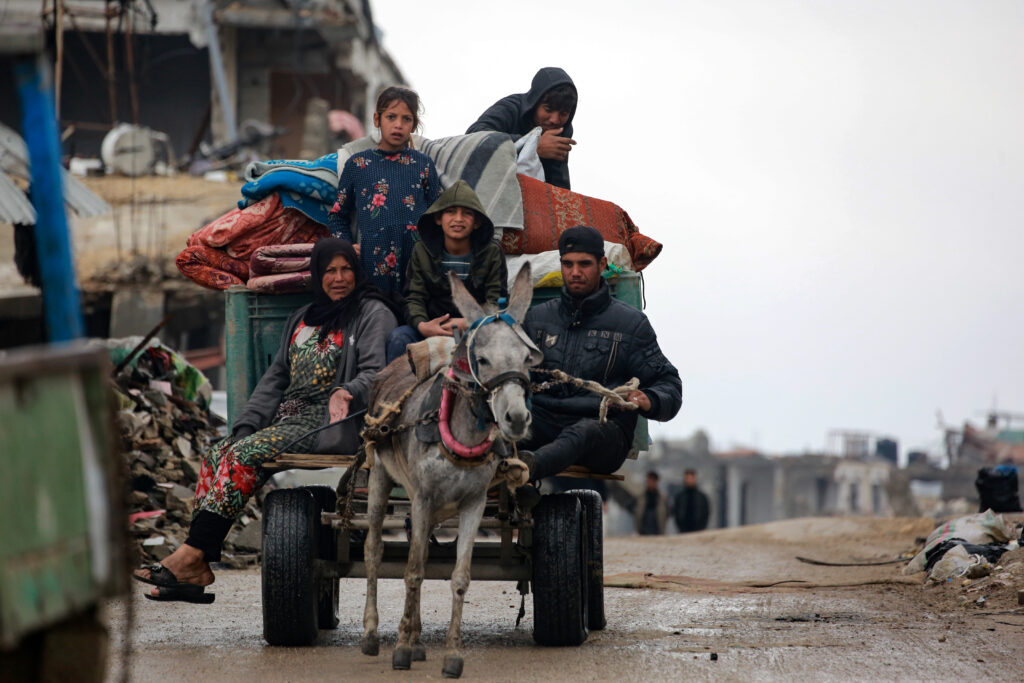
Israeli Defence Minister Israel Katz threatened Friday to annex parts of the Gaza Strip unless Hamas militants release the remaining Israeli hostages held in the war-battered Palestinian territory.The warning came as Israel pressed the renewed assault it launched on Tuesday, shattering the relative calm since a January 19 ceasefire.A Palestinian source close to the ceasefire talks told AFP late Friday that Hamas had received a proposal from mediators Egypt and Qatar for re-establishing a truce and exchanging hostages for Palestinian prisoners “according to a timeline to be agreed upon”.The source said the proposal “includes the entry of humanitarian aid” into Gaza, which has been blocked by Israel since March 2.Israel resumed intensive bombing of Gaza on Tuesday, citing deadlock in indirect negotiations on next steps in the truce after its first stage expired this month.The territory’s civil defence agency said Israeli strikes killed 11 people on Friday — three in pre-dawn strikes and eight more during the daytime. On Thursday, it had reported a death toll of 504 since the bombardment resumed, one of the highest since the war began more than 17 months ago with Hamas’s attack on Israel.In a statement Friday, Katz said: “I ordered (the army) to seize more territory in Gaza… The more Hamas refuses to free the hostages, the more territory it will lose, which will be annexed by Israel”.Should Hamas not comply, Katz also threatened “to expand buffer zones around Gaza to protect Israeli civilian population areas and soldiers by implementing a permanent Israeli occupation of the area”.The military urged residents of the Al-Salatin, Al-Karama and Al-Awda areas of southern Gaza to evacuate their homes Friday ahead of a threatened strike. AFP images from northern Gaza showed donkey carts piled high with belongings as residents fled their homes along rubble-strewn roads. – ‘Pressure points’ -Israeli forces said Friday that they had killed the head of Hamas’s military intelligence in southern Gaza in a strike a day earlier, the latest official targeted in recent days. Israel’s resumption of large-scale military operations, coordinated with US President Donald Trump’s administration, drew widespread condemnation.The foreign ministers of Germany, France and Britain called for an immediate return to a Gaza ceasefire in a joint statement late Friday, calling the new strikes “a dramatic step backward”.Turkey’s foreign ministry condemned what it called a “deliberate” attack by Israel on a Turkish-built hospital in Gaza.”The IDF (military) struck terrorists in a Hamas terrorist infrastructure site that previously had served as a hospital in the central Gaza Strip,” a military spokesperson told AFP in response to a question about the Turkish accusations.In a statement, the health ministry in Hamas-run Gaza condemned “the heinous crime committed by the occupation (Israel) in bombing the Turkish-Palestinian Friendship Hospital”, calling it “the only hospital designated for the treatment of cancer patients in the Gaza Strip”.The ministry said Israeli forces had used the hospital as “a base for its forces throughout the period of its occupation of the so-called Netzarim axis”.Israeli President Isaac Herzog expressed worry about the government’s actions in a video statement Thursday, saying it was “unthinkable to resume fighting while still pursuing the sacred mission of bringing our hostages home”. Thousands of protesters have rallied in Jerusalem in recent days, accusing Prime Minister Benjamin Netanyahu of resuming military operations without regard for the safety of the hostages.Of the 251 hostages seized during Hamas’s October 7, 2023 attack, 58 are still held by Gaza militants, including 34 the Israeli military says are dead.- Projectiles from Gaza, Yemen -Israel’s military said late Friday that it had intercepted a missile launched from Yemen, after air raid sirens sounded in Jerusalem and parts of central Israel.It is the fourth missile launched from Yemen towards Israel since Tuesday, after Huthi rebels threatened to escalate attacks in support of Palestinians following Israel’s renewed attacks on Gaza.In a statement early Saturday, the Iran-backed group said it had “targeted Ben Gurion airport” near Tel Aviv with a ballistic missile.Israeli airspace would remain unsafe “until the aggression against Gaza stops”, the group said in the statement.Earlier on Friday, Israel’s military said it intercepted two projectiles fired from northern Gaza, which Hamas’s armed wing said was in response to “massacres against civilians”.Katz said Israel would “intensify the fight with aerial, naval and ground shelling as well as by expanding the ground operation until hostages are freed and Hamas is defeated, using all military and civilian pressure points”.He said these included implementing Trump’s proposal for the United States to redevelop Gaza as a Mediterranean resort after the relocation of its Palestinian inhabitants to other Arab countries.


Global stocks mostly slump as Trump tariffs hit confidence

Major global stock markets mostly suffered another difficult day Friday, with heightened concerns over the potential fallout from US President Donald Trump’s tariff agenda blunting confidence.Gold held firm after hitting a new record Thursday. Oil prices picked up slightly amid simmering tensions in the crude-heavy Middle East, where Israel threatened to annex part of the …

Global stocks mostly slump as Trump tariffs hit confidence Read More »

French IS jihadist who held journalists gets life sentence

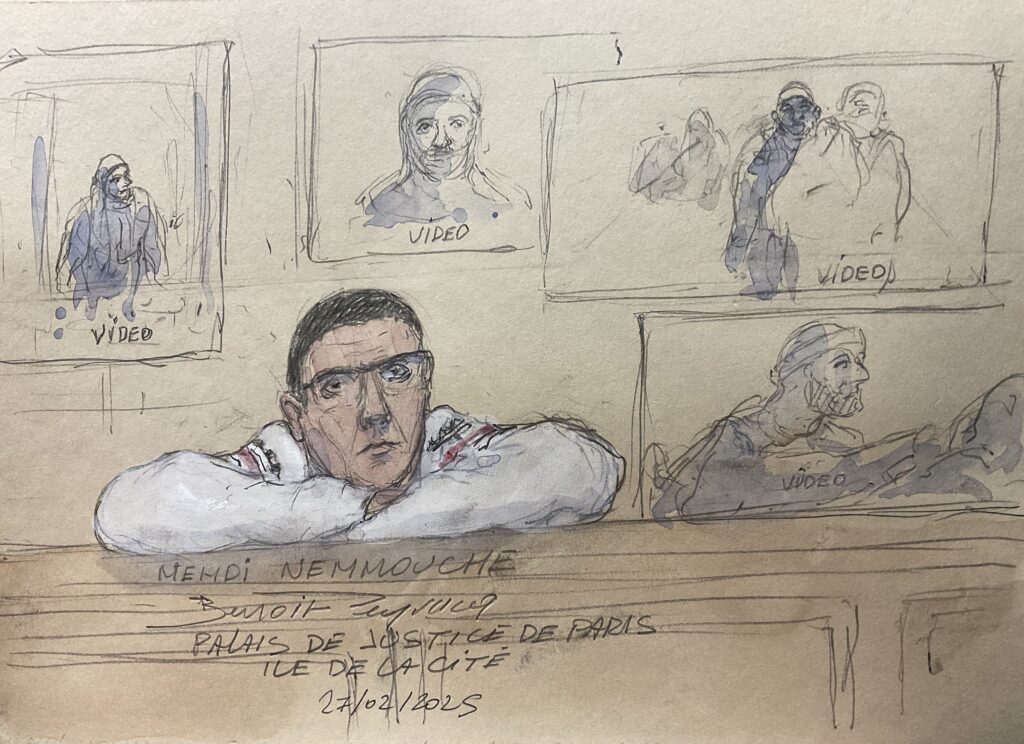
A French court on Friday sentenced a French jihadist to life in prison for holding four journalists captive more than a decade ago in war-torn Syria.Mehdi Nemmouche, 39, was convicted of having held the French reporters hostage for the Islamic State jihadist group from June 2013 to April 2014.The sentence carries a minimum term of 22 years before he is eligible for parole.All four journalists during the trial said they clearly recognised Nemmouche’s voice and manner of speech as belonging to a so-called Abu Omar, who terrorised them and made sadistic jokes while they were in captivity.Nemmouche denied ever being their jailer, only admitting in court that he was an IS fighter in Syria.From the beginning of the trial last month, he has claimed only to have fought against the forces of former president Bashar al-Assad, who Islamists previously linked to Al-Qaeda helped topple in December.”It’s through terrorism that the Syrian people freed themselves from dictatorship,” he claimed on Friday morning ahead of the verdict.”Yes I was a terrorist and I will never apologise for that.”Nemmouche has said he joined Al-Qaeda’s Syria affiliate and then IS — both listed as “terrorist” in the European Union — while in the Middle Eastern country.Clutching notes on Friday morning, he cited a range of figures from German philosopher Friedrich Nietzsche to Russian President Vladimir Putin in a speech criticising the “West”, especially the United States.Nemmouche is already in prison after a Belgian court jailed him for life in 2019 for killing four people at a Jewish museum in May 2014, after he had returned from Syria.- Torture, mock execution -IS emerged in 2013 in the chaos that followed the outbreak of the Syrian civil war, slowly gaining ground before declaring a so-called caliphate in large parts of Syria and neighbouring Iraq.A US-backed offensive dealt the final blow to that proto-state in 2019.IS abducted and held hostage 25 Western journalists and aid workers in Syria between 2012 and 2014, publicly executing several of them, according to French prosecutors.Reporters Didier Francois and Edouard Elias, and then Nicolas Henin and Pierre Torres, were abducted 10 days apart while reporting from northern Syria in June 2013.They were released in April 2014.Henin alerted the authorities after he saw a facial composite of the presumed perpetrator of the May 2014 Brussels attack that looked very familiar.Henin, in a magazine article in September 2014, recounted Nemmouche punching him in the face and terrorising Syrian detainees. During the trial, he detailed the repeated torture and mock executions he witnessed while in captivity.- Jihadists presumed dead -Nemmouche, whose father is unknown, was brought up in the French foster system and became radicalised in prison before going to Syria, say investigators.The court also handed life sentences to two other jihadists tried in absentia because they are presumed dead.Belgian jihadist Oussama Atar, a senior IS commander, had already been sentenced to life over the 2015 terror attacks in Paris claimed by IS that killed 130 people, and the Brussels bombings by the group that took the lives of 32 others in 2016.The other defendant was French IS member Salim Benghalem, accused of having been jailer-in-chief of the hostages.The court also handed a 22-year sentence to Frenchman Abdelmalek Tanem, 35, accused of being one of the jailers. None of the journalists had recognised Tanem, who said he was a bodyguard for several IS leaders and slept in the basement of an eye hospital where they were held hostage, but claimed to have never seen them.But prosecutors argued he was clearly one of around 10 French-speaking IS jailers.The court also handed a 20-year sentence to Kais Al Abdallah, a 41-year-old Syrian jihadist accused of having helped abduct the journalists and of having been deputy in command in the Syrian city of Raqqa, all of which he denies.

Jaguar looks to woo younger, richer drivers with $160,000 Type 00

Jaguar’s ambition to seduce younger, richer drivers was on full display in Paris with a presentation of its newest prototype, the Type 00, which promises all-electric luxury… at a steep price.The low-slung, muscular-looking concept car presented to European reporters on Friday prefigures a production model expected mid-2026 at a base cost of 150,000 euros ($160,000).That’s …

Jaguar looks to woo younger, richer drivers with $160,000 Type 00 Read More »

Israel attorney general warns govt against naming new security chief

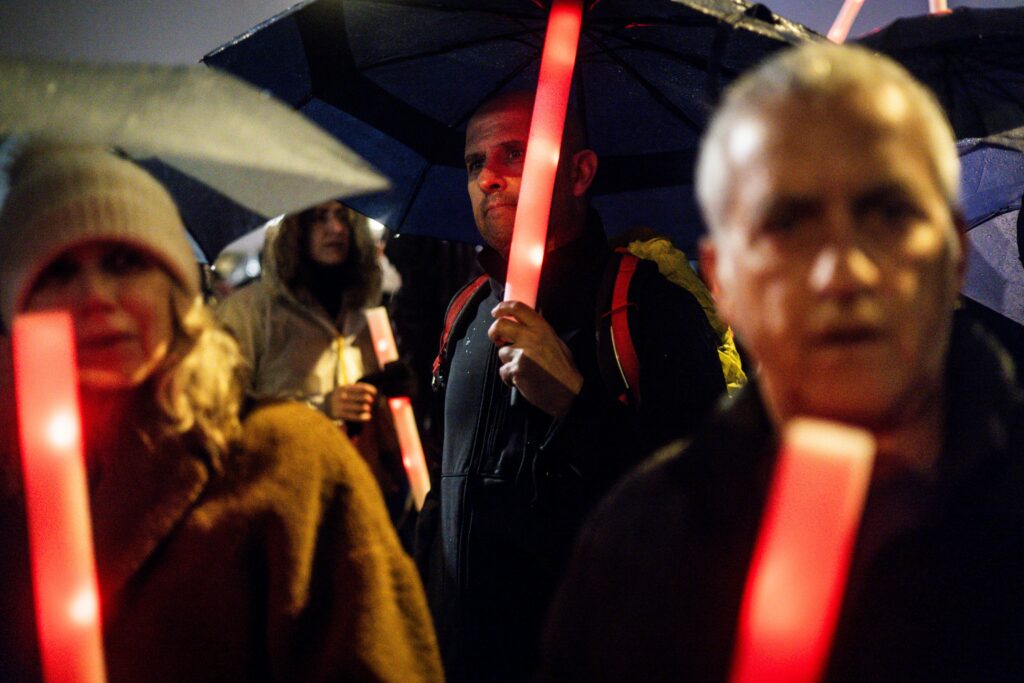
Israel’s attorney general said on Friday that Prime Minister Benjamin Netanyahu cannot name a new internal security chief, following a supreme court decision freezing the government’s bid to oust him.The unprecedented move to fire Shin Bet chief Ronen Bar has deepened divisions in the country while Israel resumes its military operations in the Gaza Strip.The top court’s decision earlier Friday came after opposition parties and a non-governmental organisation filed separate appeals following the government’s decision to sack Bar.”According to the decision of the Supreme Court, it is prohibited to take any action that harms the position of the head of the Shin Bet, Ronen Bar,” Attorney General Gali Baharav-Miara said in a message to Netanyahu published by a spokesperson. “It is prohibited to appoint a new head of Shin Bet, and interviews for the position should not be held.” In a post on X, Netanyahu insisted it was up to the government to decide who heads the domestic security agency. “There will be no civil war! The State of Israel is a state of law, and according to the law, the government of Israel decides who will be the head of the Shin Bet,” Netanyahu said.Shin Bet has acknowledged its own failure to prevent Hamas’s October 7, 2023 attack on Israel that started the Gaza war, but Bar has pointed to the need for a broader probe that would include the prime minister. Opposition leader Yair Lapid’s centre-right Yesh Atid party said it appealed Bar’s dismissal before the Supreme Court of Israel in the name of several opposition movements.Yesh Atid denounced what it called “a decision based on flagrant conflict of interest”.The Movement for Quality Government in Israel, an NGO, also appealed what it said was “an unlawful decision… posing a real risk to the national security of the State of Israel”.The separate legal appeals came after the government fired Bar in the early hours of Friday. Netanyahu has cited an “ongoing lack of trust” in him.The Shin Bet chief’s dismissal was to have been effective before April 10, making him the country’s first domestic intelligence agency chief to be fired.Bar was appointed by the previous Israeli government that briefly kept Netanyahu from power between June 2021 and December 2022.The attorney general, a critic of Netanyahu, is also under government scrutiny. Netanyahu’s office, citing a cabinet meeting agenda, said the government would meet on Sunday for a no confidence vote on Baharav-Miara, “due to her inappropriate behaviour and due to significant and prolonged differences between the government and the government’s legal adviser.” – ‘Qatargate’ -Thousands of Israelis braved cold and rainy weather on Thursday night to protest the moves against Bar and Baharav-Miara, demonstrating outside parliament and Netanyahu’s home in Jerusalem.Some spoke of a threat to democracy from Netanyahu’s policies.The opposition appeal highlighted what critics see as the two main reasons why Netanyahu moved against Bar.The first was his criticism of the government over the security failure that allowed Hamas’s attack to become the deadliest day in Israel’s history.The second was what Israeli media have dubbed “Qatargate” but which Netanyahu’s office has dismissed as “fake news”.The decision to sack Bar came “as Israel’s Security Agency is currently investigating the prime minister’s close associates… on suspicion of receiving money from entities directly linked to and acting on behalf of the State of Qatar”, the opposition appeal read.In a letter made public late on Thursday, Bar described his dismissal as motivated by Netanyahu’s “personal interests”.Friday’s appeal also mentioned that Bar’s dismissal took place after a Shin Bet investigation highlighting, according to the plaintiffs, “that the political leadership bears responsibility for the October 7 disaster”.In a video published Thursday, President Isaac Herzog deplored the government’s “controversial moves” that “deepened divisions” while Israel is still at war in the Gaza Strip.The tensions come against the backdrop of new Israeli attacks on Gaza since Tuesday and the reintegration into the government of one of Israel’s far-right figures, Itamar Ben Gvir.He had resigned as national security minister to protest the ceasefire with Hamas that took effect on January 19.

UN warns of ‘massive trauma’ for Gaza’s children amid renewed fighting

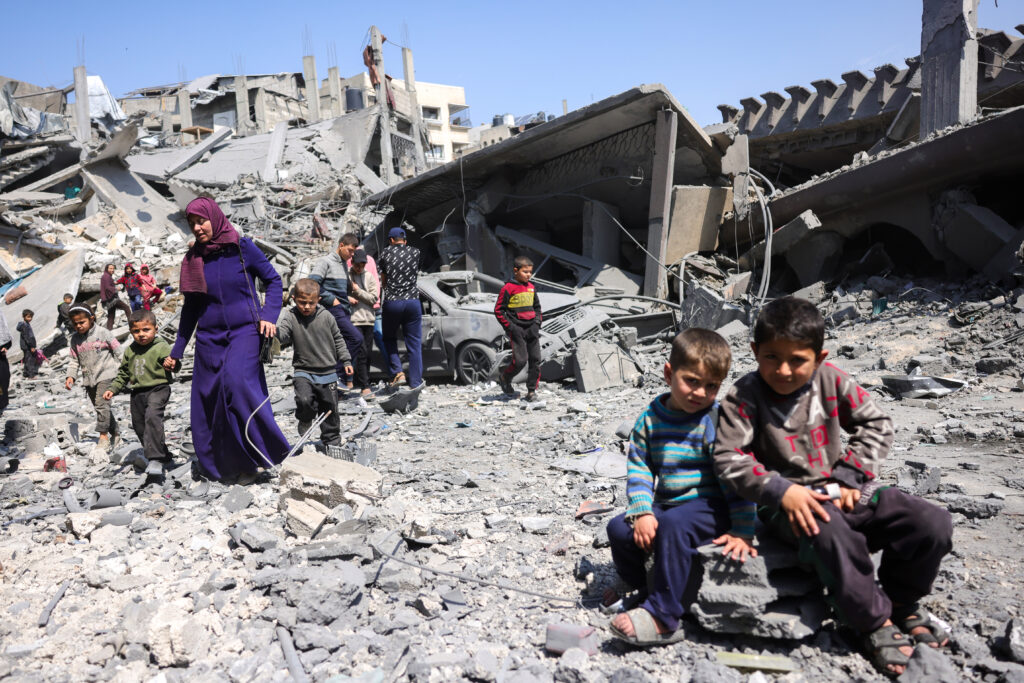
The UN warned Friday that all of Gaza’s approximately one million children were facing “massive trauma” as fighting in the war-ravaged territory resumed, and amid dire aid shortages.Humanitarians described an alarming situation in Gaza, amid a growing civilian death toll since Israel resumed aerial bombardment and ground operations this week after a six-week ceasefire.Sam Rose, the senior deputy field director in Gaza for the UN agency for Palestinian refugees UNRWA, highlighted the psychological shock for already traumatised children to one again find themselves beneath the bombs.This is a “massive, massive trauma for the one million children” living in the Palestinian territory, he told reporters in Geneva, speaking from Gaza. The breakdown of the ceasefire that took effect on January 19 comes as the population is already dramatically weakened from 15 months of brutal war sparked by Hamas’s deadly October 7, 2023 attack on Israel.”It’s worse this time,” Rose warned, “because people are already exhausted, they’re already degraded, their immune systems, their mental health, (and) populations on the verge of famine.”Children who had come back to school after 18 months out of school, now back in tents,… hearing the bombardment around them constantly.”It’s fear on top of fear, cruelty on top of cruelty, and tragedy on top of tragedy.”- ‘Nightmare’ -James Elder, a spokesman for the UN children’s agency UNICEF, said traumatised children usually only start to process their trauma when they begin returning to normalcy.”Psychologists would say our absolute nightmare is that they return home and then it starts again,” he told reporters.”That’s the terrain that we’ve now entered,” he said, warning that Gaza was the only “example in modern history in terms of an entire child population needing mental health support”.”That’s no exaggeration.”Gaza’s civil defence agency said 504 people had been killed since Tuesday, including more than 190 under the age of 18.The toll is among the highest since the war started more than 17 months ago with Hamas’s attack on Israel.It has also been a deadly period for humanitarians, with seven UNRWA staff killed just since the ceasefire broke down, bring the total number killed from that agency alone to 284 since the Gaza war began.A Bulgarian worker with another UN agency was also killed this week, as was a local staff member of Doctors Without Borders, the medical charity said Friday. – ‘Massive shortages’ -Humanitarians warned the situation on the ground has been made worse by Israel’s decision earlier this month to cut off aid and electricity to Gaza over the deadlock in negotiations to prolong the ceasefire. “We were able to bring in more supplies in during the six weeks of the ceasefire than … in the previous six months,” Rose said, warning though that that progress was “being reversed”.Currently, he said, there is only enough flour supply in Gaza for another six days.Asked about Israel’s charge that Hamas has diverted the more than sufficient aid inside Gaza, Rose said he had “not seen any evidence” of that.”There is no aid being distributed right now, so there is nothing to steal.”He warned though that if aid is not restored, “we will see a gradual slide back into what we saw in the worst days of the conflict in terms of looting … and desperate conditions among the population”.Elder meanwhile described the vital aid items that aid agencies were unable to bring into Gaza.”We’ve got 180,000 doses of vaccines a few kilometres away that are life-saving and are blocked,” he said. He also pointed to a “massive shortage” of incubators in Gaza even as pre-term births were surging.”We have dozens of them, again sitting across the border,” he said. “Blocked ventilators for babies.”

Peace hopes remain remote as Turkey’s Kurds mark ‘Newroz’

Three weeks after jailed PKK founder Abdullah Ocalan urged his militants to disband, Turkey’s Kurds were celebrating their Newroz New Year Friday with peace prospects still remote. The efforts to broker a solution to the decades-long Kurdish conflict have likely been complicated by the widespread unrest provoked by Wednesday’s arrest of Istanbul Mayor Ekrem Imamoglu, a key opposition figure. “The government is dragging the country into increasing violent upheaval with its silencing of the opposition,” said Tuncer Bakirhan, co-chair of the pro-Kurdish DEM, the third largest party in Turkey’s parliament. In Diyarbakir and the main cities in the Kurdish-majority southeast, thousands of people — women in traditional dresses, men in shawls — gathered to dance and celebrate Newroz, marking the arrival of spring. Many had hoped for a message from Ocalan, who has been jailed on a prison island near Istanbul since 1999 but who still garners widespread respect, his image present at every rally.But DEM said there would be no message from the 75-year-old as the government had not answered their request to pay him a new visit. A DEM delegation has visited Ocalan three times in recent months, relaying his messages to the Turkish authorities and transmitting his historic February 27 call for his PKK militants to disband. The PKK, or Kurdistan Workers’ Party, has led a decades-long insurgency against the Turkish state that has claimed tens of thousands of lives.”Since the delegation’s application (for a new visit) received no response, there was no message from Mr Ocalan for this year’s Newroz,” DEM said. The PKK’s military leadership, which is based in mountainous northern Iraq, accepted Ocalan’s call, declaring a ceasefire and pledging to hold a congress to formally disband.But last week, the PKK said it was impossible for its leaders to safely meet given the ongoing attacks by Turkey’s military. President Recep Tayyip Erdogan warned earlier this month there would be harsh consequences “if the promises are not kept” or the militants delayed their pledge to disarm. To date, there has been no suggestion of when the PKK leaders would meet, or whether Ocalan would be able to “direct and lead it” as they requested. – Lost momentum? -On Thursday, Erdogan’s nationalist ally Devlet Bahceli — a key figure in efforts to resume talks — proposed they meet in Malazgirt near Lake Van in Turkey’s far east on May 4.”The separatist terrorist PKK organisation must immediately convene its congress to disband and lay down its weapons, handing them over to the authorities in order to avoid spoiling the February 27 appeal,” he said. Since Ocalan’s call, the Turkish military has continued its assault on Kurdish militant positions, with the PKK’s co-leader Cemil Bayik on March 14 saying that holding a congress under such conditions would be “very dangerous”.Ankara is also concerned about the Kurdish fighters in northeastern Syria, who form the bulk of the Syrian Democratic Forces (SDF). When the SDF reached a deal with Damascus’ new leadership in mid-March to integrate into the national government, Erdogan said it would “serve peace”. But the process has since run into difficulties. And Ankara’s growing crackdown on the opposition — notably the arrest of Istanbul’s mayor and its removal of 10 DEM mayors in recent months — risks jeopardising efforts to end the conflict with the Kurds.”What’s happening with Imamoglu, with the Turkish pro-democracy movement, and in Syria, really complicates the process that has been launched with Ocalan,” said Gonul Tol, head of the Turkish studies programme at the Washington-based Middle East Institute.”Right now, (the PKK) have zero motivation to do anything, given the chaos happening in Turkey,” she told AFP.”If things go more smoothly in Syria, that could give them an opening.”