

AFP Asia Business
One dead as Israel strikes Lebanon after cross-border rocket fire
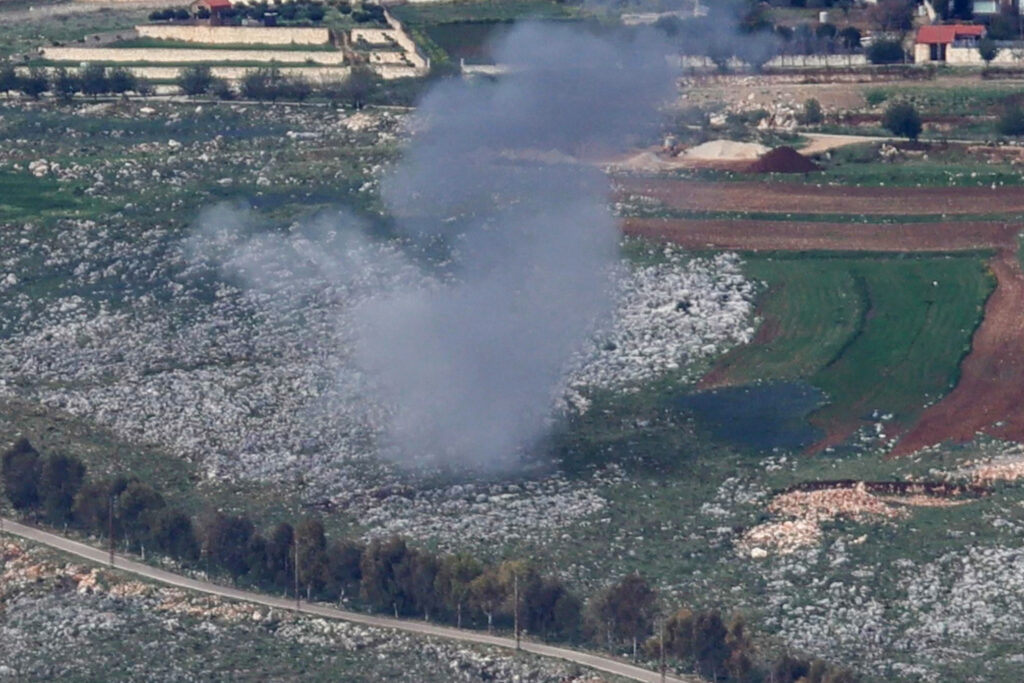
Israel launched air strikes on Hezbollah strongholds in Lebanon on Saturday after intercepting cross-border rocket fire, with Lebanese state media reporting a woman was killed.The Israeli army said three rockets were fired from Lebanon into northern Israel, setting off air raid sirens in the region for the first time since a November ceasefire between Israel and the Iran-backed Hezbollah.Lebanese Prime Minister Nawaf Salam warned the country risked being dragged into a “new war” after months of relative calm.The Israeli military said all three rockets were intercepted and there was no immediate claim of responsibility from any group.But Israeli defence chiefs said they held the Lebanese government responsible for all hostile fire from its territory regardless of who launched it.”We cannot allow fire from Lebanon on Galilee communities,” Defence Minister Israel Katz said, referring to towns and villages in the north, many of which were evacuated after Hezbollah began firing on Israel in support of Hamas in October 2023.”The Lebanese government is responsible for attacks from its territory. I have ordered the military to respond accordingly,” Katz said.”We promised security to Galilee communities, and that is exactly what will happen. Metula’s fate is the same as Beirut’s.”Armed forces chief Eyal Zamir warned the military would “respond severely”.”The state of Lebanon bears responsibility for upholding the agreement,” he said, referring to the ceasefire between Israel and Hezbollah which was signed by the government on the Lebanese side.Lebanon’s official National News Agency said Israeli air strikes and shelling had targeted several areas of the south.One Israeli strike killed a woman in Touline, the NNA reported, adding three other people were wounded in the southern town. It had earlier reported Israeli strikes wounded two people in the border village of Kfarkila.- UN ‘alarm’ -The UN peacekeeping force in Lebanon said it was “alarmed by the possible escalation of violence” following the morning’s rocket fire.”Any further escalation of this volatile situation could have serious consequences for the region,” it said.”We strongly urge all parties to avoid jeopardising the progress made, especially when civilian lives and the fragile stability observed in recent months are at risk.”The Lebanese prime minister expressed concern at the flare-up.”Salam warned against renewed military operations on the southern border, because of the risks they carry of dragging the country into a new war, which will bring woes to Lebanon and the Lebanese people,” his office said.There was no immediate claim for the rocket fire on Israel.Although Hezbollah launched the great majority of the rockets fired during the past two years, the Lebanese arm of Palestinian militant group Hamas claimed some attacks.Under the terms of the ceasefire, Hezbollah was supposed to pull its forces back north of the Litani River, some 30 kilometres (20 miles) from the Israeli border and dismantle any remaining military infrastructure in the south.Israel has carried out repeated air strikes during the ceasefire that it said targeted Hezbollah military sites that violated the agreement.The Lebanese army said it had dismantled three makeshift rocket batteries in an area north of the Litani on Saturday.- Gaza assault enters day five -Saturday’s flare-up on the Lebanese border came as Israel’s renewed offensive against Hamas militants in Gaza entered its fifth day.Israel’s resumption of military operations on Tuesday shattered the relative calm that had reigned since a January 19 ceasefire.Israel’s defence minister said Friday that he had ordered the army to “seize more territory in Gaza”, which he would annex if Hamas failed to heed Israel’s demands for the next steps in the Gaza ceasefire.”The more Hamas refuses to free the hostages, the more territory it will lose, which will be annexed by Israel,” Katz said.The return to military operations was coordinated with US President Donald Trump’s administration but drew widespread condemnation.Hamas took issue Saturday with Washington’s characterisation of its position, insisting that it stood ready to release all its remaining hostages as part of a promised second stage of the ceasefire.”The claim that ‘Hamas chose war instead of releasing the hostages’ is a distortion of the facts,” the group said.When the first stage of the ceasefire expired early this month, Israel rejected negotiations for the promised second stage, calling instead for the return of all its remaining hostages under an extended first stage.That would have meant delaying talks on a lasting ceasefire, and was rejected by Hamas as an attempt to renegotiate the original deal.burs/kir/dv
Israel reports rocket fire from Lebanon, warns of severe response
Israel threatened a severe response to three rockets it said had been fired from Lebanon Saturday, prompting the Lebanese prime minister to warn the country risked being dragged into a “new war”.A fragile ceasefire that took effect on November 27 has been marred by repeated accusations of violations by both sides but the Israeli warning marked the biggest threat so far to the relative calm it had brought to border areas.Air raid sirens sounded in the border town Metula early on Saturday. The army said it was the first time sirens had sounded in response to rocket fire from Lebanon since the day before the truce.The Israeli military said all three rockets were intercepted and there was no immediate claim of responsibility.But Israeli defence chiefs said they held the Lebanese government responsible for all hostile fire from its territory regardless of who launched it.”We cannot allow fire from Lebanon on Galilee communities,” Defence Minister Israel Katz said, referring to towns and villages in the north, many of which were evacuated after Lebanese militant group Hezbollah began firing on Israel in support of Hamas in October 2023.”The Lebanese government is responsible for attacks from its territory. I have ordered the military to respond accordingly,” Katz said.”We promised security to Galilee communities, and that is exactly what will happen. Metula’s fate is the same as Beirut’s.”Armed forces chief Eyal Zamir warned the military would “respond severely”.”The state of Lebanon bears responsibility for upholding the agreement,” he said, referring to the ceasefire between Israel and Hezbollah which was signed by the government on the Lebanese side.- PM warns Lebanon risks new ‘woes’ -Lebanese Prime Minister Nawaf Salam warned the country risked being catapulted into a “new war” after months of relative calm.”Salam warned against renewed military operations on the southern border, because of the risks they carry of dragging the country into a new war, which will bring woes to Lebanon and the Lebanese people,” his office said.Lebanon’s official National News Agency said Israeli warplanes flew over eastern areas of southern Lebanon and that interceptor missiles exploded.NNA said Israeli ground troops were strafing the Hamames hills with automatic weapon fire.It also reported Israeli artillery fire on the Nabatieh district in the south and the town of Khiam, which was hit by “three shells (fired by) Merkava tanks”.Salam urged the defence minister to “take all the necessary security and military measures, insisting that only the state can decide on war and peace”.There was no immediate claim for the rocket fire reported by the Israeli army.Although Hezbollah launched the great majority of the rockets fired during the past two years, the Lebanese arm of Palestinian militant group Hamas claimed some attacks.Under the terms of the ceasefire, Hezbollah was supposed to pull its forces back north of the Litani River, some 30 kilometres (20 miles) from the Israeli border and dismantle any remaining military infrastructure in the south.Israel has carried out repeated air strikes during the ceasefire that it said targeted Hezbollah military sites that violated the agreement.Saturday’s flare-up on the Lebanese border came as Israel’s renewed offensive against Hamas militants in Gaza entered its fifth day.Israel’s resumption of military operations in the Palestinian territory on Tuesday shattered the relative calm that had reigned since a January 19 ceasefire.Israel’s defence minister said Friday that he had ordered the army to “seize more territory in Gaza”, which he would annex if Hamas failed to heed Israel’s demands for the next steps in the Gaza ceasefire.”The more Hamas refuses to free the hostages, the more territory it will lose, which will be annexed by Israel,” Katz said.When the first stage of the ceasefire expired early this month, Israel rejected negotiations for a promised second stage, calling instead for the return of all its remaining hostages under an extended first stage.That would have meant delaying talks on a lasting ceasefire, and was rejected by Hamas as an attempt to renegotiate the original deal.burs/kir/dv
From Lebanon refuge, trauma scars Syria’s minority Alawites
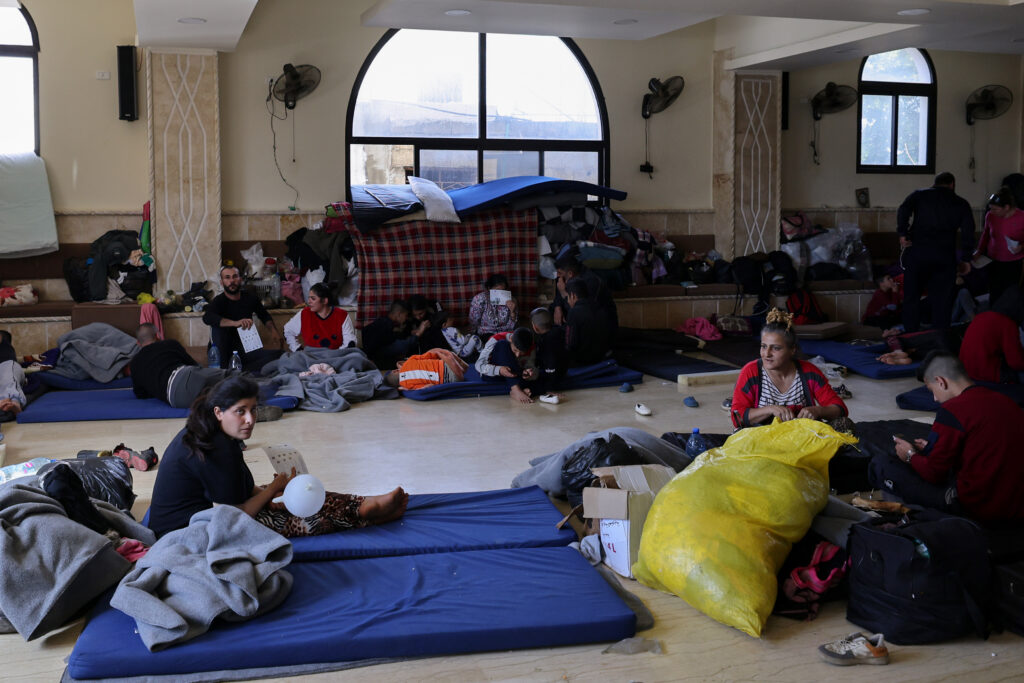
When he arrived in the town of Masaoudiyeh in northern Lebanon earlier this month, fleeing massacres on Syria’s Mediterranean coast, Dhulfiqar Ali had escaped death not once but twice.He is among thousands of Syrians who have fled across the border after armed groups descended on the Syrian coastal heartland of ousted president Bashar al-Assad’s Alawite minority and killed hundreds of civilians, mostly Alawites.”They didn’t even speak Arabic… they knew only: ‘Alawites, pigs, kill them’,” Ali said of the gunmen.A mobile phone shop owner who lived in an Alawite neighbourhood of Homs, Ali had already been attacked before, soon after Assad was toppled in a lightning offensive by Islamist-led rebels in December.”They shot and killed my two brothers in front of me and they shot me and thought I was dead,” said the 47-year-old father of two, who now lives with his family at a school in Masaoudiyeh.He escaped to the mountains near Latakia in January to receive treatment, only to be forced to flee again, this time across the border.Lebanon says nearly 16,000 Syrians have arrived since early March — adding to the already substantial population of 1.5 million Syrians who sought refuge in the country during the nearly 14-year civil war.Most are now in predominantly Alawite villages and towns in Lebanon’s northern region of Akkar, including nearly 2,500 in Masaoudiyeh.Masaoudiyeh Mayor Ali Ahmed al-Ali said the town was “above capacity”.- ‘Extermination’ -According to the Syrian Observatory for Human Rights war monitor, security forces and allied groups in Syria killed at least 1,614 civilians, the vast majority of them Alawites, during the violence that erupted on March 6.Still using a crutch to walk because of his gunshot injury, Ali said those who had descended on the coastal areas were “not Syrians”.The group Hayat Tahrir al-Sham that spearheaded the offensive that toppled Assad is an offshoot of the Syrian branch of Al-Qaeda, and is still proscribed as a terrorist organisation by countries including the United States.After the massacres in Syria, a fact-finding committee was formed to investigate.But Ali and many others told AFP the violence began well before March.Samir Hussein Ismail, a 53-year-old farmer from Hama province, said his small village of Arzeh was attacked in late January, and nine people were killed.He fled alone first, and only after the coastal killings did his family follow.The armed groups “came to my village again on Friday morning, on March 7″, Ismail told AFP.”They exterminated everything,” he said, adding that more than 30 men from Arzeh were killed.Among them were six of his cousins, he said in the modest schoolroom with a tall pile of mattresses in a corner.Like most now living in the school, he was among 10 people, or two families, sharing the space.”We have to distinguish between massacres — the massacres are still ongoing in Syria — but everything that happened after March 7 is extermination, and not a massacre,” Ismail said.- ‘No one dared leave’ -Many people AFP spoke to described men being lined up and shot dead.Almost unanimously, they called for “international protection” so they could return home.Among those was Ammar Saqqouf, who said his cousin was taken by Syria’s new security forces and found dead days later.He said security forces began a sweep of his town. “Five or six days later, we found his body, decapitated.”One woman, who gave her name only as Mariam, arrived in Lebanon last week with her son after her husband, a conscripted soldier, was killed.She fled her home town of Al-Qabu in Homs on foot, crossing the border by wading through the Al-Kabir River that divides it, like many others.”They attacked us in Al-Qabu,” she said from where she now lives alongside scores of others at a mosque in Masaoudiyeh.”People began fleeing and my husband told me and my son, ‘I will flee like those people.'”He fled, she said, “so they killed him”.Mariam described living in fear before they finally left.”No one dared leave to get a piece of bread. They surrounded the whole town.”We don’t even dare say we’re Alawites any more.”Ismail, the farmer from Arzeh, said he felt “deprived of his humanity”.”What future do we have ahead of us?” he asked.”We fled from hell.”